

Have you ever walked into your living room, looked around, and felt a sudden wave of… confusion? You love the mid-century modern armchair you scored at a vintage market. You adore the cozy, farmhouse-style dining table where your family gathers. And that sleek, minimalist lamp? It was a must-have. But all of the sudden you realize now that you put everything together in one space, something just feels off.
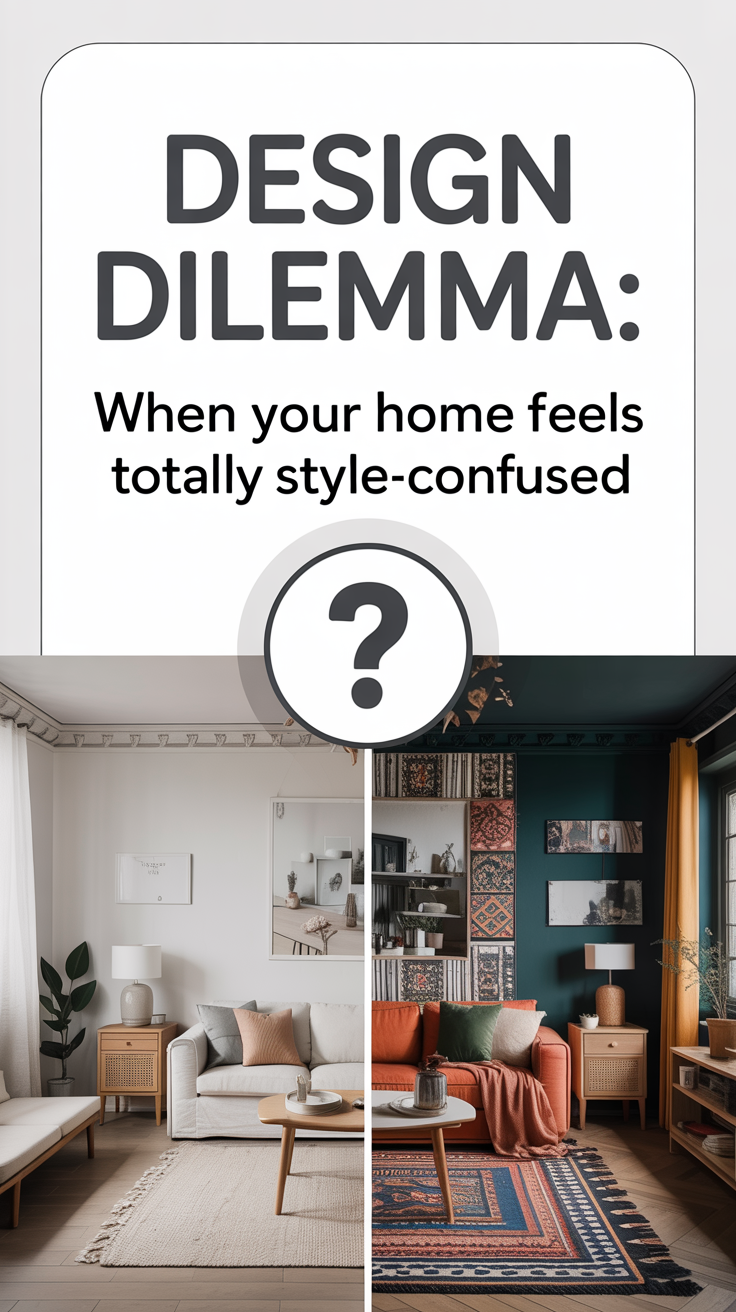
You are not alone. In fact, you are experiencing one of the most common decorating hurdles out there: the style-confused home.
As someone who has spent countless hours rearranging furniture, swapping out throw pillows, and staring blankly at paint swatches, I know exactly how frustrating this can be. You want your home to feel like a cohesive, welcoming sanctuary, but instead, it feels like a chaotic furniture showroom where none of the pieces are talking to each other. It is the classic design dilemma of loving too many different styles and not knowing how to make them play nicely together.
Let’s talk about our design choices, how to blend styles without creating a visual mess, and discover practical, actionable steps to bring harmony back to your space.
The Anatomy of a Style-Confused Home
Before we can fix the problem, we need to understand what a style-confused home actually looks and feels like. It is rarely about having “bad taste.” In fact, it is usually the exact opposite. People with style-confused homes often have fantastic taste, they just have too much of it.
When you love interior design, it is incredibly easy to fall down the rabbit hole of inspiration. One day you are pinning images of airy, Scandinavian minimalism, and the next you are swooning over moody, dark academia libraries. You buy pieces you genuinely love, but without a unifying vision, those pieces end up fighting for attention rather than working together.
Signs Your Home Might Be Style-Confused
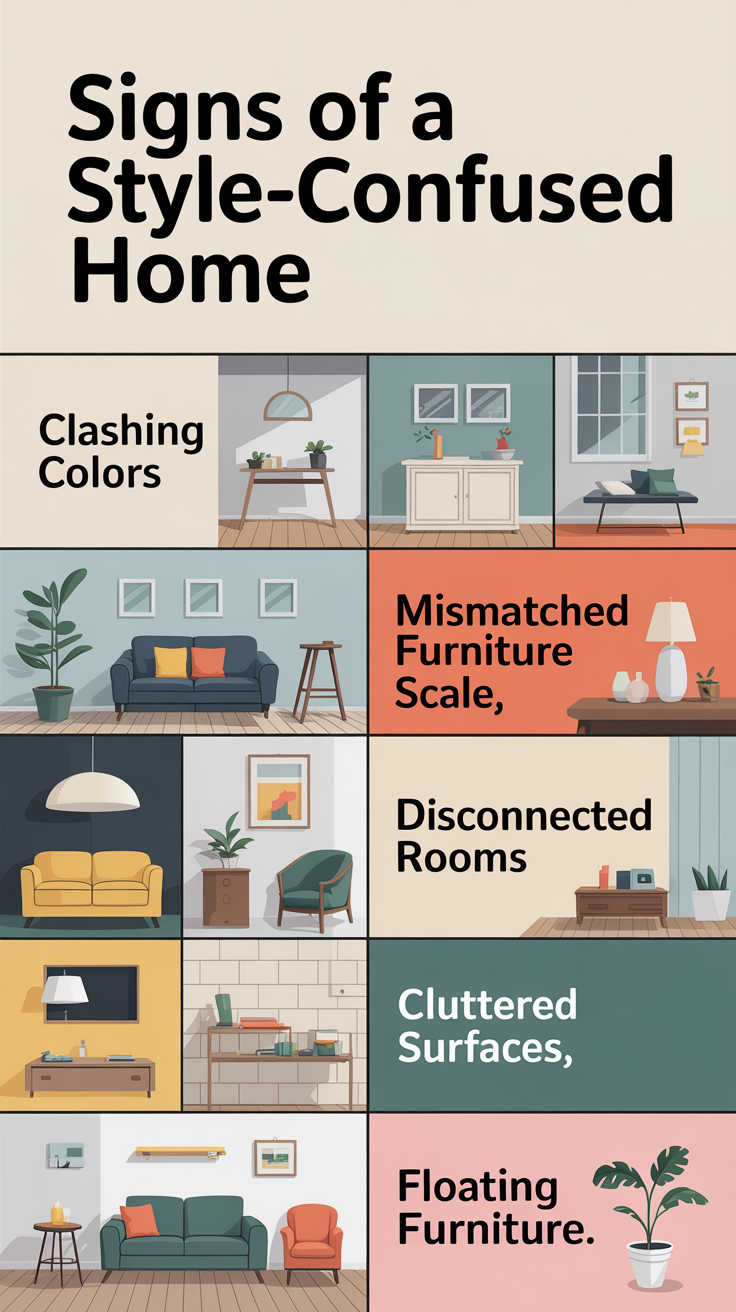
How do you know if your home is suffering from an identity crisis? Here are a few telltale signs:
The “Room-by-Room” Whiplash: You walk from a bright, coastal-inspired kitchen into a living room that looks like a 1970s retro lounge, and then into a bedroom that screams French country. There is no flow or connection between the spaces.
The “Floating” Furniture: You have beautiful pieces of furniture, but they look like they were just dropped into the room randomly. They do not relate to the architecture of the house or to the other items in the space.
The Clashing Color Palettes: Maybe the walls are painted a cool, icy gray, but your furniture is upholstered in warm, earthy tones like rust and mustard. The colors are constantly at war with each other.
The Scale Imbalance: You have a massive, overstuffed sectional sofa paired with a tiny, delicate glass coffee table. The proportions are completely out of whack, making the room feel awkward and uncomfortable.
The “Museum of Everything” Effect: Every flat surface is covered in decor items from different eras, travels, and design trends. Instead of looking curated, it looks cluttered and overwhelming.
If any of these sound familiar, do not panic. Recognizing the issue is the first step toward creating a home that feels intentional and cohesive.
The Psychology of Design Paralysis
Living in a style-confused home is not just an aesthetic issue; it can actually take a toll on your mental well-being. Our homes are supposed to be our safe havens—the places where we go to relax, recharge, and escape the chaos of the outside world. But when our physical environment is disjointed and chaotic, it can create a sense of underlying stress and anxiety.
Our surroundings have a profound impact on our mood. A cluttered, visually confusing space can lead to sensory overload. Your brain is constantly trying to process all the different colors, patterns, and styles, which can leave you feeling drained and unsettled.
This often leads to “design paralysis.” You know your home does not feel right, but you are so overwhelmed by the sheer number of choices and styles that you do not know where to start. You become afraid of making the “wrong” decision, so you end up making no decisions at all. The half-painted wall stays half-painted, the empty corner remains empty, and the mismatched furniture stays exactly where it is.
I have been there. I once spent six months living with a rug I absolutely hated because I was too paralyzed by indecision to choose a new one. I was terrified that whatever I picked would just add to the confusion. Overcoming this paralysis requires a shift in mindset. You have to stop striving for “perfect” and start striving for “personal.”
Embracing the Eclectic: Why Mixing Styles is Actually a Good Thing
Here is a secret that the glossy design magazines do not always tell you: the most interesting, soulful homes are rarely decorated in just one style. A room that is 100% mid-century modern or 100% farmhouse often ends up looking like a catalog or a movie set and completely lacking in personality and depth.
Mixing styles is the key to creating a home that feels collected, lived-in, and uniquely yours. It is called eclectic design, and it is all about blending different periods, textures, and aesthetics to create a cohesive whole.
The problem is not that you love multiple styles; the problem is that you have not yet found the common thread that ties them together. Your goal is not to force yourself to choose just one aesthetic, but rather to learn how to be a curator of the things you love. It’s funny I’ve been seeing this as a recent design “trend”, to lean into what you love. This should always be the rule!
Think of your home like a dinner party. If you invite a group of people who are all exactly the same, the conversation might be polite, but it will probably be a bit boring. But if you invite a diverse group of people with different backgrounds and interests, the conversation becomes dynamic and engaging. The key is making sure they have at least one thing in common to spark that connection. The same principle applies to your furniture and decor.
Step 1: The Great Style Audit
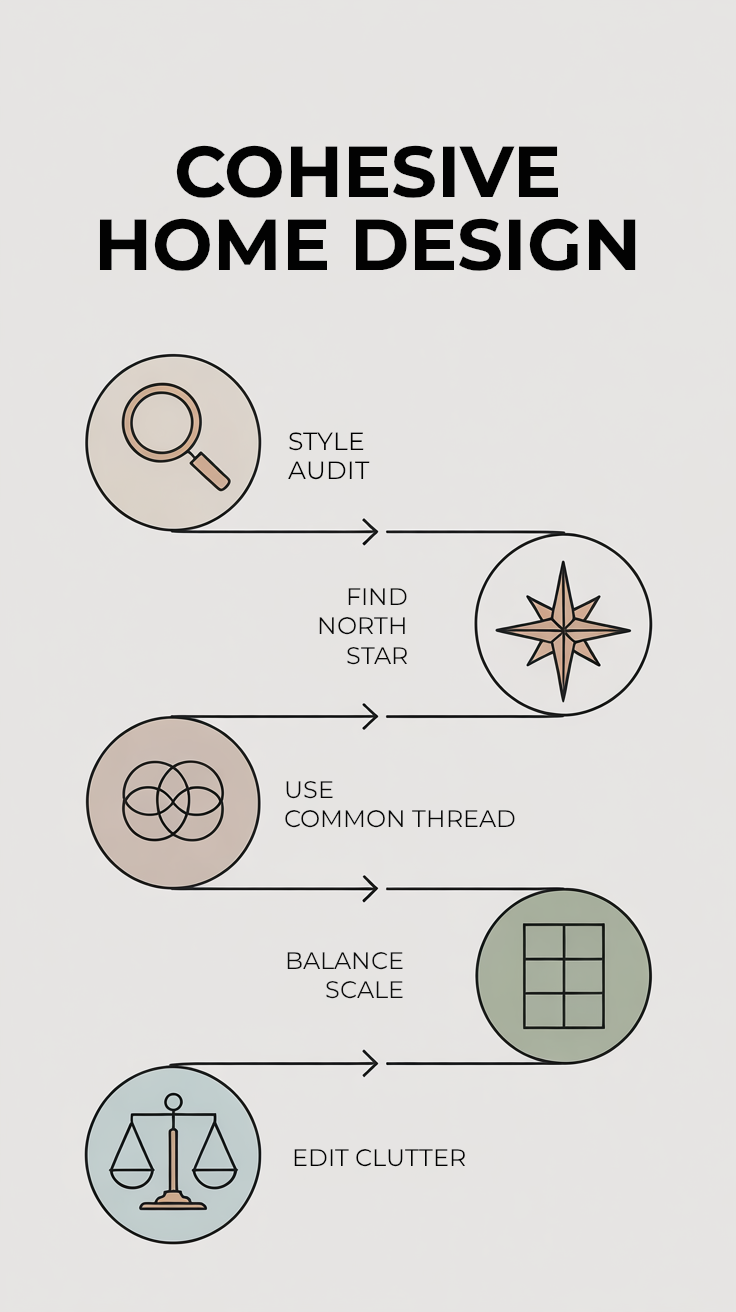
The journey to a cohesive home begins with a little self-reflection and a lot of honesty. It is time to conduct a style audit. I suggest walking through your home room by room and try to look at the spaces as if you were a guest seeing them for the first time.
What do you absolutely love? Identify the pieces that make your heart sing. Maybe it is that velvet emerald green sofa, or the antique brass mirror you inherited from your grandmother. These are your anchor pieces.
What do you tolerate? These are the items that are functional but do not bring you any joy. The basic bookshelf you bought out of necessity, or the rug that is just “okay.”
What do you actively dislike? Be ruthless here. What are the pieces that make you cringe every time you look at them? The hand-me-down recliner that does not fit your style, or the aggressively patterned curtains you bought on a whim.
Once you have your lists, it is time to start editing. The pieces you actively dislike need to go. Sell them, donate them, or give them away. I know it can be hard to part with things, especially if you spent money on them, but I promise keeping items you hate is only making the style confusion worse.
For the items you tolerate, make a plan to eventually replace or upgrade them as your budget allows. And for the items you love? Those are the building blocks of your new, cohesive design plan.
Step 2: Finding Your “North Star”
Now that you have cleared out the noise, it is time to figure out what you actually want your home to look and feel like. This is where you get to play designer.
I highly recommend creating a fresh Pinterest board or a physical mood board. Do not look at your old pins—start from scratch. Spend some time saving images of rooms that you are naturally drawn to. Do not overthink it; just pin what you love. I do think people have a tendency to get off track on Pinterest so if this is YOU be sure to check out this post here on how to gather inspiration from Pinterest while still staying true your personal design style.
Once you have a good collection of images (aim for at least 20-30), step back and look for the common denominators. This is the most crucial step in curing style confusion. You are looking for the underlying themes that connect the different styles you love.
Ask yourself these questions:
- What is the dominant color palette? Are you drawn to warm, earthy neutrals, or cool, crisp blues and whites? Do you prefer high-contrast black and white, or soft, muted pastels?
- What materials keep popping up? Do you see a lot of natural wood, woven rattan, and linen? Or are you pinning images with sleek metals, glass, and polished marble?
- What is the overall feeling? Describe the vibe of the rooms in three words. Are they cozy, relaxed, and inviting? Or are they structured, elegant, and sophisticated?
Let us say you love both rustic farmhouse and sleek modern design. When you look at your inspiration board, you might realize that the common thread is a love for natural materials (like wood and leather) and a neutral color palette (lots of white, cream, and black).
That common thread becomes your “North Star.” It is the guiding principle that will help you make design decisions moving forward. Whenever you are tempted to buy something new, you can ask yourself: “Does this fit with my North Star?” If the answer is no, put it back.
Step 3: The Power of the Common Thread
So, how do you actually mix a modern sofa with a vintage rug and a rustic coffee table without it looking like a thrift store exploded in your living room? You use the power of the common thread.
To make disparate styles work together, they need to share at least one unifying element. This is the secret sauce of eclectic design. Here are the most effective ways to create that connection:
1. Color is Your Best Friend
Color is the easiest and most impactful way to tie a room together. If you have furniture from three different eras, a cohesive color palette will instantly make them look like they belong together.
Choose a base palette of two or three colors and repeat them throughout the space. For example, if you have a modern navy blue sofa and a traditional Persian rug that features hints of navy, they will speak to each other. You can further strengthen that connection by adding navy blue throw pillows to a vintage leather armchair.
Repetition is key. When a color appears in multiple places around a room, the eye naturally connects those dots, creating a sense of harmony.
2. Balance the Scale and Proportion
One of the biggest mistakes people make when mixing styles is ignoring scale. A delicate, spindly mid-century chair will look ridiculous sitting next to a massive, overstuffed traditional sofa. When combining different styles, pay close attention to the visual weight of the pieces.
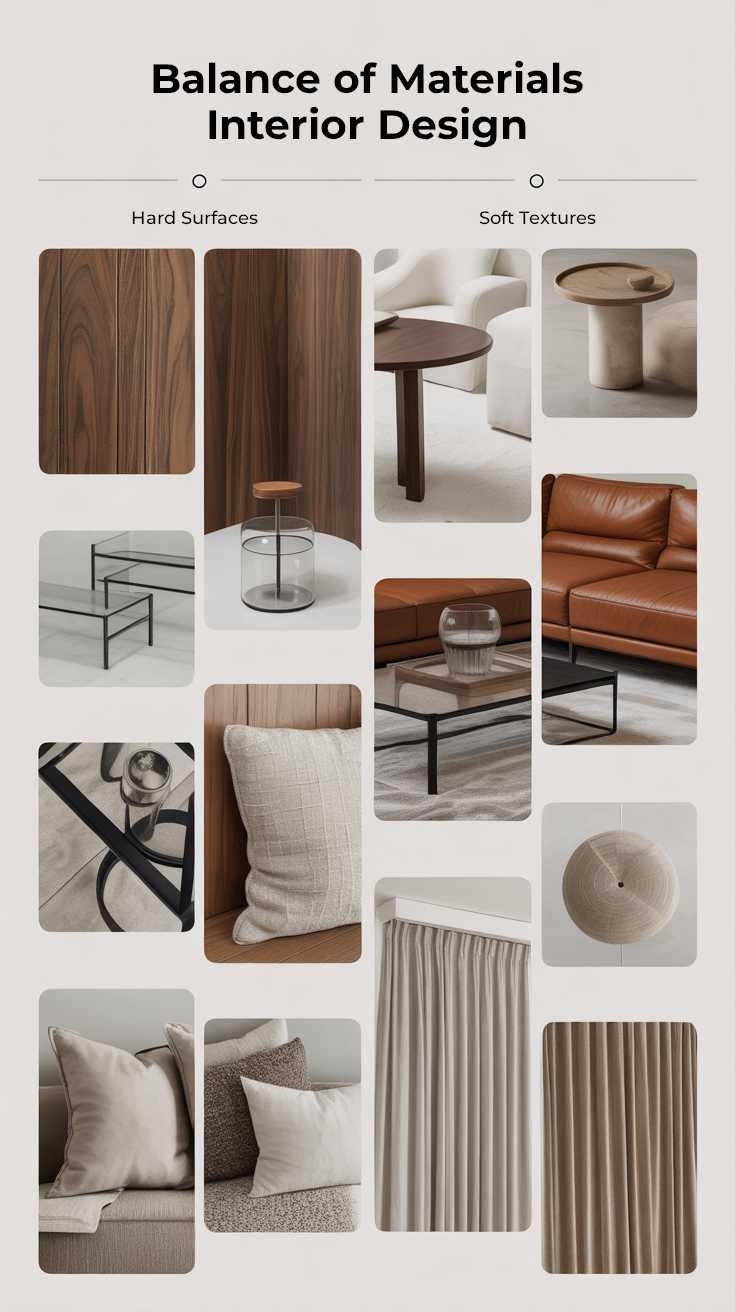
3. Mix Materials Thoughtfully
Contrasting materials can add incredible depth to a room, but they need to be balanced. If you have a lot of hard, sleek surfaces (like glass, metal, and polished stone), you need to introduce soft, textural elements (like wool, velvet, and natural wood) to keep the room from feeling cold and sterile.
Conversely, if your room is full of heavy, rustic woods and plush fabrics, adding a sleek metal lamp or a glass-topped table can provide a much-needed visual break and add a touch of modern elegance.
4. The 80/20 Rule
When mixing two distinct styles, a good rule of thumb is the 80/20 rule. Choose one style to be the dominant aesthetic (80% of the room) and use the second style as an accent (20% of the room).
For example, if you want a modern traditional look, you might choose classic, traditional furniture for your main pieces (the 80%), but incorporate modern, abstract art and sleek, contemporary lighting (the 20%). This creates a deliberate, curated look rather than a chaotic 50/50 split where the styles are fighting for dominance.
Step 4: Creating Flow Between Rooms
Style confusion does not just happen within a single room; it often happens between rooms. You want your home to feel like one cohesive entity, not a series of disconnected theme parks.
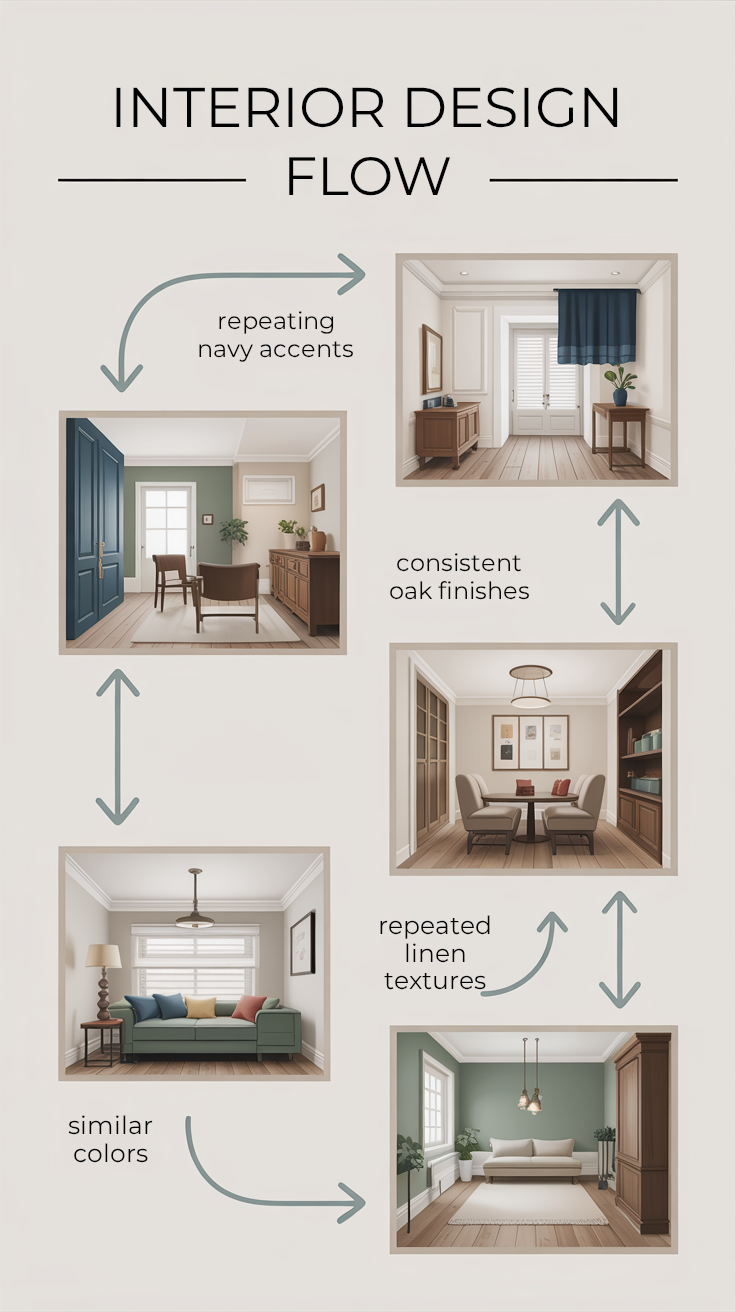
Creating flow does not mean every room has to look exactly the same. You can absolutely have a moody, dark dining room and a bright, airy living room. The trick is to carry subtle elements from one room to the next to create a sense of continuity.
Carry a Color Through: Choose one color from your main living area and use it as an accent color in the adjoining rooms. If your living room has a lot of sage green, maybe the kitchen has sage green dish towels, and the hallway has a piece of art with sage green tones.
Consistent Flooring: If possible, keeping the same flooring throughout the main living areas is one of the best ways to create flow. If that is not an option, try to use rugs that share a similar color palette or texture to bridge the gap between different flooring types.
Unifying Hardware and Finishes: Pay attention to the little details. If you have matte black doorknobs and hinges throughout the house, it creates a subtle, subconscious connection between the spaces, even if the decor styles vary slightly.
Step 5: The Art of the Edit (and Dealing with Clutter)
Sometimes, a home feels style-confused not because of the furniture, but because of the sheer volume of stuff. Clutter distracts the eye, hides your beautiful pieces, and creates visual noise rather than cohesive design.
I love books, art, and little trinkets I have picked up on my travels. But there is a fine line between “curated maximalism” and “messy.” To fix this, you have to master the art of the edit. Look at your surfaces: your coffee table, your bookshelves, your kitchen counters. Are they covered in small, disconnected items?
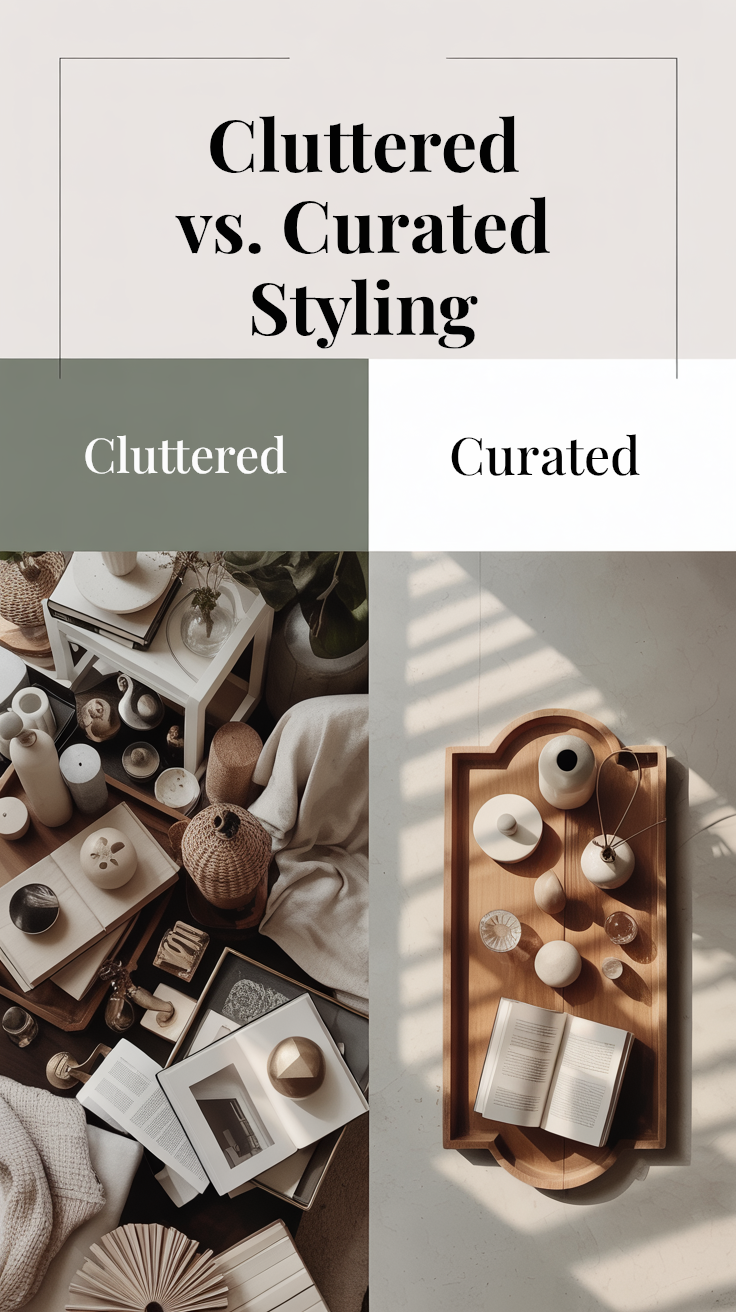
Try clearing everything off and starting fresh. Group items together in odd numbers (threes and fives work best) and alw