

Look around your living room right now. Your eyes probably land on the sofa first, maybe the television, and then, inevitably, the coffee table. It sits right there in the middle of everything, demanding attention. We treat it like the anchor of the room, the piece that ties the whole seating arrangement together. But how often does that coffee table actually work?
If you’re constantly bumping your shins on sharp corners, struggling to reach your drink without pulling a muscle, or staring at a chaotic pile of mail and remotes, you’re not alone. The coffee table is arguably the most problematic piece of furniture in the modern home. We buy them because we think we have to, often prioritizing how they look in a showroom over how they function in our actual lives.
It’s time for a serious design intervention. We need to talk about why so many coffee tables fail us, from disastrous proportions and impractical materials to the sheer magnetism they have for clutter. More importantly, we need to explore how to fix these dilemmas—or whether we even need a traditional coffee table at all.

The Proportion Problem: When Size and Scale Go Wrong
The quickest way to ruin a living room’s vibe is to drop a poorly sized coffee table right in the middle of it. It’s a mistake I see constantly. People fall in love with a piece online, hit “add to cart,” and then realize too late that it completely dwarfs their sofa or looks like a tiny island floating in a sea of rug.
The Two-Thirds Rule You Shouldn’t Ignore
There’s a reason interior designers swear by the “two-thirds rule.” The length of your coffee table should be roughly two-thirds the length of your sofa. It sounds like a rigid constraint, but it’s actually the secret to visual harmony.
When a table is too small, it looks completely disconnected from the seating. It feels less like a functional surface and more like an afterthought. Worse, it means the people sitting on the ends of the sofa have nowhere to put their drinks. On the flip side, a table that’s too large dominates the room. It turns the simple act of walking to the sofa into an obstacle course. If you have to turn sideways to squeeze past your coffee table, it’s too big. Period.
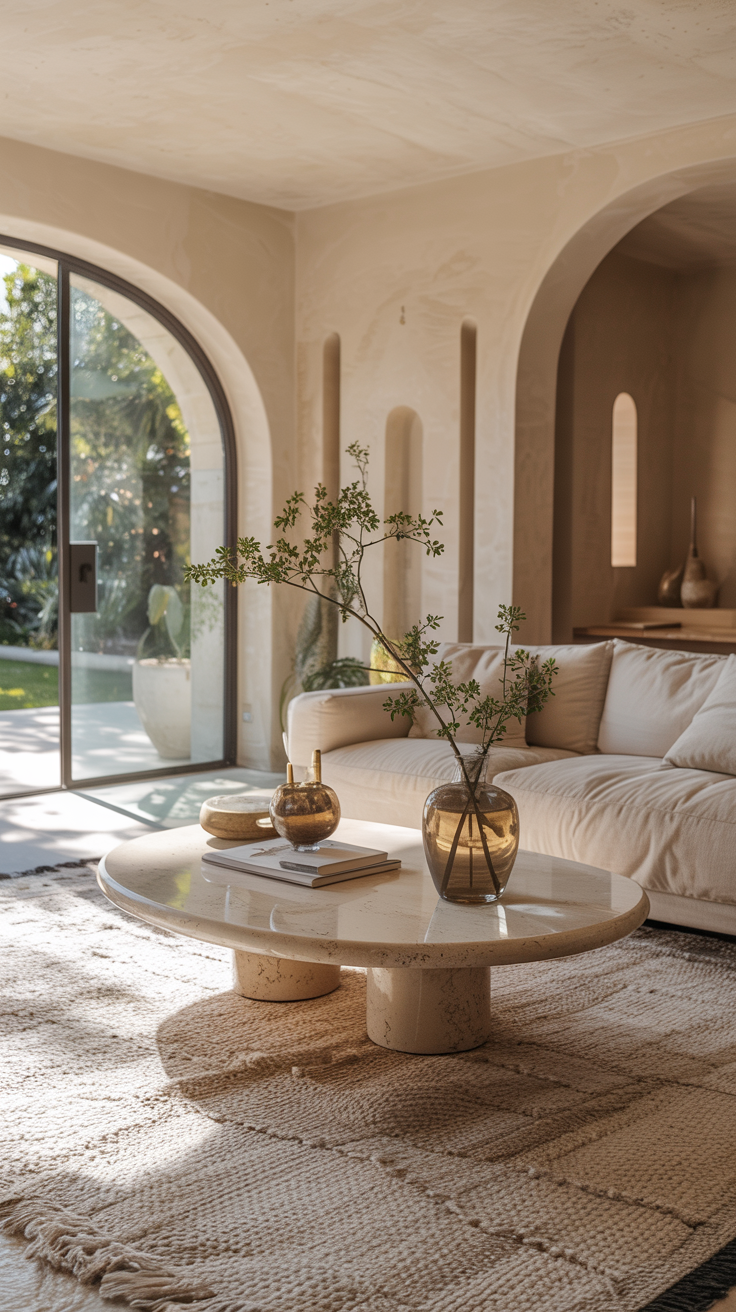
The Height Dilemma
Scale isn’t just about length and width; height is equally crucial, and it’s where things often go terribly wrong. The golden rule here is simple: your coffee table should be the same height as your sofa seat cushions, or perhaps an inch or two lower.
Why does this matter? Because nobody wants to feel like they’re reaching down into a well to grab their coffee mug. Tables that are too low might look incredibly chic and minimalist in a stylized Instagram post, but in reality, they force you to hunch over awkwardly. Conversely, a table that sits higher than your sofa cushions feels imposing and blocks the visual flow of the room. It’s like having a tiny dining table in front of your couch. Before you buy, grab a tape measure and check your sofa’s seat height. It’s a five-second step that saves years of annoyance.
The Squeeze: Clearance and Flow
Let’s talk about the space around the table. You need about 18 to 20 inches of clearance between the edge of the coffee table and the edge of your seating. This is the sweet spot. It’s enough room to walk comfortably and stretch your legs, but close enough that you don’t have to get up to reach the remote.
In small apartments, this clearance is often the first thing sacrificed. People try to cram a massive rectangular table into a tight footprint, resulting in a cramped, frustrating layout. If you can’t maintain that 18-inch gap, it’s a glaring sign that the table you’ve chosen is fundamentally wrong for the space.
Shape Shifting: Why Rectangles Aren’t Always Right
We default to rectangular coffee tables because they’re safe. They mirror the shape of a standard sofa, and they’re easy to find. But “safe” doesn’t always mean “best.” In fact, the shape of your table dictates how the entire room functions. I go into more detail on this how to choose the perfect coffee table for your space here, but read on for the cliff note version.
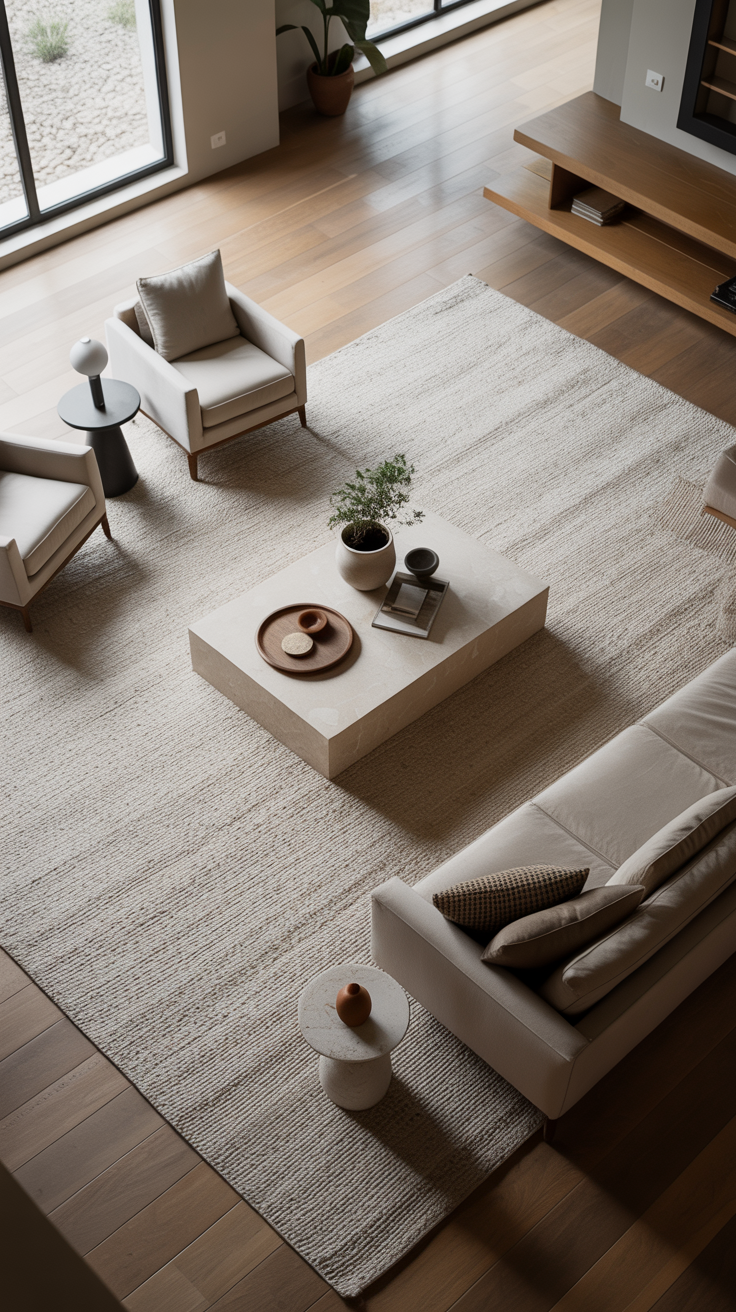
The Problem with Sharp Corners
Rectangular and square tables offer tons of surface area, which is great. But they also introduce four sharp corners into the highest-traffic area of your home. If you have a tight living room, those corners are basically weapons waiting to strike your shins. If you have toddlers learning to walk, a sharp-edged wooden or glass table is a constant source of anxiety.
Square tables have their place. They look fantastic nestled into the crook of a large L-shaped sectional, but they demand a lot of square footage. If your room is long and narrow, a square table will completely choke the walkway.
The Case for Curves
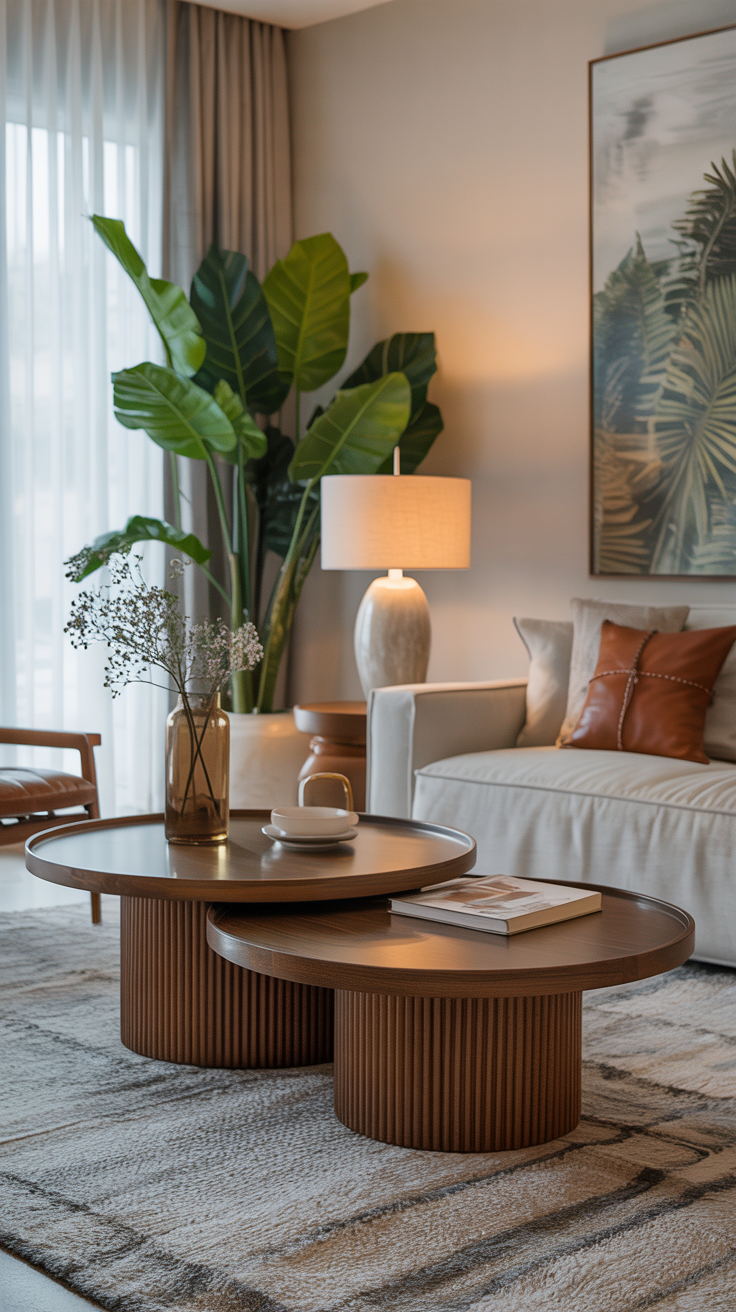
This is why I am a massive advocate for round and oval tables. They are the heroes of tricky floor plans. A round table softens a room that is otherwise full of hard, straight lines (think about it: your sofa, your TV, your rug, your windows: they’re all rectangles).
More importantly, round tables are incredibly forgiving when it comes to traffic flow. You can easily navigate around them without worrying about clipping an edge. Oval tables are the ultimate compromise, giving you the elongated reach of a rectangle but with the smooth, bump-free navigation of a circle. If your living room feels rigid or cramped, swapping a rectangular table for a curved one is an instant upgrade.
The Asymmetrical Trend
Lately, there’s been a huge trend toward organic, asymmetrical “blob” shapes. They look like smooth stones or abstract sculptures. Aesthetically, they are stunning and add a highly custom, designer feel to a room.
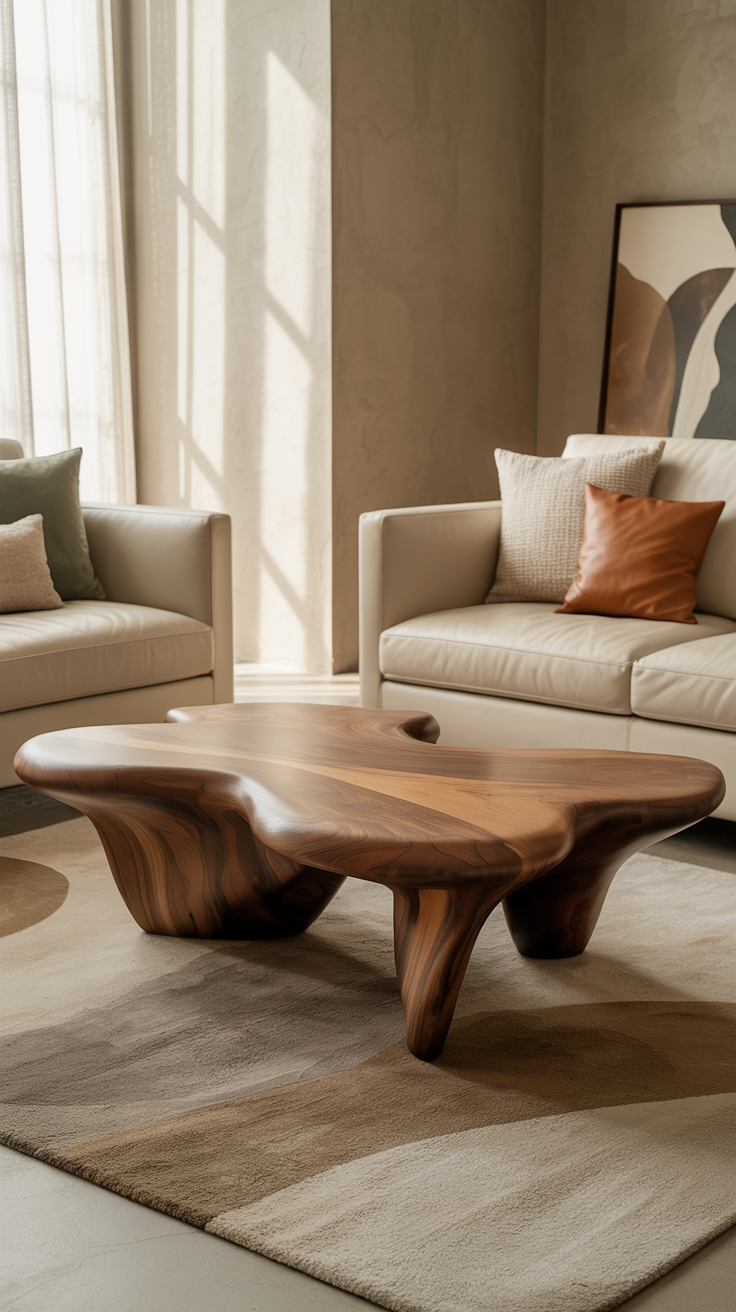
But functionally? They can be a nightmare. The irregular shape often means you have less usable surface area than you think. You might find that the table tapers off exactly where you want to set down a bowl of popcorn. If you’re going to embrace the asymmetrical trend, you have to be honest with yourself about how much tabletop space you actually need on a daily basis.
Material Disasters: When Pretty Meets Practicality
Here is where the biggest heartbreaks happen. You find a table that is the perfect size and shape, and it’s made of a material that looks absolutely gorgeous. But living with it is a completely different story. The material you choose dictates how much you’re going to stress about your furniture.
The Glass Table Trap
Let’s start with glass. Designers love glass tables for small spaces because they are visually weightless. They don’t block the view of a beautiful rug, and they make a cramped room feel airy.
But living with a glass coffee table is a part-time job. Every single fingerprint, every speck of dust, every water ring shows up immediately. If you like to put your feet up on the table, a glass surface will constantly remind you that your socks aren’t perfectly clean. And then there’s the fragile factor. Even tempered glass can scratch, and the sound of setting a ceramic mug down on a glass surface is always a little jarring. If you want a low-maintenance living room, glass is likely not your friend.
The Wood Reality Check
Wood is the classic choice. It brings warmth, texture, and a grounded feeling to a space. A solid oak or walnut table can last generations.
But wood is needy. It hates moisture and it hates heat. If you are the kind of person who refuses to use coasters, a wooden table will punish you with permanent white rings. Highly polished or dark-stained wood will highlight every scratch and dent. If you want the warmth of wood without the paranoia, look for reclaimed or distressed finishes. A table that already looks a little beaten up will hide the inevitable wear and tear of daily life.
The Heavy Hitters: Stone and Metal
Marble and travertine tables are having a massive moment right now. They look incredibly luxurious and sophisticated. But here’s the reality: stone is porous. If you spill a glass of red wine or drop a greasy piece of food on an unsealed marble table, that stain is there forever. Furthermore, stone tables weigh a ton. If you like to push your coffee table out of the way to do yoga or play a VR game, a marble slab is going to ruin your back.
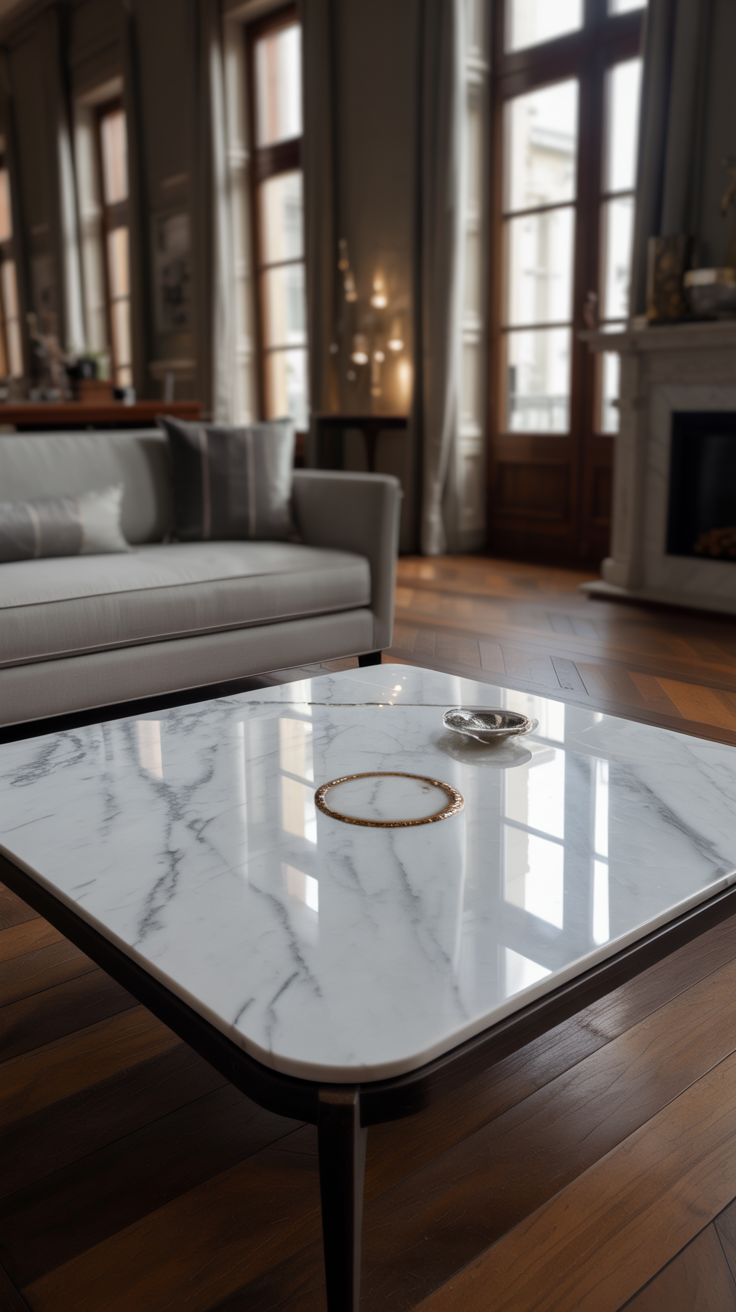
Metal tables like brass, blackened steel, or aluminum are virtually indestructible. They add a cool, industrial edge. But they can feel cold to the touch, and polished metals require constant buffing to keep them from looking smudged and tarnished.
The takeaway here is simple: don’t buy a table for the fantasy version of your life. Buy the material that fits how you actually live. If you eat dinner on the couch every night, get something indestructible.
The Clutter Magnet: Why Your Table is Always a Mess
Coffee-table options for better function and styling
Modern Nesting Coffee Table Set of 3, Faux Marble Top with Golden Frame | Coffee Table with 2 Square End Side Tables, Perfect for Living Room
A current option for nesting coffee table.
WiberWi Round Coffee Table 33.5″ Coffee Tables for Living Room High Glossy Faux White Marble Top Modern Circle Table Sturdy Gold Metal Frame Legs Cocktail Table with Storage Open Shelf
A current option for round coffee table.
Hanobe Round Decorative Tray for Coffee Table Decor, Vintage Brown Finish | 11.8″ Industrial Style, Small Circle Wood Platters for Living Room, Kitchen Centerpiece
A current option for coffee table styling tray.
As an Amazon Associate I earn from qualifying purchases.
Even if you nail the size, shape, and material, you still have to deal with the coffee table’s darkest secret: it is a magnet for clutter. Because it sits right in the center of the action, it becomes the default drop zone for everything. Mail, keys, six different remote controls, half-read books, hair ties, empty mugs—it all ends up on the coffee table.
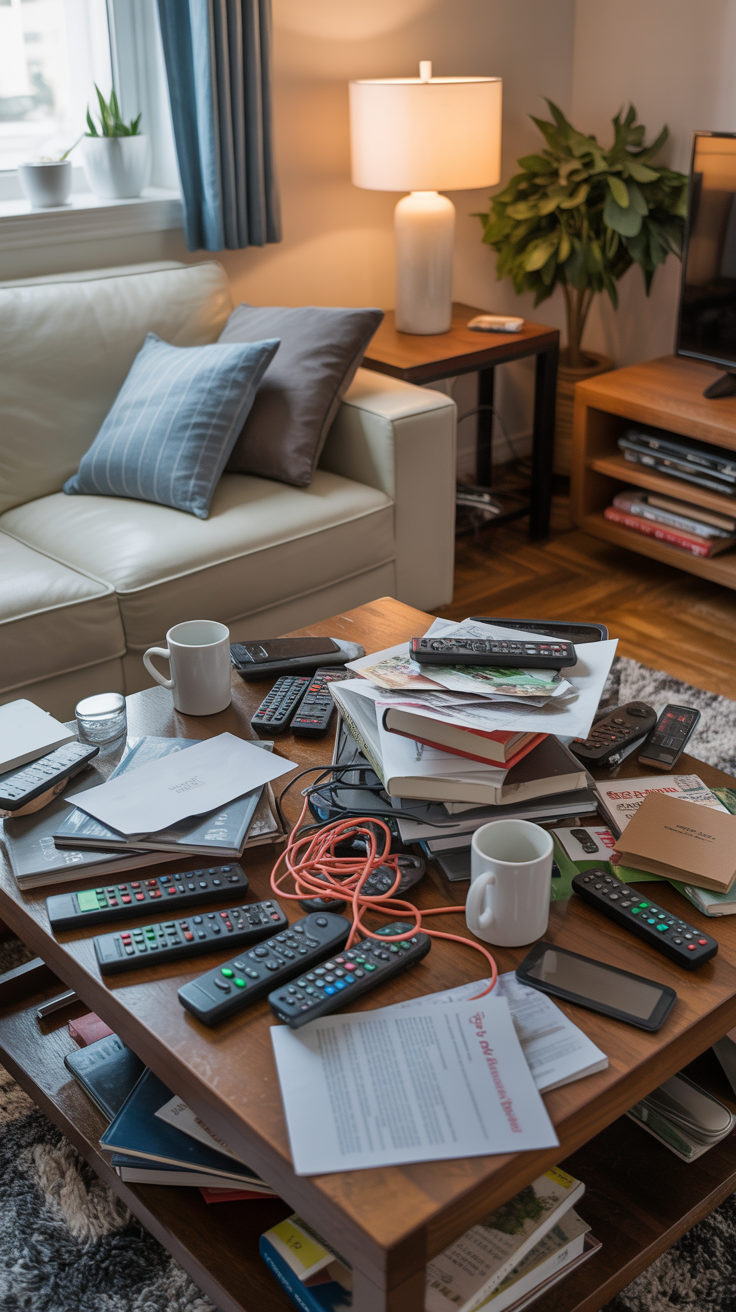
The Stress of the Mess
This isn’t just an aesthetic problem; it’s a psychological one. A cluttered coffee table makes the entire room feel chaotic. You can have a perfectly vacuumed floor and fluffed pillows, but if the center of the room is a disaster