

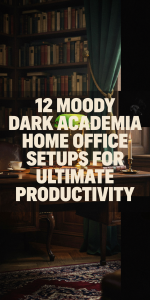
Dark academia has moved from aesthetic niche to practical design philosophy for people who want a home office that encourages concentration, deep work, and creative thinking. In 2026 we’re pairing the tactile, scholarly feel of vintage libraries with modern ergonomics and productivity tech to build workspaces that feel purposeful. In this guide we’ll explain why moody Dark Academia design enhances focus, outline the core elements every setup needs, and present 12 curated setups grouped into four trios, Vintage Scholar Desk, Gothic Library Nook, Cozy Cloister Corner, and Minimalist Noir Study, so you can pick, adapt, and carry out the look that fits your workflow and space.
Why Dark Academia Design Boosts Focus And Creativity
Dark Academia isn’t just an Instagram mood board, it’s a set of design choices that support certain cognitive states. We find that darker palettes, tactile materials, and curated clutter reduce visual noise and encourage prolonged attention. Psychologically, lower luminance contrasts and warm, muted tones create a cocooning effect that signals “this is for sustained thought,” which helps us sink into deep work more readily.
There’s also an emotional component: historic references (leather-bound books, brass details, worn wood) summon narratives of scholarship and craftsmanship. That narrative primes us to take our tasks more seriously. The style nudges a ritualistic approach to work, lighting a candle, brewing tea, taking handwritten notes, which breaks up digital overwhelm and restores deliberate pacing.
From a neuroscience angle, fewer bright distractions lower dopamine-driven interruptions: from a design perspective, layered textures and focused vignettes guide the eye and reduce decision fatigue. When we combine that with modern productivity tools, ergonomic chairs, adjustable desks, noise management, Dark Academia becomes both atmospheric and functional. In short: it’s a mood that encourages depth, and when applied thoughtfully it measurably improves our ability to concentrate and create.
Core Elements Of A Moody Dark Academia Home Office
To build a Dark Academia home office that’s more than decoration, we prioritize these core elements:
- Palette & Materials: Deep browns, oxblood, forest green, charcoal, and matte black. Choose warm woods (walnut, mahogany), leather, brass, and matte ceramics to keep surfaces rich without glare.
- Furniture Silhouettes: Classic, substantial pieces, roll-top or pedestal desks, wingback or tufted chairs, tall bookshelves. Lines should feel timeless rather than trendy.
- Layered Lighting: A combination of warm task lighting, adjustable desk lamps with amber bulbs, and low-level ambient light. We avoid stark overhead fluorescents and opt for dimmable options to control contrast.
- Textures & Fabrics: Wool throws, heavy linen curtains, embossed leather, hand-thrown pottery. Textural contrasts add depth without visual clutter.
- Curated Objects: Maps, field journals, fountain pens, classical prints, vintage clocks, and selected botanical specimens. We favor quality over quantity, items with history amplify the mood.
- Acoustics & Sound: Thick rugs, drapes, and book-lined walls absorb noise. Pair with white-noise or low-fi instrumental playlists to support uninterrupted work blocks.
- Ergonomics & Tech: Adjustable monitor arms, sit-stand desks, lumbar-support chairs, and discreet cable management. The aesthetic shouldn’t compromise comfort: instead, it should conceal tech inside elegant containers.
By combining these elements we create spaces that feel collected and intentional, perfect for focused study, writing, or project work.
Setup Inspiration: Vintage Scholar Desk Trio (Setups 1–3)
We’ll start with three desk-focused setups that emphasize classic scholar energy while remaining highly usable.
Setup 1, The Pedestal Professor
- Desk: Solid walnut pedestal desk with deep drawers. The weight and drawer space encourage physical organization.
- Seating: Leather tufted swivel chair with lumbar support and brass caster feet for mobility on hardwood.
- Lighting: Articulated brass banker’s lamp with a warm LED bulb and dimmer.
- Accents: Leather blotter, fountain pen set, stacked folios, and a small inkwell-style pen cup. A vintage brass globe sits on a side table.
Why it works: Deep drawers remove visual distractions: the tactile setup invites handwritten notes and slow thinking.
Setup 2, The Roll-Top Writer
- Desk: Restored roll-top desk to hide screens when we want to close shop.
- Seating: High-back wing chair with wool throw over the arm.
- Lighting: Warm desk lamp plus an antique sconce overhead on a dimmer.
- Accents: Typewriter (or mechanical keyboard), pile of dog-eared classics, and an amber glass carafe for water.
Why it works: The roll-top creates a physical boundary between focused work and leisure, enforcing ritual.
Setup 3, The Archivist’s Bay
- Desk: Long reclaimed wood table with a monitor arm and a single drawer organizer.
- Seating: Ergonomic chair upholstered in dark wool.
- Lighting: Wide-angle, low-glare task lamp and LED bias lighting behind the monitor to reduce eye strain.
- Accents: Wall-mounted shallow shelves for folios, archival boxes, dried specimen frames.
Why it works: A cleaner, research-focused layout that still evokes a library archive: storage is visible but organized for quick retrieval.
Setup Inspiration: Gothic Library Nook Trio (Setups 4–6)
These setups lean into verticality, tall shelving, and moody alcoves, ideal for compact spaces that want maximal atmospheric impact.
Setup 4, The Alcove Librarian
- Layout: Built-in floor-to-ceiling bookshelves flanking a narrow desk or console.
- Seating: Compact leather chair with a wool cushion.
- Lighting: Picture lights above shelves, a gooseneck desk lamp, and candles for ambiance (we keep them safely contained).
- Accents: Leather-bound collections, brass bookends, botanical prints, and a ladder (even decorative) to emphasize height.
Why it works: The vertical bookshelf walls create a sheltered feeling, encouraging immersion.
Setup 5, The Gothic Study Bay
- Layout: Deep set window bay with a small desk facing out or angled toward the room.
- Seating: Upholstered armchair with a side table for notes.
- Lighting: Layered, window film to diffuse daylight, a low-hued pendant, plus a desk lamp.
- Accents: Dark drapes, stained-glass-inspired prints, and a large heraldic tapestry or framed map.
Why it works: Natural light softened by dark interiors balances alertness and comfort: bay windows make the nook feel both private and connected.
Setup 6, The Stacked Archive
- Layout: Narrow room with stacked shelving units and a fold-down desk bracketed by cabinets.
- Seating: Slim, armless ergonomic stool that tucks away.
- Lighting: LED strip lighting under each shelf and a focused task lamp.
- Accents: Rolled manuscripts in tubes, labeled archival boxes, and a single statement art print in sepia tones.
Why it works: Efficient use of vertical storage keeps the work surface clear and the aesthetic intentionally scholarly.
Setup Inspiration: Cozy Cloister Corner Trio (Setups 7–9)
For those who want a softer, lived-in scholarly vibe, these corners blend comfort with study rituals.
Setup 7, The Fireplace Desk Nook
- Layout: Small desk or secretary placed near a fireplace or faux hearth.
- Seating: Plush wingback chair for restorative reading and a separate ergonomic desk chair for active work.
- Lighting: Firelight (real or electric) plus a shaded desk lamp.
- Accents: Wool rug, ceramic mug station, small stack of reference books, and a framed black-and-white portrait.
Why it works: Warmth and texture lower cognitive friction, making it easier to move between reading and writing.
Setup 8, The Cloistered Scriptorium
- Layout: Corner desk with tall plant or trellis to create a living partition.
- Seating: Cane-backed chair layered with a sheepskin throw.
- Lighting: Soft pendant with a warm filament bulb and a swing-arm lamp for tasks.
- Accents: Handmade paper journals, brass magnifier, and a wall shelf for curiosities.
Why it works: Natural elements and handcrafted tools slow our pace and encourage careful, contemplative work.
Setup 9, The Tea & Thesis Corner
- Layout: Compact L-desk with a dedicated beverage station and small cork pinboard.
- Seating: Adjustable chair, footstool for breaks.
- Lighting: Table lamp with adjustable brightness and under-shelf lighting for the station.
- Accents: Teapot, infuser, barometer-style clock, and a rotating “idea” bowl for slips of thoughts.
Why it works: Ritualizing breaks with a tea station enforces cadence, work blocks followed by deliberate pauses improve output quality.
Setup Inspiration: Minimalist Noir Study Trio (Setups 10–12)
Not everyone wants ornate clutter. These minimalist setups keep the Dark Academia palette but streamline surfaces for maximal clarity.
Setup 10, The Monochrome Minimalist
- Desk: Matte black sit-stand desk with cable management and a single slim drawer.
- Seating: Ergonomic mesh-backed chair with dark upholstery.
- Lighting: Adjustable black task lamp and LED bias lighting behind monitor.
- Accents: One framed literary quote, a single sculptural bookend, and a leather desk pad.
Why it works: Minimal visual stimuli with high tactile quality: perfect for writers who prefer fewer physical cues.
Setup 11, The Noir Dual-Monitor Studio
- Desk: Floating shelf desk with dual-monitor swivel arms and in-desk power modules.
- Seating: Low-profile executive chair in dark leather.
- Lighting: Dim-to-warm overhead track and focused panel lamps for each monitor.
- Accents: Discrete sound-absorbing panels wrapped in dark fabric and a compact analog clock.
Why it works: Built for knowledge workers who need screen real estate but still crave the moody aesthetic.
Setup 12, The Zen Scholar
- Desk: Narrow, raw-edge wood plank on black metal legs.
- Seating: Saddle stool for active sitting, encouraging micro-movements.
- Lighting: Minimal pendant and a small adjustable lamp.
- Accents: A single bonsai or preserved branch, one standing book stack, and a felt tray for essentials.
Why it works: The reductive approach minimizes decision fatigue while retaining the vocabulary of Dark Academia through materials and color.
Lighting, Ergonomics, And Productivity Tech For Dark Spaces
Designing a moody home office is one thing: making it functional for long hours is another. Here’s how we balance atmosphere with ergonomics and tech.
Lighting Strategy
- Layered Lighting: Combine ambient, task, and accent lighting. Ambient should be dimmable and warm (2700–3000K): task lighting should have high CRI (90+) for accurate color when we read or sketch.
- Bias Lighting: Soft LED strips behind monitors reduce eye strain and improve perceived contrast without raising overall room brightness.
- Adaptive Controls: Use smart dimmers or scene presets for “deep work,” “video call,” and “wind down” modes so we don’t fumble with switches.
Ergonomics Essentials
- Sit-Stand Flexibility: An adjustable desk helps us alternate posture. We set reminders or use apps to encourage movement every 30–60 minutes.
- Monitor Placement: Top of the screen at or slightly below eye level, an arm’s length away: use monitor arms for precise placement.
- Seating: Prioritize lumbar support and adjustability. Add a plush throw or seat pad in the Dark Academia palette for aesthetic cohesion.
Tech & Productivity Tools
- Cable Management: Conceal power strips and hubs in leather-wrapped cable sleeves or wooden boxes to maintain the look.
- Audio: A compact Bluetooth speaker with warm, full sound or noise-cancelling headphones for focus. Consider a desk-mounted mic for clearer calls without ugly peripherals.
- Input Devices: Mechanical keyboards with tactile switches and a high-DPI mouse or trackpad. Choose muted dark finishes to match the aesthetic.
- Software: Use focus tools like a Pomodoro timer, website blockers, and a distraction-free writing app. Sync lighting scenes with calendar events for automated context switching.
Acoustics & Comfort
- Soft Furnishings: Area rugs, wall hangings, and bookcase fronts reduce echo. We add a small diffuser for subtle scent (cedar, clove, or bergamot) to anchor mood.
Safety & Practicality
- Fire Safety: If using candles, keep them contained and never unattended. Electric alternatives replicate flame warmth safely.
- Ventilation: Dark rooms can feel stuffy: ensure airflow with a quiet fan or occasional window ventilation.
When we integrate these elements, our moody home offices feel intentional rather than impractical, beautiful and built for sustained productivity.
Conclusion
Dark Academia is more than an aesthetic trend: it’s a toolkit for building focused, intentional workspaces. Across the 12 setups we’ve shown how vintage pieces, layered lighting, tactile materials, and contemporary ergonomics can coexist to create offices that invite deep work. Our recommendation: start with the core elements, palette, lighting, ergonomics, and adapt one of the twelve setups to your spatial constraints and workflow. With a few curated objects, thoughtful lighting, and the right tech, you’ll have a moody, productive sanctuary that supports your best work in 2026 and beyond.