

Scroll through Pinterest, TikTok, or any craft-focused corner of the internet, and you’re bound to see them: impossibly small, incredibly detailed, and utterly adorable miniature foods. From tiny cheesecakes that could sit on a fingertip to boba teas no bigger than a thumbnail, the world has fallen head over heels for mini food crafts. This captivating trend combines the satisfaction of crafting with the irresistible charm of all things miniature. At the heart of this craze is a magical material that makes it all possible: resin. With its crystal-clear finish and ability to capture the tiniest details, resin is the secret ingredient to creating these tiny but mighty culinary creations.
If you’ve ever found yourself mesmerized by a video of someone assembling a miniature bowl of ramen or a microscopic fruit tart, you might have thought, “I could never do that!” But here’s the good news: you absolutely can! Now here my friends, is your all-access pass to the wonderful world of DIY mini resin food. My daughter Willa and I and are LOVING this craft so today I want to break down everything you need to know, from the essential tools and materials to step-by-step tutorials for your first projects. Get ready to unleash your inner artist and create some seriously sweet (and tiny) masterpieces that will have everyone asking, “How did you make that?!”
What’s the Big Deal with Tiny Food? The Allure of the Miniature
So, why is everyone so obsessed with these tiny treats? The appeal is multi-layered. First, there’s the undeniable “kawaii” or cute factor. Our brains seem to be hardwired to adore miniature versions of everyday objects, and food is no exception. There’s a sense of wonder and delight in seeing a complex item, like a layered cake or a cup of coffee, shrunk down to a minuscule scale. It’s pure, simple joy.
Beyond the cuteness, there’s the deep satisfaction that comes from the creative process itself. Working on such a small scale requires focus and precision, making it a wonderfully mindful and absorbing hobby. As you carefully place a tiny polymer clay strawberry or mix the perfect shade of “milk tea” resin, the stresses of the outside world seem to melt away. It’s a form of creative escapism that results in a tangible, adorable reward.
Finally, the versatility of these creations is a huge part of their charm. That tiny taco you just made isn’t just a tiny taco—it’s a potential earring, a keychain charm, a magnet for your fridge, a custom accessory for a dollhouse, or a unique embellishment for a phone case. The possibilities are endless, allowing you to wear your creativity and share your passion with the world.
Gearing Up: Your Mini Food Crafting Toolkit
Before you dive into making your first mini meal, you’ll need to assemble your creative toolkit. While it might seem like a lot at first, these supplies are the foundation for countless projects to come. Here’s a breakdown of the essentials:
| Material | Description |
|---|---|
| Resin | The star of the show! UV Resin is highly recommended for beginners as it cures in minutes under a UV lamp, allowing for quick layering. Two-part epoxy resin is another option, which is often cheaper for larger quantities but requires mixing and has a much longer curing time (24-72 hours). |
| Silicone Molds | These are essential for shaping your creations. You can find molds in every shape imaginable, from tiny cups and bowls to specific food items like gummy bears, cookies, and fruit. |
| UV Lamp | If you’re using UV resin, this is a must-have. A simple, affordable nail art lamp works perfectly. |
| Colorants | To bring your food to life! Resin dyes (both transparent and opaque) are great for liquids like juice or soup. Mica powders add shimmer and are perfect for things like cake batter or frosting. Alcohol inks can create cool effects but should be used sparingly. |
| Inclusions & Details | This is where the real fun begins! Polymer clay is perfect for sculpting tiny food items (like burger patties or bread) to embed in the resin. Pre-made polymer clay slices (often called fimo slices) are a lifesaver for things like fruit, vegetables, and candy. You can also use tiny beads for sprinkles or boba pearls, and glitter for a little extra sparkle. |
| Mixing & Handling Tools | You’ll need small silicone mixing cups, wooden stir sticks or silicone tools for mixing, tweezers for placing tiny inclusions, and toothpicks or dotting tools for creating fine details. |
| Safety Gear | This is non-negotiable! Always wear nitrile gloves to protect your skin, and work in a well-ventilated area. A respirator mask is also highly recommended to avoid inhaling fumes. |
The Basics of Resin Crafting: A Beginner’s Guide
Working with resin is a fun and rewarding process, but it’s important to get the basics right. We’ll focus on UV resin here, as it’s the most beginner-friendly option for these small-scale projects.
Safety First! A Quick but Crucial Reminder
Before you even open a bottle of resin, make sure your workspace is prepared. Lay down a silicone mat or plastic sheeting to protect your surfaces. Open a window or turn on a fan to ensure good ventilation. Put on your gloves and, if you have one, your respirator. Resin is a chemical, and it’s important to treat it with respect to ensure your crafting journey is a safe and healthy one.
Your First Pour: A Step-by-Step Guide to Using UV Resin
- Prepare Your Mold: Make sure your silicone mold is clean and free of any dust or debris. A piece of tape can be used to pick up any stray particles.
- Mix Your Color: Squeeze a small amount of UV resin into a silicone mixing cup. Add a tiny drop of resin dye or a small amount of mica powder and mix thoroughly with a stir stick until the color is uniform. A little color goes a long way, so start with less than you think you need!
- The First Pour: Carefully pour the colored resin into your mold. If you’re filling a detailed mold, pour slowly to allow the resin to seep into all the crevices.
- Add Your Details: This is where you add your tiny polymer clay creations, fruit slices, or glitter. Use tweezers for precise placement.
- Flash Cure: Place the mold under the UV lamp for a short period (usually 30-60 seconds) to partially cure the resin. This is called “flash curing” and it helps to lock your inclusions in place.
- Layer Up: For projects with multiple layers (like a parfait or a latte), you’ll repeat the process: pour a new layer of resin (perhaps a different color), add more inclusions, and flash cure. This is how you build depth and realism.
- The Final Cure: Once your mold is full and you’re happy with your creation, it’s time for the final cure. Place it under the UV lamp for the full recommended time, which is typically 2-5 minutes, depending on your lamp and the thickness of the resin. It’s a good idea to flip the mold over and cure the back as well to ensure it’s fully hardened.
- Demold and Admire: Once it’s fully cured and no longer tacky, you can carefully pop your creation out of the silicone mold. And there you have it—your first mini resin food masterpiece!
Your First Menu: 5 Easy & Adorable Mini Foods to Try
Ready to get your hands sticky? These five beginner-friendly projects are the perfect introduction to the world of mini resin food. They’ll help you master the basic techniques and build your confidence for more complex creations.
Project 1: Super-Cute Gummy Bear Charms
This is the perfect starter project. It’s simple, quick, and the results are irresistibly cute.
- You’ll Need: A gummy bear-shaped silicone mold, UV resin, transparent resin dye in your favorite gummy bear colors (red, green, yellow, orange), and an eye pin for each charm.
- Step 1: In a mixing cup, mix a small amount of UV resin with a drop of transparent dye.
- Step 2: Carefully pour the colored resin into the gummy bear mold, making sure not to overfill it.
- Step 3: Before curing, use tweezers to place the loop of an eye pin into the top of the gummy bear’s head. This will allow you to easily turn it into a charm later.
- Step 4: Cure under the UV lamp for 2-3 minutes. Demold, and you have an adorable charm ready for a necklace or keychain!
Project 2: Tiny Fruit Tarts
This project introduces the concept of layering and using pre-made inclusions.
- You’ll Need: A small, round, fluted mold (like a mini tart or bottle cap shape), opaque yellow or tan resin dye, pre-made polymer clay fruit slices (fimo slices), and clear UV resin.
- Step 1: Mix a small amount of resin with the opaque yellow/tan dye to create a “crust” color. Pour a thin layer into the bottom of your mold and cure for 60 seconds.
- Step 2: Arrange your tiny fruit slices on top of the cured “crust” layer. Use tweezers to get them just right.
- Step 3: Carefully pour clear UV resin over the fruit slices, just enough to cover them and create a shiny “glaze.”
- Step 4: Do a final cure for 2-3 minutes. The result is a delicious-looking fruit tart that’s almost too cute to be real.
Project 3: Miniature Boba Tea
This project is a fan favorite and a great way to practice creating “liquid” effects.
- You’ll Need: A tiny cup or mug-shaped mold, opaque tan or brown resin dye (for the tea), opaque white resin dye (for the milk), tiny black beads or pre-made black polymer clay balls (for the boba), and a small piece of a coffee stirrer or a thin roll of black polymer clay for the straw.
- Step 1: Place a small number of your black “boba pearls” at the bottom of the cup mold.
- Step 2: In a mixing cup, create your “milk tea” color by mixing resin with the tan/brown and white dyes until you get a creamy, opaque color you like.
- Step 3: Pour the milk tea mixture into the cup, filling it about three-quarters of the way. Use a toothpick to gently nudge the boba pearls around if needed.
- Step 4: Cure for 2-3 minutes. Once cured, you can add your tiny straw, securing it with a tiny drop of clear resin and curing again.
Project 4: A Bowl of Mini Cereal
This is a super fun and playful project that looks incredibly realistic.
- You’ll Need: A small bowl-shaped mold, tiny cereal-shaped polymer clay pieces (you can buy these pre-made or make your own Froot Loops or Cheerios from polymer clay), and opaque white resin dye.
- Step 1: Fill your bowl mold about halfway with your mini cereal pieces.
- Step 2: Mix up some “milk” by combining UV resin with opaque white dye.
- Step 3: Pour the white resin over the cereal, allowing it to seep down and around the pieces. Don’t submerge the cereal completely—you want some of it poking out of the top, just like a real bowl of cereal.
- Step 4: Cure for 2-3 minutes, and breakfast is served!
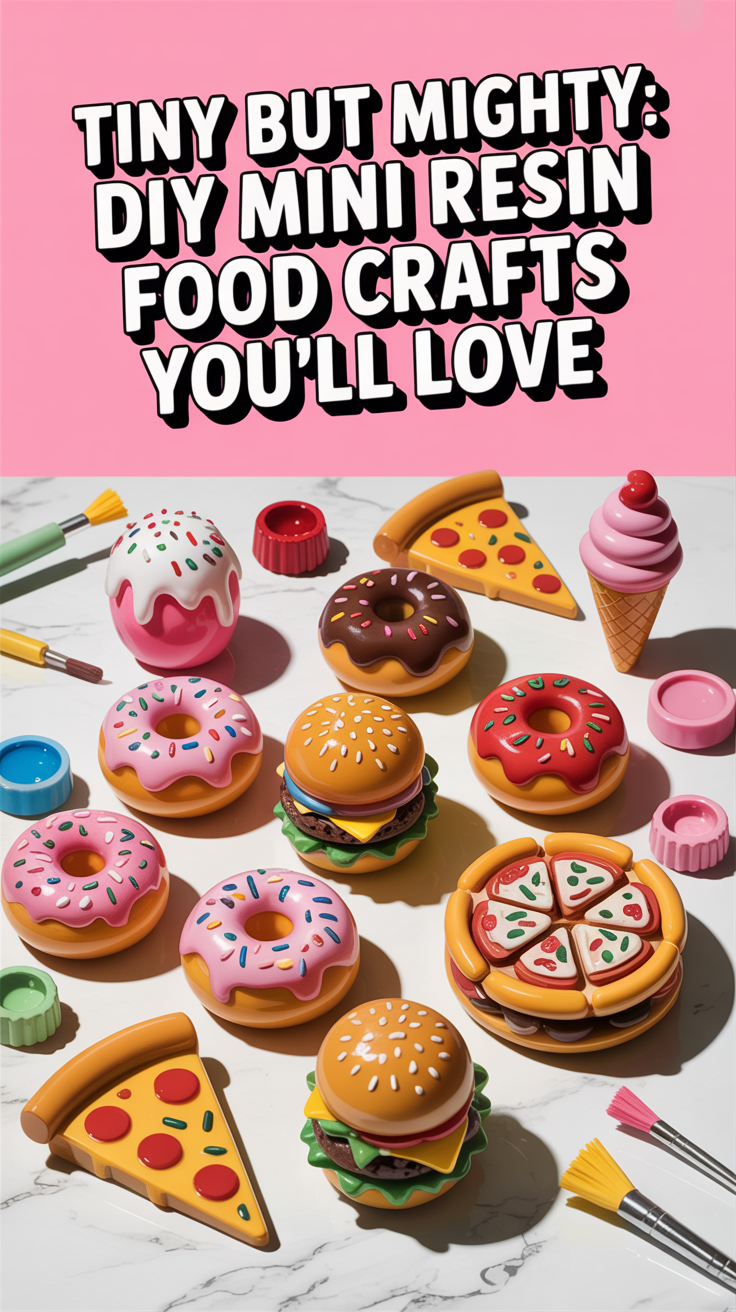
Project 5: Colorful Jello Cube Earrings
This is a fantastic way to turn a simple shape into a fun piece of wearable art.
- You’ll Need: A small cube-shaped silicone mold, transparent resin dye in a vibrant Jello color (like red, green, or orange), a small drill or pin vise, and earring hooks.
- Step 1: Mix your resin with a drop of transparent dye to get that classic, see-through Jello look.
- Step 2: Pour the resin into the cube mold and cure for 2-3 minutes.
- Step 3: Once cured and demolded, use a small hand drill (a pin vise) to carefully drill a small hole in one corner of the cube.
- Step 4: Open the loop on an earring hook, slide it through the hole in the cube, and close the loop. Repeat for the second earring, and you have a pair of fun, jiggly-looking Jello earrings!
Pro-Tips for Perfect Miniatures
As you get more comfortable with the basics, these tips will help you take your mini food creations to the next level:
- Warm Your Resin: If your resin is thick or has a lot of bubbles, you can gently warm the bottle in a bowl of warm (not hot) water for a few minutes. This will thin it out and help the bubbles rise to the surface.
- Pop Those Bubbles: Air bubbles are the enemy of a crystal-clear finish. After you pour your resin, let it sit for a minute to allow bubbles to rise. You can then pop them with the sharp end of a toothpick or by quickly passing the flame of a lighter or heat gun over the surface (be very careful if you do this!).
- Work in Thin Layers: When in doubt, use thin layers. This gives you more control, helps reduce bubbles, and is essential for creating realistic, multi-dimensional pieces.
- Clean-Up is Key: Keep a bottle of isopropyl alcohol and some paper towels handy. You can use it to clean up any sticky spills or to wipe off your tools before the resin cures.
Beyond the Plate: What to Do With Your Mini Food Creations
Now that you have a growing collection of tiny treats, what should you do with them? The possibilities are as endless as your imagination!
- Wearable Art: This is one of the most popular uses. Turn your creations into unique earrings, necklace pendants, bracelet charms, or even fun rings.
- Keychain Charms: Attach your mini foods to a keychain for a fun and personalized accessory for your keys or backpack.
- Dollhouse Delicacies: If you’re into dollhouses or miniatures, these tiny foods are the perfect way to stock your mini kitchen and dining room.
- Fridge Magnets: Simply glue a small, strong magnet to the back of your creations for the cutest fridge magnets you’ve ever seen.
- Planner and Phone Charms: Add a small charm strap to your mini foods to decorate your planner, journal, or phone.
Troubleshooting: When Your Tiny Treats Have Teething Troubles
Even the most seasoned mini food artist runs into a hiccup now and then. Don’t get discouraged! Most problems are easily fixable. Here are some common issues and how to solve them:
Problem: My resin is still sticky after curing. Solution: This is the most common issue for beginners. It usually means the resin isn’t fully cured. Try putting it under the UV lamp for another few minutes. If it’s still tacky, it could be that your resin was not mixed properly (if using epoxy) or that the colorant you used is inhibiting the cure. Some alcohol inks, in particular, can cause this if you use too much. A very thin top coat of clear resin, properly cured, can often seal in the stickiness.
Problem: My clear resin turned yellow. Solution: Yellowing can happen for a few reasons. Over-curing under the UV lamp can sometimes cause it. It can also happen if the resin is old or has been exposed to too much sunlight. To avoid this, use high-quality, fresh resin and stick to the recommended curing times.
Problem: My inclusions are sinking to the bottom. Solution: This is where flash curing is your best friend! After placing your heavier inclusions (like polymer clay pieces), cure the resin for just 30-60 seconds to partially set it. This will create a “shelf” that holds the items in place, allowing you to add more layers on top without everything sinking.
Problem: I have so many bubbles! Solution: Bubbles are the bane of many a resin artist. To minimize them, stir your resin slowly and deliberately, not like you’re whipping eggs. After pouring, let the resin sit for a few minutes to allow bubbles to rise. A quick pass with a heat gun or a lighter will pop them, but be careful not to scorch the resin or your mold. Warming your resin beforehand also helps a lot.
Taking it to the Next Level: Advanced Techniques
Once you’re comfortable with the basics, you can start exploring some more advanced techniques to make your mini foods even more realistic and impressive.
- Creating Texture: Use a stiff-bristled brush or a needle tool to stipple the surface of uncured polymer clay to create realistic bread or cake textures before you bake it.
- Shading with Chalk Pastels: Before baking your polymer clay pieces, you can use a small, soft brush to apply a little bit of chalk pastel dust to create realistic browning on bread crusts or a rosy blush on a tiny apple.
- Making Your Own Molds: If you can’t find a mold for a specific shape you want, you can make your own! Using two-part silicone putty, you can press an object (like a tiny bottle or a specific pasta shape) into the putty to create a custom mold.
- The “Doming” Technique: After you’ve demolded your piece, you can apply a final, thin layer of clear resin to the top surface. Carefully spread it out to the edges without letting it drip over the sides. This creates a beautiful, rounded, high-gloss “dome” that magnifies the details underneath.
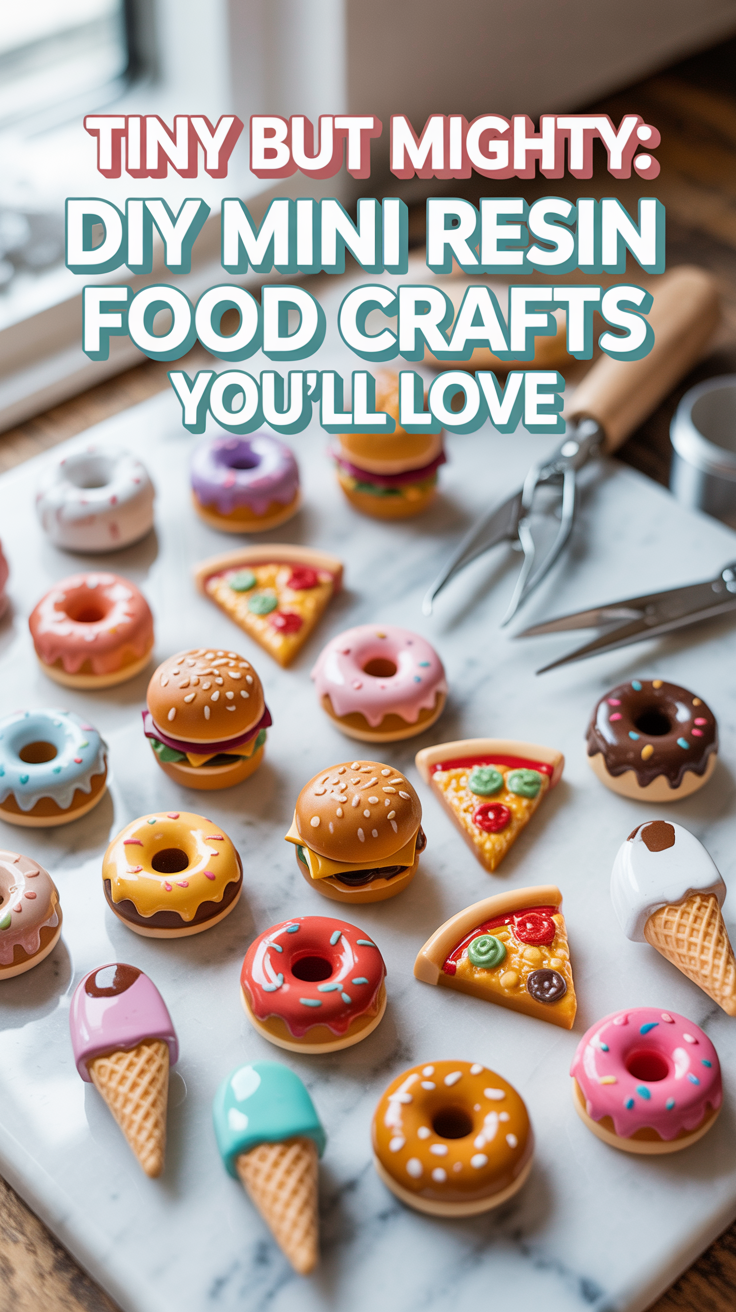
Your New Favorite Hobby Awaits
Creating mini resin food is more than just a craft; it’s a portal to a whimsical world where you are the master chef and creator. It’s a hobby that combines precision with playfulness, and the results are always delightful. The skills you learn from making a simple gummy bear can be expanded to create intricate wedding cakes, elaborate sushi platters, and everything in between. So, embrace the cuteness, gather your supplies, and don’t be afraid to start small. Your journey into the tiny but mighty world of mini resin food has just begun. Happy crafting!