When it comes to designing a living room, few things cause as much frustration as trying to arrange furniture around both a fireplace and a TV. It’s the eternal design dilemma — the battle between cozy ambiance and modern entertainment. The fireplace naturally commands attention as a timeless focal point, while the TV has become the true center of most households.
So, how do you make them coexist harmoniously without throwing off the balance of your space?
Whether you’re starting from scratch or refreshing an existing layout, this guide will walk you through design strategies, expert layout ideas, and practical tips to help you create a beautiful, functional living room where the TV and fireplace can finally live in peace.
1. Understanding the Challenge
Related: Before settling on a layout, it also helps to avoid common living room decor mistakes.
Before diving into layouts, it helps to understand why this design puzzle is so tricky.
A fireplace anchors a room architecturally — it’s often centered on a wall, framed with mantels or built-ins, and sets a mood of warmth and intimacy. The TV, on the other hand, has more functional demands: it needs a comfortable viewing angle, proper lighting control, and sufficient distance from seating.
The issue arises because these two focal points often compete for attention. You can’t comfortably face both from one spot unless you plan your layout with intention.
The key is balance — visually, functionally, and emotionally. The goal isn’t to make one dominate, but to allow each to shine in its own way.
2. Start With Your Focal Point — or Create Two
In design, a focal point is what immediately draws the eye when you enter a room. When you have both a fireplace and a TV, you can treat them in one of two ways:
Option A: Combine Them
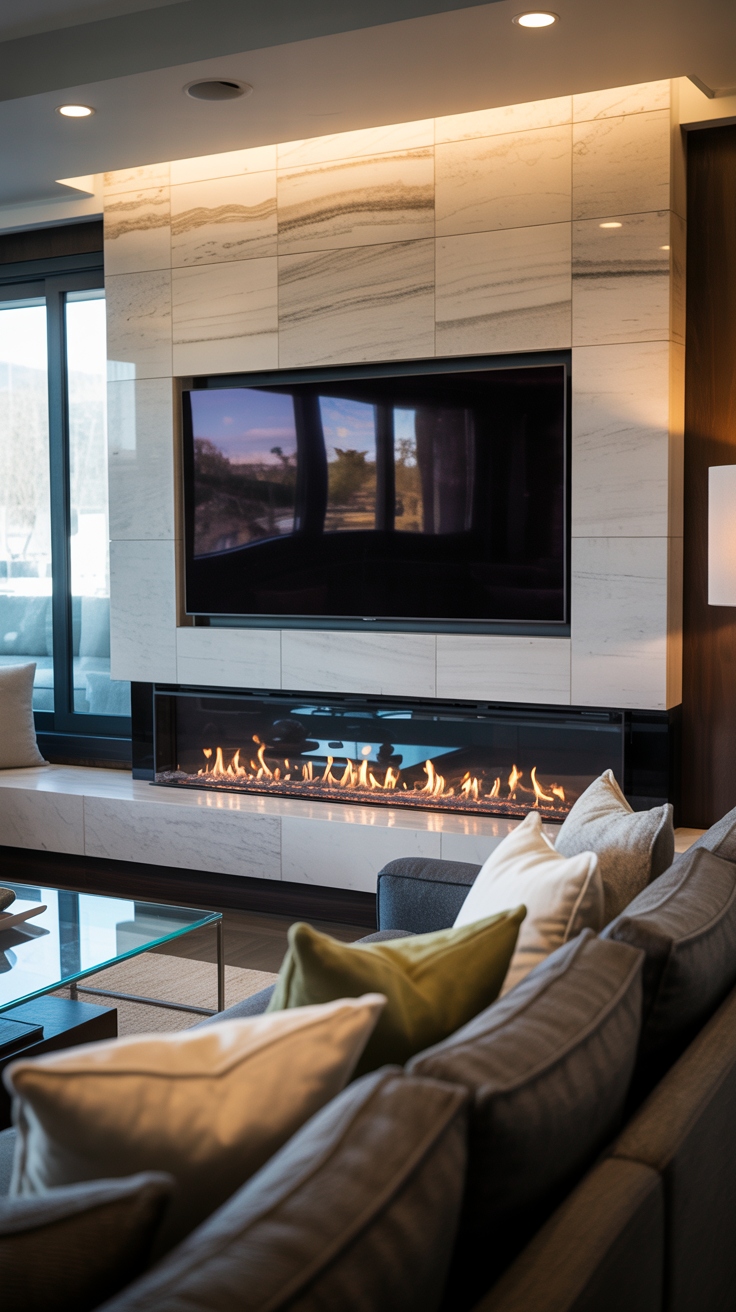
Mounting the TV above the fireplace is a common solution, especially in smaller spaces or modern homes. It unites the two features into a single focal wall, keeping things symmetrical and streamlined.
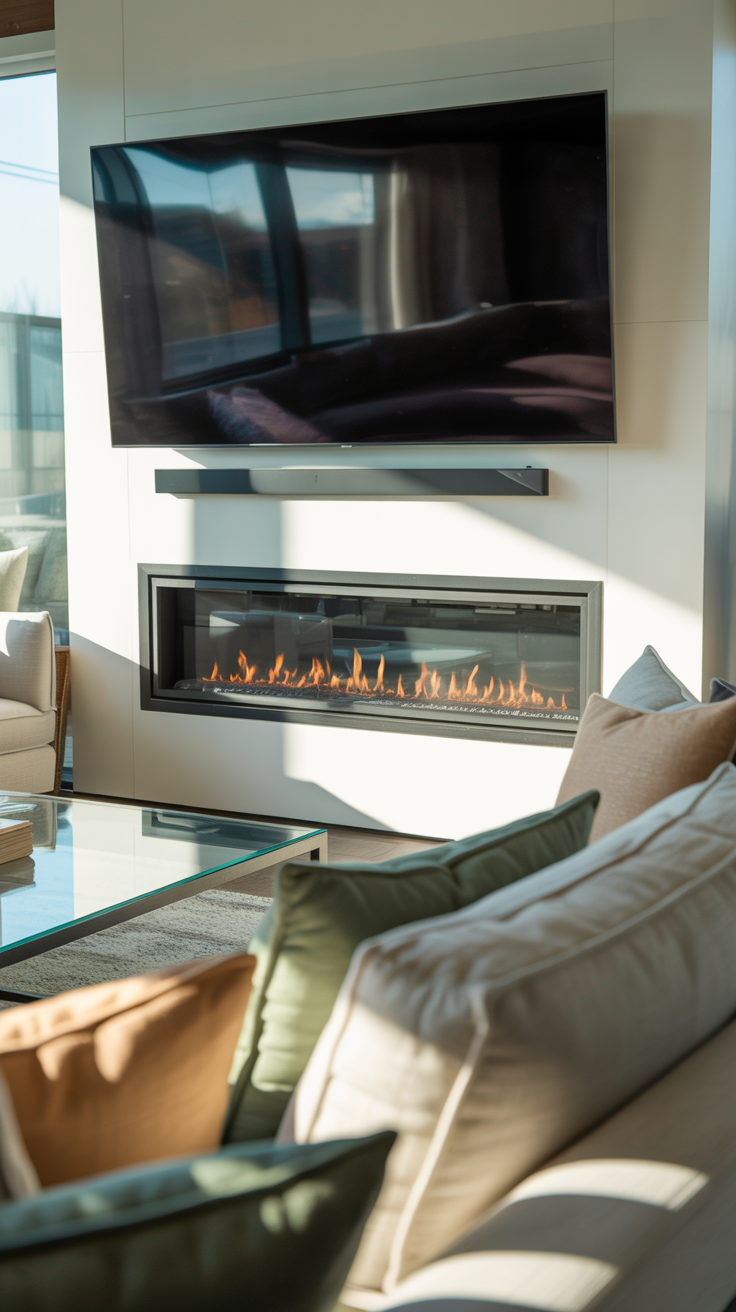
Pros:
Space-saving
Keeps layout clean and centered
Works well in open-concept homes
Cons:
Can strain your neck if the TV is mounted too high
Heat from the fireplace may not be ideal for electronics
The aesthetic can feel less cozy and more utilitarian if not styled carefully
If you choose this route, consider a tilting TV mount to improve viewing angles and use the mantel to visually soften the setup with artwork, greenery, or candles.
Option B: Give Each Its Own Zone
If you have the space, you can designate separate but complementary areas for each feature. For example, one wall for the fireplace and another for the TV. This approach works especially well in large or square rooms where furniture can be oriented toward different corners or walls.
Pro Tip:
When you have two focal points, balance them visually by keeping both at a similar scale. Use art, mirrors, or built-ins around the fireplace to match the visual weight of the TV wall.
3. Consider the Room Shape and Traffic Flow
Related: For more guidance on keeping a room functional and balanced, fix common living room decorating errors.
The architecture of your room will largely determine what’s possible. Start by observing where natural pathways form — doors, windows, or open walkways should not be blocked by furniture.
Rectangular Rooms
In long, narrow spaces, it’s often best to place the fireplace on one short wall and the TV on the long wall perpendicular to it. This allows you to create two zones within the same room — one for relaxing by the fire, and one for watching TV.
Square Rooms
For square rooms, it’s easier to create a balanced focal wall that includes both elements side by side or stacked vertically. You can then float the furniture (like a sofa) in the center to face both.
Open-Concept Spaces
If your living room blends into the kitchen or dining area, try using rugs, console tables, or sectional sofas to define zones. The fireplace can anchor the “living” area visually, while the TV side can remain functional for gatherings or entertainment.
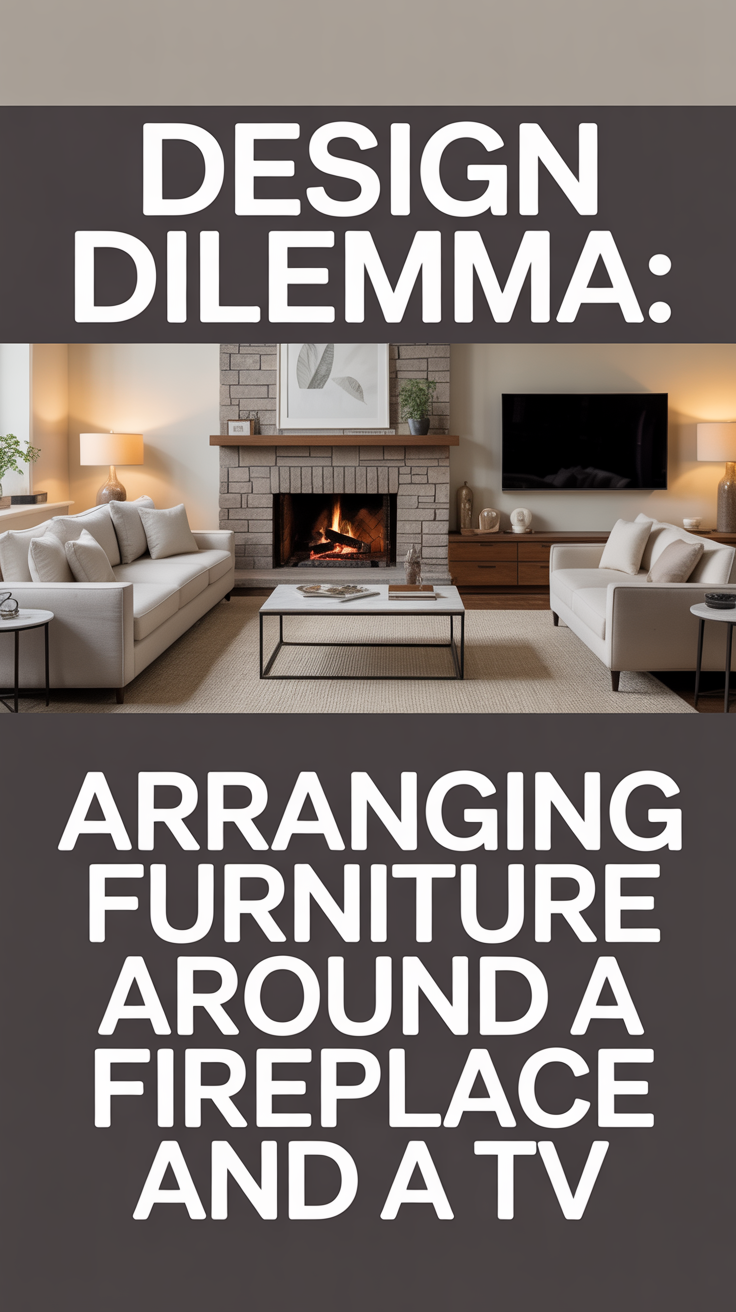
4. Smart Furniture Arrangements That Work
Here are some tried-and-true layout ideas depending on your room type and personal preferences:
Layout 1: TV Above the Fireplace
This is ideal for compact rooms or where wall space is limited. Use low, deep seating to balance proportions, and keep décor simple to avoid cluttering the focal wall.
Pro Tip:
Paint the wall, mantel, and TV frame in the same color for a seamless, integrated look.
Layout 2: Dual Focal Points (Adjacent Walls)
Place the TV and fireplace on perpendicular walls — one on the main wall and one on a side wall. Arrange a sectional or two sofas in an L-shape to face both comfortably.
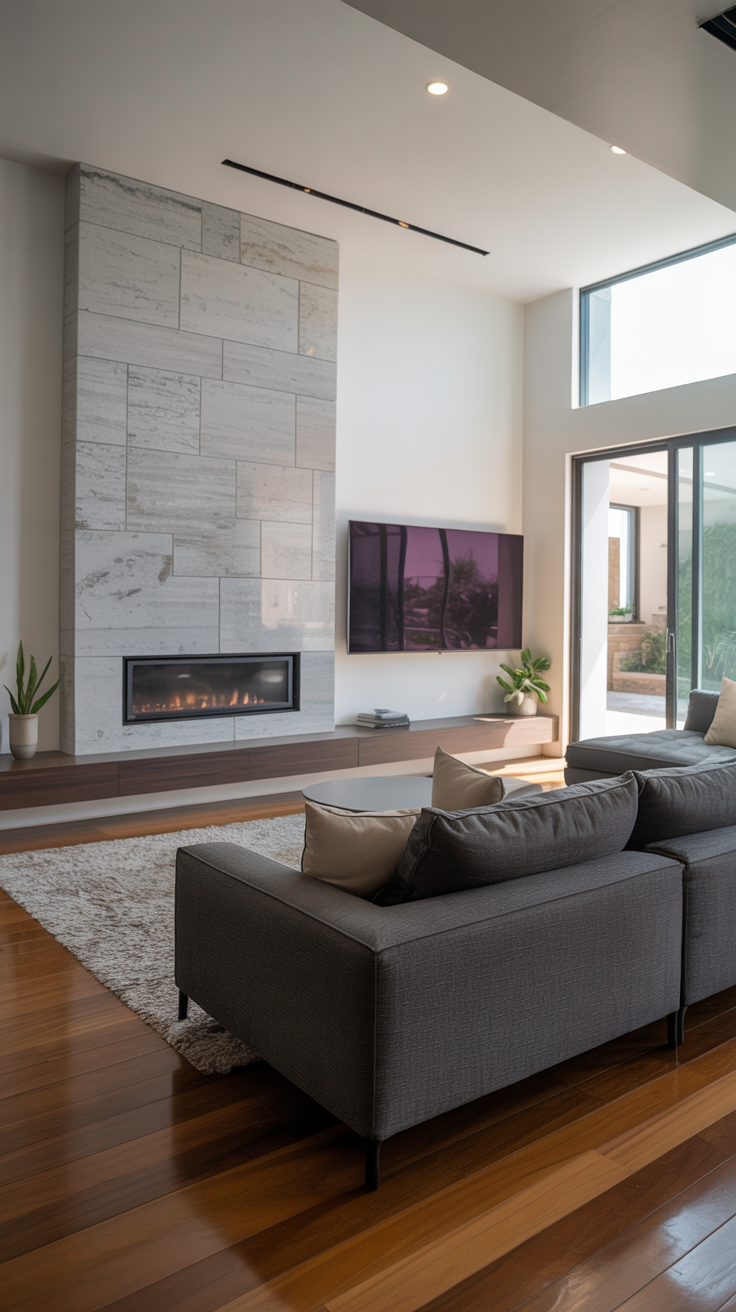
Bonus Idea:
Add a swivel chair to easily rotate between the two focal points.
Layout 3: Opposite Zones
In larger rooms, you can design two distinct areas — a media corner with a sofa and TV, and a cozy conversation nook near the fireplace. A rug or console table can visually divide the zones while keeping the space cohesive.
Layout 4: Off-Center Fireplace
Many modern homes have off-center fireplaces that can feel awkward. In this case, balance the wall visually by placing the TV on the opposite side and adding shelving or cabinetry in between. This creates symmetry and functionality without remodeling.
5. Designing Built-Ins and Storage Around Both
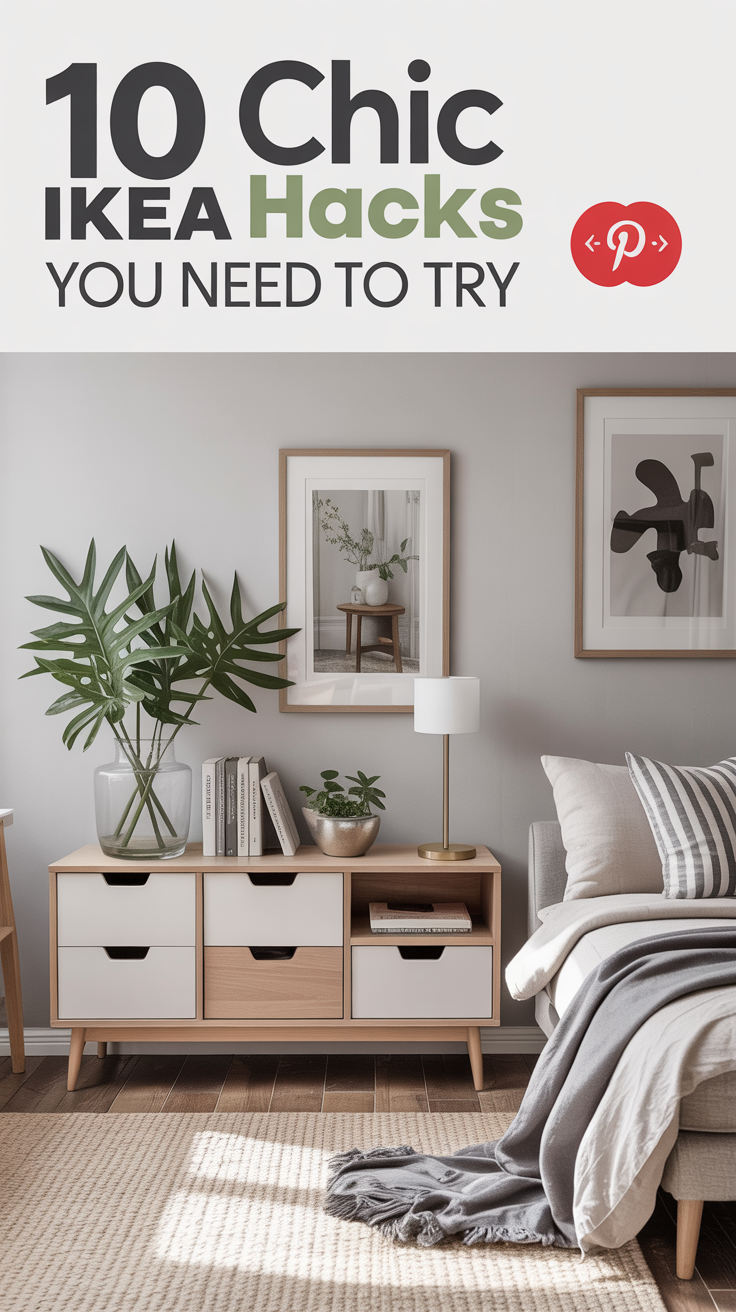
Related: For a budget-friendly way to tackle the focal wall, create fake built-ins with IKEA cabinets and molding.
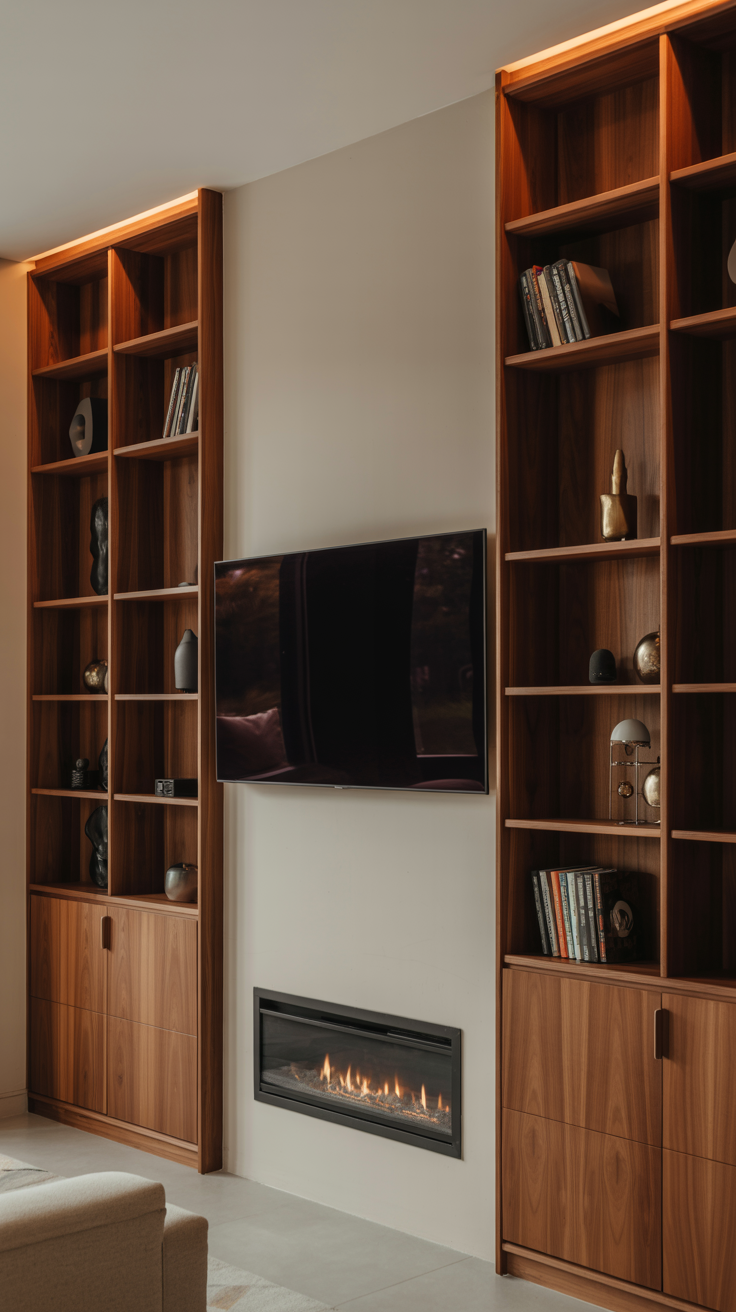
Custom built-ins are one of the best ways to make a fireplace and TV work together. They add structure, balance, and purpose to the wall while providing valuable storage.
Here’s how to do it right:
Flank the fireplace with shelving for books, décor, or media equipment.
Include closed cabinets below for hidden storage — perfect for cords, remotes, and electronics.
Center the TV within the built-in design, keeping the scale consistent with the fireplace opening.
Add lighting (like sconces or LED strips) to elevate the design and highlight key features.
Pro Tip:
Choose materials that complement your style — think sleek wood for modern homes, painted cabinetry for transitional spaces, or rustic textures for farmhouse charm.
6. Style the Fireplace & TV Wall Like a Designer
Once the layout is set, styling brings the entire concept to life. The key is to balance warmth and tech.
Here’s how:
Frame the TV: Use a thin black border or frame-style TV (like Samsung Frame) to make it look like art.
Layer décor: Add vases, books, or candles on the mantel to soften the tech presence.
Incorporate symmetry: If the TV and fireplace are on separate walls, use matching art or lighting to tie the spaces together visually.
Play with height: Tall plants or art help balance a low fireplace or visually heavy TV.
7. Mind the Viewing Angles and Comfort
Even the most beautiful layout fails if it’s not comfortable. Pay attention to sight lines, distances, and ergonomics.
Eye Level Rule: The center of your TV screen should be roughly at eye level when seated (about 42–48 inches off the floor).
Distance Rule: For a 55-inch TV, aim for 7–9 feet of viewing distance.
Avoid Glare: Position the TV away from direct sunlight or reflective surfaces.
If the fireplace height forces you to mount the TV too high, consider a motorized TV mount that can tilt down when in use.
8. Coordinating Color and Texture
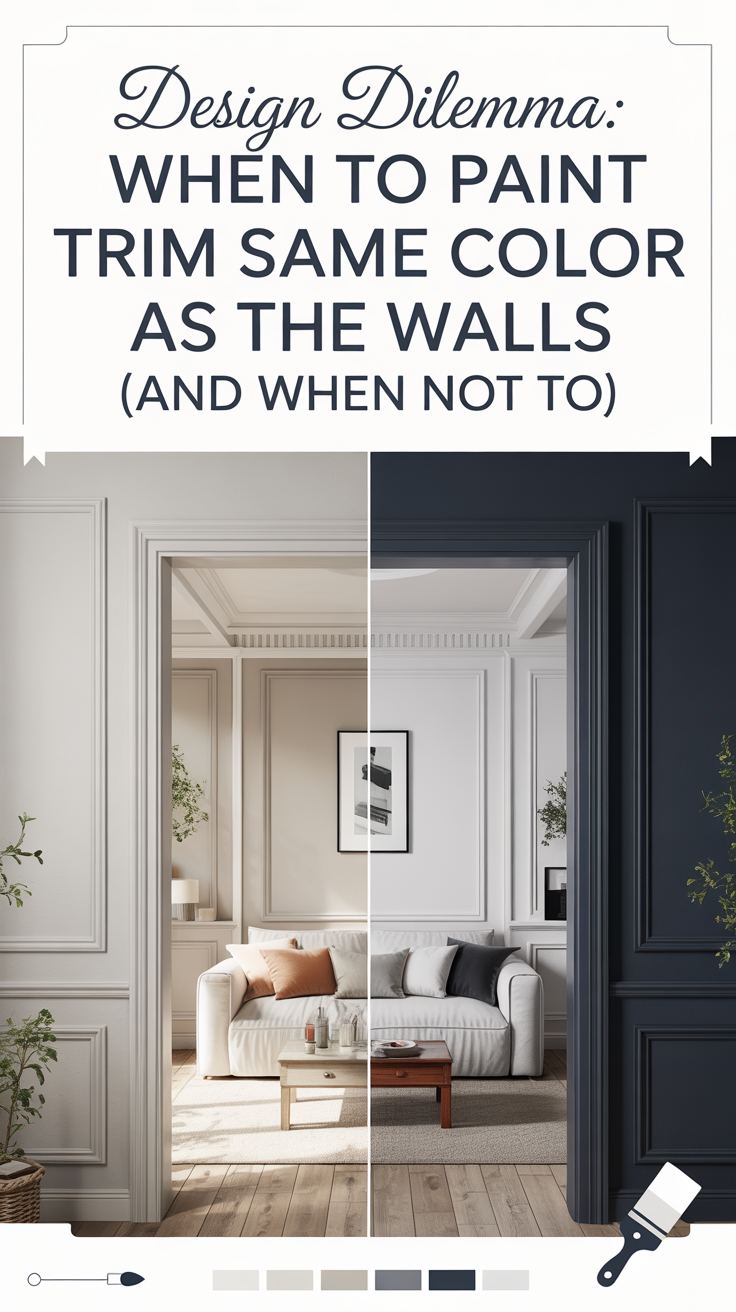
Related: To help the architecture feel cohesive, use this guide to decide whether trim should match the walls.
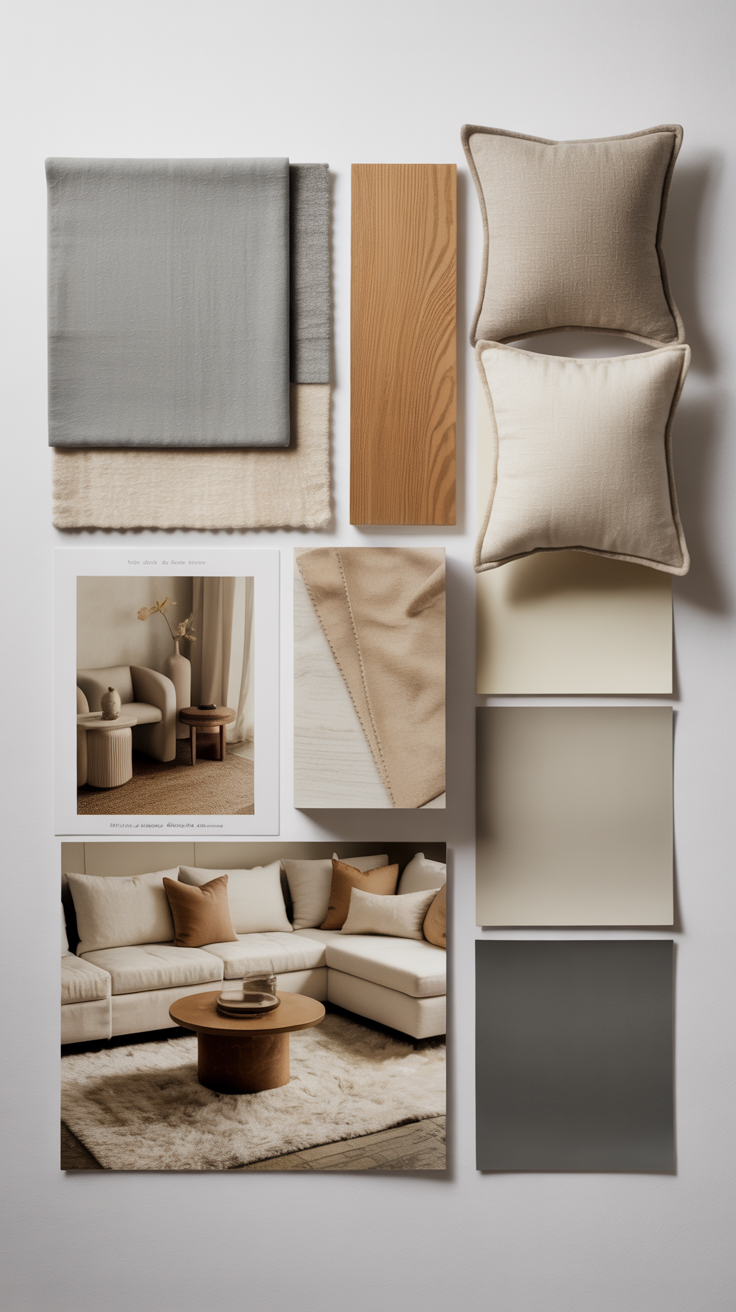
To make two focal points feel unified, rely on color and material cohesion.
Match tones: Use similar finishes (like matte black metal or natural wood) on both the fireplace surround and TV wall.
Add texture: Layer soft furnishings like throws, rugs, and curtains to counterbalance hard surfaces.
Use consistent color palettes: If your fireplace is stone, repeat that earthy tone in your pillows or artwork to create flow.
9. Lighting the Space Right
Lighting can make or break the ambiance of a dual-focal-point living room. You’ll want flexibility to shift between bright TV nights and cozy fireside evenings.
Lighting Tips:
Add dimmable recessed lights or sconces to create mood control.
Use table lamps or floor lamps for layered, indirect lighting.
Consider smart bulbs to adjust warmth and intensity based on activity.
Designer Tip:
If your fireplace is dramatic (like marble or brick), use accent lighting to emphasize the texture — it adds depth and draws the eye naturally toward the feature.
10. Personalize Your Layout
Ultimately, your living room should reflect your lifestyle. Ask yourself:
Do you mostly entertain, or relax with movies?
Is the fireplace used seasonally or daily?
How do you want the room to feel — cozy, formal, minimal?
Once you know your priorities, the layout becomes clear. For families who love movie nights, the TV may take precedence. For those who host guests or crave ambience, the fireplace becomes the star.
It’s not about choosing between the two — it’s about finding harmony between function and feeling.
Designer-Approved Hacks for Dual Focal Point Harmony
Use furniture with flexibility: Swivel chairs or lightweight accent chairs can pivot easily between the TV and fireplace.
Float furniture: Don’t shove everything against the walls — floating sofas or chairs around a rug help create intimacy and flow.
Hide cords smartly: Conceal TV wires behind walls or built-ins for a polished look.
Use mirrors strategically: Reflect light and views to make the space feel bigger and balanced.
Add art that bridges both: Choose complementary artwork that connects the visual tone of the TV wall and fireplace area.
Where Comfort Meets Cohesion
Related: For more ways to finish the space with intention, explore living room decor ideas.
Arranging furniture around a fireplace and TV doesn’t have to be a compromise. With smart planning, thoughtful styling, and a few designer tricks, you can create a living room that balances beauty and functionality perfectly.
Whether your goal is a cozy fireside reading nook, a family-friendly TV lounge, or a chic, open-concept gathering spot, remember: great design is about harmony — not hierarchy. When your layout feels natural and the energy flows, the room will invite you in again and again.
So go ahead, light the fire, queue your favorite show, and enjoy a space that finally works for you.