A backyard does not need a full renovation to feel more useful, welcoming, and personal. The best updates often begin by noticing how you actually spend time outdoors: lingering after dinner, watching children play, planting herbs, or looking for a quieter place to cool down.
This collection moves from practical groundwork to mood-setting details and gathering spaces. Choose one improvement that solves a real problem, then layer in the small touches that make the space feel finished. A few thoughtful weekend projects can give an ordinary yard a distinctly summer-ready point of view.
1. Give Evening Walkways a Softer Glow
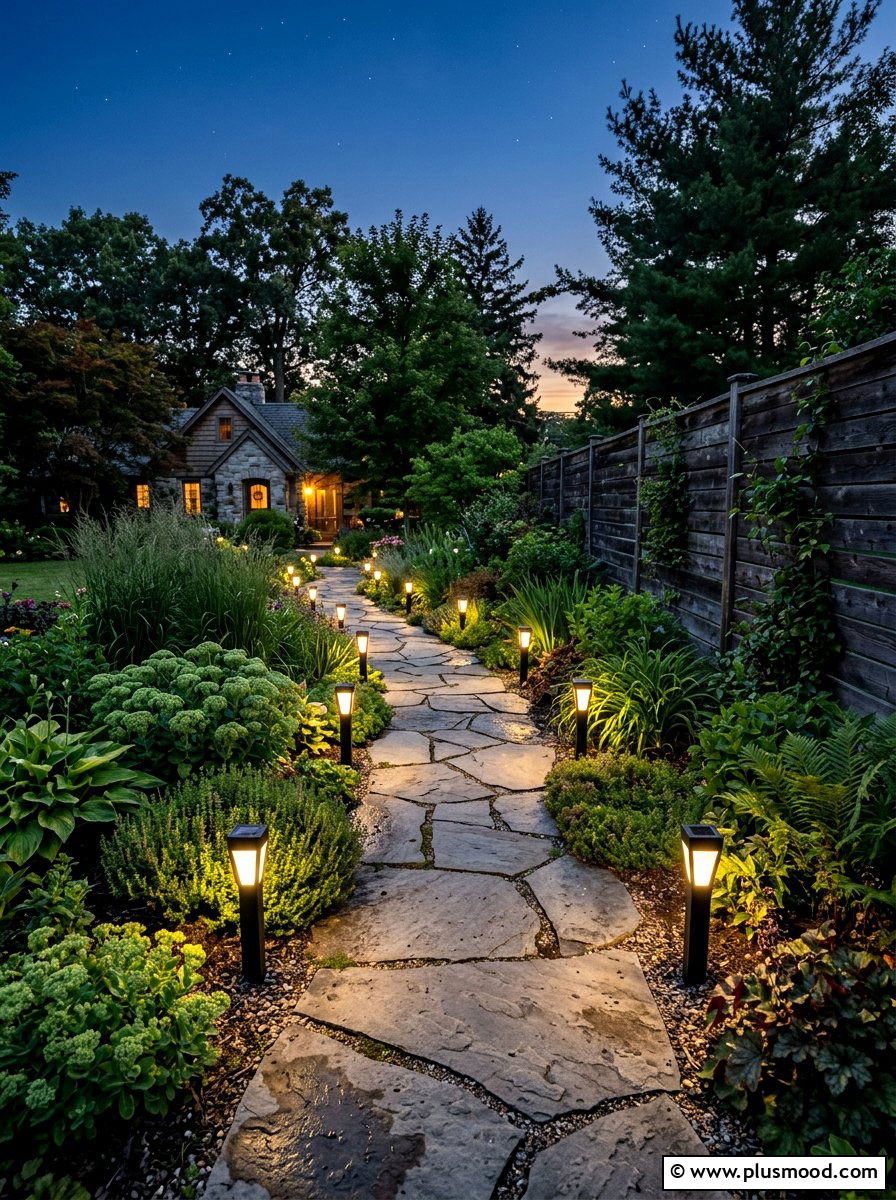
Low, solar-powered fixtures can define the route from the house to a seating area without adding wiring or visual clutter. Space them consistently along a border, garden path, or patio edge so the light feels intentional rather than scattered.
Key Details
- Use warm-white bulbs for a calmer atmosphere.
- Keep fixtures clear of mowing and trimming paths.
Pro Tip: Set a few lights beside changes in elevation so guests can see steps and edges after dark.
2. Anchor a Seating Zone With an Outdoor Rug
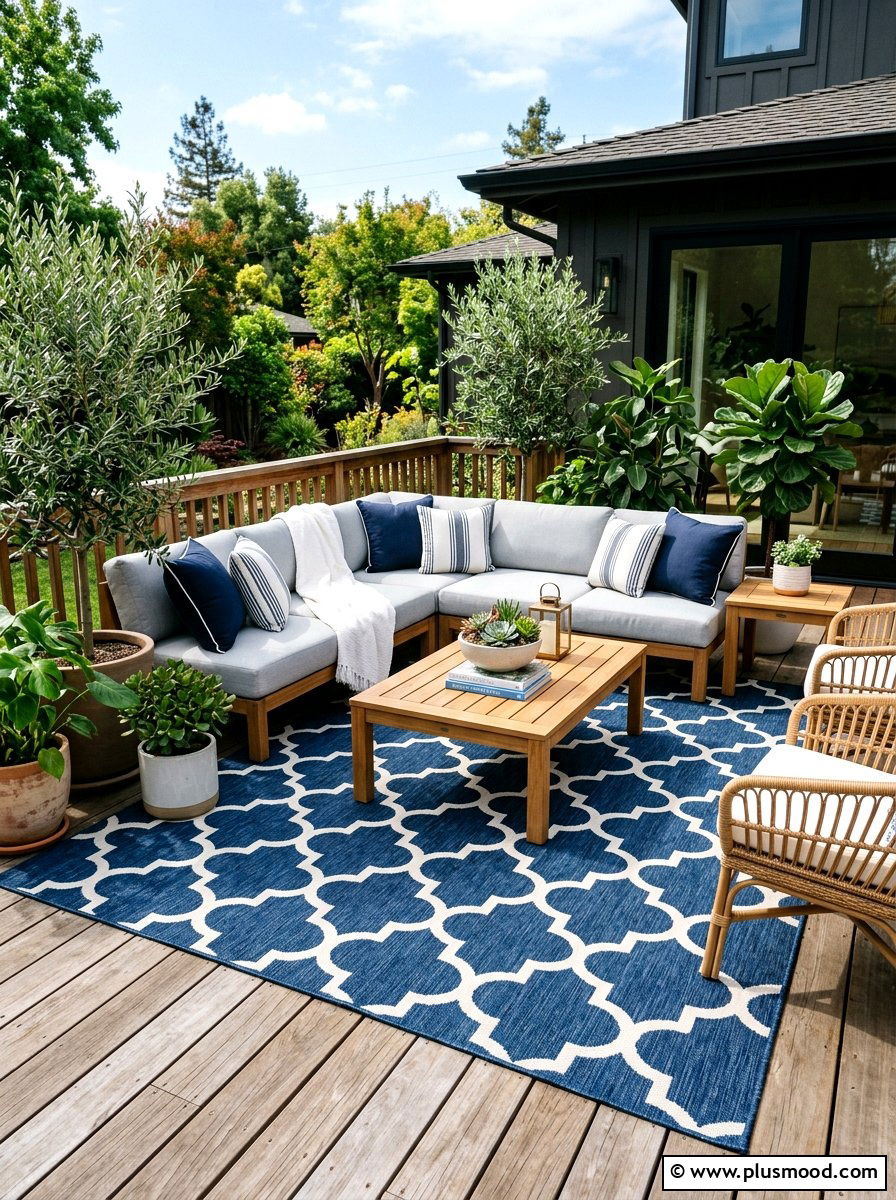
An exterior rug makes a patio grouping read like an outdoor room, particularly on plain concrete, decking, or pavers. Choose a size large enough for the front legs of each chair to rest on it, then repeat one color from the rug in cushions or planters.
Key Details
- Look for a low-pile, quick-drying weave.
- Leave a narrow border of flooring visible around the rug.
Pro Tip: Roll the rug up before a heavy storm if the space drains slowly.
3. Create a Garden Walk With Flagstone
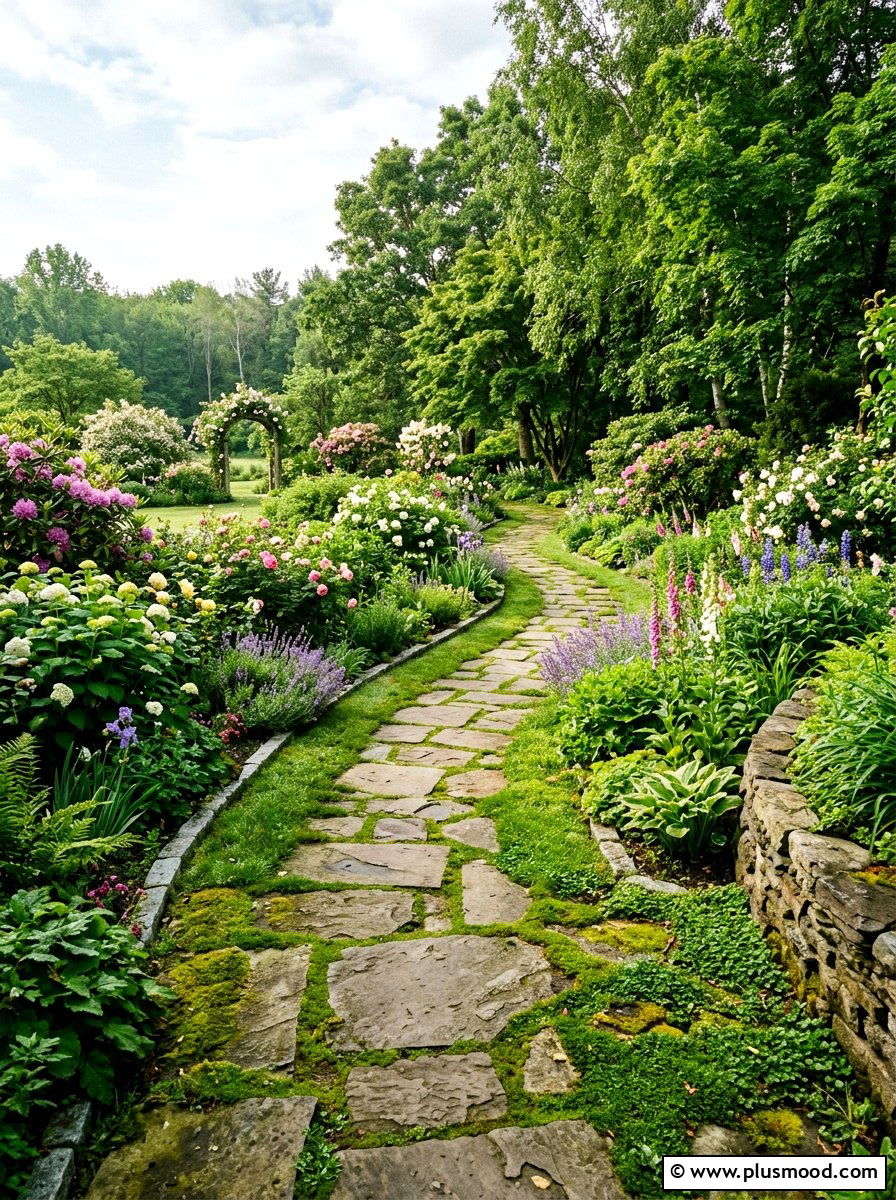
Irregular stone pieces bring texture and direction to a lawn or planting bed while guiding feet away from soft soil. A gently curving path feels relaxed in a cottage-style yard, while closely set stones create a more polished route.
Key Details
- Plan the route around the way people naturally walk.
- Set the stones flush enough for a mower to pass easily.
Pro Tip: Use temporary stepping stones first to test the path before committing to excavation.
4. Finish Beds With a Fresh Layer of Mulch
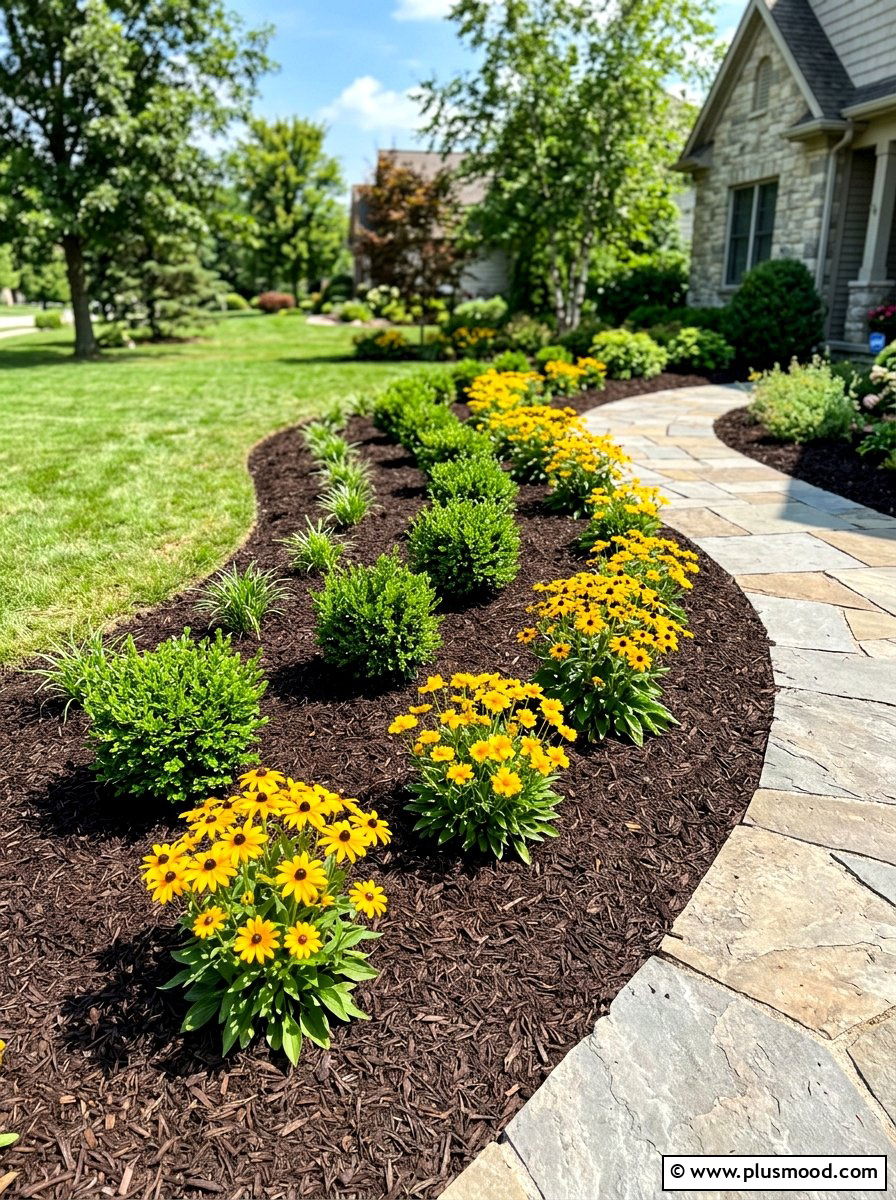
A clean layer of natural mulch gives planted areas instant definition and makes foliage stand out. It also helps the soil retain moisture through hot weather, reducing the need for frequent watering around established shrubs and perennials.
Key Details
- Pull weeds and water the bed before spreading mulch.
- Keep mulch a few inches away from plant stems and tree trunks.
Pro Tip: Choose one mulch color for the entire yard to make separate beds feel connected.
5. Outline Flower Beds With a Crisp Edge
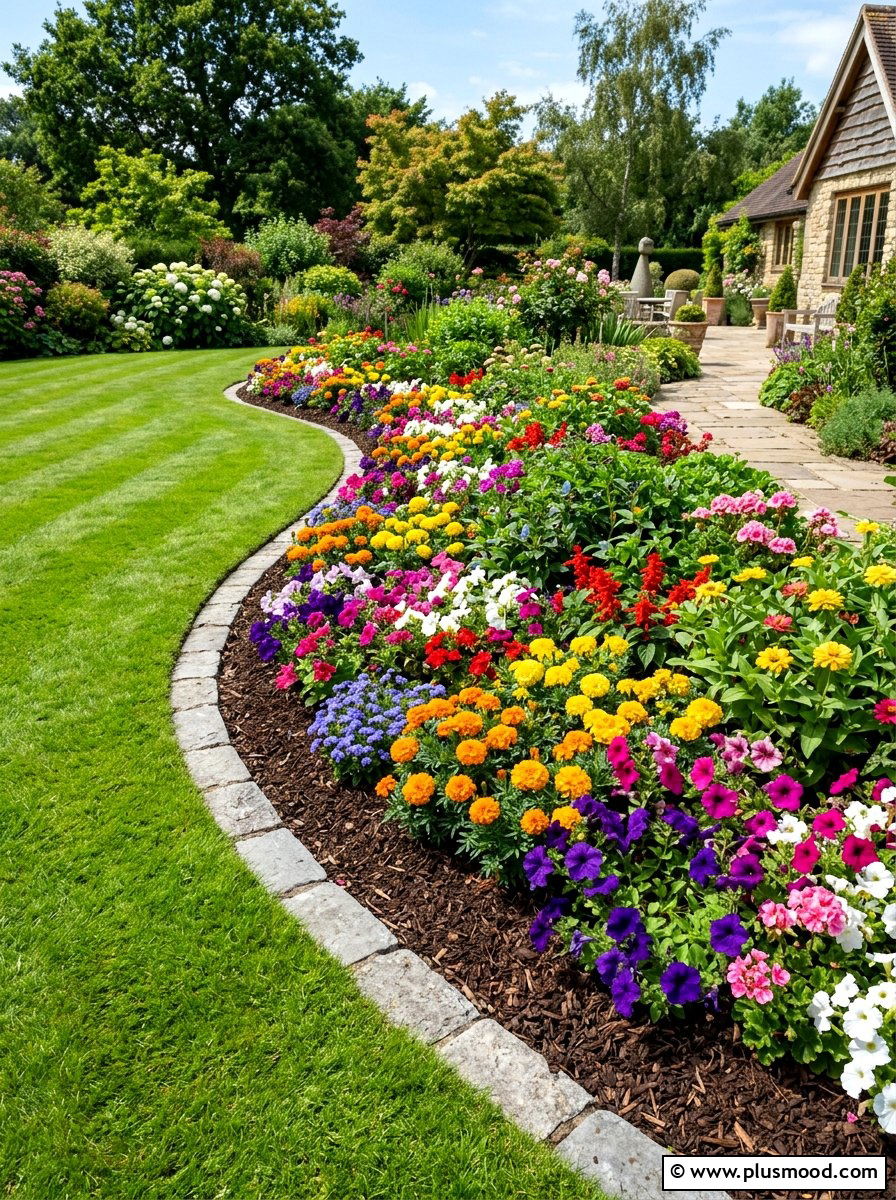
A defined edge stops grass from creeping into a flower bed and gives even simple plantings a cared-for appearance. Brick, metal, stone, or a clean spade-cut line can each work well; the right choice depends on the style of the home and how much maintenance you want.
Key Details
- Match the edging material to nearby hardscape when possible.
- Use a garden hose to preview curves before cutting the line.
Pro Tip: Taper the edge into the lawn rather than creating a sharp corner where mowing will be awkward.
6. String Up a Layer of After-Dark Charm
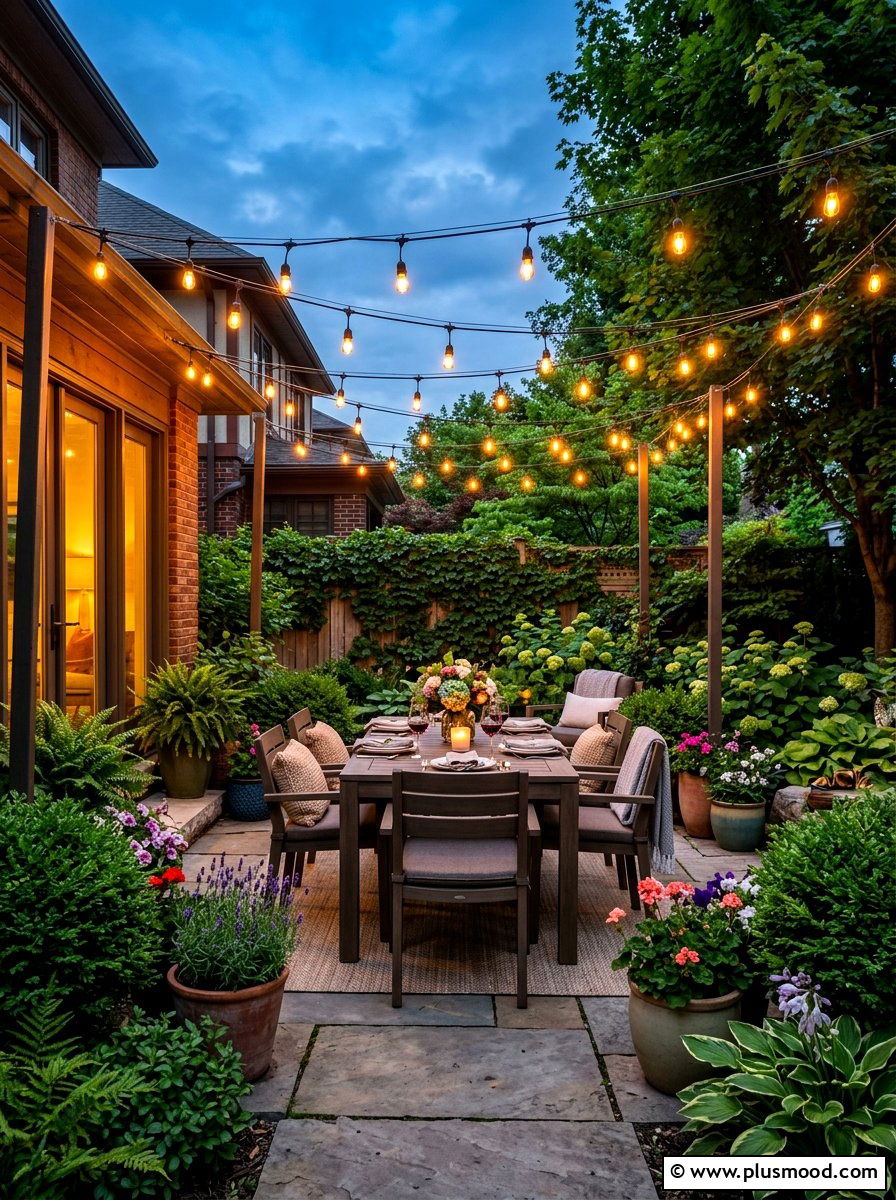
Overhead lights can transform a late dinner or casual conversation into an occasion, even when the furniture itself is simple. Attach a weather-rated strand to secure anchor points, keeping the line high enough that it never interferes with movement below.
Key Details
- Use outdoor-rated strands and extension connections.
- Create a shallow zigzag rather than one long drooping run.
Pro Tip: Install a tension wire first if your span is long, then clip the light strand to it.
7. Carve Out a Casual Gravel Lounge
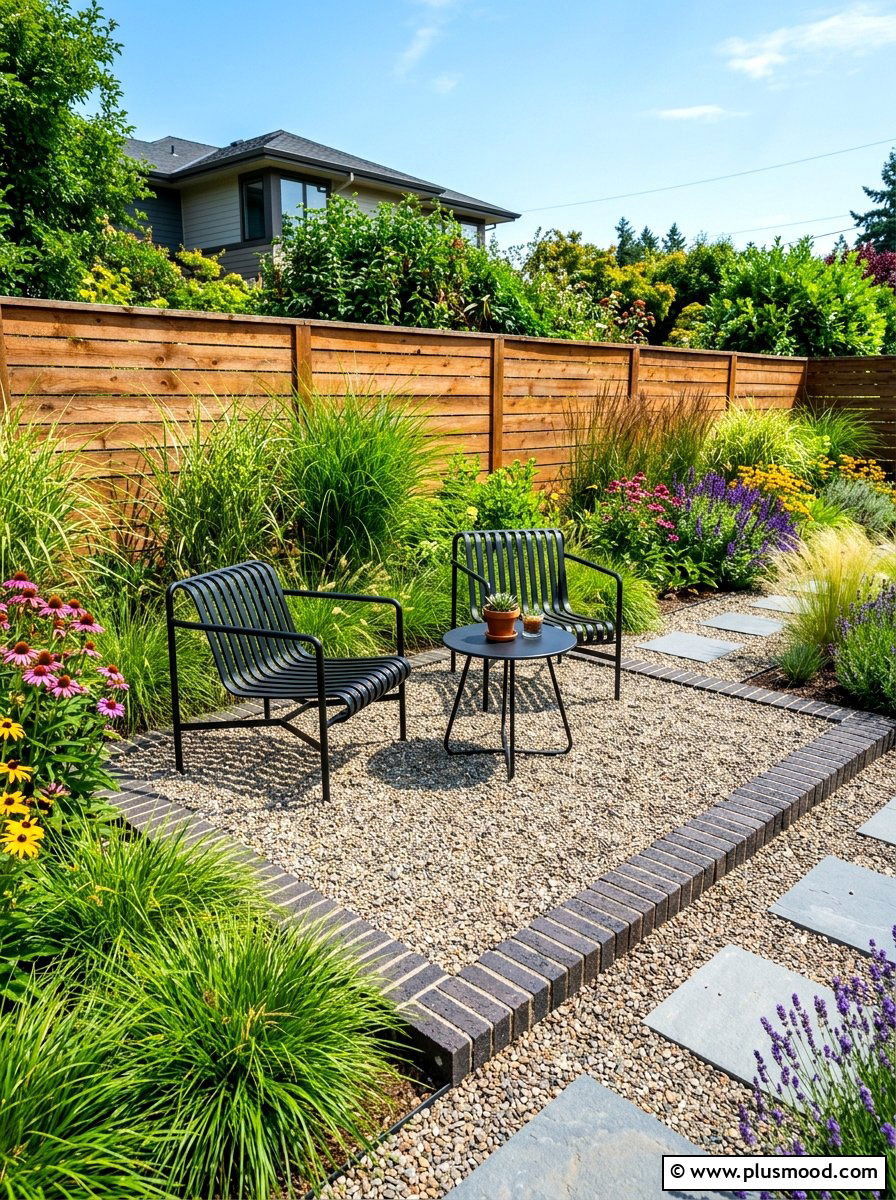
A compacted gravel surface is an approachable way to claim a corner of the yard for chairs, a bistro table, or a fire feature. Its relaxed texture suits traditional, coastal, and Mediterranean-inspired gardens while allowing rainwater to filter through.
Key Details
- Excavate and level the area before adding base material.
- Use sturdy edging to keep stones contained.
Pro Tip: Place furniture with wider feet or a small platform beneath it so legs do not sink into loose gravel.
8. Add Curtains to a Pergola Retreat
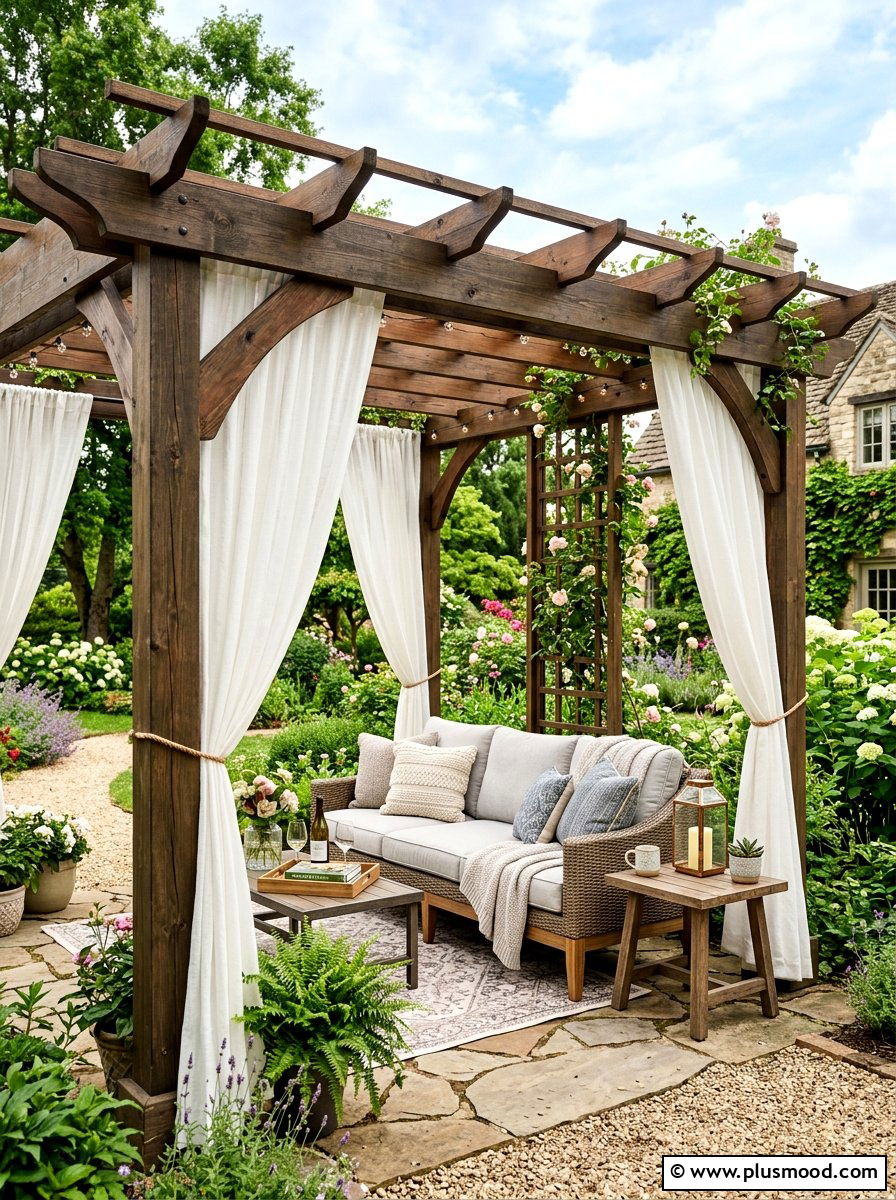
Soft outdoor panels let a pergola provide shade, privacy, and a more enclosed feeling without a permanent wall. Hung on simple rods or rings, they can be pulled back for an open view and closed when the afternoon sun is strongest.
Key Details
- Choose mildew-resistant fabric made for exterior use.
- Secure loose panels so they do not whip in high wind.
Pro Tip: Mount tiebacks at two heights so the curtains can be styled differently for daytime and evening.
9. Screen a Close Neighbor With Natural Texture
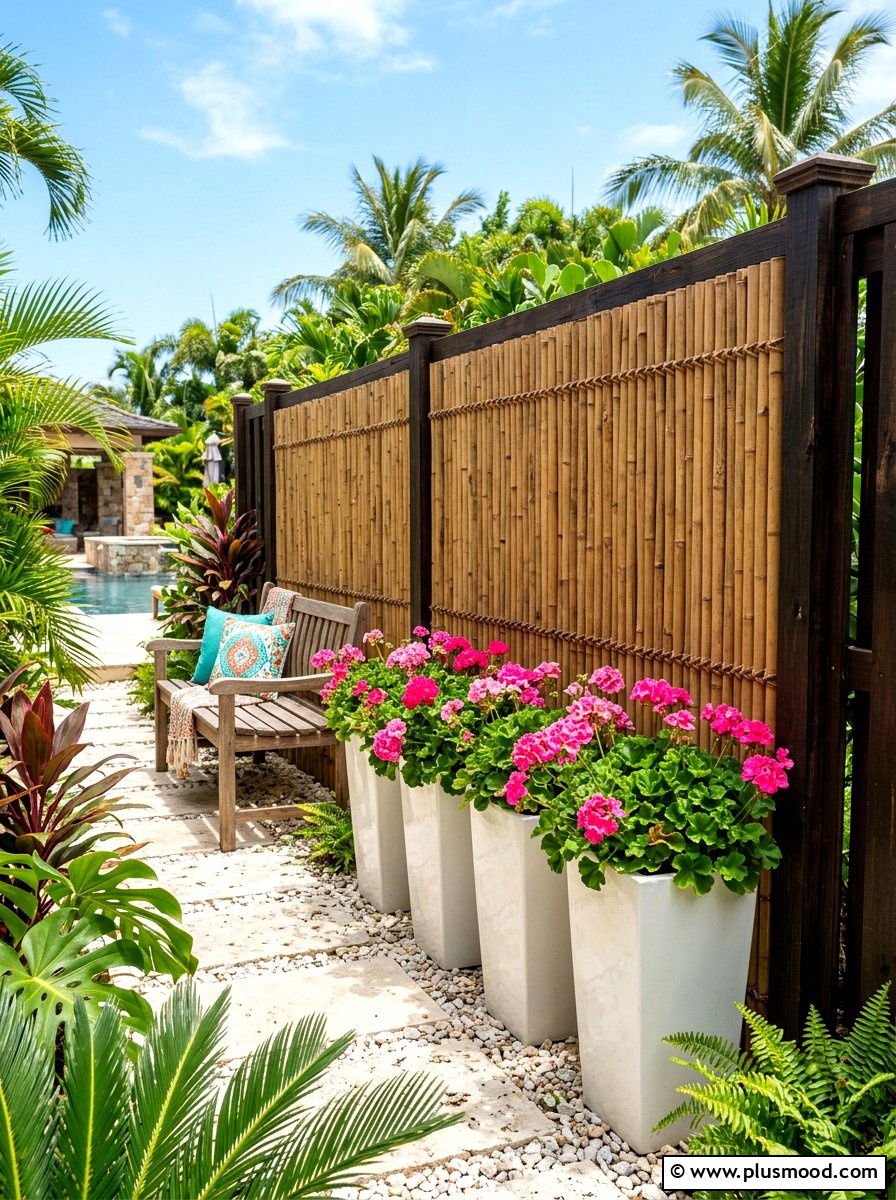
A woven bamboo panel can soften an existing fence and provide a quick sense of seclusion around a chair, dining table, or small patio. Its vertical pattern gives climbing plants and container foliage a warmer backdrop than bare wire or weathered boards.
Key Details
- Fasten panels firmly at the top, middle, and bottom.
- Leave drainage and airflow around the base.
Pro Tip: Use a dark exterior stain on the supporting fence first so it visually disappears behind the screen.
10. Turn a Blank Fence Into a Green Feature
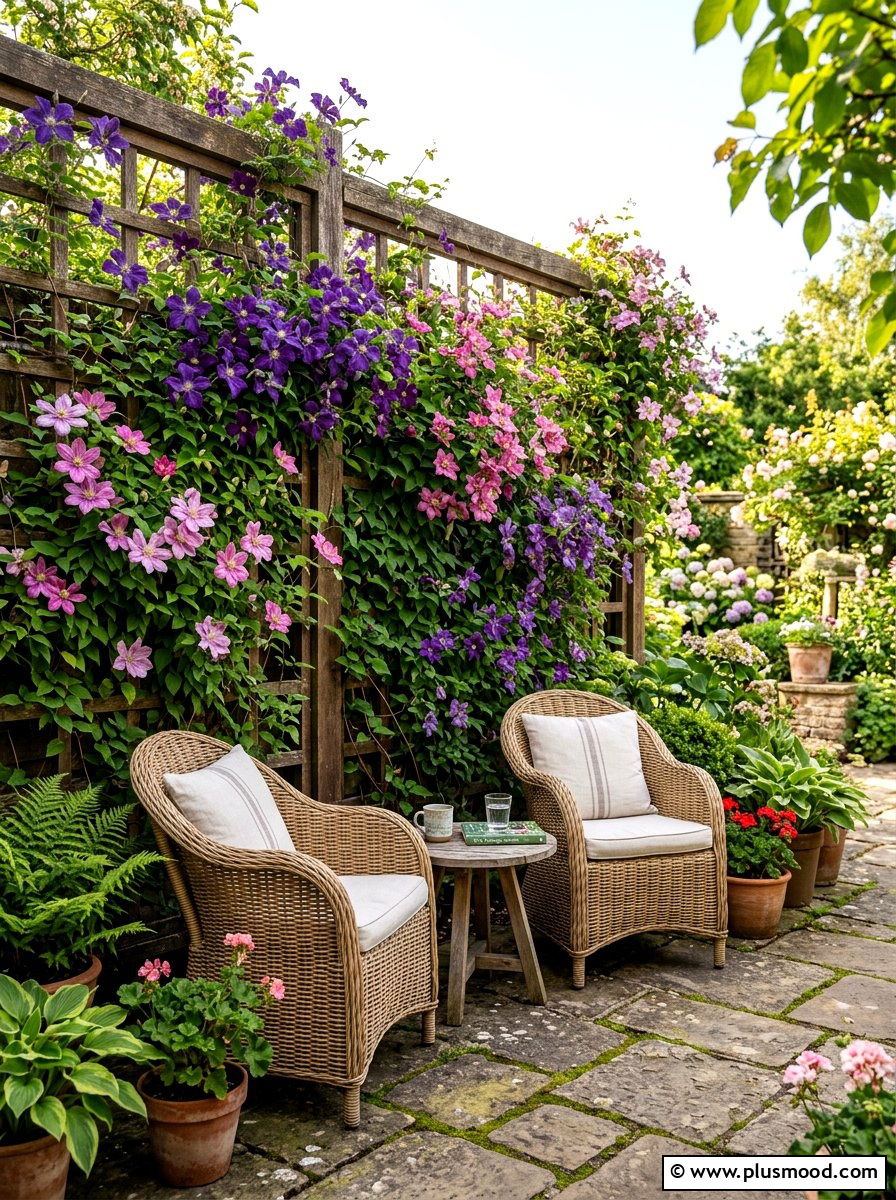
A wood trellis gives vines a place to climb and adds architectural rhythm where a fence feels flat or unfinished. It can frame a bench, disguise an uninteresting wall, or become a vertical garden for flowering climbers and fragrant plants.
Key Details
- Use rot-resistant lumber or seal raw wood before installation.
- Choose vines suited to the amount of sun the wall receives.
Pro Tip: Allow a small gap behind the trellis so plants have air circulation and the wall can dry.
11. Bring Cooking Herbs Up to Eye Level
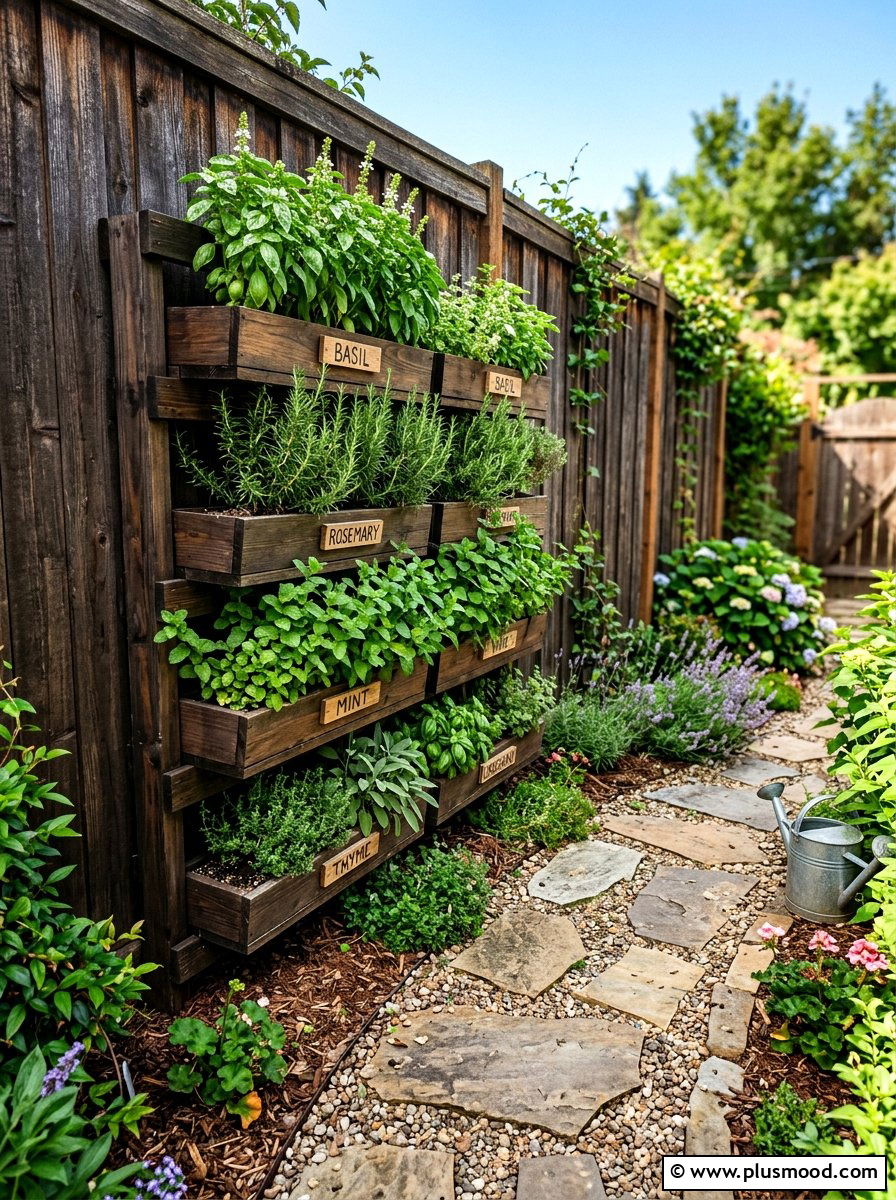
A vertical herb arrangement puts everyday ingredients within easy reach and makes a compact patio feel greener. Group plants with similar watering needs, and use containers with reliable drainage so roots are not sitting in heat-trapping water.
Key Details
- Place sun-loving herbs where they receive several hours of direct light.
- Label containers so new plantings are easy to identify.
Pro Tip: Position the herb display near the door or grill so harvesting becomes part of your routine.
12. Set Up a Dedicated Potting Corner
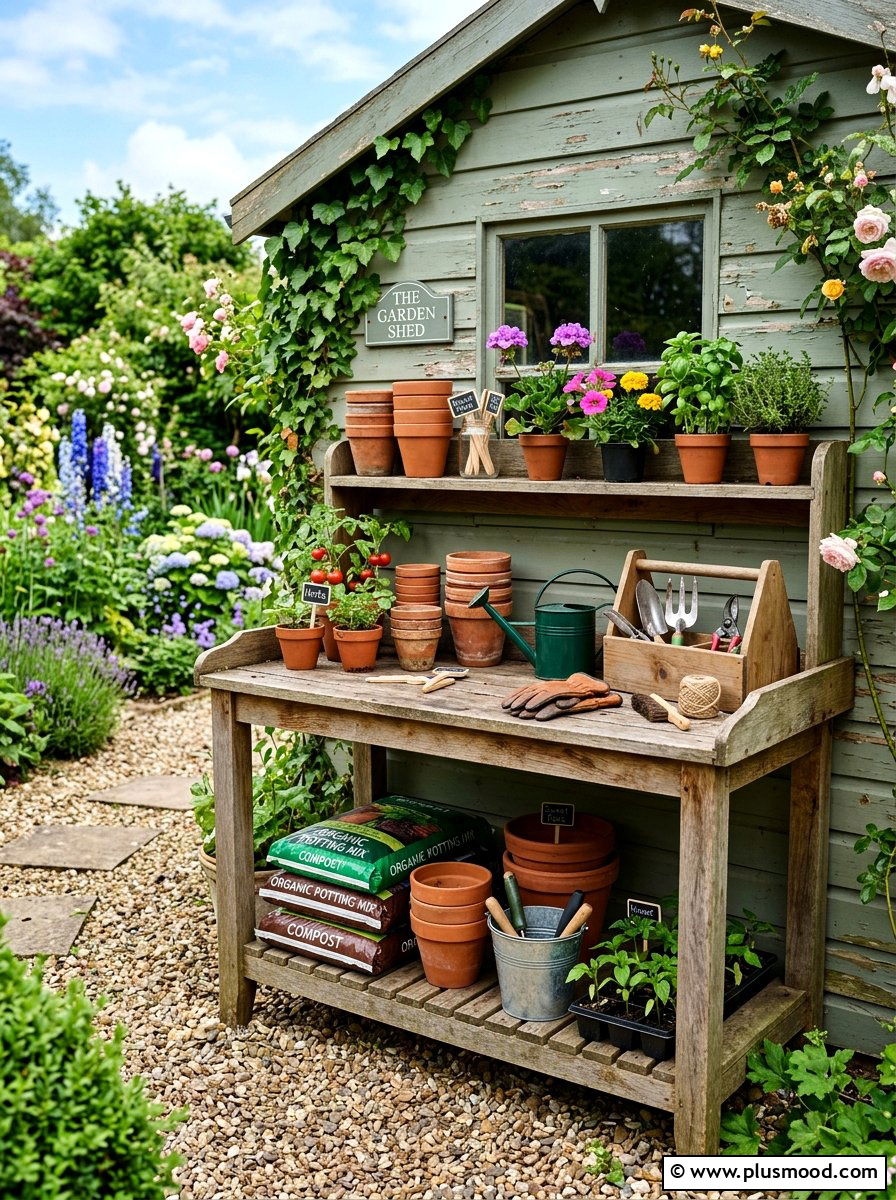
A simple work surface for potting, pruning, and storing garden supplies makes outdoor projects less scattered. Use open shelves or bins beneath the bench for soil, tools, and extra pots, leaving the top clear for the task at hand.
Key Details
- Choose a surface that can tolerate moisture and soil spills.
- Store hand tools within arm’s reach on hooks or a rail.
Pro Tip: Add a shallow tray on the worktop to catch soil and make clean-up much faster.
13. Make Grilling Feel Like a Real Gathering Spot
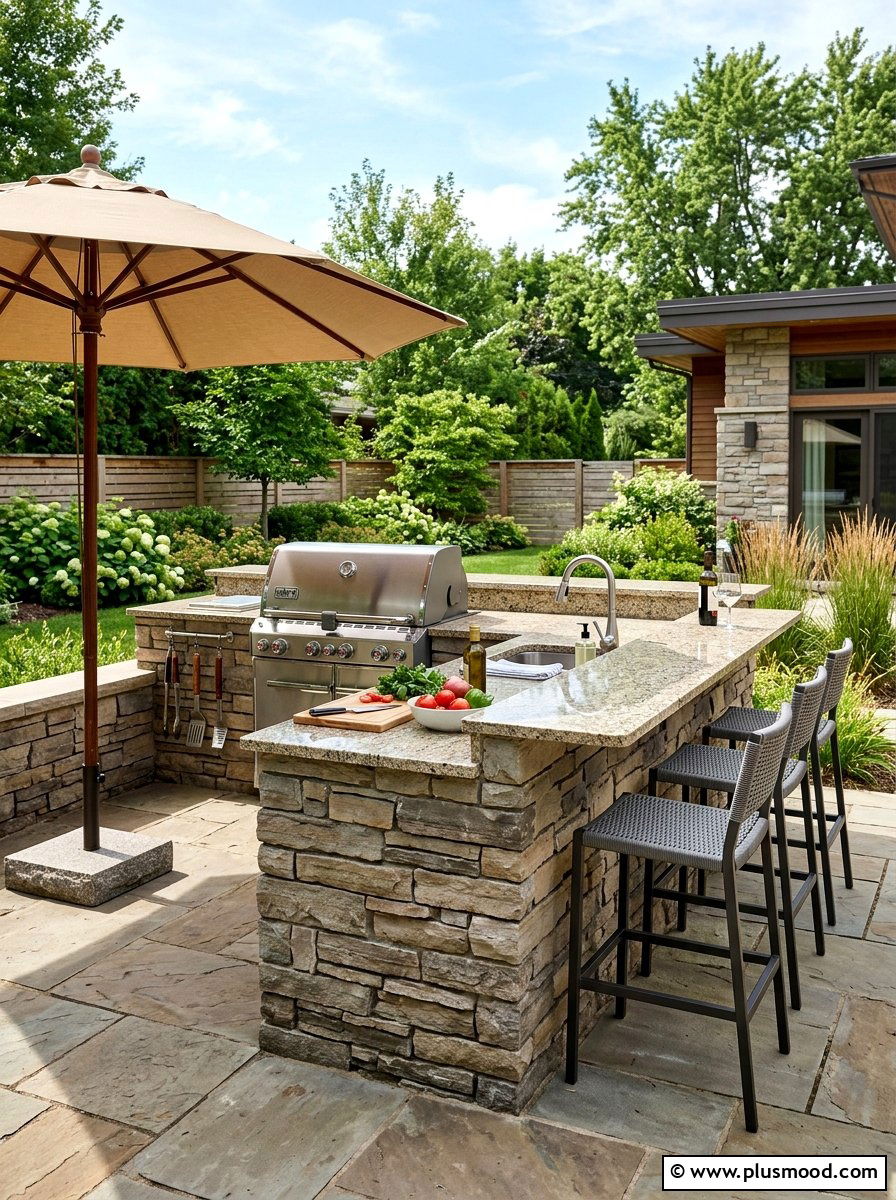
A freestanding outdoor island creates a useful place to prep, serve, and keep company with the cook. It does not need plumbing or a major build: a weatherproof counter, storage below, and good task lighting can deliver the convenience that matters most.
Key Details
- Use noncombustible materials near hot cooking equipment.
- Leave clear circulation space behind the cook.
Pro Tip: Include a shaded surface for drinks and serving dishes so they stay comfortable in bright sun.
14. Invite Guests to Pull Up to a Backyard Bar
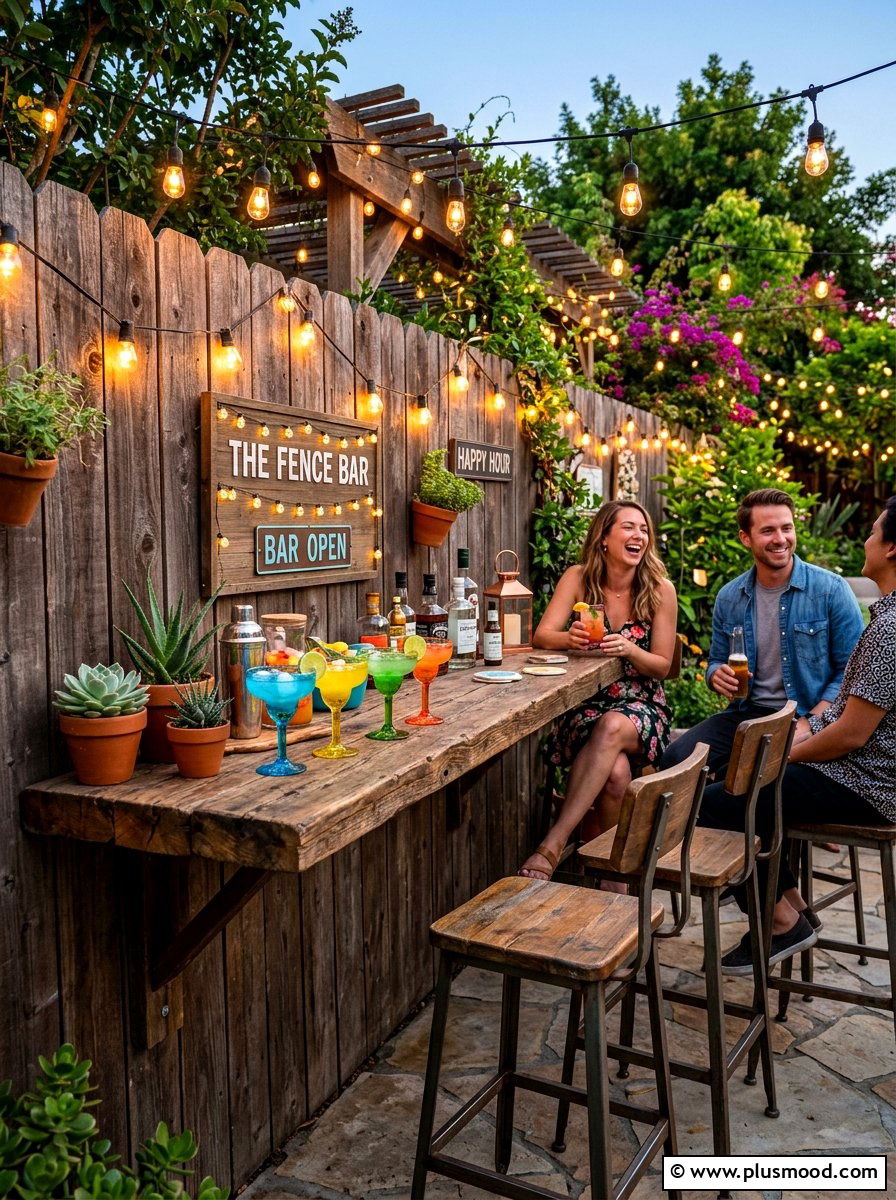
A compact counter and a pair of stools give a casual patio an easy social center. The bar can sit against a fence, beneath a pergola, or beside a grill, offering a natural perch for snacks, iced drinks, and conversation.
Key Details
- Choose stools that are rated for outdoor exposure.
- Make the counter deep enough for plates as well as glasses.
Pro Tip: Use a tray or lidded storage below the counter for napkins, bottle openers, and reusable cups.
15. Plan a Low-Key Outdoor Movie Night
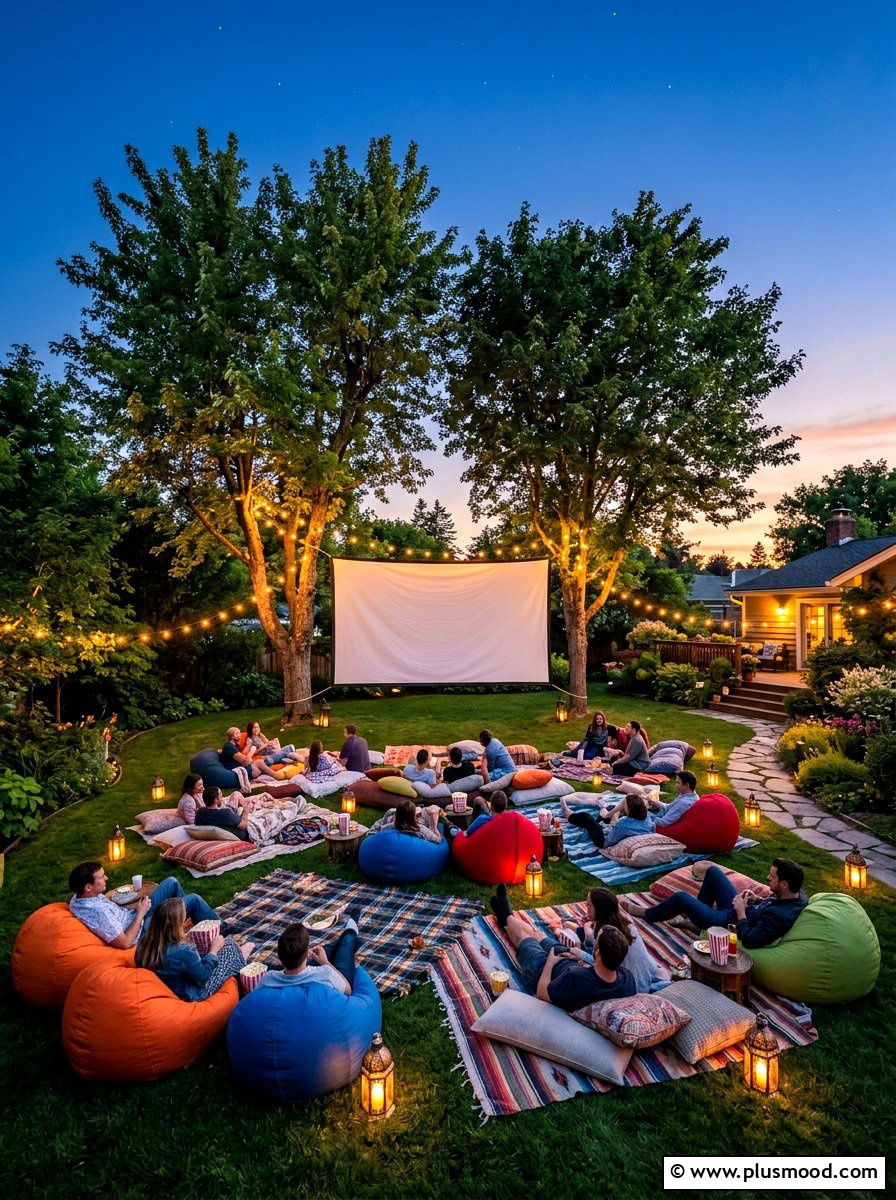
A projector and a simple screen can give a summer evening a memorable focal point without building a permanent theater. Keep the viewing area comfortable with layered blankets, floor cushions, and a nearby surface for popcorn and drinks.
Key Details
- Test projector placement before guests arrive.
- Use a clean, wrinkle-free screen for a sharper picture.
Pro Tip: Start the film later than you think; a darker sky makes even a modest projector look better.
16. Build the Yard Around a Fire-Side Circle
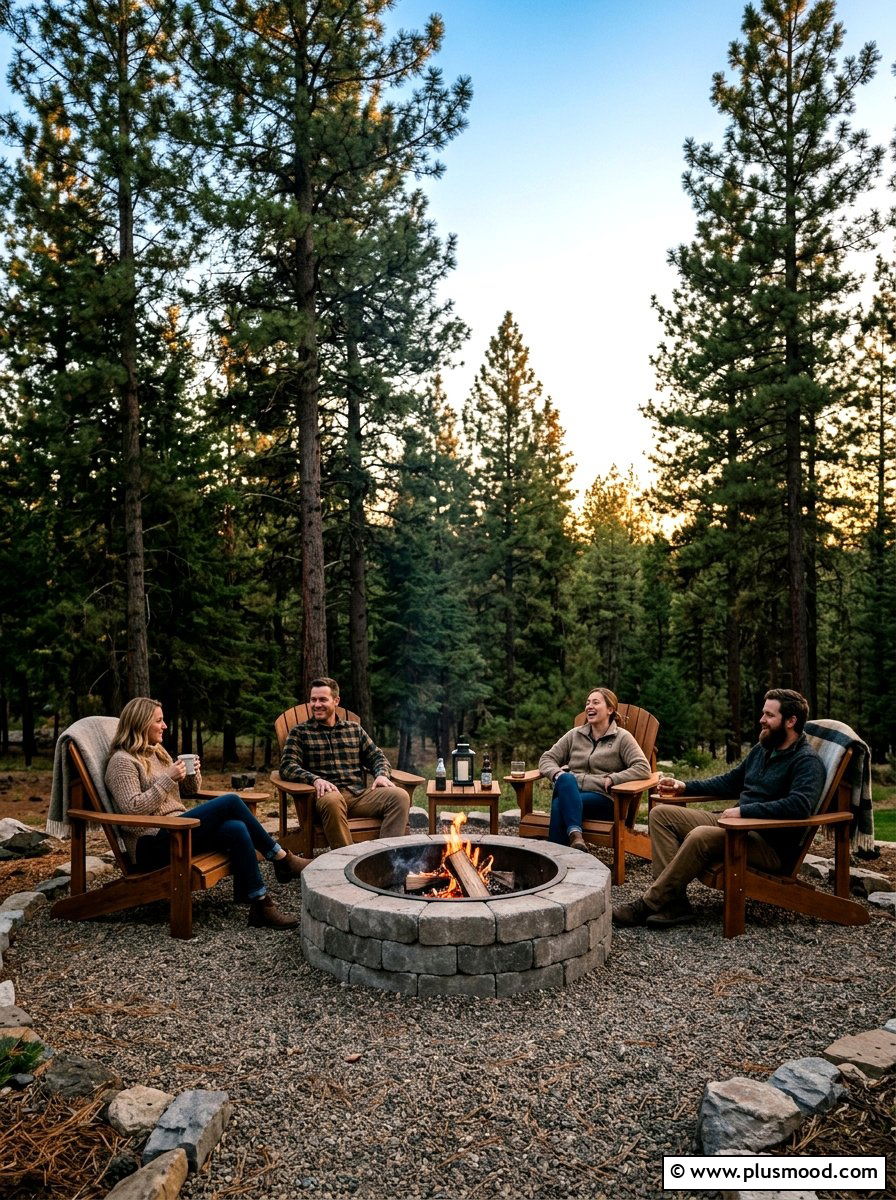
A fire feature encourages people to stay outside when the temperature dips and gives a large yard a clear focal point. Arrange seating in a generous circle, leaving enough room to move safely and keeping combustible furniture at an appropriate distance.
Key Details
- Follow local rules for open flames and placement.
- Use a stable, heat-safe base beneath the fire feature.
Pro Tip: Keep a covered metal container for cooled ash and a nearby water source for emergency use.
17. Cool Off With a Stock-Tank Soak
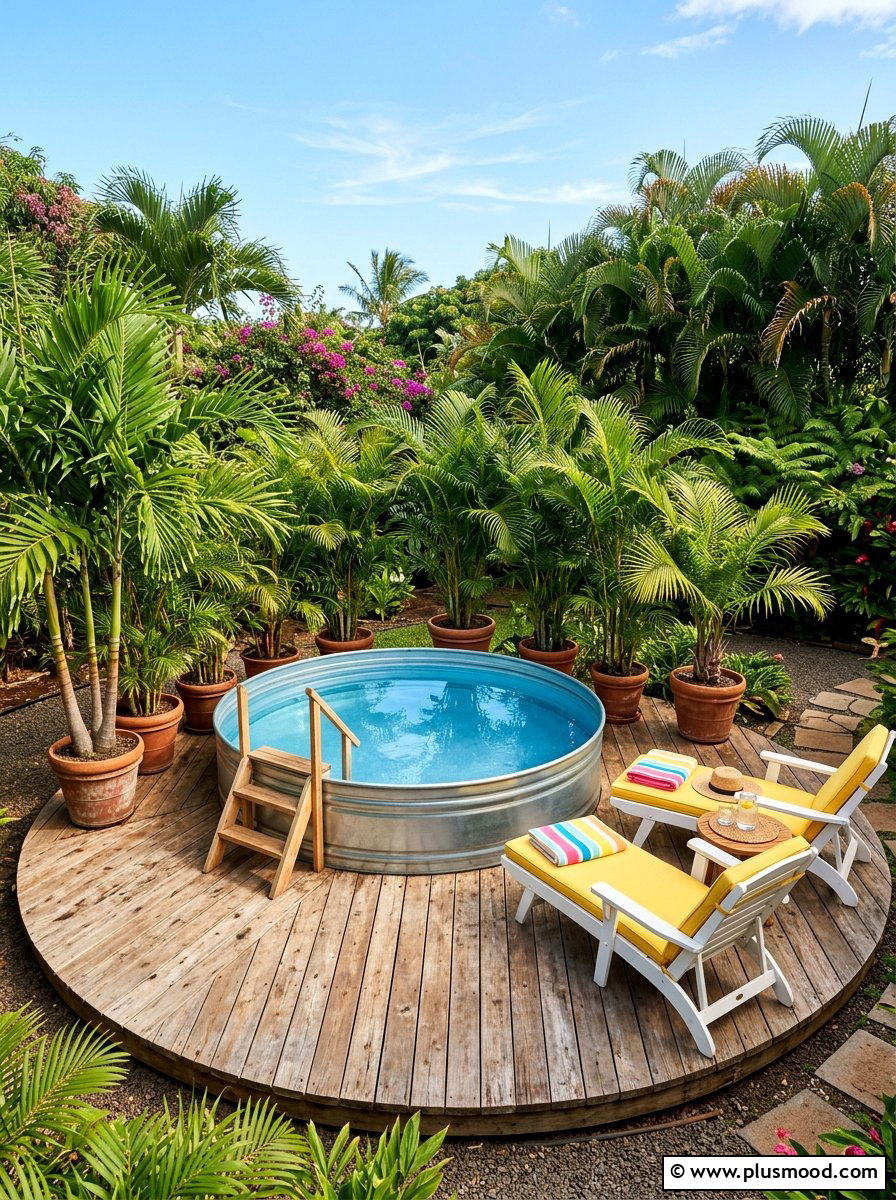
For a playful warm-weather upgrade, a stock tank can become a compact place to dip in and cool off. A level foundation, clean water, and routine maintenance are essential; surround the tank with plants or loungers to make it feel like a destination rather than an afterthought.
Key Details
- Place the tank on a firm, fully level surface.
- Use a cover when it is not in use to keep debris out.
Pro Tip: Check local requirements and use a suitable filtration and sanitation routine before regular use.
18. Let Moving Water Set a Calmer Tone

A small fountain introduces sound as well as visual interest, helping soften traffic noise or the hum of nearby activity. Choose a scale that fits the yard, then place it where it can be heard from the chairs, dining table, or open windows inside.
Key Details
- Use an exterior-rated pump and protected power connection.
- Check water levels regularly during hot, dry weeks.
Pro Tip: Set the basin where falling leaves are limited to reduce cleaning time.
19. Reserve a Corner for a Looser, Wilder Garden
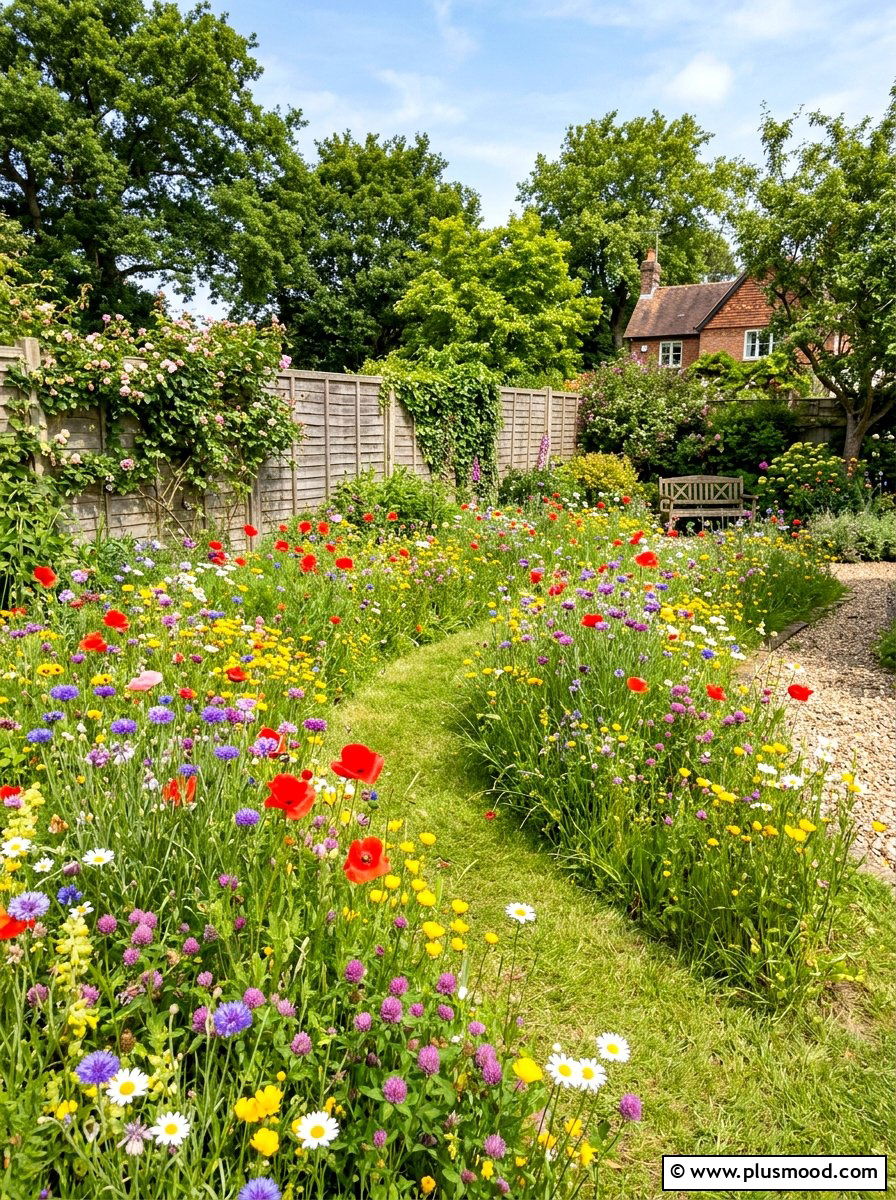
A small meadow-style patch can make a conventional lawn feel more relaxed while adding seasonal color and movement. Rather than treating it as an unkempt area, define its boundary and select locally appropriate flowering plants for a deliberate, meadow-inspired look.
Key Details
- Prepare the soil and select plants for the site’s sun and moisture.
- Mow or trim according to the needs of the chosen mix.
Pro Tip: Frame the planting with a neat edge so its informal style feels purposeful.
20. Make a Mature Tree Part of the Seating Plan
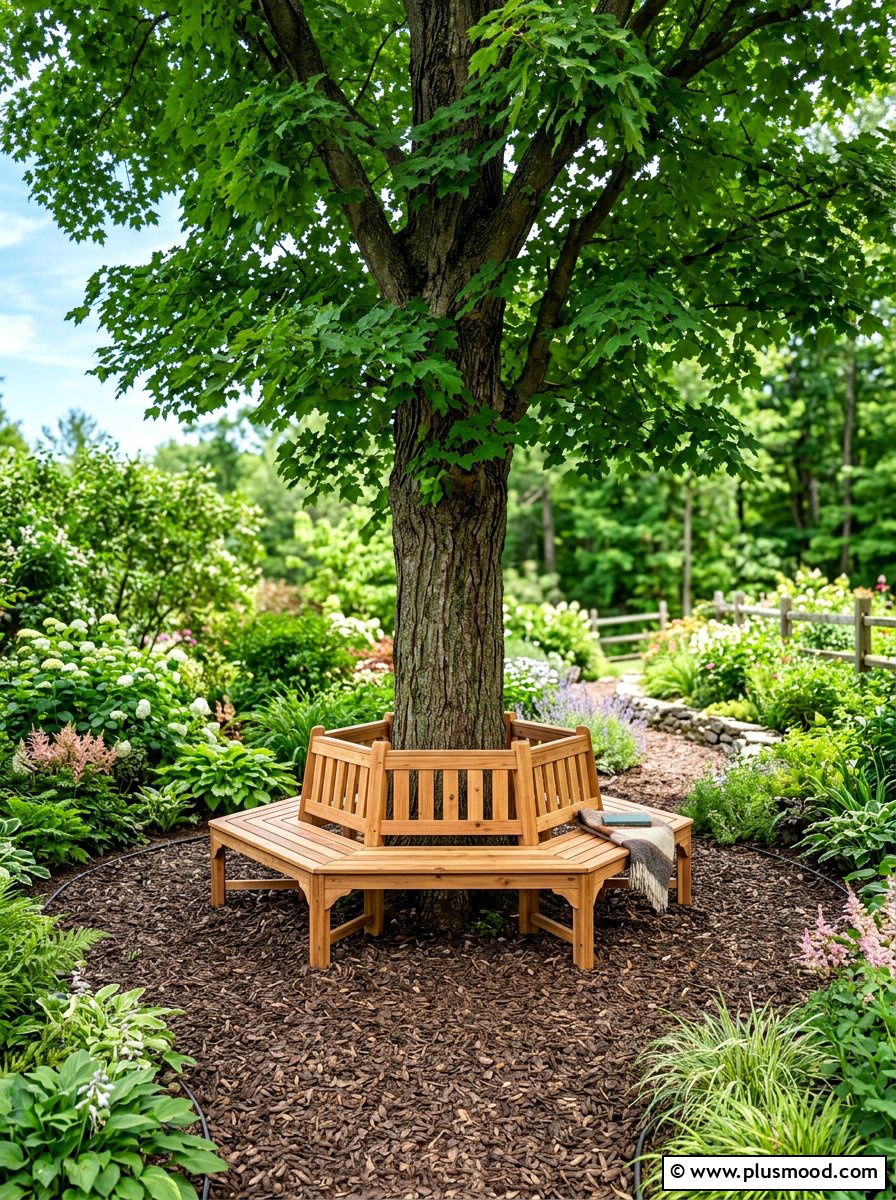
A wraparound bench can turn the shade beneath an established tree into one of the most useful places in the yard. The circular form invites conversation and makes an overlooked trunk feel like a designed garden feature.
Key Details
- Build with a generous gap around the trunk as the tree grows.
- Avoid cutting roots or compacting soil heavily around the base.
Pro Tip: Use movable cushions so the bench is comfortable during longer visits but easy to clear before rain.
21. Expand Seating With a Pallet-Based Sofa
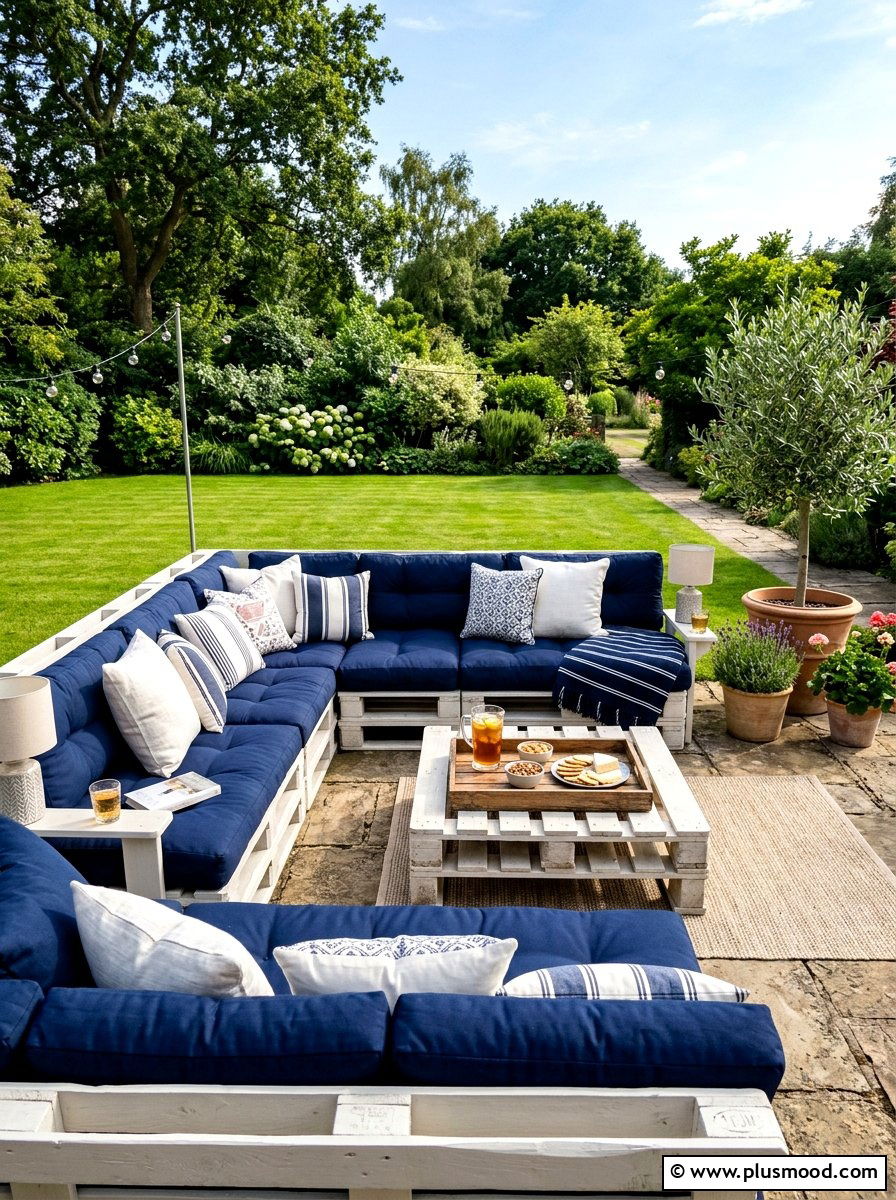
Reclaimed wood can become deep outdoor seating when it is carefully cleaned, sanded, and protected from the weather. A modular layout is especially useful in an awkward patio corner because you can size it around the available space instead of buying a standard set.
Key Details
- Inspect reclaimed wood carefully and avoid damaged or unsafe pallets.
- Use thick cushions made for exterior use.
Pro Tip: Elevate the base slightly so water can drain and the wood is not sitting directly on a wet surface.
22. Give Young Artists a Backyard Canvas
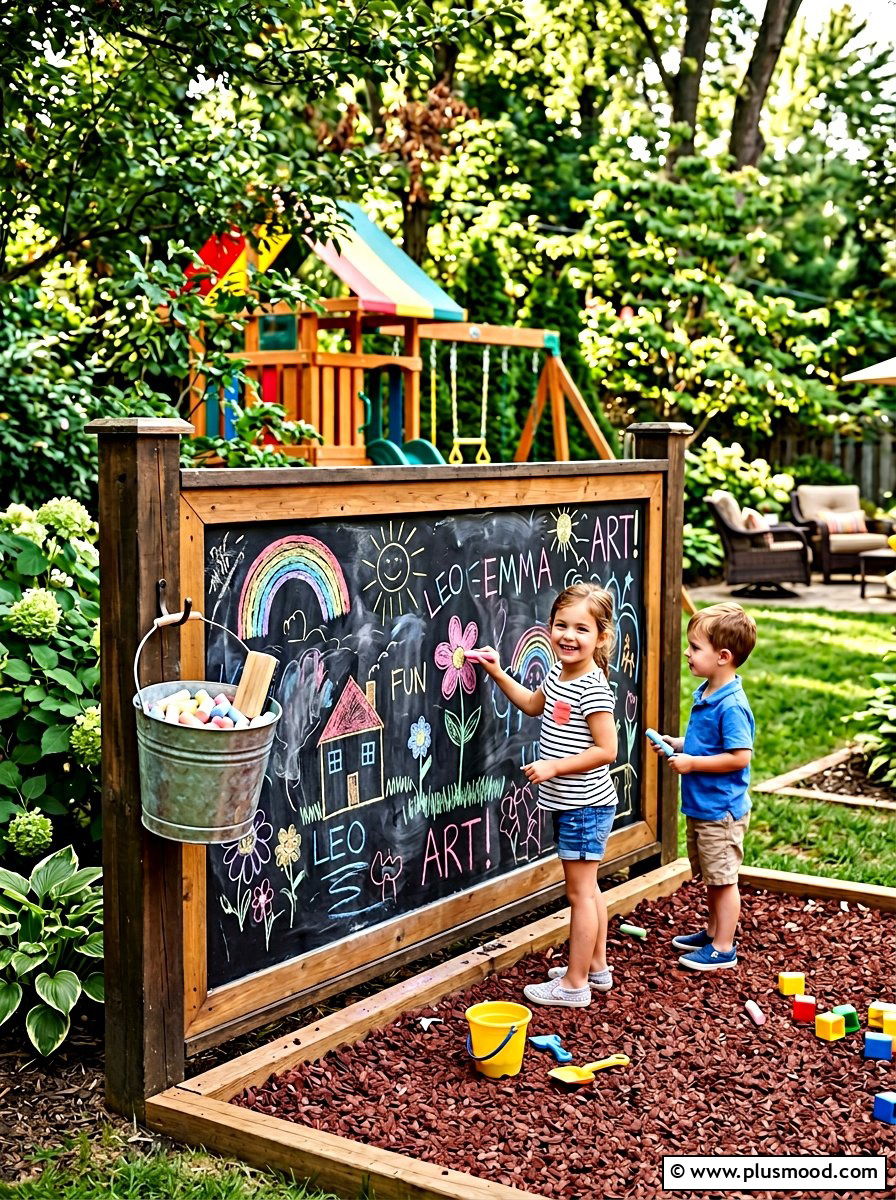
A weather-resistant chalkboard panel on a fence gives children a creative activity that stays outside and can be refreshed endlessly. Include a small container for chalk and an eraser, and position the board where it can be supervised from nearby seating.
Key Details
- Use exterior chalkboard paint on a smooth, primed surface.
- Keep the board at a height that children can reach comfortably.
Pro Tip: Mount a narrow ledge beneath the board to prevent chalk pieces from disappearing into the grass.
23. Hang a Swing Where the Shade Is Best
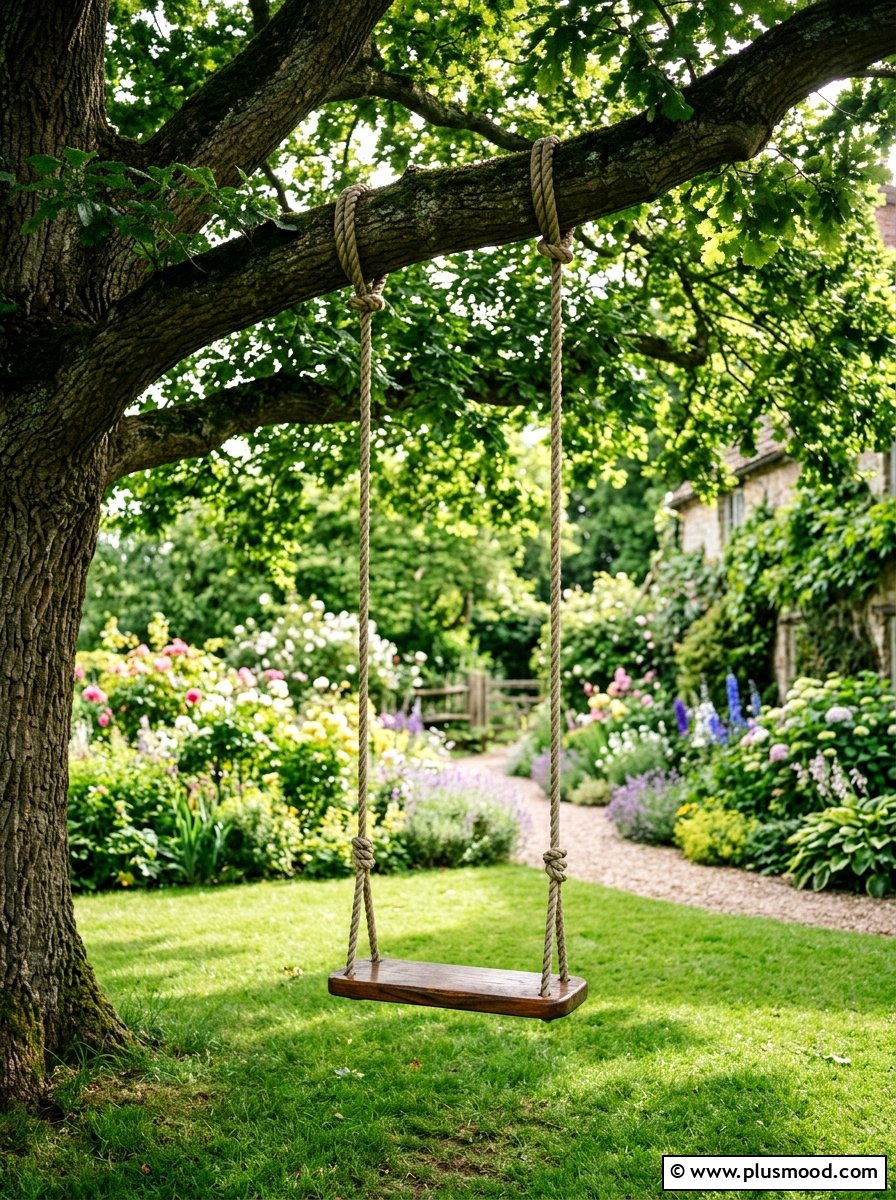
A well-placed swing adds a slower, more playful reason to spend time in the garden. Whether you choose a single seat or a larger nest-style option, safe hardware, adequate clear space, and a healthy structural support should guide the installation.
Key Details
- Inspect all rope, chains, and hardware at the beginning of each season.
- Keep the landing area clear of hard edging and obstacles.
Pro Tip: Use a purpose-made tree strap or consult a qualified installer rather than fastening hardware directly into a questionable branch.
24. Refresh a Tired Concrete Patio With Color
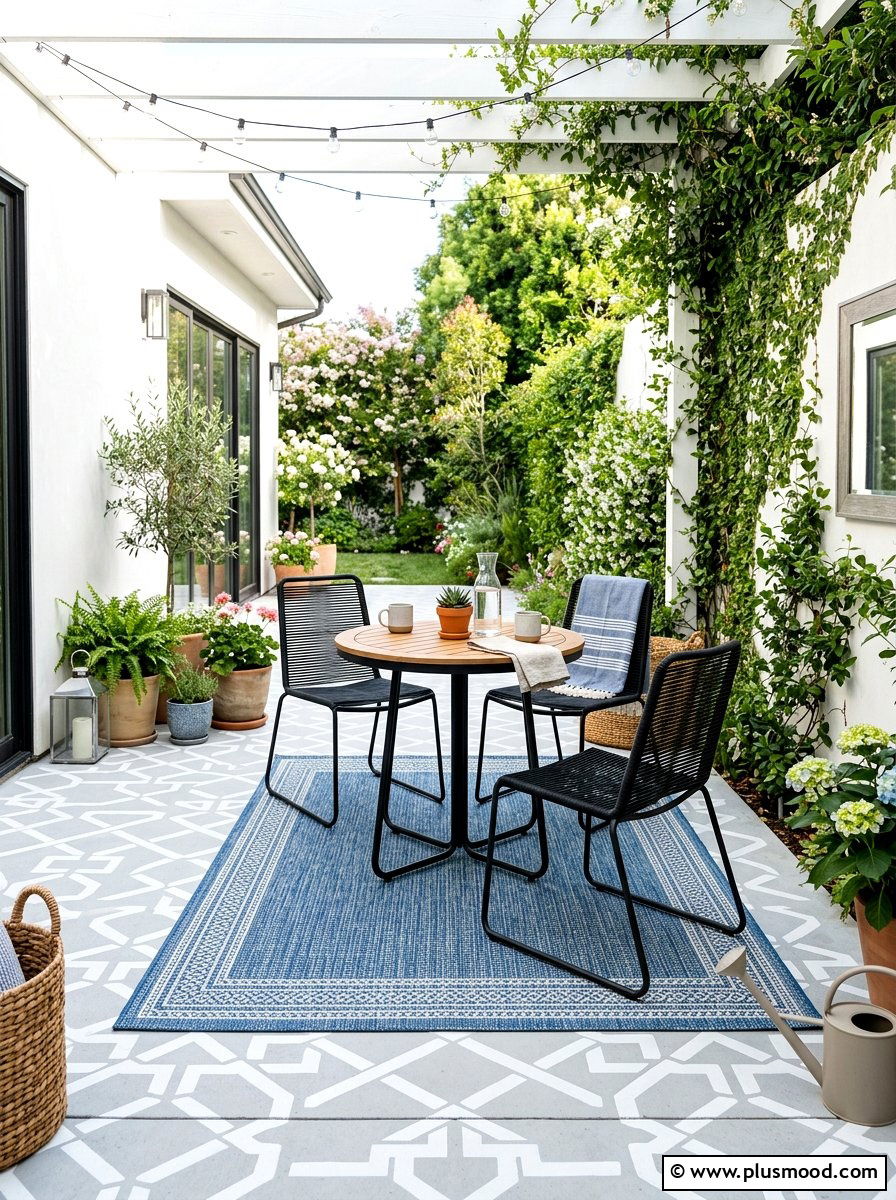
Concrete flooring can look entirely different with a carefully chosen exterior coating or a painted pattern. Preparation makes the biggest difference: clean thoroughly, repair visible damage, and use products designed for the weather and foot traffic your patio receives.
Key Details
- Allow each preparation and coating step to cure fully.
- Choose a finish with suitable slip resistance for wet conditions.
Pro Tip: Test paint colors on a small area first because outdoor light can make them appear much brighter than expected.
25. Save a Private Spot for a Hammock
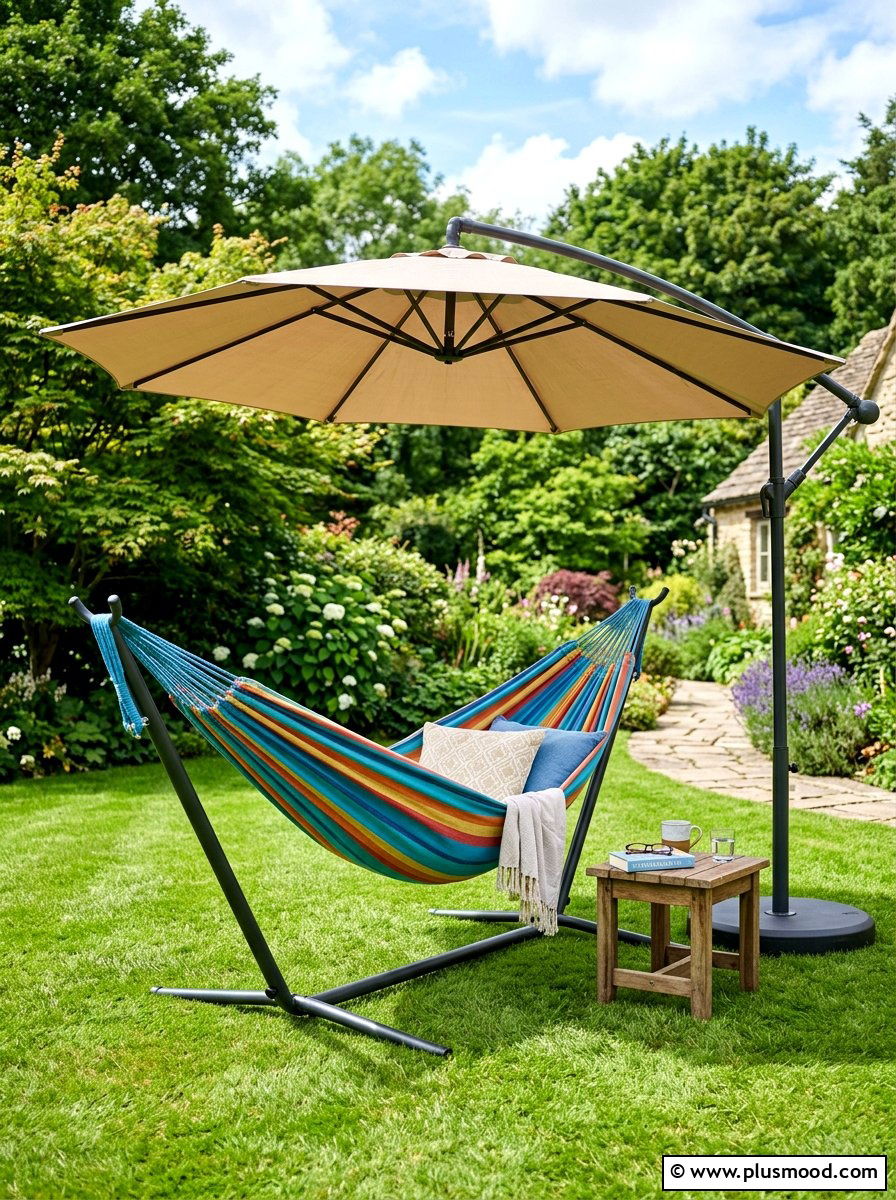
A freestanding hammock offers a simple invitation to slow down, read, or take a break from a busy gathering. Tuck it beside planting, beneath a shade tree, or at the far end of the yard so it feels a little removed from the action.
Key Details
- Choose a stand and fabric rated for the intended weight.
- Leave enough clearance for the hammock to move safely.
Pro Tip: Add a small side table for a book and water so the space works for an unhurried afternoon.
Conclusion
The most successful backyard updates are the ones that make you want to use the space more often. Start with a project that addresses a genuine need, such as shade, privacy, seating, or a clearer route through the yard, then add the decorative layers over time.
With a mix of practical surfaces, comfortable gathering spots, planting, and gentle lighting, even a modest outdoor area can feel like an extension of home throughout the season.