Fall has a way of making us notice our homes differently. The light becomes softer, evenings arrive earlier, and the rooms that felt perfectly comfortable in July can suddenly seem a little bare. A sofa needs more texture. The entryway needs a place for jackets and boots. The dining table seems to be asking for candlelight, warm wood, and a bowl of something fragrant.
The good news is that you do not need a complete makeover to create that feeling. A few smart IKEA hacks can make a room feel warmer, more personal, and more functional without requiring a major renovation or a large budget. The secret is to start with simple, versatile pieces and customize them with paint, hardware, fabric, lighting, and thoughtful styling.
These 15 ideas cover the areas that have the biggest effect on a home’s fall atmosphere: seating, lighting, storage, textiles, natural materials, and small decorative moments. Some are quick weekend projects. Others are simple styling changes that take less than an hour. Together, they can turn a practical IKEA piece into something that feels collected, comfortable, and distinctly yours.
Your fall IKEA hack plan at a glance
1. Turn a KALLAX unit into a warm, collected library wall
KALLAX is one of IKEA’s most recognizable storage pieces, but its clean grid can look a little stark if every cube is treated the same way. For fall, make it feel less like a storage system and more like a small library or curated cabinet by mixing open display areas with baskets, doors, books, and objects in warm colors.
Start by anchoring the unit visually. If it is freestanding, place it against a wall in a deep neutral such as mushroom, olive, charcoal, or muted clay. If you are painting the unit, use a primer designed for laminate or other smooth surfaces, then apply thin coats of durable furniture paint. Always follow the paint manufacturer’s preparation and drying instructions.
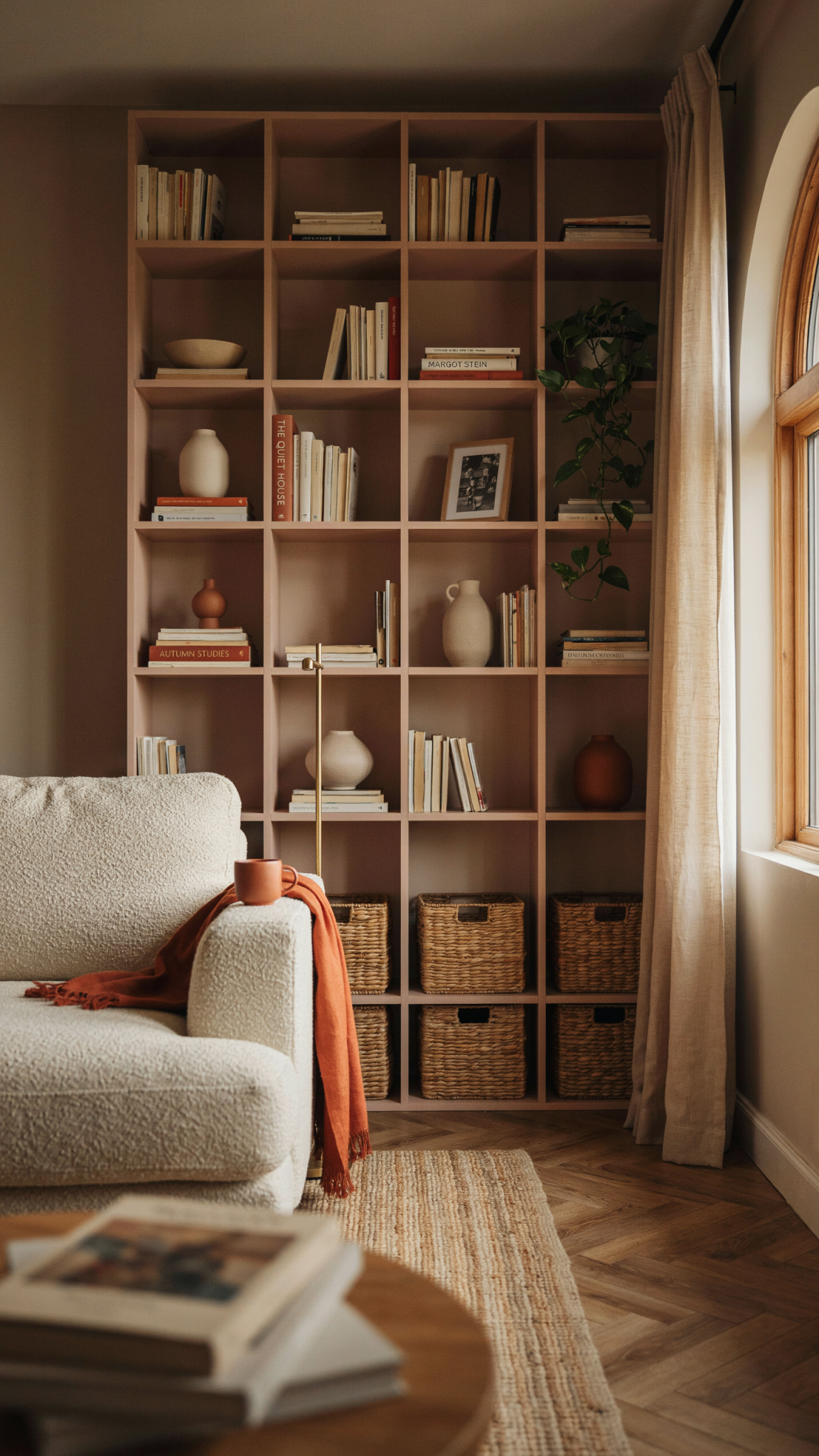
Fill approximately one-third of the compartments with closed storage. Woven baskets, fabric bins, or wood-toned inserts will soften the geometry. Use another third for books, arranging some vertically and others in small horizontal stacks. Leave the remaining cubes open for pottery, framed photographs, a small lamp, or a bowl filled with pinecones.
The most convincing styling is not perfectly symmetrical. Repeat a few colors across the unit instead. A rust-colored book spine can echo a terracotta vase, while a cream textile can connect a basket to the surrounding sofa. Add a warm LED lamp nearby, and the KALLAX becomes a practical source of fall atmosphere rather than just a place to put things.
2. Give a BILLY bookcase the look of custom built-ins
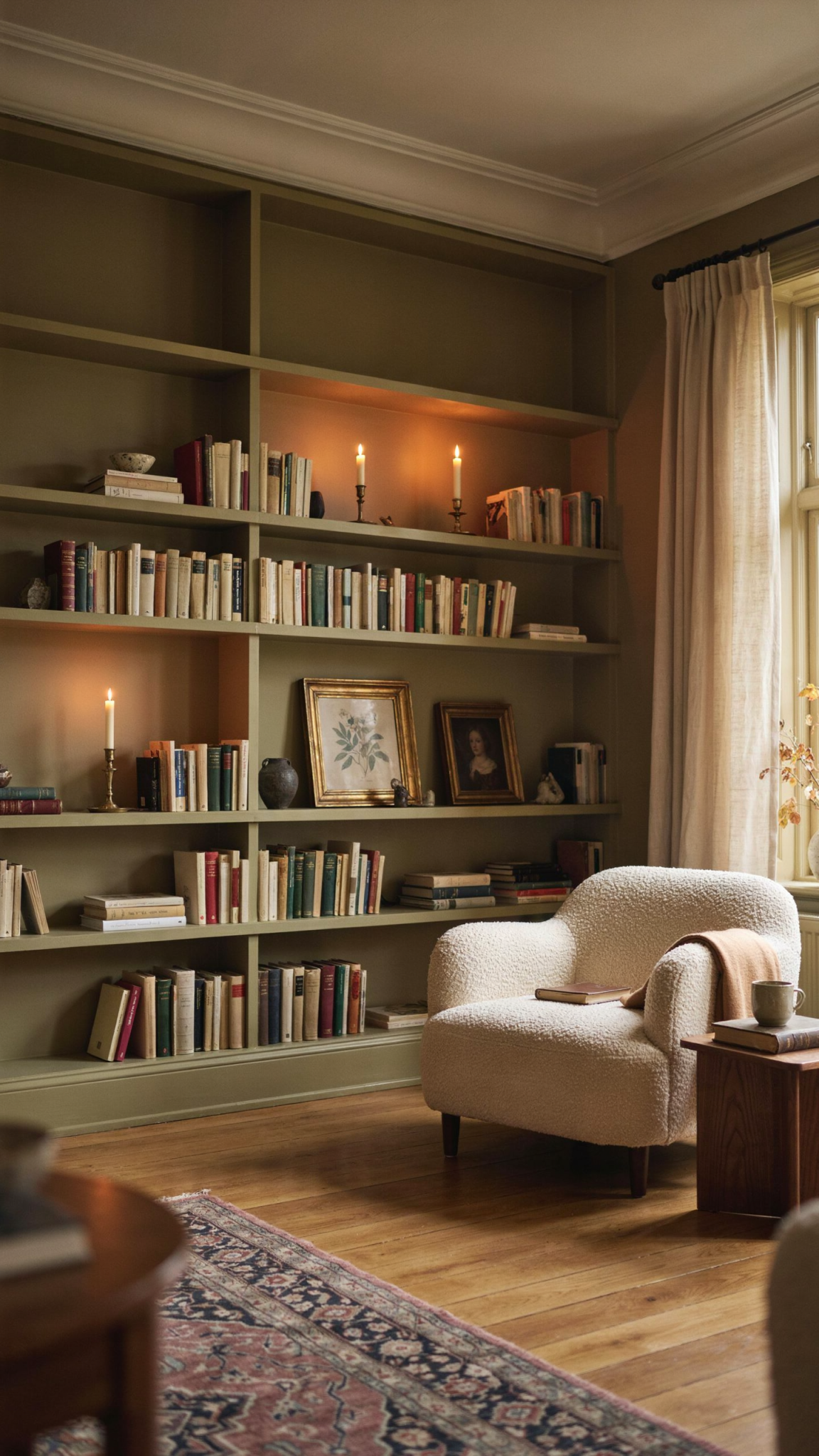
A wall of books instantly makes a room feel lived in, and BILLY bookcases can create that effect at a fraction of the cost of bespoke cabinetry. The cozy transformation comes from making separate bookcases look intentional and architectural.
Arrange two or more units side by side, leaving enough room for doors, trim, and safe installation. Secure every bookcase to the wall according to IKEA’s instructions and your wall type. For a built-in appearance, add simple wood trim around the top and sides. A narrow strip of molding at the ceiling can visually connect the bookcases to the room.
Painting the bookcases and the wall behind them in the same color creates the strongest built-in effect. Deep green, warm taupe, brown-black, and muted navy all work particularly well in rooms that receive evening light. If a full dark wall feels too dramatic, choose a warm white or soft gray and add contrast through the books and accessories.
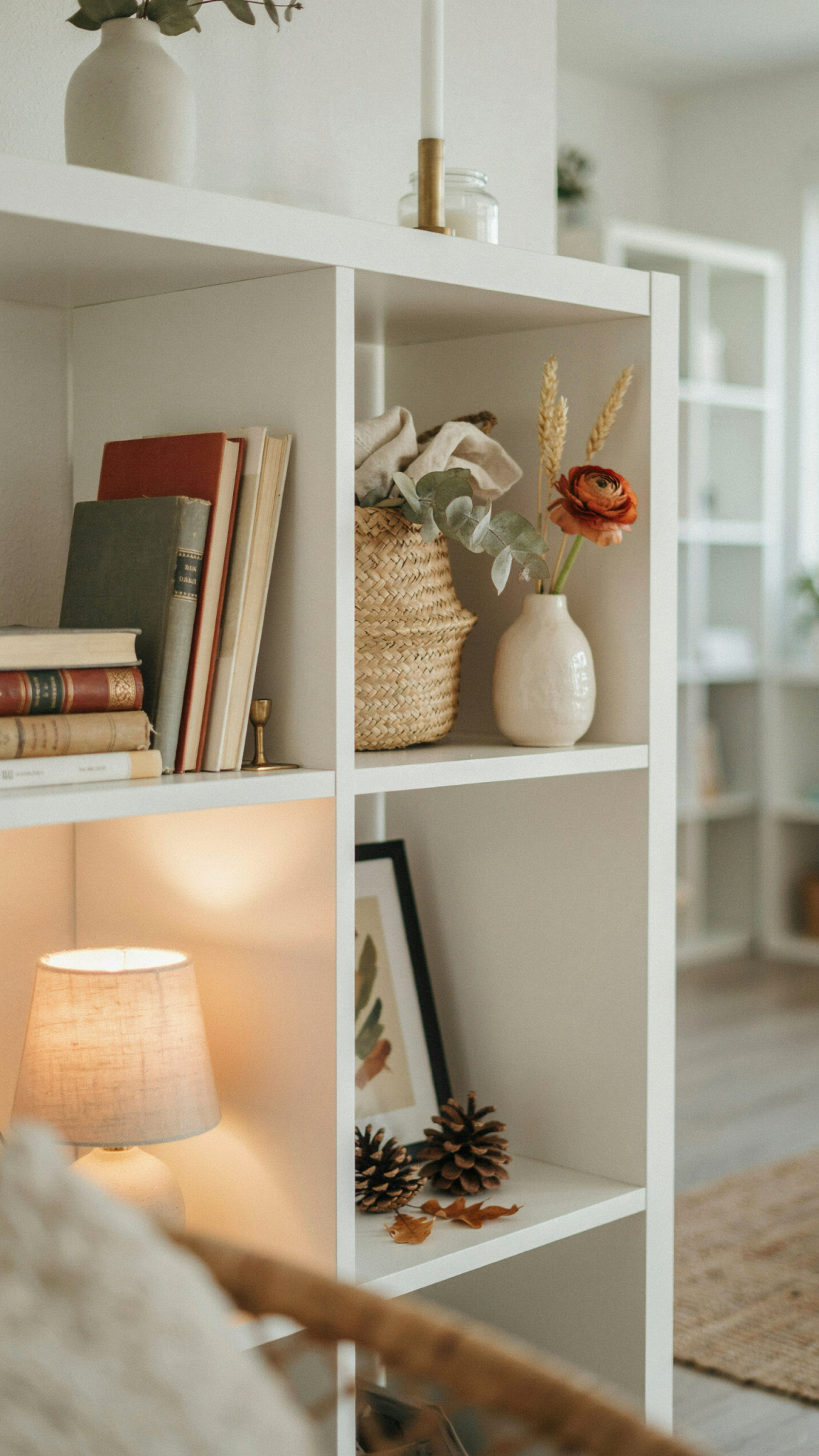
Use the shelves as a balance of utility and invitation. Store everyday books within easy reach. Place a few candleholders, framed prints, and small ceramic pieces between the stacks. The goal is not to fill every inch. Negative space gives the display room to breathe and makes the objects you love look more important.
3. Make an IVAR cabinet feel like a handcrafted fall sideboard
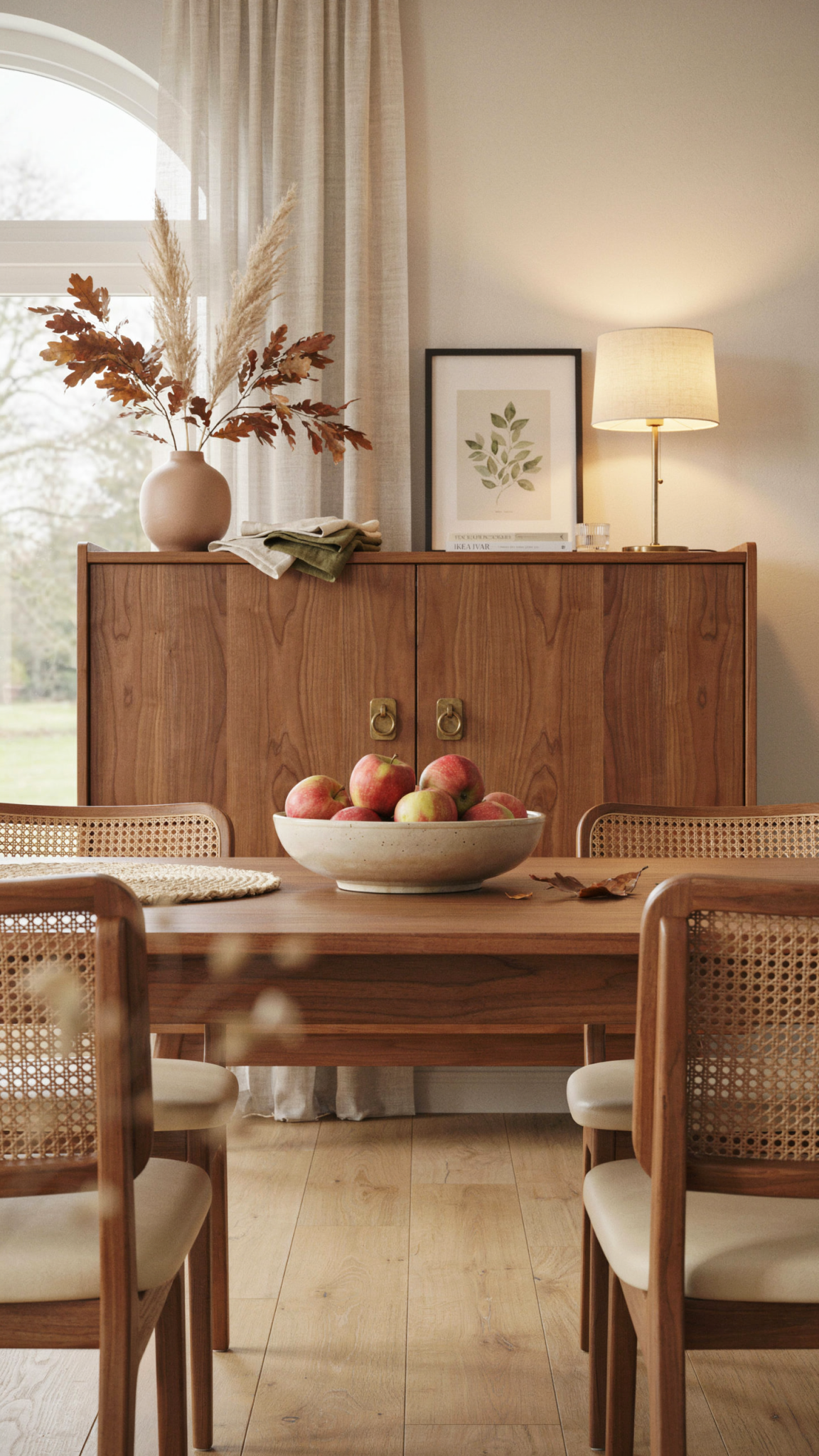
The unfinished wood of an IVAR cabinet or shelving unit is ideal for a seasonal update because it accepts stain, paint, and hardware in many different directions. A simple cabinet can become a sideboard in the dining room, a linen cabinet in the hallway, or a concealed toy-storage piece in the living room.
For a warm autumn look, lightly sand the surface, remove the dust, and apply a medium wood stain or tinted furniture oil. Test the color on an inconspicuous area first. If you prefer color, paint the body in a matte olive, cinnamon, or smoky blue while leaving the legs or top in natural wood.
Hardware has an outsized effect on a small piece. Replace basic pulls with aged brass knobs, leather loops, black metal handles, or simple oak pulls. Choose hardware that is comfortable to use and proportionate to the doors. If you are combining several cabinets, install the hardware at exactly the same height for a more polished result.
Style the top with a low arrangement: a table lamp, a bowl of apples, a stack of cloth napkins, or a vase of dried grasses. Keep the accessories relatively low if the cabinet sits behind a dining table so that conversation remains easy. Inside, use boxes and baskets to hide the items that make a home functional but not necessarily beautiful.
4. Upgrade a RAST chest into a character-filled nightstand
A small unfinished RAST chest of drawers can become a surprisingly elegant nightstand with a few inexpensive changes. This hack works especially well in a bedroom because fall coziness depends as much on the bedside area as it does on the bed itself.
Begin by deciding whether you want to emphasize the wood or cover it. A warm walnut stain creates a cabin-inspired look. A creamy beige or dusty mauve finish feels softer and more traditional. You can also paint the drawer fronts and stain the frame for a two-tone design.
Replace the original knobs with ceramic, wood, or aged-metal hardware. Add a slim lamp with a fabric shade, a small tray for a book and hand cream, and a tiny dish for jewelry. The tray is important because it prevents the top from becoming a collection of loose objects.
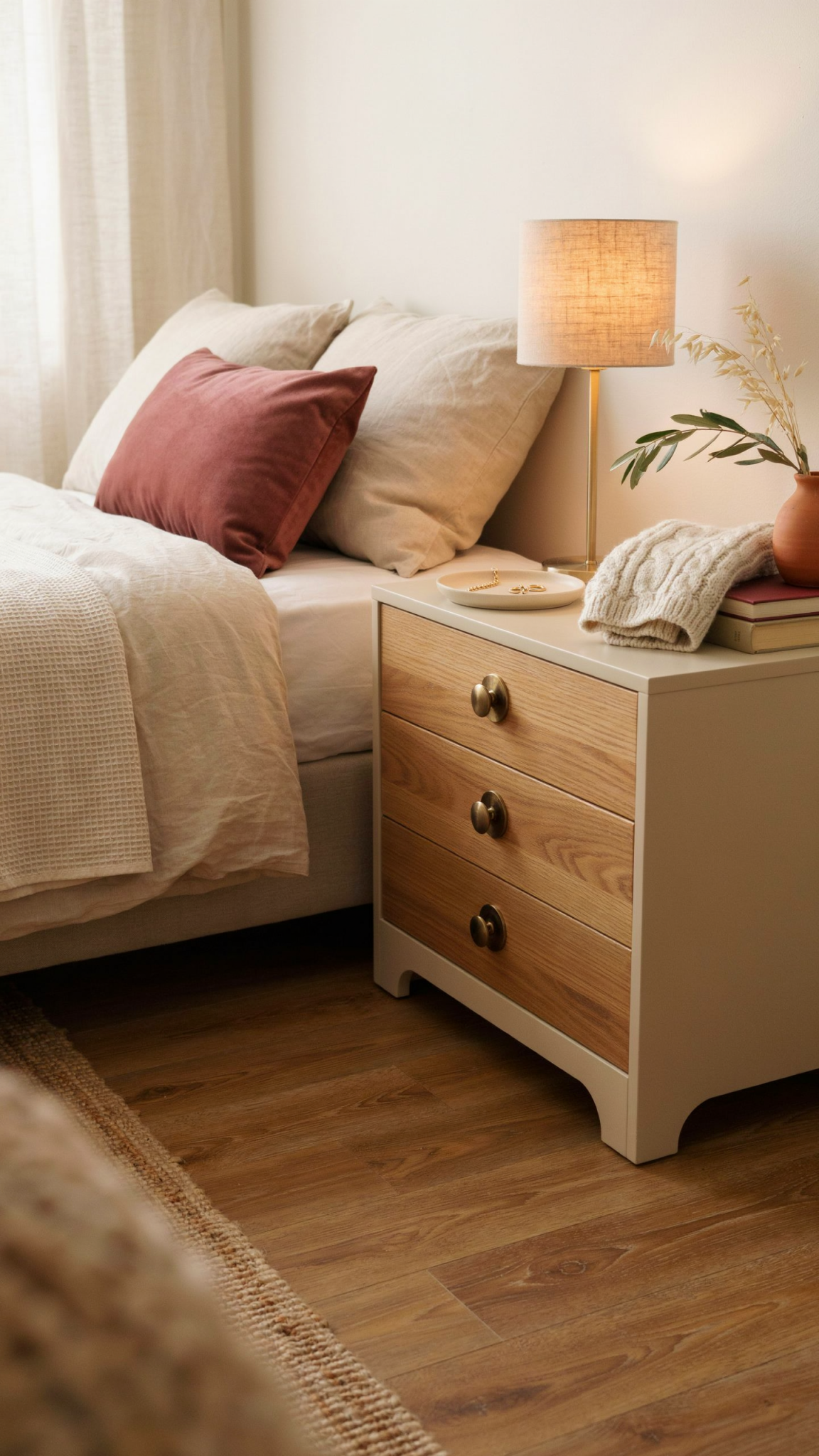
For extra polish, consider adding a simple trim detail to the drawer fronts or attaching decorative molding around the top. Keep the design restrained. The appeal of the RAST is its uncomplicated form, so one strong color and one distinctive hardware choice are usually more effective than many decorative additions.
5. Create a wood-look LACK side table with layered legs and a thicker top
LACK tables are lightweight and affordable, but their hollow construction can make them feel temporary. A thicker-looking top and a warmer finish can change that impression completely.
One approach is to add a thin wood panel or furniture board over the existing tabletop. Secure it properly and soften the edges with sanding. You can stain the new surface in a honey, chestnut, or smoked oak tone. Another option is to use peel-and-stick wood veneer, provided the surface is clean, smooth, and suitable for the product.
If you want a more substantial silhouette, add a second panel beneath the top to create the appearance of a thicker slab. Use construction methods appropriate to the materials and check that the table remains stable. A table that wobbles is not cozy, regardless of how attractive it looks.
Place the finished piece beside a sofa or reading chair. Add a mug, a small lamp, and a bowl for remote controls. Because the shape is simple, it works best when paired with tactile materials such as boucle, wool, rattan, or knitted cotton.
6. Turn a BESTÅ cabinet into a calm media console or dining sideboard
Open storage tends to accumulate visual noise, especially during a season when blankets, books, candles, and entertaining supplies are all in regular use. A BESTÅ cabinet provides a clean surface for a more restful room, and the hack is mainly about customizing its finish and proportions.
Choose a cabinet width that suits the wall rather than automatically filling the entire space. Mounting the unit slightly above the floor can make a small room feel more open, while low legs can make the piece feel more like furniture. Wood legs, black metal legs, or a plinth painted to match the cabinet each create a different mood.
For fall, consider fluted wood panels, cane webbing, or a painted front. These treatments add texture to an otherwise smooth surface. If using cane or another woven material, keep the surrounding décor simple so the front remains the focal detail.
Use the cabinet for less attractive necessities: game consoles, chargers, serving pieces, or extra table linens. On top, leave generous empty space around one lamp, one piece of art, and one seasonal object. A restrained surface gives the whole room a quieter feeling.
7. Build an inviting entryway from EKET cubes
The entryway sets the emotional tone of the home. It is also where fall clutter appears first: coats, scarves, umbrellas, backpacks, and muddy shoes. EKET cubes can be arranged into a compact landing zone that makes coming home feel easier.
Mount one or more cubes at a comfortable height for keys, mail, and small accessories. Place a longer row lower down to create a bench-like arrangement, but do not use wall-mounted units as seating unless they are specifically installed and supported for that purpose. Add a separate cushion and a properly supported bench if you want a place to sit.
Paint the wall behind the cubes in a warm shade to give the arrangement more presence. A narrow shelf above can hold a mirror, while hooks below or beside it provide space for coats. Use labeled boxes inside the cubes for hats, gloves, and dog-walking supplies.
The finishing touch is a washable runner in a rich, muted color. It adds visual warmth while protecting the floor from wet-weather traffic. Keep one attractive basket near the door for reusable shopping bags and one tray for keys. Good organization is one of the most effective forms of coziness because it reduces the amount of effort required to maintain the room.
8. Use a MOSSLANDA picture ledge for a rotating fall display
A picture ledge is one of the easiest ways to make seasonal decorating feel flexible instead of permanent. Install a MOSSLANDA ledge above a console, sofa, bed, or reading chair, then layer art and objects rather than hanging every piece individually.
For a fall display, combine one larger print with two or three smaller frames. Botanical drawings, landscape photographs, abstract prints in earthy colors, and vintage-inspired typography all work well. Add a small ceramic vase or a candleholder, but keep open flames away from paper, fabric, and other combustible materials.
The beauty of a ledge is that
you can refresh it without drilling new holes. In October, add a darker print or a small branch arrangement. Later, swap in winter imagery and a few metallic details. The display should feel like an evolving shelf, not a themed arrangement that takes over the room.
Layer frames by height and depth. Leaning one frame slightly in front of another creates dimension, while a single object placed off-center prevents the grouping from looking too formal. Repeat one accent color in the art and accessories to keep the composition coherent.
9. Turn a FROSTA stool into a flexible accent seat
Extra seating is useful in every season, but fall gatherings make it especially valuable. The FROSTA stool’s simple shape lends itself to a quick transformation into a small accent seat, plant stand, or side table.
Sand the stool lightly and finish it with paint, stain, or a clear protective coat. A matte black base with a warm wood seat feels modern. A fully stained stool feels Scandinavian and understated. For a softer look, attach a round cushion using ties or a secure fastening method that will not slip during use.

Place two stools near a coffee table for guests, or keep one beside a reading chair. When it is not needed as seating, it can hold a folded throw or a small basket. Avoid overloading it with decorative objects if it may be used as a seat.
This is also a useful project for creating visual repetition. Finish several stools in the same color and distribute them around an open-plan room. Repeated small pieces can make a large space feel more connected without matching every major item.
10. Make an IKEA kitchen cart into a coffee and cider station
A kitchen cart can become a compact hospitality station for weekend breakfasts, afternoon tea, coffee, or spiced cider. The key is to organize it like a tiny piece of cabinetry rather than a mobile pile of supplies.
Reserve the top shelf for the items you use most often. A tray can corral mugs, spoons, and sweeteners. Use a lidded container for tea bags or coffee filters. The lower shelf can hold extra cups, a kettle, napkins, and a basket of seasonal treats.
Warm the cart visually with a wood cutting board, a small framed menu, or a linen runner that does not hang near heat sources. If the cart has a metal frame, a deep green, brown, or cream paint color can make it feel less utilitarian. Apply the correct primer for the surface and allow the finish to cure fully before regular use.
Position it near the dining area or a comfortable sitting room, but keep clear pathways around it. A functional station is cozy because it supports spontaneous rituals. When guests can make another cup of coffee without searching through cabinets, the whole home feels more relaxed.
11. Build a moody gallery wall from RIBBA frames
A gallery wall brings personality to a room, but a collection of mismatched frames can look accidental. RIBBA frames make it easier to create a coherent display because you can repeat the same profile while varying the art inside.
Choose a limited palette before you begin. For a fall mood, try black, cream, olive, rust, and warm brown. The art does not need to depict autumn leaves. Architectural sketches, still lifes, family photographs, textile samples, and simple line drawings can all contribute to a seasonal atmosphere when their colors and textures work together.
Lay the frames on the floor and experiment with the arrangement. Leave consistent spacing between the pieces, then transfer the layout to the wall using paper templates. Start with the central or largest frame and work outward. Measure carefully, especially if the wall is long or the arrangement sits above furniture.
To make the display feel warmer, include one or two tactile elements such as a woven wall piece or a small wood frame. Keep the overall shape balanced, not necessarily symmetrical. A gallery wall should look considered but still allow the room to feel lived in.
12. Soften a room with an upgraded IKEA lampshade
Lighting is often the fastest route to a cozy fall atmosphere. You can keep the lamp base and change the shade, or add a textile treatment to an existing IKEA shade if the material and construction allow it.
Choose shades made from fabric, paper, or another material that diffuses light gently. Warm-white LED bulbs generally create a more inviting evening glow than very cool bulbs. Check the lamp’s maximum wattage and use a bulb that is compatible with the fixture.
A linen-look shade works in almost any room. A pleated shade adds a more traditional feeling, while a woven shade introduces texture. If you are covering a shade, use a heat-safe, nonflammable method and never allow fabric or trim to touch the bulb. When in doubt, replace the shade rather than modifying it.
Use several pools of light instead of relying on one overhead fixture. A table lamp, floor lamp, and small plug-in light can make a room feel layered and comfortable. Add dimmable bulbs or a compatible dimmer when possible so that the room can shift from daytime activity to evening relaxation.
13. Layer IKEA textiles for instant warmth
Textiles create the largest immediate sensory change with the least effort. Swap lightweight summer covers for heavier throws, textured cushion covers, and a rug that gives the feet a softer landing.
Start with a base of quiet neutrals: oatmeal, cream, gray, faded denim, or warm beige. Then add two or three autumn accents, such as tobacco, rust, forest green, muted ochre, or burgundy. Mixing textures is more effective than using many colors. Pair a smooth cotton cover with a knitted throw, a nubby cushion, or a brushed fabric.
Do not arrange every cushion in a perfect row. Place larger cushions at the back, add one or two medium layers, and finish with a smaller lumbar cushion. Fold a throw over the arm or back of the sofa so it looks available rather than staged.
A washable rug can define a seating area and reduce the echo in a room with hard floors. If layering rugs, make sure the lower rug has a secure pad and that edges do not create a tripping hazard. Comfort should never come at the expense of safety.
14. Hide seasonal clutter with IKEA baskets and boxes
Cozy rooms are not necessarily minimalist, but they do have a place for the objects that would otherwise remain in view. IKEA baskets, boxes, and storage bins can make everyday fall life easier without forcing you to discard useful items.
Create a basket system around actual habits. Keep a blanket basket beside the sofa. Place a lidded basket near the entryway for hats and gloves. Use small boxes inside drawers for charging cables, matches, or craft supplies. The best container is the one that is easy to reach and easy to put back.
Coordinate storage by material rather than buying every piece from one collection. Woven baskets add natural texture. Fabric bins soften shelves. Wooden boxes bring warmth to a media console or open bookcase. If the room already contains many textures, choose simpler containers so the storage does not compete with the rest of the décor.
Label hidden storage when several people share the home. A small label can prevent the common problem of every basket becoming a miscellaneous category. Clear systems preserve the visual calm that makes a room feel cozy long after the initial decorating session.

15. Create a natural fall vignette with IKEA planters and glassware
The final hack is less about modifying a single product and more about combining small IKEA pieces into a seasonal still life. Planters, vases, trays, and glassware can create a natural arrangement that brings the colors and textures of fall indoors.
Use a shallow tray as the foundation. Add a small plant or branch arrangement, a ceramic vessel, and a glass hurricane or vase. Dried grasses, eucalyptus, branches, and fallen leaves can provide seasonal texture without filling the room with overtly themed décor. If you bring natural materials indoors, check them for insects and moisture first.
Vary the heights while keeping the group compact. One tall element, one medium element, and one low object usually create enough structure. Use a restrained palette of green, brown, cream, and terracotta, then add a little brass or black for contrast.
This vignette can live on a coffee table, dining sideboard, kitchen island, or bathroom shelf. Refresh it throughout the season by replacing flowers, changing the branch arrangement, or adding a small bowl of seasonal fruit. Because the individual pieces remain useful year-round, the display feels like a home accent rather than a box of decorations that appears once a year.
The best fall home is not the one with the most seasonal decorations. It is the one that encourages you to slow down, settle in, and enjoy ordinary routines. IKEA’s simple furniture and accessories provide a useful foundation, but the cozy feeling comes from the personal choices layered on top: a color you love, a texture that feels good, a lamp that makes evening softer, and storage that removes friction from daily life.
Whether you stain an IVAR cabinet, frame a collection of autumn-toned art, build a more welcoming entryway, or simply layer a few cushions and throws, each hack is an opportunity to make your space feel more like yours. Choose one project, take your time with the details, and let the season shape the home gradually.


