

Halloween decorating has a reputation for going one of two ways. There is the delightfully over-the-top version: inflatable ghosts on the lawn, orange string lights around every window, plastic skeletons climbing the roof, fake spiderwebs stretched from tree to tree, and enough pumpkins to stock a small farm. Then there is the other extreme: the home that barely acknowledges Halloween at all. Perhaps there is one tasteful pumpkin on the kitchen island and a vaguely autumnal wreath on the front door. But somewhere between those two approaches is a sweet spot that interior designers understand particularly well. A beautifully decorated Halloween home can still be spooky, whimsical, nostalgic, and fun. The difference is that the decorations feel integrated into the house rather than simply placed on top of it. Designers think about Halloween much the same way they think about decorating a room. They consider scale, repetition, color, lighting, texture, focal points, and negative space. Instead of asking, “Where can I put another Halloween decoration?” they ask, “How do I want this room to feel?” That subtle shift changes everything. Whether your dream Halloween home feels like an old English manor, a charming New England cottage, an abandoned Victorian mansion, or simply a slightly moodier version of your everyday home, these are the decorating tricks designers use to make Halloween feel sophisticated without taking away the fun.
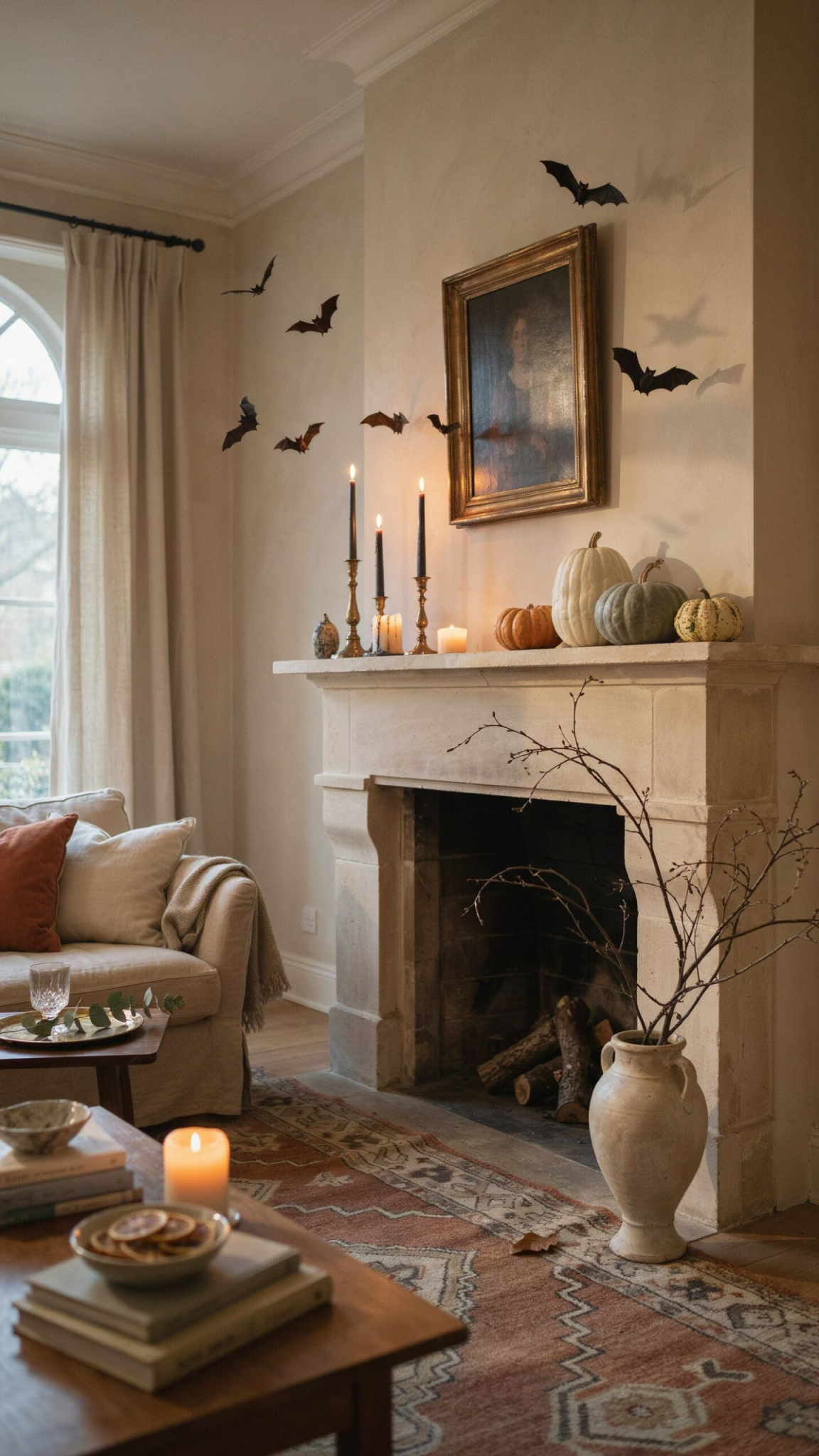
1. Start With a Halloween Mood, Not a Shopping Cart
One of the biggest differences between designer Halloween decorating and ordinary seasonal decorating happens before anything comes out of storage. Designers establish a direction. Halloween décor becomes difficult when every object is chosen independently. A cute felt ghost goes into the cart. Then a black glitter pumpkin. Then an orange pillow. Then a gothic candelabra. Then a vintage-inspired ceramic witch. Individually, each item might be wonderful. Together, they may tell five completely different stories. Instead, decide what kind of Halloween you are creating. Perhaps it is old-world gothic, with aged brass candlesticks, burgundy velvet, black taper candles, antique portraits, dark florals, and tarnished silver. Maybe you prefer nostalgic Halloween, with jack-o’-lanterns, black cats, paper decorations, vintage-style signs, candy buckets, and cheerful orange accents. Or perhaps your style is natural and moody, using pumpkins, branches, dried foliage, moss, gourds, candlelight, and subtle black details. You could even lean into whimsical haunted house, where floating witch hats, oversized spiders, bats, ghosts, and skeletons are intentionally exaggerated.
There is no requirement that Halloween décor be serious to look good. In fact, some of the best Halloween homes are incredibly playful. What makes them successful is consistency. Choose three or four words before you decorate. For example: Moody + historic + romantic + eerie
Or: Playful + nostalgic + colorful + whimsical
Or: Natural + understated + rustic + autumnal
Those words become your filter. Suddenly it becomes much easier to determine which decorations belong in your home and which can stay at the store.
2. Build a Restricted Color Palette
Halloween comes with a built-in color scheme, but designers rarely feel obligated to use all of it. Orange, purple, lime green, black, and white may immediately communicate Halloween, but combining every traditional Halloween color can quickly make a room visually busy.
Instead, designers usually edit the palette. Black and warm white can create an elegant haunted-house look. Black, rust, cream, and brown feel autumnal and sophisticated. Burgundy, plum, black, and aged brass can make a room feel like a Victorian manor. Muted orange, dusty green, cream, and natural wood work beautifully in a cozy cottage. For a more playful home, orange and black can absolutely remain the stars. Simply repeat those colors intentionally instead of introducing several unrelated accent colors.
The secret isn’t eliminating Halloween colors. It is controlling them. Try following a simple rule: choose two dominant colors, one supporting color, and one metallic or natural finish.
For example: Black + cream + rust + brass.
Or orange + black + white + natural wood.
This immediately creates visual continuity throughout the house.
3. Decorate the House You Already Have
Great seasonal decorating works with your home’s existing personality. A modern home does not need to suddenly become a Victorian haunted mansion simply because October arrived. Likewise, a traditional home doesn’t need neon Halloween signs if they feel disconnected from everything else in the room. Look at the materials, colors, and architectural details already present in your home.
If you have warm woods, linen upholstery, vintage furniture, and brass lighting, Halloween might naturally lean toward aged candlesticks, amber glass, old books, branches, ravens, and dark florals. If your home is contemporary and neutral, oversized black spiders, sculptural pumpkins, graphic bats, and dramatic lighting might feel much more appropriate.
If your home is colorful and eclectic, Halloween is an opportunity to embrace saturated orange, purple, whimsical ghosts, painted pumpkins, and quirky vintage finds. Halloween decorating looks most sophisticated when it feels like your house dressed up for Halloween—not someone else’s house temporarily moved into yours.
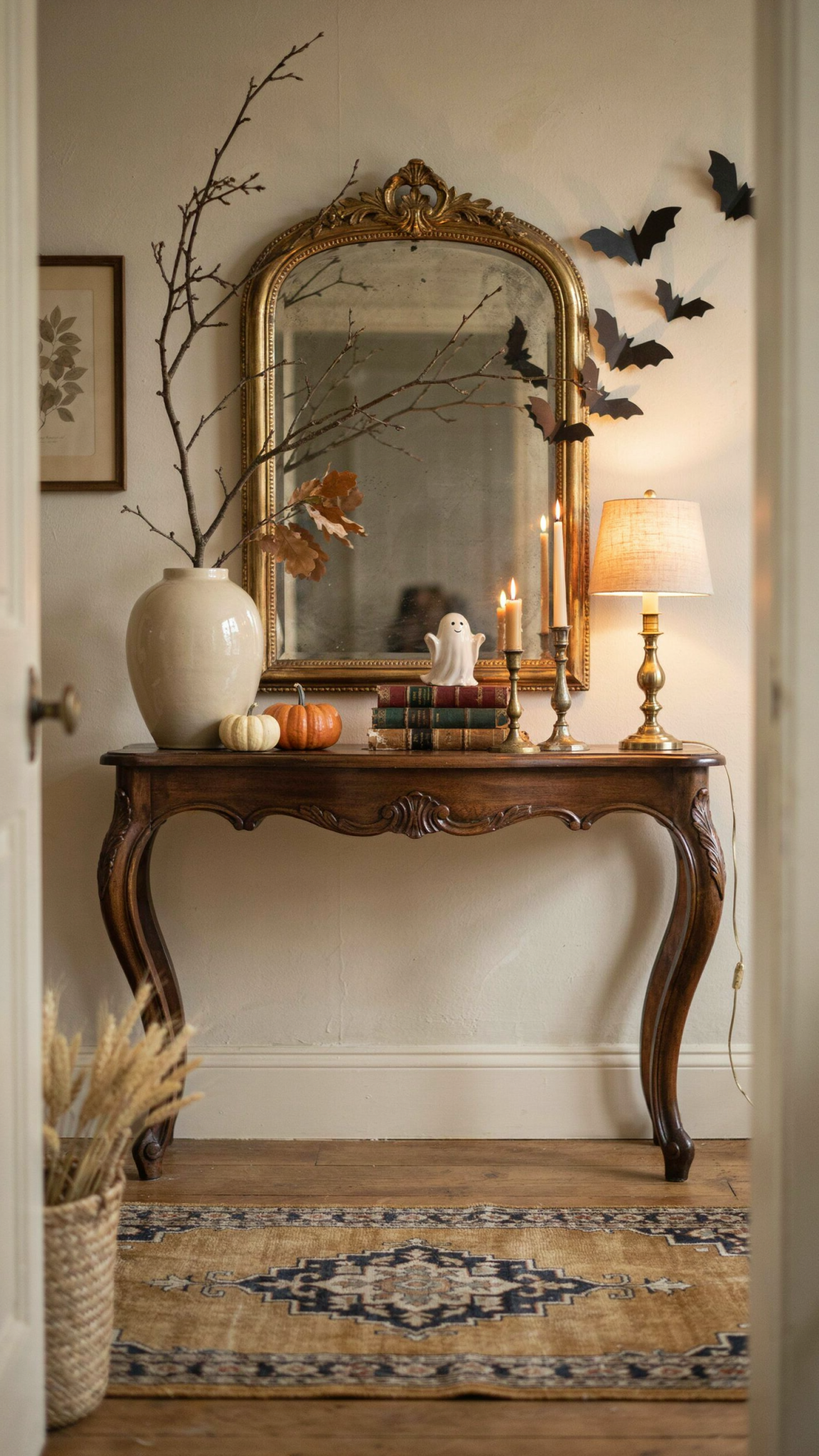
4. Edit Before You Add
This is one of the least glamorous designer tricks and one of the most important. Before adding seasonal décor, remove some everyday décor. If your mantel already contains artwork, a mirror, two candlesticks, a vase, framed photographs, a plant, and decorative objects, adding six pumpkins and a flock of bats will probably make it feel cluttered. Instead, temporarily pack away a few everyday accessories.
Clear the coffee table. Remove some objects from the entry console. Simplify the mantel. Take a few pillows off the sofa before introducing seasonal ones. Think of your house as having a visual capacity. Halloween decorations need somewhere to breathe. Removing everyday objects gives seasonal pieces enough negative space to make an impact. Ironically, displaying fewer things can make the Halloween decorations you own look significantly better.
5. Use Scale to Make Halloween Look Expensive
One of the easiest ways to make seasonal decorating look more professionally styled is to stop relying on lots of small objects. Designers love scale. Imagine a fireplace mantel covered with fifteen tiny Halloween figurines compared with a mantel featuring one enormous arrangement of dark branches, three substantial pumpkins, and a dramatic group of taper candles. The second arrangement commands attention. Large decorations create focal points and allow the eye to rest. This doesn’t mean everything needs to be oversized. Rather, establish a hierarchy.
Choose one large element, several medium elements, and only a few smaller accents. An oversized spider crawling across an exterior wall can be far more effective than twenty small decorations scattered around the porch. A six-foot branch arrangement in the entry can create more atmosphere than a dozen Halloween signs. A group of thirty bats sweeping dramatically across one wall will generally look more intentional than placing bats randomly throughout the house. Scale creates drama. Halloween is the perfect holiday to use it.
6. Cluster Decorations Instead of Spreading Them Everywhere
Another designer trick is concentration. Instead of putting one Halloween item on every available surface, create several highly decorated moments. Perhaps the entry table gets a dramatic Halloween vignette. The fireplace becomes the main focal point in the living room. The kitchen island gets a beautiful bowl of pumpkins. The dining room receives dark candles and a moody centerpiece. The rest of the home can remain relatively restrained. This creates rhythm. Your eye moves from moment to moment rather than processing constant visual clutter. It also makes decorating much easier. You do not need enough Halloween décor to fill an entire house. You need enough to create several memorable scenes.
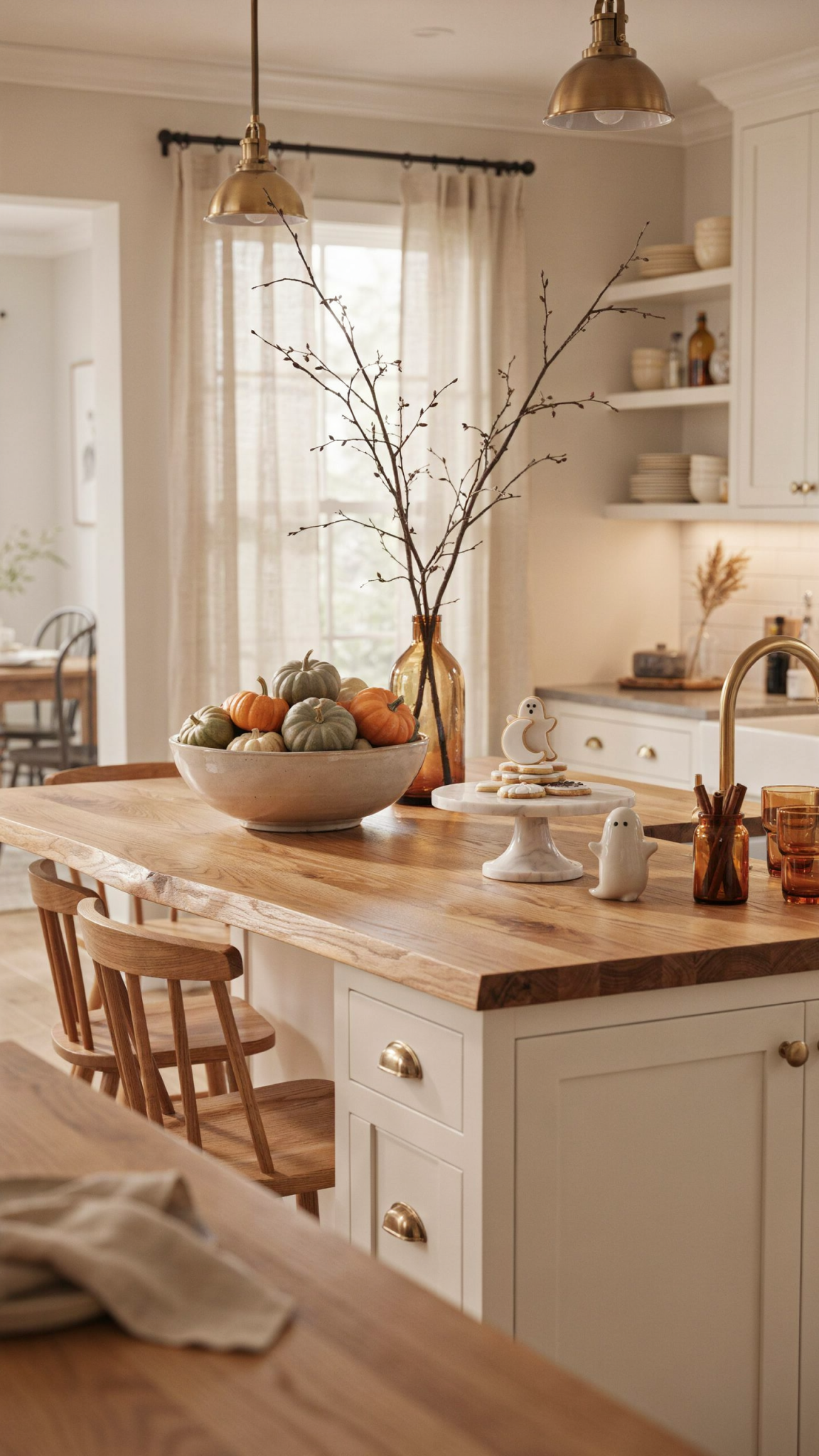
7. Treat the Entryway Like a Movie Trailer
The entry should tell visitors what kind of Halloween house they are entering. It doesn’t need to reveal everything. It simply needs to establish the mood. An antique-style mirror with black taper candles, a vase overflowing with crooked branches, several pumpkins, and a few bats climbing the wall may be enough. Or perhaps it is playful: a skeleton sitting on the bench, witch hats hanging overhead, and a bowl of candy waiting on the console.
Lighting is especially important here. A small lamp with a warm bulb instantly creates atmosphere. So do battery-operated candles, lanterns, and string lights tucked discreetly into branches. The goal is not necessarily to make the entry dark. It is to make it glow.
8. Make the Mantel the Star
If you have a fireplace, Halloween practically begs you to decorate it. Architecturally, fireplaces are already natural focal points, which means seasonal decorations placed there automatically feel important. Start with the largest visual element. This might be artwork, a mirror, a wreath, an oversized spiderweb, or a dramatic arrangement of branches. Then layer around it. Try pumpkins in varying sizes. Add tall candlesticks. Lean an antique-looking portrait against the wall. Let black gauze drape slightly over the edge. Introduce ravens, bats, or spiders sparingly. Then step back.
A designer mantel typically has movement. Objects are not all the same height or evenly spaced. Some pieces overlap. Some are tall. Some sit low. And there is usually at least a little empty space. For Halloween, asymmetry can be particularly effective because it makes an arrangement feel slightly unsettled—which happens to be perfect for the season.
9. Look to Nature Before the Halloween Aisle
Some of the most beautiful Halloween decorations aren’t technically Halloween decorations at all.
Branches are a perfect example. Bare, crooked branches instantly create a slightly eerie silhouette. Place them in a large urn or vase and suddenly a completely ordinary entryway feels like October. Other natural materials work beautifully too. Think dried hydrangeas, pampas grass, moss, fall leaves, dried seed pods, pinecones, grapevine, wheat, feathers, and of course pumpkins and gourds. Nature provides irregular shapes and imperfect textures that manufactured seasonal décor often lacks. It also bridges the gap between Halloween and fall. Once Halloween is over, remove the bats and spiders while leaving the branches, pumpkins, and foliage in place. Your house can transition into November without starting over.
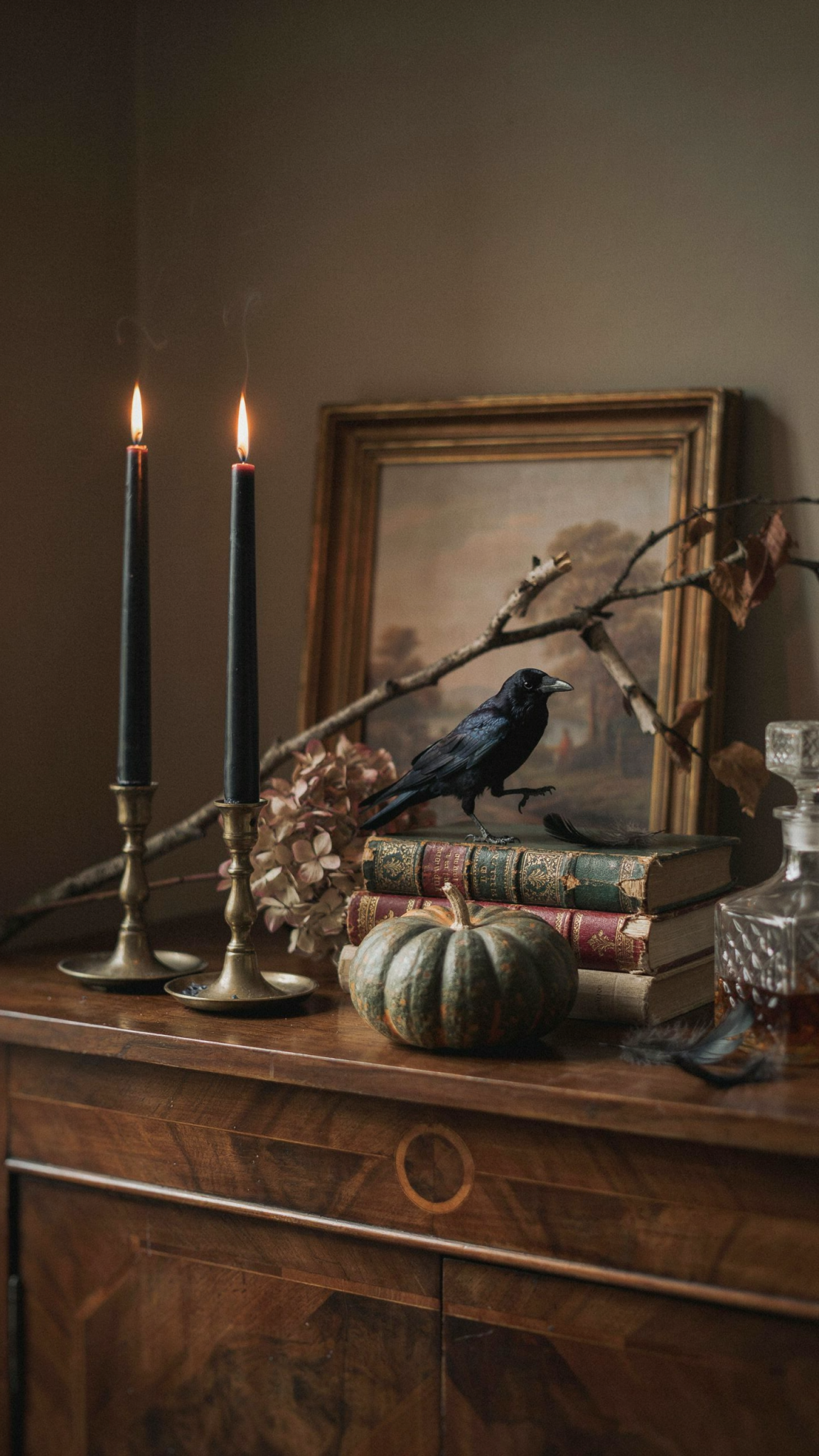
10. Mix Real Pumpkins With Decorative Ones
There is something about real pumpkins that instantly makes seasonal décor feel richer. Their imperfect stems, subtle color variations, and irregular shapes bring life to a display. That doesn’t m