

The 1960s was a defining decade for interior design—where creativity met functionality and boldness became the norm. Dining rooms evolved beyond simple eating areas into expressive spaces filled with personality, color, and innovation. Today, this iconic style is making a strong comeback, blending nostalgia with modern sensibilities. Whether you’re doing a full makeover or just adding subtle retro touches, these expanded ideas will help you recreate a 1960s dining room that feels both authentic and effortlessly stylish.
1. Make a Statement with Iconic Lighting
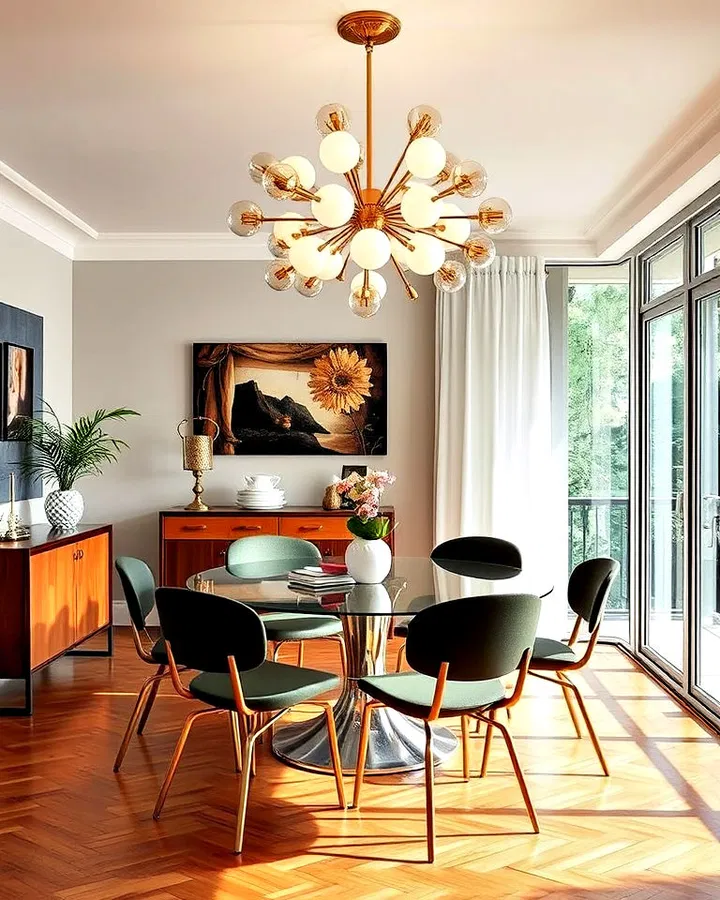
Lighting is one of the quickest ways to define a 1960s-inspired dining room. A Sputnik chandelier, with its radiating arms, or a cluster of globe pendants can instantly become the focal point of the space. These fixtures are not just practical—they act as sculptural art pieces.
To maximize impact, position the light directly above the dining table and choose warm-toned bulbs to enhance the cozy atmosphere. Metallic finishes like brass or chrome further reinforce the retro aesthetic while adding a touch of sophistication.
2. Build a Strong Mid-Century Foundation
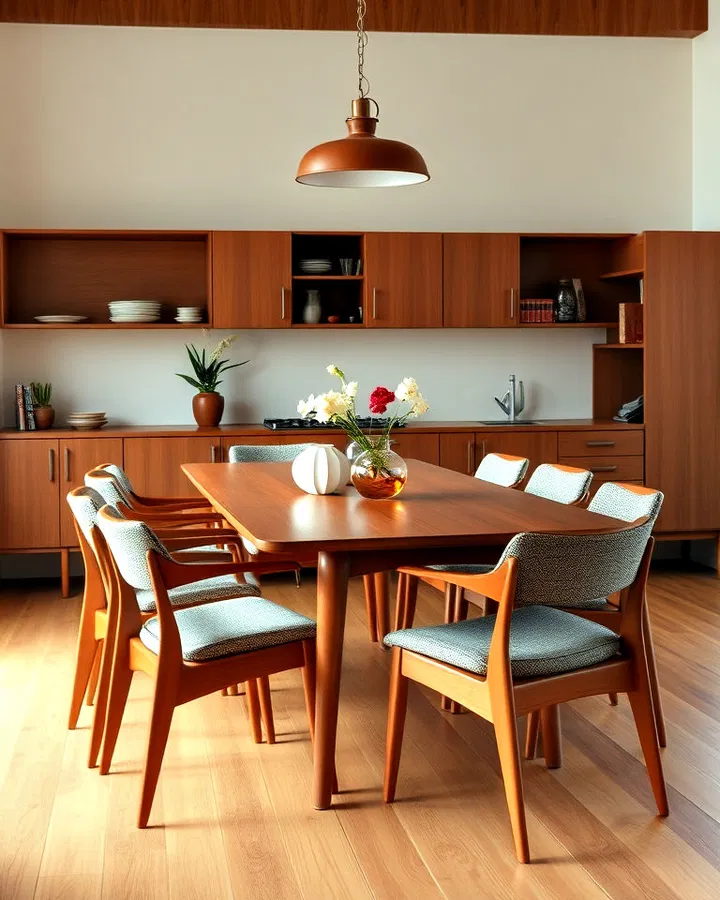
Your dining table and chairs set the tone for the entire room. Choose pieces with clean lines, smooth surfaces, and tapered legs—hallmarks of mid-century design. Materials like walnut, teak, and oak provide warmth and authenticity.
For a more curated look, mix seating styles—such as pairing wooden chairs with upholstered ones at the head of the table. This adds visual interest while staying true to the era’s minimalist yet functional approach.
3. Introduce Retro Colors with Confidence
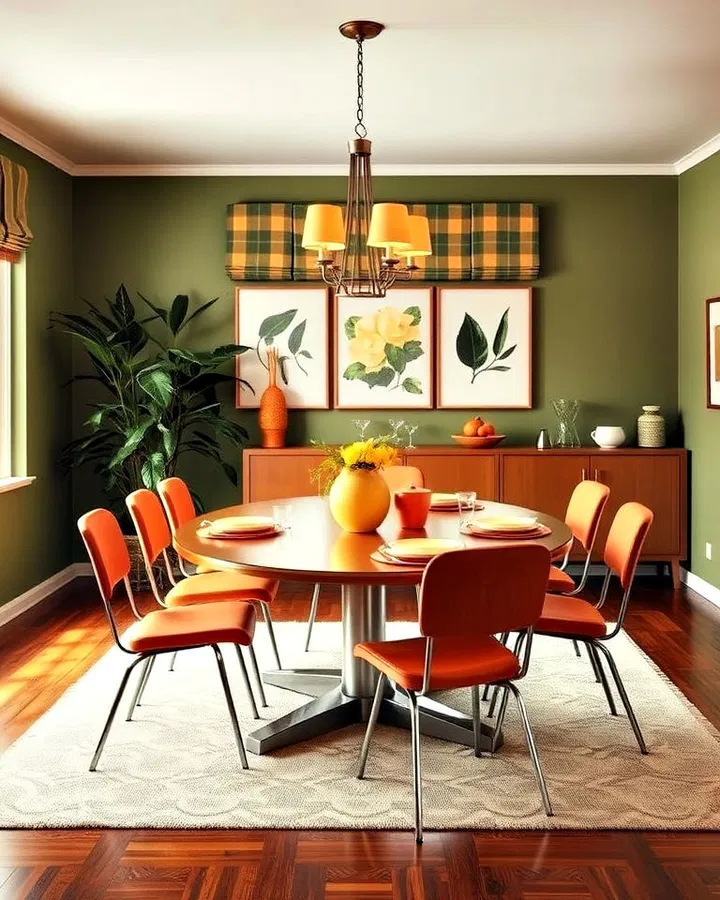
The 1960s embraced bold, earthy color palettes. Incorporate shades like mustard yellow, avocado green, burnt orange, and deep brown to create a warm and inviting space.
Instead of applying color everywhere, layer it thoughtfully—through cushions, curtains, artwork, or accent walls. This approach keeps the room vibrant without overwhelming the senses, allowing each element to stand out.
4. Add Character with Wood-Paneled Walls
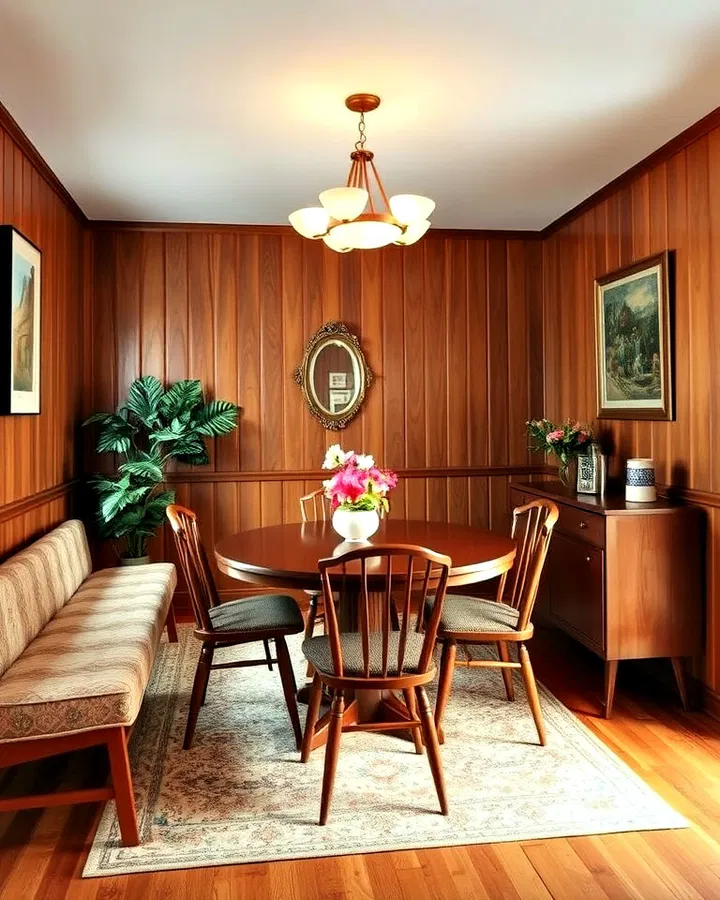
Wood paneling is one of the most recognizable features of 1960s interiors. It adds texture, depth, and a sense of warmth that instantly makes the space feel cozy.
To modernize the look, pair paneling with lighter décor elements such as mirrors, artwork, or soft furnishings. This contrast prevents the room from feeling too dark while preserving its vintage charm.
5. Layer in Geometric Wall Designs
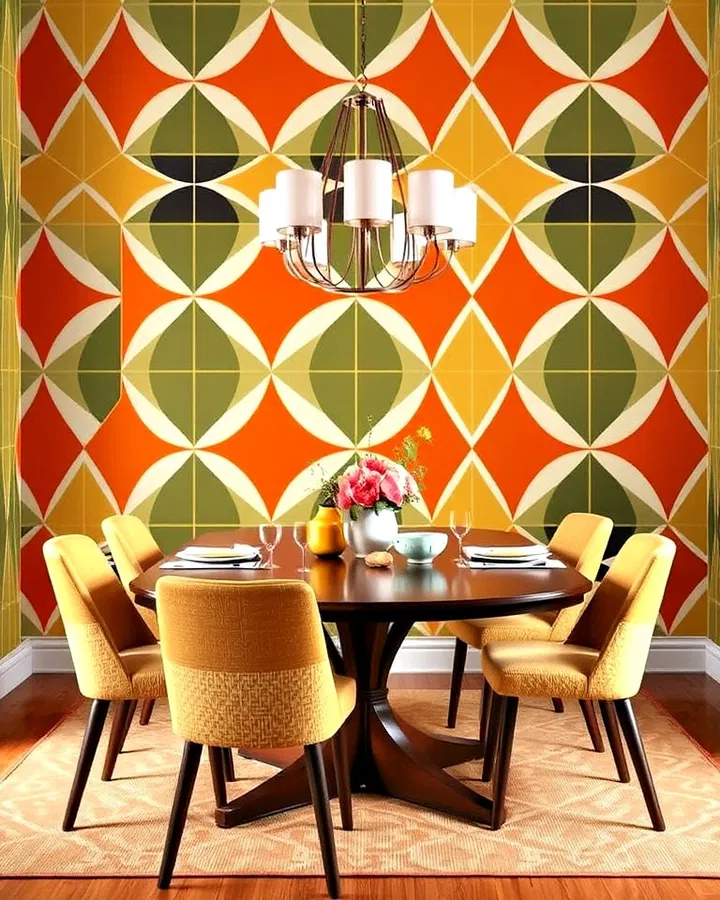
Geometric patterns bring energy and movement into your dining room. Whether through wallpaper, decals, or painted designs, these patterns reflect the playful creativity of the 1960s.
If you prefer a subtle approach, limit the pattern to one feature wall. Pair it with simple furniture and neutral tones to maintain balance while still making a statement.
6. Ground the Room with a Statement Rug
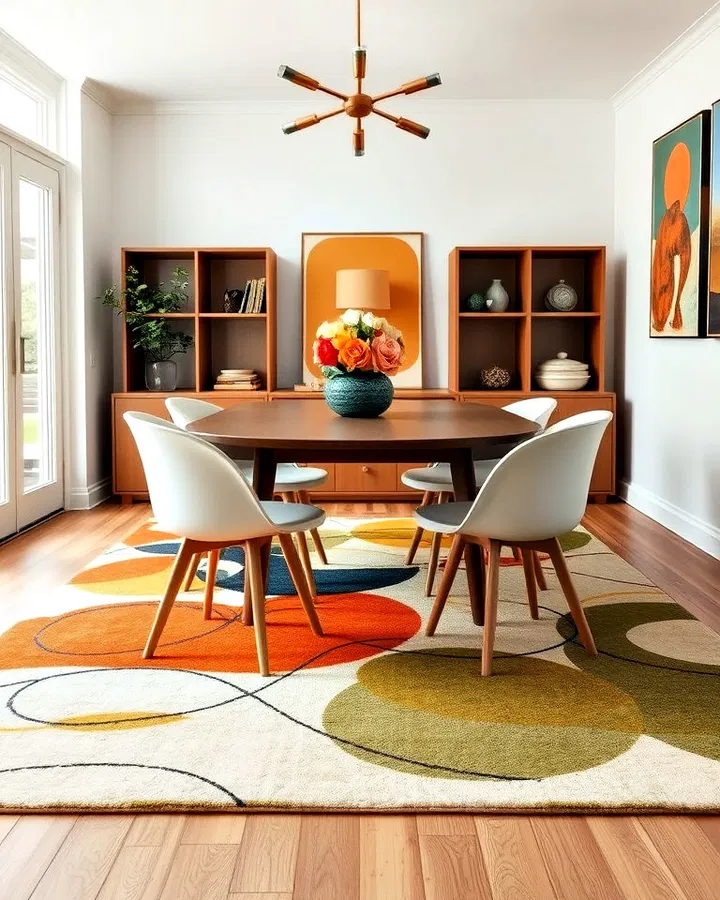
An abstract or geometric rug can visually anchor your dining area. Choose designs with bold shapes or retro color combinations to tie the room together.
In addition to style, rugs add comfort and help define the dining space—especially in open-plan homes. Make sure the rug is large enough to accommodate chairs even when pulled out.
7. Choose Sleek and Functional Seating
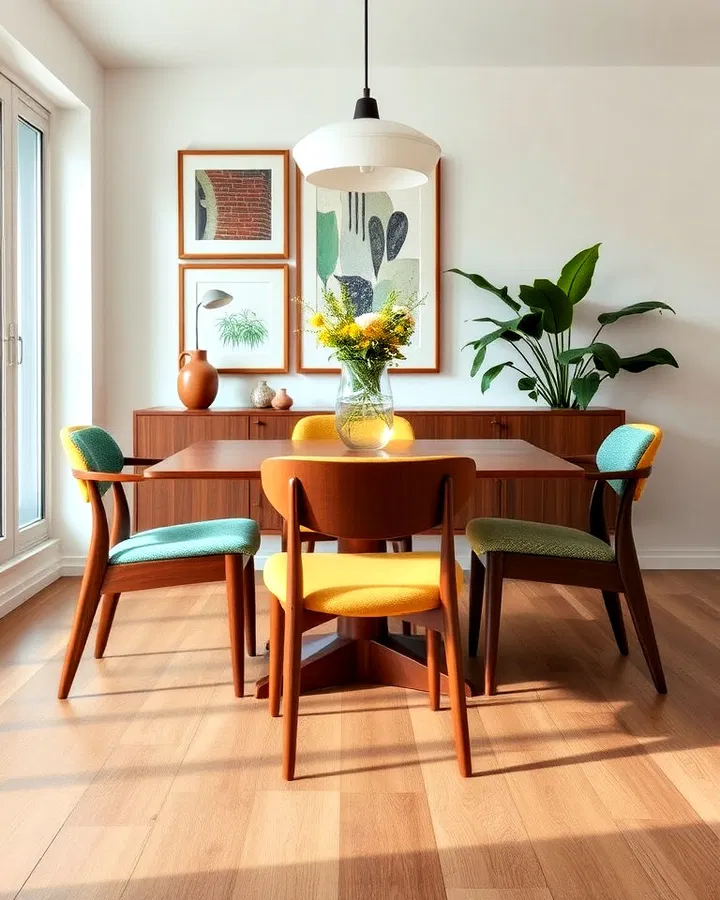
Dining chairs in the 1960s were designed with both comfort and simplicity in mind. Look for slim frames, angled legs, and minimal detailing.
To add personality, opt for upholstery in textured fabrics or bold colors. This creates contrast while maintaining the clean aesthetic that defines mid-century design.
8. Incorporate a Stylish Sideboard
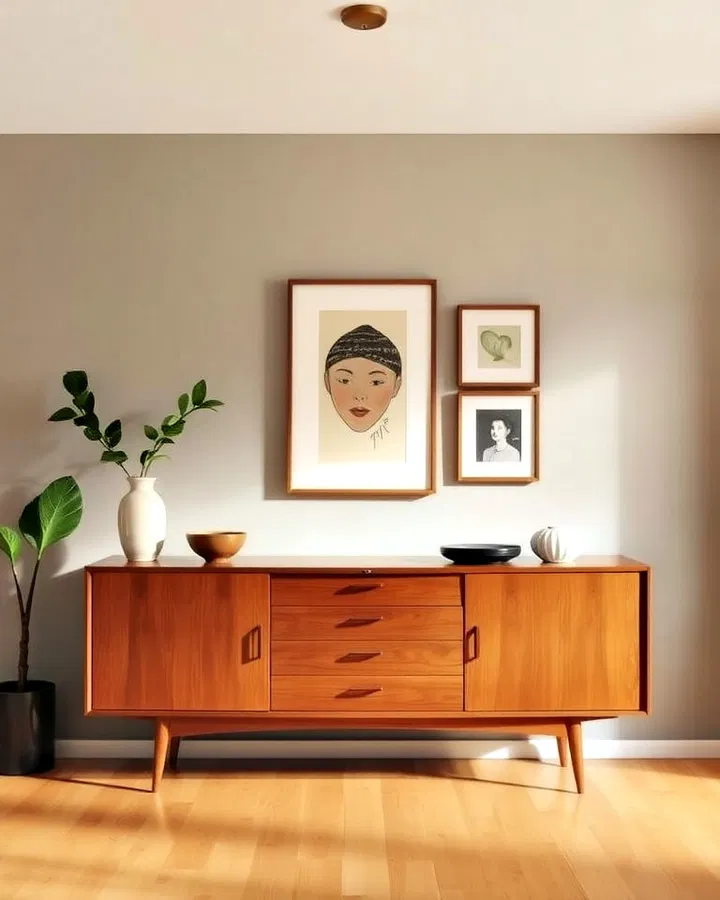
A sideboard is both a functional storage solution and a decorative feature. Its long, low profile complements the horizontal lines often found in mid-century interiors.
Use it to store dinnerware while styling the top with ceramics, books, or a statement lamp. This layered look adds depth and reinforces the retro theme.
9. Lighten the Look with Glass Elements
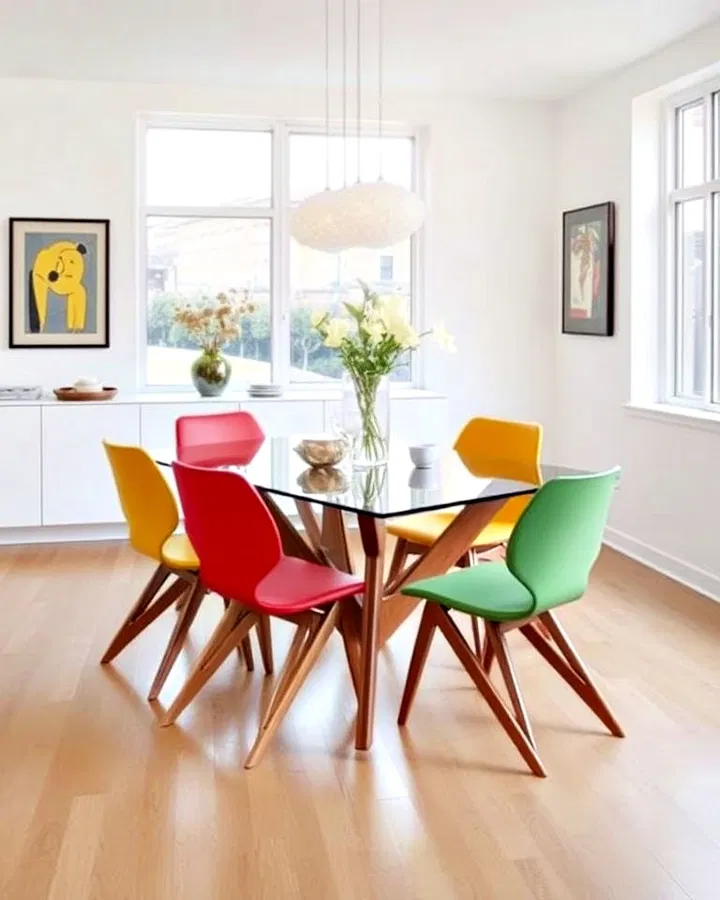
Glass-top tables are perfect for creating an open and airy feel, especially in smaller dining rooms. They reflect light and make the space appear larger.
Pair the glass surface with sculptural wooden or chrome bases to maintain a balance between vintage and modern design elements.