

Designers know a secret that instantly separates a basic room from one that looks straight out of a magazine: texture.
You can choose the perfect paint color, buy stylish furniture, and hang trendy artwork, but without layered textures, your space can still feel flat and uninspired. High-end interiors — the kind you see in luxury homes and design magazines — all have one thing in common: a thoughtful mix of textures that add depth, warmth, and dimension.
Whether your style leans modern and minimal or cozy and collected, mastering texture is the key to creating a polished, designer-approved look. In this ultimate guide, you’ll learn how to layer textures like a pro — from fabrics and finishes to walls, furniture, and accessories — so your home feels rich, inviting, and effortlessly elevated.
1. Why Texture Is the Secret to a High-End Look
Texture isn’t just how something feels; it’s how it looks. Even when you don’t physically touch a material, your eyes read its depth, weight, and finish. When a room lacks texture, it feels flat. When done right, layered textures create a sense of visual interest and comfort.
Think about walking into a beautifully designed hotel lobby:
Velvet chairs paired with sleek marble tables
Chunky knit throws layered on smooth leather sofas
Soft rugs grounding polished stone floors
This interplay between soft and hard, matte and glossy, rough and smooth creates balance and sophistication. Without texture, even the most expensive room can feel cold or unfinished.
2. Start With a Whole-Room Vision
Before layering textures, you need a design direction. Textures should support your style, not fight against it.
Ask yourself:
Do I want my home to feel warm and cozy or sleek and modern?
Do I prefer organic, natural materials or polished, glamorous finishes?
Am I aiming for minimalism, maximalism, or something in between?
Create a mood board on Pinterest or Canva and collect inspiration images. Pay attention not just to colors and furniture but to material choices:
Are there lots of woven fabrics?
Do you see glossy finishes or matte surfaces?
Is the overall vibe casual or refined?
This vision will guide every texture decision that follows.
3. Build a Strong Foundation With Core Materials
High-end spaces start with quality foundational textures — the big surfaces that dominate the room.
Flooring
Your floors set the tone for everything above them. Consider:
Hardwood: Adds warmth and timelessness
Natural stone or polished concrete: Creates a sleek, modern feel
Layered rugs: Add softness, define zones, and introduce patterns
Pro Tip: If your flooring is sleek and smooth, contrast it with chunkier rugs or woven mats for balance.
Walls
Walls are the largest canvas in your home, so don’t leave them flat:
Textured wallpaper (grasscloth, linen, embossed patterns)
Plaster or limewash finishes for soft, tonal depth
Wood paneling or wainscoting for architectural richness
Ceilings
Most people forget about ceilings, but designers don’t:
Add wood beams for rustic warmth
Install coffered ceilings for architectural drama
Use a painted or wallpapered ceiling for an unexpected pop of texture
4. Master the Art of Fabric Layering
Fabrics are one of the easiest and most effective ways to add depth to a room.
Sofas & Chairs
Choose upholstery that fits your overall vibe:
Velvet: Luxe, glamorous, and soft
Linen: Airy and relaxed
Bouclé or sherpa: Cozy and inviting
Leather: Timeless and grounding
Throws & Pillows
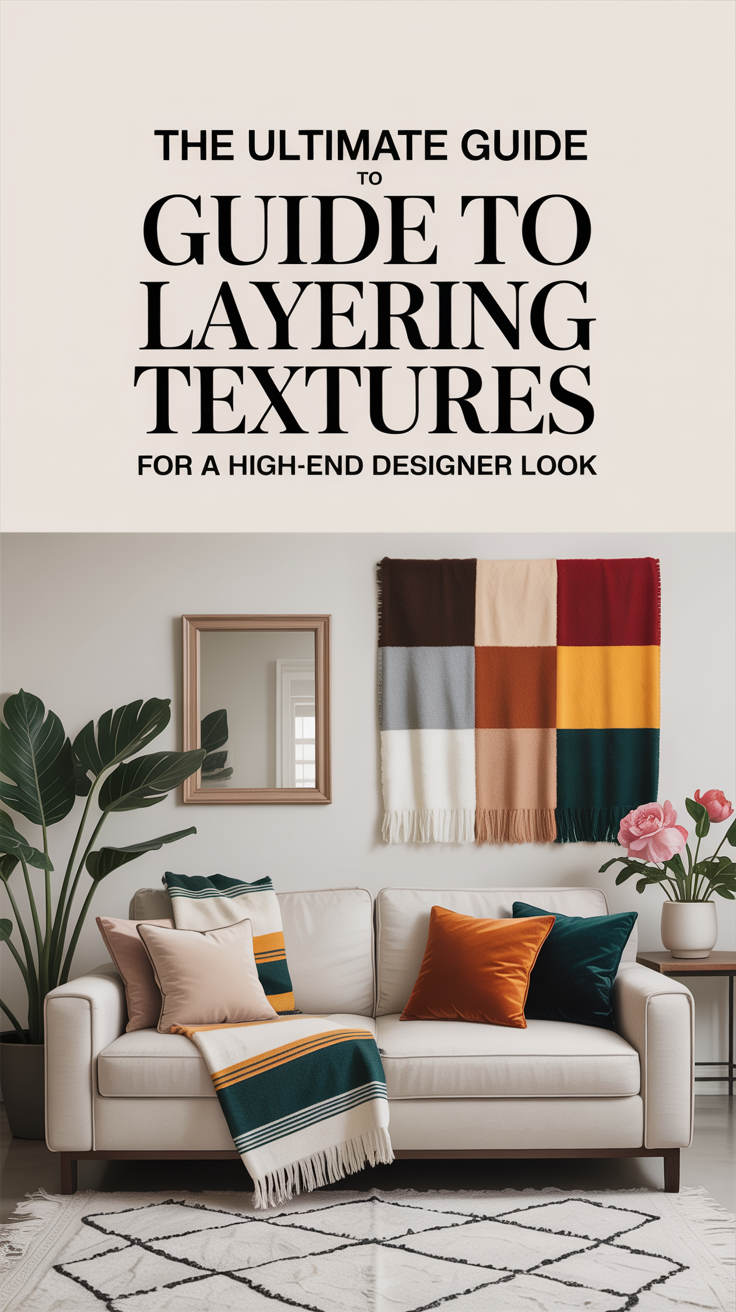
Layering throws and pillows introduces dimension and personality:
Mix chunky knits, smooth linens, and faux furs
Combine contrasting weaves but stick to a cohesive color palette
Use oversized floor pillows for an organic, collected feel
Designer Trick: Always vary scale. Pair one oversized lumbar pillow with smaller accent pillows to avoid clutter.
Curtains & Drapes
Window treatments instantly elevate a space:
Linen drapes → relaxed sophistication
Velvet curtains → moody elegance
Roman shades → tailored and classic
5. Balance Hard and Soft Surfaces
One of the hallmarks of designer spaces is contrast. If everything is soft, the room feels heavy. If everything is sleek, it feels cold.
Pair opposites for balance:
A glass coffee table on a plush wool rug
Matte cabinetry with polished brass hardware
Concrete countertops softened by woven bar stools
This push-and-pull between hard and soft creates visual tension that draws the eye and makes the space feel dynamic.
6. Layer in Natural Textures
Bringing in natural elements grounds your space and adds organic warmth.
Wood
Use repeated wood tones across furniture, shelving, and accents
Stick to 2–3 shades max for a cohesive look
Stone
Marble, travertine, and soapstone introduce timeless luxury
Honed finishes feel soft and understated, while polished surfaces read bold and glamorous
Plants
Nothing adds texture faster than greenery:
Use large-leaf plants for drama
Layer smaller trailing plants on shelves for softness
Incorporate natural baskets as planters to double up on texture
7. Use Metals as Accent Textures
Metals reflect light and bring contrast and shine to your design.
Popular finishes:
Brushed brass: Warm and timeless
Matte black: Bold and modern
Polished chrome: Sleek and minimal
Pro Tip: Mix metals intentionally, but always repeat each finish at least twice within the same space for cohesion.
8. Don’t Forget Lighting Texture
Lighting isn’t just functional — it’s a design statement.
Fixture Materials
Rattan pendants → airy and organic
Glass globes → polished and timeless
Woven shades → cozy and casual
Layered Light Sources
Every designer-approved room has three layers of lighting:
Ambient → ceiling lights, chandeliers
Task → reading lamps, under-cabinet lighting
Accent → sconces, picture lights, uplighting
By mixing materials and light types, you add dimension and mood.
9. Add Architectural Details
Built-in textures add a designer edge without relying solely on décor.
Board and batten walls → subtle texture and depth
Fluted paneling → trending yet timeless
Built-in shelving → creates intentional visual flow
Arches and rounded edges → soften sharp lines for balance
10. Accessorize With Intention
Accessories are where texture meets personality. But the trick is less is more.
Textured Décor
Ceramic vases with matte finishes
Woven baskets for storage and style
Layered trays in wood, marble, or leather
Art and Wall Décor
Choose pieces with dimension — think relief art, textile hangings, or layered frames
Use consistent framing finishes to avoid visual chaos
Books & Objects
Stacking books with sculptural accents adds both height and interest without cluttering the space.
11. Play With Scale and Proportion
Layering textures isn’t just about mixing materials — it’s about balancing scale.
Use oversized statement pieces (like a chunky knit throw) next to finer details (like a linen pillow).
Combine large woven rugs with smaller patterned layers for a collected look.
Anchor a room with substantial textures — like a velvet sofa — and contrast them with lighter, airy fabrics elsewhere.
12. Repeat Key Elements for Cohesion
A luxury home feels intentional because designers repeat certain textures and finishes throughout.
For example:
If you introduce brushed brass in the kitchen, echo it in the dining room chandelier.
Use bouclé fabric on a living room chair and repeat it on a bedroom bench.
Carry a natural linen tone across pillows, drapes, and bedding.
Repeating textures in small, subtle ways connects spaces and creates a whole-home flow.
13. Avoid These Common Texture Mistakes
Even with the best intentions, it’s easy to go overboard. Here’s what to watch out for:
Too many competing textures → feels chaotic instead of layered
Ignoring balance → pairing all glossy surfaces or all matte finishes can fall flat
Mixing too many patterns → stick to 2–3 per room max
Forgetting functionality → velvet dining chairs look gorgeous… until spaghetti night
14. Try the “Designer’s Texture Formula”
If you’re unsure where to start, use this simple ratio designers swear by:
40% soft textiles → rugs, pillows, drapes, upholstery
30% smooth finishes → glass, polished stone, sleek metals
20% organic materials → wood, rattan, plants, woven accents
10% statement textures → bouclé, leather, plaster, or high-gloss pops
This formula ensures your space feels balanced and intentional without being overwhelming.
15. Test Before You Commit
Always see textures together before making decisions:
Create a sample board with fabric swatches, flooring samples, and paint chips.
Use Pinterest collages to visualize how different materials interact.
Leverage AI tools like Houzz’s AR preview or IKEA Kreativ to see textures layered in real time.
Layering textures is the ultimate shortcut to a high-end, designer-approved look. It’s what turns a nice room into a wow room — full of depth, warmth, and personality. By mixing soft and hard materials, balancing finishes, and repeating key elements, you’ll create a space that feels intentional, elevated, and uniquely yours.
Start small: add a chunky knit throw, swap smooth pillows for textured linens, or bring in a raw-edge wood bowl to contrast your marble countertop. Over time, these small, thoughtful choices will transform your home into a collected, magazine-worthy space that feels both luxurious and livable.
