

An outdoor kitchen is no longer just a luxury add-on; it has evolved into an essential extension of the modern home. For homeowners who love to entertain, cook, and spend time in nature, an outdoor kitchen transforms a simple backyard into a vibrant culinary and social hub. However, taking that kitchen and putting it under a permanent cover elevates the experience entirely. A covered outdoor kitchen offers protection from the elements, expands your usable square footage year-round, and protects your investment in high-end appliances. Designing a functional covered outdoor kitchen requires careful planning, a solid understanding of spatial flow, and strategic choices regarding materials, appliances, ventilation, and lighting.
Let’s talk through the essential steps and considerations for designing a functional, beautiful, and enduring covered outdoor kitchen. We will explore structural options, layout strategies, material selections, appliance must-haves, and the critical but often overlooked elements like ventilation and permits.
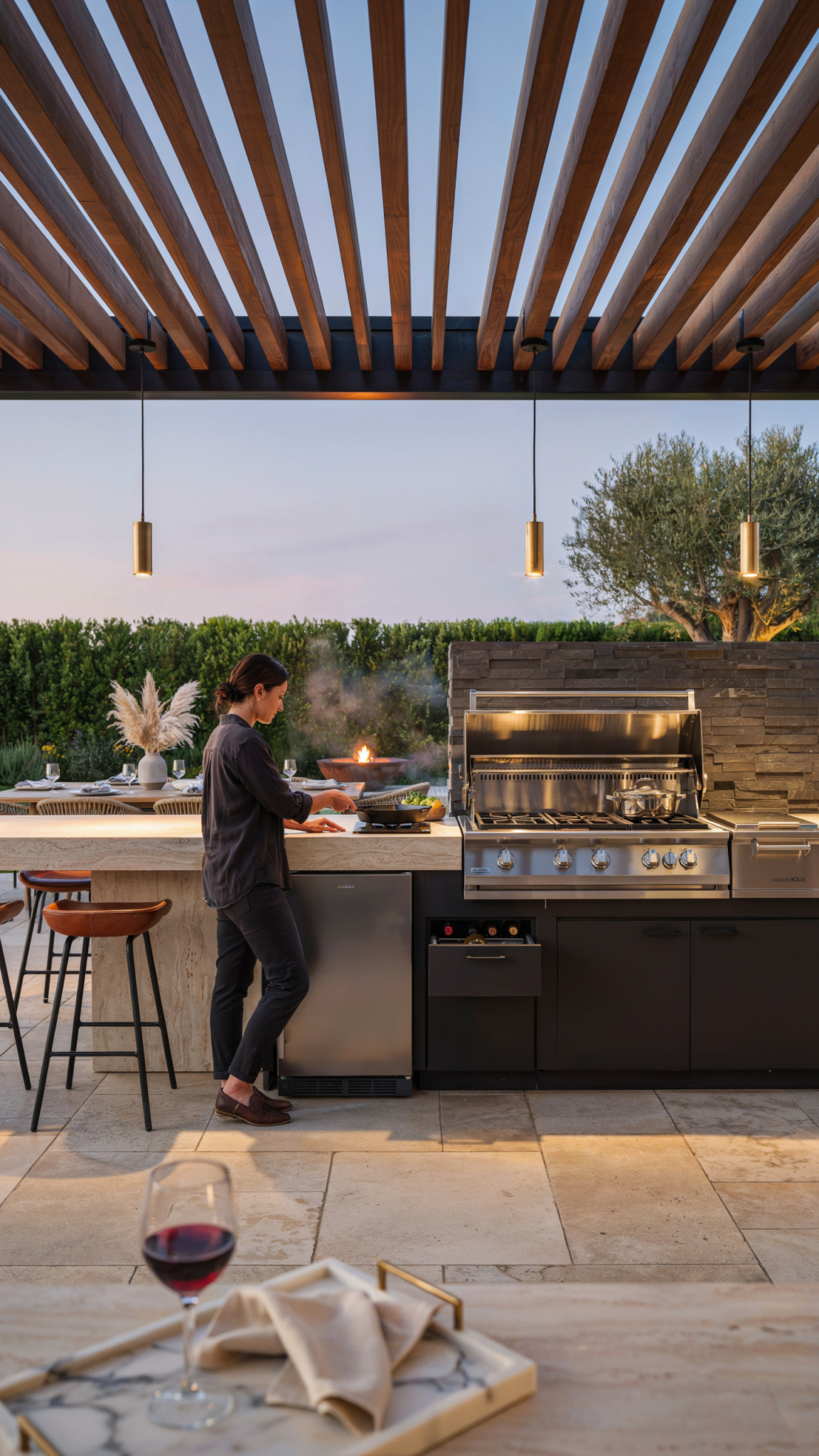
The Importance of a Covered Structure
The foundation of any covered outdoor kitchen is, quite literally, the cover itself. The decision to build a structure overhead is what separates a casual grilling station from a true outdoor room. When you invest in premium outdoor appliances, custom cabinetry, and natural stone countertops, exposing them to relentless sun, driving rain, and winter snow can significantly reduce their lifespan. A cover acts as the first line of defense, shielding your equipment from damaging UV rays and moisture, which helps prevent fading, rust, and premature wear.
Beyond protection, a covered structure dictates the usability of the space. A solid roof or a well-designed pergola allows you to cook and entertain regardless of the weather. It provides much-needed shade during the sweltering summer months, making it comfortable to stand by a hot grill. Conversely, during a sudden downpour, the party does not have to move indoors; the cooking and gathering can continue uninterrupted. Furthermore, a permanent structure creates a defined architectural anchor in your backyard. It establishes a sense of place, framing the outdoor kitchen as a distinct “room” that invites comfortable seating, ambient lighting, and entertainment features like outdoor televisions and sound systems.
Choosing the Right Structure
The type of structure you choose will set the tone for the entire space and dictate how much protection you receive from the elements. There are several popular options, each offering a different balance of shade, shelter, and aesthetic appeal.
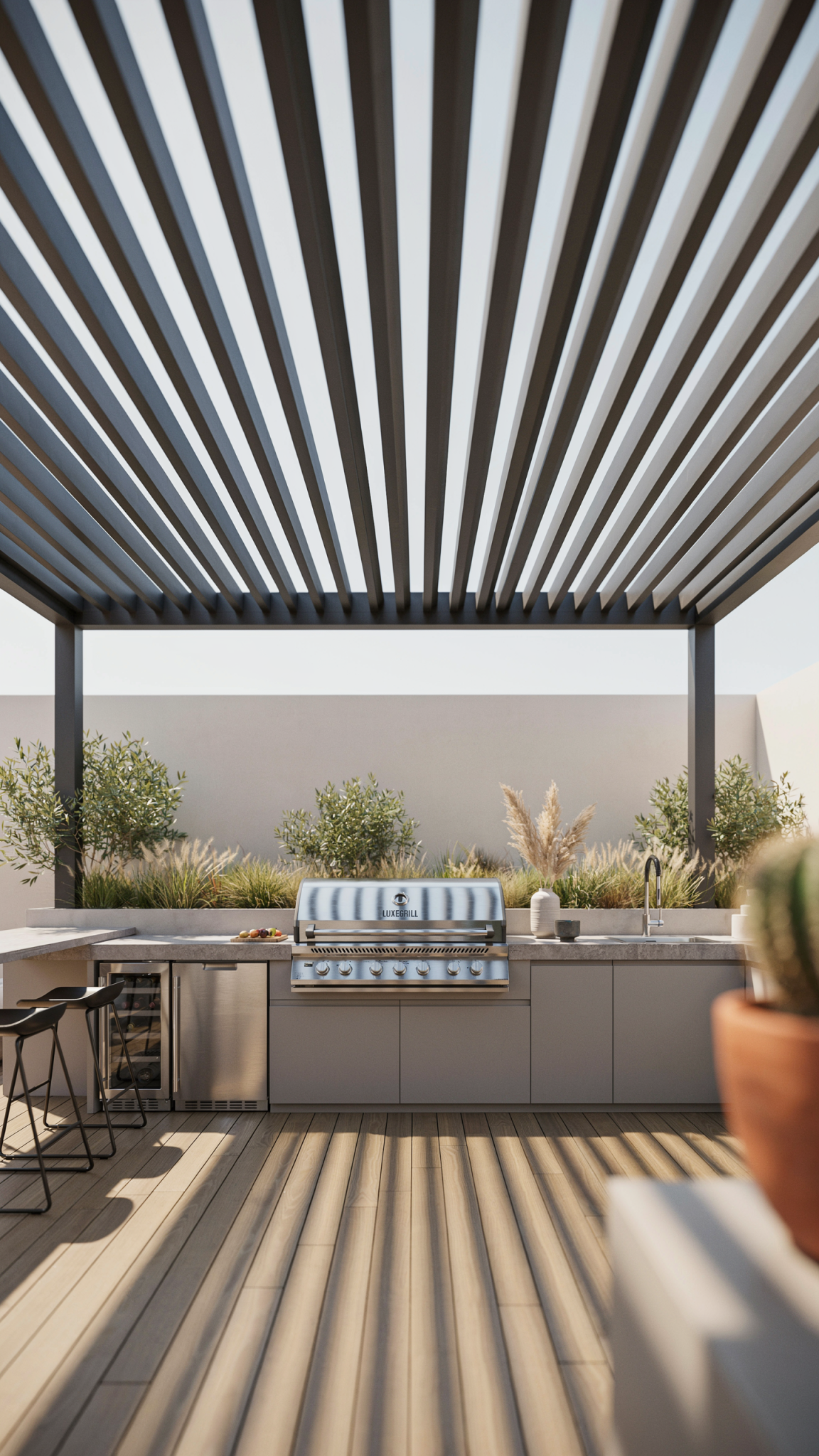
Pergolas and Arbors offer an open, airy feel. Characterized by their criss-cross or slatted roofs, pergolas provide partial shade while maintaining a strong connection to the sky and surrounding landscape. They are ideal for homeowners who want to define the space architecturally without feeling completely enclosed. While traditional wood pergolas are beautiful, they require significant maintenance to prevent rot and weathering. Aluminum pergolas have become increasingly popular as they offer superior durability and are much easier to clean, especially when dealing with grease or smoke from a grill. For added rain protection, some pergolas can be fitted with clear acrylic or polycarbonate panels.
Pavilions and Gazebos provide solid, sheltered protection. These structures feature a complete roof, offering guaranteed defense against sun and rain. A pavilion typically has a rectangular footprint with an open-air feel on the sides, making it a grand and inviting anchor for a spacious outdoor kitchen and dining area. Gazebos are similar but often feature octagonal or round designs. Because they have solid roofs, these structures are excellent for incorporating ceiling fans, extensive lighting, and even integrated heating systems.
Louvered Roofs represent the ultimate in flexibility. These modern structures feature adjustable slats that can be controlled manually or electronically. You can open the louvers to let in full sunlight, angle them for partial shade, or close them completely to create a waterproof barrier during a storm. This adaptability makes louvered roofs an excellent choice for climates with unpredictable weather, giving you total command over your outdoor comfort.
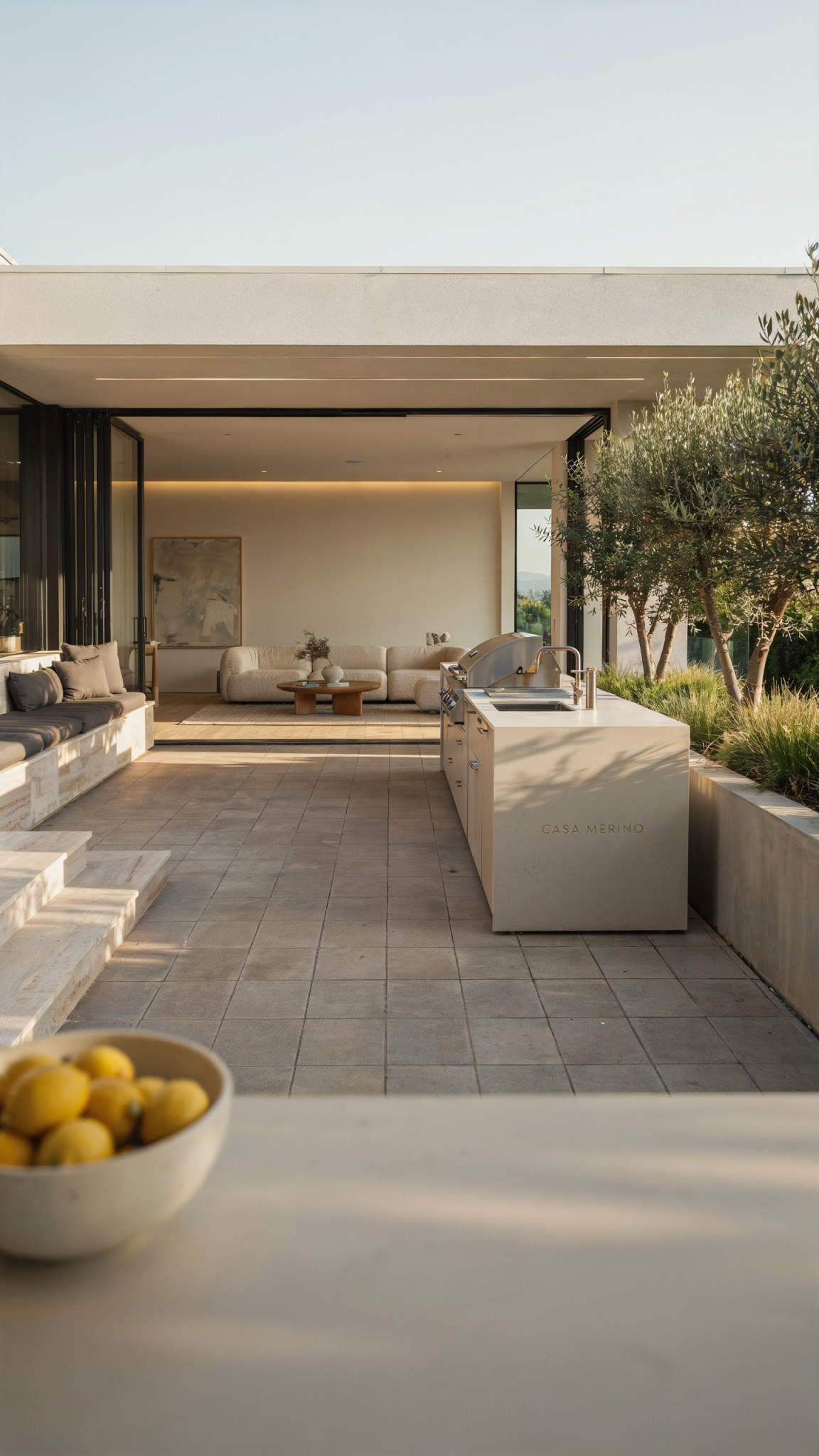
Home Extensions (California or Florida Rooms) are structures designed to tie directly into the architecture of your existing home. A “California Room” typically features a solid roof extending from the house, supported by posts, and often includes one or two walls for wind protection and privacy. A “Florida Room” takes this a step further by fully enclosing the space with screens or glass, creating a true four-season room that protects against insects and pollen while still feeling like an outdoor space.
Planning the Layout and Workflow
Once you have determined the structural cover, the next critical step is planning the layout. A beautiful outdoor kitchen is useless if it is frustrating to cook in. The principles of indoor kitchen design apply just as strongly outdoors. The goal is to create a seamless workflow that allows the chef to prepare, cook, and serve without constantly walking back and forth or feeling cramped.
The Work Triangle and Zones
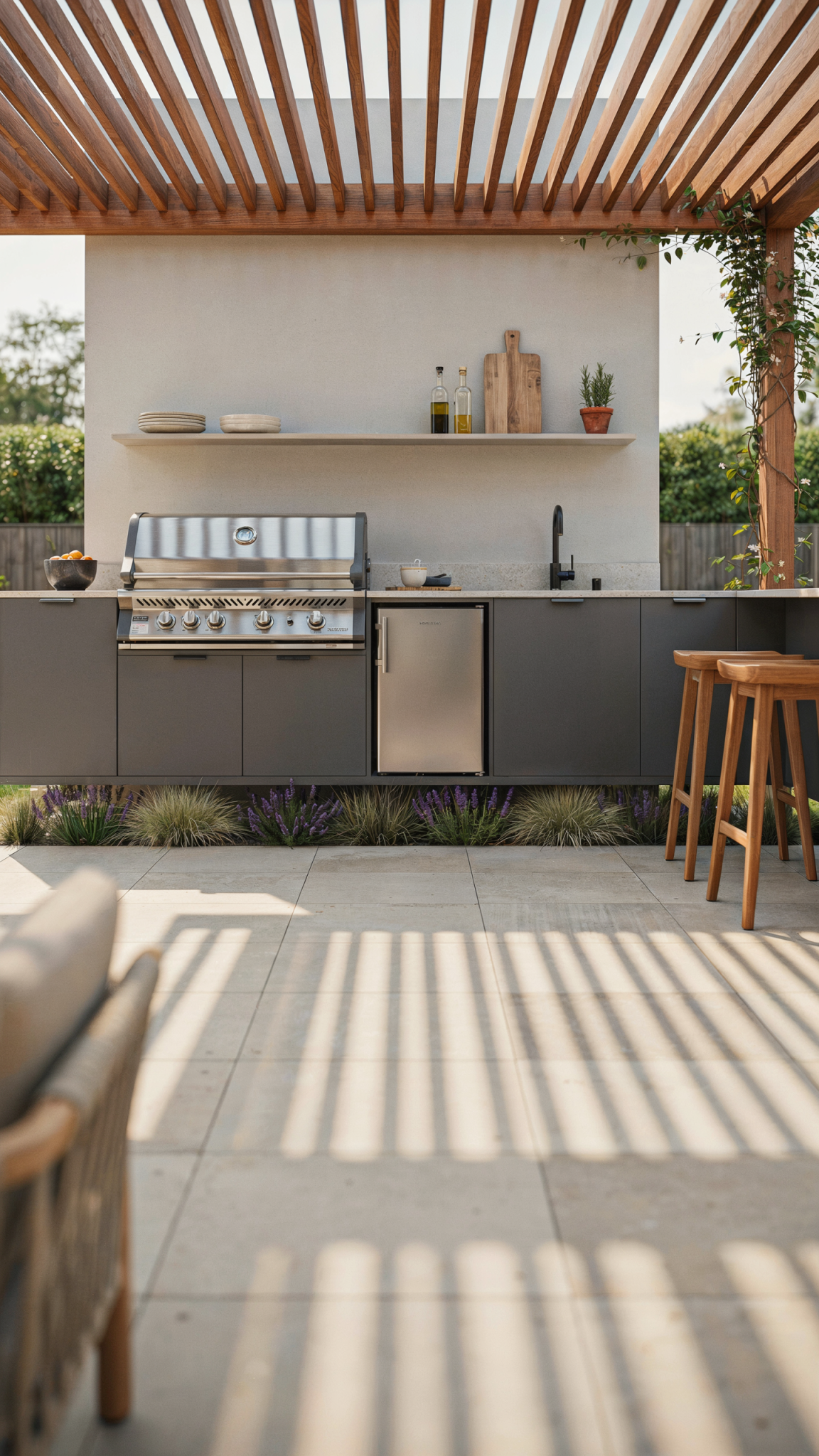
The traditional “work triangle”—the path between the grill (cooking), the sink (cleaning), and the refrigerator (storage)—should be unobstructed and efficient. However, in an outdoor setting, it is often more helpful to think in terms of distinct functional zones.
The Preparation Zone requires ample, uninterrupted counter space. This is where you will chop vegetables, marinate meats, and assemble platters. Ideally, this zone should be located next to the sink for easy washing of produce and hands, and adjacent to the grill so food can be transferred directly to the heat.
The Cooking Zone is centered around the grill and any secondary cooking appliances like side burners or pizza ovens. This area gets hot and can generate smoke and grease. It is vital to have heat-resistant countertops immediately adjacent to the grill for resting hot tools and platters.
The Cleaning Zone revolves around the sink and trash receptacles. Having a sink outdoors is a game-changer, eliminating the need to carry dirty dishes and cutting boards back inside. A pull-out trash and recycling drawer located near the sink and prep area keeps the kitchen tidy and keeps pests away.
The Serving and Entertaining Zone is where the food meets the guests. This often takes the form of a raised bar counter or a peninsula where guests can sit on stools, converse with the cook, and enjoy drinks and appetizers. This zone should be positioned so that guests are safely away from the heat and smoke of the grill, but close enough to feel part of the action.
Common Layout Configurations
The shape of your outdoor kitchen will depend on the available space under your covered structure and how you intend to use it.
A Straight-Line or Linear layout is the simplest and most space-efficient. It places all appliances and counter space along a single wall or island. This is ideal for smaller patios or when the kitchen needs to be tucked against the side of the house.
An L-Shaped layout is highly versatile and popular. It provides two legs of counter space, allowing for a clear separation between the cooking zone and the prep/serving zone. The corner of the “L” is often a great place for a sink or a built-in cooler. This layout naturally accommodates bar seating on the outer edge of one leg.
A U-Shaped layout is the ultimate configuration for serious cooks and large spaces. It surrounds the chef with appliances and counter space on three sides, offering maximum efficiency and storage. This layout easily accommodates multiple cooks and provides extensive seating options along the outer perimeter.
An Island layout features a central, freestanding unit that houses the grill and other components. This design allows for 360-degree access and is excellent for socializing, as guests can gather all the way around the kitchen.
Material Selection: Durability Meets Aesthetics
In an outdoor kitchen, materials must be chosen for their ability to withstand the elements, resist stains and grease, and endure temperature fluctuations, all while looking beautiful. Inferior craftsmanship and materials will deteriorate quickly, turning your investment into an eyesore.
Cabinetry and Framing
The base structure of your outdoor kitchen must be robust. Traditional wood framing can warp, rot, and attract insects if not meticulously sealed and maintained. Instead, modern outdoor kitchens often utilize heavy-duty aluminum, stainless steel, or concrete block framing.
For the cabinet faces and doors, Stainless Steel is the gold standard. It is highly durable, rust-resistant (especially 304-grade stainless steel), and offers a sleek, professional appearance that matches most grills. It is also easy to wipe down and sanitize.
Marine-Grade Polymer (often known by brand names like King StarBoard) is another excellent option. It is a high-density plastic that will not rot, swell, or splinter. It is UV-resistant and can be manufactured to mimic the look of painted wood cabinetry, offering a softer aesthetic than stainless steel.
Masonry and Stone bases, constructed from concrete blocks and finished with stone veneer, brick, or stucco, provide a permanent, built-in look that blends beautifully with natural landscapes. These structures are incredibly durable but are difficult to modify once built.
Countertops
Countertops take the brunt of the abuse in an outdoor kitchen, enduring hot pans, spilled wine, acidic citrus, and the weather itself.
Granite remains one of the most popular and durable choices. It stands up exceptionally well to the elements, does not absorb stains easily when properly sealed, and will not fade in the sun. When selecting granite for an outdoor kitchen, it is advisable to choose a mid-range color. Dark stones absorb significant heat from the sun and can become too hot to touch, while very light stones may show dirt more easily. It is also recommended to avoid heavily veined granite, as the epoxies used in those slabs can react negatively to UV rays.
Porcelain is rapidly gaining popularity as a premium outdoor countertop material. Large-format porcelain slabs are incredibly dense and non-porous, meaning they do not require sealing and are highly resistant to stains, scratches, and UV fading. They can be manufactured to mimic the look of natural stone, concrete, or even wood, offering immense design flexibility.
Concrete countertops offer a clean, contemporary, and industrial look. They can be customized with various pigments and edge profiles. However, concrete is porous and prone to cracking if not installed correctly with steel reinforcement. It must be sealed upon installation and resealed regularly to prevent stains from grease and wine.
Soapstone is a highly durable natural stone option. It is non-porous, meaning it does not require sealing and is highly resistant to stains, bacteria, and acidic foods. It is also highly heat resistant. The primary limitation of soapstone is its color palette, which is generally restricted to shades of gray and black.
Materials to avoid for outdoor countertops include quartz (the resins can yellow and degrade under UV light), marble (too porous and easily stained or etched by acids), and laminate (the particleboard core will warp and rot in humid or wet conditions).
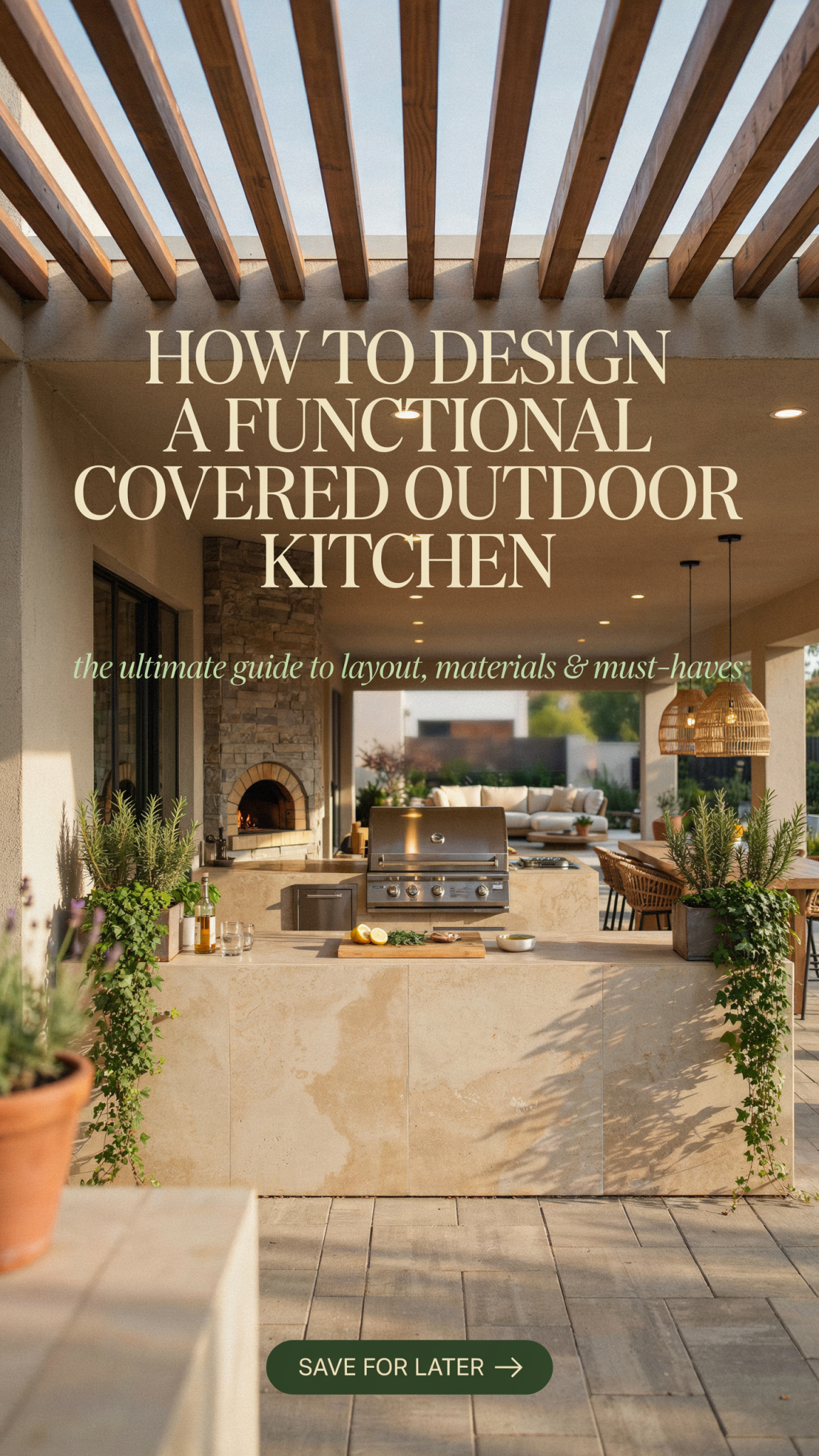
Flooring
The flooring under your covered outdoor kitchen must be slip-resistant, durable, and easy to clean. Grease splatters and spilled drinks are inevitable, so the floor must be able to handle frequent washing.
Porcelain Pavers are widely considered the best overall choice. They are frost-proof, weather-resistant, and non-porous, making them impervious to stains. They are available in textured finishes that provide excellent slip resistance, which is crucial around sinks and cooking areas.
Natural Stone like travertine, granite, or limestone offers timeless elegance. Travertine is particularly favored in hot climates because it stays relatively cool underfoot. However, natural stone requires regular sealing to prevent staining from grease and food.
Sealed Concrete (stamped or polished) is a versatile and cost-effective option. It can be textured and stained to mimic more expensive materials. It requires regular resealing to maintain its moisture and grease resistance.
Composite Decking is a good option if your outdoor kitchen is built on an elevated deck. High-quality composite materials resist rot, moisture, and insects far better than natural wood. However, care must be taken around the grill area, as composite decking is not as heat-resistant as stone or porcelain, and hot embers or grease can cause damage.
Appliance Selection: The Heart of the Kitchen
The appliances you choose will define the culinary capabilities of your outdoor kitchen. While a grill