Transforming an outdoor space into a stunning, functional extension of your home requires careful consideration of materials, design, and layout. Among the myriad options available for hardscaping, large-format pavers, specifically the 24×24 inch size, have emerged as a dominant trend in contemporary landscape design. These expansive squares offer a sleek, modern aesthetic that minimizes grout lines, creates an illusion of a larger space, and provides a durable foundation for patios, walkways, and pool decks.
The Appeal of Large-Format Pavers
The shift toward large-format pavers in outdoor design is a reflection of evolving architectural tastes that favor clean lines, minimalism, and seamless transitions between indoor and outdoor environments. The 24×24 inch paver, in particular, strikes an ideal balance. It is large enough to make a bold visual statement but manageable enough for skilled installers to handle efficiently.
One of the primary advantages of using 24×24 pavers is the reduction in visible joints. Traditional smaller pavers, such as standard bricks or cobblestones, create a busy, textured surface with numerous intersecting lines. While this can be charming in rustic or historical settings, it often clashes with modern architectural styles. Large pavers significantly decrease the number of joints, resulting in a smoother, more uniform surface. This uninterrupted expanse draws the eye outward, making small patios feel more spacious and large patios feel grand and cohesive.
Furthermore, fewer joints mean less maintenance. By minimizing these vulnerable areas, 24×24 pavers inherently reduce the time and effort required to keep the patio looking pristine. The smooth surface also provides a more stable foundation for outdoor furniture, preventing chairs and tables from wobbling unevenly.
Exploring Material Options for 24×24 Pavers
The aesthetic and functional qualities of your patio will be heavily influenced by the material you choose for your 24×24 pavers. Each material offers distinct advantages in terms of durability, texture, color availability, and cost.
Concrete Pavers
Concrete is perhaps the most versatile and widely used material for large-format pavers. Modern manufacturing techniques have elevated concrete far beyond the plain, gray slabs of the past. Today, concrete pavers can be engineered to mimic the look and texture of natural stone, wood, or even sleek architectural panels.
The primary benefit of concrete is its exceptional durability and strength. High-density concrete pavers are designed to withstand heavy foot traffic, extreme weather conditions, and the freeze-thaw cycles common in colder climates. They are also highly customizable. Pigments can be mixed directly into the concrete, ensuring that the color permeates the entire paver and resists fading over time. Textures can range from ultra-smooth, polished finishes ideal for contemporary spaces to stamped or brushed surfaces that provide slip resistance around pools.
From a cost perspective, concrete is generally more affordable than natural stone or high-end porcelain, making it an excellent choice for large patio projects where budget is a consideration.
Porcelain Pavers
Porcelain has revolutionized the outdoor paving industry in recent years. While traditionally associated with indoor flooring, exterior-grade porcelain pavers (typically 2cm thick) are engineered specifically for outdoor use.
Porcelain offers unparalleled aesthetic refinement. High-definition printing technology allows porcelain pavers to replicate the intricate veining of marble, the rich tones of natural wood, or the rugged texture of slate with astonishing realism. Beyond their beauty, porcelain pavers are incredibly dense and non-porous. This means they are virtually impervious to water absorption, making them highly resistant to stains, mold, and frost damage. They do not require sealing, which significantly reduces long-term maintenance costs.
Additionally, porcelain is naturally slip-resistant and maintains its color vibrancy even under intense ultraviolet exposure. While the initial material and installation costs for porcelain are typically higher than concrete, the longevity and low maintenance requirements often justify the investment.
Natural Stone
For those who seek timeless elegance and organic beauty, natural stone remains the gold standard. Materials such as bluestone, travertine, granite, and limestone can be cut into 24×24 inch squares to create breathtaking patios.
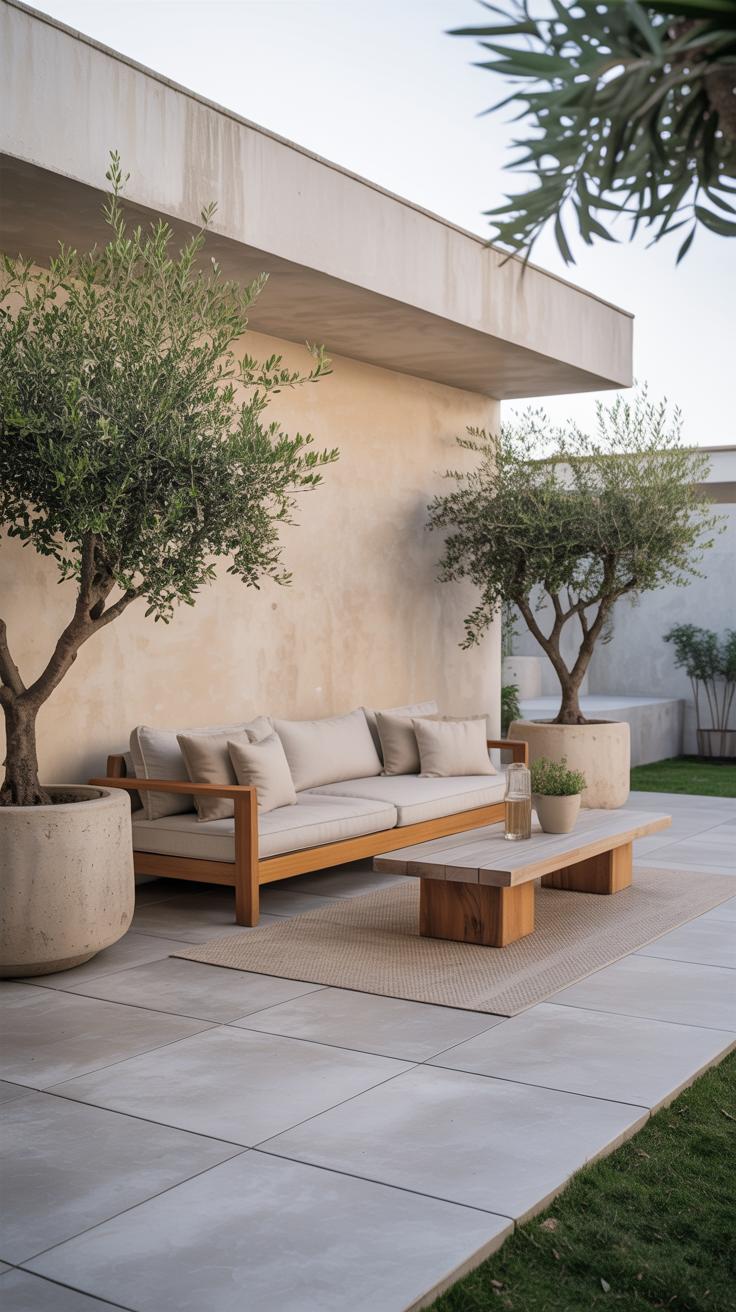
Natural stone offers a unique, unrepeatable aesthetic. Every piece features distinct color variations, mineral deposits, and textures formed over millions of years. Travertine, with its porous surface and cool tones, is a classic choice for Mediterranean-style patios and pool decks, as it remains comfortable underfoot even in direct sunlight. Bluestone provides a rich, earthy palette of grays, blues, and rusts, perfect for rustic or traditional landscapes. Granite offers unmatched hardness and a sophisticated, speckled appearance.
However, natural stone requires more careful consideration. It is generally the most expensive option, both in terms of material and labor. Some types of stone are porous and require regular sealing to prevent staining and water damage. Additionally, the natural variations in thickness can make installation more challenging, requiring a highly skilled contractor to ensure a perfectly level surface.
Design Styles and Layout Patterns
The 24×24 inch square is a versatile geometric shape that can be adapted to a wide range of design styles. The way the pavers are laid out, combined with the surrounding landscaping elements, dictates the overall mood of the outdoor space.
The Modern Minimalist Approach
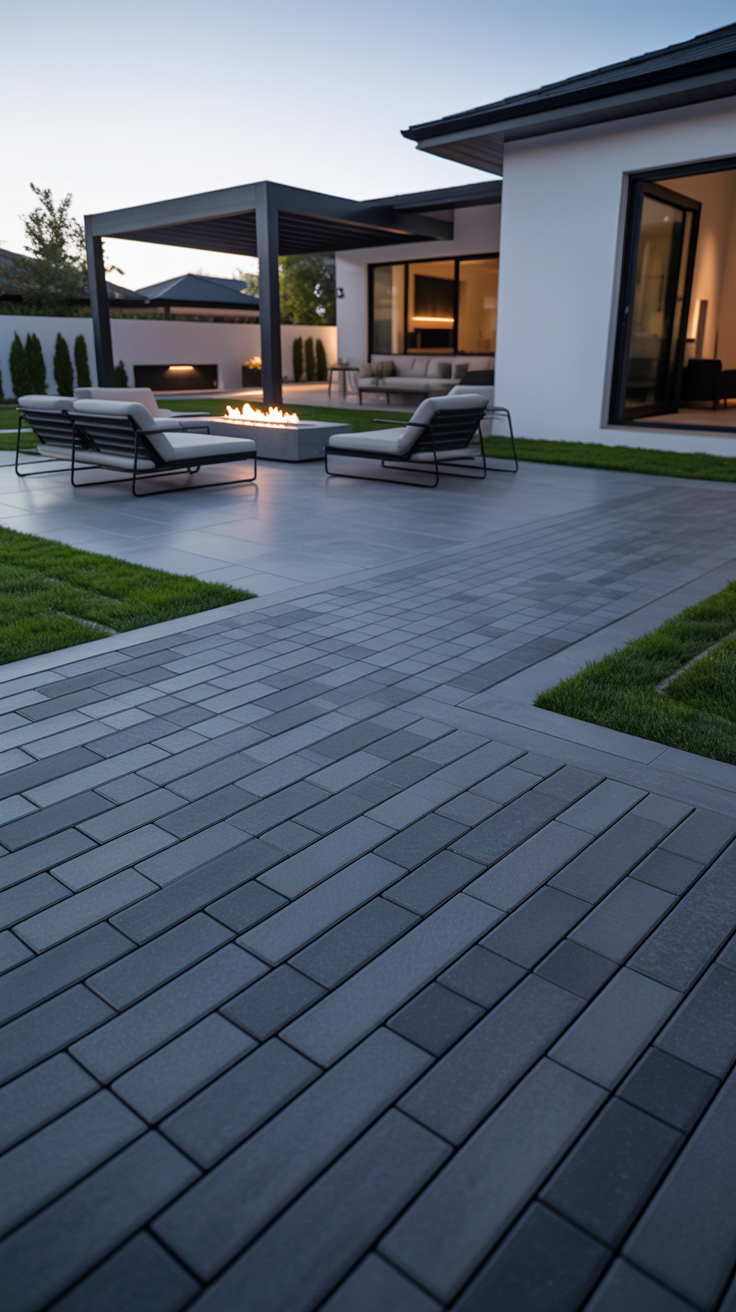
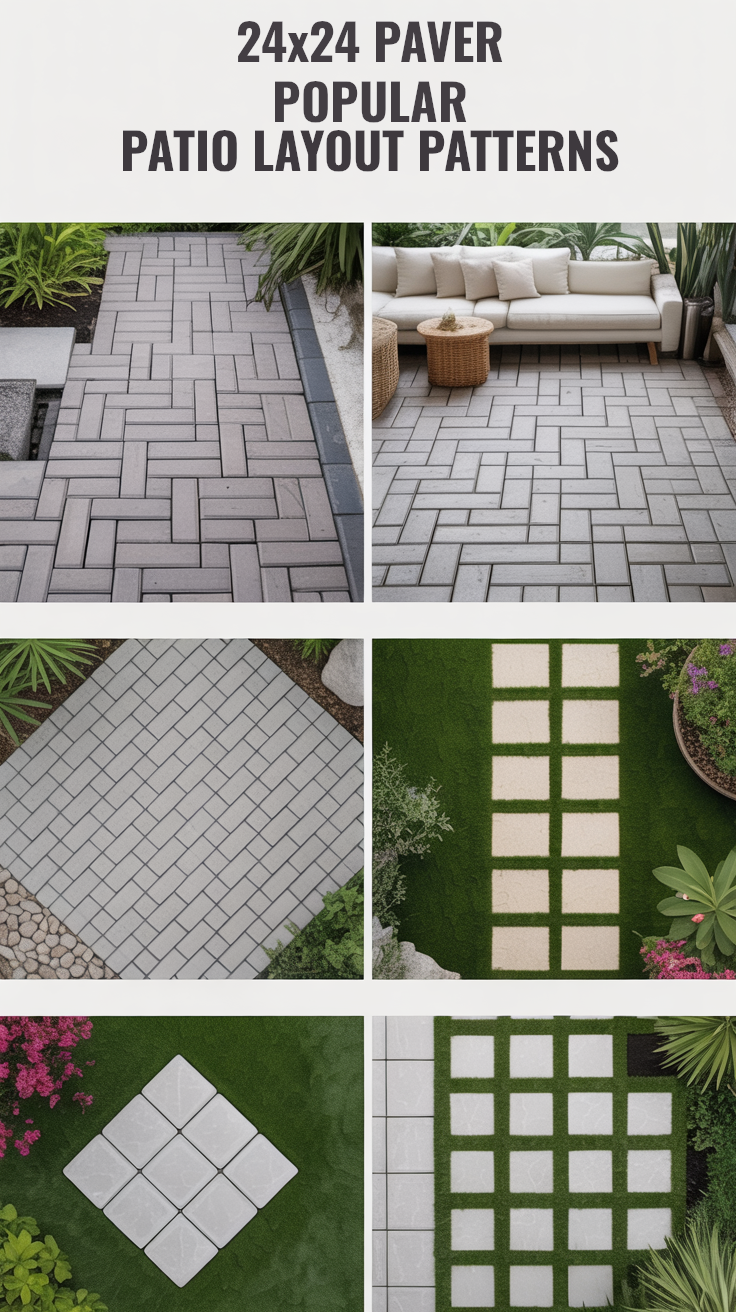
For a sleek, contemporary look, the stack bond pattern is the layout of choice. In a stack bond, the 24×24 pavers are aligned in a perfect grid, with all joints running straight and parallel. This emphasizes the clean, geometric lines of the pavers and creates a sense of order and calm.
To enhance the minimalist aesthetic, choose pavers in solid, cool tones such as charcoal gray, stark white, or polished concrete. Keep the joints narrow and fill them with a polymeric sand that closely matches the paver color for a seamless, monolithic appearance. Pair this layout with streamlined outdoor furniture, architectural planters, and structural landscaping elements like ornamental grasses or manicured hedges.
The Transitional Running Bond
If the stack bond feels too rigid, the running bond pattern offers a slightly softer, more transitional look. In this layout, the pavers are laid in staggered rows, typically offset by half the width of the paver (12 inches). This is the classic “brickwork” pattern, scaled up for large-format squares.
The running bond breaks up the continuous lines of the grid, adding subtle visual interest and a sense of movement to the patio. It works beautifully with both concrete and natural stone pavers and bridges the gap between modern and traditional design. This pattern is particularly effective for long, narrow spaces, such as walkways or side-yard patios, as it can make the area feel wider.
The Stepping Stone and Grass Integration
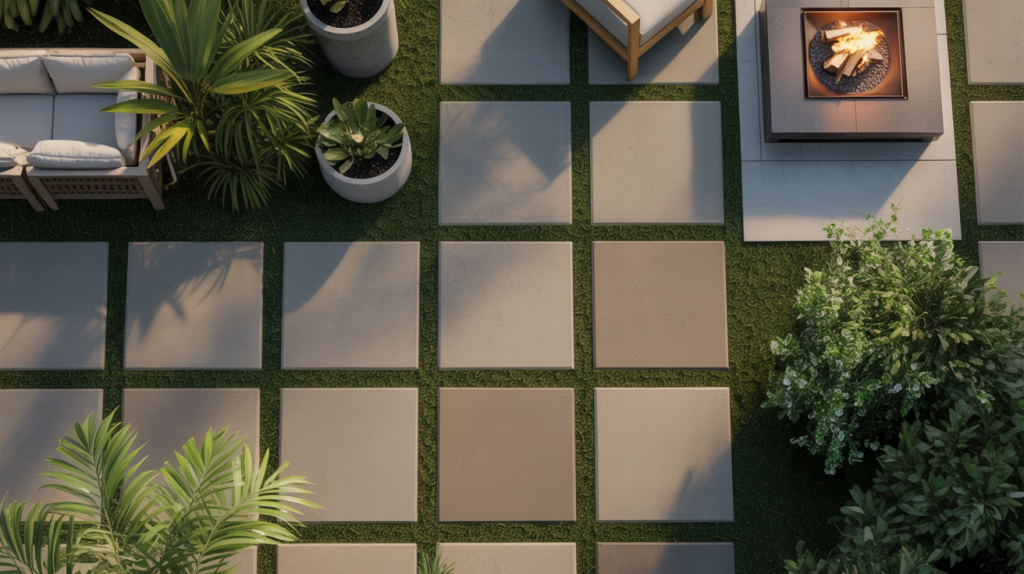
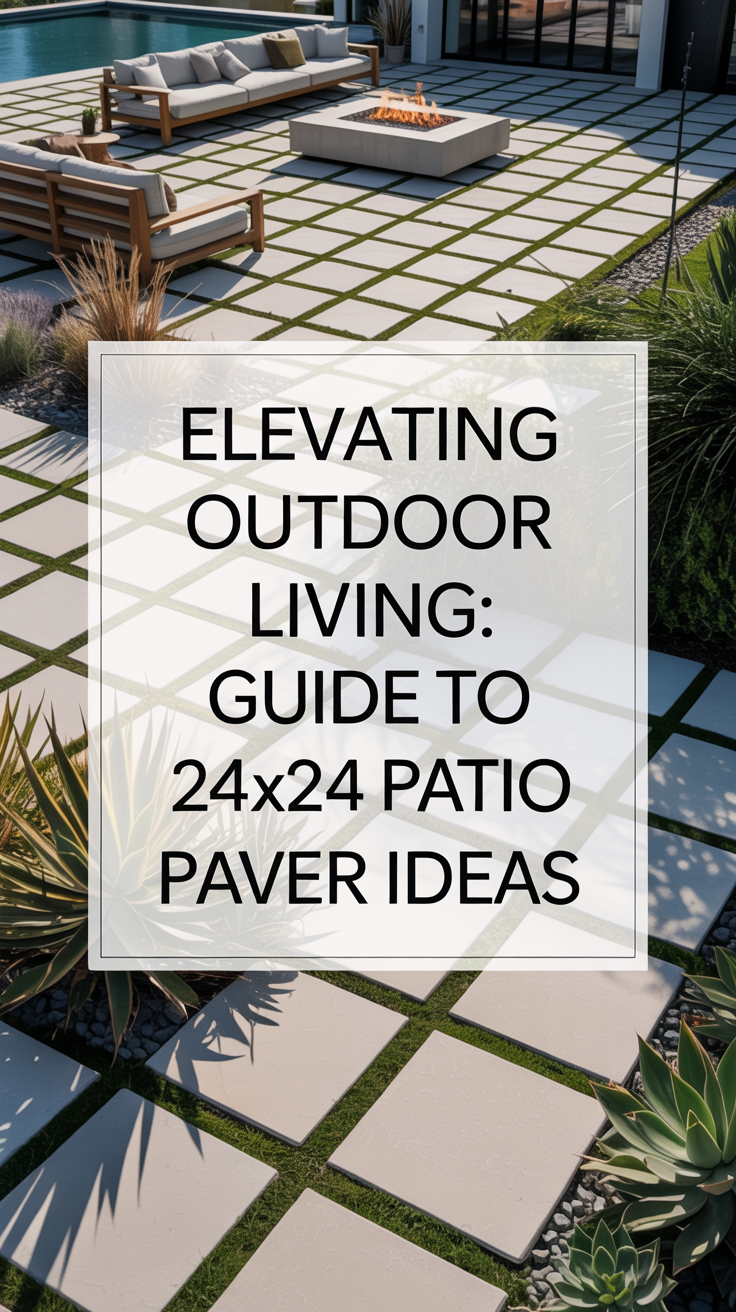
One of the most popular and visually striking ways to use 24×24 pavers is to separate them with wide gaps filled with grass, groundcover, or decorative gravel. This approach softens the hardscape, integrates the patio seamlessly into the surrounding lawn, and creates a permeable surface that aids in water drainage.
When using this design, the pavers act as oversized stepping stones. They can be arranged in a strict grid or a staggered pattern. The contrast between the solid, geometric pavers and the soft, organic texture of the grass or gravel creates a dynamic and inviting environment. This style is highly adaptable; using dark river rock between textured concrete pavers leans toward a Zen or rustic aesthetic, while a groundcover like creeping thyme or Irish moss introduces a lush, cottage-garden feel.
Artificial Turf Between Pavers
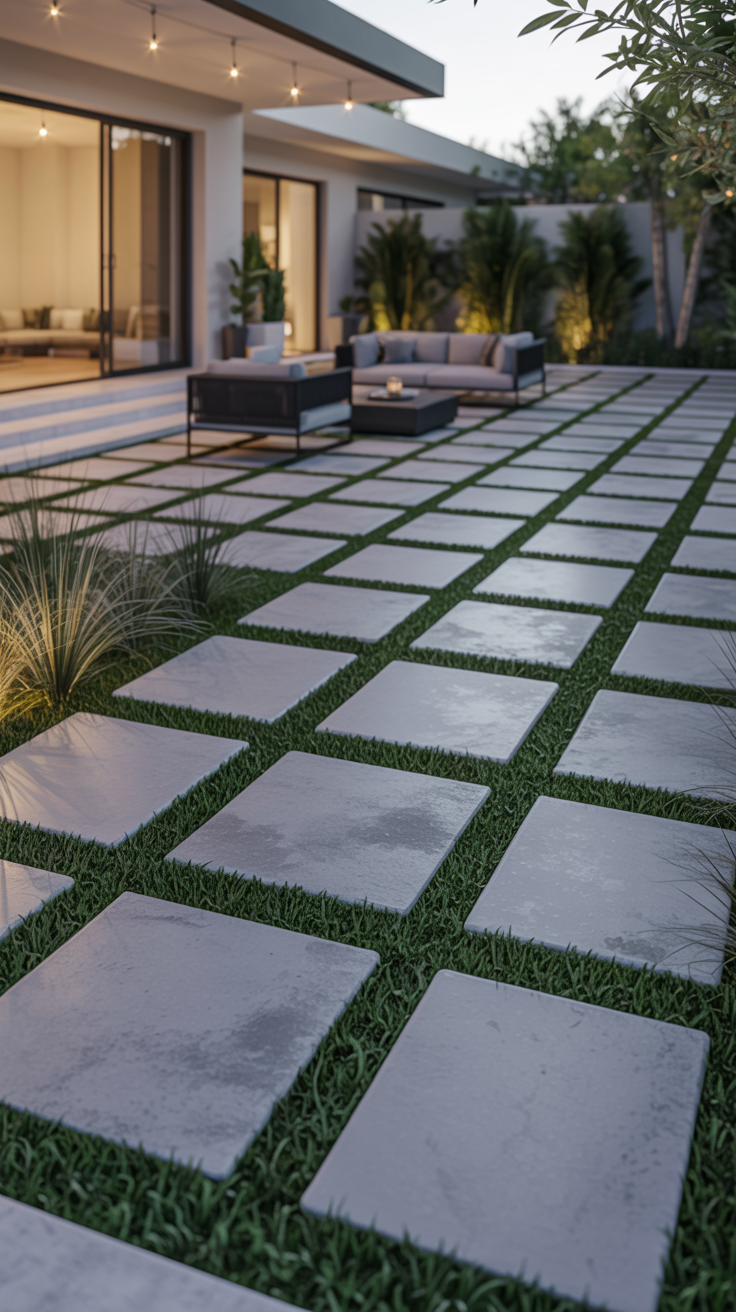
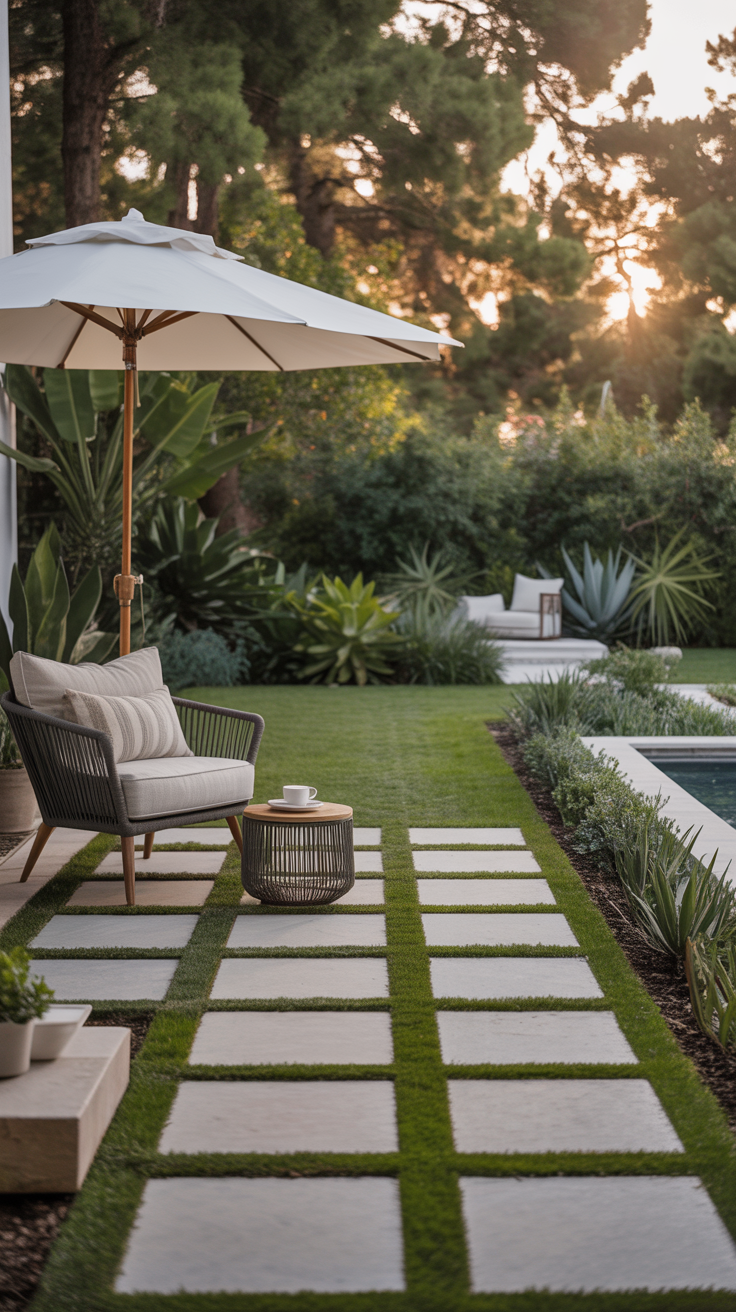
For homeowners who love the look of lush green grass between their 24×24 pavers but want to eliminate the upkeep that comes with it, artificial turf is an outstanding alternative. We installed artificial turf between our concrete pavers three years ago (check out the DIY here) and still loving the design and function–no regrets! This combination has become one of the most sought-after trends in modern hardscaping, and for good reason; it delivers a visually striking, year-round green aesthetic without the watering, mowing, or seasonal browning that natural grass demands.
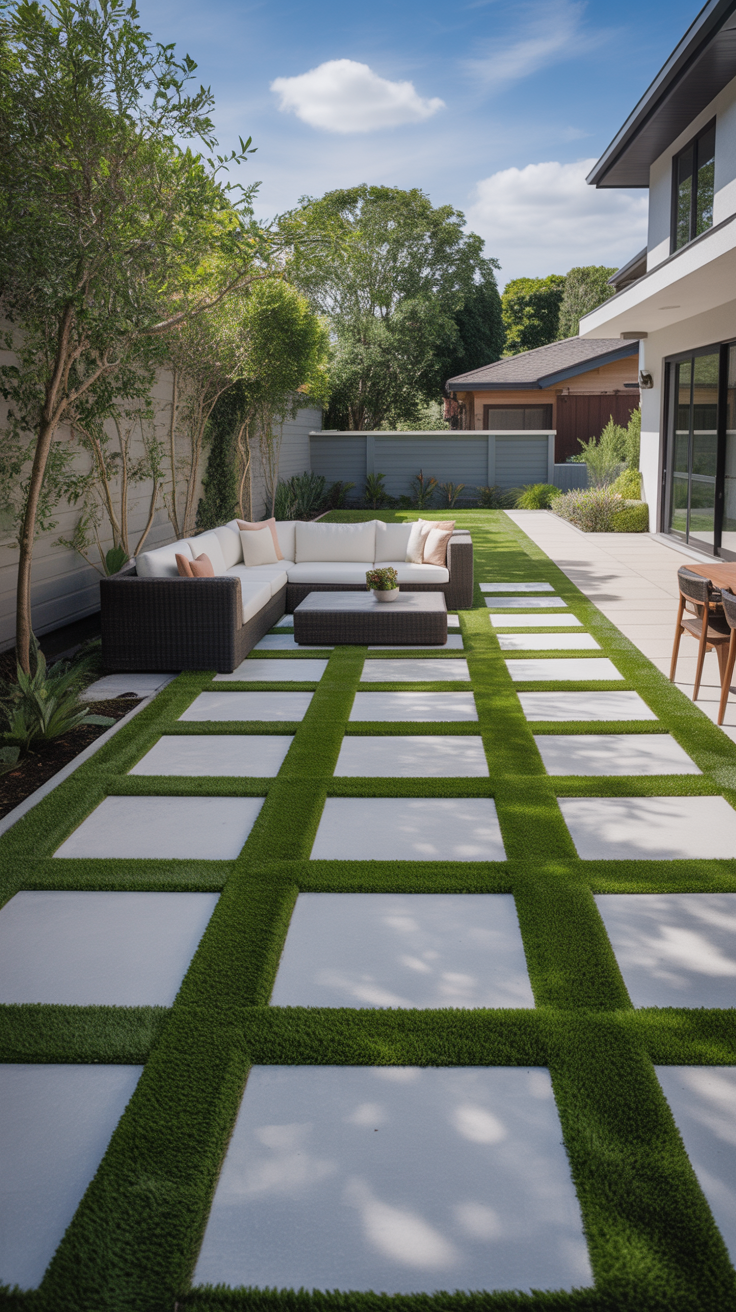
The design works by setting the 24×24 pavers with deliberate, wider gaps, typically 2 to 4 inches or more, depending on the desired look, and then infilling those gaps with precision-cut strips or sections of artificial turf. The result is a clean, geometric grid of stone punctuated by vivid green lines, creating a surface that feels both structured and organic at the same time. The contrast between the cool, hard surface of the pavers and the soft, warm texture of the turf is visually compelling and highly photogenic, making it a popular choice for contemporary backyard designs, rooftop terraces, and pool surrounds.
From a practical standpoint, artificial turf offers several compelling advantages in this application. Because it does not require sunlight or water to thrive, it performs equally well in shaded patios and in regions that experience drought conditions or water-use restrictions. Modern artificial turf products are engineered with UV-stabilized fibers that resist fading, so the vibrant green color remains consistent throughout the year and across many years of use. High-quality turf also incorporates a drainage backing with perforations that allow rainwater to pass through freely, preventing puddles from forming between the pavers.
Installation requires some additional planning compared to a standard paver layout. The base preparation must account for the turf’s thickness, ensuring that the finished turf surface sits flush with the top of the pavers for a seamless, trip-free surface. A weed barrier membrane is typically installed beneath the turf sections to prevent any growth from pushing up through the backing. The turf is cut to fit the gap dimensions precisely, secured along its edges, and infilled with a layer of silica sand or crumb rubber to give the blades an upright, natural appearance and to add stability.
In terms of design versatility, the artificial turf and paver combination is remarkably flexible. Charcoal or slate-gray pavers paired with a bright, emerald-green turf create a bold, modern contrast ideal for contemporary homes. Warm-toned concrete or travertine pavers combined with a more muted, olive-toned turf evoke a softer, Mediterranean atmosphere. For a minimalist approach, keeping the turf strips narrow—just an inch or two wide—creates a subtle grid effect that adds texture without overwhelming the clean lines of the pavers. Be sure to check out our big post here on how to install artificial turf between concrete pavers.
The Diamond or Diagonal Layout
To add a touch of classic elegance or to make a small patio feel more expansive, consider laying the 24×24 pavers on a 45-degree angle to the house, creating a diamond pattern. This layout draws the eye diagonally across the space, creating an illusion of greater width and depth.
The diamond pattern is often used in traditional or Mediterranean-style designs, particularly when paired with warm-toned travertine or textured concrete. To anchor the design, a border of contrasting, smaller pavers (such as 6×9 inch rectangles) is typically installed around the perimeter of the patio. This border frames the diagonal layout and provides a clean, finished edge.
Color Selection and Coordination
Choosing the right color for your 24×24 pavers is crucial for creating a cohesive outdoor living space that complements your home’s architecture. The color palette should harmonize with the exterior siding, trim, and roofing, as well as the surrounding natural landscape.
Matching Architectural Styles
The architectural style of your home provides the strongest cue for paver color selection. Modern and contemporary homes, characterized by clean lines and neutral palettes, pair exceptionally well with cool-toned pavers. Shades of charcoal, slate gray, silver, and even stark white enhance the minimalist aesthetic.
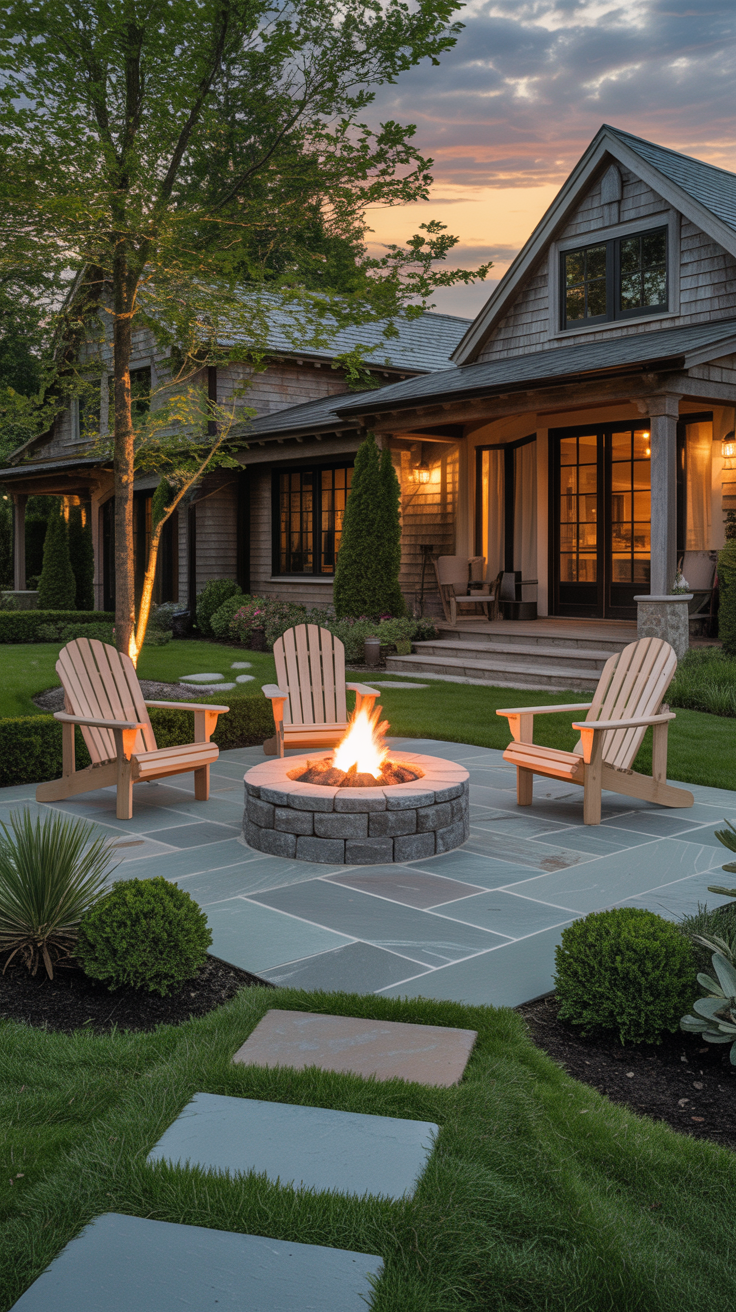
Conversely, homes with warm, earthy exteriors including such as Mediterranean, Tuscan, or traditional brick houses benefit from pavers in warm tones. Sand, terracotta, beige, and warm browns create a welcoming, sun-drenched atmosphere. For rustic or farmhouse styles, blended colors that mimic natural stone, incorporating varying shades of gray, tan, and rust, add character and depth.
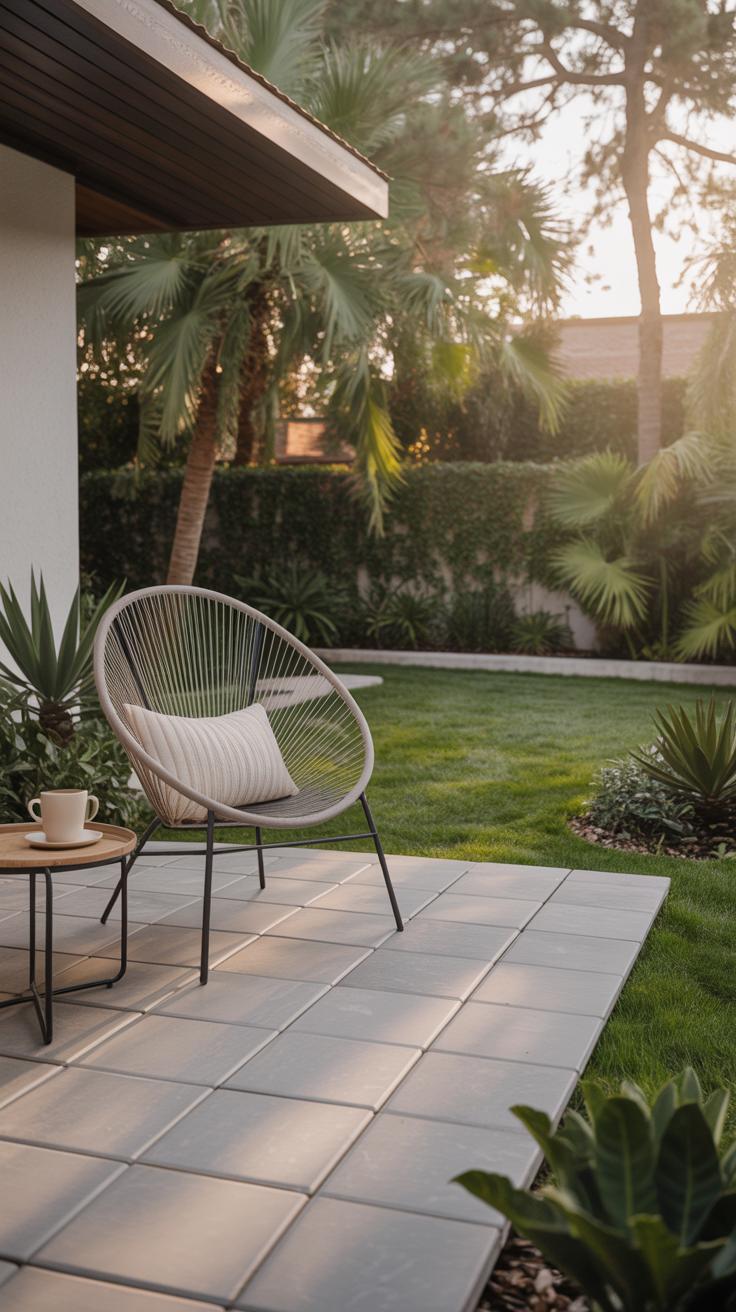
The 60-30-10 Rule
When designing your outdoor space, consider applying the classic 60-30-10 design rule to your color palette. The pavers will likely represent the 60%, the dominant color in the space. The exterior of your home or large landscaping features (like retaining walls) represent the 30%, the secondary color. The final 10% is reserved for accent colors, introduced through outdoor furniture cushions, umbrellas, vibrant planters, or a contrasting paver border.
Monochromatic vs. Contrasting Designs
You must also decide whether you want the patio to blend in or stand out. A monochromatic approach, where the paver color closely matches the home’s exterior, creates a seamless, expansive feel. This is particularly effective in small spaces where high contrast might feel visually cluttered.
A contrasting approach, on the other hand, highlights the patio as a distinct architectural feature. For example, pairing a light-colored stucco home with dark charcoal 24×24 pavers creates a striking, dramatic effect. When using contrast, ensure that the undertones (warm or cool) of the house and the pavers remain consistent to avoid a clashing appearance.
Installation Considerations for Large-Format Pavers
Installing 24×24 pavers requires precision, proper equipment, and a thorough understanding of base preparation. Because of their large surface area, these pavers are less forgiving of an uneven base than smaller bricks. A poorly prepared foundation will lead to settling, cracking, and poor drainage.
Base Preparation and Grading
The longevity of any paver patio depends entirely on the quality of its base. The process begins with excavation, removing the topsoil to a depth that accommodates the base material, the bedding sand, and the thickness of the paver itself.
Proper grading is essential for water management. The patio must slope away from the house foundation to prevent water pooling and potential structural damage. The industry standard is a minimum slope of 1/8 inch to 1/4 inch per foot of run.
Once excavated and graded, a geotextile fabric is often laid down to separate the soil from the base material and prevent weeds. The base itself typically consists of crushed gravel or a specialized open-graded aggregate. This material must be applied in layers (usually 2 to 3 inches at a time) and compacted thoroughly using a heavy vibratory plate compactor. A standard patio requires a compacted base depth of 4 to 6 inches, while areas supporting heavier weight may require more.
The Bedding Layer and Placement
Over the compacted base, a 1-inch layer of bedding sand or fine aggregate is screeded to create a perfectly smooth, level surface for the pavers to rest on. This layer is not compacted before the pavers are laid.
Handling 24×24 pavers requires care. Depending on the material, a single paver can weigh anywhere from 50 to over 80 pounds. Professional installers often use specialized suction equipment or paver clamps to lift and place the heavy squares precisely without disturbing the screeded bedding layer. Because of their size, even a slight variation in the bedding layer can cause a large paver to “rock” or sit unevenly, known as lippage. Installers use rubber mallets and levels constantly to ensure each paver is perfectly flush with its neighbors.
Jointing and Edge Restraints
Once the pavers are laid, edge restraints must be installed around the perimeter of the patio. These restraints, typically made of plastic, aluminum, or concrete, prevent the pavers from shifting outward over time.
The final step is filling the joints. For 24×24 pavers, polymeric sand is the standard recommendation. This specialized sand contains binding agents that activate when wet, hardening to lock the pavers in place, prevent weed growth, and deter insects. The sand is swept into the joints, the patio is lightly compacted (using a protective pad on the compactor to avoid scratching the pavers), and then the surface is carefully misted with water to activate the polymers.
Maintenance and Long-Term Care
While 24×24 pavers are designed for durability and low maintenance, a regular care routine is necessary to preserve their appearance and structural integrity over the years.
Routine Cleaning
The most effective maintenance strategy is regular, gentle cleaning. Sweeping the patio weekly removes dirt, leaves, and organic debris before they have a chance to decompose and cause stains. For a deeper clean, a simple solution of warm water and a mild, pH-neutral dish soap applied with a stiff-bristled push broom is usually sufficient.
Avoid using harsh chemical cleaners, bleach, or acidic solutions, as these can damage the surface of concrete pavers or etch natural stone. If you encounter stubborn stains, such as grease from a barbecue grill or rust from metal furniture, use specialized paver cleaners designed specifically for the type of stain and the paver material.
Power Washing Precautions
Power washing can be an effective way to rejuvenate a patio, but it must be done with extreme caution. High-pressure water can easily strip the protective finish off concrete pavers, etch the surface, and blast the polymeric sand out of the joints.
If you choose to power wash, use a wide-angle nozzle (40 degrees or wider), keep the wand at least 12 to 18 inches away from the surface, and use a low-pressure setting (under 1,500 PSI). Never direct the spray directly into the joints.
Sealing the Pavers
Sealing is a crucial step in protecting natural stone pavers in particular. A high-quality sealer acts as a barrier, preventing water absorption, resisting UV fading, and making it easier to clean up spills before they stain.
It is generally recommended to wait 60 to 90 days after installation before applying a sealer, allowing the pavers to weather and any natural efflorescence (a white, powdery residue caused by salt deposits) to escape. After the initial application, the patio should be thoroughly cleaned and resealed every three to five years, depending on the level of wear and exposure to the elements. Note that porcelain pavers are naturally non-porous and do not require sealing.
Managing Weeds and Joint Sand
Even with polymeric sand, weeds may occasionally find a foothold in the joints, particularly if dirt has accumulated on the surface. Address weeds promptly by pulling them by hand or using a targeted, paver-safe herbicide.
Over time, the polymeric sand in the joints may degrade or wash away due to heavy rain or improper power washing. Inspect the joints annually. If the sand level has dropped significantly, you will need to top it up. This involves thoroughly cleaning the joints, ensuring they are completely dry, sweeping in new polymeric sand, and activating it with water according to the manufacturer’s instructions.
Enhancing the 24×24 Paver Patio
A beautiful paver surface is just the foundation of an outdoor living space. To truly elevate the patio, consider integrating complementary landscaping and architectural features.
Fire Features and Seating Walls
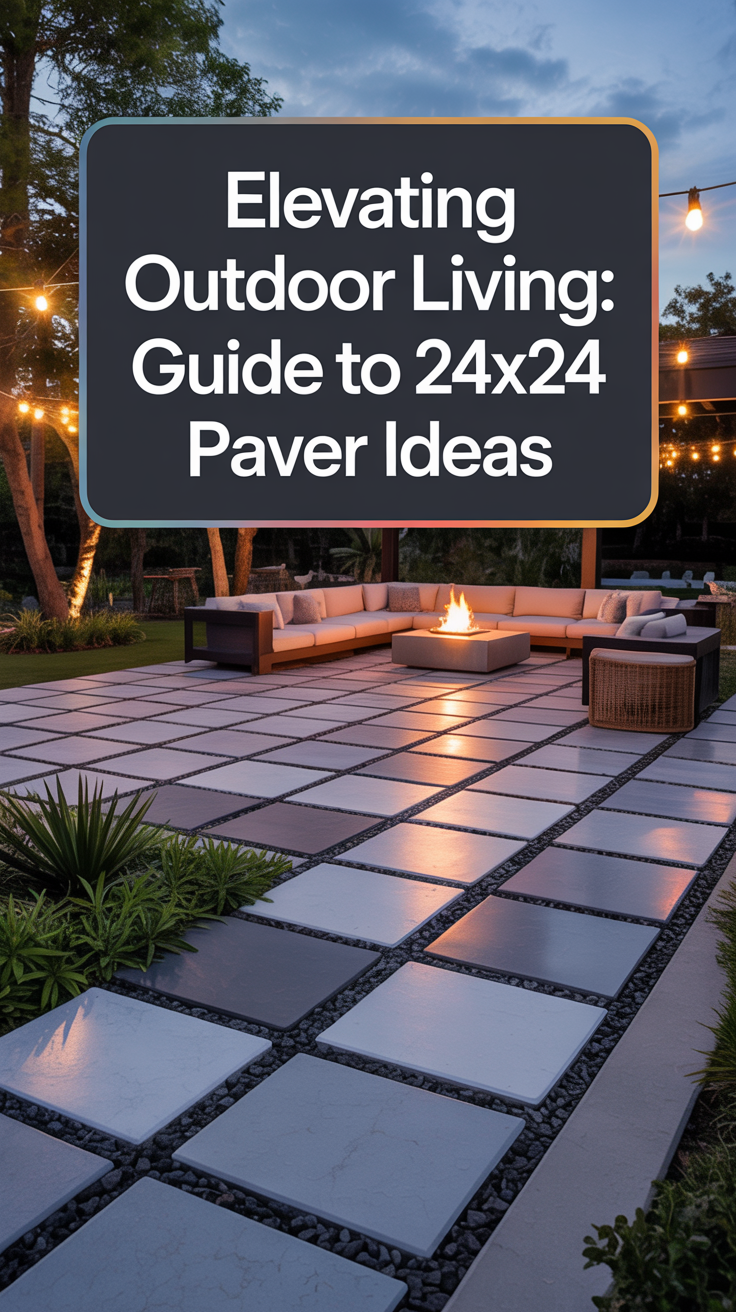
Incorporating a fire pit or an outdoor fireplace creates a natural focal point and extends the usability of the patio into the cooler months. When designing a fire feature on a 24×24 paver patio, ensure that the materials complement each other. A sleek, linear gas fire pit pairs perfectly with modern, smooth concrete pavers, while a circular, stone-veneered fire pit suits a more traditional or rustic layout.
Adding built-in seating walls around the fire feature or along the perimeter of the patio provides permanent, durable seating and helps define the outdoor “rooms.” These walls can be constructed using retaining wall blocks that match or contrast with the patio pavers.
Lighting and Ambiance
Proper lighting transforms a patio from a daytime retreat into an enchanting evening oasis. Because 24×24 pavers create a smooth, expansive surface, lighting should be used to highlight the perimeter and provide safe navigation.
Consider installing low-voltage LED hardscape lighting under the coping of seating walls or steps. Path lights can be placed in the adjacent landscaping to cast a soft glow over the edges of the patio. For a truly integrated look, some paver systems allow for small, durable LED lights to be installed directly into the paver joints, creating a starry-night effect across the surface.
Pergolas and Shade Structures
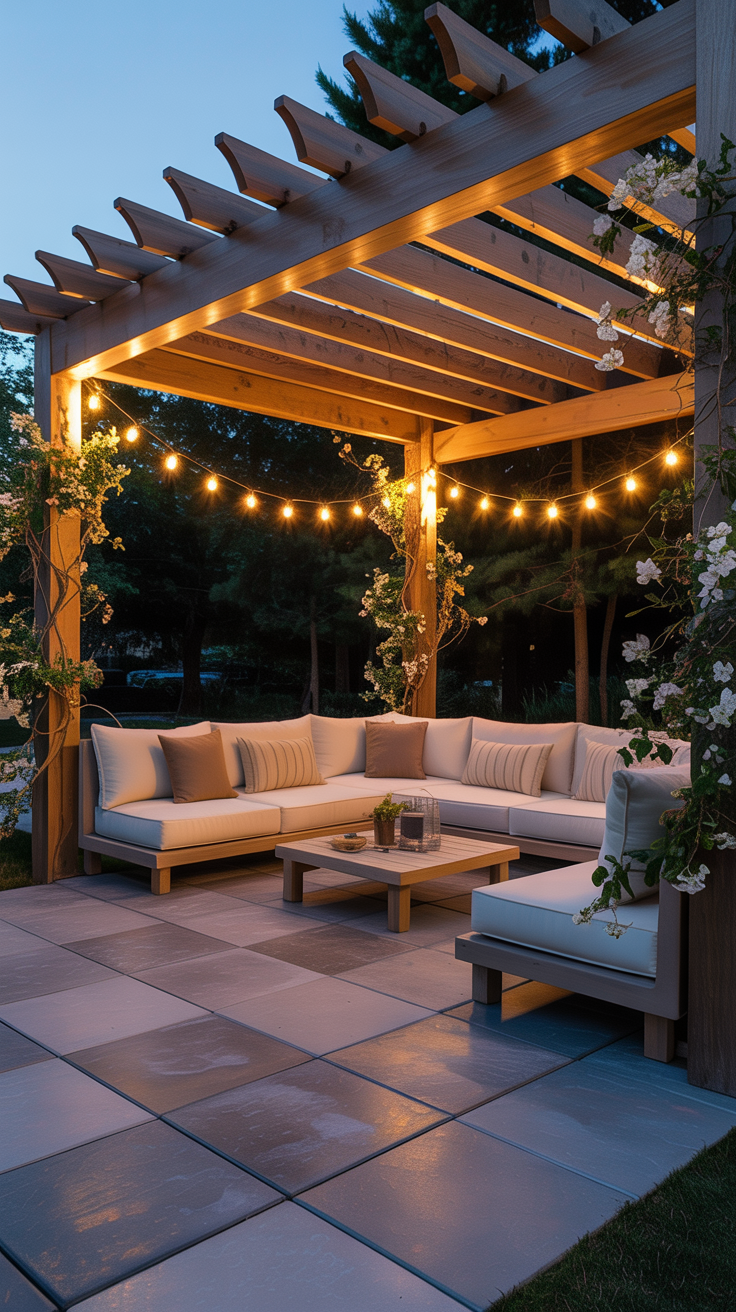
To make the patio comfortable during the heat of the day, a shade structure is essential. A wooden or aluminum pergola adds vertical interest and architectural structure to the space. The clean lines of a modern pergola complement the geometric grid of 24×24 pavers beautifully. We did not add a pergola but we opted to add a star jasmine trellis on a large blank wall and it turned out beautifully. Check out our DIY here. For added shade and softness, train climbing vines like wisteria or jasmine to grow over the structure, or install retractable canopy shades.
Artificial Turf as a Patio Surround
Beyond filling the gaps between pavers, artificial turf can also be used as a broader surround or border for the patio itself. Rather than transitioning the paved area directly into bare soil, mulch, or natural grass, framing the 24×24 paver patio with a band of high-quality artificial turf creates a polished, finished look that requires virtually no maintenance. This approach is particularly effective for backyard spaces where the patio is positioned in the center of the yard, as the turf surround provides a soft, green frame that highlights the paver design and creates a comfortable barefoot surface for children and pets to enjoy. When selecting artificial turf for this purpose, look for products with a pile height of 1.5 to 2 inches and a natural, multi-tonal blade color for the most realistic appearance.
The decision to utilize 24×24 patio pavers is a commitment to modern elegance, durability, and sophisticated outdoor living. These large-format squares offer a versatile foundation that can be adapted to almost any architectural style, from ultra-contemporary minimalist spaces to warm, inviting Mediterranean courtyards.
By carefully selecting the right material whether it be the robust versatility of concrete, the refined resilience of porcelain, or the timeless beauty of natural stone and making thoughtful design patterns, you can create a patio that visually expands your space and minimizes maintenance. Coupled with precise installation techniques and a consistent care routine, a 24×24 paver patio will serve as a stunning, functional centerpiece for your outdoor lifestyle for decades to come. As you plan your project, remember that the patio is more than just a surface; it is the canvas upon which you will build memories, entertain guests, and find daily moments of relaxation in the beauty of the outdoors.