

The spark is gone. The thrill of that gallery wall you meticulously hung three years ago has faded. The rug feels tired, the layout feels stale, and you are suddenly struck by an overwhelming urge to burn it all down and start from scratch.
You want a new look. You want that “after” photo feeling. But then reality sets in: you do not have the budget to buy a whole house full of new furniture, nor do you want to send perfectly good pieces to the landfill.
This is one of the most common design dilemmas I hear about: the desire for a massive transformation on a micro budget. The good news? You absolutely do not need to buy everything new to make your home feel entirely different. In fact, some of the most creative, soulful, and interesting spaces are born out of the constraint of working with what you already have.
If you are itching for a change but your wallet is saying “absolutely not,” grab a notebook.
Step 1: The Great Empty-Out
Before you can see the potential in your space, you have to strip away the noise. When we live in a room for a long time, we become blind to the clutter. We stop seeing the stack of mail on the console, the extra throw pillows that always end up on the floor, and the knick-knacks that are just gathering dust.
If you want a new look, you have to start with a blank canvas.
Take everything out of the room that is not a heavy piece of furniture. I mean everything. Take the art off the walls, roll up the rugs, remove the lamps, the books, the plants, the curtains, and the decorative objects. Put it all in another room or out in the hallway.
Now, look at your room. It probably feels echoey and a little sad, but it also feels full of possibility. This is your baseline.
While the room is empty, give it a deep clean. Wash the baseboards, clean the windows, and vacuum the corners you usually cannot reach. A sparkling clean room instantly feels fresher and newer, even before you put anything back in it.
Step 2: Rethink the Layout
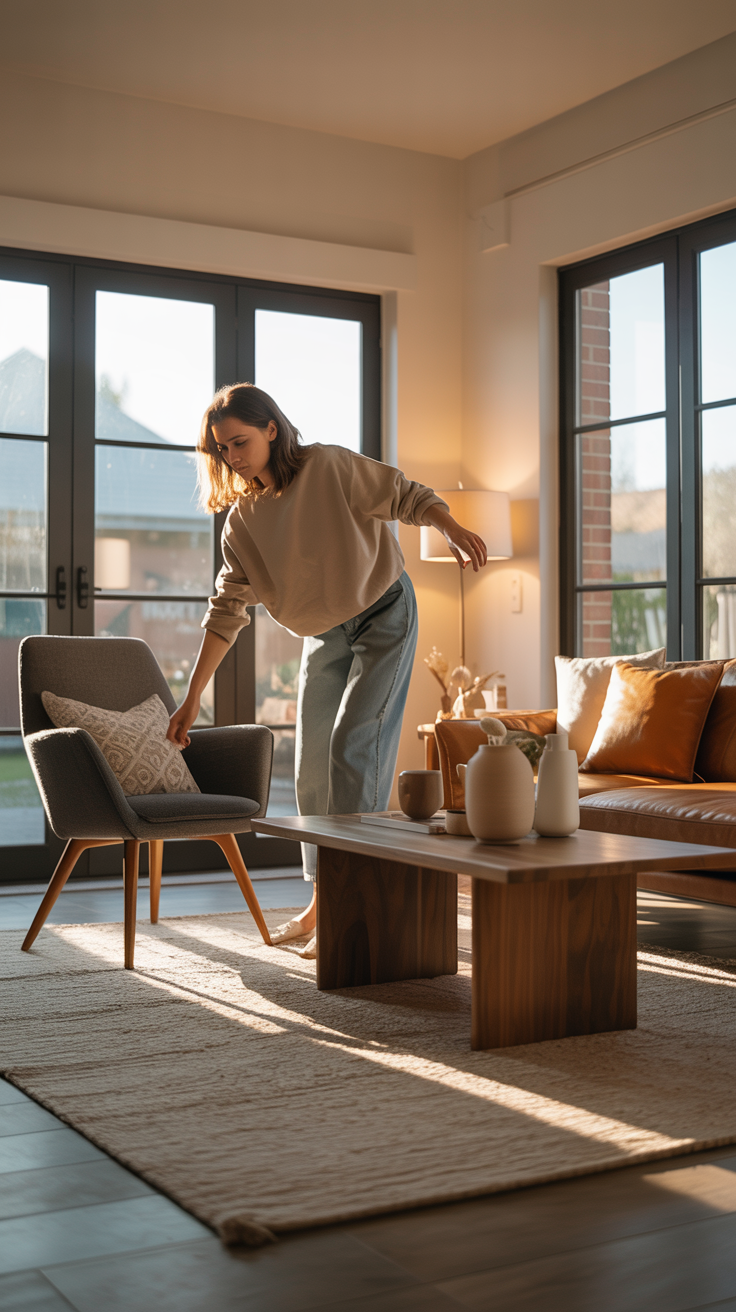
The absolute most impactful, zero-dollar way to change a room is to rearrange the furniture. We tend to put our furniture in a room on move-in day and leave it there for a decade. But just because the sofa has always been against that wall does not mean it has to stay there.
Float the Furniture
The biggest mistake people make with furniture layout is pushing everything flush against the walls, creating a “waiting room” effect with a massive dead space in the middle.
Try pulling your sofa and chairs away from the walls and floating them in the center of the room. This creates a cozier, more intimate conversation area and actually makes the room feel larger because you can see the floor extending past the furniture.
Change the Focal Point
What is your furniture pointing at? If it is the TV, can you change it? Try arranging the seating around the fireplace, or orienting the room toward a beautiful window. If you must keep the TV as the focal point, try moving it to a different wall. Changing the orientation of the room completely alters how you experience the space.
Swap Rooms
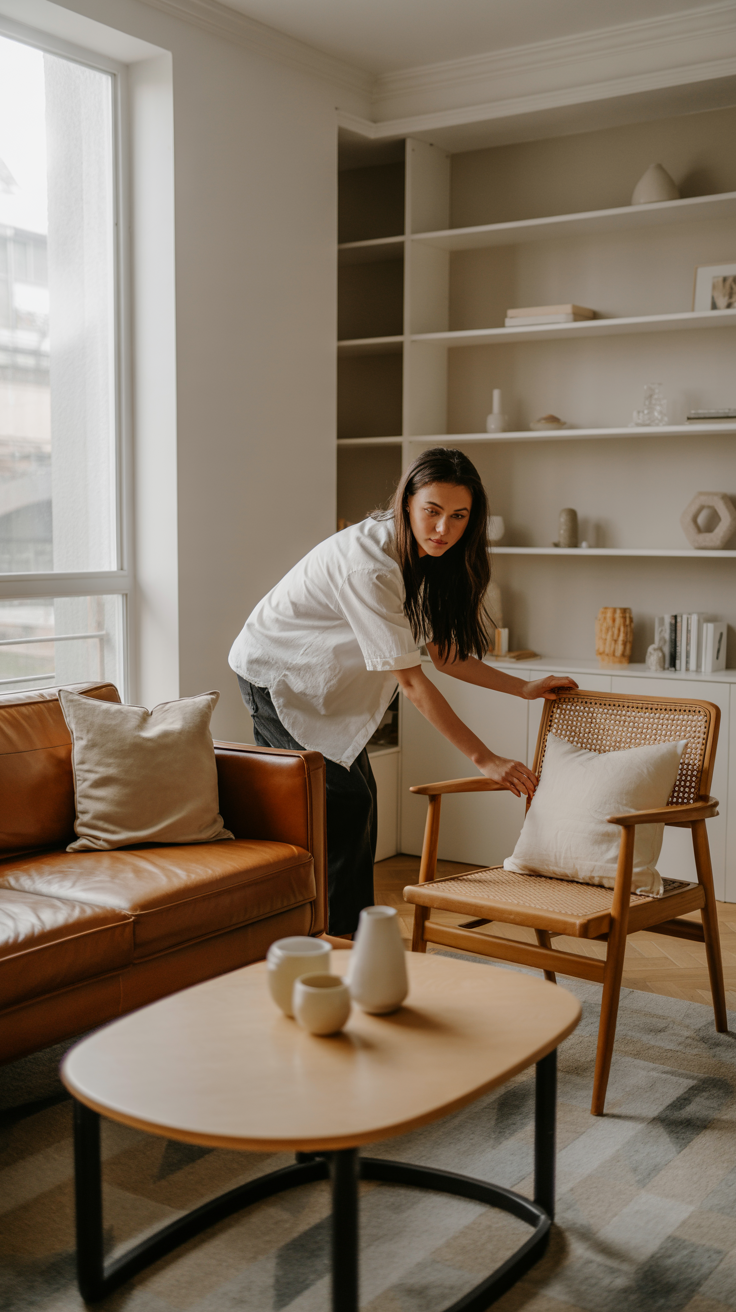
Who says the armchair in the bedroom has to stay in the bedroom? Shop your own house. Bring the console table from the entryway into the dining room to act as a buffet. Move the living room rug into the primary bedroom. Swap the nightstands for the side tables in the den.
Moving a piece of furniture to a new context completely changes how you see it. That tired dresser might look incredibly chic when repurposed as a TV stand in the living room.
Step 3: The Power of Paint
If you have a little bit of budget (say, $50 to $100) and a weekend to spare, paint is your best friend. Nothing transforms a space faster, cheaper, or more dramatically than a fresh coat of paint. But we are not just talking about painting all four walls a new shade of greige. Let’s get creative.
Color Drenching
If you want a high-end, dramatic look, try color drenching. This means painting the walls, the baseboards, the trim, the doors, and even the ceiling all the exact same color. It erases the visual boundaries of the room, making it feel incredibly cozy, modern, and expensive. A dark, moody color like deep navy, forest green, or rich plum looks spectacular when color-drenched.
Paint the Trim
If painting the whole room feels like too much work, try painting just the trim and the doors. A room with white walls and contrasting trim—like a soft mushroom, a warm taupe, or even a bold black—instantly feels architectural and custom-designed.
Paint the Furniture
Remember that furniture you are tired of? Paint it. A dated, orange-toned oak dresser can become a modern masterpiece with a coat of matte black paint and some new brass hardware.
You can even paint upholstery! Yes, really. If you have an armchair with a great shape but a hideous 1990s floral pattern, you can use specialized fabric medium mixed with latex paint (or buy dedicated upholstery paint) to paint the fabric. It changes the texture slightly—it will feel more like canvas or outdoor fabric—but it is a brilliant way to save a piece of furniture from the thrift store donation pile.
Step 4: Textile Transformation
Textiles are the secret weapon of interior design. They add softness, texture, color, and pattern. If your room feels flat, it is probably lacking in the textile department.
The Pillow Swap
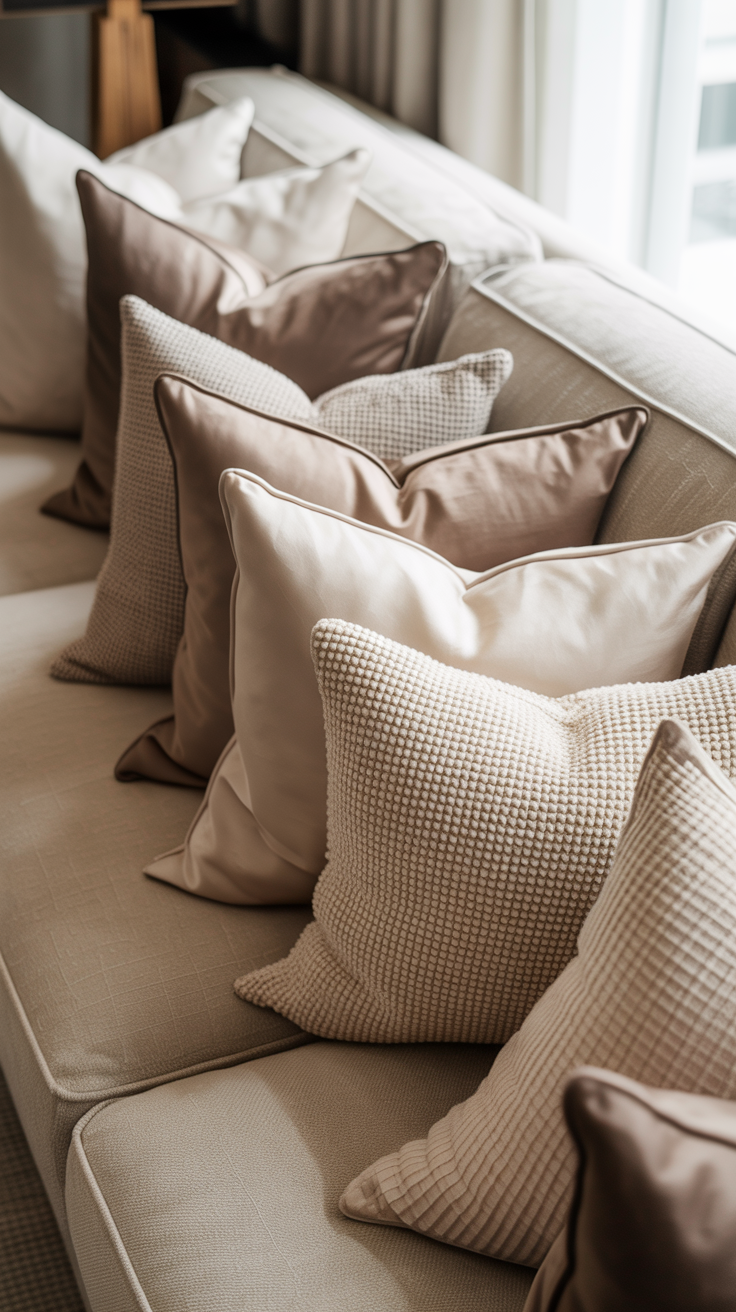
Throw pillows are the easiest thing to change in a room. If you have been living with the matching pillows that came with your sofa, it is time to let them go.
You do not even need to buy new pillow inserts; just buy new covers. Mix and match textures—pair a nubby linen with a smooth velvet, or a chunky knit with a sleek cotton. Stick to a cohesive color palette, but vary the scale of the patterns. A large floral, a small stripe, and a solid texture is a foolproof combination.
Rethink Your Curtains
Curtains take up a massive amount of visual real estate in a room. If you have heavy, dark drapes, swapping them for light, breezy linen panels will make the room feel twice as big and bright.
If you cannot afford new curtains, try a DIY upcycle. You can use fabric dye to change the color of cotton curtains, or use iron-on hem tape to add a band of contrasting fabric or a decorative trim to the leading edge of plain drapes. It gives them a custom, high-end look for pennies.
Layer Your Rugs
If you hate your wall-to-wall carpet or your current area rug is looking a little worse for wear, try layering. Buy a large, inexpensive natural fiber rug (like jute or sisal) to cover the bulk of the floor, and then layer a smaller, more colorful or patterned rug on top of it, right under the coffee table. It adds incredible texture and hides a multitude of sins.
Step 5: Lighting is Everything
I cannot stress this enough: bad lighting will ruin even the most beautifully designed room. If your only source of light is a harsh, bright overhead fixture, your room will always feel like a waiting room at the DMV.
The Rule of Three
Every room should have at least three sources of light, placed at different heights. You need overhead light (for cleaning and finding lost keys), task lighting (like a reading lamp next to a chair), and ambient lighting (like a soft table lamp on a console).
Swap the Shades
You do not need to buy new lamps to get a new look. Simply swapping the lampshades can completely modernize a tired lamp. Replace a dated, bell-shaped pleated shade with a crisp, white drum shade for an instant update. Or, for a moodier look, try a black or dark green paper shade with a gold foil interior.
Change the Bulbs
This is the cheapest trick in the book. If your room feels cold and sterile, check your lightbulbs. You want bulbs with a color temperature of 2700K to 3000K (often labeled “Soft White” or “Warm White”). Anything higher than 3500K will cast a blue, clinical light that makes everything look terrible.
Step 6: The Art of the Edit
Now that you have rearranged the furniture, painted, and updated your textiles and lighting, it is time to bring the accessories back into the room. But remember: you do not have to bring everything back.
Shop Your Stash
Go to the pile of decor you removed in Step 1. Look at it with fresh eyes. Pick up each item and ask yourself if you still love it. If it feels dated, if you are tired of looking at it, or if it just does not fit the new vibe of the room, put it in a donation box.
Now, go through the rest of your house and “shop” for items that might look great in this newly refreshed space. A vase from the kitchen, a stack of books from the bedroom, a tray from the dining room—bringing these items into a new context makes them feel brand new.
Style the Surfaces
When styling your coffee table, bookshelves, or console, remember the rule of odd numbers. Groupings of three or five items look more natural and pleasing to the eye than even numbers.
Vary the heights of your objects. If you have a tall vase, pair it with a medium-sized framed photo and a low, flat decorative bowl.
Use books as pedestals. If an object feels too small or gets lost on a shelf, place it on top of a stack of two or three beautiful hardcover books to give it presence and height.
Bring in the Greenery
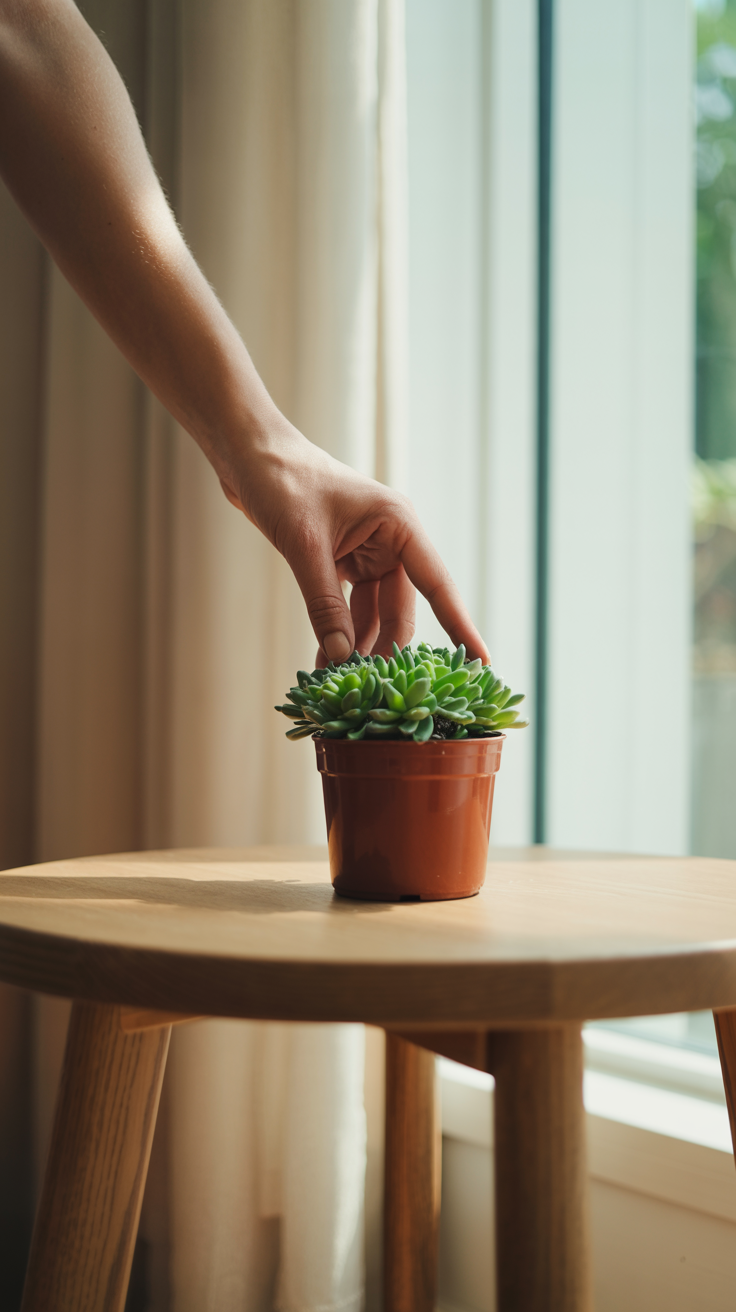
If a room feels lifeless, it needs a plant. Plants add sculptural shape, vibrant color, and literal life to a space. You do not need to spend a fortune at a nursery; pick up a pothos or a snake plant at the grocery store. Put it in a beautiful ceramic pot or a woven basket, and place it on a shelf or a side table.
If you have a black thumb, forage in your own backyard. Snip a few leafy branches from a tree or bush and stick them in a tall glass vase with water. It is free, it is dramatic, and it brings the outdoors in.
Step 7: Hardware and Details
The final layer of a room refresh is the jewelry—the small details that make a big impact.
Swap the Hardware
If you have a dresser, a media console, or kitchen cabinets that feel dated, change the knobs and pulls. Swapping out cheap, builder-grade brushed nickel hardware for sleek matte black pulls, unlacquered brass knobs, or even quirky leather handles completely changes the look of the furniture. It is a ten-minute project that yields massive results.
Upgrade the Switch Plates
Look at your light switch plates and outlet covers. Are they cracked, yellowed plastic? Spend $20 at the hardware store and replace them all with crisp white plates, or upgrade to metal plates that match your door hardware. It is a tiny detail, but it makes the room feel finished and cared for.
The Psychology of the Refresh
When we crave a new look in our homes, what we are usually craving is a new feeling. We want to feel inspired, calm, or energized. We think we need to buy a new sofa to get that feeling, but the truth is, the feeling comes from the act of caring for our space.
Taking the time to empty a room, clean it, rethink the layout, and carefully curate the objects within it is an act of intention. It forces you to engage with your home creatively rather than just passively existing in it.

By using paint, textiles, lighting, and the things you already own, you are not just saving money. You are creating a space that is deeply personal, layered with history, and uniquely yours. You are proving that great design is not about how much money you spend; it is about how much thought and creativity you are willing to invest.
So, the next time you look around your living room and feel the urge to throw it all out and start over, pause. Empty the room. Move the sofa. Paint the trim. Shop your house. You might just find that the “new” look you have been dreaming of was hiding in your home all along.
Step 8: The Magic of Upcycling and Thrifting
If you have exhausted the possibilities of what you already own and you still feel like the room needs something, it is time to look outside your home—but not at a traditional retail store. Thrifting, estate sales, and upcycling are the budget decorator’s best friends.
The Thrill of the Hunt
There is a unique satisfaction in finding a beautiful, high-quality piece of decor for a fraction of its retail price. Thrift stores are treasure troves of unique items that can add character and history to your space. When you shop secondhand, you are not just saving money; you are rescuing items from landfills and giving them a second life.
When thrifting for home decor, keep an open mind. Look pa