A library mural needs to work with the books, shelving, and people in front of it. The strongest idea is not always the most detailed one: a simple landscape above a bookcase may serve the room better than an elaborate scene that disappears behind furniture.
These fifteen ideas include ways to place and create each design. The images are visual inspiration, not measured installation plans or records of projects we completed.
Plan the Visible Wall First
Measure the wall, then mark the doors, outlets, fixtures, and furniture on a sketch. Draw the actual height of bookcases and chairs. Plan the mural around the area that remains visible, including how it looks from the doorway and from a seated position.
For an illustrative 10-foot-wide wall with 3-foot-high shelving and an 8-foot ceiling, the main visible band above the shelves is about 5 feet high. Put the important scene in that band. A large tree trunk behind the shelving may be fine; a character’s face hidden in the same spot is not.
Paint, Wallcovering, or a Commission?
- Paint: useful for simple silhouettes, large shapes, and a custom palette. Plan surface preparation and a future repaint.
- Printed wallcovering: useful for detailed scenery. Check the supplier’s wall requirements, panel layout, trimming allowance, and removal instructions.
- Artist commission: useful for site-specific scenes, lettering, and perspective. Agree on a scaled sketch, materials, revisions, and installation scope before work begins.
1. Nature-Inspired Serenity
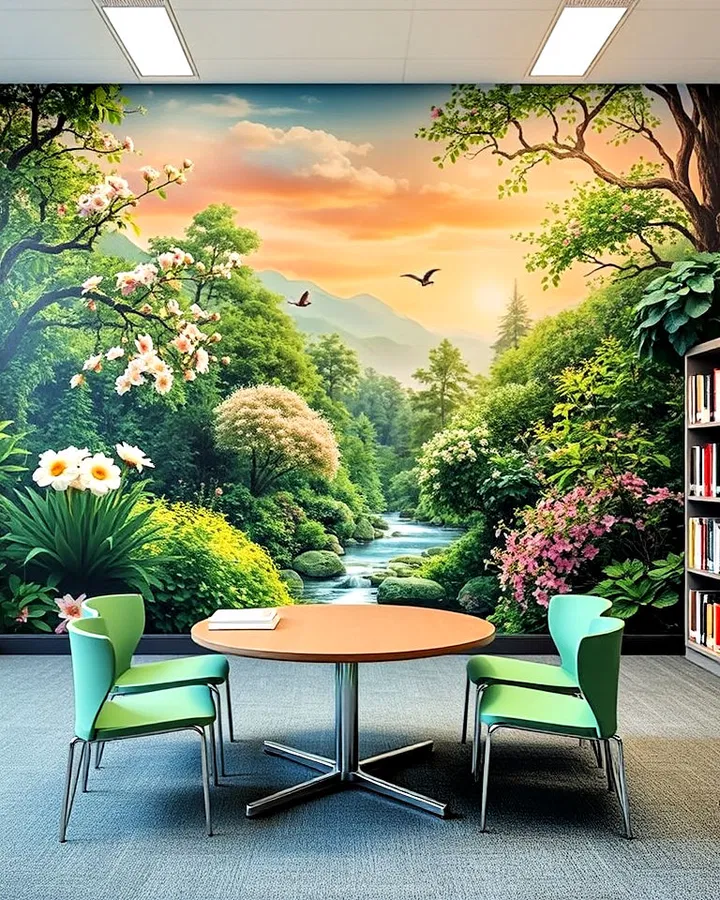
A tree canopy or distant landscape works well behind a reading chair because it provides a setting without demanding attention from every angle. Keep the area immediately behind open shelves simpler so book spines do not compete with detailed leaves.
For a manageable painted version, use one background color and two overlapping hill or tree silhouettes. Put smaller details above furniture height. A detailed forest with convincing depth is better treated as a printed wallcovering or an artist commission.
2. Seasonal Storytelling
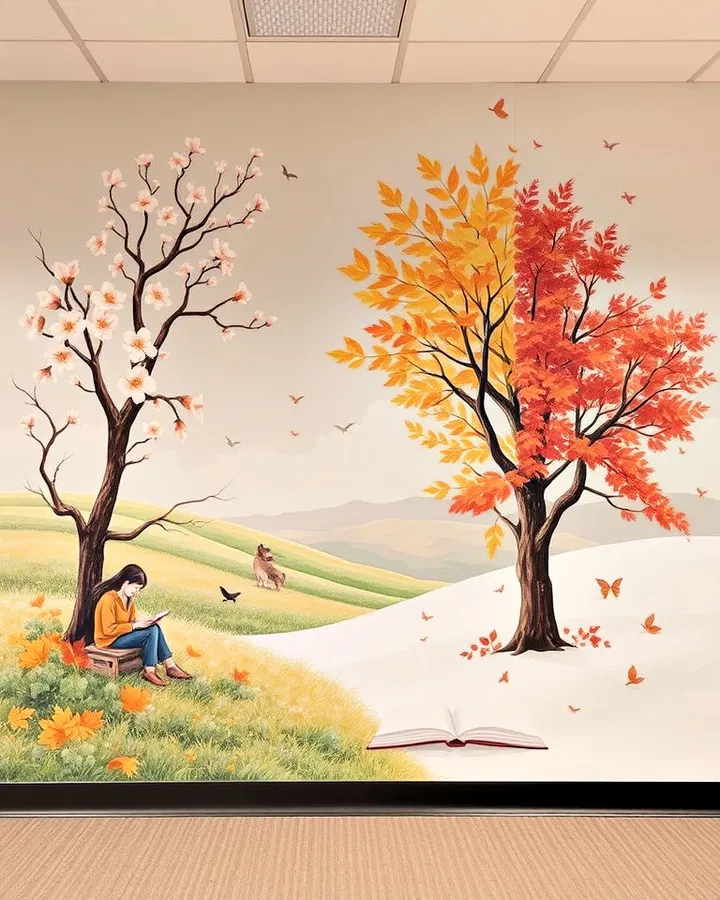
Divide a long wall into four connected sections, changing the leaves, sky, or landscape as the seasons progress. Repeat the same horizon line and tree scale across all four so the wall reads as one design.
This is useful in a children’s reading area where you can display seasonal books beneath the corresponding section. Keep display labels separate from the permanent mural so staff or family members can change the book selection without repainting.
3. Underwater Adventure
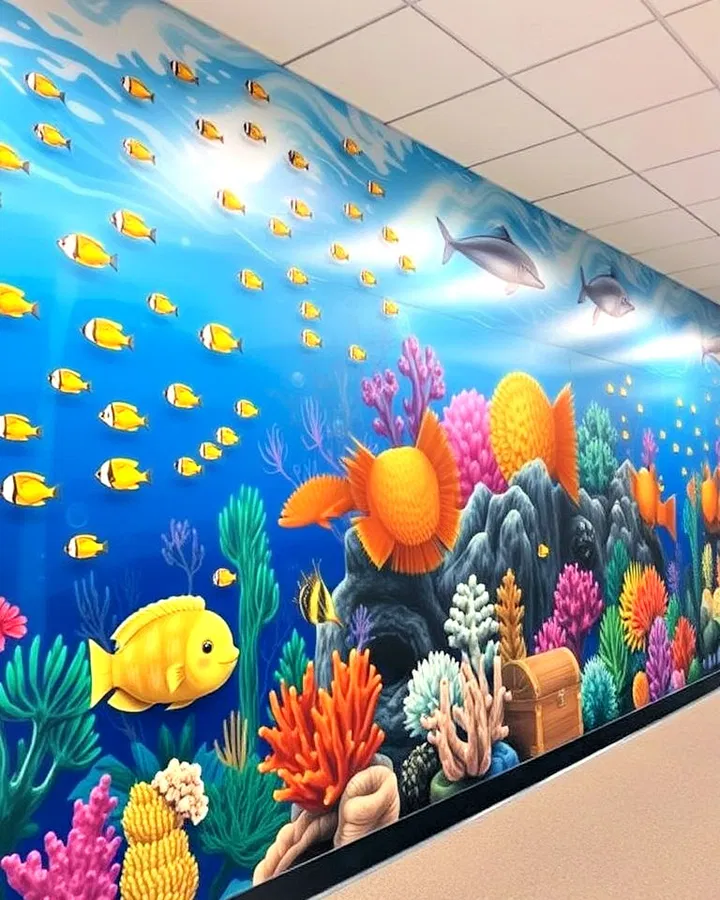
Use a pale water background with one large school of fish or a few oversized sea creatures. A wide, simple scene is easier to read from across the room than many small animals scattered evenly over the wall.
Place the most recognizable shapes where children can see them above the actual book bins. For a small DIY project, use paper templates to plan a few fish silhouettes before transferring them to the wall; keep fine reef details optional.
4. Celestial Exploration
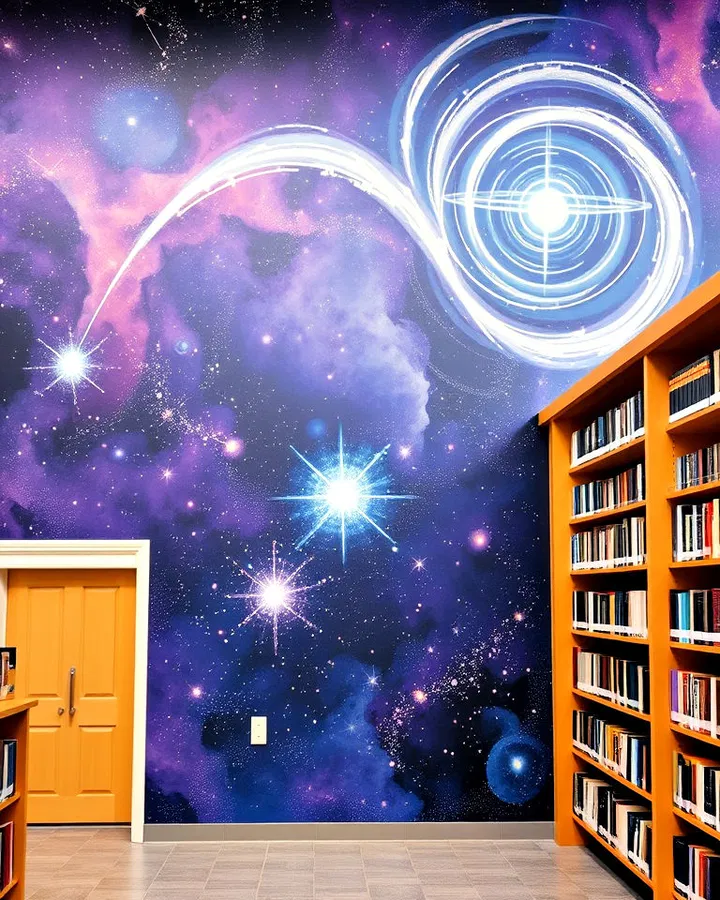
A star field suits a narrow reading alcove or the wall behind a telescope-themed book display. Let most of the wall remain a calm background, then concentrate stars or a large moon in one area.
If the mural is meant to teach constellations, use a checked reference and label the intended pattern. If it is simply a fantasy sky, describe it that way. Test the dark paint color in the room’s evening light before committing to the whole wall.
5. Fantasy Realms
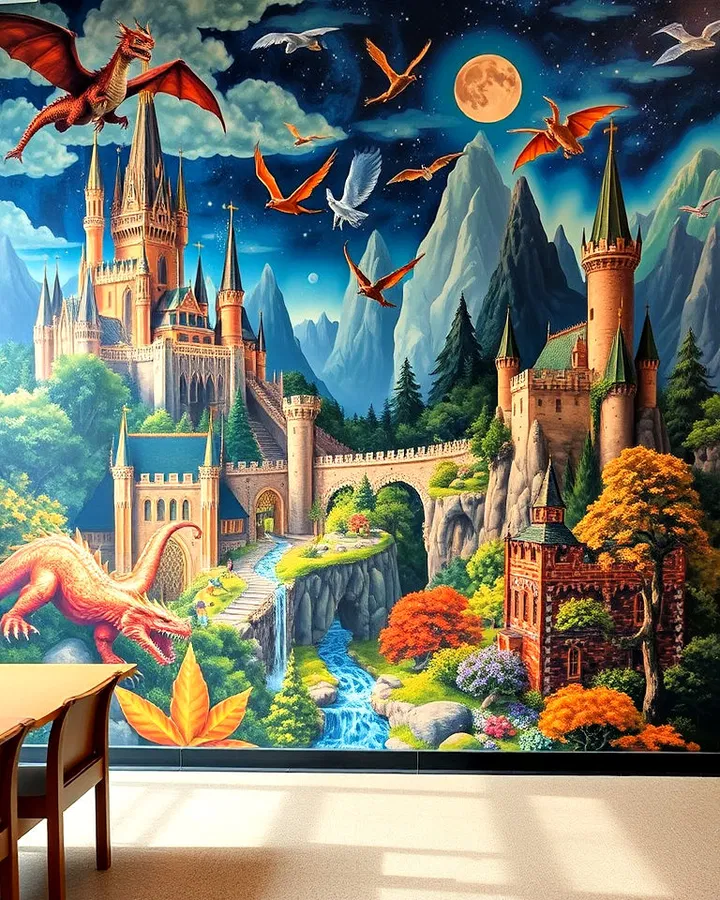
A winding path toward a castle or a doorway into a forest gives the mural a clear focal point. Line that focal point up with the open reading area rather than hiding it behind the tallest bookcase.
For a home library, a single arch-shaped landscape panel can suggest a storybook world without covering every wall. Give an artist the wall dimensions, furniture positions, and one main scene to work from instead of asking for every favorite creature at once.
6. Sci-Fi Futures
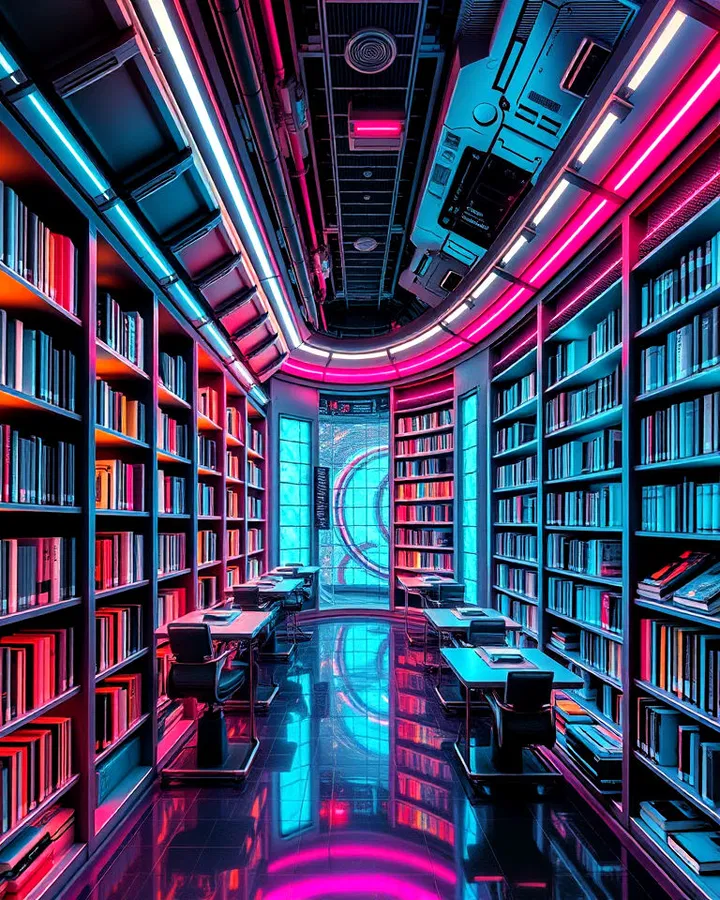
Try an imagined library aboard a spacecraft, with a large window looking toward a planet. Limit the drawing to a few strong architectural lines and one view, leaving quieter areas near real shelves.
A computer-generated concept can help communicate the mood, but it still needs a deliberate wall layout. Ask for a scaled proof before ordering a printed mural, and check that important shapes will not disappear behind doors, radiators, or furniture.
7. Whimsical Storybook Scenes
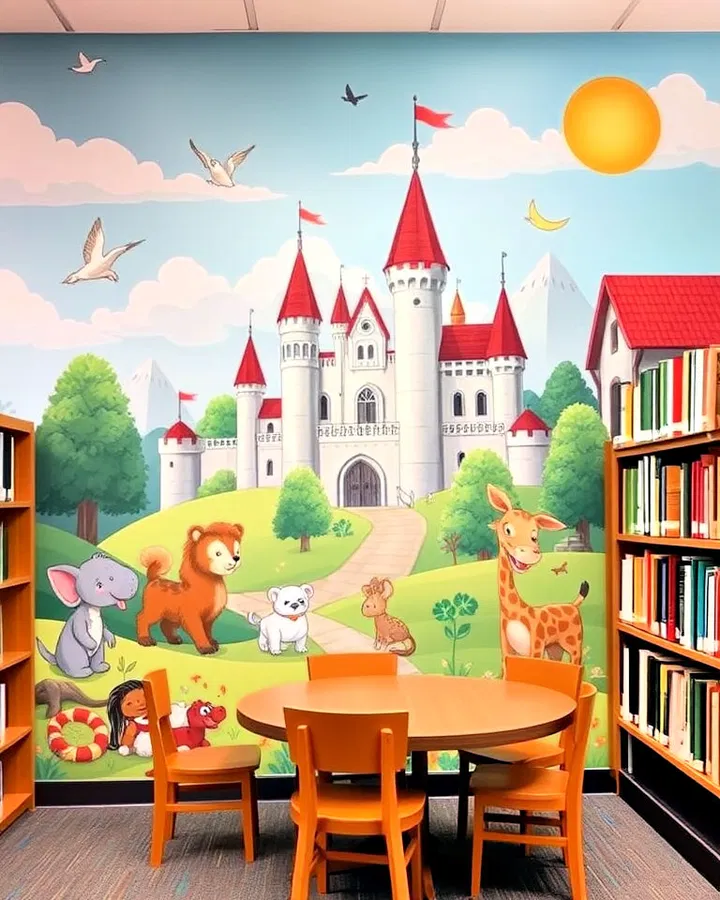
Choose one original scene, such as woodland animals sharing books beneath a tree, rather than combining unrelated characters. Repeat a few colors from the room’s rug or cushions to make the mural feel connected to its surroundings.
Keep faces and key story details out of furniture zones. If you want recognizable published characters or book artwork, establish permission to use the artwork before commissioning or printing it. Original characters are another way to create a personal reading corner.
8. Cultural Heritage Celebration
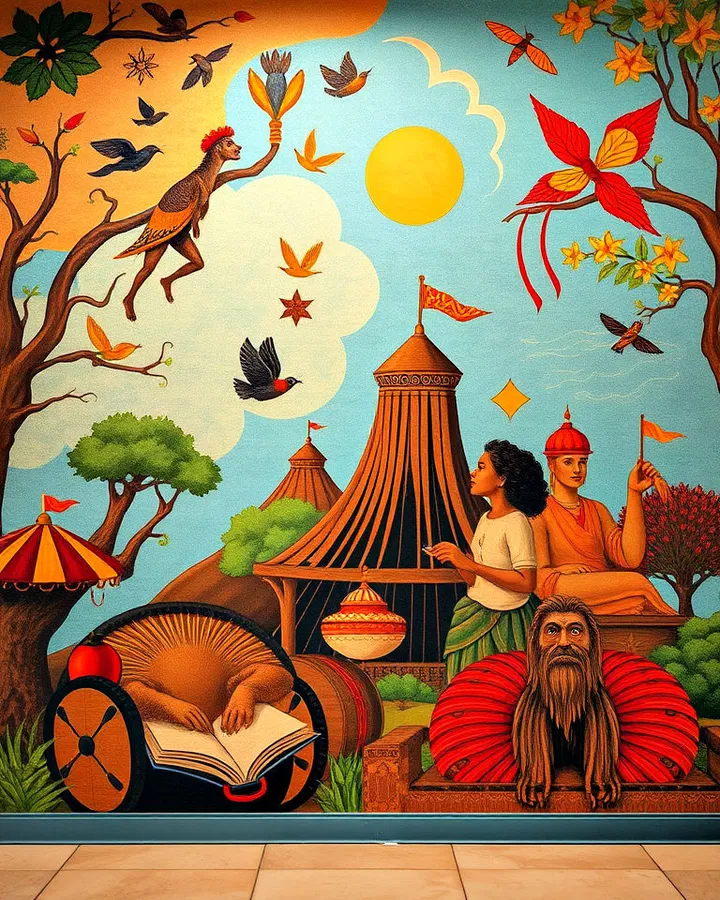
Build this mural around a specific storytelling tradition or community contribution, with input from people represented in the design. A focused scene with a short explanation is more useful than a collection of decorative symbols without context.
For a school or public library, review the sketch and wording with the people responsible for the collection. Use a nearby changeable panel to connect the scene with relevant books, authors, or languages, and check spelling before painting.
9. Local Landmarks and Identity
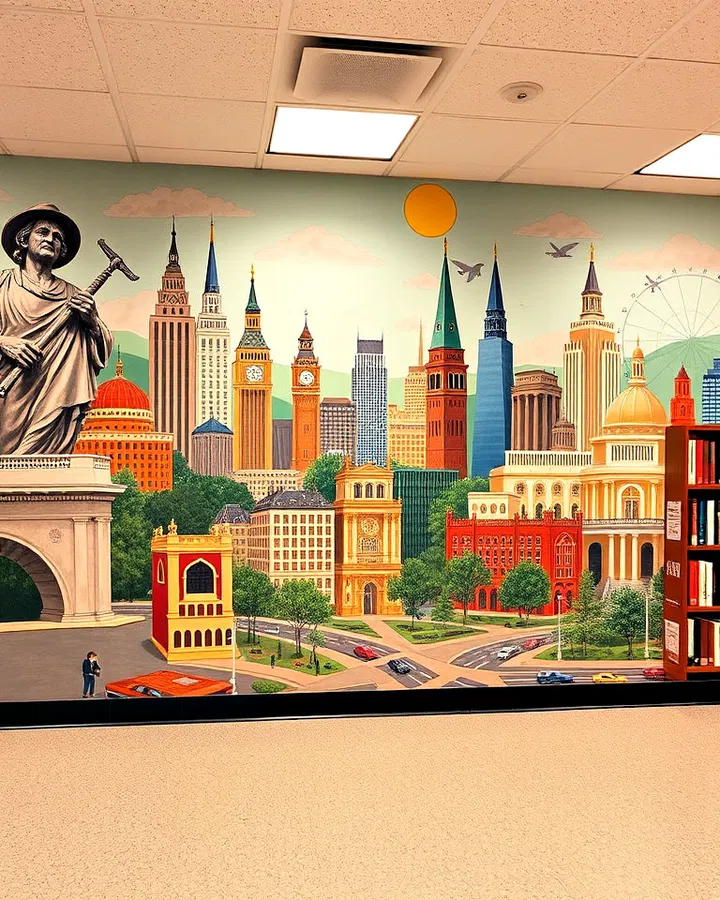
A familiar bridge, park, or street can connect a library to the neighborhood around it. Use a simplified skyline or landscape, then place the books or reading motif within that setting.
This is a good commission for a local artist. Supply your own reference photos where possible and identify which landmarks matter most. A horizontal composition can run above low shelving, keeping the recognizable outline visible even when the shelves are full.
10. Architectural Wonders

Turn stacks of books into an imagined city, bridge, or staircase. Choose one organizing shape so the design remains legible; dozens of different buildings can become a busy backdrop.
For a simple painted version, arrange rectangles of varying heights like a skyline and add a few spine lines. Keep the palette limited. Use a level and measured sketch to establish the main edges before adding any playful details.
11. Historical Literary Timeline
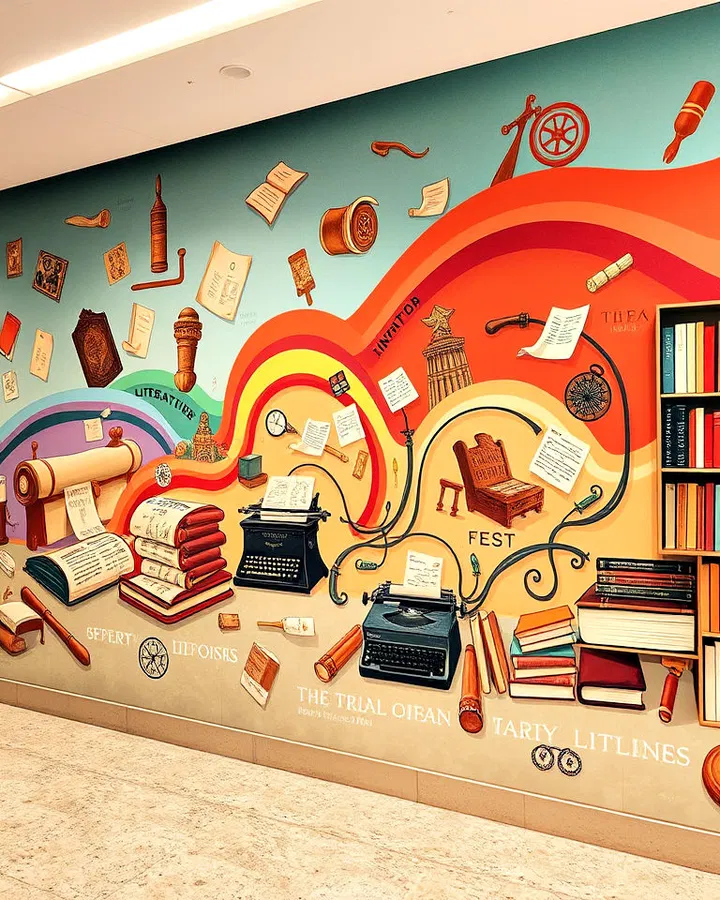
Give a long wall a sequence of a few large milestones rather than tiny dates packed edge to edge. Separate the illustrated background from the written information so labels stay readable.
Check every date and description before production, and decide how the timeline handles different writing and publishing traditions. A series of removable information panels over a restrained painted background makes future corrections easier than painting all the text permanently.
12. Classic Literary Icons
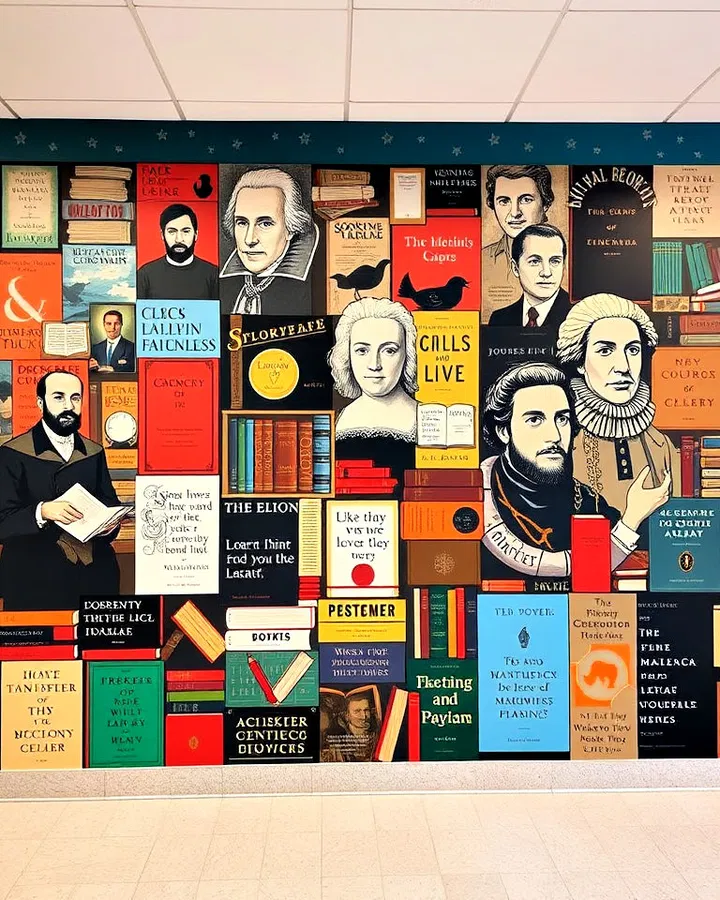
An author portrait or a group of symbolic objects can honor a favorite collection without reproducing an entire book cover. A quill, landscape, doorway, or other story element may be enough to establish the theme.
Pick a small number of subjects and provide a clear list to the artist. Confirm image permissions and check name spellings. Place labels on a separate plaque if the collection or display is likely to change.
13. Inspirational Quotes Wall
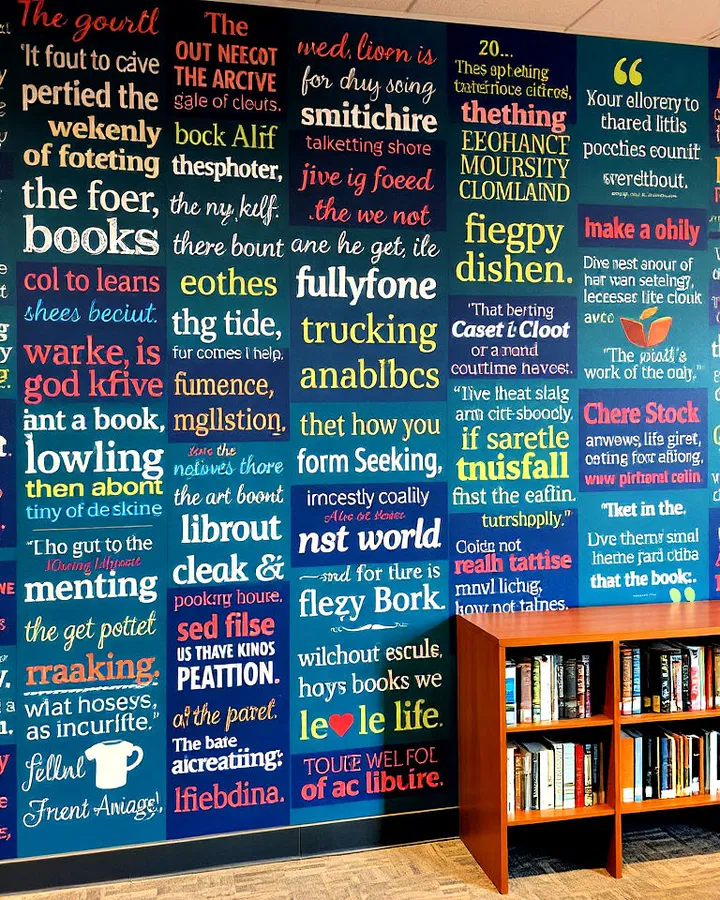
Short wording usually works better on a wall than a long passage. Choose a line that is appropriate to the space, verify its wording and attribution, and establish that you may use it.
Print a paper mock-up at the intended letter size and view it from the entrance and a reading chair. Give the words a quiet background with generous space around them. Stencils or professionally cut lettering can make a cleaner result than freehand text.
14. Abstract Literary Art
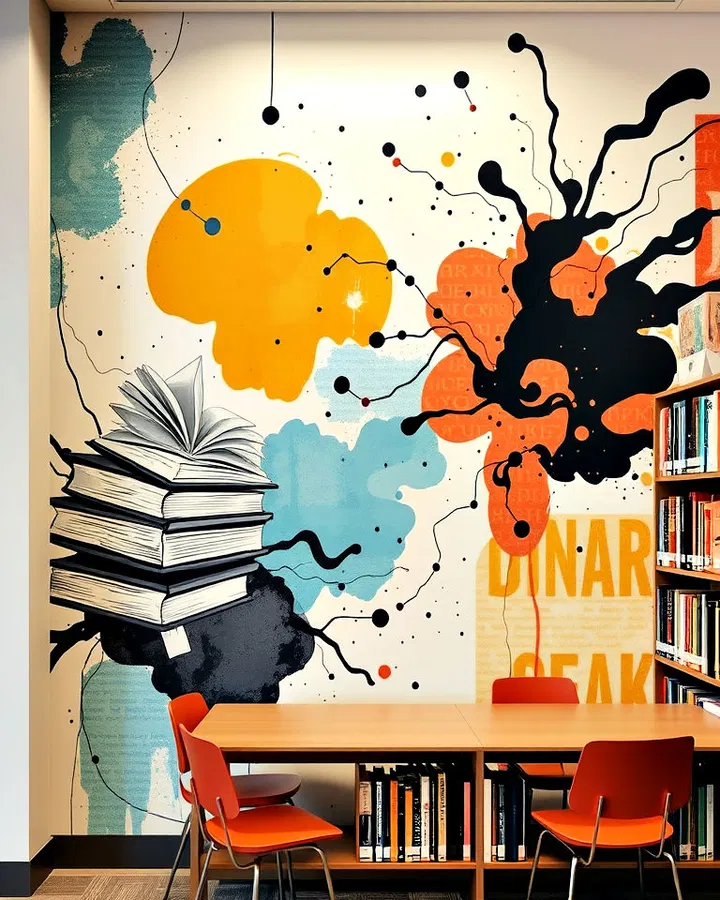
Flowing lines, scattered letterforms, and oversized page shapes can suggest reading without a literal scene. This is a flexible choice when the room already contains colorful book spines and several furniture styles.
Choose two or three paint colors from the existing room and repeat one shape at different scales. Sketch the whole composition first. A few deliberate large shapes usually hold a wall better than small marks added until the space feels full.
15. Bird’s-Eye Library Perspective

A painted view down into an imagined library can be striking, but convincing perspective depends on the viewing point. It works best on an unobstructed feature wall that visitors see from a predictable direction.
Treat this as a specialist illustration rather than a first freehand painting project. Ask for a scaled preview that includes the room’s furniture, and inspect a print sample for detail. An intricate floor plan placed behind real bookcases will lose much of its effect.
A Practical Mural Project Sequence
- Photograph and measure the wall with its furniture in place.
- Choose one main idea and make a small color sketch.
- Test colors or order a wallcovering sample in the room’s actual light.
- Prepare the surface according to the selected paint or wallcovering instructions. It should be suitable, clean, and dry; see Sherwin-Williams’ paint-preparation guide for the painted route.
- Transfer the main shapes or approve the printed panel proof before installing.
- Allow the specified drying or curing time, then return furniture without covering the focal point.
For a modest home project, start with two overlapping hill shapes above one low bookcase. Gather the compatible wall paint, any required primer, a small roller, brushes, measuring tools, floor protection, and tape suitable for the finish. Follow the paint labels for coverage and recoating rather than assuming a fixed one-day schedule.
Once the mural is in place, keep the nearby displays restrained. Our shelf-styling guide can help with the books and objects below it. For a smaller wall project, see our budget-friendly large-wall ideas.