

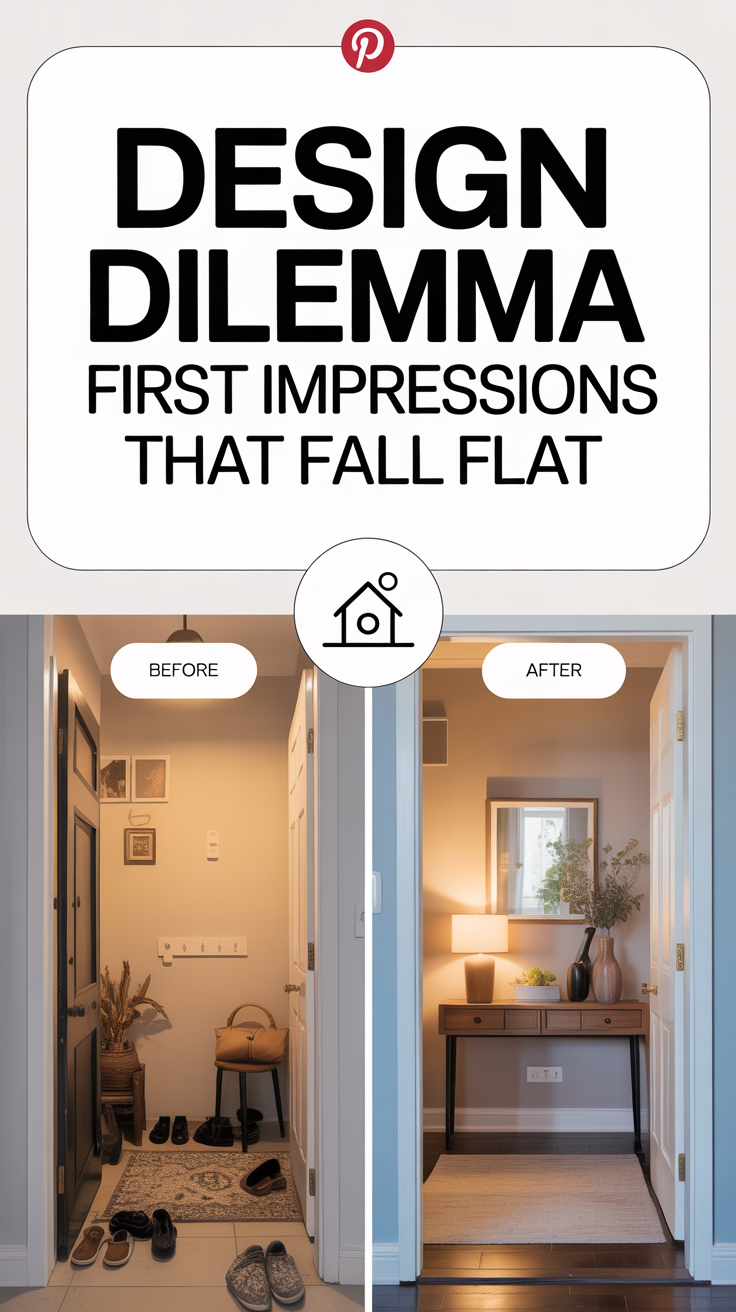
Have you ever walked into a home and immediately felt a sense of calm, as if the space itself was giving you a warm hug? Or on the flip side, have you stepped through a front door only to be greeted by a chaotic jumble of shoes, mail, and coats that instantly spiked your stress levels? I know I have experienced both, and let me tell you, the difference is entirely in the entryway.
Your entryway is the handshake of your home. It is the very first impression guests get of your personal style, and more importantly, it is the first thing you see when you return after a long day. Yet, it is so often the most neglected space in our houses. We pour our hearts, souls, and budgets into our living rooms and kitchens, leaving the poor entryway as an afterthought, a drop zone for daily life. This is what I call the ultimate design dilemma: first impressions that fall flat.
But it does not have to be this way. Whether you are working with a grand, sweeping foyer that echoes when you speak, or a tiny sliver of wall space in a studio apartment, you can create an entryway that is both highly functional and incredibly stylish. I have spent years tweaking, rearranging, and obsessing over entryways of all shapes and sizes, and I am here to share everything I have learned about turning this transitional space into a stunning statement.
The Psychology of the Entryway
Before we get into the fun stuff like picking out the perfect mirror or agonizing over rug patterns, we need to talk about why the entryway matters so much. It is not just about aesthetics; it is about psychology.
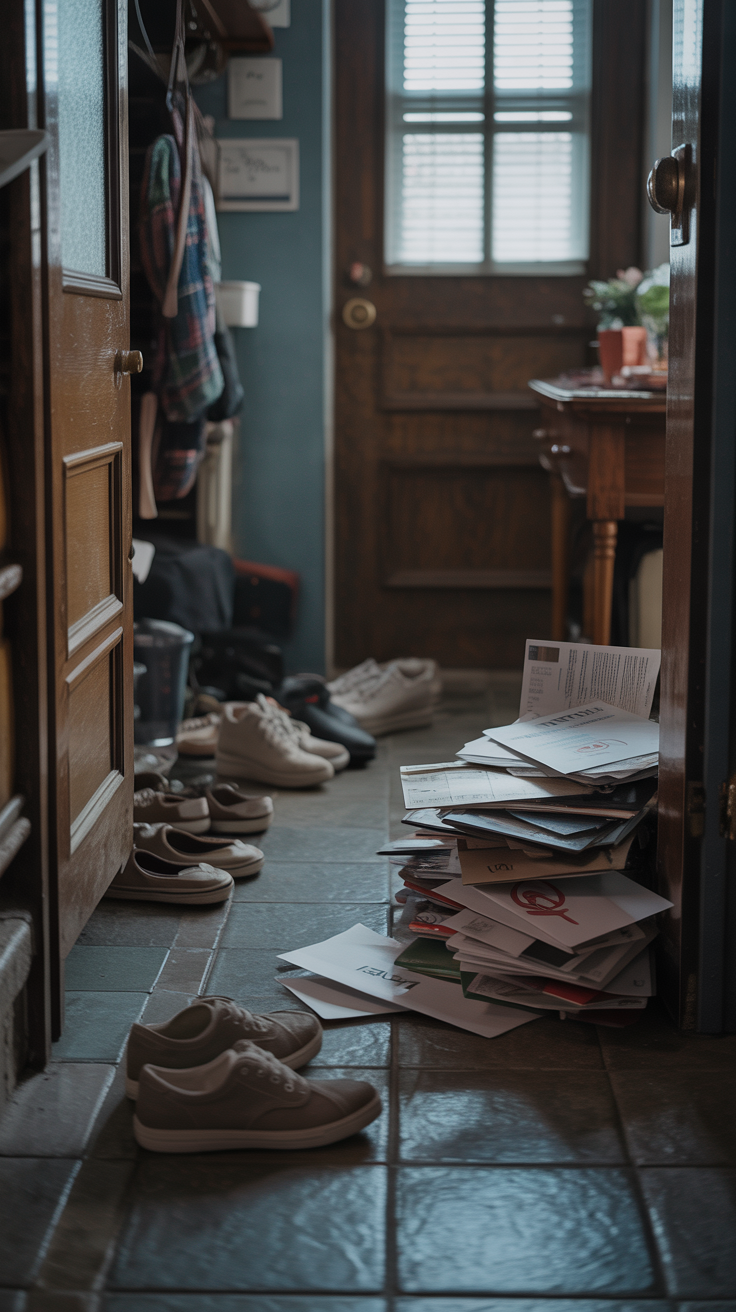
The entryway is a transitional zone. It is the physical and mental bridge between the chaotic outside world and the sanctuary of your home. When this space is cluttered, dark, or uninspired, it sets a negative tone for your entire house. You walk in, trip over a stray boot, stare at a pile of unopened bills, and immediately feel overwhelmed. Your home should be your refuge, but a messy entryway turns it into a source of stress before you have even taken off your coat.
On the flip side, a well-designed entryway acts as a palate cleanser. It welcomes you in, offers a designated spot to shed the physical baggage of the day (keys, bags, shoes), and visually signals that you are safe and sound. It tells your guests, “Welcome, we are so glad you are here, and yes, we do have our lives together.” (Even if the rest of the house is a mess, a chic entryway can totally fake it!)
So, how do we achieve this magical balance of form and function? It all comes down to understanding the anatomy of an entryway and tailoring it to the size of your space.
The Universal Elements of a Great Entryway
No matter how large or small your entryway is, there are a few universal elements that every successful drop zone needs. Think of these as the building blocks of your design.
1. A Surface to Drop Things
You need a place to put your keys, mail, and sunglasses the second you walk in. This could be a grand console table, a floating shelf, or even a tiny ledge. Without a designated drop zone, these items will inevitably end up on the kitchen counter or the dining table, spreading the clutter throughout your home.
2. A Place to Sit
Taking off and putting on shoes requires balance, and let’s be honest, none of us want to be hopping around on one foot while trying to yank off a stubborn boot. A bench, a stool, or even a sturdy pouf provides a necessary perch.
3. Storage for the Essentials
Shoes, coats, umbrellas, dog leashes—these things need a home. Depending on your space, this could mean a spacious hall tree, a sleek cabinet, or simply a few well-placed hooks and a woven basket.
4. A Mirror
A mirror is the MVP of the entryway. Not only does it give you a chance for a quick outfit check before you head out the door, but it also bounces light around the space, making it feel larger and brighter.
5. Good Lighting
Entryways are notoriously dark, often lacking natural light. A good lighting plan—whether it is a statement chandelier, a pair of sconces, or a cute table lamp—is crucial for setting a welcoming mood.
6. A Touch of Personality
This is where you get to have fun. A piece of art, a vase of fresh flowers, a vintage rug, or a bold wallpaper pattern tells the story of who lives there.
Now that we have our building blocks, let’s look at how to apply them to different sizes of entryways.
The Tiny Apartment Entryway: Making Magic Out of Nothing
Let’s start with the most challenging scenario: the non-entryway. You know the one. You open your front door and you are immediately standing in your living room or kitchen. There is no defined foyer, just a blank wall (if you are lucky) or the back of a sofa.
When I lived in my first apartment, my “entryway” was literally just the back of the front door and about two feet of wall space next to it. It was a design dilemma of epic proportions. But here is the secret to tiny entryways: you have to go vertical and you have to define the zone.
Define the Space
When you do not have architectural boundaries, you have to create visual ones. The easiest way to do this is with a rug. A small, durable runner or a 2×3 vintage-inspired rug placed right inside the door instantly says, “This is the entryway.”
Another great trick is to use paint or wallpaper to carve out a zone. You can paint a color block on the wall behind your entryway setup, or wallpaper just that small section. It creates a distinct vignette that separates the entry from the rest of the room.
Go Vertical
When floor space is non-existent, the walls are your best friend. Instead of a bulky console table, opt for a floating shelf. It provides that crucial drop zone for keys and mail without eating up any square footage.
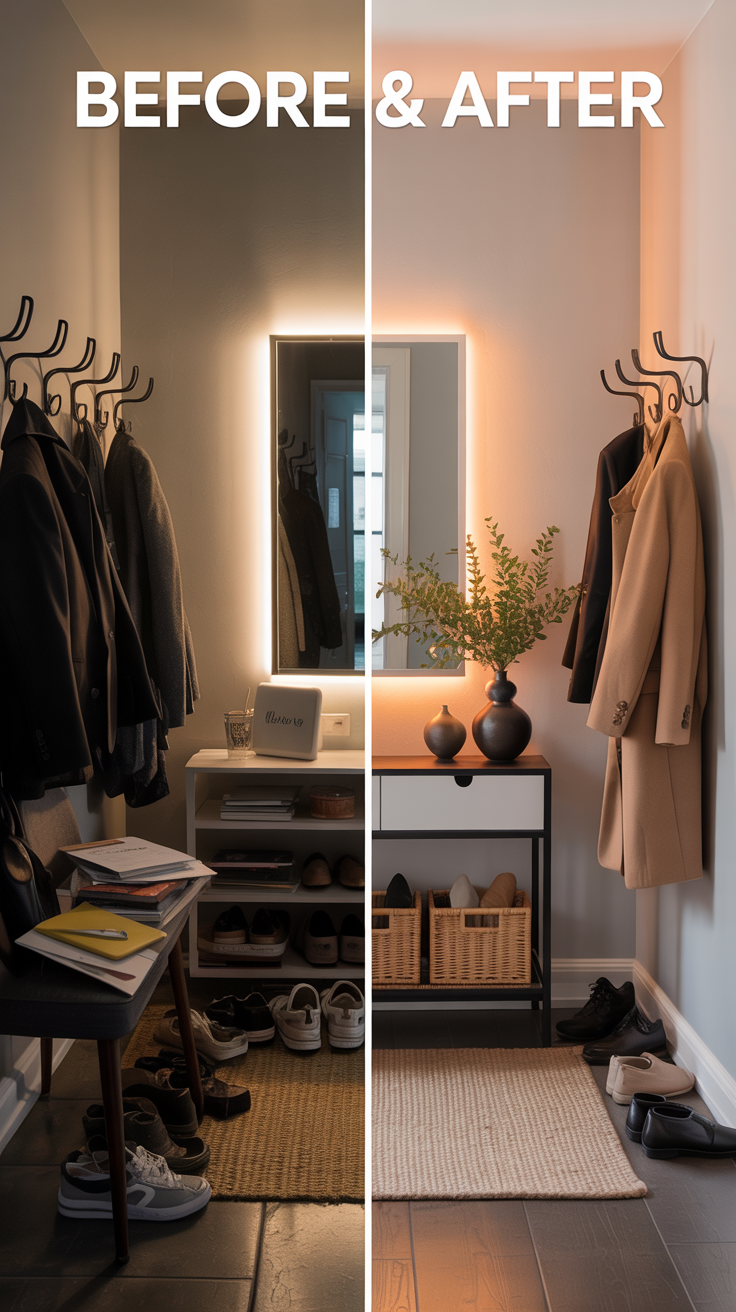
Above the shelf, hang a mirror to reflect light and make the space feel bigger. Flank the mirror with a few stylish wall hooks for coats and bags. I love using interesting, sculptural hooks so they look like art when they are empty.
Sneaky Storage
You probably do not have room for a bench, but you might have room for a small, narrow stool tucked under your floating shelf. For shoes, a slim, wall-mounted shoe cabinet (the kind that tilts open) is an absolute lifesaver. They are often only six to eight inches deep but can hold several pairs of shoes, keeping them completely out of sight.
If even a slim cabinet is too much, a beautiful woven basket placed on the floor can corral a few pairs of everyday shoes and an umbrella.
The Narrow Hallway: The Bowling Alley Dilemma
Ah, the narrow hallway. This is a very common entryway layout, especially in older homes and townhouses. You have a long, skinny corridor that feels a bit like a bowling alley. The challenge here is adding function and style without blocking the traffic flow. You do not want guests to have to turn sideways and suck in their stomachs just to get past your console table.
The Skinny Console
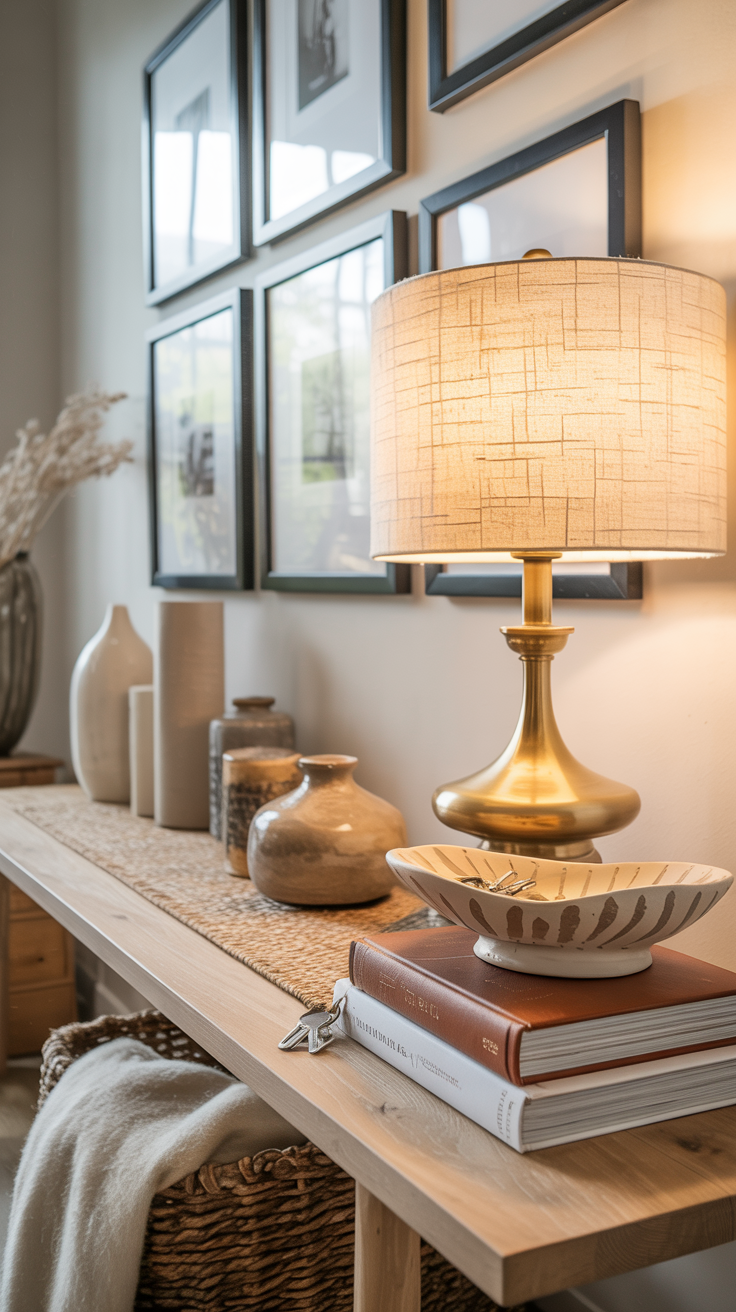
The key to a narrow hallway is finding furniture with a very slim profile. Look for console tables that are no more than 10 to 12 inches deep. A table with open legs (rather than a solid cabinet) will feel lighter and less obtrusive in the space.
If you cannot find a table narrow enough, consider using a radiator cover or building a custom narrow ledge. I once used a piece of reclaimed wood resting on two simple brackets to create a perfectly sized drop zone in a tight hallway.
Draw the Eye Up and Down
To counteract the “bowling alley” effect, you want to draw the eye up to the ceiling and down to the floor, rather than letting it shoot straight down the hall.
On the floor, a long, patterned runner is essential. It adds color and texture, and it protects your floors in this high-traffic area. Make sure to leave a few inches of bare floor showing on either side of the runner so the space does not feel choked.
On the ceiling, swap out the basic flush-mount light fixture for something with a bit more personality. A series of small, interesting pendants or semi-flush mounts will break up the length of the ceiling and add a beautiful glow.
The Gallery Wall
A long, blank wall is begging for art. A gallery wall is a fantastic way to add personality to a narrow hallway. Because people will be viewing the art from up close, this is a great place for smaller, more detailed pieces—family photos, small sketches, or a collection of vintage postcards.
Alternatively, a single, oversized piece of art at the very end of the hallway can act as a focal point, giving the eye a destination to land on.
Mirrors on the Long Wall
Hanging a large mirror (or a series of mirrors) on the long wall of a narrow hallway is a classic designer trick. It reflects the opposite wall, instantly making the hallway feel twice as wide.
The Average Foyer: The Goldilocks Zone
If you have a standard-sized foyer, a defined room that is not tiny but not massive, you are in the Goldilocks zone. You have enough space to play with different furniture arrangements, but not so much space that it feels empty or intimidating. This is where you can really have fun with the classic entryway formulas.
The Classic Console Setup
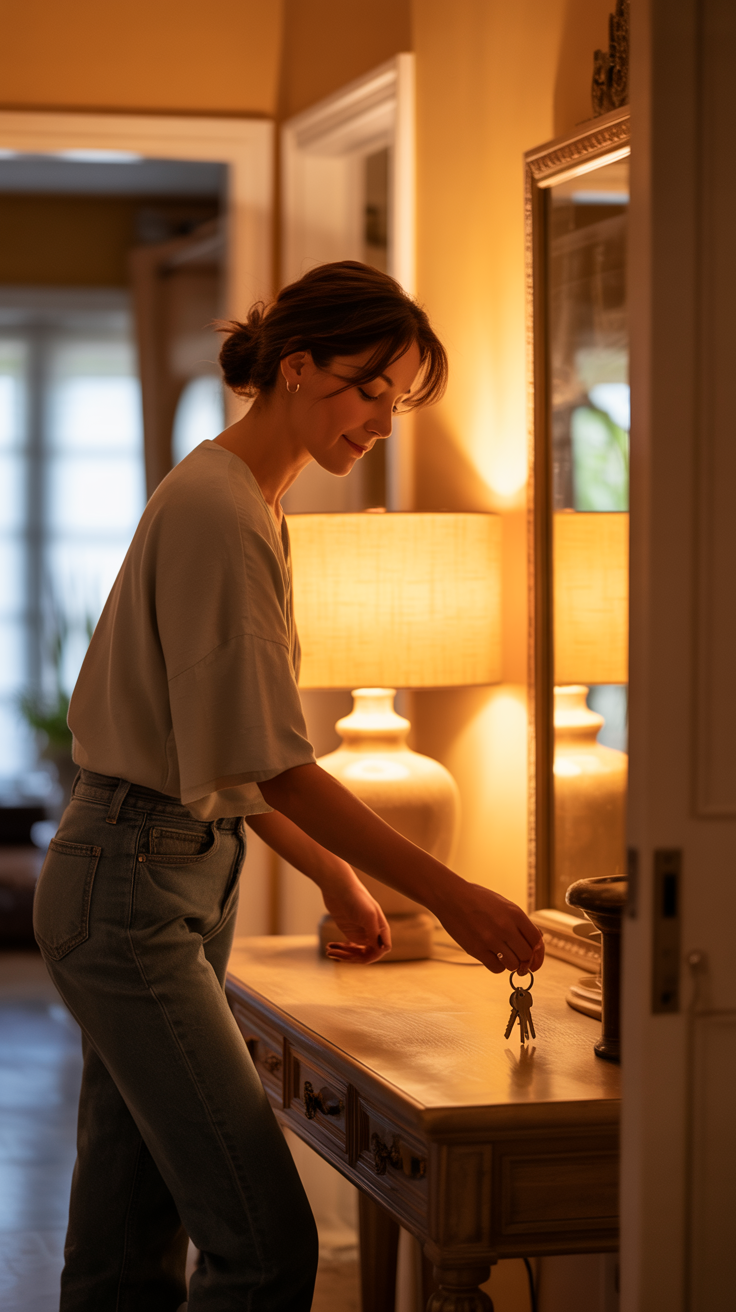
The most foolproof formula for an average foyer is the console table setup. Start with a beautiful console table or a closed cabinet (if you need more hidden storage).
Above the table, hang a large mirror or a statement piece of art. Flank the mirror with a pair of sconces, or place a stylish table lamp on one side of the console.
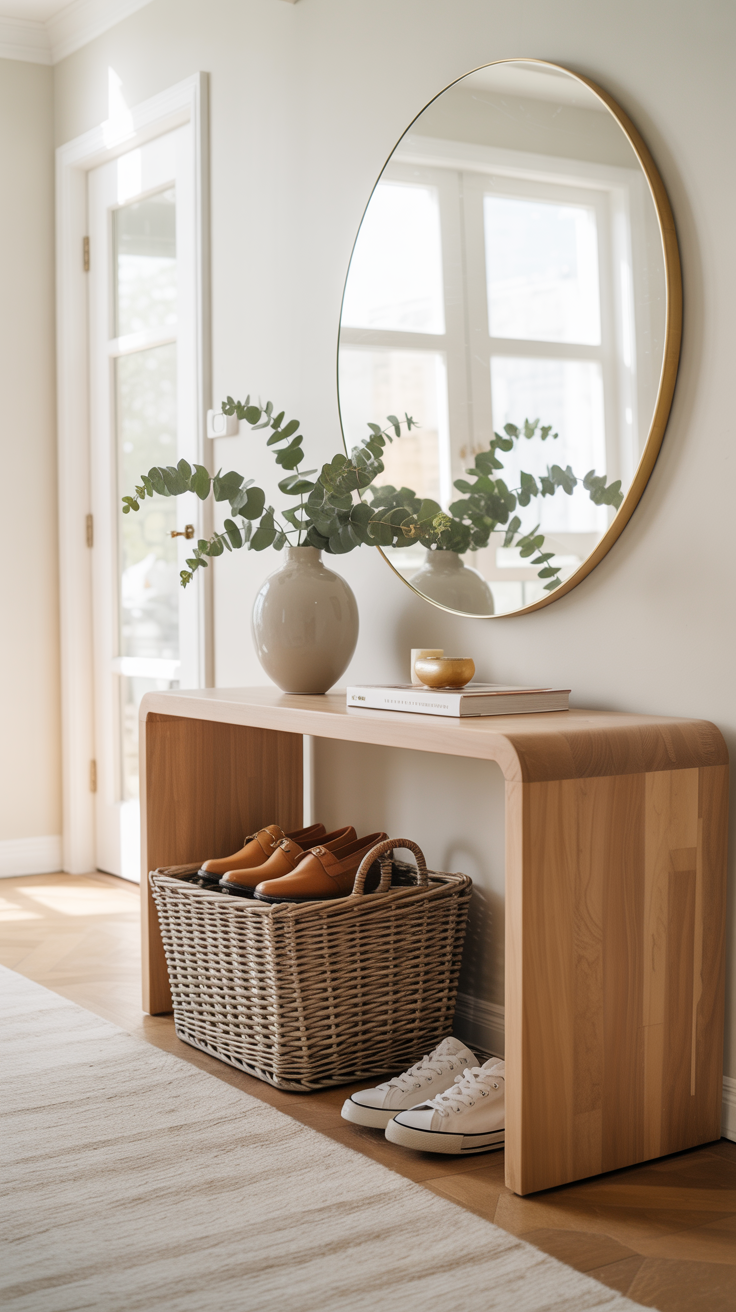
Underneath the table, tuck a pair of matching ottomans or a large woven basket for shoes. This setup provides everything you need: a drop zone, lighting, a mirror, and storage, all in one neat, symmetrical package.
The Bench and Hooks Combo
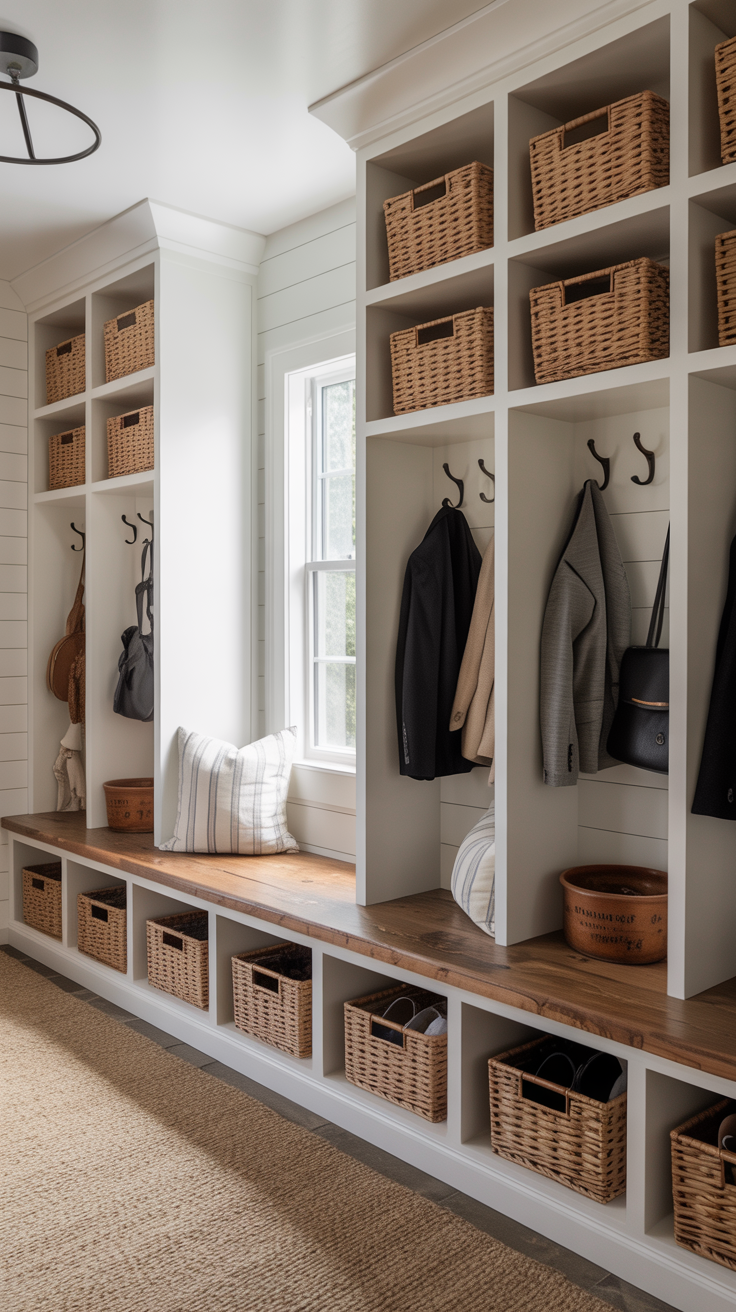
If your family is more casual and you need serious functionality, the bench and hooks combo is a winner. Find a sturdy, comfortable bench—perhaps one with a lift-up seat for hidden storage, or an open bottom where you can slide baskets.
Above the bench, install a row of heavy-duty hooks or a peg rail. This is perfect for hanging coats, backpacks, and dog leashes. To make it look intentional and designed, add a shelf above the hooks to display a few pieces of art or trailing plants.
Mix Materials
Because the average foyer has a bit more breathing room, you can afford to mix materials to create a layered, interesting look. If you have a wood floor, try a metal or painted console table. Add a textured jute rug, a sleek brass mirror, and a ceramic table lamp. The contrast of textures—warm wood, cool metal, nubby jute, smooth ceramic—is what makes a space feel professionally designed rather than bought straight out of a catalog.
The Grand Entryway: Taming the Cavern
Having a massive, two-story foyer might sound like a dream, but it comes with its own unique set of design dilemmas. A grand entryway can easily feel cold, cavernous, and uninviting. The challenge here is to bring the scale down to a human level and make the space feel warm and grounded.
Anchor the Center
If you have a large, open space, pushing all the furniture against the walls will only emphasize the emptiness in the middle. Instead, anchor the center of the room.
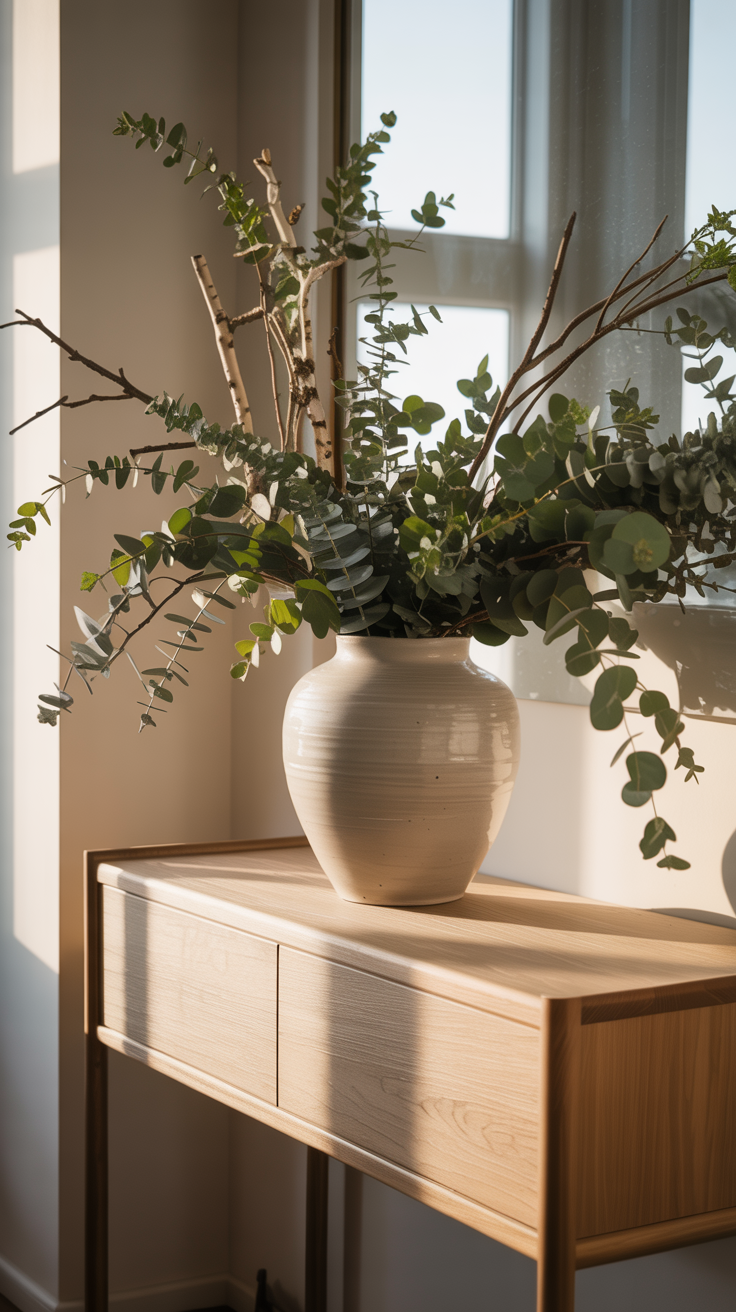
A classic center table is a stunning choice for a grand foyer. A round pedestal table placed directly under a spectacular chandelier creates an immediate focal point. Top the table with a massive vase of fresh branches or flowers, a stack of beautiful coffee table books, and a decorative bowl for keys. It feels incredibly elegant and intentional.
Scale Up Your Furniture
In a large space, standard-sized furniture will look like dollhouse miniatures. You need pieces with heft and presence. Instead of a delicate console table, opt for a massive, heavy credenza or a long, antique enfilade.
Your art and mirrors need to be scaled up as well. A tiny 8×10 frame will get lost on a two-story wall. Look for oversized canvases, massive floor mirrors that lean against the wall, or dramatic