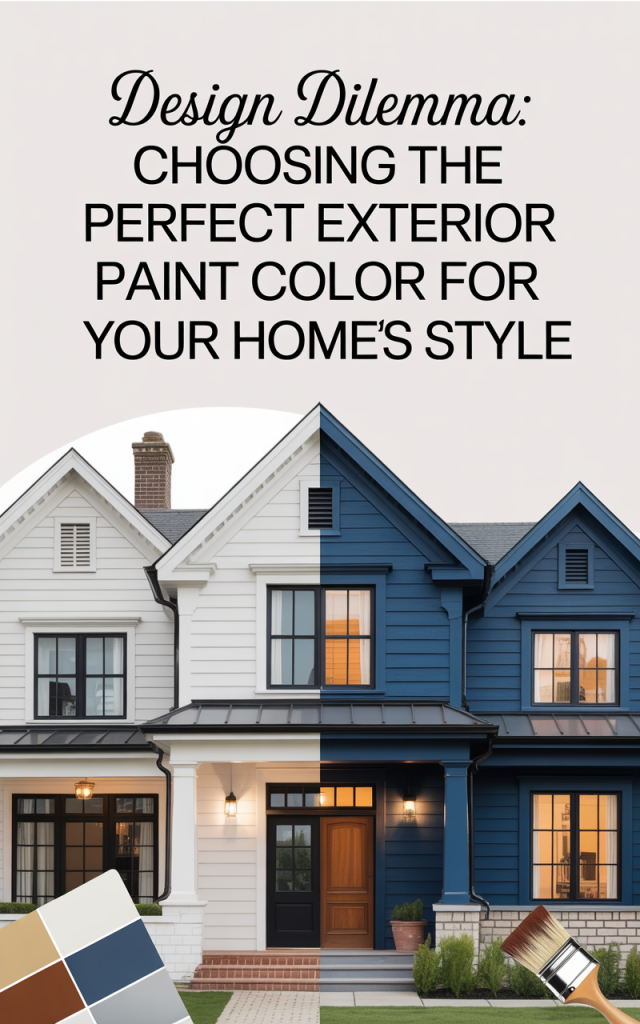
Choosing an exterior paint color should be exciting—a chance to transform your home’s curb appeal and express your personal style. And yet, for most homeowners, this decision becomes one of the most overwhelming parts of home improvement. The stakes feel high. The surface area is massive. The cost isn’t small. And unlike pillows or décor accents, the wrong exterior color is not something you can easily change next weekend.
Whether you’re refreshing a faded façade, updating a newly purchased home, or preparing to sell, the right exterior paint color can make your home look polished, modern, inviting, and architecturally cohesive. The wrong color? It can clash with your neighborhood, wash out your home’s features, or make the architecture look dated.
Fortunately, choosing the right exterior paint color doesn’t have to be complicated. By understanding your home’s style, lighting, fixed elements, and environment—and by following proven design principles—you can make a confident choice that looks intentional and timeless.
This comprehensive guide will walk you through everything you need to know to choose the perfect exterior paint color for your home’s unique style—from traditional and modern to farmhouse, colonial, craftsman, and more.
1. Why Exterior Paint Color Matters (More Than You Think)
Exterior paint isn’t just cosmetic—it’s architectural. The right color:
Highlights your home’s best features
Enhances curb appeal (a big factor if you plan to sell)
Makes your home feel cohesive and intentional
Can even visually enlarge or slim the home’s silhouette
Creates harmony with landscaping and surroundings
Because exterior colors cover such a large area, they influence how your home feels in every season and light condition. A stunning cream may appear bright and fresh in sunlight, but washed out in shade. A rich charcoal may look modern in theory but appear almost black in a wooded lot.
Getting it right means understanding style, context, lighting, and undertones—the four pillars of good exterior color design.
2. Start With Style: Your Home’s Architecture Should Guide You
Every home has a design language. Your paint color should speak that same language—otherwise the result feels visually confusing.
Let’s break down how architecture influences the “right” color family.
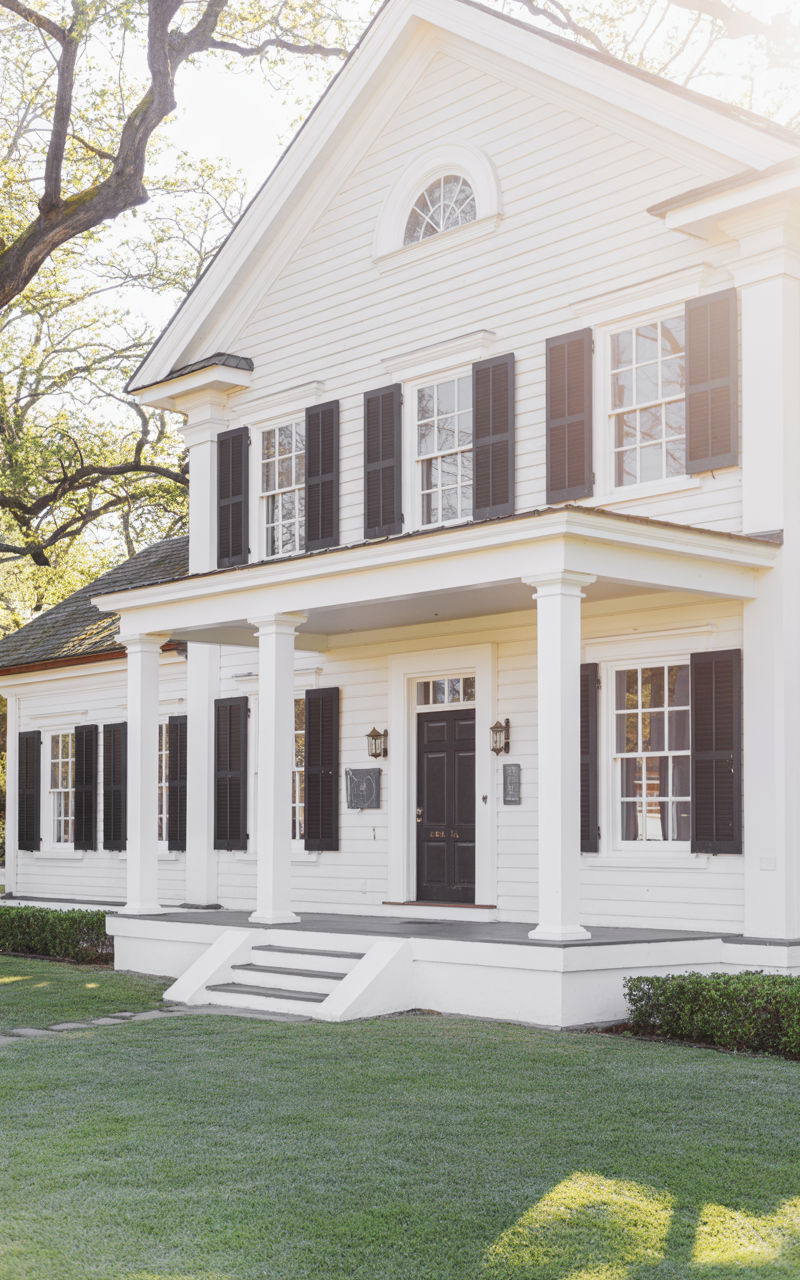
Traditional Homes
Examples: Colonial, Georgian, Victorian, Cape Cod, Tudor
Traditional homes often shine with:
Classic whites and creams
Deep navy or hunter green
Brick red, charcoal, or muted grays
Warm beiges and greiges
These styles typically favor timeless colors that won’t feel trendy—or dated—with time. Trim is usually high-contrast: crisp white or deep black to emphasize lines and symmetry.
Modern or Contemporary Homes
Examples: Minimalist, Box-style, New Construction Cubic Homes
Modern architecture frequently features:
Bold dark paints (charcoal, black, deep bronze)
Light monochromatic palettes (white on white)
Earthy midtones (warm gray, mushroom, café mocha)
Two-tone contrast blocks
These homes rely on clean lines and dramatic contrast, so the paint color should amplify that sleekness.
Farmhouse & Modern Farmhouse
Think:
Soft whites
Muted grays
Greige
Black accents
Sage green
Farmhouse architecture pairs beautifully with simple, earthy tones and matte finishes. Modern farmhouse often uses crisp white or greige siding with black or deep bronze trim for a timeless-yet-current look.
Craftsman Homes
Craftsman exteriors love nature-inspired colors:
Olive green
Rust
Navy
Warm browns
Creamy off-whites
These colors complement exposed beams, stonework, and natural materials.
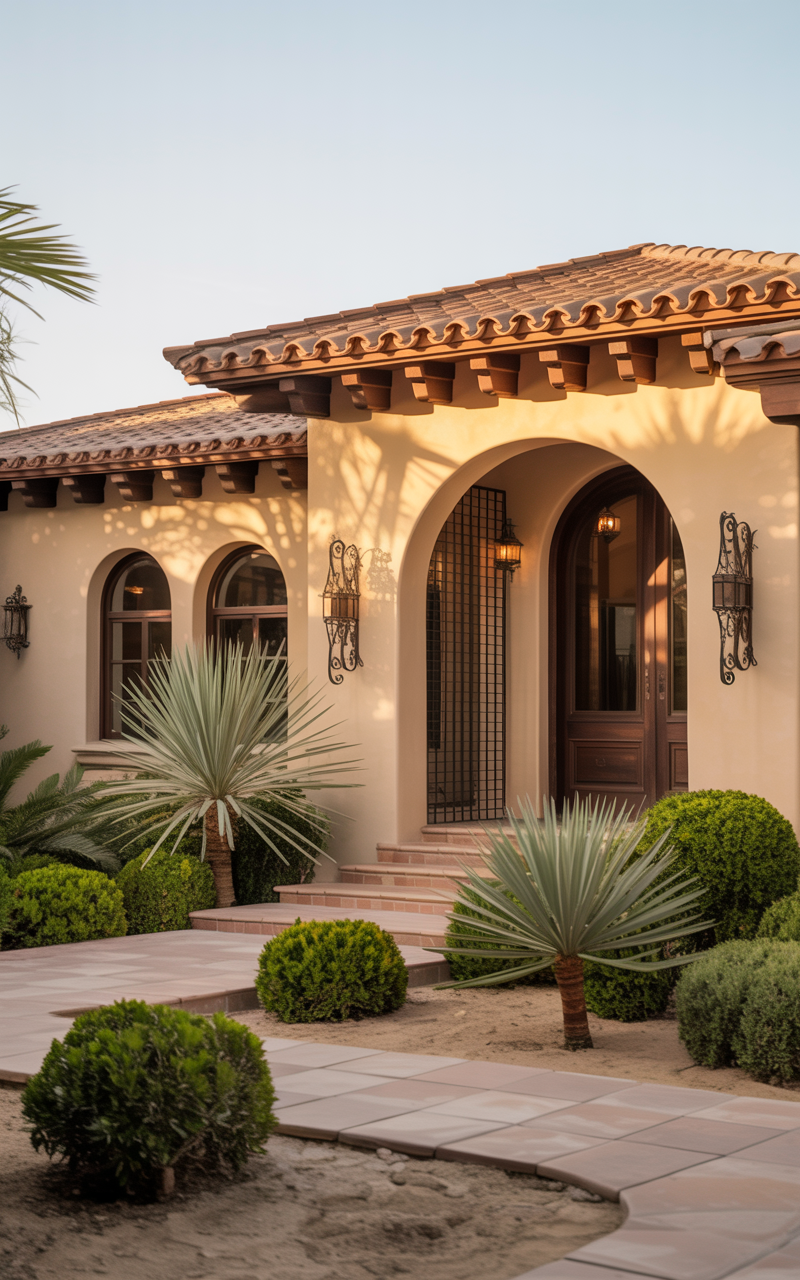
Mediterranean & Spanish-Style Homes
These homes traditionally feature:
Warm sand tones
Terracotta
Soft peach
Cream
Warm white
Desert neutrals
Deep turquoise, clay red, or deep blue also show up for accent doors.
Coastal Cottages & Beach Homes
Perfect pairings include:
Airy whites
Soft blues
Seafoam greens
Driftwood gray
Warm sandy tones
These homes naturally lean toward breezy, relaxed palettes.
3. Match the Paint Color to Your Home’s Fixed Elements
Your house has several “fixed elements” that you are not changing—at least not now. These have undertones you must work with:
Roof shingles
Brick
Stonework
Pathways
Landscaping
Decking
Window color
Metal/wood railings
These elements dictate which colors will harmonize—and which ones will clash.
Roof Color Matters Most
If your roof is:
Black or dark gray → almost any color works
Brown or tan → warm beige, greige, greens, creams work best
Red or terracotta → creamy neutrals, taupe, light tan
Light gray → soft blues, charcoal, white, black accents

Brick & Stone Have Strong Undertones
Brick and stone can have:
Red undertones
Pink-beige undertones
Orange or terra-cotta
Cool gray
Warm gray
Blue-gray
Taupe
Always sample colors directly against the brick or stone—your house’s fixed materials will instantly reveal whether a paint color belongs.
4. Consider Your Surroundings
Your home doesn’t exist in a vacuum. Its environment influences how your paint color appears.
Neighborhood Style
You don’t have to match your neighbors, but your home should feel harmonious in its context.
If every house around you is:
White
Beige
Gray
Earth-toned
…a neon blue house will feel out of place (and possibly hurt resale value).
Light Conditions
Lighting changes everything.
Full sun: Colors appear lighter and cooler
Shade or trees: Colors appear darker and more saturated
Open fields: Colors can look washed out
Wooded lots: Earth tones blend beautifully; bright whites may glare
Climate Matters
In sunny regions (Texas, Florida, Arizona), whites and warm neutrals look best.
In northern climates (Washington, Oregon, New England), deeper saturated colors thrive in overcast light.
5. Treat Exterior Paint Like a Three-Part Palette
A polished exterior typically uses three colors:
Main (Field) Color – the body of the house
Trim Color – highlights windows, fascia, corners
Accent Color – doors, shutters, details
How to Choose the Trio
A foolproof formula:
Low-contrast palette → modern, minimal, calming
Medium-contrast palette → timeless, balanced
High-contrast palette → bold, striking, architectural
Examples:
White house + off-white trim + black door
Greige house + white trim + navy door
Sage green house + cream trim + charcoal accents
Keep the palette to three colors max. Anything beyond that looks cluttered.
6. Undertones Make or Break an Exterior Paint Color
Understanding undertones is the secret to selecting colors that look intentional rather than “off.”
Warm Undertones
Beige
Cream
Tan
Warm gray (greige)
Terracotta
Earthy greens
Warm tones pair beautifully with clay roofs, stonework, and brown shingles.
Cool Undertones
True gray
Blue-gray
Charcoal
Blue
Cool whites
Cool tones suit modern homes, coastal homes, and homes with gray stonework.
Neutral Undertones
Greige (gray + beige)
Taupe
Soft whites
Neutral undertones are the most versatile and tend to be timeless.

7. Popular Color Families and What They Communicate
White + Off White
Feel: Clean, timeless, bright
Best for: Farmhouse, traditional, colonial, coastal, modern
Works with: Nearly anything, but be careful with stark whites in direct sun
Gray
Feel: Sophisticated, versatile
Best for: Craftsman, modern, ranch, colonial
Choose: Warm grays or greige to avoid looking cold
Beige + Greige
Feel: Warm, welcoming, timeless
Best for: Traditional, ranch, Mediterranean
Trend: Greige is now more popular than pure beige
Sage + Olive Green
Feel: Organic, grounding, designer-approved
Best for: Craftsman, cabins, cottages
These greens are trending due to their earthy, soothing vibe
Blue
Feel: Friendly, bold, coastal
Best for: Cape Cod, bungalows, coastal homes
Navy remains a top choice for shutters and doors
Charcoal + Black
Feel: Modern, dramatic
Best for: Modern, Scandinavian, cabin
Use: Body, trim, or accents—just not all three
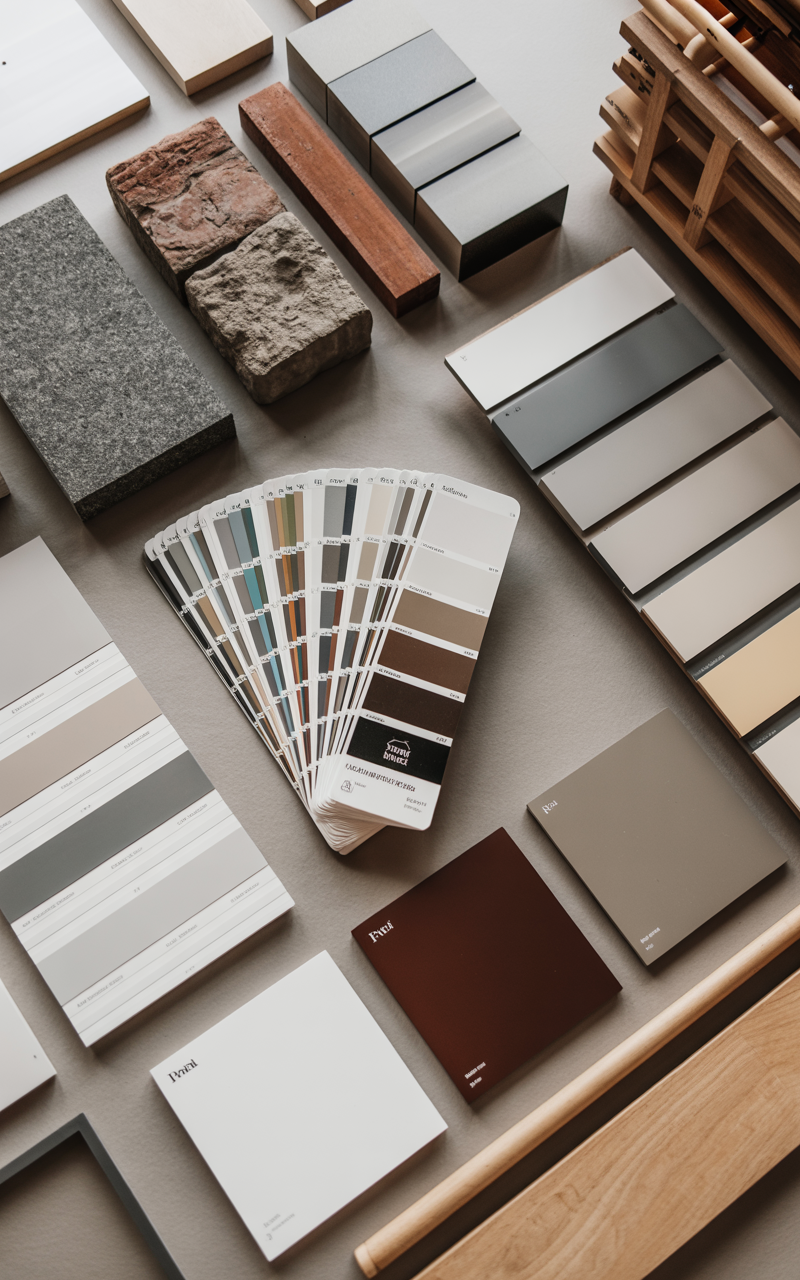
8. Sample Paint Colors—The Right Way
This is where most homeowners go wrong.
Don’t Sample Indoors. Ever.
Exterior colors look completely different outside.
Use Large Sample Boards
Paint 18×24 boards (or purchase peel-and-stick samples) and tape them to different sides of the house.
View Samples at Multiple Times of Day
Check the colors:
Morning
Midday
Cloudy days
At sunset
Under outdoor lighting
Test Against Fixed Materials
Hold samples next to:
Roof
Brick/stone
Windows
The incompatible colors will immediately stand out.
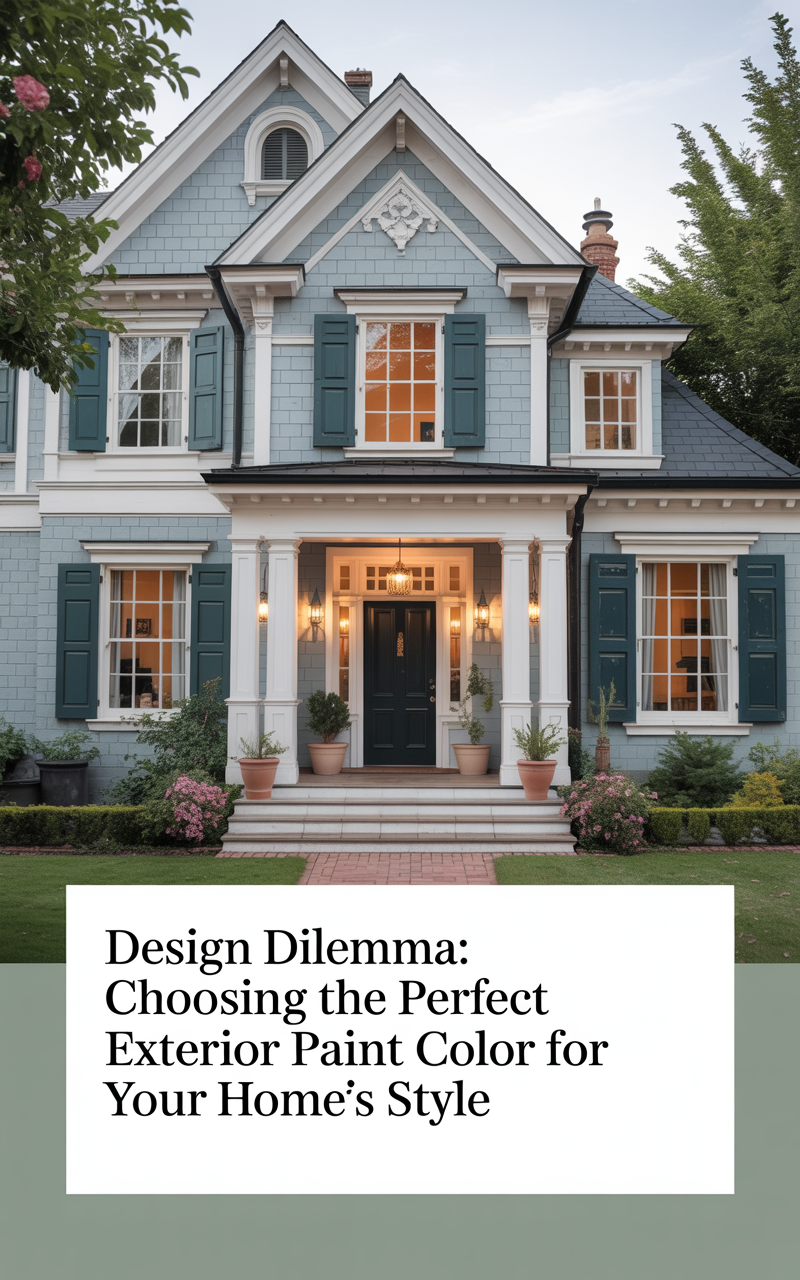
9. The Best Exterior Paint Colors for Popular Home Styles
Below are curated color suggestions often used by designers, categorized by style.
Modern Farmhouse
Soft White: Benjamin Moore White Dove
Pure White: Sherwin-Williams Pure White
Warm Greige: BM Revere Pewter
Contrasting Trim: SW Tricorn Black
Traditional Colonial
Classic White: BM Simply White
Navy: SW Naval
Historic Gray: BM Coventry Gray
Forest Green Door: BM Essex Green
Craftsman
Olive: SW Artichoke
Slate Blue: BM Van Deusen Blue
Warm Taupe: SW Dorian Gray
Cream Trim: SW Alabaster
Mediterranean
Clay Beige: BM Manchester Tan
Soft White: SW Shoji White
Terracotta Red Door: Traditional Spanish clay
Warm Taupe: BM Pale Oak
Modern / Contemporary
Charcoal Black: SW Iron Ore
Warm White: BM Chantilly Lace
Greige: SW Agreeable Gray
Black Trim: SW Tricorn Black
Coastal Cottage
Seafoam: BM Palladian Blue
Driftwood Gray: BM Shoreline
Nautical Navy: SW Salty Dog
Beachy Cream: SW Oyster White
10. When to Go Bold (And When to Avoid It)
Bold colors make a statement, but they’re not always the right choice.
Bold Choices That Work:
Deep navy
Charcoal
Black trim
Forest green
Red doors
Rich teal
Use bold hues for:
Front doors
Shutters
Accent siding
Modern homes
Bold Choices to Avoid:
Neon colors
Overly saturated primary colors
Pastels in non-coastal settings
Extremely dark colors in HOA neighborhoods
Bold choices shine when they play off architecture—not against it.
11. The Psychology of Exterior Color
Color affects how people perceive your home:
White → fresh, clean, upscale
Gray → sophisticated, calm
Blue → friendly, coastal, welcoming
Green → grounded, natural
Black → bold, modern
Beige → warm, timeless
If you intend to sell your home in the next few years, choosing psychological “crowd pleasers” is a smart strategy.
12. HOA Rules, Resale Value & Local Codes
Before selecting your dream color:
Check HOA-approved colors
Note restrictions on trim or accent colors
Understand neighborhood style expectations
Avoid overly unique colors if selling soon
Homes painted neutral, buyer-friendly colors tend to sell faster and at higher prices.
13. The Perfect Front Door Color (Finishing Touch!)
Never underestimate the emotional power of a front door.
Top Designer Picks
Black
Navy
Teal
Forest green
Classic red
Warm wood stain
Your front door is your home’s handshake—make it memorable.
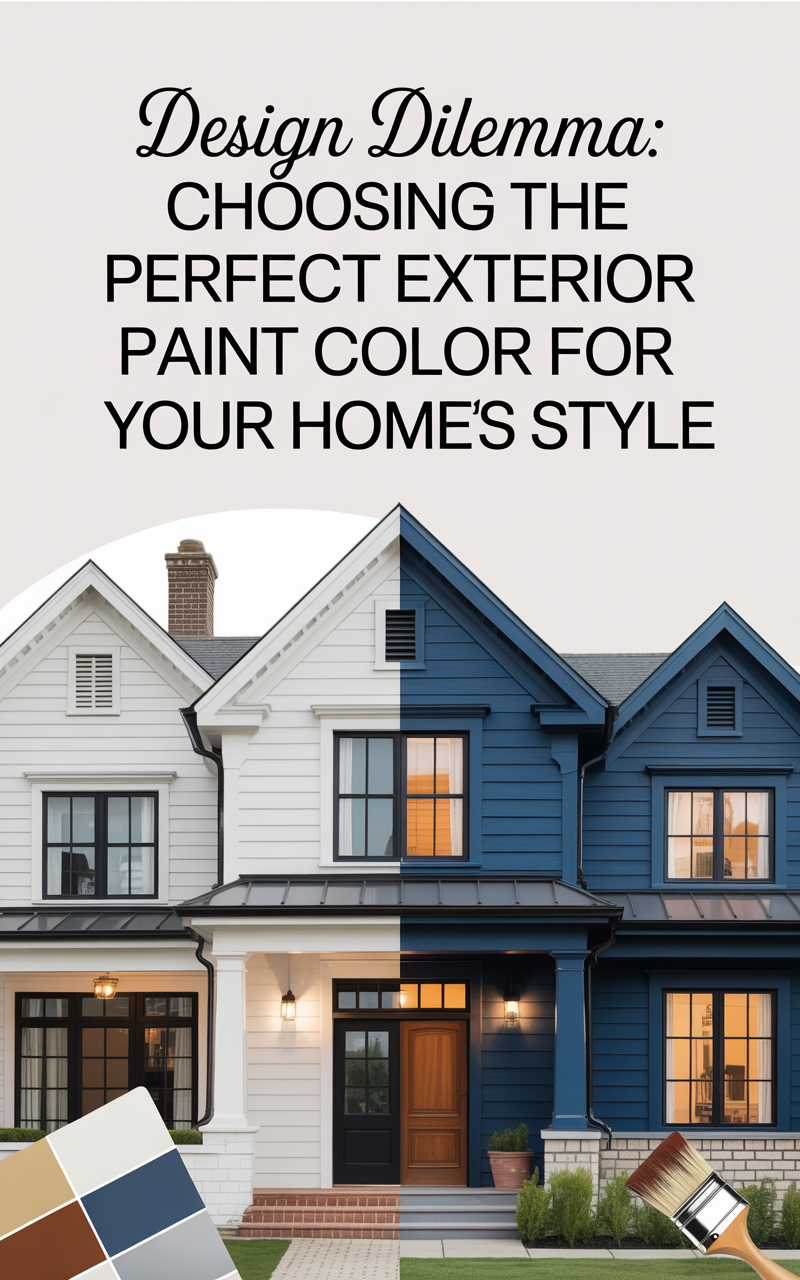
14. Final Checklist: Your Foolproof Exterior Color Game Plan
Before hiring the painter, confirm these:
Does the color complement your home’s architecture?
It should feel authentic to the style.
Does it match your fixed elements?
Brick, stone, roofing—this is non-negotiable.
Have you tested samples in natural light?
Morning, noon, shade, dusk.
Are the undertones consistent?
Warm with warm. Cool with cool.
Does your trim create the right contrast level?
Low, medium, or high—choose intentionally.
Is it timeless enough for future resale?
Trendy accent, timeless base = best combination.
Does it reflect your neighborhood environment?
Stand out—but don’t clash.
15. Your Home’s Perfect Color Is a Blend of Style + Science
Choosing an exterior paint color is one part design, one part psychology, one part architectural respect—and a big dose of personal preference.
When done right, the results are stunning:
Your home looks polished
Architectural features pop
The style feels cohesive
The colors flow naturally in all seasons
Curb appeal skyrockets
The “perfect” color is not a random guess—it’s the result of thoughtful consideration. With this guide, you now have the insider tools designers use to confidently choose long-lasting, beautiful exterior colors.
Your home has a personality. The right color brings it to life.