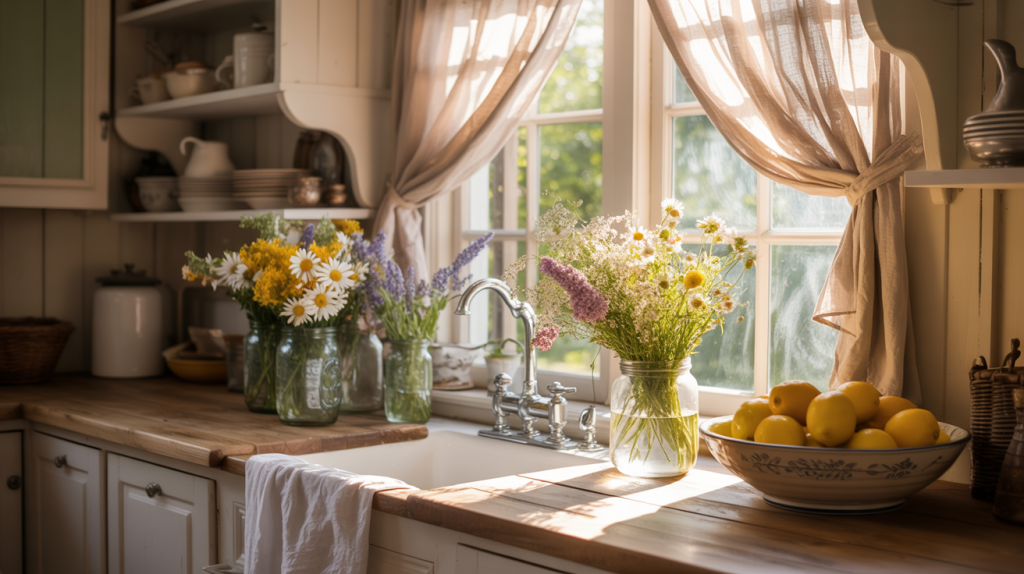
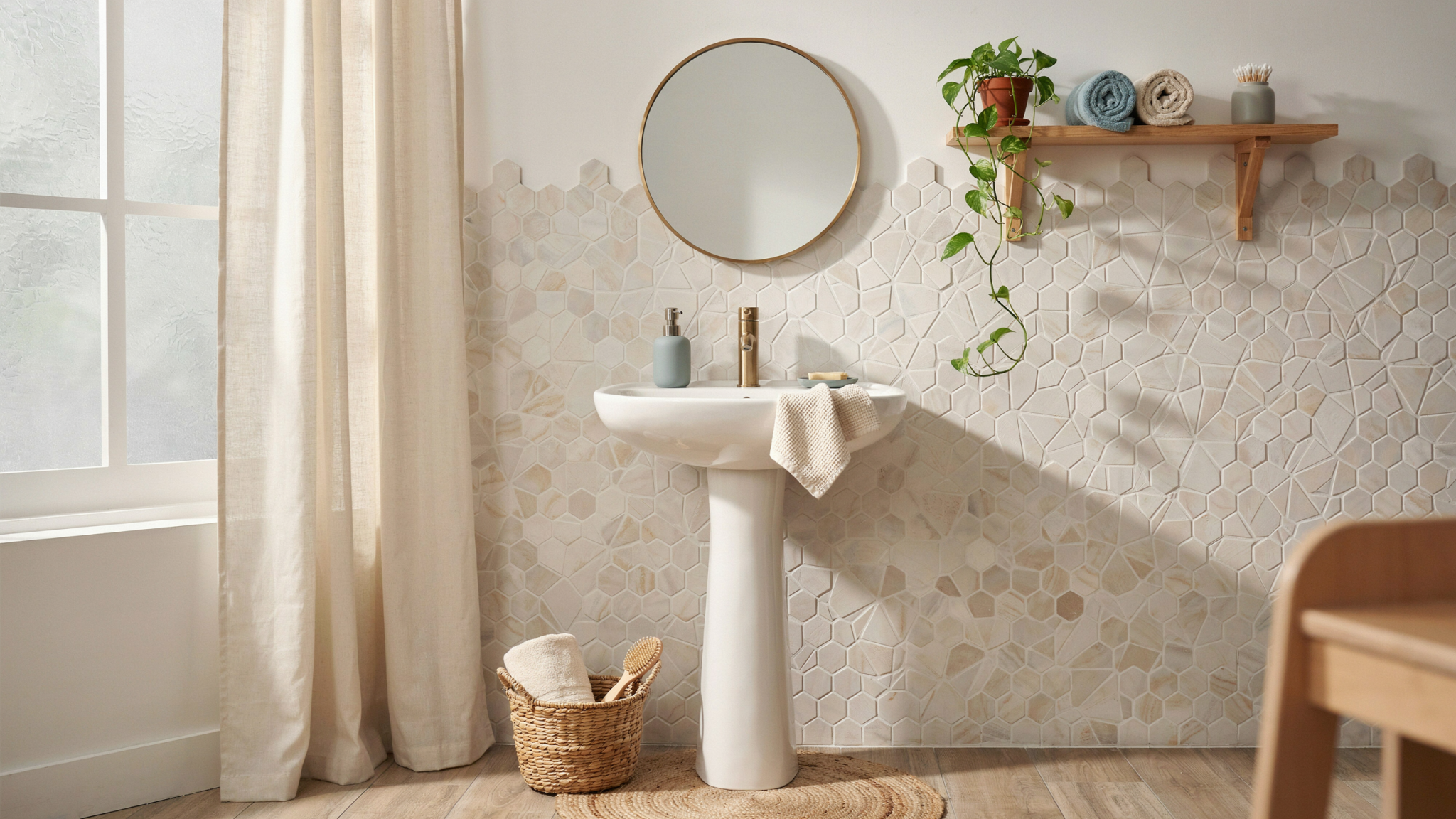
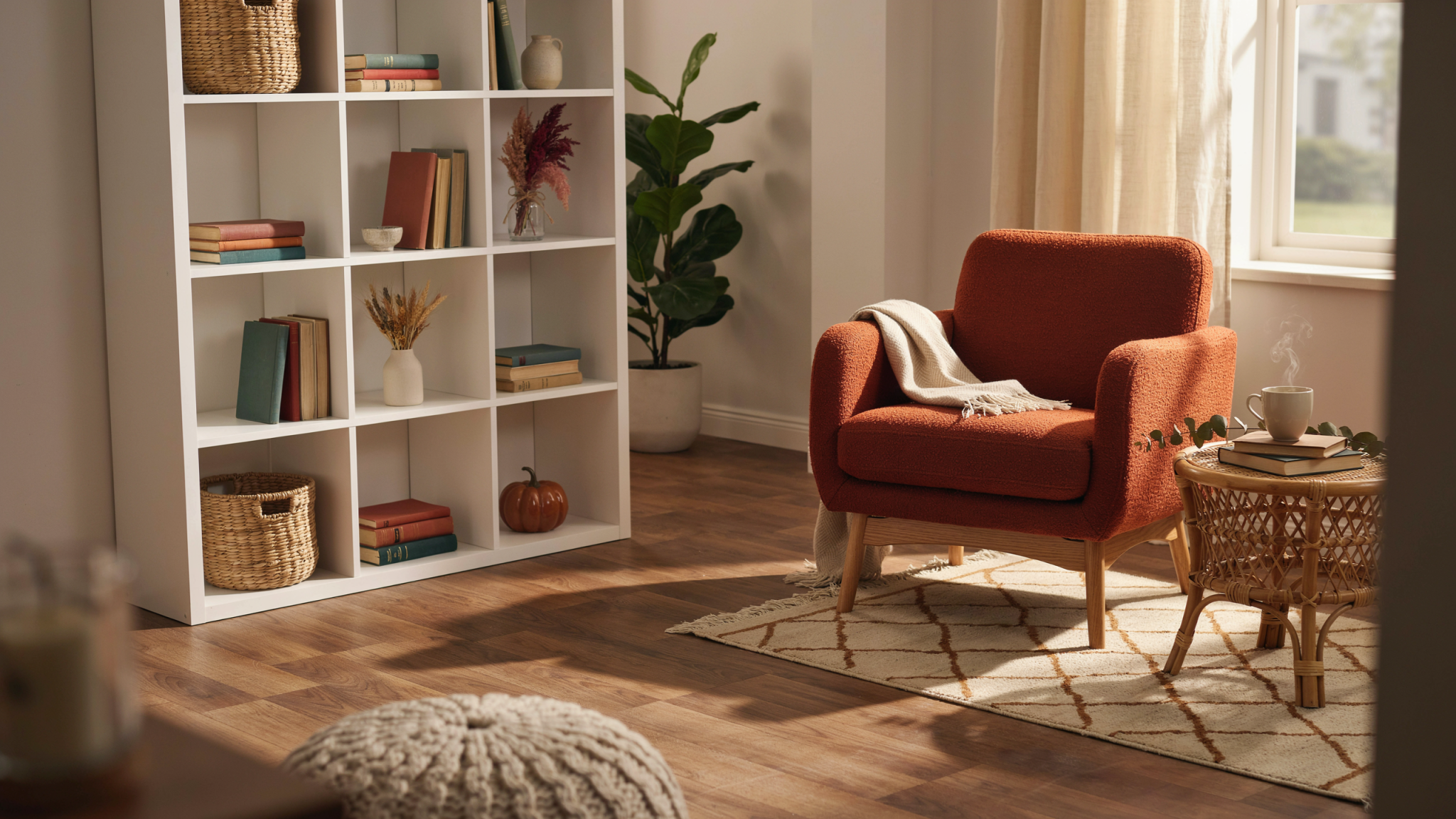
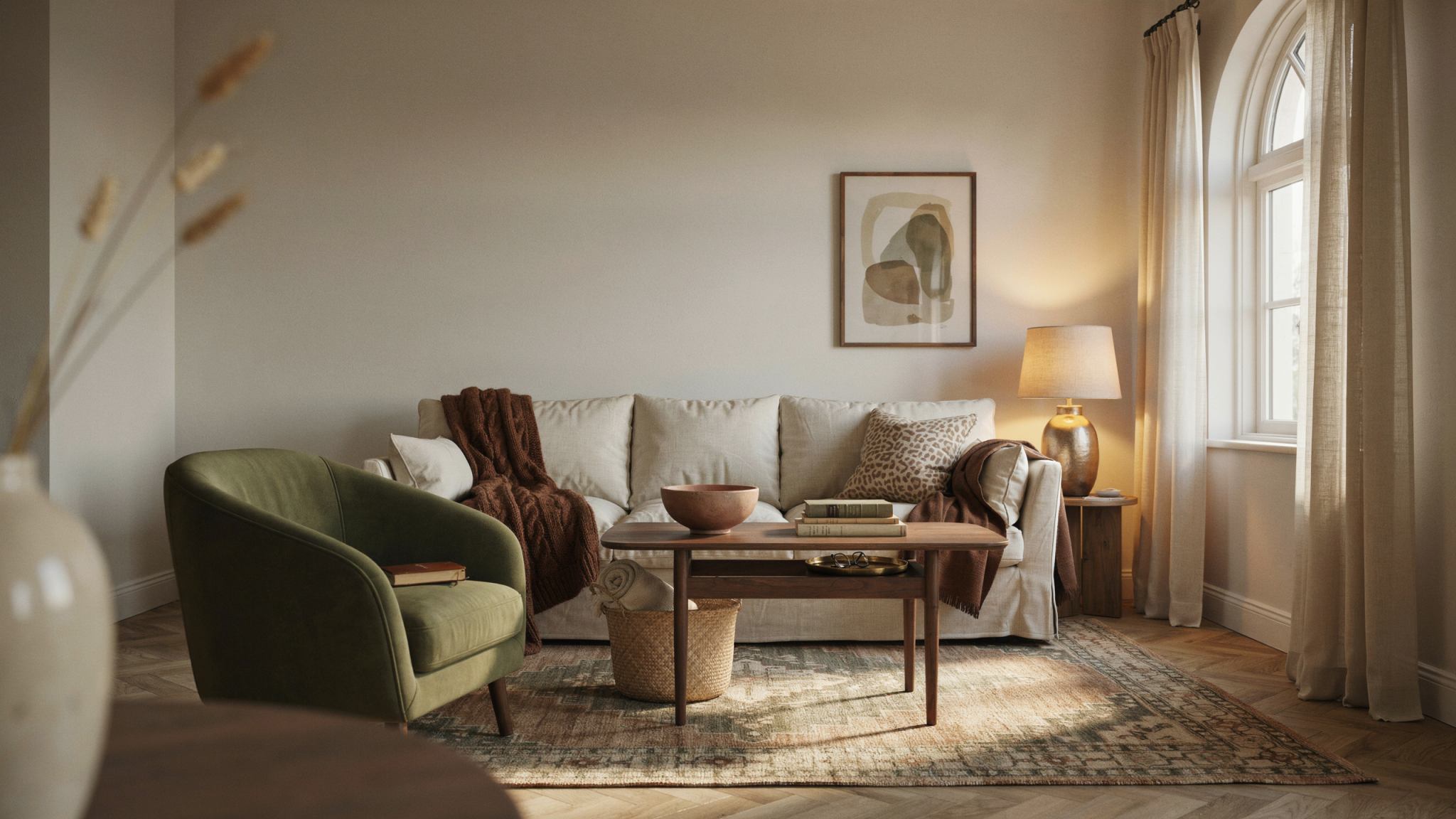
I used to think a beautiful kitchen had to look like it belonged in a sleek, modern showroom: spotless, minimalist, and completely devoid of anything that suggested actual humans lived there. But lately, as I scroll through Pinterest and Instagram, I’ve noticed a massive shift. The stark, all-white, hyper-modern kitchens are stepping aside, making room for something so much better: the cozy kitchen aesthetic.
This look is all about warmth, texture, and a sense of lived-in charm. It’s the kind of kitchen that makes you want to brew a pot of coffee, put on a chunky cardigan, and spend a Sunday morning baking bread. Whether you’re renting a tiny apartment with builder-grade cabinets or you’ve just bought your first home and are staring down a dated 1990s layout, the cozy kitchen aesthetic is entirely achievable. It doesn’t require a massive renovation budget or knocking down walls. Instead, it’s about layering textures, embracing warm tones, and displaying the things you actually use.
Let’s talk about how you can transform your kitchen into the coziest room in your home, using simple DIYs, clever styling tricks, and a few well-chosen thrift store finds.
What Exactly is the Cozy Kitchen Aesthetic?
If you’ve been pinning images of “cottagecore,” “Nancy Meyers kitchens,” or “hygge interiors,” you already know what the cozy kitchen aesthetic looks like. It’s the antithesis of the sterile, clinical kitchen.
A cozy kitchen feels collected over time rather than bought all at once from a single catalog. It embraces imperfections—a slightly chipped vintage ceramic bowl, a wooden cutting board with knife marks, or a linen towel that’s soft and wrinkled from years of washing. It’s highly functional but deeply personal. The aesthetic relies heavily on natural materials, warm color palettes, soft lighting, and the intentional display of everyday items.
The best part about this trend is how forgiving it is. You don’t need brand-new marble countertops or custom cabinetry to make it work. In fact, slightly older, quirkier kitchens often lend themselves better to this style because they already have character.
The Foundation: Warm, Earthy Color Palettes
For years, the default kitchen color was bright, cool white. While white kitchens can be beautiful, they can also feel a bit chilly. The cozy aesthetic leans heavily into warm, earthy tones that make the space feel grounded and inviting.
Moving Away from Cool Grays
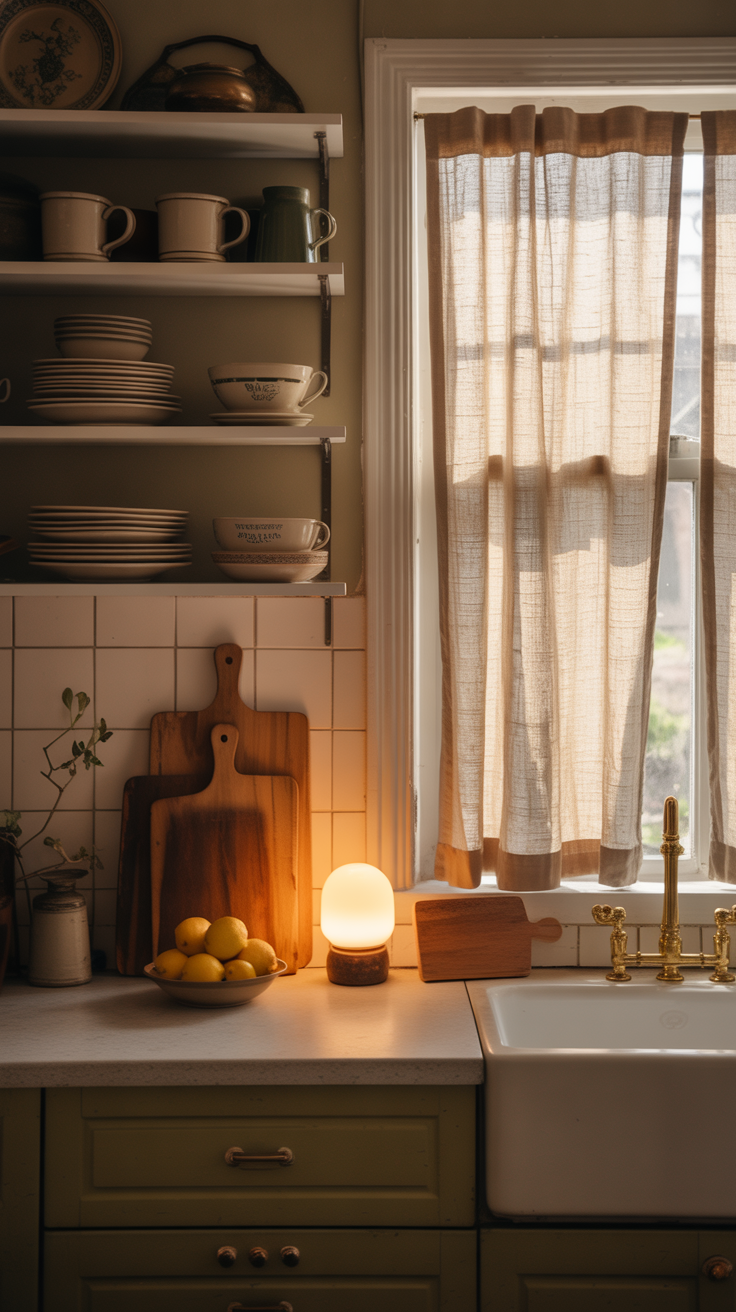
If you’re planning to paint your walls or cabinets, look toward nature for inspiration. Soft mushroom, warm taupe, creamy off-whites, and muted sage greens are incredibly popular right now. These colors act as a beautiful, soft backdrop that allows natural wood tones and vintage decor to shine.
If you love darker colors, the “dark cottagecore” trend is having a major moment. Think deep, moody hues like forest green, navy blue, or even a warm, plummy burgundy. Darker colors can actually make a small kitchen feel cozier and more intimate, like a warm hug.
Renter-Friendly Color Updates
If you’re renting and can’t paint your cabinets, don’t worry. You can still introduce these warm tones through your accessories. A large, washable runner rug in a rich, earthy pattern can completely change the color profile of the room. You can also use peel-and-stick wallpaper to cover a stark white fridge or add a pop of color to the back of open shelving.
Another brilliant renter hack is temporary contact paper for countertops. If you’re stuck with cool, speckled granite from the early 2000s, covering it with a warm butcher-block or soapstone-patterned contact paper can instantly warm up the entire room.
The Magic of Open Shelving (and How to Style It)
Nothing says “cozy kitchen” quite like open shelving. It breaks up the heavy, boxy look of upper cabinets and gives you a place to display your favorite pieces.
Creating Open Shelving Without Renovating
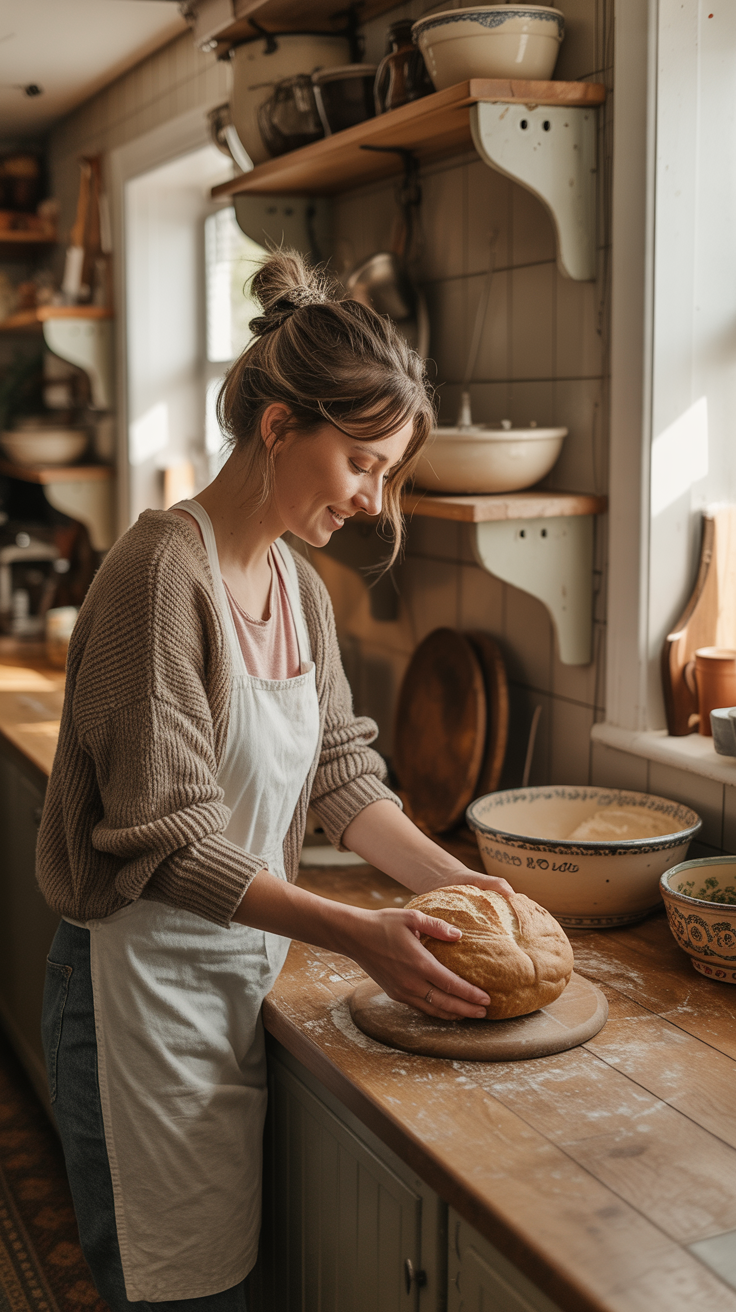
If you own your home, taking down a few upper cabinets and replacing them with chunky, reclaimed wood shelves is a fantastic weekend DIY project. But if you rent, you can achieve a similar look simply by removing the doors from one or two of your existing upper cabinets. Store the doors safely under your bed or in a closet, and put them back on before you move out. You can even paint or wallpaper the inside of the cabinet box to make it look intentional.
The Art of Styling the Shelves
Styling open shelves can feel intimidating. You want them to look curated, not cluttered. The trick is to mix functional items with decorative ones, and to stick to a cohesive color palette.
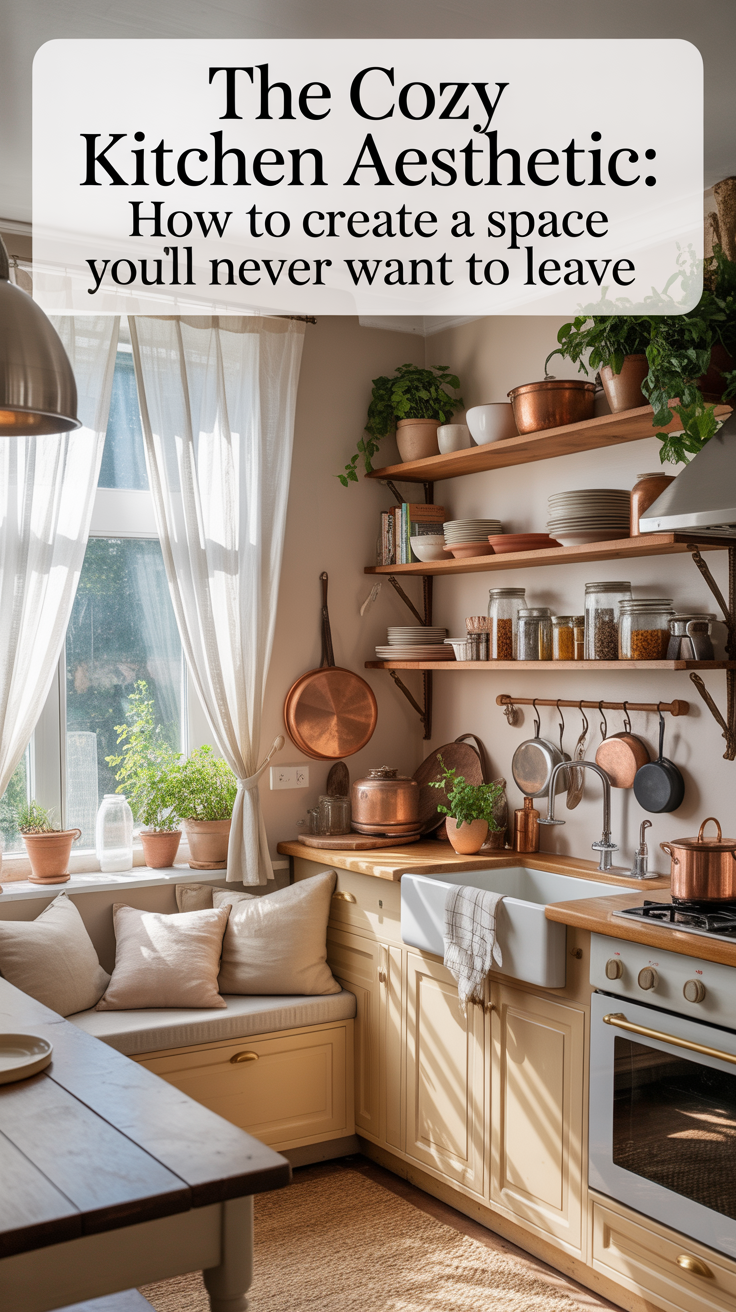
Start with your everyday items: stack your favorite ceramic plates, line up your coffee mugs, and display your glass storage jars filled with oats, coffee beans, or pasta. Then, layer in the cozy elements. Lean a small piece of vintage art against the back wall. Add a trailing plant like a pothos or string of pearls to bring life and movement to the rigid lines of the shelves.
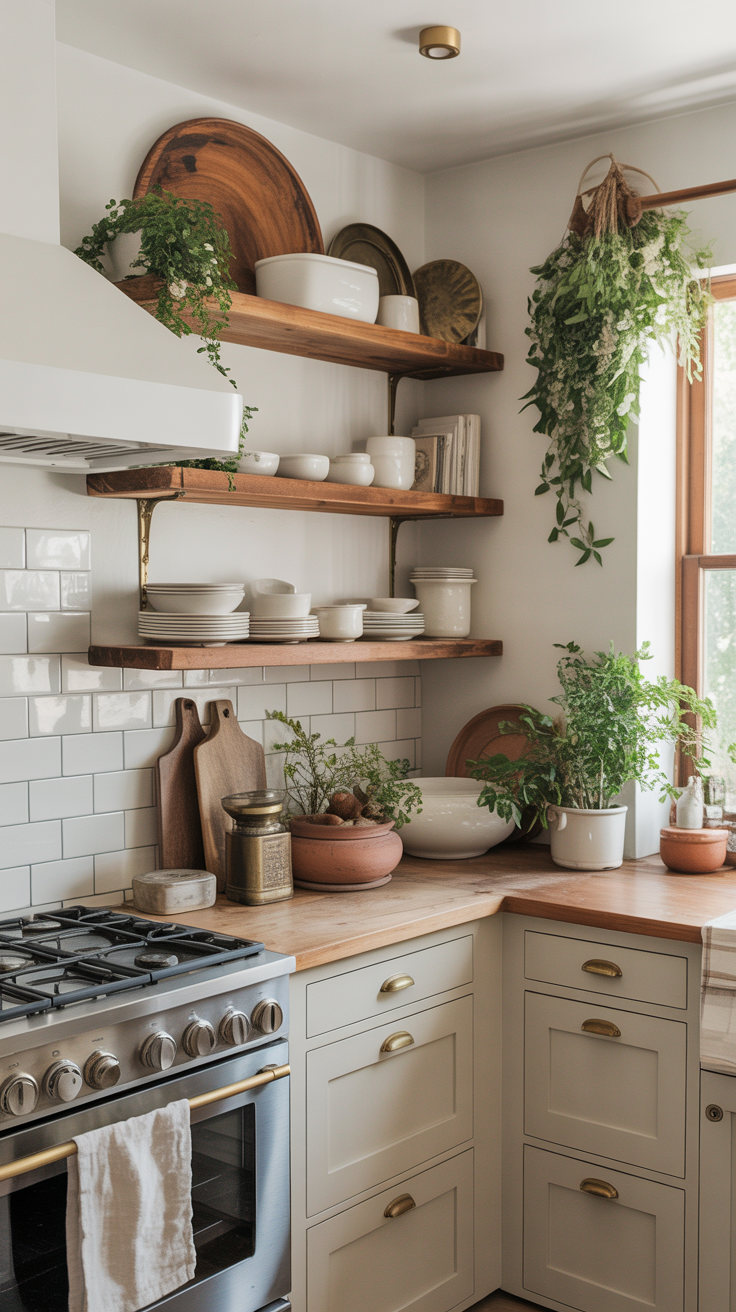
When arranging items, think in triangles and odd numbers. If you have a stack of white bowls on the bottom left shelf, place a white pitcher on the top right shelf to balance the color. Mix textures. Place a smooth glass jar next to a rough, unglazed pottery bowl. And don’t be afraid to let things overlap slightly; it makes the arrangement feel relaxed and effortless.
Countertop Styling: Functional Beauty
In a cozy kitchen, the countertops aren’t completely clear. While you don’t want them to be messy, a completely bare counter feels sterile. The goal is “functional beauty” by displaying the things you use every day in a way that looks intentional and stylish.
The Power of the Cutting Board
Wooden cutting boards are the unsung heroes of the cozy kitchen. They bring instant warmth and texture to the space. Instead of hiding them in a drawer, lean two or three wooden boards of varying sizes and shapes against your backsplash. They look beautiful, they hide ugly outlets, and they’re always within arm’s reach when you need to chop an onion.
Containing the Clutter
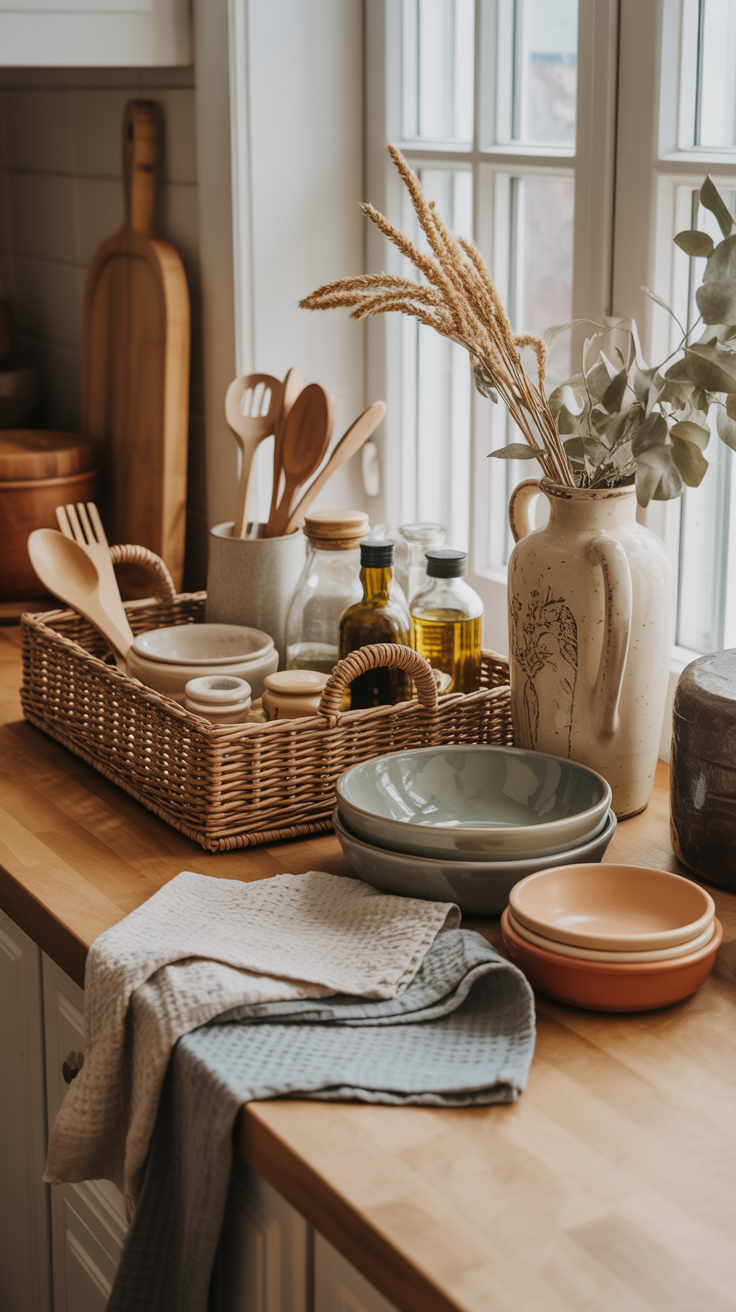
Corral your everyday cooking items onto a beautiful tray or a shallow wooden bowl. Place your olive oil, salt cellar, and a pepper grinder on the tray next to the stove. This keeps the items organized so they don’t look like clutter, while still keeping them accessible.
For your cooking utensils, ditch the plastic holder and use a vintage stoneware crock or a heavy ceramic vase. Fill it with wooden spoons, spatulas, and a whisk. The mix of wood and ceramic adds immediate texture to the counter.
The Fruit Bowl and the Cookbook
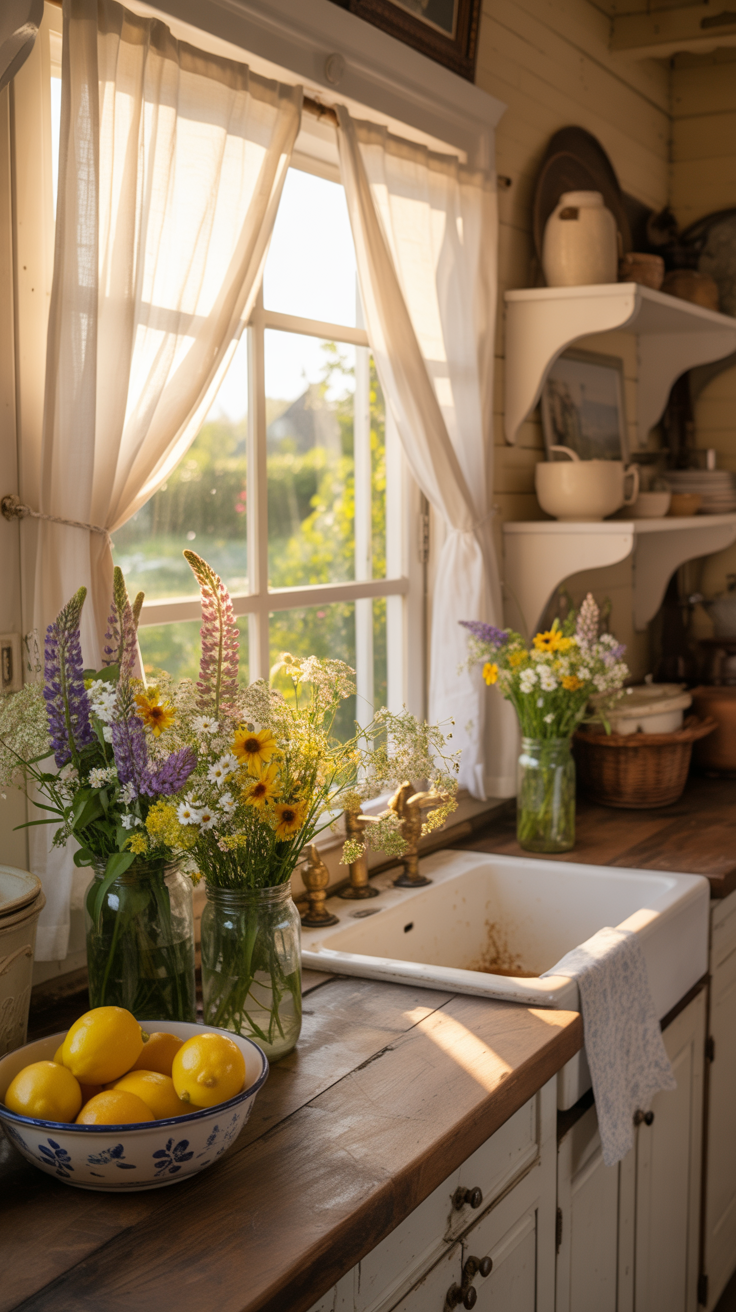
A bowl of fresh fruit is a classic kitchen staple for a reason. It adds a pop of natural color and makes the kitchen feel active and alive. Choose a beautiful footed bowl or a woven rattan basket to hold lemons, apples, or pears.
Similarly, leaving a cookbook open on a wooden stand not only looks charming but also inspires you to actually cook. If you don’t have a stand, simply leaning a beautiful, fabric-bound cookbook against the wall works just as well.
Layering Textures: Textiles and Natural Materials
Texture is the secret ingredient that makes a room feel cozy. In a kitchen, which is naturally full of hard, cold surfaces like stone, metal, and glass, you have to intentionally introduce soft, warm textures to balance the space.
Linens and Dish Towels
Ditch the brightly colored, synthetic dish towels and invest in a few high-quality linen or waffle-weave cotton towels in muted, earthy tones. Drape one casually over the handle of your oven, hang one from a hook near the sink, or fold one under your cutting board. Linen has a beautiful, relaxed drape that instantly softens the room.
If you have a window over your sink, consider adding a café curtain. A simple tension rod with a linen or subtle gingham curtain adds a massive amount of charm and privacy, and it’s completely renter-friendly.
Rugs in the Kitchen
A rug is essential for a cozy kitchen. It warms up cold tile or laminate floors and provides a soft spot to stand while you wash dishes. Look for a vintage-inspired runner or a washable rug with a distressed, faded pattern. Persian-style rugs in warm reds, rusts, and blues look incredible against wood or white cabinets. If you prefer a more neutral look, a chunky jute or sisal runner adds fantastic natural texture.
Embracing Wood, Wicker, and Rattan
Bring in as many natural materials as you can. Swap out plastic fruit bowls for woven rattan baskets. Use wooden stools at your kitchen island instead of metal ones. Even small details, like a wicker tray holding your coffee station supplies or a wooden soap brush near the sink, contribute to the overall feeling of warmth.
Lighting: Setting the Mood
Lighting is arguably the most important element in creating a cozy atmosphere. If your kitchen only has bright, cool-toned overhead recessed lights, it’s going to feel like a cafeteria, no matter how beautifully you style your countertops.
Layering Your Light Sources
The key to cozy lighting is layers. You want ambient light (overall room light), task light (for chopping and cooking), and accent light (for mood).
If you own your home, consider swapping out harsh overhead fixtures for a beautiful pendant light or a semi-flush mount with a linen or woven rattan shade. If you rent, you can often swap out light fixtures easily (just keep the original to put back when you leave), or you can use plug-in pendant lights that hang from a hook in the ceiling.
The Magic of Small Lamps
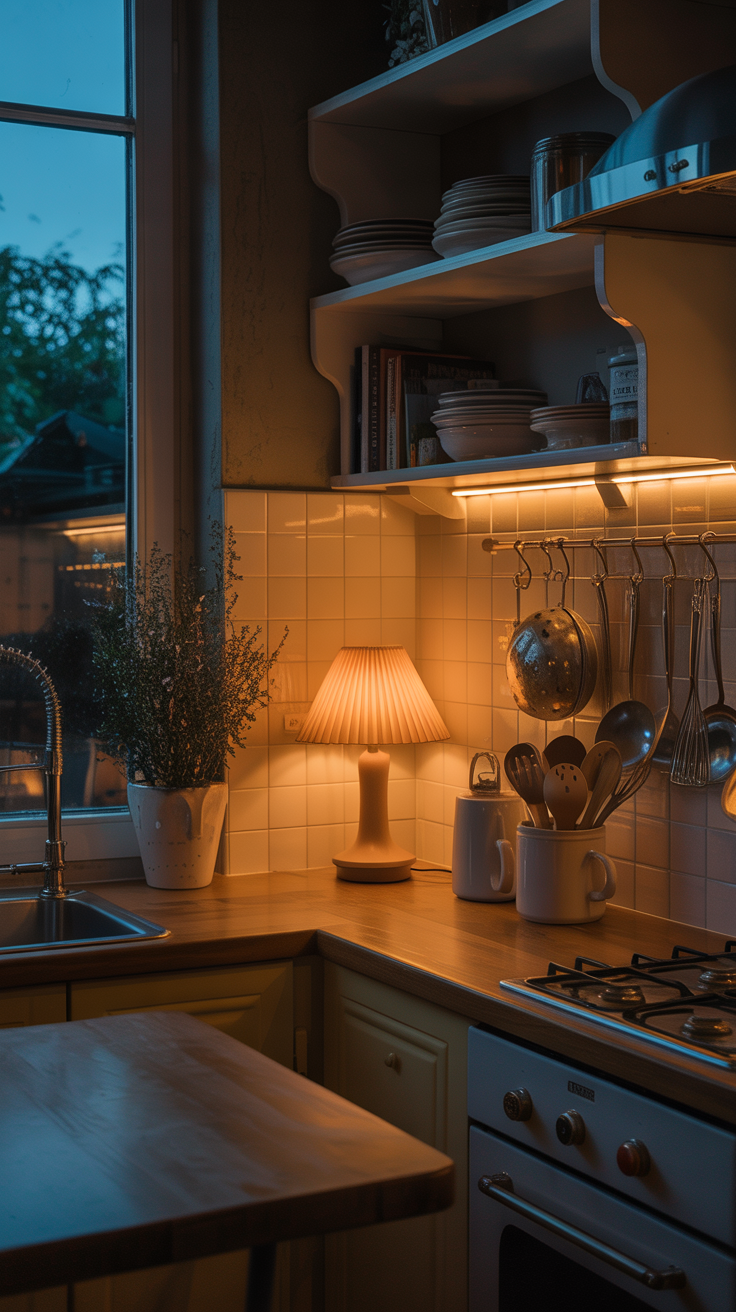
One of my absolute favorite trends right now is putting a small, decorative lamp on the kitchen counter. It sounds unusual, but it completely transforms the space at night. A tiny lamp with a pleated shade tucked into the corner of your counter provides the softest, warmest glow. It’s perfect for leaving on in the evening when you’re done cooking but still want the kitchen to feel inviting. I have found some great small lamps at Target but I’m also loving the rechargeable LED lamps like these that can be found at so many retailers including Amazon.
Under-Cabinet Lighting
If your kitchen feels dark, under-cabinet lighting is a game-changer. You don’t need to hardwire anything; there are fantastic, inexpensive LED puck lights or light strips that stick right under your cabinets and operate via remote control or motion sensor. They provide excellent task lighting and make the kitchen look incredibly high-end.
Always ensure your lightbulbs are “warm white” (around 2700K to 3000K). Anything higher than that will cast a blue, clinical light that instantly kills the cozy vibe.
Bringing Nature Indoors
A cozy kitchen feels connected to the outdoors. Bringing plants and natural elements into the space breathes life into the room and softens the hard edges of cabinetry and appliances.
The Kitchen Windowsill
If you’re lucky enough to have a windowsill, use it! Line up a row of terracotta pots filled with fresh herbs like basil, rosemary, and thyme. Not only do they look beautiful and smell amazing, but they’re also incredibly practical for cooking.
If you don’t have a green thumb, pothos and snake plants are incredibly forgiving and look beautiful trailing down from the top of the fridge or an open shelf.
Foraged and Found Elements
You don’t always have to buy expensive bouquets to have flowers in the kitchen. Snip a few branches from a tree in your yard and place them in a heavy ceramic jug on the island. In the fall, a bowl of pinecones or small gourds adds seasonal warmth. In the summer, a simple mason jar filled with wildflowers or even leafy green weeds from the side of the road can look incredibly charming.
The Nancy Meyers Effect: Hardware and Details
If you’ve ever watched a Nancy Meyers movie (think Something’s Gotta Give or The Holiday), you know exactly what the ultimate cozy kitchen looks like. It’s the details that make these cinematic kitchens so memorable.
Upgrading Your Hardware
One of the fastest, most impactful ways to upgrade a kitchen, whether you rent or own, is changing the cabinet hardware. Builder-grade silver knobs can make a kitchen feel generic. Swap them out for unlacquered brass, antique bronze, or matte black pulls and knobs.
Unlacquered brass is particularly wonderful for the cozy aesthetic because it develops a natural patina over time, aging beautifully and adding a sense of history to the room. Just make sure to keep all the original hardware in a Ziploc bag so you can swap it back if you’re renting.
Displaying Art in the Kitchen
We often forget to hang art in the kitchen, reserving it for the living room or bedroom. But art is what makes a house feel like a home. Lean a small, framed vintage landscape painting against the backsplash, or hang a gallery wall of botanical prints in a blank corner.
Thrift stores and flea markets are goldmines for kitchen art. Look for old oil paintings, vintage sketches of fruit or vegetables, or even beautifully framed handwritten recipe cards. The art doesn’t have to be expensive; it just has to mean something to you.
Creating a Sensory Experience
Finally, the cozy kitchen aesthetic isn’t just about how the room looks; it’s about how it feels and smells. A truly cozy kitchen engages all the senses.
The Scent of Home
Scent is deeply tied to our emotions and memories. To make your kitchen feel instantly welcoming, keep a high-quality candle on the counter. Look for scents that mimic baking or nature: vanilla, cinnamon, cedar, or bright citrus.
If you prefer not to burn candles, a simmer pot is a wonderful alternative. Fill a small saucepan with water, add some sliced lemons, a sprig of rosemary, and a dash of vanilla extract, and let it simmer on the lowest heat setting. It will make your entire apartment or house smell incredible.
The Sounds of the Kitchen
Keep a small, vintage-looking Bluetooth speaker on the counter. Playing soft jazz, acoustic folk, or a French café playlist while you cook or clean up makes the mundane tasks feel romantic and enjoyable.
Making It Your Own
The most important rule of the cozy kitchen aesthetic is that there are no strict rules. It’s not about buying a matching set of decor from a big-box store; it’s about slowly collecting pieces that you love. It’s about the thrifted ceramic bowl you found on a weekend trip, the wooden spoon that’s perfectly worn to the shape of your hand, and the linen towel that gets softer every time you wash it.
Whether you’re working with a tiny galley kitchen in a rental apartment or updating the kitchen in your first home, you can create a space that feels warm, inviting, and deeply personal. Start small. Lean a cutting board against the wall, add a small lamp to the counter, or swap out your cabinet knobs. Before you know it, you’ll have created a kitchen that isn’t just a place to prepare food, but the true, cozy heart of your home.
The Art of the Coffee and Tea Station
One of the most charming and functional ways to embrace the cozy kitchen aesthetic is by dedicating a small area specifically to your morning rituals. A well-styled coffee or tea station not only streamlines your routine but also serves as a beautiful focal point that radiates warmth and hospitality.
Setting Up the Station
You don’t need a massive expanse of counter space to create a coffee station. A small corner, a section of an open shelf, or even a freestanding bar cart works perfectly. The key is to gather all your supplies in one designated spot. Start by anchoring the space with a tray. A vintage silver tray, a woven rattan basket, or a simple wooden board helps to visually corral the items so they look intentional rather than cluttered.
Place your coffee maker, French press, or electric kettle on or near the tray. Then, add the elements that make the ritual special. Use a beautiful glass jar or a vintage ceramic canister to hold your coffee beans or tea bags. Instead of keeping sugar in its original paper bag, transfer it to a small stoneware bowl with a tiny wooden spoon.
Displaying Your Mugs
Mugs are an excellent opportunity to inject personality into your kitchen. Rather than hiding them away in a cabinet, put your favorites on display. If you have open shelving above your coffee station, line up a mismatched collection of handmade ceramic mugs. The variations in glaze, shape, and texture add incredible visual interest.
If you don’t have shelving, consider installing a simple wooden peg rack on the wall above your coffee maker. Hanging your mugs turns them into functional art and frees up valuable cabinet space, a major win for small apartment kitchens.
Embracing Vintage and Thrifted Finds
The cozy kitchen aesthetic is fundamentally opposed to the “everything bought from one store” look. To achieve true warmth and character, you need pieces that have a history. Thrift stores, flea markets, and antique shops are your best friends when decorating a cozy kitchen.
What to Look For
When you’re thrifting, keep an eye out for items made from natural materials that show signs of gentle wear. Copper pots and pans with a beautiful, aged patina look incredible hanging from a pot rack or displayed on a shelf. Old wooden rolling pins, vintage brass salt and pepper shakers, and heavy ironstone pitchers all add a sense of timelessness.
Don’t overlook the glassware section. Vintage amber or green glass goblets catch the light beautifully when displayed on open shelves. Old mason jars or apothecary jars with glass lids are perfect for storing dry goods like rice, lentils, or flour on your countertops.
The Beauty of Ironstone and Transferware
If you want to start a collection that perfectly suits the cozy aesthetic, look into vintage ironstone or transferware. Ironstone is a type of heavy, durable pottery, usually white or cream, that was incredibly popular in the 19th and early 20th centuries. A stack of chipped, crazed ironstone plates or a large ironstone pitcher used as a vase brings instant farmhouse charm to any kitchen.
Transferware, which features intricate, often floral or pastoral patterns transferred onto ceramics (commonly in blue, red, or brown), adds a beautiful pop of pattern and color. A single red transferware platter leaned against the backsplash can serve as the inspiration for your entire kitchen color palette.
Maximizing Small and Awkward Spaces
Many of us, especially those renting apartments or living in older homes, have kitchens with awkward layouts, tiny footprints, or strange nooks. The cozy aesthetic actually thrives in these spaces because it embraces quirkiness.
The Cozy Breakfast Nook
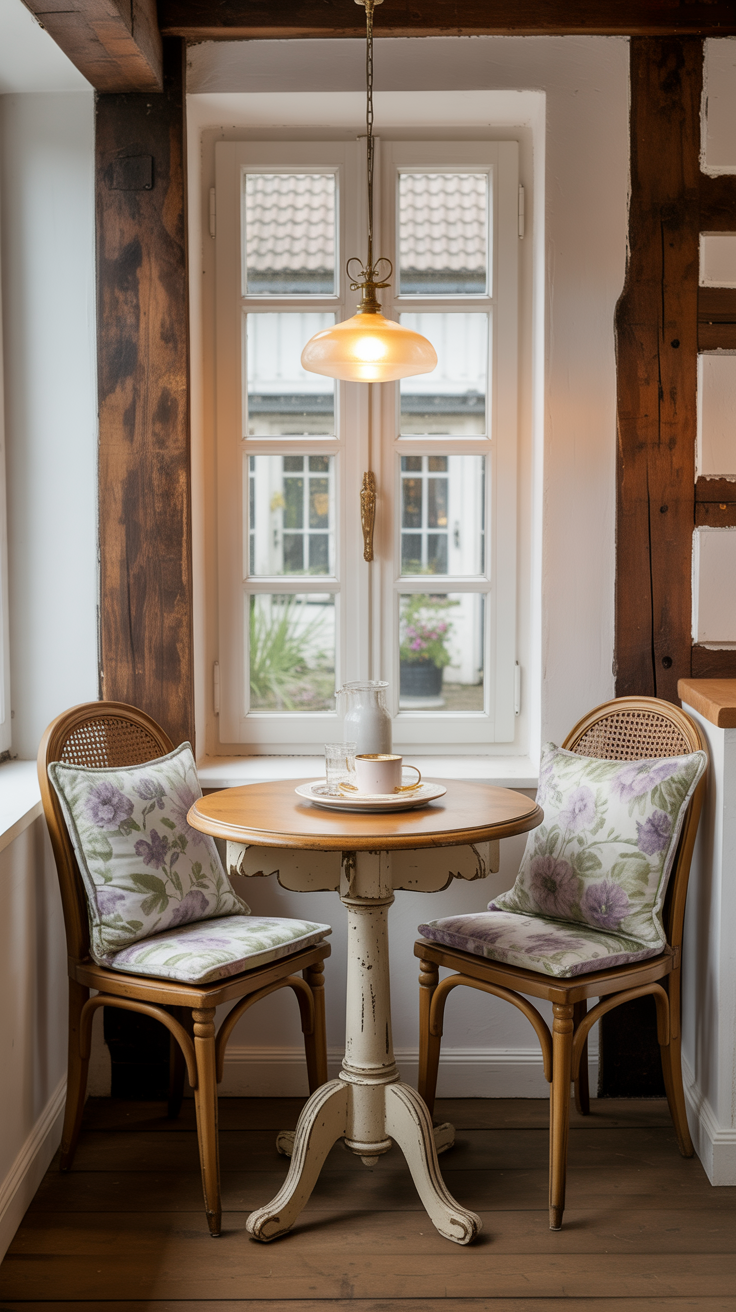
If you have a small corner that isn’t quite big enough for a full dining table, turn it into a cozy breakfast nook. A small, round bistro table paired with two vintage wooden chairs creates an intimate spot for morning coffee. To make it even cozier, add a plush, patterned seat cushion to the chairs and hang a small pendant light or a plug-in sconce directly above the table to define the space.
Utilizing Vertical Space
In a small kitchen, vertical space is your most valuable asset. If you have a blank wall, install a floor-to-ceiling pegboard (painted to match your walls) to hang your pots, pans, and utensils. This is a classic Julia Child-inspired look that is both incredibly practical and visually stunning.
Alternatively, use the space above your cabinets. While this area can sometimes collect dust, it’s also a great place to display larger items that you don’t use every day, like a vintage picnic basket, a large copper stockpot, or a collection of woven baskets. Just be sure to keep the display curated so it doesn’t look like a storage unit.
The Importance of the “Unfitted” Look
Modern kitchens are typically “fitted,” meaning all the cabinets match perfectly, the countertops are uniform, and the appliances are built-in. The cozy kitchen aesthetic often leans toward an “unfitted” look, which mimics historical kitchens where furniture was brought in piece by piece over time.
Adding Freestanding Furniture
If you have the floor space, adding a piece of freestanding furniture is the fastest way to achieve the unfitted look. An antique wooden dresser can be repurposed as a kitchen island or a coffee station. A vintage glass-front hutch is perfect for storing dishes and linens, acting as a beautiful alternative to standard upper cabinets.
Even in a small apartment, you can incorporate this idea. A narrow, rustic console table can serve as extra prep space or a makeshift island. Because these pieces don’t match your built-in cabinets, they break up the monotony of the room and add a layer of bespoke charm.
Mixing Countertop Materials
If you are renovating or have the ability to change your countertops, consider mixing materials. Having a butcher block island paired with soapstone perimeter counters is a classic cozy kitchen move. The contrast between the warm wood and the cool, matte stone feels incredibly custom and high-end, while still remaining grounded and approachable.
The Heart of the Home
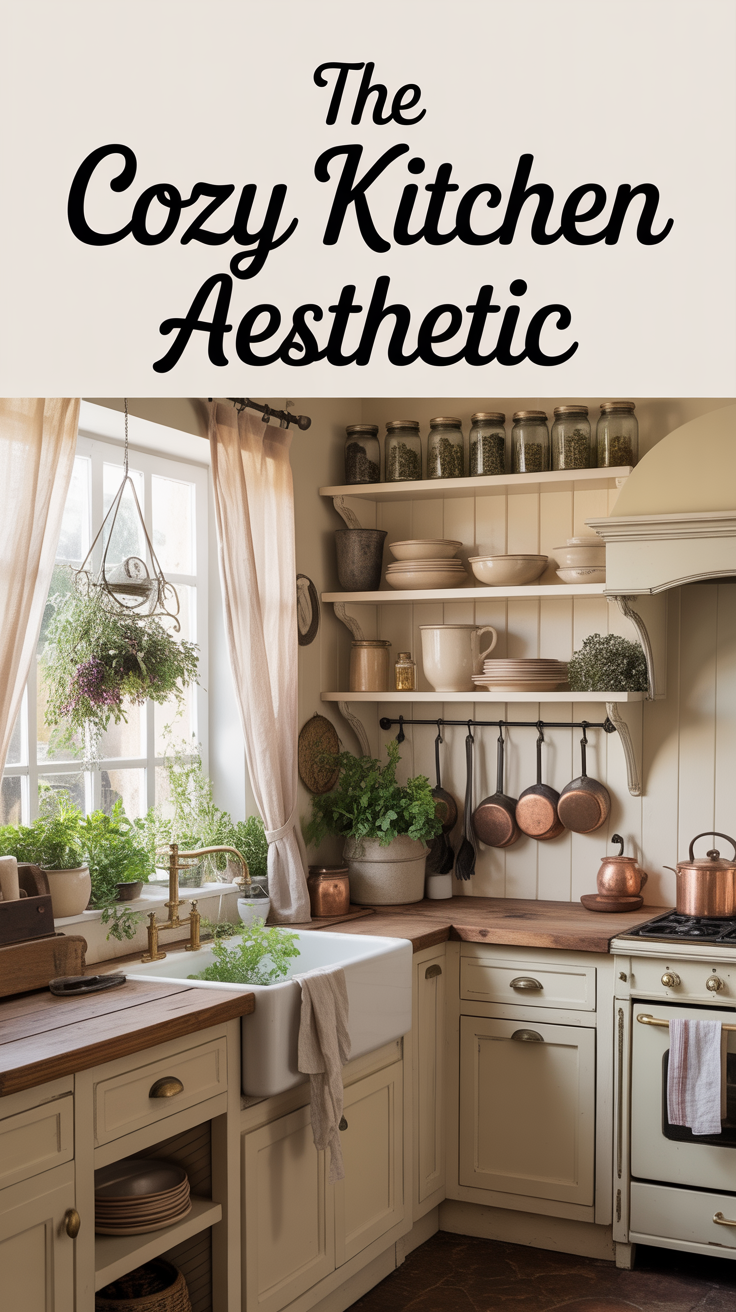
Creating a cozy kitchen aesthetic is ultimately about designing a space that supports the life you want to live. It’s about prioritizing comfort over perfection and choosing items that bring you joy every time you look at them.
When you walk into your kitchen, you shouldn’t feel like you’re stepping into a sterile laboratory. You should feel a sense of relief, a deep exhale. By layering warm colors, embracing natural textures, displaying your favorite functional items, and softening the lighting, you can transform any kitchen, no matter its size or age, into a warm, inviting sanctuary.
So go ahead, leave the wooden cutting board on the counter, let the linen towel wrinkle, and put on a pot of coffee. Your cozy kitchen is waiting.