You walk into a brand-new house, the smell of fresh paint still lingering in the air. The floors are spotless, the baseboards are pristine, and the layout is exactly what you envisioned. Then, you turn the corner into the kitchen. It is perfectly functional. It is completely new. And yet, it feels entirely devoid of soul. The cabinets are a safe, mass-produced gray or white, stopping awkwardly a foot below the ceiling. The hardware is lightweight and uninspired. The backsplash, if there is one at all, is a basic subway tile with matching white grout that fades into the background. The countertops are a speckled quartz or maybe a laminate that mimics stone but feels hollow to the touch.
This is the builder-grade kitchen. It is a space designed not to offend, but in doing so, it fails to inspire. For many homeowners, the kitchen is the heart of the house, where meals are eaten at the same counter where homework and art projects are completed. Yet, in new construction homes across the country, this vital space is often treated as an afterthought, outfitted with materials chosen for their cost-effectiveness and broad appeal rather than their character or longevity.
The “builder-grade kitchen” problem is a modern design dilemma that leaves many homeowners feeling frustrated and uninspired in their brand-new spaces. It is a phenomenon born out of the economics of homebuilding, where margins are tight and speed is essential. But for the people who actually live in these homes, the reality of a builder-grade kitchen often means settling for a space that feels generic, flimsy, and disconnected from their personal style.
The Anatomy of a Builder-Grade Kitchen
So what does “builder-grade” actually mean? In the construction industry, builder-grade (sometimes called contractor-grade or production-grade) refers to materials and products that meet basic building code requirements but are manufactured using inexpensive materials and minimal detailing. These products are mass-produced, readily available, and highly affordable, making them the go-to choice for developers building large subdivisions or quick-turnaround homes.
When applied to a kitchen, the builder-grade label usually manifests in several distinct ways.
The Cabinetry Conundrum
Cabinets are the most prominent feature of any kitchen, and they are also where builders tend to cut the most corners. Builder-grade cabinets are typically constructed from melamine (a type of particleboard with a plastic coating) or medium-density fiberboard (MDF). While these materials are cheap and easy to manufacture, they lack the durability and structural integrity of solid wood or high-quality plywood.

The construction methods used for builder-grade cabinets are also designed for speed rather than longevity. They are often assembled using simple butt joints and staples, rather than the sturdy dovetail joints found in custom cabinetry. The drawer boxes are usually made of thin plywood or melamine, and the hardware for hinges and drawer slides is basic, lacking the smooth, soft-close functionality that has become a hallmark of modern kitchen design.
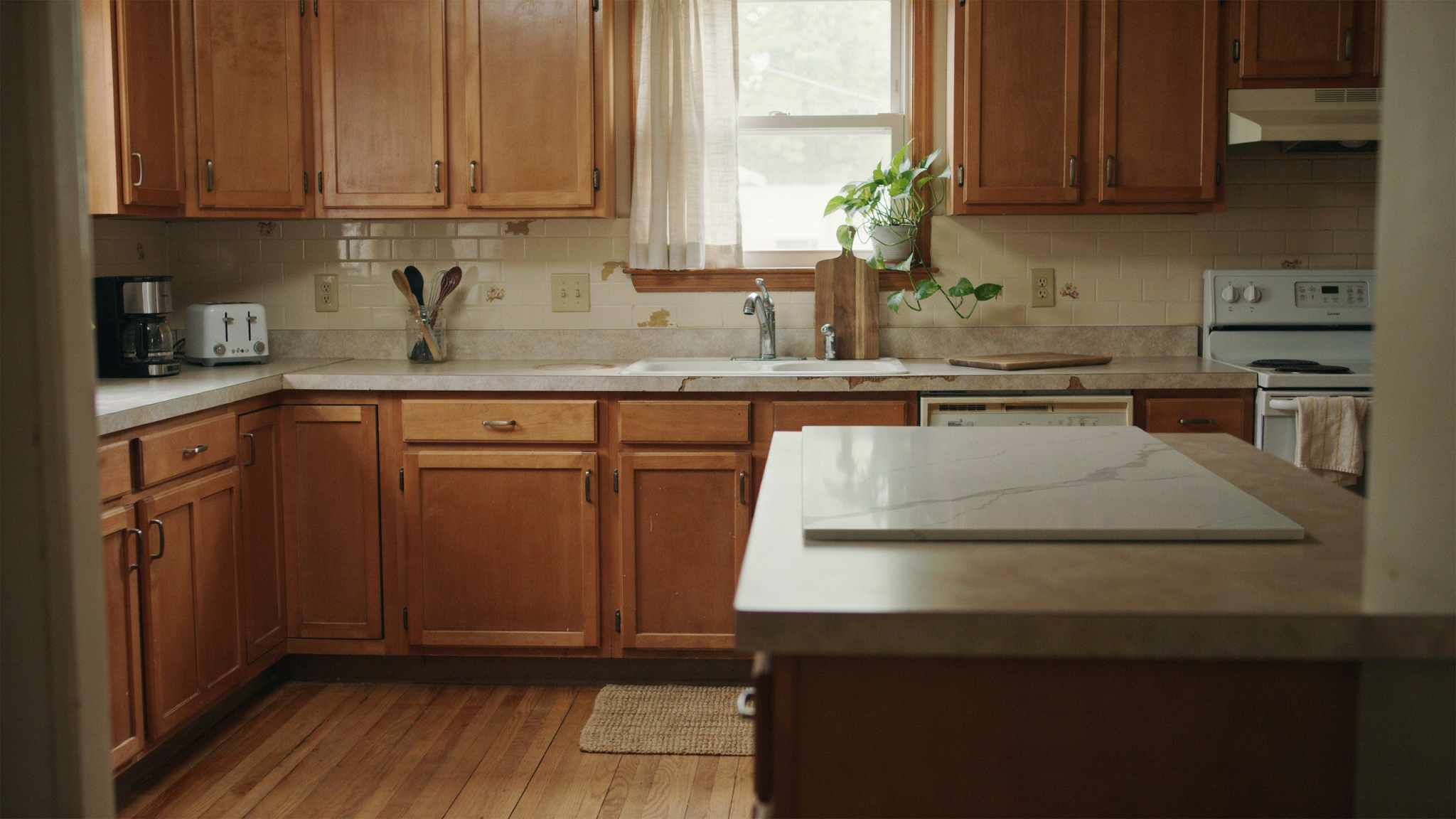
Visually, builder-grade cabinets are easy to spot. They come in a limited range of standard sizes and finishes, usually safe neutrals like white, gray, or espresso. The door profiles are simple, often a basic shaker or flat-panel design. Perhaps the most glaring visual cue of a builder-grade kitchen is the awkward gap between the top of the upper cabinets and the ceiling. Because custom-height cabinets are expensive, builders typically install standard 30-inch or 36-inch uppers, leaving a dusty, unusable void above them that makes the ceilings feel lower and the room feel unfinished.
The Hardware and Fixtures
If cabinets are the outfit, hardware is the jewelry. In a builder-grade kitchen, that jewelry is often cheap costume pieces. Builders typically buy hardware in bulk, opting for lightweight, inexpensive knobs and pulls in finishes like brushed nickel, matte black, or powder-coated gold. While these finishes might mimic current trends, the hardware itself often feels hollow and insubstantial to the touch.
The same goes for plumbing fixtures and lighting. The kitchen faucet is usually a basic, functional model that lacks the heft and elegant design of higher-end options. Lighting is often limited to a few recessed can lights and perhaps a generic pendant or two over the island. These fixtures are chosen because they appeal to the widest possible demographic, but they do nothing to elevate the space or give it a distinct personality.

The Surfaces: Countertops and Backsplashes
Countertops in builder-grade kitchens have evolved over the years, but the underlying philosophy remains the same: keep it cost-effective. In lower-priced homes, laminate countertops are still common. While modern laminates have improved in appearance, they are still prone to scratching, peeling at the edges, and swelling if water seeps into the seams.
In mid-range new builds, builders often upgrade to entry-level granite or quartz. However, these stones are usually chosen from the lowest price tier, featuring busy, speckled patterns that lack the elegant veining or movement of higher-end slabs.
The backsplash is another area where builders play it safe. If a backsplash is included at all, it is almost always a standard 3×6-inch white ceramic subway tile with matching white grout. While subway tile is a classic choice, when it is used as the default option with no variation in texture, color, or layout, it tends to fade into the background rather than adding character to the room.

The Economics of “Good Enough”
Why do builders continue to install these generic, uninspired kitchens? The answer, unsurprisingly, comes down to economics.
Building a home is a complex, expensive process with tight profit margins. For large-scale production builders, the goal is to construct homes as quickly and cost-effectively as possible while still appealing to a broad pool of potential buyers. Every dollar saved on materials and labor goes directly to the builder’s bottom line.
Kitchens are notoriously expensive to build and renovate. Custom cabinetry, high-end appliances, and premium surfaces can easily push a kitchen budget into the tens of thousands of dollars. By using builder-grade materials, developers can keep the overall price of the home competitive while still delivering a space that looks shiny and new on a walkthrough.
Furthermore, builders are designing for the masses. When you are building a subdivision with fifty identical floor plans, you cannot afford to make bold design choices that might alienate potential buyers. A navy blue kitchen with unlacquered brass hardware and a zellige tile backsplash might appeal to a design-savvy buyer, but it could turn off someone who prefers a more traditional look. White shaker cabinets and speckled quartz countertops, on the other hand, are the design equivalent of vanilla ice cream i.e. nobody’s favorite, but acceptable to almost everyone.
This “good enough” approach makes perfect sense from a business perspective. But for the homeowner who has just spent hundreds of thousands of dollars on a new house, “good enough” often feels like a letdown.
The Psychological Toll of the Cookie-Cutter Kitchen
Living with a builder-grade kitchen can be a surprisingly frustrating experience. When you purchase a new construction home, there is an expectation that everything will be perfect. You have likely spent months waiting for the house to be built, picking out finishes from a limited menu of options, and dreaming about the life you will build in your new space.
But once the boxes are unpacked and the reality of daily life sets in, the limitations of the builder-grade kitchen become apparent. The drawers don’t slide smoothly. The cabinet doors bang shut. The laminate countertops show every smudge and scratch. The layout, designed to fit a standard footprint rather than the way you actually cook, feels clunky and inefficient.
Beyond the functional issues, there is a psychological disconnect. Our homes are supposed to be a reflection of who we are. We spend hours curating our living rooms with carefully chosen rugs, art, and furniture. We paint our bedrooms in colors that soothe us. But the kitchen, the most used room in the house, often feels like it belongs to someone else. It feels like a showroom, not a home.
This lack of personality can lead to “new build buyer’s remorse.” Homeowners find themselves staring at their brand-new, perfectly functional kitchens and feeling a deep sense of dissatisfaction. They feel guilty for wanting to change a space that has never even been used, yet they cannot shake the feeling that the room is cold, sterile, and entirely devoid of charm.
I have spoken with countless homeowners who have experienced this exact frustration. One woman described her new kitchen as feeling “like a hospital cafeteria.” Another lamented that her kitchen looked exactly like the kitchens of the five other houses on her street. The overarching sentiment is one of disappointment: a feeling that they paid a premium for a new home, only to end up with a space that feels cheap and generic.
The Dilemma: To Rip or Not to Rip?
When faced with a builder-grade kitchen they hate, homeowners are presented with a difficult dilemma. Do you rip out a brand-new kitchen and start over, or do you try to live with it?
Ripping out a new kitchen feels incredibly wasteful, both financially and environmentally. It is hard to justify sending perfectly good cabinets and countertops to a landfill simply because they lack character. A full kitchen remodel is also a massive undertaking, often costing upwards of $50,000 and leaving the kitchen completely unusable for weeks or months. For someone who has just depleted their savings to buy a new house, a full remodel is usually out of the question.
On the other hand, living with a space you actively dislike can drain the joy out of your home. If the kitchen is the heart of the house, a cold, uninspiring kitchen can make the entire home feel less welcoming.
Fortunately, there is a middle ground. You do not have to gut your kitchen to give it personality. With a bit of creativity, some strategic investments, and a willingness to get your hands dirty, you can transform a builder-grade kitchen into a custom, character-filled space that feels uniquely yours.
Elevating the Builder-Grade Kitchen: A Strategic Approach
The key to upgrading a builder-grade kitchen is to focus on the details. Builders cut corners on the finishing touches because they are time-consuming and expensive to execute at scale. By adding those details back in, you can elevate the entire space.
Here is a strategic approach to tackling the builder-grade kitchen problem, moving from the easiest, most affordable updates to more involved projects.

Phase 1: The Quick Wins
If you are short on time and budget, start with the jewelry of the kitchen. Swapping out the basic fixtures and hardware is a low-effort, high-impact way to inject personality into the room.
- Upgrade the Hardware The lightweight, generic pulls that came with your cabinets are the first thing that needs to go. Replace them with solid, weighty hardware that feels good in your hand. Unlacquered brass, polished nickel, or oil-rubbed bronze can instantly make standard cabinets look more expensive. Do not be afraid to mix metals, either. A kitchen with polished nickel cabinet pulls and a brass faucet feels layered, intentional, and custom. Be sure to check out my full post on how to choose cabinet “jewelry” here!
- Swap the Lighting Builder-grade pendant lights are often small, unimaginative, and spaced awkwardly. Swapping them out for larger, more statement-making fixtures can completely change the focal point of the room. Look for fixtures with texture like woven rattan, ribbed glass, or aged brass to add warmth to the space. If your kitchen only has recessed lighting, consider hiring an electrician to add pendants over the island or a sconce above the sink.
- Replace the Faucet The kitchen faucet is one of the most frequently used items in the house. Replacing a flimsy, standard-issue faucet with a high-quality, beautifully designed model is a functional and aesthetic upgrade. A classic bridge faucet or a sleek, professional-style pull-down model can serve as a stunning centerpiece for your sink area.
Phase 2: Adding Character and Warmth
Once the basic fixtures are updated, the next step is to address the sterile, boxy feeling that plagues so many builder-grade kitchens. This phase is all about adding texture, color, and architectural interest.
- Close the Gap That awkward space between the top of your cabinets and the ceiling is a dead giveaway of a builder-grade kitchen. Closing that gap is one of the most transformative projects you can undertake. If you are handy, you can build simple plywood boxes to sit on top of the existing cabinets, then finish them off with crown molding that connects to the ceiling. Once everything is painted to match, the cabinets will look like custom, ceiling-height built-ins. If building boxes feels too advanced, simply adding a thick piece of crown molding to the top of the existing cabinets can draw the eye upward and make the room feel more finished.
- Paint the Cabinets If you cannot stand the color of your cabinets, paint them. A fresh coat of paint is the most powerful tool in your design arsenal. While painting cabinets is a labor-intensive process that requires meticulous prep work cleaning, sanding, and priming are non-negotiable, the results are well worth the effort. Consider a two-tone look, with a grounding, moody color on the lower cabinets and a soft, creamy white on the uppers. Or, paint the island a contrasting color to make it look like a standalone piece of furniture.
- Introduce Open Shelving Builder-grade kitchens often feature a solid wall of matching upper cabinets, which can feel heavy and monotonous. Removing just one or two of those upper cabinets and replacing them with open shelving can break up the visual bulk and make the room feel more airy. Use the shelves to display beautiful, everyday items: stacks of white plates, clear glassware, a trailing plant, or a vintage wooden bowl. The mix of materials will add much-needed warmth and texture to the space.

Phase 3: The Bigger Investments
If you have a larger budget and are willing to take on more significant projects, these upgrades will completely disguise the builder-grade origins of your kitchen.
- Upgrade the Backsplash If your kitchen came with a basic white subway tile backsplash or no backsplash at all replacing it is a surefire way to add custom character. Look for tiles with variation and texture, like handmade zellige tiles, tumbled stone, or a richly colored ceramic. Taking the tile all the way up the wall, behind the range hood or around a window, creates a stunning, high-end look that builders rarely execute.
- Customize the Range Hood Many builder-grade kitchens feature a standard stainless steel vent hood or a microwave mounted above the range. Replacing this with a custom-built range hood cover can dramatically alter the architecture of the room. A hood cover finished in plaster, limewash, or warm wood tones becomes a beautiful focal point that draws the eye and anchors the kitchen.
- Add Architectural Details Builders love flat, unadorned surfaces because they are cheap and easy to install. You can counter this by adding architectural details to the blank spaces in your kitchen. Apply beadboard, vertical shiplap, or decorative molding to the back and sides of your kitchen island. Frame out the windows with substantial trim. These small carpentry projects add a layer of craftsmanship that is entirely absent in production homes.
- Rethink the Countertops If your budget allows, replacing builder-grade laminate or low-tier speckled granite with a higher-quality surface will completely change the feel of the kitchen. A beautiful quartz with subtle veining, a warm butcher block on the island, or a classic honed marble can elevate the entire room. If replacing the countertops is not an option, focus on the other upgrades like beautiful lighting, hardware, and paint can often distract the eye from a less-than-ideal countertop.

Embracing the Process
The “builder-grade kitchen” problem is frustrating, but it is not insurmountable. You do not have to settle for a space that feels generic, nor do you have to spend a fortune ripping out brand-new materials.
By understanding why builder-grade kitchens look the way they do, you can strategically target the areas that lack character. It is about layering in the details that production builders leave out—the weighty hardware, the textured tile, the custom woodwork, the thoughtful lighting.

Transforming a builder-grade kitchen is a process of slow, intentional curation. It is about taking a blank, sterile canvas and slowly infusing it with your own personality, history, and style. You might start by simply changing the cabinet knobs this weekend. Next month, you might tackle painting the island. Next year, you might finally tile that backsplash.
With each small change, the kitchen will feel a little less like a showroom and a little more like a home. And eventually, you will walk into that space, look past the standard-issue cabinet boxes, and see a kitchen that is entirely, beautifully yours.