There is something universally appealing about a reading nook. It’s not just a place to sit; it’s a physical manifestation of a pause button. In a world that constantly demands our attention, a dedicated corner for reading, sipping tea, or simply staring out the window feels like a radical act of self-care. But here is the catch: most of us don’t live in sprawling estates with extra rooms just waiting to be turned into libraries. We live in apartments, cozy starter homes, or houses where every square foot is already spoken for.
The good news? You don’t need a massive library to create a perfect reading nook. In fact, some of the most magical, save-worthy spaces on Pinterest and Instagram are carved out of the tiniest, most awkward corners of a home. A reading nook thrives on intimacy. It wants to be small. It wants to wrap around you like a warm blanket.
Over the past few years, I’ve become slightly obsessed with how people maximize small spaces to create these cozy havens. I’ve scoured design blogs, saved hundreds of photos, and even transformed a weird, angled corner in my own bedroom into my favorite spot in the house. Today I’m sharing the absolute best reading nook ideas for tiny spaces. We’ll cover everything from finding the perfect spot and choosing the right seating to the essential elements of lighting and decor that make a nook truly irresistible.
The Anatomy of a Perfect Reading Nook
Before we dive into specific locations and ideas, let’s talk about what actually makes a reading nook work. A successful nook is more than just a chair shoved into a corner. It requires a delicate balance of comfort, functionality, and atmosphere.
The Non-Negotiable: Comfort
This might seem obvious, but it’s the most common mistake people make. You see a gorgeous, sculptural mid-century modern chair that looks incredible in a corner, but after twenty minutes of reading, your back aches and your legs fall asleep. A reading nook is not a museum display; it is a place meant for lingering.
When selecting seating, prioritize depth and softness. You want a chair or a bench that allows you to pull your legs up, shift positions, and sink in. If you are working with a built-in bench, the cushion is everything. Don’t skimp on the foam. A high-density foam wrapped in batting will give you that plush, sink-in feeling while still providing support. If you are using a freestanding chair, consider adding an ottoman or a small pouf. Being able to elevate your feet is a game-changer for long reading sessions.
The Essential: Lighting
Lighting makes or breaks a reading nook. You need a combination of task lighting (so you can actually see the words on the page without squinting) and ambient lighting (to create that cozy, enveloping atmosphere).
If your nook is near a window, you have a massive head start. Natural light is the best reading light. But for evening reading, or for nooks tucked into darker corners, you need a solid lighting plan. A plug-in wall sconce is a brilliant solution for small spaces because it frees up floor and table space. An adjustable pharmacy-style floor lamp is another classic choice that allows you to direct the light exactly where you need it. To up the cozy factor, weave in some ambient light—a small table lamp with a warm bulb, or even a string of fairy lights draped over a nearby bookshelf.
The Practical: A Place to Put Things
A reading nook without a surface is just a waiting room. You need a place to set down your coffee mug, your glasses, your phone, and, of course, your book. In a tiny space, this doesn’t mean a full-sized side table.
Look for C-tables that can slide under the base of your chair, tiny drink tables just big enough for a mug, or even a floating shelf mounted to the wall right next to your seat. If you are building a window seat, consider incorporating a small, flat ledge at one end specifically for this purpose.
Finding the Space: Where to Put Your Nook
The biggest hurdle in creating a reading nook is usually figuring out where it goes. When you live in a small space, you have to train your eye to see potential in the “dead” zones of your home. Here are some of the most popular and clever places to carve out a nook.
The Classic: The Window Seat
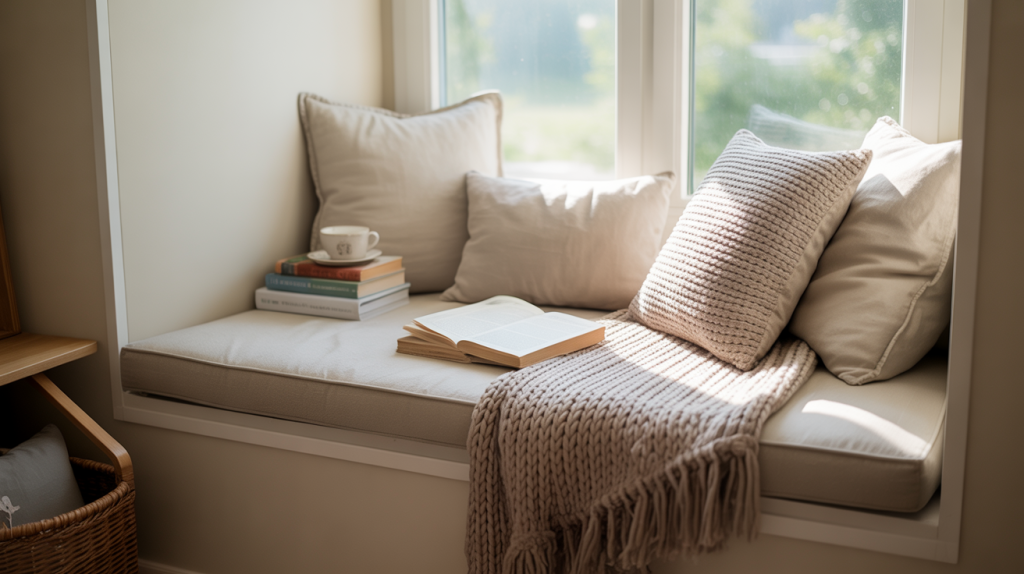
There is a reason the window seat is the holy grail of reading nooks. It combines natural light, a view, and a sense of being tucked away. If you have a bay window, or even just a standard window with a bit of wall space beneath it, you have the perfect canvas.
You don’t need to hire a contractor to build a custom window seat (though if you can, it’s a wonderful investment). You can fake the look by placing a sturdy, low storage bench directly under the window. Top it with a thick, custom-cut cushion and a mountain of pillows. To make it feel intentional, flank the bench with two tall, narrow bookcases. This creates an alcove effect, making the bench feel like a built-in architectural feature rather than a piece of furniture pushed against a wall.
The Clever Conversion: The Closet Nook
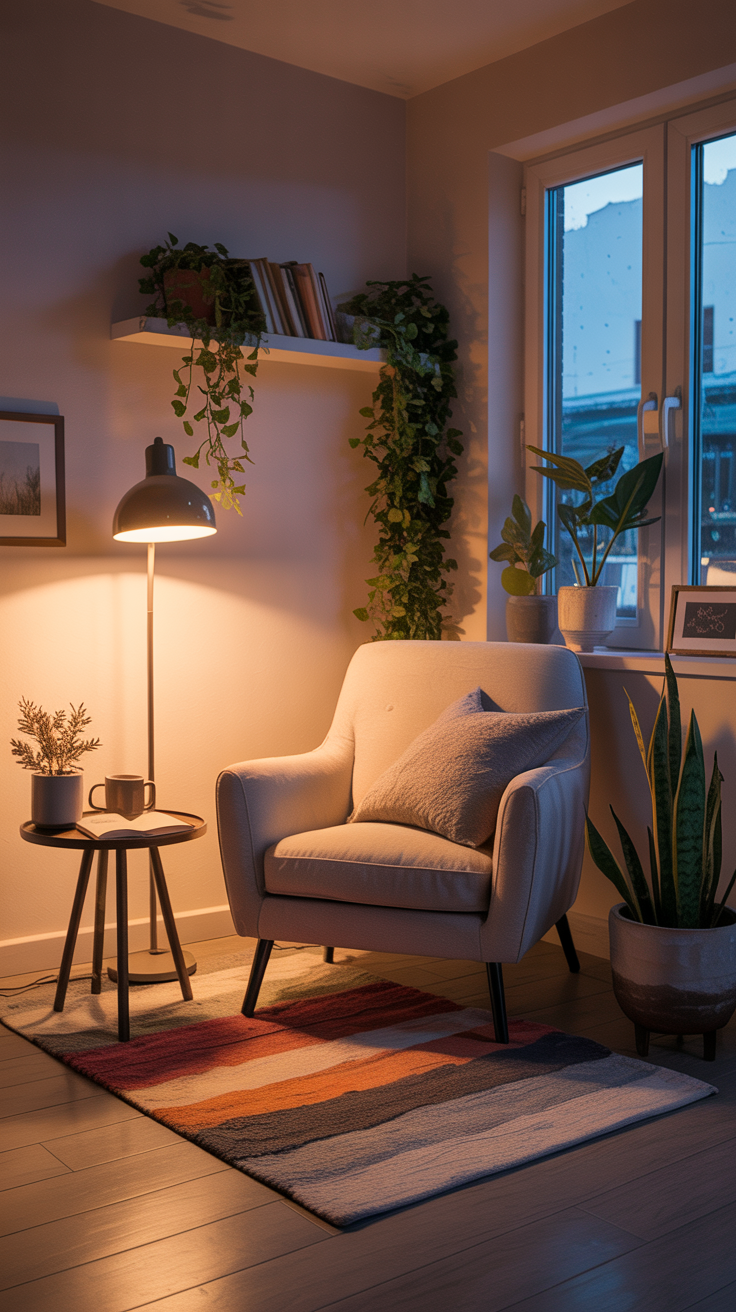
This is one of my absolute favorite trends right now. If you have a small, shallow closet that is currently holding a vacuum cleaner and a pile of coats you never wear, consider taking the doors off and turning it into a reading nook.
A closet is naturally enclosed, which instantly provides that cozy, den-like feeling. You can build a simple bench seat across the width of the closet, leaving the space underneath open for baskets or adding cabinet doors for hidden storage. Paint the inside of the closet a dark, moody color—like a deep forest green or a rich navy—to make it feel like a distinct, separate room. Add a plug-in pendant light hanging from the ceiling of the closet, line the back wall with wallpaper, and you have a stunning, space-saving retreat.
The Architectural Hack: Under the Stairs
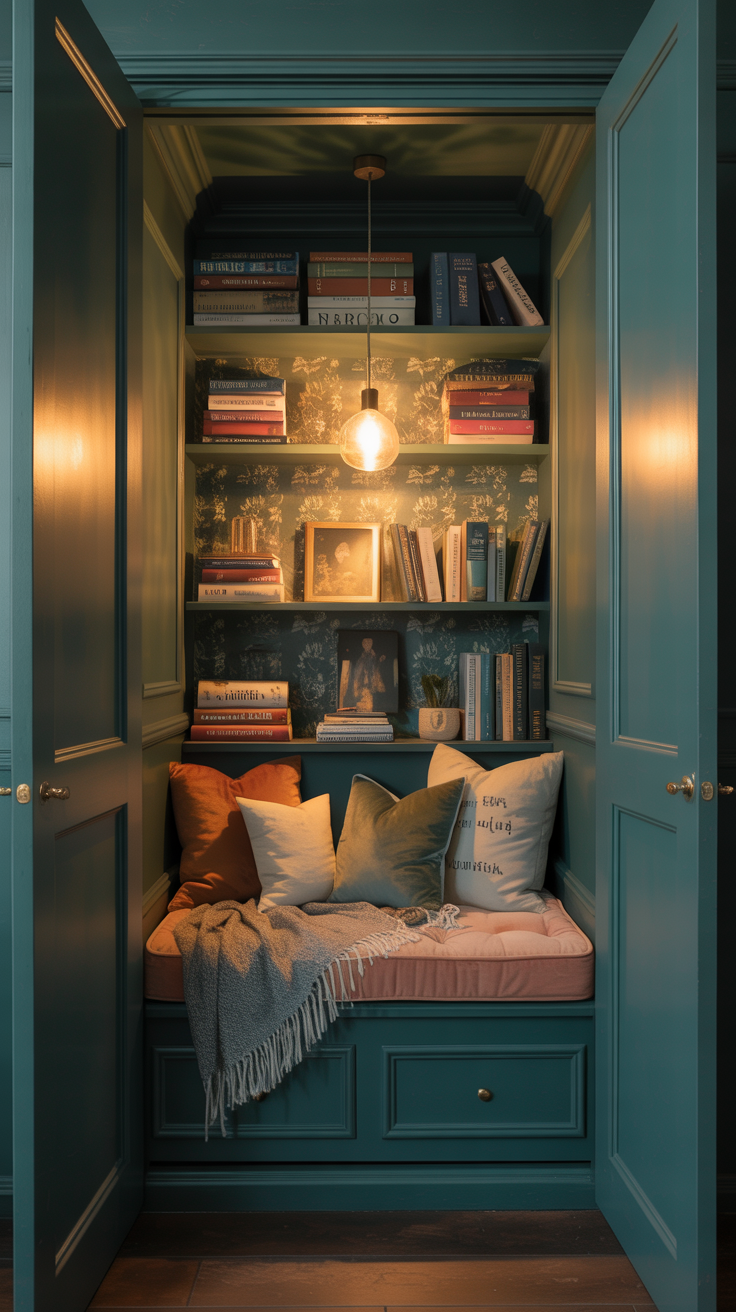
The space beneath a staircase is notoriously difficult to use. It’s angled, it’s awkward, and it usually ends up becoming a dumping ground for clutter. But that exact awkwardness makes it the perfect spot for a reading nook.
Because the ceiling slopes down, you can’t stand up in this space anyway, making it ideal for a seated or reclining area. You can build a custom daybed into the deepest part of the wedge, complete with pull-out drawers underneath. Line the taller walls with shelves for your books. It feels like a secret hideaway, a little fort for adults. If the space is open to the living room, it adds incredible architectural interest to your home.
The Bedroom Corner
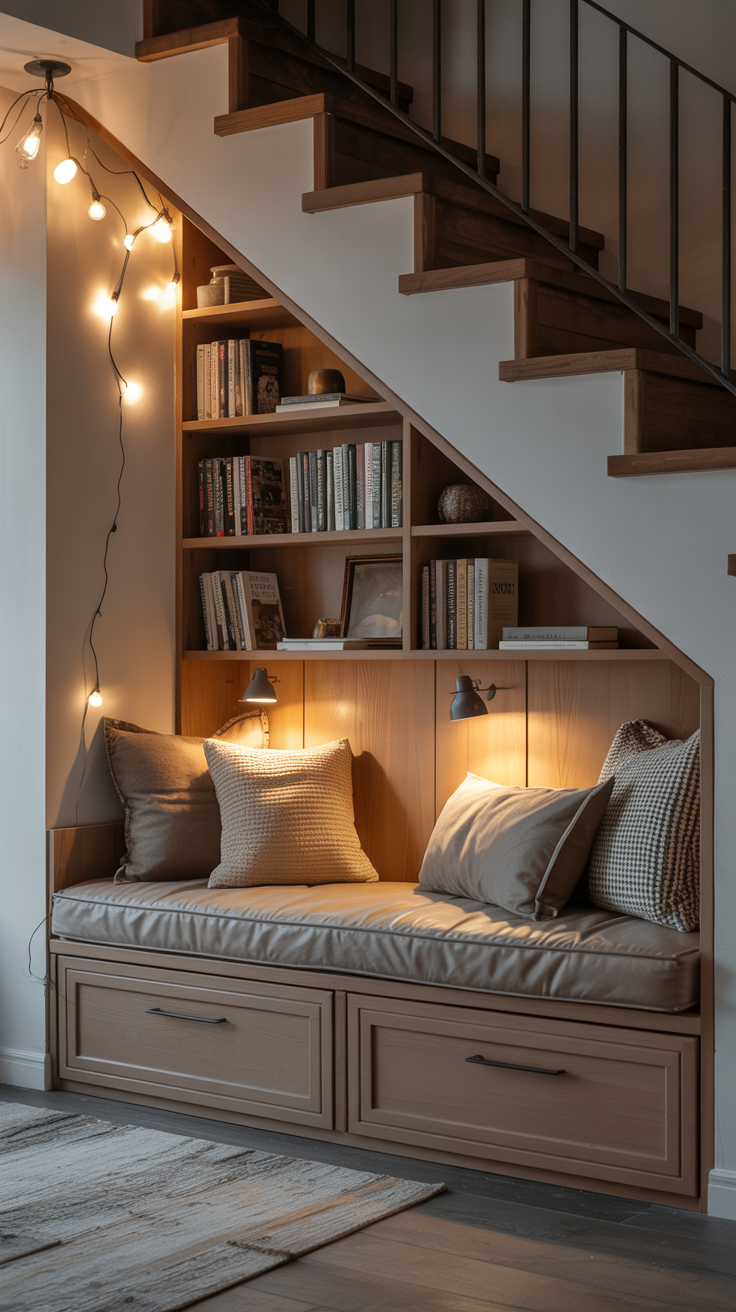
If you don’t have a closet to spare or stairs to utilize, look to the corners of your bedroom. Often, we push our bed to the center of the wall and leave the corners empty, or fill them with a laundry chair (you know the one).
Reclaim that corner. You don’t need much square footage. A comfortable, oversized armchair angled into the corner, paired with a tiny side table and a floor lamp, is all it takes. To visually separate the nook from the rest of the bedroom, use a small area rug to anchor the chair, or paint a color-blocked arch on the wall behind the chair to define the zone.
Styling Your Nook: The Details That Matter
Once you have your location, your seating, and your lighting, it’s time for the fun part: styling. The decor is what transforms a functional seating area into a space you actually crave spending time in.
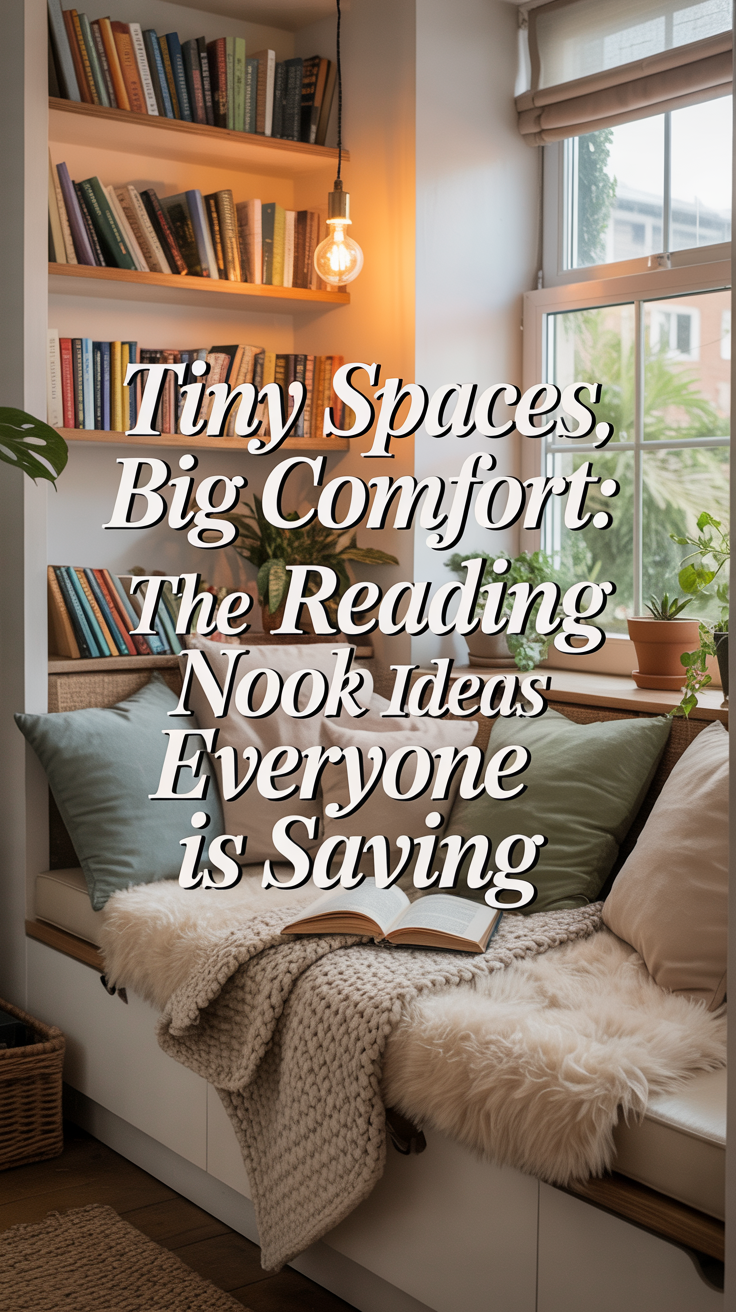
Layering Textures
In a small space, you don’t want to overwhelm the eye with too many bold patterns or loud colors. Instead, create interest through texture. This is the secret to that “cozy” feeling everyone is chasing.
Start with your seating. If you have a smooth leather chair, drape a chunky knit wool throw over the back. If you have a linen bench cushion, pile on pillows in velvet, faux fur, or nubby bouclé. The contrast between smooth and rough, cool and warm, makes the space feel rich and inviting. A small sheepskin rug layered over your existing floor covering adds a literal layer of softness underfoot.
The Books Themselves
It wouldn’t be a reading nook without books. But how you display them matters. If you have shelves in your nook, don’t just pack them spine-to-spine like a library. Break up the visual weight.
Stack some books horizontally and use them as a pedestal for a small plant or a beautiful candle. Lean some books vertically. Mix in personal objects—a framed photo, a piece of pottery, a vintage clock. This makes the shelves feel curated and personal, rather than just a storage facility. If you don’t have shelves, a beautiful, sturdy woven basket on the floor next to your chair is a great way to keep your current TBR (to be read) pile organized and accessible.
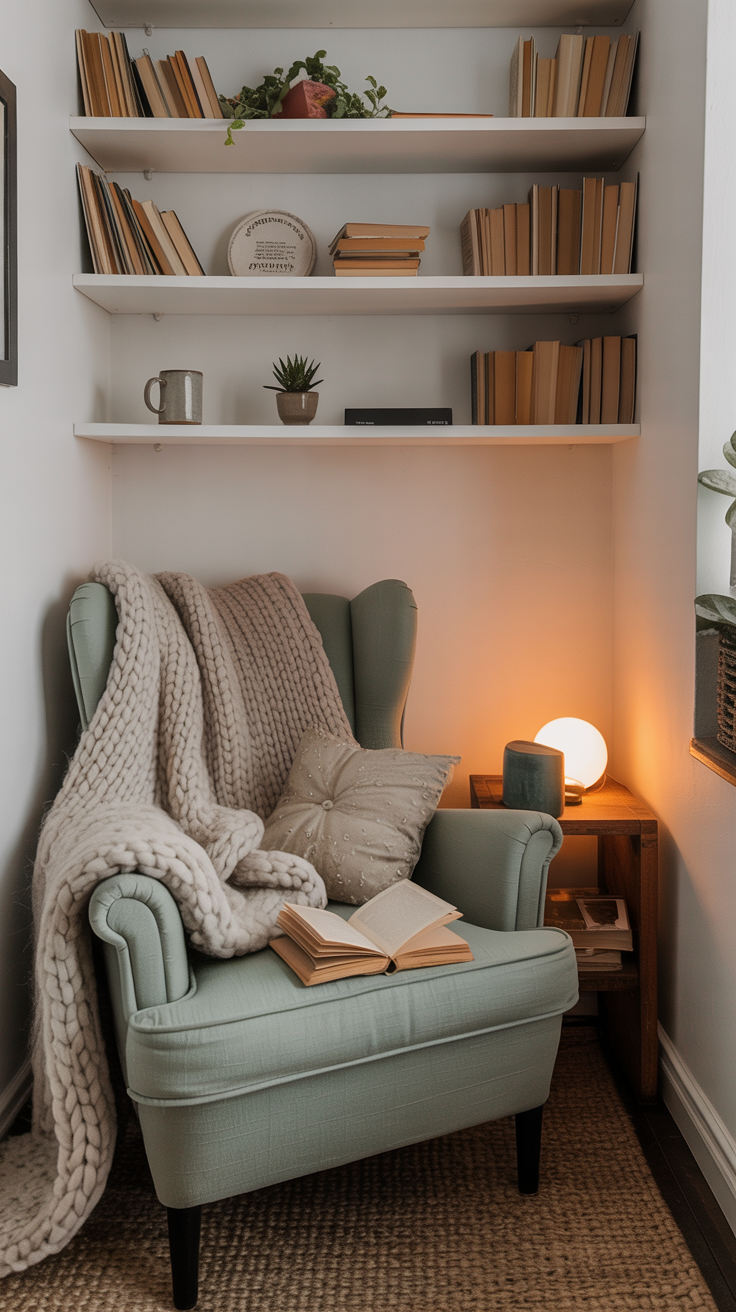
Bringing the Outside In
There is a reason we love reading by a window; humans are drawn to nature. Even if your nook is tucked into a windowless closet or a dark corner, you can bring that organic, calming energy into the space with plants.
A trailing plant, like a Pothos or a String of Pearls, looks beautiful draped over the edge of a high shelf. If you don’t have a green thumb, a vase with some dried eucalyptus or pampas grass adds a touch of nature without the maintenance. The organic shapes of plants soften the hard angles of walls and furniture, making the nook feel more relaxed.
Budget-Friendly Nook Hacks
Creating a beautiful reading nook doesn’t have to drain your bank account. Some of the most charming spaces are pulled together with thrifted finds and clever DIYs.
The Thrifted Chair Makeover
A brand-new, high-quality armchair can cost a small fortune. Instead, scour thrift stores, estate sales, or Facebook Marketplace for a chair with a great shape and solid bones. Don’t worry if the fabric is hideous or stained.
You can completely transform a thrifted chair with a high-quality slipcover. If the chair has a simple shape, you can even try your hand at a DIY upholstery job using drop cloths or inexpensive canvas. Alternatively, a large, beautiful throw blanket strategically draped and tucked can hide a multitude of sins while adding cozy texture.
DIY Shelving
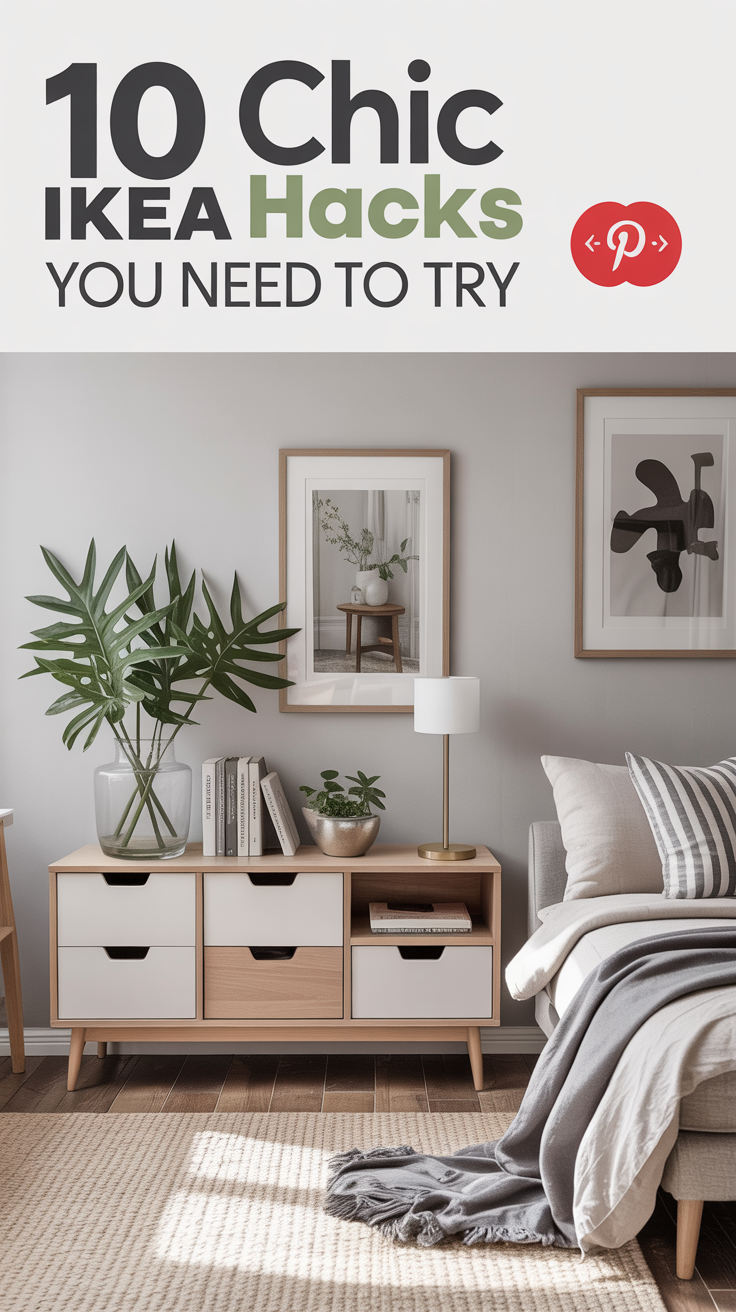
Custom built-ins are expensive, but you can fake the look for a fraction of the cost. The “IKEA hack” is famous for a reason. Take basic, inexpensive bookcases (like the Billy bookcase), secure them to the wall, and add your own baseboards and crown molding to the top and bottom. Paint the shelves and the molding the same color as your walls, and they will look like expensive, custom architectural features.
If you just need a few floating shelves, buy inexpensive pine boards from the hardware store, stain them a rich walnut color, and mount them using basic L-brackets painted to match your wall. It’s a rustic, charming look that costs very little.
Repurposing What You Have
Before you buy anything new, shop your own home. That small garden stool on your patio? Bring it inside, give it a good scrub, and use it as a side table for your nook. That extra dining chair sitting in the guest room? Throw a sheepskin over it and pull it into a corner. The beauty of a reading nook is that it is an eclectic, personal space. It doesn’t need to look like a matching furniture set from a catalog.
The Psychology of the Nook
Why are we so drawn to these tiny spaces? Why do photos of reading nooks consistently go viral and fill up our Pinterest boards? I think it goes deeper than just interior design trends.
A reading nook represents a boundary. When you sit in that specific chair, or curl up on that specific window seat, you are sending a signal to yourself and to anyone else in your home: I am off the clock. It is a physical space dedicated to slowing down. In a tiny apartment or a busy, crowded house, having just one square meter that is entirely devoted to quiet leisure is incredibly powerful.
It’s also about containment. Psychologically, humans find comfort in small, enclosed spaces. It’s why kids build blanket forts and why we love booths at restaurants. A nook with a slightly lowered ceiling, or one tucked between two bookcases, provides a sense of security and shelter. It allows us to drop our guard and fully immerse ourselves in the world of a book.
Nook Styles for Every Aesthetic
One of the most exciting things about reading nooks is that they are infinitely adaptable. There is no single “right” aesthetic. Your nook should be a reflection of your personal style, and the good news is that the format works beautifully across every design language.
The Moody, Dark Academia Nook
This is the style that dominates Pinterest saves right now, and for good reason. Dark academia is all about rich, deep colors, leather-bound books, warm candlelight, and the feeling of being tucked inside an old English library. To achieve this look in a small nook, paint the walls of your alcove or closet a deep, inky color—think charcoal, forest green, or a dark burgundy. Pair it with a worn leather armchair or a tufted velvet settee in a jewel tone. Layer in brass accents: a brass swing-arm sconce, a brass-framed mirror, and brass bookends. Stack your shelves with books facing outward, and add a few vintage objects like a globe, an old clock, or a magnifying glass. The effect is deeply atmospheric and feels like it belongs in a Victorian manor, even if it is tucked into a closet in a studio apartment.
The Light and Airy Scandinavian Nook
If dark and moody isn’t your thing, the Scandinavian approach to a reading nook is its perfect opposite. This style is built on the concept of hygge—the Danish and Norwegian idea of coziness, contentment, and well-being. A hygge-inspired nook is all about simplicity, natural materials, and soft, warm light.
For this look, keep the palette pale and neutral: creamy whites, soft oatmeal tones, and warm birch wood. A simple linen cushion on a window seat, a chunky knit throw in a natural wool color, and a single, oversized candle are all you need. The furniture should be clean-lined and functional. Avoid clutter. A small, neat stack of books and a single plant are all the decor you need. The beauty of this style is that it feels incredibly calm and restful—exactly the energy you want in a reading space.
The Bohemian Maximalist Nook
For those who believe that more is more, the bohemian reading nook is a joyful explosion of color, pattern, and texture. This style celebrates eclecticism and personal history. Nothing needs to match; everything just needs to feel alive.
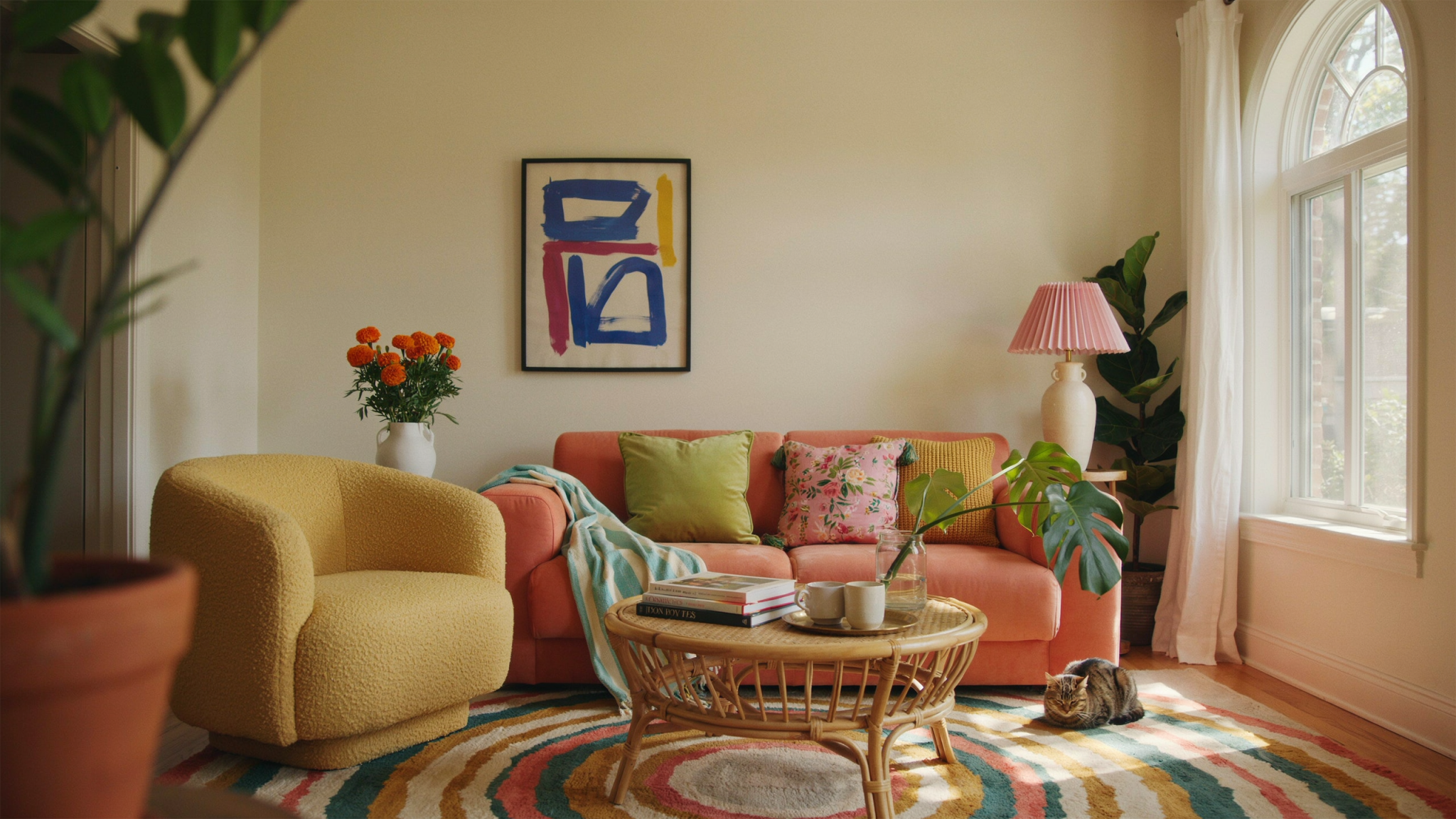
Start with a floor cushion or a low, tufted pouf as your seating. Layer a kilim rug over your existing floor. Hang a macramé wall hanging or a tapestry behind your seat. Fill your shelves with a mix of books, plants, crystals, candles, and collected objects from your travels. String fairy lights around the perimeter of the nook. Use mismatched throw pillows in every pattern you love. The result is a space that feels like a magical, personal cave—warm, eclectic, and completely unique to you.
Seasonal Nook Updates: Keeping It Fresh Year-Round
One of the best things about a reading nook is how easy it is to refresh with the seasons. Because the space is small, even minor changes make a significant impact. Swapping out your textiles is the fastest and most affordable way to give your nook a seasonal update.
In autumn and winter, lean into warmth and weight. Swap your light linen cushion covers for velvet or faux fur. Bring in a heavier, cable-knit throw. Add a small tray with a candle and a cinnamon stick for a sensory boost. In spring and summer, lighten everything up. Switch to crisp cotton or linen, bring in fresh flowers or a potted herb, and let as much natural light in as possible by keeping window treatments minimal.
You can also rotate your book display seasonally. In October, pull out your gothic novels and mysteries and display them prominently. In December, stack some beautiful coffee table books about art or travel. In spring, fill the shelves with light fiction and gardening books. Your nook becomes a living, evolving reflection of the season and your current reading mood.

The Nook for Kids: Fostering a Love of Reading
A reading nook isn’t just for adults. Creating a dedicated reading space for children is one of the most powerful things you can do to foster a lifelong love of books. Kids are especially drawn to small, enclosed spaces—it taps into that same primal instinct for shelter and security. A reading nook designed for a child feels like the ultimate fort, but one that is filled with stories instead of couch cushions.
For a child’s nook, safety and accessibility are the top priorities. Keep shelves low so that children can reach their own books independently. This sense of ownership and choice is crucial for encouraging reading. Use open-faced shelves (where the book covers face outward rather than the spines) so that children can visually browse their options—this is how bookstores display books, and it works just as well at home.
Make the seating soft and forgiving. A pile of large floor cushions, a beanbag, or a low mattress covered in washable covers is ideal. Add a canopy or a tent over the nook to enhance the fort-like feeling. String some fairy lights inside the canopy for a magical, warm glow. Let your child personalize the space with their own artwork, their favorite stuffed animals, and a small chalkboard where they can write the title of the book they are currently reading. A child who has their own special reading space is a child who will choose to read.
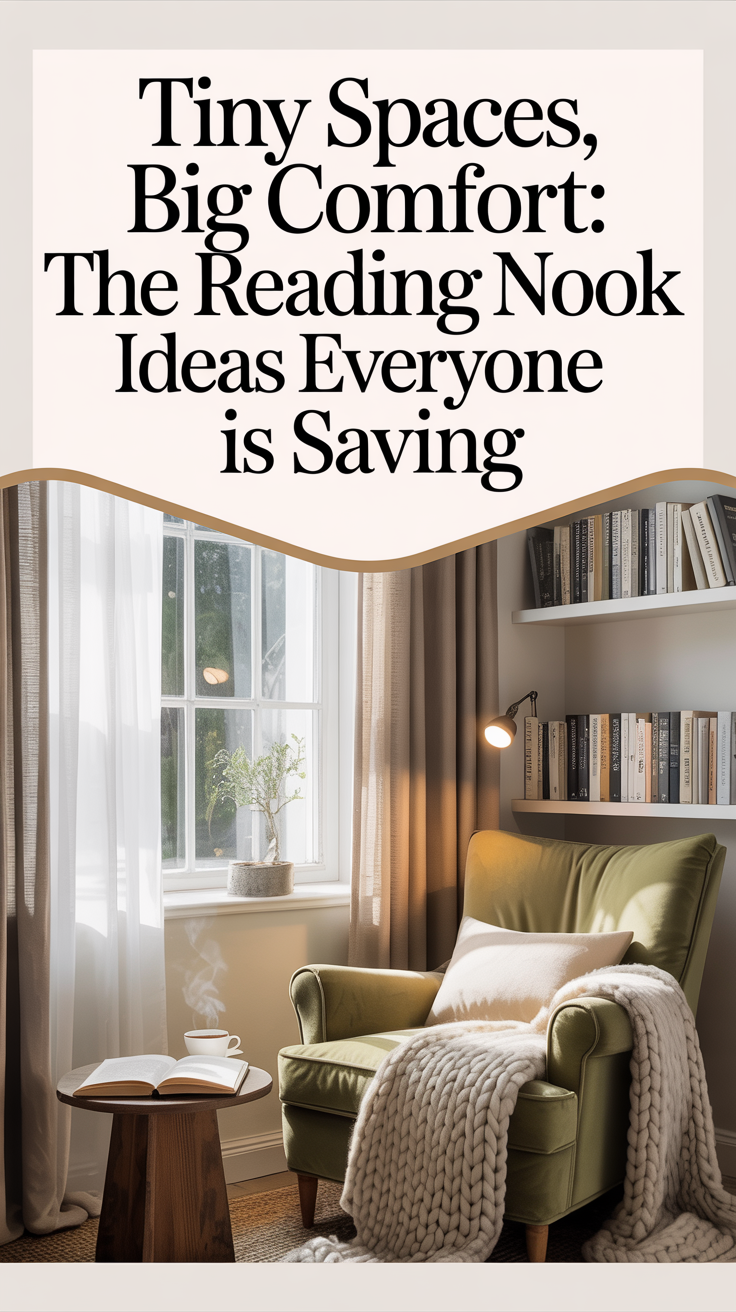
Creating Your Own Sanctuary
Creating a reading nook in a small space is an exercise in creativity and intention. It’s about looking at an awkward corner, a shallow closet, or an empty wall and seeing the potential for comfort. It’s about deciding, firmly and deliberately, that you deserve a space in your own home that is just for you.
Remember that your nook doesn’t have to be perfect to be wonderful. It doesn’t need to feature designer furniture or custom carpentry. It just needs to be comfortable, well-lit, and unapologetically yours. Whether it’s a plush armchair squeezed between your bed and the wall, a DIY bench built into a dormer window, or a converted closet painted a moody forest green, the magic of a reading nook lies entirely in how it makes you feel.
The reading nooks that everyone is saving on Pinterest aren’t going viral because they are expensive or elaborate. They are going viral because they look like escape. They look like the kind of place where the world slows down, where your phone stays face-down, and where the only thing that matters is the story in your hands. That feeling is available to all of us, regardless of the size of our homes or the size of our budgets.
So, take a look around your home today. Find that unused corner. Pull up a chair, add a lamp, and drape a blanket. Your new favorite spot in the house is waiting to be discovered. Happy reading.