It’s a familiar scene for many of us: standing in a room, surrounded by cherished objects, yet utterly stumped as to how to arrange them. The perfectly good bookshelf looks cluttered, the coffee table feels either barren or buried, and the mantelpiece is a chaotic jumble of items that, individually, you adore. This is the moment where the joy of decorating can curdle into a frustrating exercise in trial and error. But what if there was a simple, almost magical, principle that could cut through the confusion and guide you towards a more beautiful, balanced, and engaging space? As it turns out, there is. It’s called the “rule of three,” and it’s a secret weapon that designers, artists, and storytellers have been using for centuries to create a sense of harmony and visual interest. Today I want to explore the rule of three in all its multifaceted glory, from its ancient origins and the psychological reasons for its effectiveness to its practical applications in our homes and beyond. We will geek out on the science of visual perception, trace the historical thread of this principle through various artistic movements, and provide a wealth of practical advice for applying it in your own life. And I want to talk about surprising ways in which the rule of three shapes our experiences in the digital world and even in the stories we tell. Finally, I will share my insights on the art of intentionally breaking the rules, and how doing so can lead to even more sophisticated and personal design statements.
The Allure of the Odd: Deconstructing the Rule of Three
At its core, the rule of three is a simple guideline: items arranged in odd numbers, particularly in groups of three, are more visually appealing and memorable than those arranged in even numbers. This principle is rooted in the way our brains perceive and process information. When we see an even number of objects, our minds tend to pair them up, creating a sense of symmetry and order. While this can be calming, it can also feel static, predictable, and, dare we say, a little boring. An odd number of items, on the other hand, creates a subtle sense of imbalance, a visual tension that draws the eye in and encourages it to move around the composition. This creates a more dynamic and engaging experience for the viewer. Our brains are wired to seek out patterns and solve puzzles. When presented with an even number of objects, the brain can quickly and easily pair them up, satisfying its desire for order. However, this process is so efficient that it requires very little cognitive effort, which can lead to a feeling of boredom or disinterest. An odd number of objects, on the other hand, presents the brain with a more complex puzzle. It cannot be easily divided into equal groups, forcing the eye to move around the composition and the brain to work a little harder to make sense of what it is seeing. This increased cognitive engagement is what makes odd-numbered groupings feel more interesting and memorable.

Think of it this way: a single object can be a powerful focal point, but it can also feel lonely. Two objects create a sense of duality, a conversation between two equals. But three objects create a narrative. There’s a beginning, a middle, and an end. There’s a sense of movement and energy that is simply not present in a more symmetrical arrangement. This is why a trio of vases on a console table, a cluster of three pendant lights over a kitchen island, or a sofa flanked by two different accent chairs often feels more natural and “right” than a more rigidly balanced setup. The asymmetry inherent in the rule of three gives a space a more relaxed, lived-in quality, as if the objects have been collected and curated over time rather than placed with formulaic precision. This subtle ‘off-kilterness’ is not a flaw; it is a feature. It is what makes a space feel alive, dynamic, and, ultimately, more human.
A Journey Through Time: The Historical Roots of a Design Axiom
The rule of three is not a modern invention. Its roots can be traced back to ancient Greece, where philosophers and mathematicians were obsessed with the concepts of harmony, proportion, and the golden ratio. The Greeks understood that certain mathematical relationships were inherently more pleasing to the eye, and they incorporated these principles into their art, architecture, and design. The idea of a “trinity” has also held a powerful symbolic meaning in many cultures and religions throughout history, further cementing the number three in our collective consciousness as a number of significance and power.
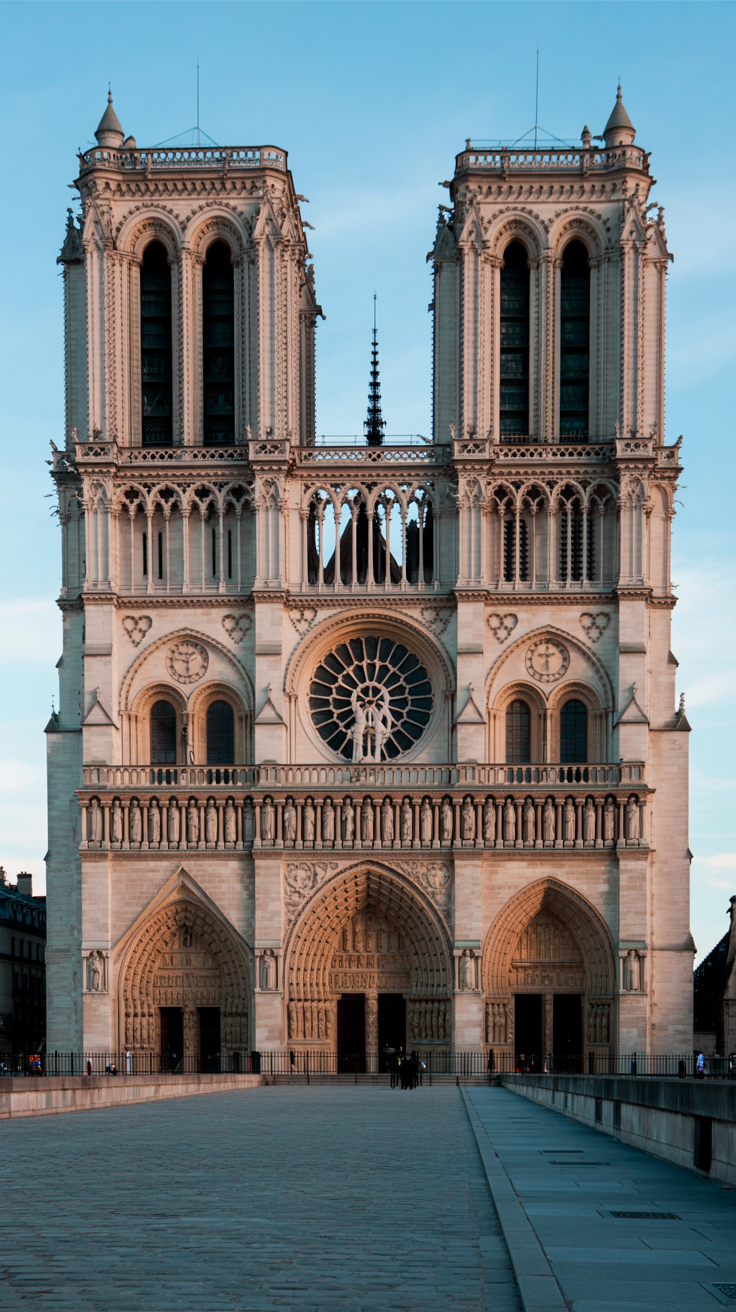
As we move through art history, we see the rule of three, and its close cousin, the rule of thirds, appearing again and again. The rule of thirds, a compositional guideline used in painting and photography, suggests that an image should be divided into nine equal parts by two equally spaced horizontal and vertical lines. The most important compositional elements should be placed along these lines or at their intersections. This creates a more dynamic and visually interesting image than simply centering the subject. From the Renaissance masters to the Impressionists, artists have intuitively understood the power of this principle to guide the viewer’s eye and create a sense of depth and movement within the frame. Leonardo da Vinci’s ‘The Last Supper,’ for example, is a masterclass in the use of the rule of three. The apostles are arranged in four groups of three, creating a sense of both order and drama. In the world of architecture, the famous Notre Dame Cathedral in Paris features three grand portals on its western facade, a powerful and inviting entrance that has captivated visitors for centuries.
In the 20th century, the rule of three found a new expression in the clean lines and geometric forms of Art Deco architecture. Architects of this era often used triple divisions in their facades, windows, and decorative motifs, creating a sense of rhythm and visual interest that was both modern and timeless. Today, the rule of three is a fundamental principle of interior design, a tool that designers use to create spaces that are both beautiful and functional. But its influence doesn’t stop there. As we will see, this simple principle has a profound impact on how we experience the world around us, from the art we admire to the websites we browse.
The Rule of Three in Nature: A Divine Blueprint?
It is fascinating to note that the rule of three is not just a human invention; it is a pattern that we see repeated throughout the natural world. From the three leaves of a clover to the three lobes of a maple leaf, the natural world is full of examples of this principle in action. Many flowers have three or five petals, and the branches of trees often grow in a pattern of three. This prevalence of the rule of three in nature may be one of the reasons why we find it so aesthetically pleasing. It is a pattern that is deeply ingrained in our evolutionary history, a ‘divine blueprint’ that our brains are wired to recognize and appreciate. When we use the rule of three in our own creative endeavors, we are, in a sense, tapping into this ancient and universal language of beauty.
The Trinity in Practice: Mastering the Rule of Three in Your Home
The Digital Realm: The Rule of Three in UI/UX Design
In an increasingly digital world, the principles of good design are more important than ever. And just as the rule of three can be used to create a harmonious living room, it can also be used to create a more intuitive and engaging user experience on a website or in an app. UI/UX designers often use the rule of three to organize information, guide the user’s eye, and create a sense of visual hierarchy.
For example, a homepage might feature three main calls to action, each with its own icon and a short snippet of text. This makes it easy for the user to quickly understand the key features or offerings of the site. Similarly, a pricing page might present three different subscription tiers, making it easy for the user to compare and contrast the options. The rule of three can also be used to create a more visually appealing layout. A web page might be divided into three columns, or a block of text might be broken up by three images. By using the rule of three, designers can create a user experience that is not only more aesthetically pleasing but also more effective at communicating information and driving user engagement.
So, how can you put the rule of three into practice in your own home? The good news is that it’s a surprisingly versatile and easy-to-use principle. Here are some practical tips for applying the rule of three to different areas of your home:
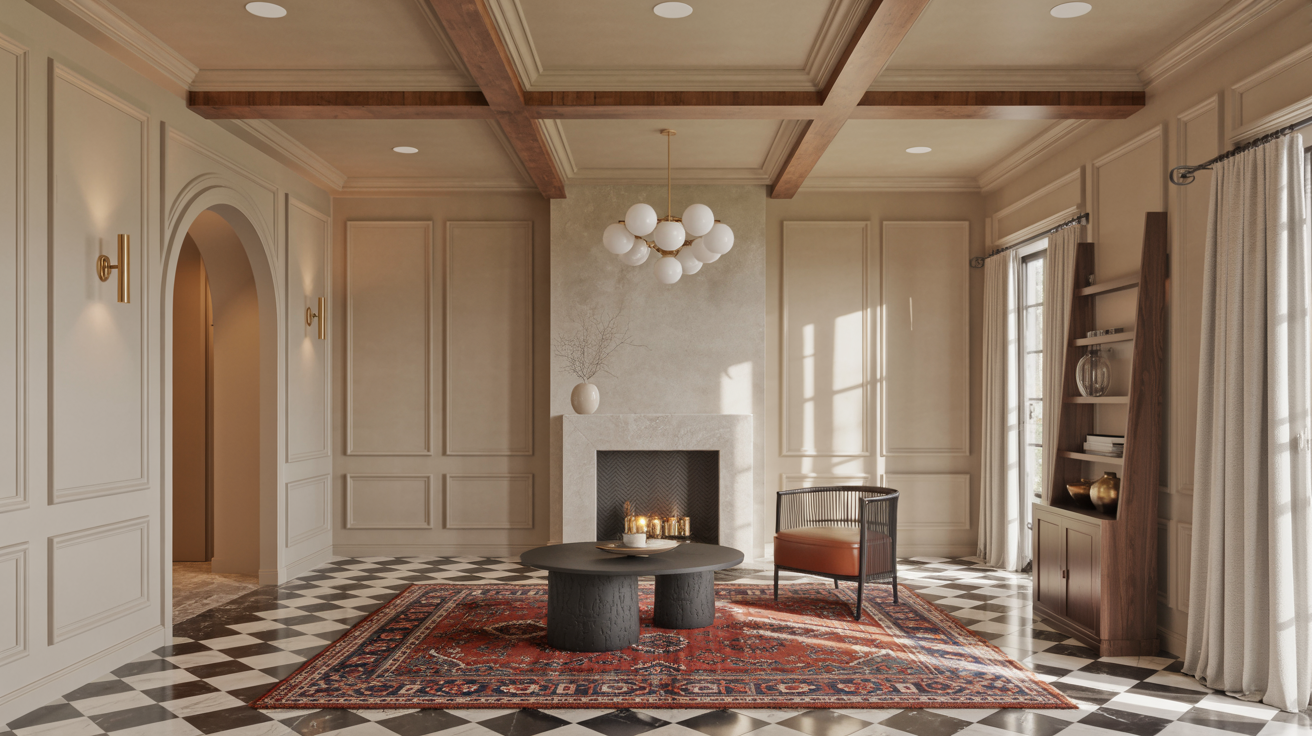
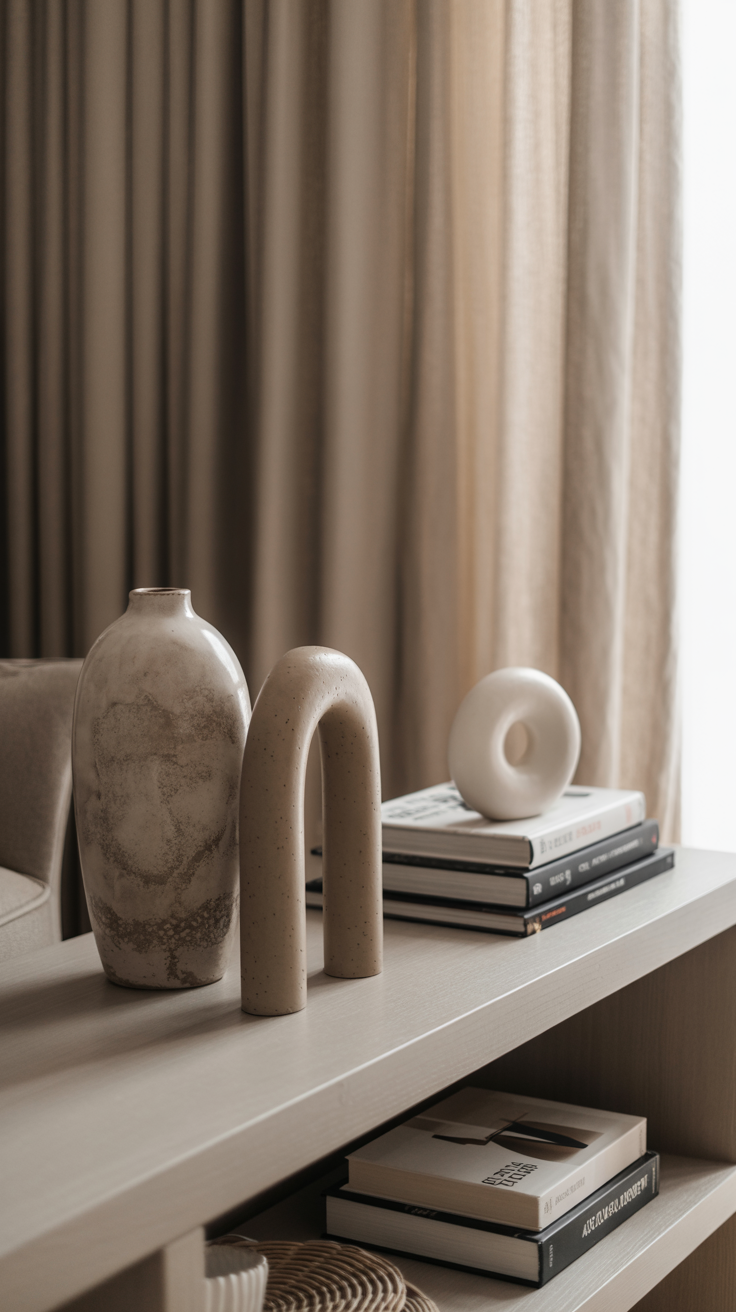
Accessories: This is perhaps the most common and straightforward application of the rule of three. When styling a bookshelf, mantelpiece, or coffee table, group accessories in threes. Vary the height, scale, and texture of the objects to create a more layered and interesting look. For example, you could pair a tall vase with a shorter, wider bowl and a small, sculptural object. Don’t be afraid to mix materials, such as ceramic, metal, and wood, to add another layer of visual interest.
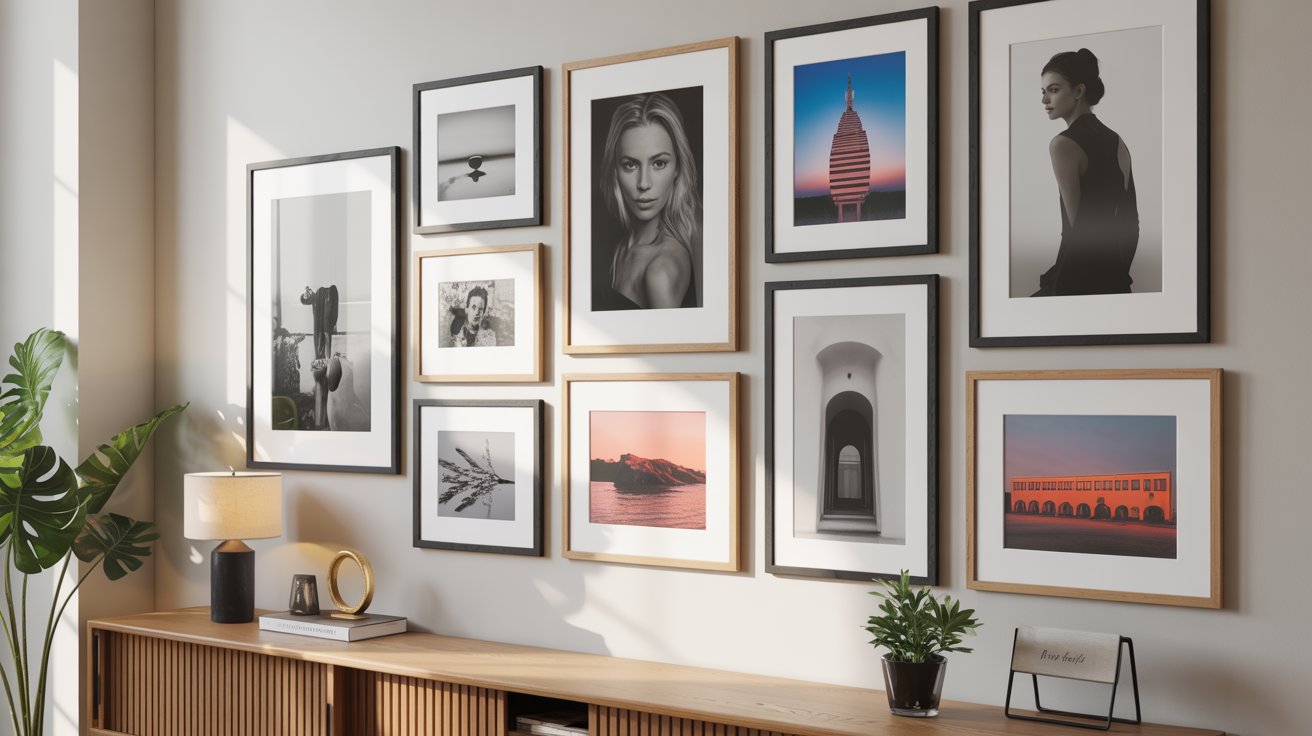
Furniture Arrangements: The rule of three can also be applied to larger furniture arrangements. Instead of a sofa and a matching loveseat, consider a sofa and two accent chairs. This creates a more dynamic and inviting seating area. You can also use the rule of three to create a sense of balance in a room with an asymmetrical layout. For example, if you have a large window on one side of the room, you could balance it with a grouping of three pieces of art on the opposite wall.
Lighting: A cluster of three pendant lights over a dining table or kitchen island can be a stunning focal point. You can also use the rule of three to create a layered lighting scheme in a room. For example, you could have a floor lamp, a table lamp, and a reading sconce in a living room to create a warm and inviting ambiance.
Color Palettes: The rule of three can even be applied to color. A common approach is to use a 60-30-10 rule, where 60% of the room is a dominant color, 30% is a secondary color, and 10% is an accent color. This creates a balanced and harmonious color scheme that is both visually interesting and easy on the eyes.
| Do | Don’t |
|---|---|
| Vary the height, scale, and texture of objects. | Use three identical objects. |
| Create a focal point with one larger object. | Let the objects compete for attention. |
| Group objects in a way that feels natural and relaxed. | Be too rigid or formulaic in your arrangements. |
| Mix materials and finishes. | Be afraid to experiment and break the rules. |
The Comedic Trio: The Rule of Three in Humor
The rule of three even finds its way into the world of comedy. The comedic triple, or the use of a series of three, is a common structure for jokes. The first two items in the series establish a pattern, and the third item subverts it, creating a surprise that triggers laughter. This structure plays on our brain’s natural tendency to seek patterns. The unexpected third element creates a small cognitive shock, a delightful disruption of our expectations. Think of a classic joke structure: a priest, a rabbi, and an imam walk into a bar. The setup creates an expectation of a certain kind of story, and the punchline, the third element, delivers the comedic twist. This comedic timing, the rhythm of three, is a testament to the power of this simple principle to not only please the eye but also to tickle the funny bone.
Beyond the Living Room: The Rule of Three in a Wider Context
The power of the rule of three extends far beyond the realm of interior design. It is a fundamental principle of communication that is used in a wide range of fields to make information more memorable, persuasive, and engaging.
Writing and Storytelling: The three-act structure (setup, confrontation, and resolution) is a cornerstone of Western storytelling. From ancient Greek plays to modern Hollywood blockbusters, this simple structure has been used to create compelling narratives that keep audiences on the edge of their seats. The rule of three is also used in writing at a more granular level. A series of three words or phrases is often more rhythmic and memorable than a series of two or four. Think of famous phrases like “life, liberty, and the pursuit of happiness” or “veni, vidi, vici.”
Marketing and Advertising: Marketers have long understood the power of the rule of three to create memorable slogans and brand messages. A trio of words or a three-part message is more likely to stick in a consumer’s mind than a more complex or convoluted message. The rule of three is also used in product design and packaging to create a sense of quality and appeal.
Public Speaking: When giving a speech or presentation, structuring your message around three key points can make it more impactful and easier for your audience to follow. The repetition of a key phrase three times can also be a powerful rhetorical device for driving home a point.
The Art of Breaking the Rules: When to Embrace Symmetry and Singularity
While the rule of three is a powerful and versatile tool, it is important to remember that it is a guideline, not a rigid law. There are times when breaking the rule can be just as effective as following it. The key is to understand the principles behind the rule so that you can make intentional and informed design choices.
The Power of Symmetry: While asymmetry can be dynamic and engaging, symmetry can be calming and serene. In a bedroom or a bathroom, a symmetrical arrangement can create a sense of order and tranquility. A pair of matching nightstands and lamps flanking a bed, for example, can create a sense of balance and harmony that is conducive to rest and relaxation.
The Statement of Singularity: Sometimes, a single, bold object can be more impactful than a group of three. A large-scale piece of art, a sculptural floor lamp, or a dramatic piece of furniture can be a powerful focal point in a room. In a minimalist space, a single, carefully chosen object can have a profound impact.
Expanding the Group: In a large or high-ceilinged room, a group of three objects can sometimes feel lost. In these cases, you may want to expand the group to five or seven objects. The key is to stick with an odd number to maintain that sense of dynamic tension.
The Global Language of Three: Cultural Perspectives on a Universal Principle
While the rule of three is a powerful and universal principle, it is also important to recognize that its interpretation and application can vary across cultures. In some cultures, for example, certain numbers are considered to be lucky or unlucky, and this can influence how objects are arranged in a space. In China, for example, the number four is considered to be unlucky because it sounds like the word for “death.” As a result, you are unlikely to see objects grouped in fours in a traditional Chinese home. In Japan, on the other hand, the number three is considered to be a lucky number, and it is often used in traditional Japanese gardens and floral arrangements.
These cultural nuances do not invalidate the rule of three, but they do remind us that design is not a one-size-fits-all proposition. The most effective design is always that which is sensitive to the cultural context in which it is being created. By understanding the cultural significance of numbers and symbols, we can create spaces that are not only beautiful and harmonious but also meaningful and respectful.
The rule of three is more than just a simple design trick. It is a fundamental principle of visual and verbal communication that is rooted in the way our brains are wired. By understanding and applying this principle, we can create spaces that are not only more beautiful and harmonious but also more engaging and memorable. But perhaps the most important lesson of the rule of three is that design should be a creative and intuitive process. The rules are there to guide us, but they are not meant to be followed blindly. The most beautiful and interesting spaces are often those that strike a balance between order and chaos, symmetry and asymmetry, the expected and the unexpected. So, the next time you find yourself standing in a room, surrounded by your cherished objects, don’t be afraid to experiment, to play, and to trust your own instincts. After all, the most important rule of design is that there are no rules. The principles and guidelines we’ve explored are not meant to be a straightjacket, but rather a set of tools to help you unlock your own creativity. The ultimate goal is to create a space that feels authentic to you, a space that tells your story. So, embrace the power of three, but don’t be afraid to break the rules and forge your own path. In the end, the most beautiful and meaningful designs are those that come from the heart.
In the grand tapestry of design, the rule of three is a single, yet powerful, thread. It weaves its way through art, science, and culture, a testament to our innate desire for beauty and meaning. By understanding and embracing this principle, we can not only create more beautiful and harmonious spaces but also gain a deeper appreciation for the subtle rhythms and patterns that shape our world.