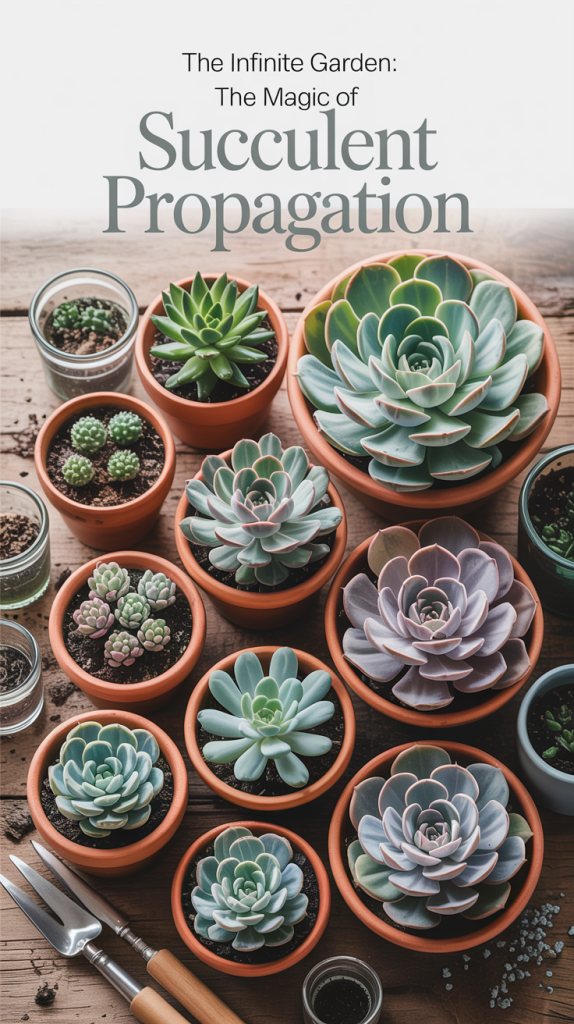
There is a quiet, profound magic in the act of propagation. It’s a gentle rebellion against the idea that things must be bought to be had, a partnership with the quiet, persistent life force that hums within our houseplants. To propagate a succulent is to take a single, perfect leaf and trust that it holds the blueprint for a whole new life. It’s an act of faith, a lesson in patience, and one of the most rewarding journeys a plant lover can embark upon. It transforms you from a mere keeper of plants into a creator of them.
For years, my windowsills have been a laboratory of sorts, a nursery filled with trays of fallen leaves and hopeful cuttings. I’ve learned that propagation is more than just a frugal way to expand a collection or a clever method for salvaging a leggy, light-starved plant. It’s a way to connect more deeply with the natural world, to observe its resilience and its tenacious desire to grow. It’s a process that slows you down and asks you to pay attention, to notice the almost imperceptible emergence of a hair-like root or the first tiny rosette of a new pup.
This guide is born from that experience—from the successes, the many failures, and the awe I still feel every time a new plant springs forth from what was once just a part of the whole. We’ll go beyond the basic steps and delve into the science behind the magic, troubleshoot the common heartbreaks, and explore how to create a propagation station that is as beautiful as it is functional. So, find a plant that’s ready to share its abundance, and let’s begin the journey of creating your own infinite garden.
The Science of a Second Chance: Understanding Meristematic Tissue
Have you ever wondered how a single leaf can magically sprout a whole new plant? The answer lies in a remarkable type of plant tissue called meristematic tissue. Think of it as the plant world’s equivalent of stem cells. These undifferentiated cells hold the incredible potential to become any part of the plant—a root, a stem, or a new leaf. In succulents, this powerful tissue is concentrated at the base of each leaf, right where it connects to the main stem.
This is why a “clean break” is so crucial when you’re harvesting leaves for propagation. When you gently twist a leaf from the stem and it pops off cleanly, you are ensuring that a small cluster of these meristematic cells comes with it. This is the genetic gold, the vital spark that will ignite the process of new growth. If the leaf tears or a piece is left behind on the stem, you’ve likely lost this precious tissue, and the leaf will simply wither away, its potential unfulfilled.
Once the leaf is separated, another fascinating process begins: callusing. The open wound at the base of the leaf needs to dry and form a protective seal. This callus is like a scab on a human wound; it prevents the leaf from absorbing too much water and rotting before it has a chance to grow roots. It also acts as a barrier against bacteria and fungi. This is why patience is a propagator’s greatest virtue. Rushing this step is one of the most common and heartbreaking mistakes a beginner can make. By giving your cuttings a few days to a week to callous over in a dry, airy spot, you are setting them up for success, giving them the best possible chance at a second life.
The Propagator’s Palette: Choosing Your Method
One of the joys of propagating succulents is that they are incredibly generous and forgiving, offering us multiple paths to success. There is no single “best” method; the right choice often comes down to your personal preference, your environment, and the simple joy of experimentation. I’ve tried them all, and each has its own unique charm and rhythm.
- The Classic Soil Method: This is the most common and, in many ways, the most intuitive method. It mimics the way succulents naturally propagate in the wild, where a fallen leaf lands on the soil and puts down roots. You can either gently nestle the calloused end of the leaf into a shallow tray of well-draining soil or simply lay the leaves flat on the surface. I find that laying them flat has a slight advantage, as it allows you to see the new root and pup growth more easily without disturbing them. It’s a method that feels grounded and earthy, a direct partnership with the soil.
- The Water-Watcher’s Way: Water propagation is a visual delight. It’s like having a tiny, aquatic science experiment on your windowsill. To do this, you’ll need to suspend your calloused leaves or stem cuttings over a jar of water so that only the very base is touching the surface. There are many clever ways to do this, from stretching plastic wrap over the jar and poking holes in it to using a specially designed propagation station. The reward is a front-row seat to the miracle of root growth, watching the fine, white tendrils emerge and reach for the water. It’s a method that requires a bit more setup, but the visual payoff is immense. The one caveat is that the transition from water to soil can sometimes be a bit of a shock to the new plant, as water roots are different from soil roots.
- The Minimalist’s Air Propagation: This method feels like the ultimate act of faith. It requires nothing more than a dry, empty tray and a bit of patience. You simply lay your calloused leaves on the tray and wait. It seems impossible, but the leaf contains all the water and nutrients it needs to push out new roots and a pup. The advantage of this method is that there is virtually no risk of rot. The disadvantage is that it can be a bit slower than the other methods. I love to use this method for my most precious or rare cuttings, as it feels like the safest bet. The sight of a tiny pink root emerging from a leaf that is simply sitting in the open air is a moment of pure, unadulterated magic.
- The Whimsical Hanging Method: This is a fun, decorative twist on air propagation. By threading your leaves onto a piece of fishing line or twine, you can create a living garland that is both a propagation station and a piece of botanical art. It’s a great space-saving solution and a beautiful way to display your propagating leaves. I’ve found that this method works surprisingly well, as it provides excellent air circulation around each leaf. It’s a conversation starter and a constant, beautiful reminder of the life that is unfolding in your home.
The Nursery: Creating a Beautiful and Functional Propagation Station
Your propagation station doesn’t have to be a purely utilitarian space. With a little bit of thought and creativity, it can be a beautiful feature in your home, a testament to your love of plants and your partnership with nature. The key is to choose a spot that gets several hours of bright, indirect sunlight. A north- or east-facing windowsill is often ideal. Direct, harsh sunlight can scorch your delicate cuttings before they have a chance to grow.
Here are a few ideas for creating a propagation station with style:
- The Tray of Treasures: A simple, shallow ceramic or terracotta tray is a beautiful and classic choice for soil propagation. The natural materials complement the earthy nature of the process. You can arrange your leaves in neat, orderly rows for a minimalist look, or in a more organic, circular pattern for a softer feel. I love to use a vintage silver tray that I found at a flea market; the contrast between the tarnished silver and the fresh green of the new pups is just beautiful.
- The Apothecary’s Lab: For water propagation, embrace a vintage, scientific aesthetic. Collect a variety of small glass bottles and vials—old medicine bottles, spice jars, or even test tubes—and arrange them on a shelf or a windowsill. Each cutting gets its own individual vessel, creating a beautiful, light-catching display. It’s a look that is both romantic and intellectual, a nod to the botanists of old.
- The Tiered Tea Cart: If you’re a truly obsessive propagator (like me), you may need a bit more space. A vintage bar cart or a small, tiered plant stand can be transformed into a multi-level propagation station. The top tier can be for your water propagation experiments, the middle for your soil trays, and the bottom for your tools and supplies. It’s a mobile nursery that you can move around to catch the best light.
Your propagation station is your personal laboratory, your nursery, your sanctuary. Make it a space that brings you joy, a place where you can pause and observe the slow, quiet, and miraculous process of new life.
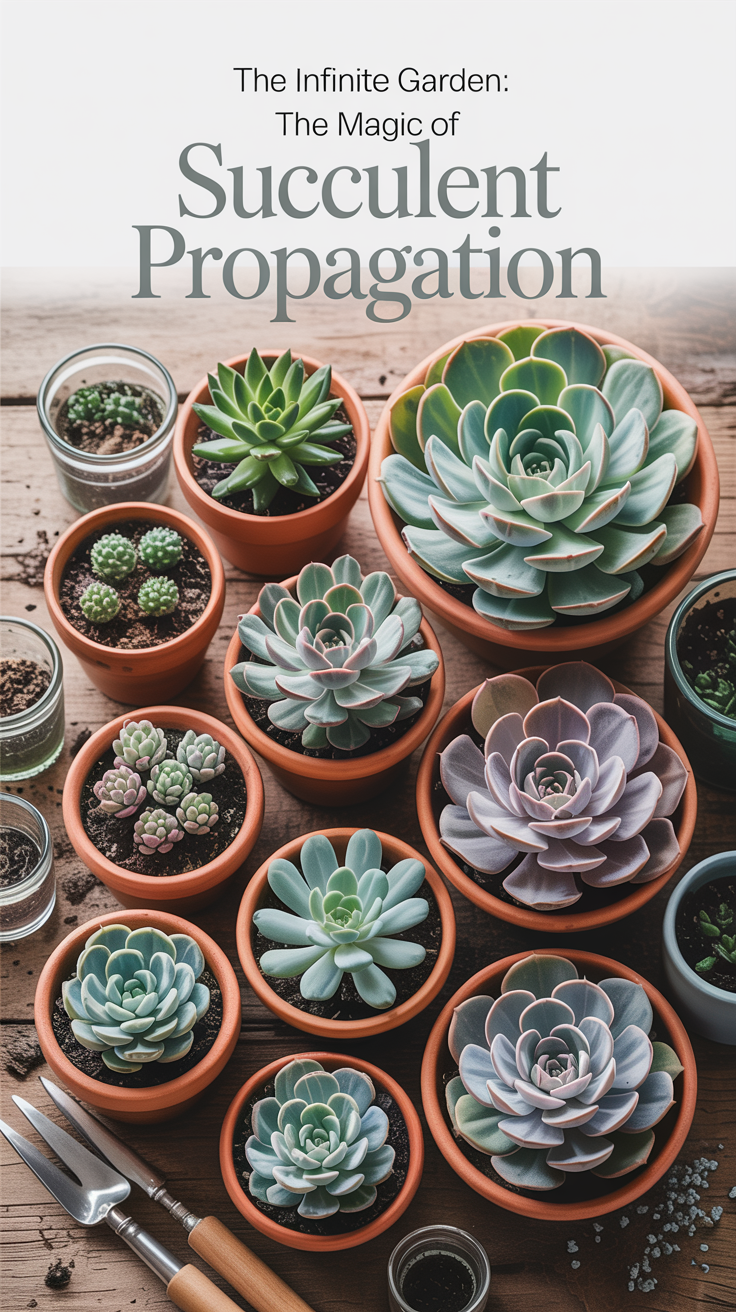
When Good Leaves Go Bad: Troubleshooting Common Propagation Heartbreaks
Even the most experienced propagator will encounter a few duds along the way. It’s all part of the learning process. But there are a few common problems that can be easily avoided with a bit of knowledge. Here are the most common propagation heartbreaks and how to troubleshoot them:
- The Mushy, Translucent Leaf: This is the most common and tragic of all propagation failures. You have a promising-looking leaf, and then one day, you notice it has turned into a sad, mushy, translucent blob. This is almost always a sign of rot, caused by too much moisture. It means you either didn’t let the leaf callous over for long enough, or you overwatered it. The best way to avoid this is to be patient with the callusing process and to water your soil propagations sparingly. A light misting every few days is all they need. Remember, succulents are desert plants; they are much more tolerant of being too dry than too wet.
- The Crispy, Withered Leaf: This is the opposite problem. Your leaf looks promising, and then it simply withers away into a dry, crispy husk without ever producing roots or a pup. This can happen for a few reasons. It might be that you didn’t get a clean break from the stem, and the vital meristematic tissue was left behind. It could also be that the mother plant was not healthy or well-hydrated enough to begin with. To give your leaves the best chance, always start with a healthy, robust mother plant, and give it a good watering a few days before you take your cuttings.
- Roots, But No Pup: Sometimes, you’ll have a leaf that produces a beautiful, healthy set of roots, but no new pup ever emerges. This can be frustrating, but it’s not necessarily a failure. It may just be a matter of patience. Sometimes, a pup will eventually emerge, even weeks or months after the roots have formed. It can also be a sign that the leaf doesn’t have enough light to trigger the growth of a new rosette. Try moving your rooting leaf to a slightly brighter spot and see if that encourages a pup to form.
- Pup, But No Roots: This is a less common but equally perplexing problem. A tiny, perfect little pup emerges from the base of the leaf, but there are no roots to be found. This is a precarious situation, as the pup is relying solely on the mother leaf for its water and nutrients. The best thing you can do is to be incredibly patient. Leave the pup attached to the mother leaf for as long as possible. Often, roots will eventually form. Once the mother leaf has completely withered away, you can very gently place the rootless pup on top of some moist soil and hope for the best. It’s a long shot, but I’ve had a few surprise successes this way.
Propagation is a numbers game. Not every leaf will be a success, and that’s okay. By learning to read the signs and troubleshoot the problems, you’ll increase your success rate and deepen your understanding of these remarkable plants.
The Gift That Keeps on Giving
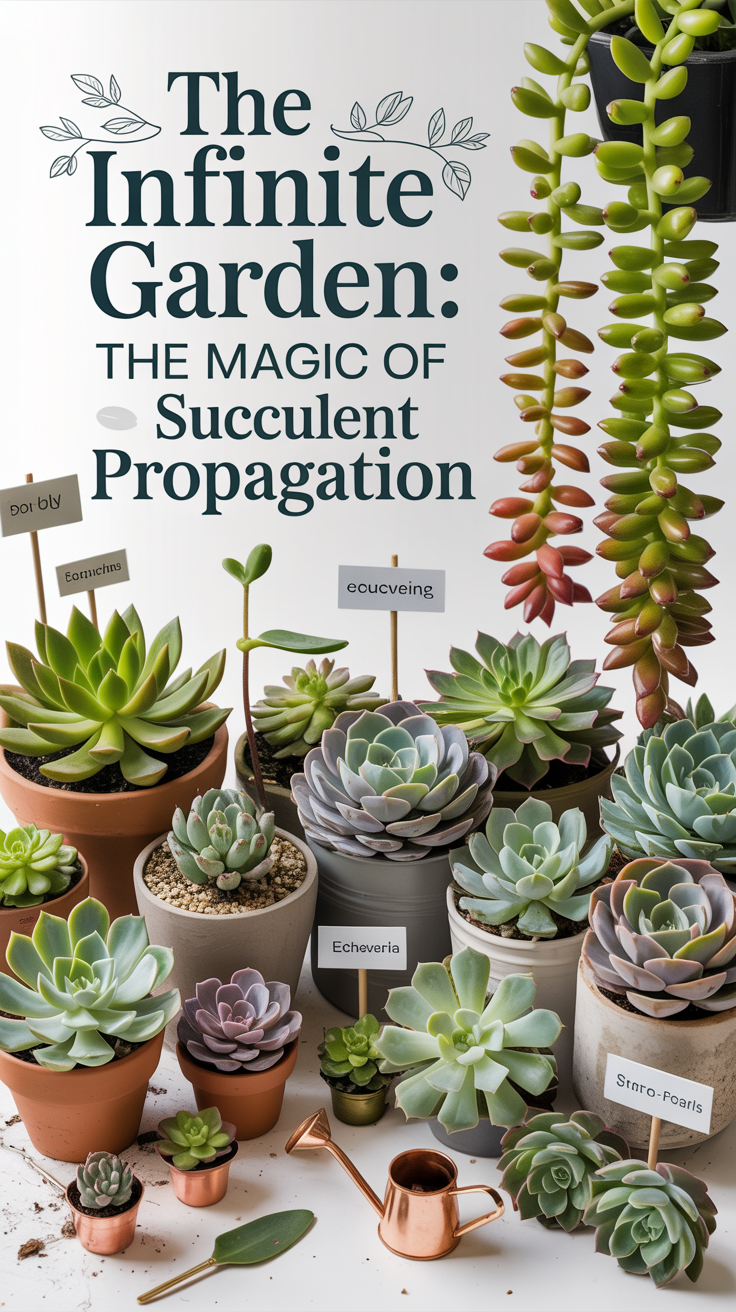
There is a unique and profound joy in potting up your first successfully propagated succulent. It’s a tangible result of your patience, your care, and your partnership with the quiet, persistent forces of nature. You have taken something small and seemingly insignificant and nurtured it into a new, independent life. It’s a small miracle, and it’s one that you can create again and again.
This is the true gift of propagation. It’s a skill that, once learned, allows you to create an endless supply of new plants. You can fill your own home with a lush, verdant jungle, or you can share the abundance with others. A small, hand-potted succulent, grown from a leaf from your own plant, is one of the most personal and meaningful gifts you can give. It’s a gift of life, a symbol of growth, and a testament to the simple, profound magic that can be found in a single, perfect leaf.