Fashion, in its perpetual, cyclical dance, has always delighted in the art of surprise. Just when we think we have a handle on the prevailing aesthetic, the pendulum swings in a wildly unexpected direction, unearthing trends we thought were long buried or inventing new ones that challenge our very definition of style. As we look toward 2026, the sartorial crystal ball is revealing a landscape that is not just different, but delightfully strange. The era of quiet luxury and understated minimalism that soothed our post-pandemic sensibilities is being swept away by a tidal wave of expressive, tactile, and often contradictory impulses. The coming year in fashion is poised to be a celebration of the weird, the wonderful, and the wonderfully confusing, where the only rule is to expect the unexpected.
From the controversial resurrection of the 2010s aesthetic to the rise of a “gummy” tactile universe, 2026 is shaping up to be a year of sartorial schizophrenia. It’s a world where your grandmother’s brooch is just as chic as a pair of spray-on skinny jeans, and where your shoes might be a bizarre hybrid of a loafer and a trainer. This is not just about new clothes; it’s about a new mood. It’s a collective desire to break free from the beige, to embrace individuality in its most eccentric forms, and to find joy in the sheer, unadulterated fun of getting dressed. Get ready to explore the most surprising and unusual fashion predictions that will define 2026.
The Great Contradiction: Y2K’s Cringey Cousin and Grandma’s Closet
Perhaps the most jarring prediction for 2026 is the aggressive return of the 2010s. Just as the fashion world was getting comfortable with its Y2K revival, the next decade is already knocking, bringing with it a host of trends many had hoped to forget. This isn’t a subtle nod; it’s a full-blown renaissance of an era defined by clubbing aesthetics and questionable denim choices. Leading the charge is the potential comeback of the skinny jean. After years of wide-leg and baggy dominance, runways from Celine, Gucci, and KNWLS are showcasing calf-sucking, spray-paint-level skinny silhouettes. The key to the 2026 iteration seems to be pairing them with oversized, boxy jackets for a play on proportions, but the fundamental challenge to the relaxed-fit status quo is undeniable.
This 2010s revival doesn’t stop at denim. Prepare for the return of the wedge sneaker, a controversial hybrid shoe once championed by Isabel Marant and now being spotted on the next generation of style icons like Blue Ivy and North West. The aesthetic of excess from that era is also re-emerging. Think of the gaudy, recklessly sexy styles of the mid-2010s: the Hervé Léger-esque bandage dress, the prominent Valentino Rockstud heel, and an overall vibe that screams “night out.” It’s a stark departure from the cozy, comfort-first mindset that has prevailed for so long.
In a stunning display of fashion’s inherent contradictions, this 2010s redux is happening alongside the rise of its complete opposite: “Grandmacore.” This trend romanticizes the elegance and eccentricity of grandmotherly style. The most surprising accessory to make a major comeback is the brooch. Pinterest Predicts a massive surge in popularity for brooches, worn not just on lapels, but on everything from ties and shirts to socks and hats. It’s a small detail that adds a touch of vintage charm and personality. This is complemented by the broader “Poetcore” aesthetic, which embraces oversized capes, classic satchel bags, and other literary-inspired, romantic elements. It’s a gentle, nostalgic trend that feels a world away from the body-con dresses of the 2010s, yet both are predicted to coexist in the eclectic landscape of 2026.
Tactile Overload: A Feast for the Senses
Moving beyond visual aesthetics, 2026 will be a year defined by touch. A significant macro-trend is the move towards a more sensory, tactile experience with clothing and accessories. This manifests in several surprising micro-trends, led by the bizarrely named “Gimme Gummy” aesthetic. Driven by Gen Z and Millennials, this trend is an “ASMR overload,” focusing on materials that are bendy, rubbery, and elastic. Imagine phone cases with a squishy, gummy texture, cheek tints that are jelly-like, and even 3D jewelry with a rubberized finish. It’s a playful, almost childlike obsession with texture that prioritizes the feeling of an object as much as its look.
This focus on detail extends to fastenings. The era of the simple zipper is over, replaced by “Niche Fastenings.” Gen Z’s love for unique, vintage-inspired details is driving a fascination with intricate closures. Chinese frog fastenings are appearing on Mandarin-style jackets, while toggles are becoming a key feature on shearling coats. The viral “hooked top” from designer Isabella Vrana, with its 82 individual hook-and-eye closures, is a prime example of this trend in action. It’s a celebration of craftsmanship and a rejection of mass-produced simplicity.
Nowhere is this tactile experimentation more evident than in footwear. Get ready for the rise of the hybrid shoe. The “troafer” (a trainer-loafer) and the “sneakerina” (a sneaker-ballerina) were just the beginning. For 2026, the concept is being pushed even further with predictions of trainer-boots, loafer-boots, and even sandal-boots. These Frankenstein-like creations challenge our traditional categories of footwear, creating something entirely new and, to many, wonderfully weird. It’s a trend that embraces the experimental and finds beauty in the unexpected combination of familiar forms.
The New Maximalism: Beyond ‘80s Power Dressing
Maximalism has been bubbling under the surface for a few seasons, but 2026 will see it explode in several new and surprising directions. While the ‘80s will continue to be a major influence, the interpretations are becoming more extreme and nuanced.
The “Glamoratti” trend, as identified by Pinterest, takes ‘80s luxury and turns it up to eleven. This isn’t just about shoulder pads; it’s about tailored suits with sculpted shoulders that “grow three sizes.” It’s about funnel necks becoming the default base layer for every outfit, and jewelry becoming chunkier, bolder, and golder than ever before. Baggy suits, high-collared jackets, and an unapologetic embrace of decadent fabrics will define this look. It’s a power-dressing fantasy for a new generation.
At the same time, a more deconstructed and avant-garde form of maximalism is emerging in the beauty world. “Glitchy Glam” is the art of “missing the mark—on purpose.” It’s about embracing intentionally imperfect and eccentric makeup. Think asymmetrical eyeliner, clashing eyeshadows, and nails with a different color on each finger. This trend rejects the pursuit of flawless, symmetrical beauty in favor of something more artistic, personal, and delightfully off-kilter. It’s the makeup equivalent of a digital glitch, finding a strange beauty in the error.
Perhaps the most unexpected twist on maximalism is the “Khaki Coded” or “Paleontologist” aesthetic. This trend finds inspiration in the utilitarian and academic world of archaeology and field research. It’s a look built on a foundation of pleated trousers, utility shirts, field jackets, and brown linen. It’s a nerdy, intellectual take on fashion that feels both practical and surprisingly chic. It suggests a desire for substance and storytelling in our clothes, a move away from fleeting trends towards a more character-driven approach to style.
Color and Print Shake-Up: The Unexpected Palette of 2026
The entire color and print landscape is set for a major overhaul in 2026. The warm, earthy tones that have dominated recent years are giving way to a cooler, more vibrant palette. The most significant shift is the rise of “Capri Blue,” a range of oceanic cobalt and cerulean hues, which is set to replace the ubiquitous burgundy and cherry red of 2025. This move towards cool tones is also reflected in the animal print hierarchy. The long-reigning leopard print is being usurped by the cooler, more graphic snakeskin print, appearing on everything from shoulder bags to knit dresses.
However, not all warm tones are disappearing. In a surprising show of longevity, chocolate brown will continue to be a key color, providing a rich, sophisticated anchor in this new, cooler world. And in a true blast from the past, polka dots are predicted to be a major print trend, bringing a dose of playful, retro charm to the forefront.
One of the most divisive color trends making a comeback is the use of white tights. A staple of ‘80s ladylike styling, they are being positioned as a chic, if challenging, accessory to be paired with heels and dresses. It’s a look that requires confidence and a certain sartorial bravery, perfectly encapsulating the experimental spirit of 2026.
Conclusion: Embracing the Beautifully Bizarre
Looking ahead to 2026, it’s clear that fashion is entering a period of joyful chaos. The trends on the horizon are a testament to a collective desire to break free from the constraints of good taste and embrace a more personal, expressive, and often humorous approach to style. The surprising return of the 2010s, the tactile allure of “gummy” textures, the intellectual charm of the “paleontologist” aesthetic, and the avant-garde spirit of “glitchy glam” all point to a future where individuality reigns supreme.
This is not a time for sartorial rules or rigid aesthetics. It’s a time for experimentation, for clashing decades, for mixing high and low, and for finding delight in the beautifully bizarre. Whether you find yourself drawn to the nostalgic comfort of a vintage brooch or the futuristic weirdness of a trainer-boot hybrid, 2026 offers a playground of possibilities. The most important trend, it seems, will be the courage to be yourself, in all your strange and wonderful glory. The future of fashion is weird, and frankly, we couldn’t be more excited.
Deeper Dives into the Weird: Deconstructing the Trends
To truly grasp the strange new world of 2026 fashion, it’s essential to dissect these predictions further, understanding the nuances and the specific items that will come to define each surprising trend. The beauty of this emerging landscape is in the details—the specific cut of a controversial jean, the exact texture of a “gummy” accessory, the historical references embedded in a “Poetcore” garment.
The 2010s Time Warp: A Closer Look
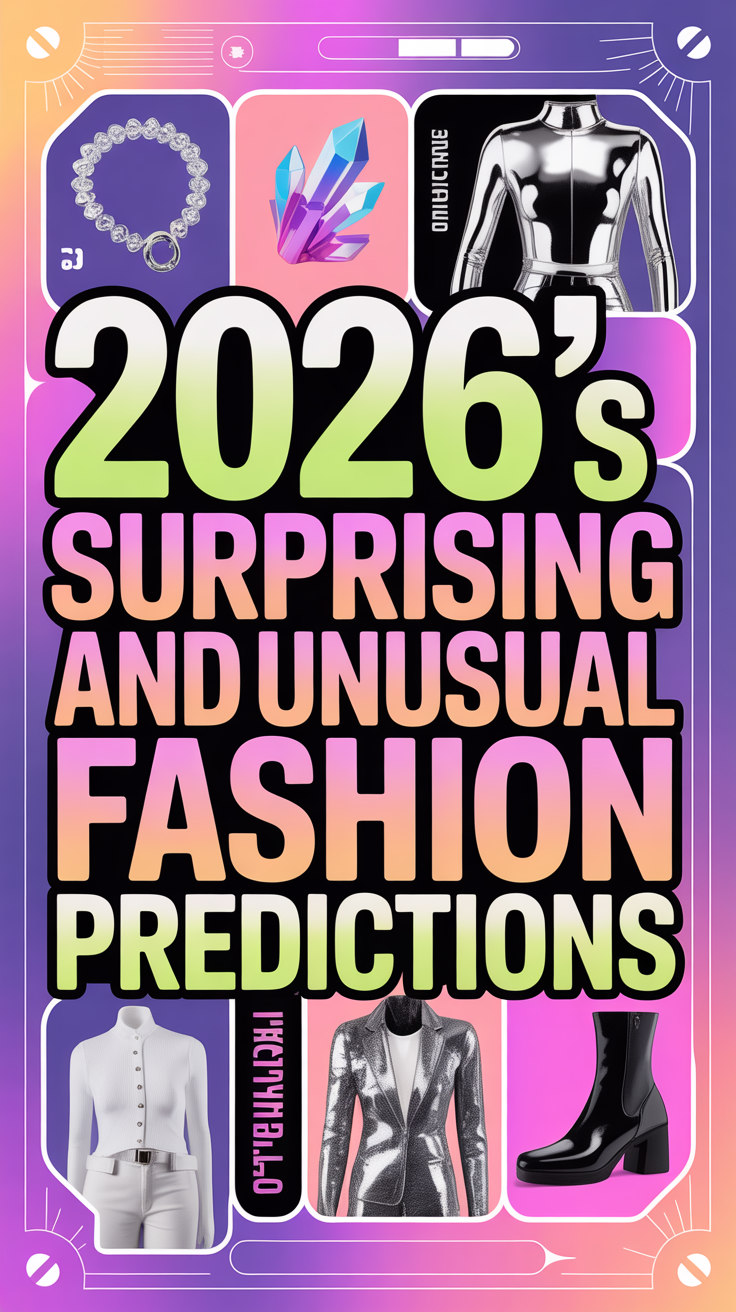
The return of the 2010s is perhaps the most polarizing of the 2026 predictions. For many, the decade represents a recent fashion past they are not yet ready to revisit. However, the revival is not a carbon copy. The skinny jean, for instance, is being re-contextualized. While the super-stretch, low-rise jeggings of the past may remain in the vault, the 2026 version seen on the runways of Gucci and Celine features a higher rise and more rigid denim. The silhouette is uncompromisingly slim, but the quality of the material and the overall styling—often paired with oversized, architectural blazers or chunky knitwear—elevates it from its casual, almost sloppy, predecessor. The key is the tension between the tight-fitting leg and the voluminous top half, creating a new, more intentional silhouette.
Similarly, the wedge sneaker is undergoing a facelift. The original Isabel Marant Bekett sneaker, with its prominent velcro straps and chunky sole, is being reinterpreted with sleeker lines and more luxurious materials. The 2026 wedge sneaker is less about overt sportiness and more about a sculptural, futuristic aesthetic. It’s a shoe that unapologetically adds height and presence, but does so with a newfound design sensibility. The trend is less about a direct copy and more about capturing the hybrid energy of the original, pushing it into a more refined, and arguably stranger, direction.
The Rise of the “Thing”: Accessories as Conversation Starters
Accessories in 2026 are not just finishing touches; they are central characters in the sartorial narrative. The brooch, in its grand comeback, is a perfect example. This is not the delicate, understated pin of yesteryear. The 2026 brooch is a statement piece. It can be a large, sculptural metal form pinned to the lapel of a massive blazer, a cluster of mismatched vintage brooches creating a collage on a denim jacket, or even a single, quirky ceramic brooch worn on a sock. The placement is as important as the object itself, encouraging a playful, unconventional approach to accessorizing. It’s about using these small objects to tell a story, to add a layer of personal history or humor to an outfit.
The “Gimme Gummy” trend takes this idea of the accessory-as-object to a new, more tactile level. The appeal lies in the material itself. Think of phone cases that are not just brightly colored, but have a satisfyingly squishy feel. Imagine earrings that are not metal or plastic, but translucent, rubbery forms that catch the light in a unique way. This trend extends to beauty, with jelly-textured blushes and lip glosses becoming highly sought after. It’s a multi-sensory experience, where the feel of an object is as important as its appearance. This is fashion for the ASMR generation, finding satisfaction in the squish, the bounce, and the unique material properties of their belongings.
Maximalism’s Many Faces: From the Boardroom to the Bizarre
The umbrella of maximalism in 2026 covers a wide and varied territory. The “Glamoratti” trend is a hyper-stylized take on ‘80s power dressing. The key is exaggeration. The shoulders on blazers are not just padded; they are architectural. The jewelry is not just gold; it’s heavy, sculptural, and layered with abandon. This is a look that embraces artifice and the transformative power of clothing. It’s about creating a larger-than-life persona, exuding a confidence that borders on theatrical.
In stark contrast, the “Khaki Coded” or “Paleontologist” aesthetic offers a quieter, more intellectual form of maximalism. The “more is more” philosophy here applies not to glitz and glamour, but to layers, pockets, and utilitarian details. A typical outfit might involve pleated, high-waisted khaki trousers, a multi-pocketed field jacket, a utility shirt, and sturdy leather boots. The maximalism is in the functionality, the layering of practical garments to create a look that is both complex and cohesive. It’s a trend that romanticizes knowledge, adventure, and a certain nerdy intellectualism, proving that maximalism doesn’t always have to be loud.
The Cultural Drivers: Why So Weird?
This collective pivot towards the unusual is not happening in a vacuum. It is a direct reaction to the social, cultural, and technological shifts of our time. The past few years have been marked by a sense of uncertainty, a blurring of digital and physical realities, and a growing fatigue with the curated perfection of social media. The fashion of 2026 is a response to all of this, a way of processing and reacting to the world we live in.
The rise of Gen Z as the dominant cultural force is a primary driver. Having grown up online, in a world of endless digital content, they have a highly developed sense of irony and a deep appreciation for niche aesthetics. Their fashion choices are often driven by a desire to signal their belonging to specific online subcultures. Trends like “Niche Fastenings” and “Hybrid Shoes” are fueled by a vintage- and thrift-centric shopping culture, where the discovery of a unique, one-of-a-kind item is the ultimate prize. This generation is not interested in the top-down, magazine-dictated trends of the past. They are the curators of their own style, piecing together looks from a vast and eclectic range of sources.
The collective experience of the pandemic has also had a profound impact. After years of prioritizing comfort and practicality, there is a pent-up desire for joy, expression, and a reason to get dressed up again. The explosion of maximalist trends, from the decadent “Glamoratti” to the playful “Gimme Gummy,” can be seen as a form of sartorial catharsis. It’s a rejection of the quiet, subdued mood of the lockdown era and an embrace of color, texture, and unapologetic presence.
Furthermore, the increasing blur between our digital and physical lives is manifesting in trends like “Glitchy Glam.” The idea of finding beauty in imperfection, in the “glitch,” is a direct reflection of our digitally mediated reality. It’s an acknowledgment that life, and beauty, is not always perfectly rendered. This trend, along with the rise of AI-generated art and virtual fashion, points to a future where the boundaries between the real and the digital will continue to dissolve, creating new and unexpected forms of creative expression.
Finally, the cyclical nature of fashion is, of course, at play. The 20-year trend cycle is a well-established phenomenon, and the return of the 2010s is, in some ways, right on schedule. However, the simultaneous revival of ‘80s maximalism and the emergence of entirely new, digitally-native aesthetics suggests that this cycle is becoming less predictable, more fragmented, and altogether more interesting. We are no longer in a monoculture, where one single look defines an era. Instead, we are in a poly-stylistic world, where a multitude of trends, from the deeply nostalgic to the radically futuristic, can and do coexist.
A Guide to Navigating the New Weird
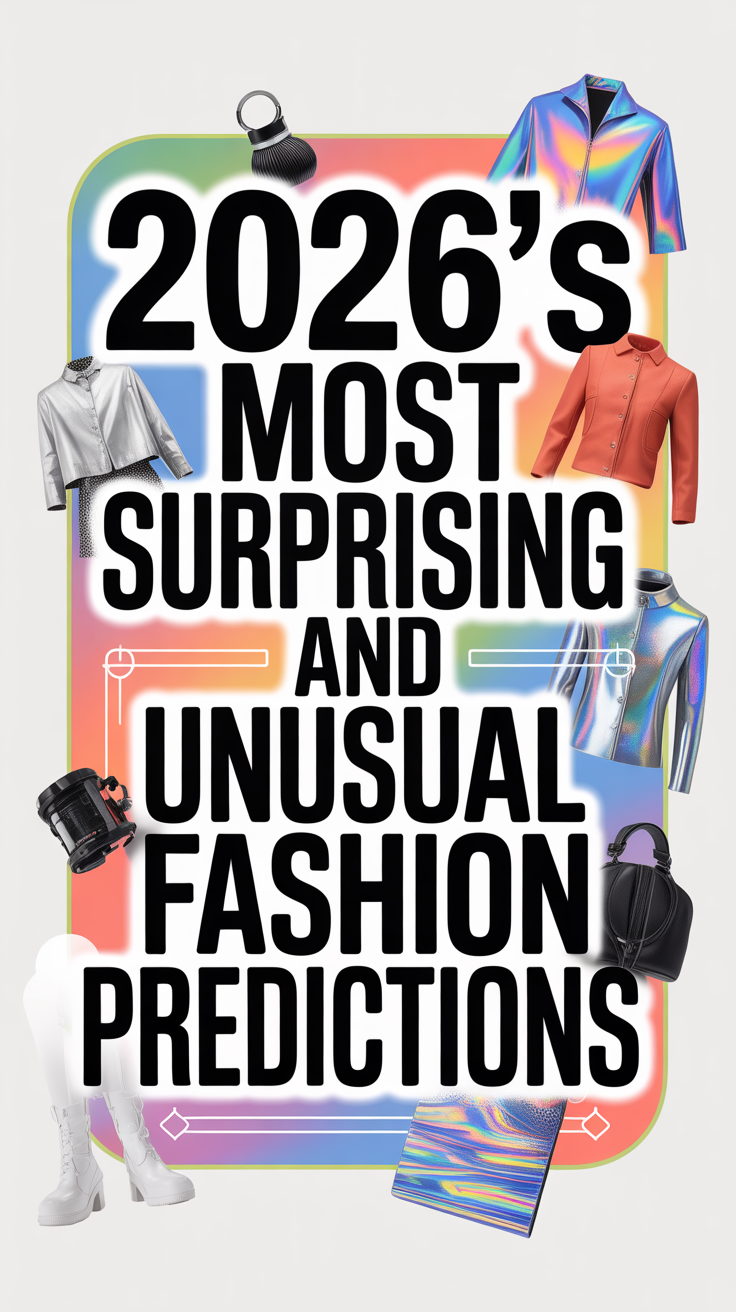
The fashion landscape of 2026 promises to be a wild and exhilarating ride. It will be a year that challenges our notions of good taste, that pushes us to experiment, and that ultimately, celebrates the power of personal style. Navigating this new weird will require an open mind and a sense of humor. It’s about giving yourself permission to play, to try on different personas, and to find joy in the unexpected.
Whether you find yourself drawn to the controversial allure of a skinny jean, the tactile pleasure of a gummy accessory, or the intellectual charm of a field jacket, the key is to make these trends your own. The most important takeaway from the predictions for 2026 is not to slavishly follow every new look, but to embrace the spirit of experimentation that underlies them all. It’s a call to be bolder, to be more expressive, and to have a little more fun with what we wear. In a world that often feels overwhelmingly complex and serious, a little bit of fashion weirdness might be exactly what we need.