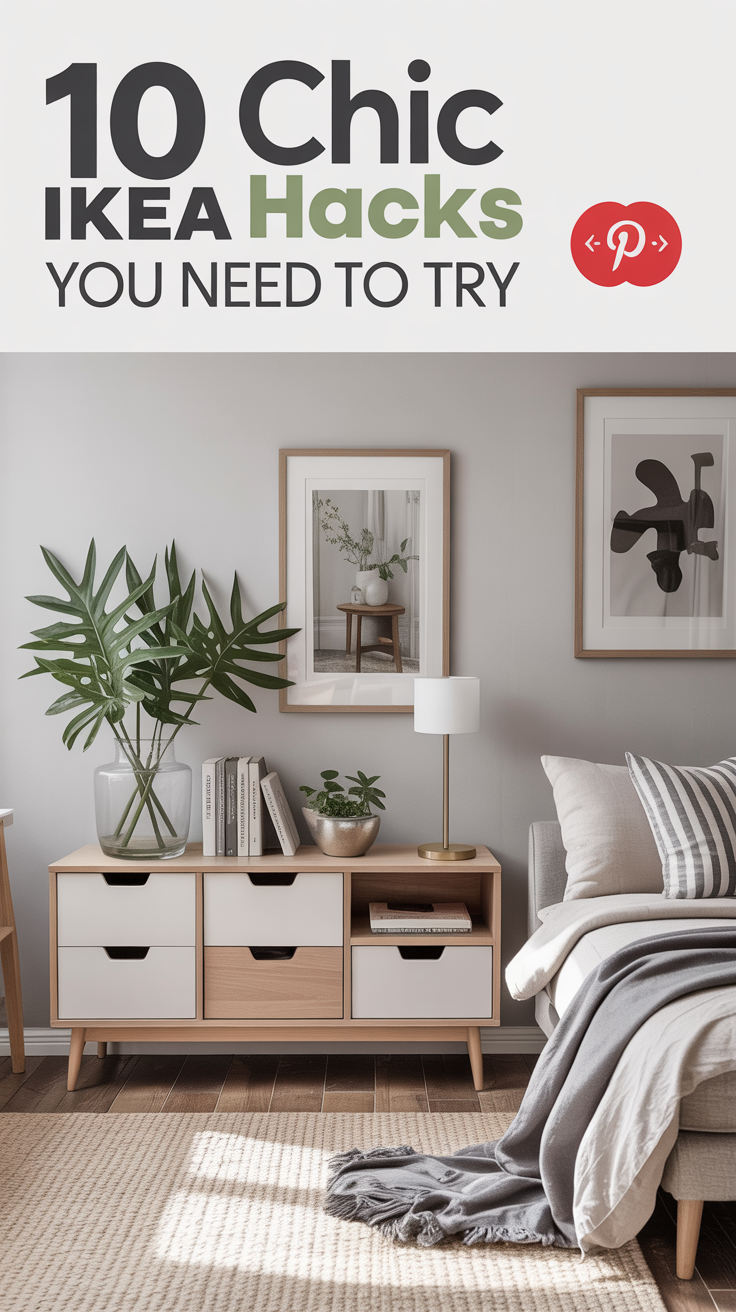
A small bedroom is not a limitation — it is an invitation to design with intention. Whether you are working with a studio apartment, a guest room, or a cozy urban flat, the right combination of layout choices, furniture, color, and storage can completely redefine how your space looks and feels. This guide walks you through 18 expert-backed ideas, each one designed to help you reclaim space, reduce clutter, and create a bedroom that feels both larger and more personal.
Why Small Bedrooms Feel Cramped — And How to Fix It
Most small bedrooms feel cramped not because of their size, but because of how they are used. Oversized furniture, poor lighting choices, cluttered surfaces, and wasted vertical space all conspire to make a room feel smaller than it actually is. The good news is that each of these problems has a practical, design-forward solution. Understanding the root cause of spatial discomfort is the first step toward transforming a tight room into a thoughtfully curated retreat.
- Oversized or bulky furniture consumes visual and physical floor space.
- Poor use of vertical wall space leaves the room feeling low and dense.
- Clutter on surfaces creates visual noise that shrinks perceived space.
- Dark colors and inadequate lighting absorb rather than reflect light.
- Every square foot counts — and every square foot can be optimized.
1. Reclaim Your Floor Space With a Murphy Bed
Of all the furniture upgrades available to small bedroom owners, the Murphy bed — also known as a wall bed or fold-down bed — stands alone as the single most transformative investment you can make. When folded into the wall during the day, it instantly converts your sleeping area into a fully functional living, working, or exercise space. Modern Murphy bed systems go far beyond a simple mattress on a hinge: today’s designs incorporate built-in shelving, integrated desks, hidden storage compartments, and even sofa configurations that make the transition from bedroom to multipurpose room completely seamless.
- Frees up the entire floor footprint of a bed during waking hours.
- Modern designs include built-in desks, shelves, and storage units.
- Available in styles from sleek contemporary to classic wood finishes.
- Pair with rolling storage bins for linens and clothing.
- Ideal for studio apartments, guest rooms, and home offices that double as bedrooms.
2. Floating Shelves: Storage Without the Footprint
Traditional bookcases are among the most space-hungry pieces of furniture you can place in a small bedroom. They sit on the floor, claim wall real estate from baseboard to mid-height, and create a visual barrier that makes rooms feel boxed in. Floating shelves solve all of this at once. By mounting directly to the wall with no visible supports touching the floor, they deliver the same storage capacity while preserving the open, airy feeling that makes a small room breathable. Materials range from reclaimed wood on sleek metal brackets to minimalist glass panels that practically vanish against the wall.
- Eliminate the floor footprint of traditional freestanding bookcases.
- Available in wood, metal, glass, and acrylic finishes to suit any aesthetic.
- Arrange books vertically alongside plants and decorative objects for visual interest.
- Add hooks beneath shelves to store accessories, keys, and jewelry.
- Transform functional storage into an attractive, gallery-style display.
3. Think Tall: Vertical Storage Changes Everything
The human eye naturally follows vertical lines upward, and this principle of visual perception is one of the most powerful tools available to small-bedroom designers. When you install tall, narrow storage units that stretch from floor to ceiling, you create unbroken vertical lines that guide the gaze skyward — making low ceilings feel taller and cramped rooms feel more expansive. This effect is amplified by strategic styling: arrange books vertically rather than horizontally, place taller decorative objects on upper shelves, and consider trailing plants that cascade downward from elevated positions to reinforce the sense of height.
- Vertical lines trick the eye into perceiving greater ceiling height.
- Floor-to-ceiling units create the most dramatic spatial illusion.
- Arrange books and objects vertically to reinforce upward movement.
- Trailing plants on upper shelves add organic height and visual interest.
- Adjustable shelving allows customization as storage needs evolve.
4. Your Bed Can Do Double Duty as a Storage Powerhouse
The space beneath a standard bed is one of the most consistently wasted areas in any bedroom. A storage bed frame changes that entirely. By choosing a platform bed with built-in drawers or a captain’s bed with deep pull-out compartments on both sides, you instantly convert dead space into organized, accessible storage for off-season clothing, extra linens, shoes, and personal items that would otherwise pile up in an already-strained closet. The result is a cleaner room, a more functional closet, and a sleeping area that works harder without looking any busier.
- Converts the underbed void into organized, accessible storage.
- Platform designs offer discreet pull-out compartments with a sleek profile.
- Captain’s beds feature multiple deep drawers on both sides of the frame.
- Ideal for storing off-season clothing, extra bedding, and shoes.
- Pair with flat, wheeled bins to maximize every remaining inch of underbed space.
5. Mount Curtains at Ceiling Height for an Instant Room Lift
One of the simplest and most cost-effective tricks in small-bedroom design requires nothing more than repositioning your curtain rod. Instead of mounting it directly above the window frame — the default choice for most people — move it to within an inch or two of the ceiling. This single adjustment creates the visual impression that your walls are taller, your windows are grander, and your entire room is more spacious. Floor-length curtain panels reinforce the effect by creating a continuous vertical line from ceiling to floor, drawing the eye upward and elongating the room’s proportions.
- Mount curtain rods 1–2 inches below the ceiling, not above the window frame.
- Floor-length panels create an unbroken vertical line from ceiling to floor.
- Works with virtually all curtain styles: sheers, linen, velvet, and structured panels.
- Lightweight linen is ideal for small bedrooms — airy, light-filtering, and elegant.
- Pairs beautifully with other vertical design strategies for a cohesive effect.
6. Light Colors Expand Space — The Science Behind the Strategy
Color is one of the most immediate and impactful tools in the small-bedroom designer’s toolkit. Light colors — whites, creams, soft grays, pale blues, and warm off-whites — reflect natural and artificial light rather than absorbing it, which eliminates the heavy, enclosed feeling that darker walls create. When your walls, bedding, and furniture share a similar light palette, visual boundaries between surfaces blur, making the room feel larger and more cohesive. This is not merely an aesthetic preference; it is grounded in color psychology and the physics of light reflection.
- Light colors reflect light, while dark colors absorb it and shrink perceived space.
- Whites, creams, soft grays, and pale blues are the most effective choices.
- Matching wall and furniture tones erases visual boundaries between surfaces.
- Nature-inspired textiles in earthy tones add warmth without adding visual weight.
- A monochromatic light palette creates a serene, spa-like atmosphere.
7. Mirrors: The Small Bedroom’s Most Powerful Illusion Maker
No single decorative element does more to expand a small bedroom than a well-placed mirror. Mirrors work on two levels simultaneously: they double the visual depth of a room by reflecting what lies behind the viewer, and they amplify natural light by bouncing it into shadowy corners that would otherwise feel dim and closed-in. The key is placement. A large mirror positioned directly across from a window captures daylight throughout the day and distributes it across the entire room. A full-length mirror on a closet door visually extends the floor plan, while a gallery arrangement of smaller mirrors multiplies perceived dimensions and adds personality.
- Place mirrors directly across from windows to maximize light reflection.
- A full-length closet door mirror visually doubles the room’s apparent size.
- Gallery arrangements of smaller mirrors add depth and personal style.
- Waterfall-edge mirrors offer a contemporary look with elegant visual interest.
- Mirrors work best in combination with light colors and good natural light.
8. Every Piece of Furniture Should Earn Its Place
In a small bedroom, furniture that serves only one purpose is a luxury you cannot afford. Multi-functional pieces — those that serve double or triple duty — are not just practical; they are essential for maintaining both functionality and breathing room in a compact space. An ottoman that opens to reveal hidden storage, a nightstand that doubles as a compact desk, a bench with a lift-top compartment at the foot of the bed, a headboard with integrated shelving — each of these choices eliminates the need for additional standalone pieces and keeps the room from feeling crowded.
- Ottomans with hidden storage provide seating, a footrest, and concealed organization.
- Nightstands that double as desks eliminate the need for a separate work surface.
- Headboards with integrated shelving replace the need for bedside tables.
- Benches with lift-top compartments offer storage at the foot of the bed.
- Murphy beds that fold into wall units are the ultimate multi-functional investment.
9. Wall-Mount Your TV and Reclaim the Floor
A bulky entertainment center or television stand is one of the most space-consuming pieces of furniture in any bedroom. Wall-mounting your television eliminates it entirely, instantly freeing up a significant stretch of floor space that can be repurposed for a slim dresser, a reading chair, or simply left open to make the room feel larger. Modern wall-mount brackets are easier to install than most people expect, requiring only basic tools and an afternoon. The result is a clean, streamlined look that feels intentional and modern — and the freed floor space beneath the floating screen creates a visual breathing room that transforms the entire atmosphere of the room.
- Eliminates the floor footprint of entertainment centers and TV stands.
- Creates breathing room beneath the TV for additional furniture or open space.
- Modern brackets install with basic tools in a single afternoon.
- Decorative cord covers or in-wall channels keep cables hidden and tidy.
- Applies the same vertical-thinking principle used throughout small-bedroom design.
10. The Space Under Your Bed Is a Hidden Storage Goldmine
The area beneath a standard bed frame is one of the most consistently overlooked storage opportunities in any bedroom. With the right containers, it becomes an organized, dust-free home for bulky seasonal items — winter coats, summer linens, holiday decorations — that would otherwise consume precious closet space for nine months of the year. The secret is choosing the right containers: low-profile bins with wheels allow effortless sliding access, clear containers let you see contents at a glance without opening each bin, and a clear labeling system by season ensures that everything is instantly retrievable when the weather changes.
- Transforms wasted underbed space into organized seasonal storage.
- Low-profile bins with wheels allow easy sliding access.
- Clear containers eliminate the guesswork of identifying contents.
- Label each bin by season for a streamlined wardrobe rotation system.
- Protects stored items from dust while keeping them accessible.
11. Corners Are Wasted Space — Until You Install Shelving
The corners of a room are among the most consistently ignored areas in bedroom design. Where two walls meet, most people see an awkward void — a place where furniture does not fit neatly and décor feels forced. But with the right shelving solution, corners become one of the most efficient storage and display areas in the entire room. Floating triangular corner platforms offer a minimalist approach, while tall ladder-style corner units climb toward the ceiling and maximize vertical storage potential. Both options transform what was previously dead space into functional display areas for books, plants, decorative objects, and everyday essentials.
- Corners are typically wasted — corner shelving converts them into functional zones.
- Floating triangular platforms offer a minimalist, space-efficient solution.
- Tall ladder-style corner units maximize vertical storage from floor to ceiling.
- Keeps floor space clear while adding significant storage and display capacity.
- Creates an organized, intentional bedroom aesthetic.
12. A Sliding Barn Door Reclaims Inches You Did Not Know You Had
A traditional hinged door requires a swing radius of several feet — space that must remain permanently clear of furniture, décor, and foot traffic. In a small bedroom, that swing radius represents a significant chunk of usable floor area. Replacing a hinged door with a sliding barn door eliminates the swing entirely, instantly freeing up wall space for furniture, artwork, or storage. Modern barn door styles range from rustic reclaimed wood planks to sleek frosted glass panels, making them a versatile choice for virtually any bedroom aesthetic. The hardware mounts directly to the wall above the door frame, creating a streamlined track system that also serves as an architectural focal point.
- Eliminates the swing radius of a hinged door, freeing floor and wall space.
- Available in rustic wood, painted finishes, and sleek frosted glass.
- Hardware mounts above the door frame, adding an architectural design element.
- Transforms a purely functional element into a stylish focal point.
- Works equally well for bedroom entrances and closet doors.
13. Turn a Blank Wall Into an Organized Accessory Station
Jewelry, scarves, hats, bags, and daily accessories are among the most common sources of bedroom clutter — small items that accumulate on dressers, chairs, and floors because they have no designated home. Pegboards and wall-mounted organizers solve this problem elegantly by bringing vertical wall space into active use. Available in wood finishes, painted metal, and modern acrylic, these systems can be customized with hooks, shelves, and compartments to accommodate any collection of accessories. The result is a visible, accessible organization system that streamlines the morning routine and keeps surfaces clear.
- Brings vertical wall space into active use for daily accessory storage.
- Available in wood, metal, and acrylic to complement any bedroom aesthetic.
- Fully customizable with hooks, shelves, and compartments.
- Keeps accessories visible and accessible, streamlining the morning routine.
- Eliminates clutter from dressers, chairs, and other flat surfaces.
14. Exposed Legs Create the Illusion of More Floor Space
Furniture that sits directly on the floor creates a visual barrier that interrupts sight lines and makes a room feel denser and more enclosed. Furniture with exposed, slender legs — whether tapered wood, metal hairpin, or mid-century modern styles — allows light to flow beneath the pieces and sight lines to extend across the floor, creating the optical illusion of more space. This effect is subtle but powerful: a bed with tapered legs, a nightstand elevated on metal supports, or a sleek armchair with visible legs all contribute to a lighter, more open atmosphere without sacrificing any of the storage or functionality of their floor-resting counterparts.
- Exposed legs allow light and sight lines to flow beneath furniture.
- Creates an optical illusion of greater floor space and openness.
- Mid-century modern, hairpin, and tapered leg styles work particularly well.
- Applies to beds, nightstands, dressers, chairs, and side tables.
- Pairs naturally with light color palettes and minimalist décor.
15. A Capsule Wardrobe Transforms Your Closet — and Your Bedroom
No amount of clever furniture or spatial illusion can compensate for a closet that is overflowing with unused clothing. A capsule wardrobe — a curated collection of versatile, high-quality pieces that you genuinely love and wear regularly — is one of the most impactful changes you can make to a small bedroom. By ruthlessly decluttering unworn items and limiting your collection to coordinated essentials, you free up significant closet real estate, eliminate the visual and mental noise of excess clothing, and simplify your daily routine. Seasonal items that are not currently in use should be stored elsewhere — in underbed containers or vacuum storage bags — to keep the closet focused and functional.
- A curated wardrobe frees up significant closet space immediately.
- Declutter ruthlessly: if you have not worn it in a year, it does not belong.
- Store seasonal clothing in underbed containers or vacuum storage bags.
- Coordinated, versatile pieces simplify daily outfit decisions.
- A streamlined closet reduces visual clutter throughout the entire bedroom.
16. Wall Sconces Free Up Nightstand Space and Elevate the Aesthetic
Bedside table lamps are a default choice in most bedrooms, but in a small space, their bulky bases consume a disproportionate amount of the limited surface area on a nightstand. Replacing them with wall-mounted sconces frees up that surface entirely, creating room for a phone, a glass of water, a book, or a small plant. Beyond the practical benefit, wall sconces positioned at eye level provide focused, directional light that is ideal for reading — reducing harsh shadows and allowing one partner to read without disturbing the other. Adjustable swing-arm models and dimmable fixtures offer the most flexibility, combining functionality with a sophisticated, hotel-inspired aesthetic.
- Frees up the entire surface of the nightstand by eliminating lamp bases.
- Eye-level positioning reduces harsh shadows and improves reading light.
- Swing-arm models allow directional adjustment for personalized illumination.
- Dimmable fixtures let you customize the lighting mood for different activities.
- Adds a sophisticated, boutique-hotel aesthetic to the bedroom.
17. Transparent Furniture Disappears Into the Room — In the Best Way
Clear and acrylic furniture pieces occupy physical space without occupying visual space. A transparent acrylic nightstand, desk, or chair blends seamlessly into any design scheme, allowing light to pass through it and sight lines to extend beyond it — creating the impression that the room is less furnished and more open than it actually is. This approach works particularly well in modern, minimalist, and contemporary bedrooms where the goal is to maintain a clean, uncluttered aesthetic. Acrylic pieces are available in a wide range of styles, from sleek geometric nightstands to sculptural accent chairs, and they pair beautifully with both light and dark color palettes.
- Transparent pieces occupy physical space without creating visual weight.
- Allows light to pass through and sight lines to extend beyond the furniture.
- Works in modern, minimalist, and contemporary bedroom styles.
- Available as nightstands, desks, chairs, and accent tables.
- Pairs well with both light and dark color palettes.
18. A Custom Closet System Can Eliminate the Need for a Dresser
A well-organized closet does more than just store clothing neatly — it can literally give you square footage back in your bedroom by eliminating the need for bulky dressers, storage bins, and overflow furniture. Custom closet organization systems transform chaotic, underutilized closets into efficient, zone-based storage environments where every item has a designated home. Double hanging rods maximize vertical space for shorter garments, pull-out drawers replace the need for a separate dresser, angled shoe racks keep footwear organized and accessible, and adjustable shelving accommodates items of every size. The investment pays for itself in reclaimed bedroom space.
- A well-organized closet can eliminate the need for a bedroom dresser entirely.
- Double hanging rods maximize vertical space for shirts, jackets, and folded items.
- Pull-out drawers replace standalone dressers and keep clothing neatly folded.
- Angled shoe racks keep footwear organized and accessible.
- Adjustable shelving accommodates items of every size and category.
19. Curate Your Décor Like a Gallery Curator — With Intention
Every decorative object you place in a small bedroom competes for precious visual real estate. A collection of mismatched items on a dresser, a gallery wall crowded with frames, a shelf overloaded with trinkets — each of these choices adds visual noise that makes a room feel smaller and more chaotic. The solution is not to strip the room of personality, but to curate with the same careful intention you would bring to a gallery exhibition. Choose one or two meaningful decorative objects per surface. Select artwork that creates a focal point without overwhelming the wall. Let negative space — the empty areas between objects — breathe and do its work.
- Every decorative object competes for visual space in a small bedroom.
- Choose one or two meaningful pieces per surface rather than collections.
- Purposeful artwork creates focal points without overwhelming the walls.
- Negative space is a design element — let it breathe.
- A curated, minimal approach creates a serene, sophisticated retreat.
Frequently Asked Questions
Even with the best design strategies in place, small bedrooms raise practical questions that deserve direct answers. Here are the five most common questions from homeowners and renters navigating compact bedroom spaces.
Q1 — What is the minimum square footage for a small bedroom? The functional minimum is approximately 70 square feet, with dimensions of at least 7 by 10 feet. However, with smart furniture placement and the strategies covered in this guide, even smaller spaces can be made to work effectively.
Q2 — How do I make a small bedroom feel cozy without overcrowding it? Layer soft textiles — plush throws, textured pillows, a quality rug — and use dimmable, warm-toned lighting. Keep surfaces clear and let the warmth come from materials and light rather than objects.
Q3 — What bed size works best in a very small bedroom? A twin bed maximizes floor space in the smallest rooms. For slightly larger spaces, a full or queen with a storage frame is a practical choice. Loft beds are ideal for rooms where vertical space is available.
Q4 — How do I maintain good air circulation in a small bedroom? Open windows daily, use a compact fan, and keep the door ajar when possible. Avoid blocking air vents with furniture, and consider a small air purifier for rooms with limited natural ventilation.
Q5 — Can dark accent walls work in a small bedroom? Yes — when applied to a single wall only. A dark accent wall creates depth and intimacy without shrinking the entire room. Pair it with light-colored furniture and bedding to maintain balance.
Conclusion: Your Small Bedroom Can Become Your Favorite Room in the House
A small bedroom is not a problem to be solved — it is a design challenge to be embraced. With the right combination of spatial strategies, furniture choices, color psychology, and storage solutions, even the most compact bedroom can become a peaceful, organized haven that feels intentional, personal, and genuinely restful. The 18 ideas in this guide are not theoretical — they are practical, proven, and achievable at a range of budgets. Start with one or two changes that address your most pressing pain points, and build from there. The transformation may surprise you.
Small space. Big possibilities. Start today.