Life moves fast. Between work, family, errands, and the endless pull of screens, it’s easy for our homes to become just another extension of the chaos. But home should feel different. Home should be the place where you exhale, reset, and recharge. That’s where the philosophy of slow living comes in.
Slow living isn’t about moving to the countryside, throwing away your phone, or adopting an entirely new lifestyle overnight. At its heart, it’s about creating rhythms, spaces, and habits that make life feel lighter and more intentional. It’s about designing your home—and your days—in a way that helps you breathe easier.
The good news? You don’t have to renovate or spend a fortune. You can start small, right where you are, with shifts that ripple outward into every part of your life. Let’s look at how to bring slow living into your home.
What Is Slow Living, Really?
The slow living movement grew out of the idea that faster isn’t always better. It’s a response to the hustle culture that tells us our worth is tied to productivity. Instead, slow living invites us to savor the present moment, choose quality over quantity, and design our environments for peace, not pressure.
In the home, slow living means:
Prioritizing comfort and calm over perfection.
Creating spaces that reflect your values and lifestyle.
Simplifying routines so they serve you, not stress you out.
Surrounding yourself with things you truly love (and letting go of the rest).
Think of it less as a style and more as a mindset.
Why Slow Living Belongs at Home
We can’t always control the pace of the outside world, but we can shape how we live inside our walls. When your home reflects slow living, it becomes a buffer between you and the noise. You walk in the door and instantly feel your shoulders drop. You sit down with your morning coffee and actually taste it. You end the day not just surviving, but restoring.
Your home becomes a partner in your well-being, not just a backdrop.
Step One: Simplify Your Spaces
Clutter has a sneaky way of keeping us on edge. The more things piled on counters, shoved into closets, or stacked in corners, the more mental energy we spend managing them. Slow living starts with simplifying—not to live in an empty house, but to make room for what matters.
Declutter intentionally. Instead of asking “Do I need this?” ask “Does this help me live the way I want?”
Clear surfaces. A kitchen counter with only the essentials instantly feels calmer.
Choose quality over quantity. One beautiful vase you love beats ten knick-knacks you barely notice.
When your home is lighter, your mind is lighter too.
Step Two: Rethink Your Routines
Slow living isn’t only about what your home looks like—it’s about how you move through it. Routines are powerful because they shape how your days feel.
Morning rituals. Start the day with one grounding habit: making tea, stretching, or writing in a journal.
Evening wind-down. Dim the lights, light a candle, and read instead of scrolling.
Weekend resets. Spend 30 minutes tidying, meal prepping, or setting out fresh flowers so the week begins with ease.
It’s not about adding more tasks—it’s about swapping stressful habits for nurturing ones.
Step Three: Design for Comfort and Calm
Slow living homes don’t have to look a certain way, but they do tend to feel a certain way: soft, warm, and welcoming.
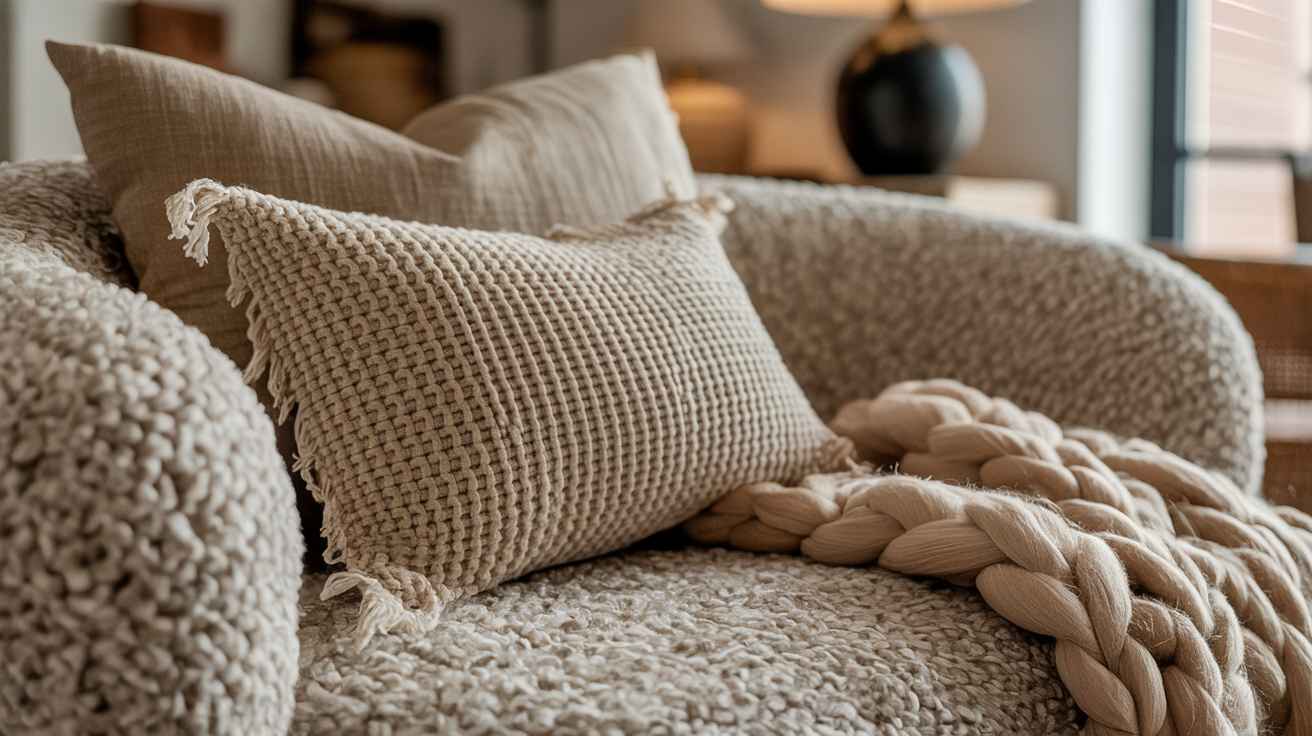
Textures matter. Think linen curtains, wool throws, or natural wood furniture.
Lighting sets the tone. Swap harsh overhead bulbs for warm lamps and candles.
Scent is powerful. Fresh herbs, essential oils, or a simmer pot on the stove make your space feel grounded.
Natural elements. Plants, flowers, and natural materials bring calm and connect you to the seasons.
It’s about using design to support how you want to feel, not just how you want things to look.
Step Four: Create Spaces for Rest and Connection
Every home should have places where rest feels natural and connection feels easy.
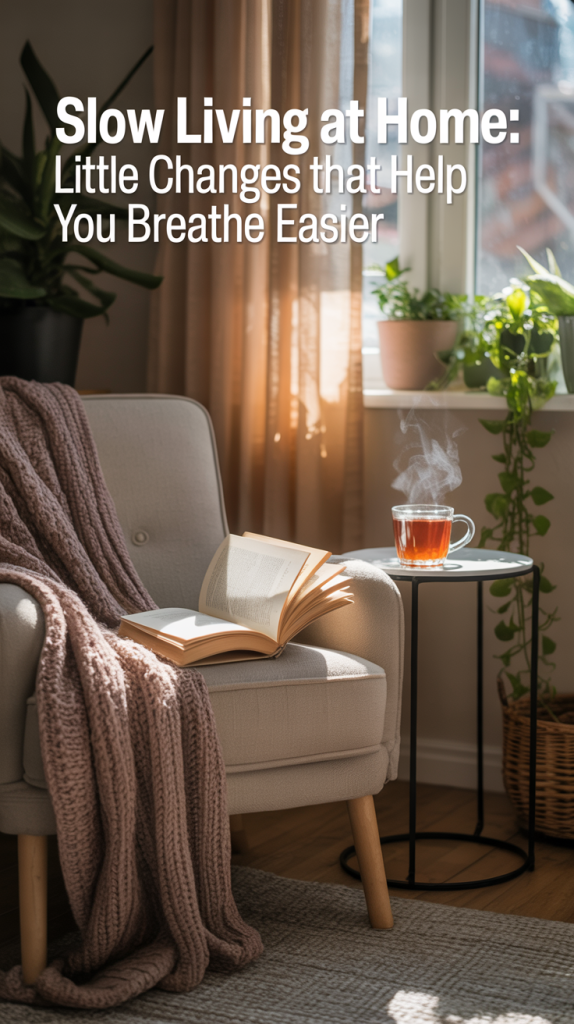
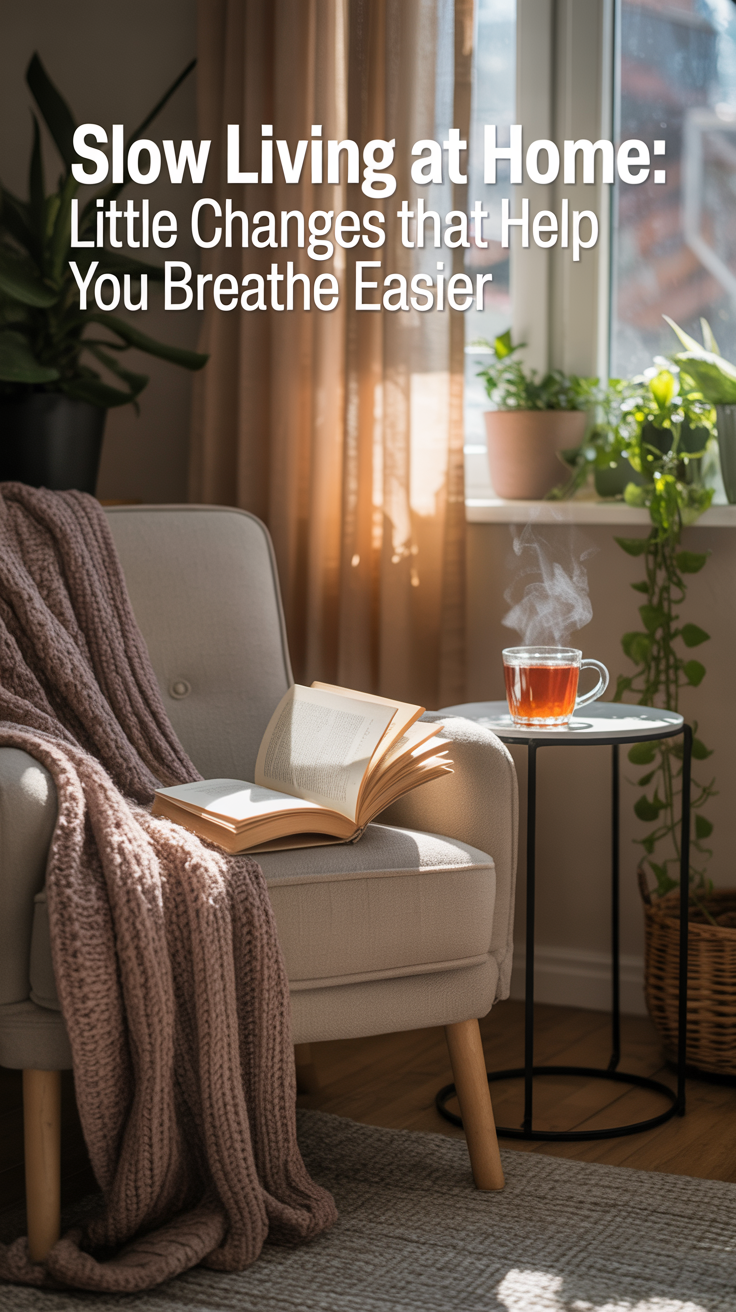
A cozy corner. A reading chair with a throw blanket and soft lamp can become a daily retreat.
A dining table you use. Slow living means lingering over meals, not rushing through them.
Outdoor nooks. Even a balcony with two chairs can be a sanctuary.
Screen-free zones. Give yourself at least one area of the house that isn’t dominated by devices.
These spaces become anchors in your home life, reminding you to slow down.
Step Five: Embrace Seasonal Living
One of the most rewarding aspects of slow living is reconnecting with the seasons. This doesn’t mean elaborate decorating—it’s about small shifts that help you feel rooted.
Spring: Open windows, display fresh flowers, cook lighter meals.
Summer: Embrace outdoor dining, keep a pitcher of infused water in the fridge.
Fall: Layer in cozy textiles, simmer cider on the stove.
Winter: Light candles, use warmer lighting, create a nook for quiet evenings.
Seasonal living brings rhythm and freshness to your home without needing constant change.
Step Six: Cook and Eat with Intention
Slow living extends to the kitchen and dining table. Instead of rushing meals, treat cooking and eating as grounding rituals.
Cook one meal a week from scratch.
Keep your pantry simple but stocked with real ingredients.
Set the table, even if it’s just for yourself.
Savor meals without screens.
Food prepared and enjoyed slowly becomes nourishment in more ways than one.
Step Seven: Bring Nature In
Nothing slows us down like reconnecting with the natural world. Even small gestures can make your home feel more alive.
Place a vase of fresh greens on the table.
Start a tiny herb garden on the windowsill.
Collect seasonal objects—pinecones, shells, branches—as organic décor.
Use natural fibers like cotton, wool, and jute in textiles.
Nature has a grounding effect, reminding us that life has its own pace.
Step Eight: Practice Digital Boundaries
Technology is one of the biggest speed traps in modern life. Slow living at home means creating boundaries so screens don’t dominate your daily rhythm.
Charge your phone outside the bedroom.
Have “device-free” meal times.
Use analog alternatives where possible: books, board games, handwritten notes.
Set a nightly screen curfew.
These small boundaries can shift the energy of your home almost immediately.
Step Nine: Celebrate Everyday Moments
Slow living isn’t about waiting for vacations or big life changes. It’s about celebrating small, daily joys.
Use your favorite dishes on an ordinary Tuesday.
Light a candle with breakfast.
Play music while folding laundry.
Step outside and notice the sunset.
These moments cost nothing, but they change how you experience your home.
Step Ten: Shift Your Mindset
Ultimately, slow living is less about what you do and more about how you do it. A slower home begins with choosing presence over productivity.
Remind yourself: “Done is better than perfect.”
Choose one space or one habit at a time to shift.
Let go of the pressure to keep up with others.
Redefine success at home: peace, not perfection.
When your mindset shifts, even small changes feel powerful.
Real-Life Examples of Slow Living Homes
A busy family swapped nightly TV time for a ritual of reading together in the living room, with lamps instead of overhead lights.
An apartment dweller turned their tiny balcony into a breakfast nook with a bistro table and string lights.
A young professional replaced a desk in their bedroom with a chair, a lamp, and a journal—transforming the space into a retreat instead of an office.
Each story shows that slow living is personal, flexible, and doesn’t require a certain style or budget.
The Benefits You’ll Notice
When you start making small slow-living changes at home, here’s what happens:
Your home feels calmer, lighter, and easier to be in.
Daily routines become rituals you look forward to.
You feel more grounded and less rushed.
Relationships deepen as connection becomes intentional.
You breathe easier—literally and figuratively.
Slow living at home isn’t about perfection or creating a magazine-ready space. It’s about creating a home that supports you in living with more presence and less pressure. Start with small shifts—clear a surface, light a candle, create one cozy corner—and notice how the energy of your home changes.
Over time, these little changes add up. You’ll find yourself slowing down, savoring the everyday, and breathing easier right where you are.