If the past few years have taught us anything about design, it’s that the kitchen is no longer just a workspace — it’s a lifestyle hub. By 2026, homeowners aren’t chasing perfection; they’re designing for presence. The kitchen is becoming the calm center of the home — a place to recharge, gather, and savor.
From earthy color palettes to quietly integrated technology, kitchen design in 2026 merges natural beauty with intelligent functionality. The goal? To craft spaces that feel lived-in but luxurious, where every surface tells a story and every detail is grounded in comfort.
Welcome to the 2026 kitchen — where craftsmanship, calm, and connection take center stage.
WHAT’S IN: THE DEFINING TRENDS OF 2026
1. Nature-Driven Color Palettes
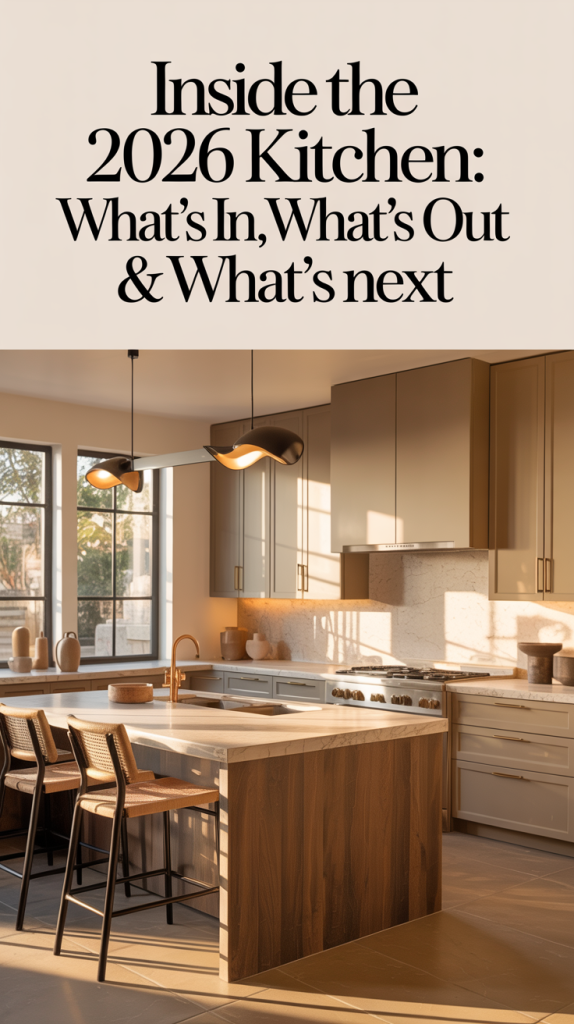
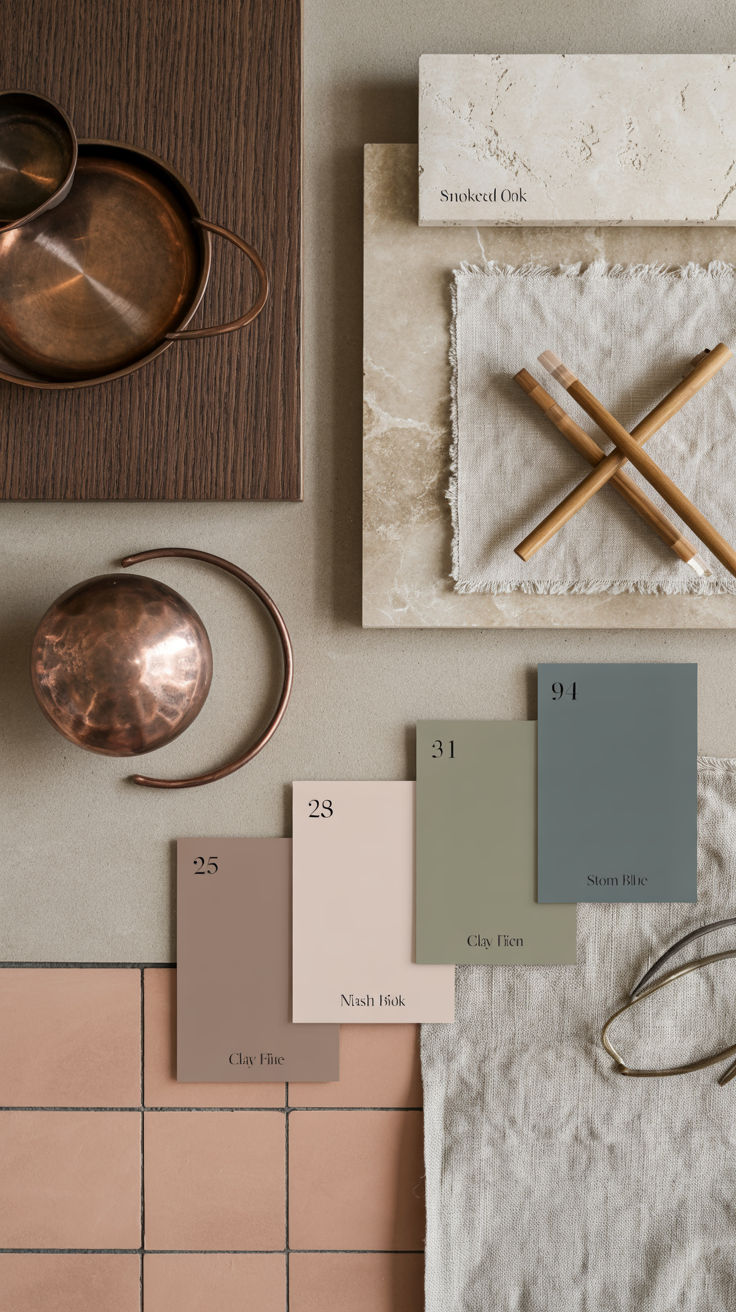
After years of sterile whites and stark contrasts, color is returning to the kitchen — softly, organically, and with soul. The 2026 palette borrows from nature’s quiet beauty: mushroom beige, clay pink, smoky olive, storm blue, and charcoal umber.
These hues feel timeless yet fresh, providing warmth without visual clutter. Beige and taupe tones are layered with warm whites, creating depth and softness. Homeowners are embracing tonal harmony — pairing cabinetry, walls, and trim in subtle variations of the same hue for a calm, cocooned effect.
Trend watch: Two-tone kitchens evolve in 2026 with nuanced pairings like clay pink and mushroom beige, charcoal and warm taupe, or olive green with honey oak accents.

2. Textural Materials That Tell a Story
Surface materials are shifting from sleek to soulful. The days of glossy marble and high-polish quartz are waning, replaced by honed, matte, and tactile finishes that age gracefully.
Expect to see:
Smoked oak cabinetry with a brushed, open-grain texture
Natural quartzite countertops, prized for movement and veining
Oxidized copper and antiqued brass fixtures
Clay tile backsplashes with organic edges
Limestone and travertine flooring in soft, neutral tones
Texture now defines luxury. Homeowners want materials that look handmade, feel grounded, and develop patina over time — a reflection of authentic living rather than showroom perfection.
3. Concealed Function, Visible Ease
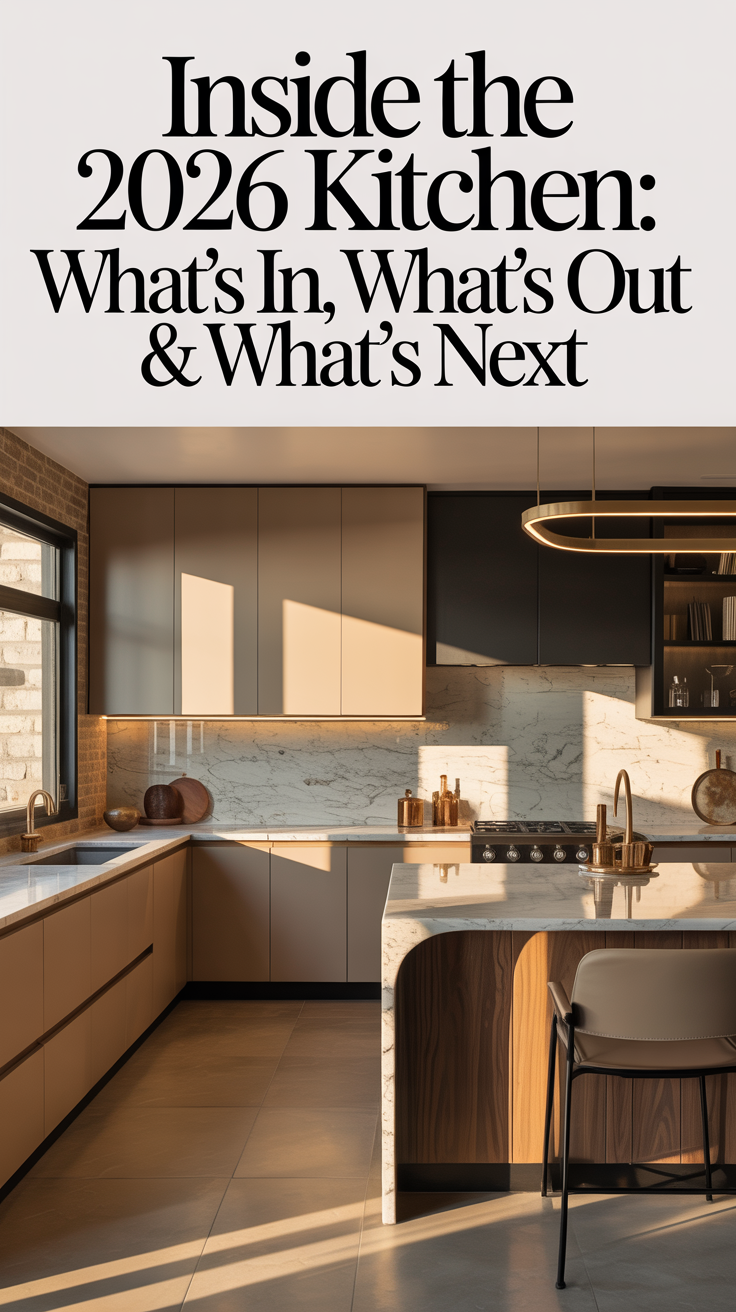
The smartest kitchens of 2026 are masters of understatement. Technology hasn’t disappeared — it’s simply gone quiet. Touch-to-open cabinetry, integrated induction cooktops, and voice-controlled lighting blend invisibly into the design, allowing the visual focus to remain on materials and mood.
Refrigerators and dishwashers hide behind seamless paneling. Small appliances tuck away into custom niches. Even range hoods are being reimagined as sculptural elements or concealed behind plasterwork for a minimalist, architectural look.
In essence: The 2026 kitchen whispers sophistication. Functionality is built in, not bolted on.
4. The Rise of Ambient Lighting Layers
Lighting has moved beyond task illumination into emotional architecture. Expect to see layered lighting plans that blend form and feeling:
Soft under-cabinet LEDs to highlight texture
Warm-tone pendants in brass, alabaster, or smoked glass
Hidden cove lighting for gentle evening glow
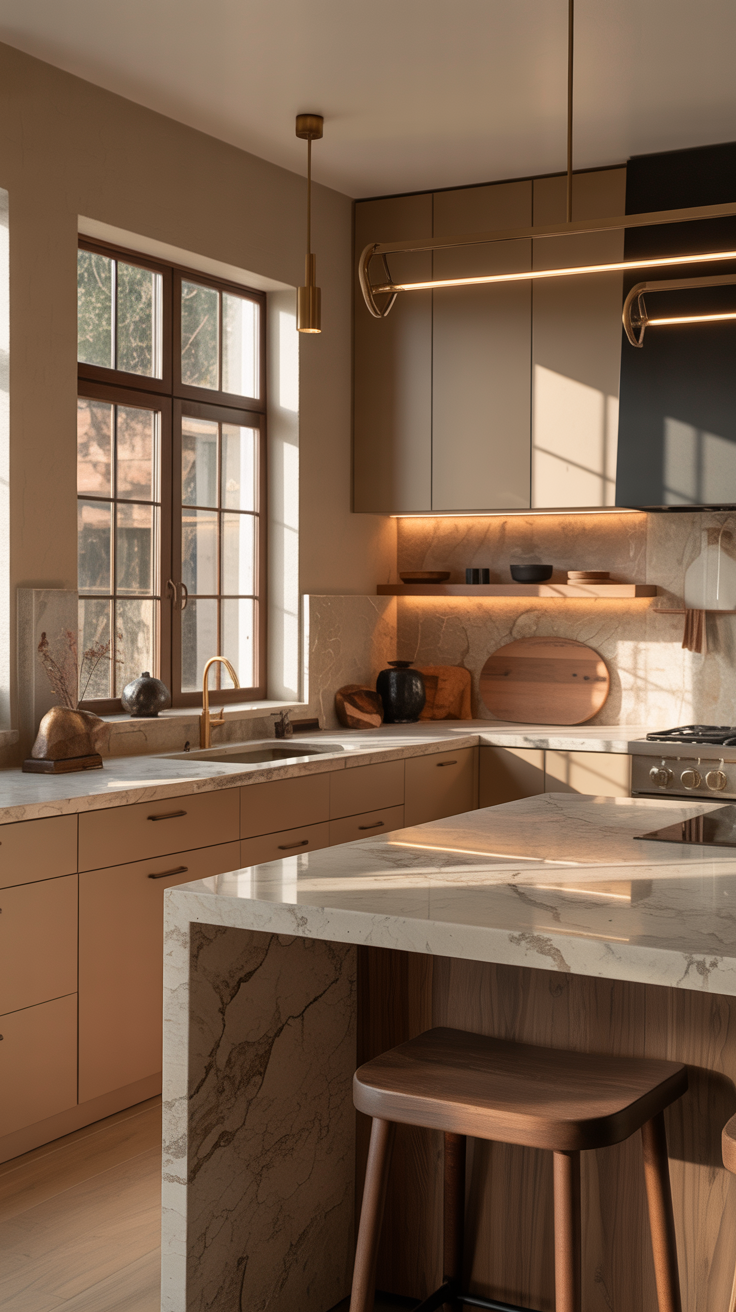
The new aesthetic leans warm, not white. Color temperature matters — 2700K to 3000K bulbs are preferred for a cozy, candlelit tone. In 2026, the right lighting isn’t just about brightness; it’s about mood and energy.
5. Mixed Metals and Moodier Finishes
Gone are the days when every handle, hinge, and faucet had to match. 2026 embraces mixology in metalwork. Designers are blending aged brass with matte black, or pairing polished nickel hardware with copper accents.
These combinations feel layered and personal — the design equivalent of curating jewelry for your kitchen.
Finishes are also trending darker and more textural. Expect to see bronzed stainless steel, antiqued mirror, and hand-rubbed pewter details that complement warm wood tones and natural stone.
6. Organic Form and Soft Geometry
Lines are softening. Instead of sharp edges and rigid symmetry, 2026 kitchens feature curved islands, arched doorways, fluted detailing, and rounded corners. These organic shapes bring a sense of movement and approachability, offsetting the rectilinear rigidity of traditional cabinetry.
Arched plaster range hoods, scalloped wood trim, and fluted cabinet fronts all nod to craftsmanship — adding warmth and human touch to otherwise minimalist designs.

WHAT’S OUT: THE TRENDS LOSING STEAM
1. The All-White Minimalist Kitchen
For nearly a decade, the crisp white kitchen dominated Pinterest and remodel plans alike. But in 2026, it’s officially losing its hold. Homeowners crave warmth, depth, and visual comfort — qualities that white alone can’t deliver.
Instead, expect to see whites softened by beige undertones, warm veining, and wood accents. The sterile, clinical vibe is giving way to cozy sophistication.
2. Overexposed Open Shelving
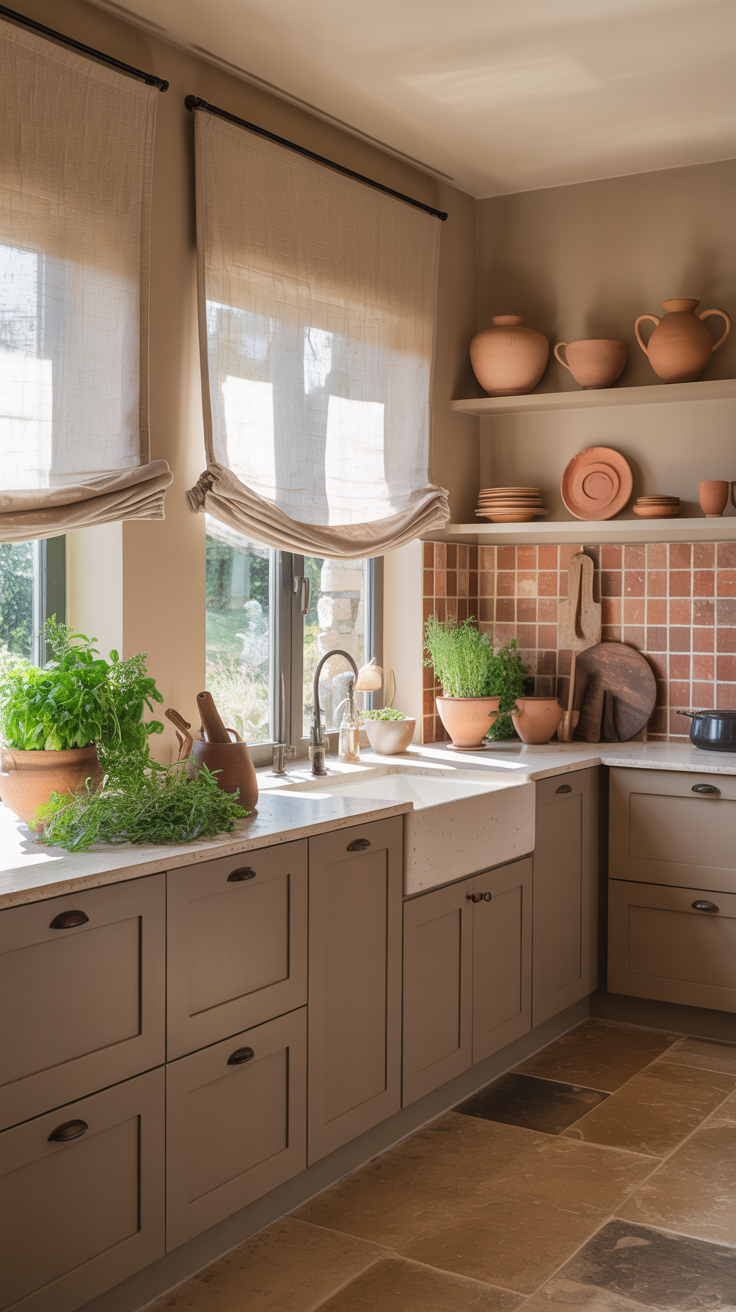
Open shelving had its moment — and in moderation, it’s still beautiful. But full walls of open shelves are becoming less practical and more polarizing. Homeowners are returning to concealed storage for visual calm, often pairing closed cabinets below with a single display shelf above for balance.
The new aesthetic: curated, not cluttered.
3. Perfectly Matching Finishes
Uniformity is out; individuality is in. In 2026, design cohesion doesn’t mean sameness — it means rhythm and balance. Matching hardware, fixtures, and lighting feels too predictable. Designers are mixing metals, combining stone and wood, and blending tones to create visual depth.
The kitchen of the future celebrates contrast — thoughtfully and with restraint.
4. High-Gloss Everything
Ultra-polished cabinets, mirrored backsplashes, and slick quartz counters are fading fast. The new direction is low-sheen luxury. Matte, brushed, or honed finishes feel more tactile and inviting — an aesthetic that aligns with the overall shift toward natural imperfection and texture.
WHAT’S NEXT: THE EMERGING IDEAS SHAPING THE FUTURE
1. Sustainable Luxury
Eco-conscious design is evolving beyond recycled materials — it’s becoming an aesthetic in itself. 2026 kitchens spotlight responsibly sourced woods, VOC-free finishes, and natural stone alternatives like sintered porcelain.
Designers are using sustainability as a form of quiet luxury — thoughtful, lasting, and personal. Expect more locally made cabinetry, vintage lighting, and handcrafted tilework.
2. The “Gathering Kitchen” Revival
After years of sleek minimalism, the kitchen is once again a place for connection. Islands are growing larger and more communal, often featuring dual-level surfaces — prep space below, dining ledge above.
Designers are integrating banquette seating, cozy nooks, and fireplaces into open-plan kitchens, blurring the line between cooking and living. The emphasis is on comfort and conversation rather than rigid formality.
3. Multifunctional Zones
The modern kitchen now serves as a home’s command center — blending cooking, working, and entertaining. 2026 brings zoned design: distinct areas for prep, baking, coffee, or bar service, each defined by lighting or material shifts.
This layout flexibility is especially appealing to homeowners working from home or hosting more often. It keeps the space flowing yet organized, ensuring every square foot earns its keep.

4. Timeless Personalization
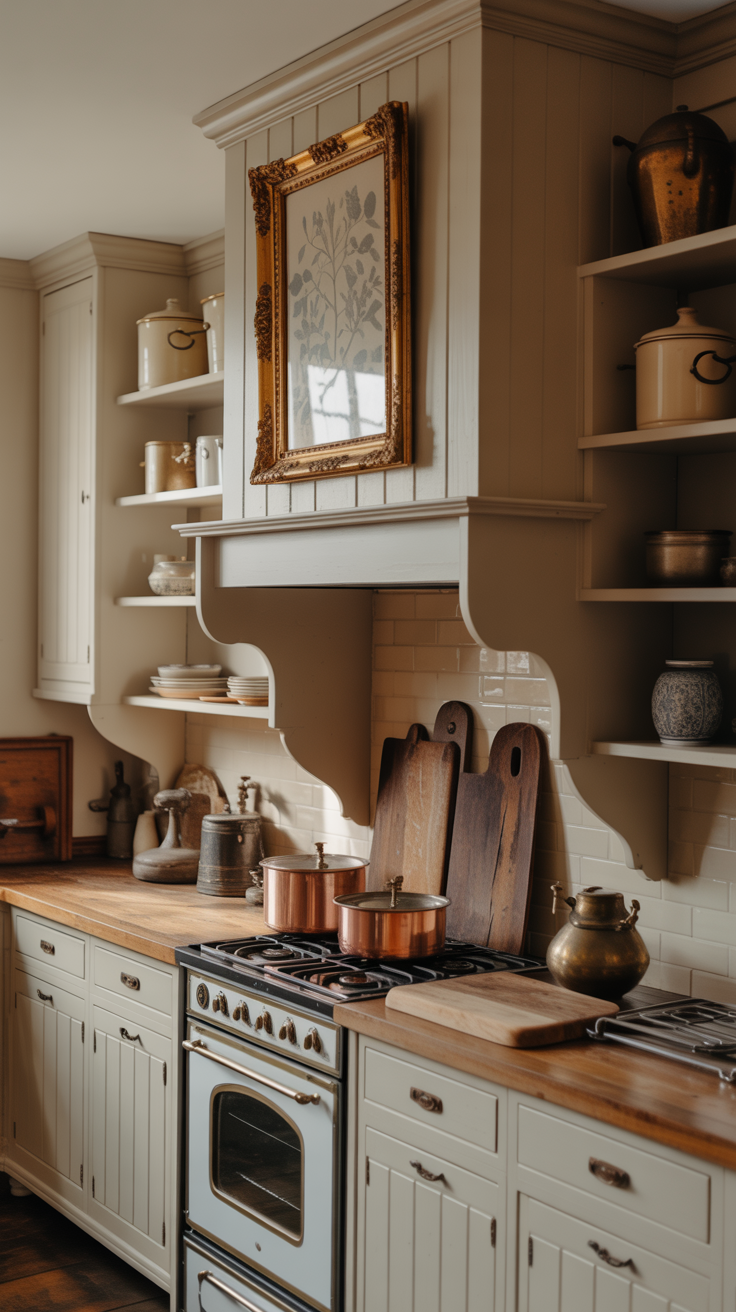
The strongest trend of 2026 isn’t a color or finish — it’s individuality. After years of following Pinterest boards, homeowners are leaning into self-expression. That means vintage furniture in kitchens, bespoke hardware, and custom color combinations that feel one-of-a-kind.
“Matchy-matchy” design is being replaced by “intentionally collected.” The result: kitchens that feel personal, layered, and enduring — designed for real life, not just a photoshoot.
Designing for Longevity and Emotional Warmth
The 2026 kitchen isn’t chasing trends; it’s setting a new rhythm for how we live. It’s about slowing down, cooking more, and surrounding ourselves with materials that ground and inspire us.
From the color of the cabinets to the texture of the countertops, every choice is intentional — a reflection of how homeowners want to feel in their space.
This is design as comfort, design as connection, design as calm.
Welcome to the kitchen of 2026 — a space that finally feels like home.