I remember the exact moment I realized I was doing vacations all wrong.
I was standing in the middle of a cobblestone street in a city I had spent months dreaming about, clutching a color-coded itinerary that was scheduled down to the quarter-hour. My feet were blistered, my husband was hangry, and I was on the verge of tears because we were running twelve minutes late for a museum tour I wasn’t even sure I wanted to go on. I had spent thousands of dollars and used up precious PTO to feel exactly as stressed and over-scheduled as I did back home on a Tuesday morning.
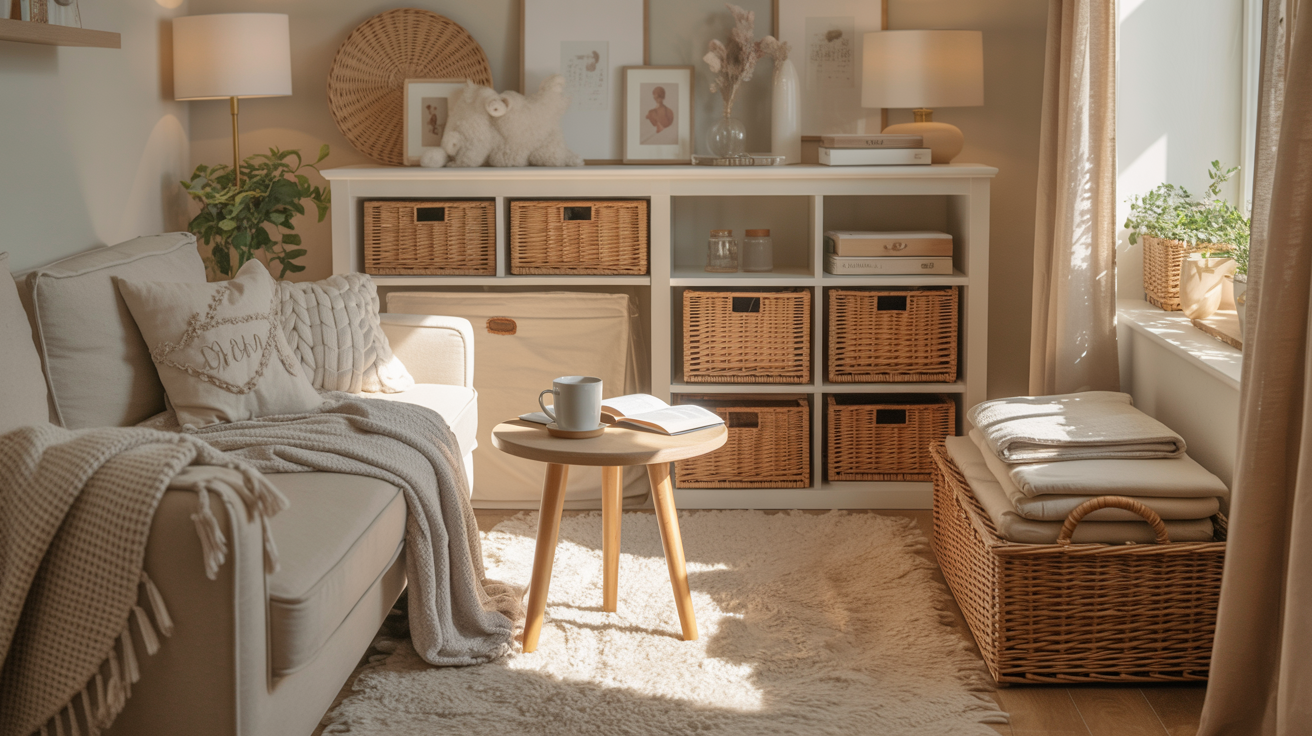
We are a generation that has been conditioned to optimize everything. We optimize our mornings with green juice and journaling. We optimize our careers with side hustles and networking. We optimize our homes with perfectly curated, Pinterest-worthy organization systems. And, inevitably, we try to optimize our rest. We treat vacations like another project to manage, another checklist to conquer. We want to see the sights, eat at the “must-try” restaurants, get the perfect photos, and return home feeling like we maximized every single second.
But here is the hard truth I had to learn: You cannot optimize rest. And if you try, you aren’t actually resting. You are just working in a different location.
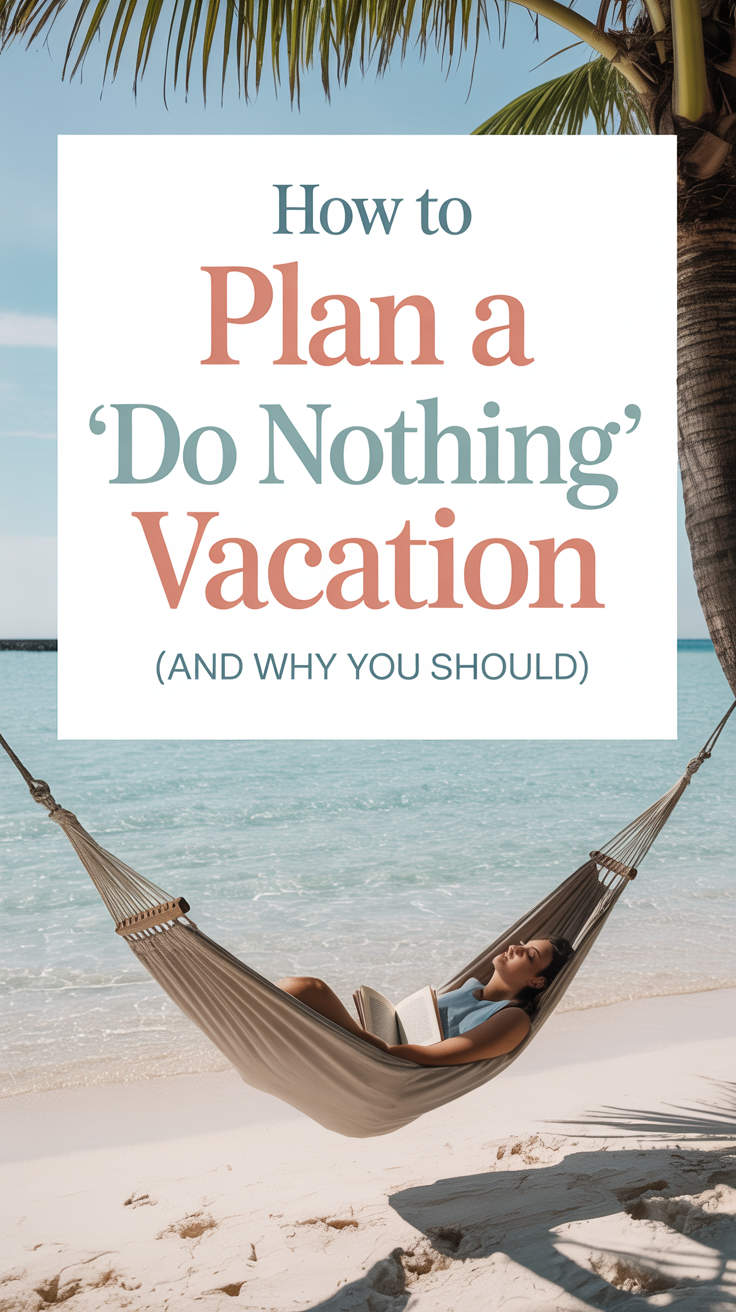
That realization led me to a radical experiment: The “Do Nothing” Vacation. No itineraries. No alarms. No reservations booked six months in advance. Just a commitment to waking up and asking, “What do I feel like doing right now?” even if the answer is “staring at the ceiling for two hours.”
It changed everything. And if you feel like you are constantly running on a treadmill that keeps speeding up, I am here to tell you that a Do Nothing vacation might be exactly what you need to finally catch your breath.
The Productivity Trap and the Myth of the “Good” Vacation
Before we talk about how to plan a Do Nothing vacation, we have to talk about why it feels so incredibly hard to actually do it.
If you are anything like me, your self-worth is at least partially tied to your productivity. We live in a culture that glorifies the hustle. We wear our busyness like a badge of honor. When someone asks how we are, “So busy!” is the default, socially acceptable response. It implies that we are important, in demand, and doing things that matter.
This mindset doesn’t magically disappear when we set our out-of-office auto-responder. We carry that need to be productive right into our leisure time. We want to make sure we are “making the most” of our trip. We research extensively, creating spreadsheets of activities and mapping out the most efficient routes between landmarks. We fear that if we travel all the way to a new place and don’t see the top ten attractions listed on TripAdvisor, we have somehow failed at vacationing.
But this approach to travel is a trap. It turns leisure into labor. It takes the mental load we carry at home; the planning, the managing, the anticipating of everyone’s needs, the load simply transfers it to a new zip code.
There is a Dutch concept called niksen, which translates literally to “doing nothing.” It is not about meditating or practicing mindfulness. It is literally just… being. Staring out a window. Sitting on a porch. Letting your mind wander without a goal or a purpose. In our hyper-productive society, niksen feels almost rebellious. It feels lazy.
But science tells a different story. When we allow our brains to truly rest, when we stop feeding them a constant stream of tasks and stimuli, we activate what neuroscientists call the “default mode network.” This is the part of the brain that lights up when we are daydreaming, reflecting, and making unexpected connections. It is the birthplace of creativity and deep problem-solving.
When we pack our vacations with back-to-back activities, we never give our default mode network a chance to engage. We return home exhausted, needing a vacation from our vacation, because we never actually gave our brains a break from the constant hum of execution.
The Anatomy of a Do Nothing Vacation
So, what exactly is a Do Nothing vacation?
It is not necessarily a meditation retreat or a week spent locked in a dark room (though if that sounds appealing, go for it). A Do Nothing vacation is defined not by the absence of activity, but by the absence of obligation. It is a trip where the primary goal is to listen to your own internal rhythms rather than an external schedule.
Here are the core tenets of a Do Nothing vacation:
- Zero Pre-Planned Itineraries This is the hardest rule for the planners among us. Aside from booking your travel and your accommodation, you plan nothing. No dinner reservations. No guided tours. No timed entry tickets to museums. You wake up each day with a blank slate.
- Permission to Pivot If you wake up and decide you want to go for a hike, you go for a hike. If you get to the trailhead and decide you’d rather sit in the car and read a book, you sit in the car and read a book. There is no guilt, no “shoulds,” and no pushing through fatigue just because you said you were going to do something.
- Disconnection from the Hustle A Do Nothing vacation requires a strict boundary with the outside world. That means no checking work emails “just in case.” It means limiting social media, because seeing other people’s highlight reels will only trigger your FOMO and make you feel like you should be doing more.
- Embracing the Slow Everything on a Do Nothing vacation should happen at a slower pace. You linger over coffee. You take the scenic route. You allow for the possibility of getting a little bit lost. You stop treating time as a resource to be maximized and start treating it as a space to be inhabited.
How to Plan a Trip Where You Plan Nothing
The irony of a Do Nothing vacation is that it actually requires a very specific type of planning to pull off successfully. You have to set up the right environment so that doing nothing is not only possible, but effortless. Here is how to design the perfect unstructured getaway.
Step 1: Choose the Right Destination
Not all destinations are created equal when it comes to doing nothing. If you go to a major city like Paris or New York, the pressure to “see the sights” will be immense. The energy of the city will pull you toward activity.
Instead, look for destinations that naturally encourage a slower pace.
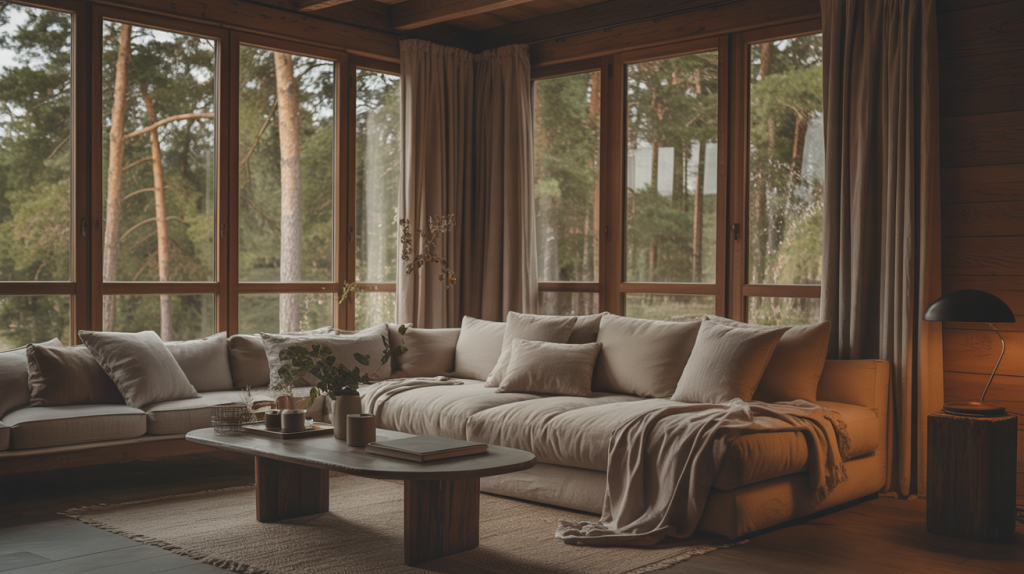
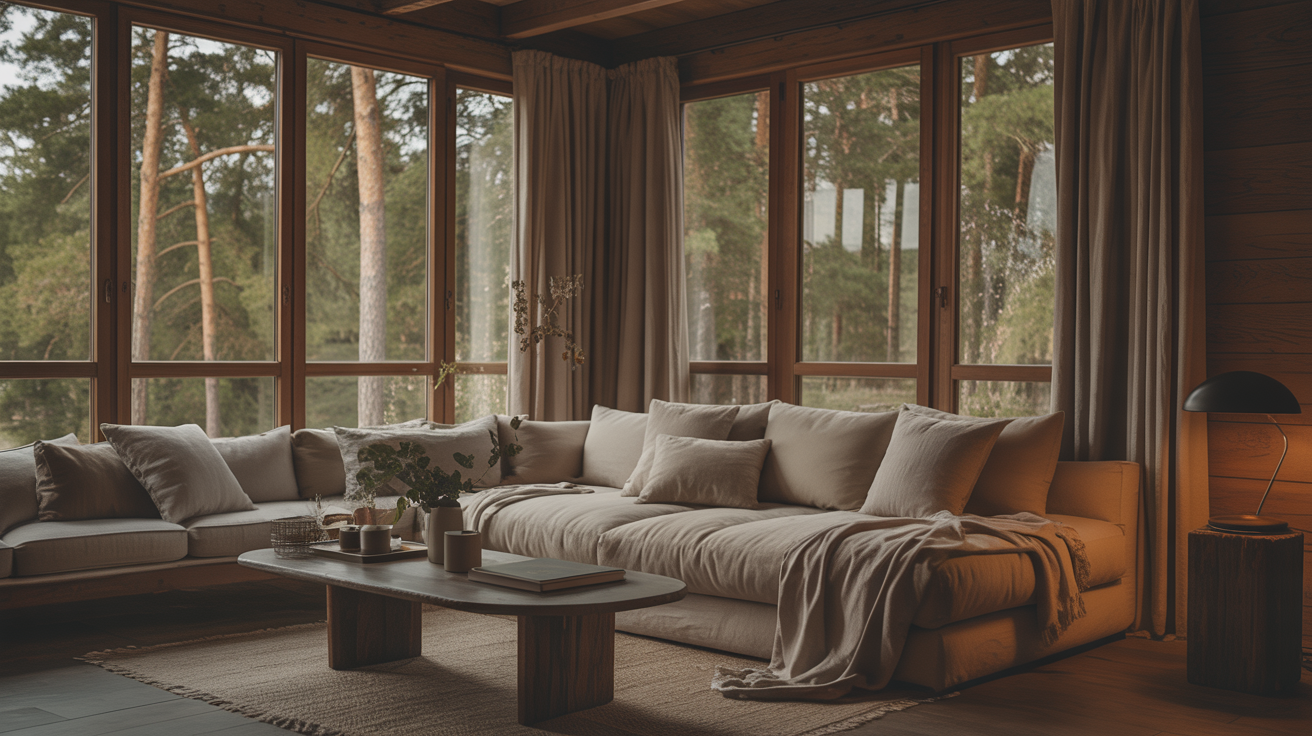
The Isolated Cabin: There is something incredibly freeing about being somewhere where there is literally nothing to do. A cabin in the woods, a house on a quiet lake, or a desert retreat forces you to slow down. When your only options are reading by the fire, walking in the woods, or staring at the stars, doing nothing becomes the default state.
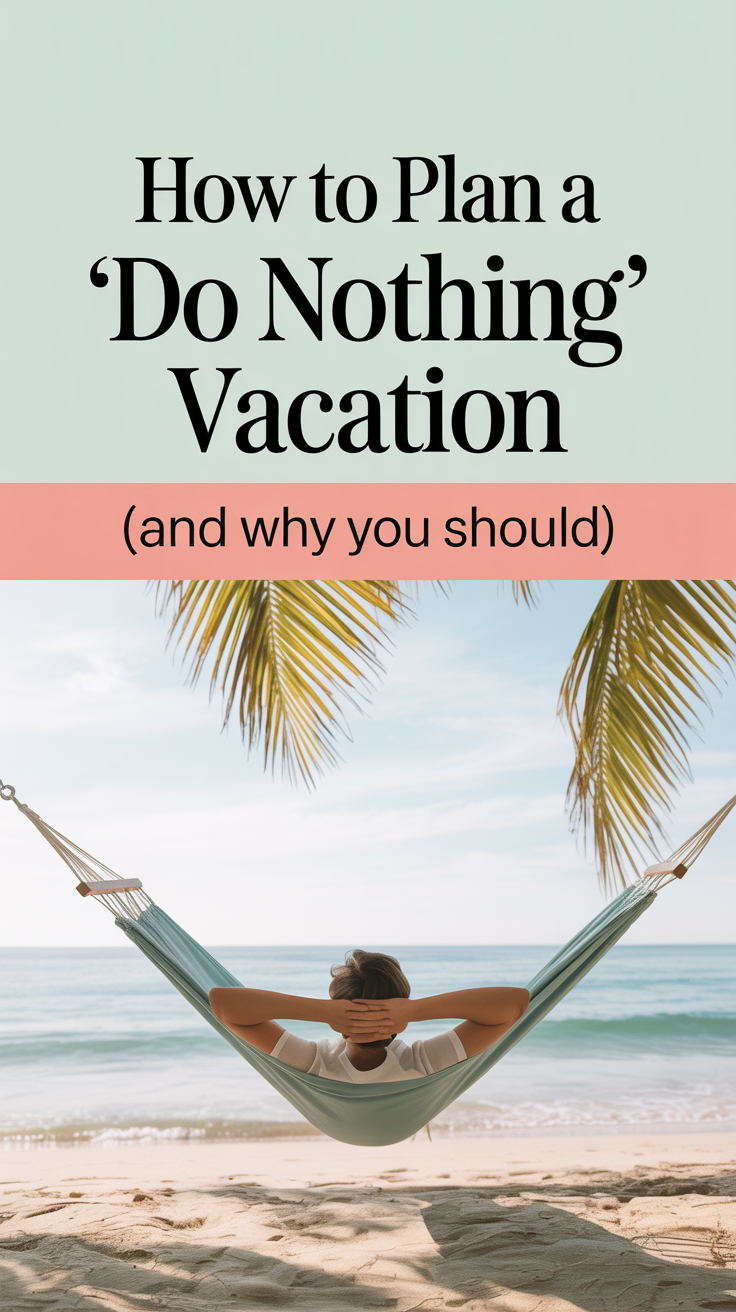
The Sleepy Beach Town: Avoid the major resort areas and look for the quiet, off-the-beaten-path coastal towns. The rhythm of the ocean is naturally soothing, and the agenda rarely needs to extend beyond “walk to the beach, read, walk back.”
The All-Inclusive (With Caveats): An all-inclusive resort can be a great Do Nothing option, provided you choose the right one. Look for smaller, boutique resorts rather than massive mega-complexes with endless activities and loud pool parties. The beauty of an all-inclusive is that the mental load of deciding where to eat and how to get there is completely removed.
Step 2: Curate Your Accommodation
When you are planning a Do Nothing vacation, your accommodation is not just a place to sleep; it is the main event. You will likely be spending a lot of time there, so it needs to be a space where you actually want to linger.
When booking, look for these key features:
- A Great View: Whether it is a mountain vista, a crashing ocean, or just a really beautiful garden, having something lovely to look at encourages niksen. You want a place where you can sit with a cup of coffee and just stare.
- Comfortable Seating: This sounds basic, but it is crucial. A stiff, formal sofa won’t cut it. You need deep, squishy armchairs, a hammock, a porch swing, or a massive, comfortable bed.
- A Kitchen (or Kitchenette): Even if you don’t plan on cooking elaborate meals, having the ability to make your own coffee, store some good cheese and wine, and eat breakfast in your pajamas removes the friction of having to get dressed and leave the house every time you are hungry.
- A Soaking Tub: There is no better way to kill an hour doing absolutely nothing than soaking in a deep tub with a good book and a glass of wine.
Step 3: Manage Expectations (Yours and Theirs)
If you are traveling with a partner, family, or friends, communication is critical. You cannot spring a Do Nothing vacation on someone who is expecting a week of adventure and sightseeing.
Have a conversation well before the trip. Explain the concept. Say something like, “I am feeling really burned out, and my goal for this trip is to have zero agenda. I want to sleep in, read, and just see where the day takes us. Are you on board with that?”
If your travel companion is someone who needs activity to feel fulfilled, you have to establish boundaries. Give them permission to go off and do their own thing without you. “I would love for you to go take that surfing lesson or do that guided hike! I am going to stay here and read on the porch, and we can meet up for dinner.”
You have to release the guilt of not participating, and they have to release the expectation that you will entertain them.
Step 4: Pack for Comfort, Not for Content
We have all fallen victim to the “vacation wardrobe” trap—buying outfits specifically for the photos we plan to take. But a Do Nothing vacation is not about content creation. It is about physical and mental comfort.
Pack clothes that feel good on your body. Think soft fabrics, loose silhouettes, and layers. Bring the sweatpants you love but never wear out of the house. Bring the cozy socks. Leave the heels and the restrictive shapewear at home.
And more importantly, pack the right “doing nothing” supplies:
- Books: Bring more than you think you will read. Bring a mix of genres—a trashy thriller, a beautiful memoir, a design book to flip through.
- A Journal: Not for bullet journaling or tracking habits, but just for brain-dumping. When you finally slow down, you might find that a lot of thoughts and feelings bubble up to the surface. Having a place to put them is helpful.
- Analog Entertainment: Bring a deck of cards, a jigsaw puzzle, or some watercolors. Things that keep your hands busy but let your mind wander.
- Good Snacks: Go to a fancy grocery store before you leave and buy the good snacks. The expensive chocolate, the artisanal crackers, the fancy sparkling water. Treat yourself to the little luxuries that make staying in feel special.
The Phases of Doing Nothing (What to Expect)
If you are used to operating at 100 miles per hour, slamming on the brakes and doing nothing is going to feel weird. In fact, it might feel downright uncomfortable at first. Here is what you can expect as you transition into the Do Nothing state.
Phase 1: The Detox (Days 1-2)
The first day or two of a Do Nothing vacation are often the hardest. Your body is physically in a new place, but your brain is still operating on hustle time.
You might feel twitchy. You might reach for your phone every five minutes. You might feel a nagging sense of guilt, a voice in your head whispering, You should be doing something. You are wasting this trip.
This is normal. It is the mental equivalent of caffeine withdrawal. Your brain is so used to a constant drip of cortisol and dopamine from ticking things off a to-do list that the sudden absence of it feels alarming.
The key in Phase 1 is to simply observe the discomfort without acting on it. When you feel the urge to “be productive,” acknowledge it, and then gently redirect your attention back to the present moment. Take a deep breath. Look at the view. Remind yourself that rest is the goal.
Phase 2: The Surrender (Days 3-4)
Right around day three, something magical happens. The frantic energy starts to dissipate. The urge to check your email fades. You wake up and realize you don’t actually care what time it is.
This is the surrender. You stop fighting the stillness and start sinking into it.
During this phase, you might find yourself sleeping a lot. You might take a two-hour nap in the afternoon, sleep for nine hours at night, and still feel tired. Let it happen. Your body is finally feeling safe enough to process the accumulated exhaustion of your daily life. You are paying off a sleep debt that you have likely been carrying for months, if not years.
You will also start to notice the small things. The way the light changes in the afternoon. The sound of the birds outside your window. The exact flavor of your coffee. When you remove the big, loud stimuli of a packed itinerary, the quiet, subtle joys of life become magnified.
Phase 3: The Reawakening (Days 5+)
Once you have moved through the detox and allowed your body to truly rest, you will enter the final phase: the reawakening.
This is when the default mode network kicks in. Because your brain is no longer bogged down with managing a schedule or processing stress, it suddenly has the space to be creative again.
You might find yourself having sudden moments of clarity about a problem at work or a situation in your personal life. You might feel a sudden urge to write, or draw, or cook something beautiful. You might actually want to go for a long walk and explore the town, not because you feel like you should, but because you genuinely have the energy and curiosity to do so.
This is the ultimate reward of the Do Nothing vacation. You don’t just return home rested; you return home reconnected to yourself. You remember what it feels like to have desires and interests that aren’t dictated by a to-do list.
Bringing the “Do Nothing” Energy Home
The hardest part of a Do Nothing vacation is coming back. It is jarring to transition from a state of complete surrender back into the demands of daily life. The emails are waiting. The laundry needs to be done. The mental load returns.
But the goal is not to live in a permanent state of vacation. The goal is to take the lessons of the Do Nothing vacation and weave them into your everyday life.
Here is how to keep that energy alive once you unpack your bags:
- Schedule “Niksen” Time You schedule your meetings, your workouts, and your kids’ activities. Start scheduling time to do nothing. It doesn’t have to be a whole day. It can be fifteen minutes on a Sunday morning where you sit on the couch with your coffee and stare out the window. Protect that time fiercely.
- Lower the Bar on Weekends We often treat weekends like a different kind of workday, a time to run errands, clean the house, and catch up on all the chores we didn’t get to during the week. Try to designate at least one day (or even half a day) a weekend as a Do Nothing zone. Order takeout. Leave the laundry in the basket. Let the house be a little messy.
- Notice the Urge to Optimize Pay attention to the moments when you try to turn leisure into labor. When you are reading a book, are you reading it because you enjoy it, or because you want to finish it so you can log it on Goodreads? When you go for a walk, are you enjoying the fresh air, or are you obsessively checking your step count? Catch yourself in the act of optimizing, and consciously choose to let it go.
- Redefine What a “Good” Day Looks Like We have been taught that a good day is a productive day. A day where we crossed ten things off the list and fell into bed exhausted. We need to rewrite that narrative.
A good day can be a day where you rested. A good day can be a day where you laughed with your partner. A good day can be a day where you did absolutely nothing of measurable value, but you felt at peace.
The Radical Act of Resting
In a world that constantly demands our attention, our energy, and our output, choosing to do nothing is a radical act. It is a rejection of the idea that our worth is tied to our productivity. It is a declaration that we deserve rest simply because we are human, not because we have earned it through exhaustion.
Planning a Do Nothing vacation is not just about taking a break from work. It is about taking a break from the version of yourself that is always performing, always managing, always striving. It is about giving yourself permission to just be.
So, the next time you feel the familiar creep of burnout, the next time you find yourself fantasizing about running away to a desert island, don’t start researching ten-day itineraries in Europe. Don’t start making spreadsheets.
Find a quiet cabin. Pack your softest pants. Bring a stack of books. And give yourself the greatest luxury of all: the permission to do absolutely nothing.
You might just find that it is exactly what you needed to do all along.