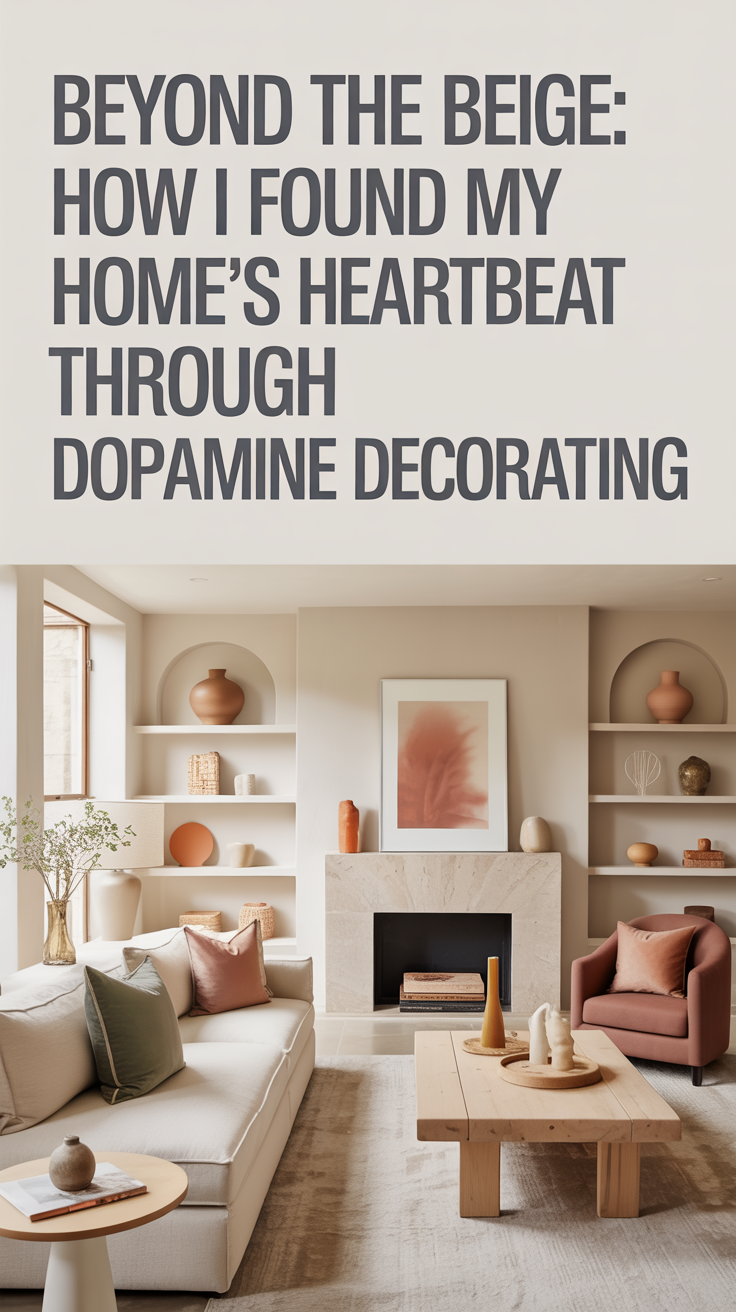
For most of my adult life, my home has been a carefully composed ode to neutrality. I was a connoisseur of the quiet, a devotee of the muddied and the muted. My walls whispered in greige, my furniture spoke in the hushed tones of linen and worn leather, and my decor was selected for its ability to blend in, not stand out. This was my sanctuary, a sophisticated haven of calm I had meticulously crafted to soothe the senses in a chaotic world. It was chic, it was safe, and I was certain it was the ultimate expression of my taste.
Then, a term I couldn’t ignore began bubbling up from the vibrant corners of the internet: “dopamine decorating.” It arrived in my feed as a riot of canary yellows, electric blues, and hot pinks—a visual language that felt entirely alien to my own. The philosophy, as I understood it, was to curate a home that delivers small jolts of pleasure, or “dopamine hits,” through bold color, playful patterns, and engaging textures. My home was designed for a deep, restorative exhale, not for a series of stimulating jolts. Yet, a quiet curiosity took root. Was my serene sanctuary so peaceful that it had become silent? In my pursuit of impeccable taste, had I designed the joy right out of my own home?
This is the story of my accidental journey into the world of dopamine decorating. It’s a story about how a few tentative pops of color led to a profound personal discovery, and how I learned that the path to a truly authentic home isn’t about following a trend, but about having the courage to listen to the forgotten whispers of your inner child.
A Quiet Rebellion: From Muted to Magical
My conversion was not a sudden revolution but a slow, cautious evolution. It began with a single, low-stakes act of defiance against my own rigid design rules: a set of colorful, batik-patterned dining napkins. They were a temporary splash of vibrancy, a secret party I could fold up and put away. Yet, on my stark dining table, they were a revelation. They didn’t disrupt the calm; they animated it, proving that joy and serenity could coexist.
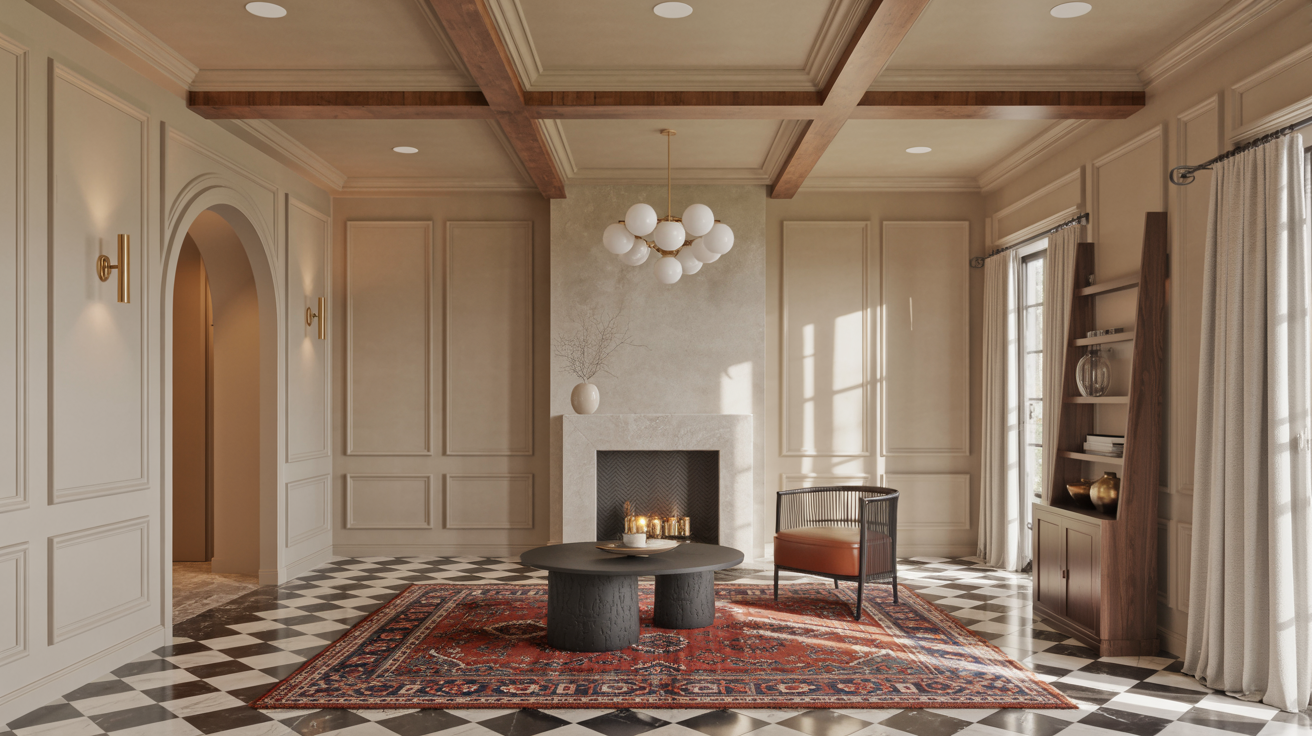
This small success emboldened me. My next step was a lamp with a ceramic base in a soft, spring green. It was a bridge piece, a color that was undeniably a color, yet still felt connected to the natural world I loved. It transformed a lifeless corner into an inviting, verdant nook, teaching me that color could create a mood, not just a statement. The final, and most significant, leap of faith was a vintage Turkish rug. I had always been drawn to traditional, earthy patterns, but this one had a secret. Woven into its mostly tan, tribal field were tiny, electrifying pops of turquoise and hot pink. The seller described it as having “surf shack vibes,” a phrase that felt both thrillingly rebellious and deeply nostalgic.
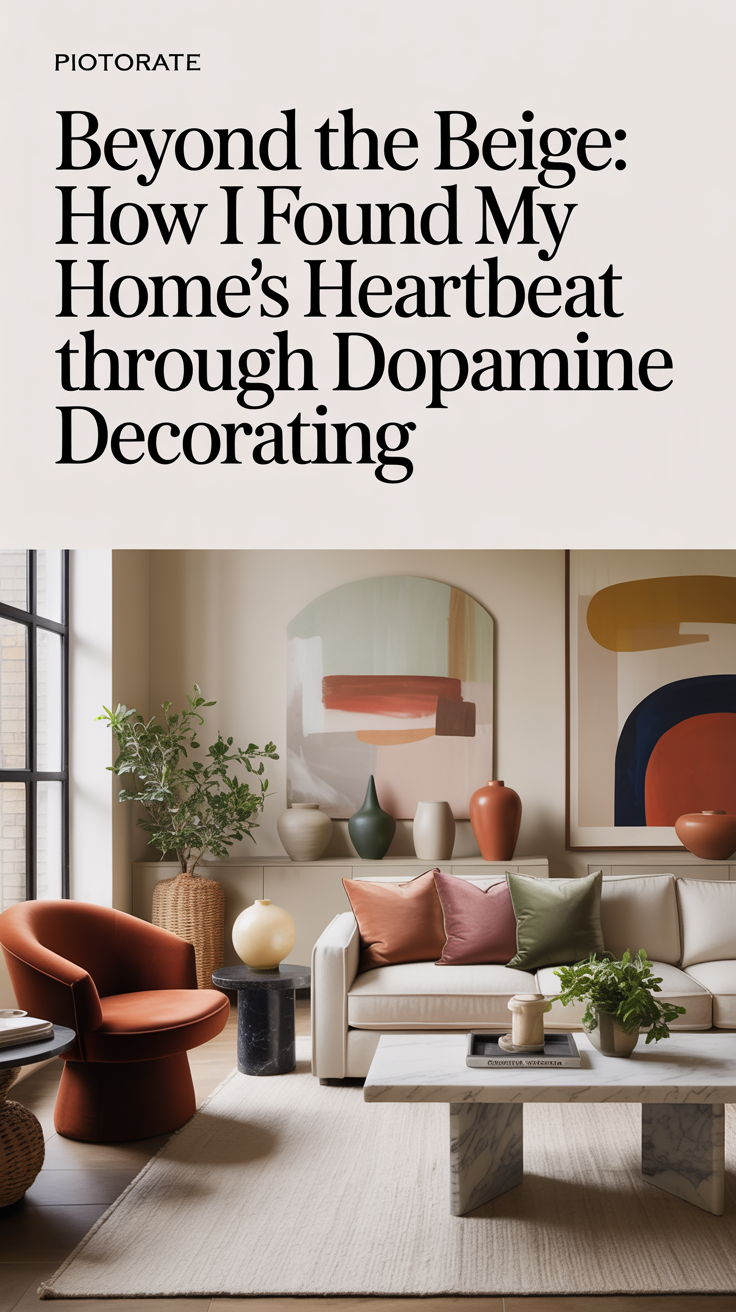
Unrolling that rug was the turning point. It didn’t just anchor the room; it gave it a heartbeat. The neutral base harmonized with my existing furniture, while the vibrant flecks of color created a new, energetic context. Suddenly, my collection of street art—bold, graphic prints I loved but could never make work—finally had a home. The thread of hot pink in the rug seemed to reach up and connect with the art, creating a cohesive story. My home was no longer just a neutral backdrop; it was a layered, personal narrative. It was a space that could be both sophisticated and playful, calm and alive. It was a space that finally felt entirely, authentically, and completely me.
The Real Meaning of Dopamine: More Than a Trend
Reflecting on this journey, I’ve come to believe that “dopamine decorating” is a bit of a misnomer. The profound joy I feel isn’t just a fleeting chemical reaction to a bright color. It’s the deeper, more resonant satisfaction of self-recognition. The power of these objects lies in their ability to act as conduits to memory, nostalgia, and authenticity. The batik napkins speak of craftsmanship and travel; the green lamp is a monument to a small act of creative bravery; the rug is a portal to the carefree spirit of my youth.
This experience taught me that our homes should not be static monuments to a single aesthetic we’ve chosen. They should be living, breathing diaries of our lives, with enough space to hold all our different seasons and selves. The true gift of the dopamine decorating trend is not the prescription of a certain look, but the permission it grants us to listen to our own quirky, joyful impulses. It’s an invitation to reconnect with the part of ourselves that existed before we learned about “good taste”—our inner child.
Your Turn: A Guide to Waking Up Your Home’s Heartbeat
My journey was accidental, but yours doesn’t have to be. If you find yourself in a beautifully designed but emotionally quiet home, you don’t need to overhaul your entire space. You simply need to start a conversation with a part of yourself you may have silenced long ago. Here is a practical guide to gently introducing joy and personality into your home, one small step at a time.
Part 1: An Archeological Dig for Your Inner Child
Before you buy a single thing, you must first become an archeologist of your own past. Your inner child knew exactly what it loved, without shame or concern for trends. Your mission is to unearth that joyful, intuitive taste.
- Conduct a Nostalgia Audit: Close your eyes and travel back to your childhood bedroom. What do you see? Forget about whether it was “well-designed.” Focus on the feeling. Was there a fuzzy, bright blue beanbag chair you loved? A poster of a cartoon with a wild color palette? A specific floral pattern on your bedspread? Write down the colors, textures, and objects that made you feel happy and safe. These are your primal aesthetic clues.
- The Toy Store Test: Give yourself an hour and wander through a toy store or the children’s section of a bookstore. Pay close attention to what your hands and eyes are drawn to. Is it the smooth, primary-colored wood of a building block set? The intricate, whimsical illustrations in a picture book? The sparkly, over-the-top texture of a craft kit? Don’t judge or analyze; just observe. This is your intuition speaking, free from the constraints of adult sophistication.
- Play the “What If” Game: Sit in your favorite room and ask yourself a liberating question: “What would I do in this space if I knew no one else would ever see it?” Would you paint a secret mural on the inside of your closet door? Would you hang a disco ball from the ceiling? Would you replace your sensible sofa with a giant, plush floor cushion? The answers to this game reveal your unfiltered desires, the joyful impulses you’ve suppressed in the name of “good taste.”
Part 2: The Art of the Low-Stakes Experiment
Once you have a better sense of your forgotten aesthetic, it’s time to experiment. The key is to start small and make it feel safe. You are building a new muscle, and it needs gentle, consistent exercise, not a single, overwhelming workout.
- Focus on the Fleeting: Begin with items that are temporary and easily changed. This is the design equivalent of a first date—low pressure and non-committal. Think colorful, patterned dish towels in the kitchen, a bouquet of outrageously bright flowers for your coffee table, or a set of vibrant placemats. Like my batik napkins, these items can be swapped out in an instant, giving you the freedom to play without fear.
- Decorate Your Private Worlds: Your entire home doesn’t need to be on display. Start by injecting joy into the spaces that are just for you. Line your sock drawer with a wildly patterned wallpaper remnant. Buy a desk lamp in your favorite childhood color for your home office. Replace the generic soap dispenser in your powder room with a quirky, sculptural one. These are private delights, small moments of joy that are meant for an audience of one.
- Embrace Functional Art: Look for opportunities to upgrade your everyday “workhorses” into objects of beauty and fun. Swap your boring plastic watering can for a sleek, brightly colored metal one. Replace your worn-out wooden cutting board with one shaped like an animal or a whimsical cloud. These objects must exist in your home for functional reasons; there’s no reason they can’t also spark a little joy every time you use them.
Part 3: Graduating to Bolder Expressions
As you get more comfortable with color and pattern, you can begin to make more significant, lasting changes. Each small success will build your confidence, preparing you to take bigger, more rewarding risks.
- Find Your “Bridge” Piece: Look for a single item that can connect your established neutral aesthetic with your new, more vibrant desires. This could be a piece of art that contains both muted and bright tones, a throw pillow with a traditional pattern rendered in an unexpected color, or, like my green lamp, a single piece of furniture in a soft, approachable color. This “bridge” piece proves that your two aesthetic selves can coexist harmoniously.
- Seek the “Hero with a Secret”: When you’re ready for a larger commitment like a rug or a piece of furniture, look for items that follow the principle of my Turkish rug: a mostly neutral base with surprising, electrifying pops of color. This could be a beige armchair with a colorful welt, a simple wooden cabinet with brightly painted knobs, or a neutral wallpaper with a thin, metallic, or neon stripe. These pieces provide the best of both worlds—they offer a calming foundation while delivering a delightful jolt of energy.
- Create a New Context: Use these new, bolder pieces to re-evaluate the things you already own. That quirky vase you bought on vacation but could never find a place for? It might look perfect next to your new colorful lamp. That bold, graphic art print that felt too loud? It might be the perfect companion for your new rug. Often, introducing one or two key pieces can create the permission structure you need to finally incorporate the objects that feel most authentically you.
Your Home is a Conversation, Not a Statement
My journey from a muted sanctuary to a home with a heartbeat taught me that our living spaces should not be rigid, finished statements. They should be ongoing conversations. They are the place where our past, present, and future selves can meet, mingle, and learn from one another. The dopamine decorating trend, at its best, is a powerful reminder that joy, nostalgia, and playfulness are not frivolous additions to a home; they are essential nutrients for the soul.
So, I invite you to break your own rules. Be curious. Allow yourself to be surprised. Buy the rug that speaks to a forgotten part of you. Hang the art that feels a little too loud. Listen to the whispers of your inner child. You might just discover that the home you create is not only more vibrant, but infinitely more true. You might just find that in the process of decorating your home, you have also been redesigning your life.
The Unspoken Rules of “Good Taste”
Before embarking on this journey, it’s crucial to acknowledge the invisible forces that likely shaped your current aesthetic. For many of us, our adult homes are a reaction to the perceived chaos of our childhoods or a performance of sophistication we’ve learned from magazines and social media. We absorb an unwritten rulebook of “good taste” that often champions subtlety, restraint, and a specific, marketable form of minimalism. This rulebook tells us that a cohesive home is a successful home, and that cohesion is best achieved through a limited, harmonious palette. It whispers that bold choices are risky, that too much personality can look cluttered, and that a truly elegant home is a serene and unobtrusive backdrop for an equally elegant life.
This aesthetic is not inherently bad; it can be genuinely beautiful and calming. The problem arises when it becomes a cage. When our adherence to these unspoken rules forces us to suppress genuine, joyful impulses, we are no longer curating a home; we are curating a persona. The fear of making a “mistake”—of choosing a color that will fall out of fashion, of buying a piece that doesn’t “go” with everything else—can be paralyzing. It leads to safe, predictable choices that create a home that is aesthetically pleasing but emotionally sterile. The first step in breaking free is to recognize that this rulebook exists and to give yourself permission to tear out a few pages. The goal is not to abandon taste, but to expand its definition to include your own unique, and sometimes quirky, sources of joy.
Deconstructing the Journey: A Deeper Dive into the Process
My own journey, while seemingly about objects, was actually a series of psychological breakthroughs. The batik napkins were my “gateway drug” to joy. Their small size and low cost made the experiment feel inconsequential, which was precisely why it was so successful. It was a lesson in the power of the low-stakes pivot. By choosing an item that was both inexpensive and temporary, I had created a psychological safe space to play. This is a critical strategy for anyone feeling paralyzed by the permanence of design decisions. Don’t start with a sofa; start with a set of coasters, a vibrant tea towel, or a colorful candle. These small items are the training wheels for your new design sensibility.
The green lamp represented the next stage: graduating from a temporary fling to a semi-permanent relationship. Its success taught me about the importance of the “color bridge.” The soft, natural green was a color I already loved in the outside world, in forests and fields. By bringing it inside, I wasn’t introducing a foreign concept; I was simply translating a familiar source of joy into the language of my home. This is a powerful technique for those wary of bright colors. Look to your own wardrobe, your favorite landscapes, or even the covers of your favorite books. What colors are you already drawn to in other areas of your life? These are your personal “bridge” colors, the hues that can seamlessly connect your established taste with your emerging desires.
The vintage rug was the final exam. Its purchase was an act of trusting my gut over my intellect. My brain, armed with years of design rules, told me it was a mistake. It was too eclectic, too playful, too “surf shack.” But my gut, that intuitive inner voice, felt a spark of recognition. It saw a reflection of a part of myself I had neglected. This is perhaps the most challenging but most rewarding part of the process: learning to distinguish between the voice of learned “good taste” and the voice of authentic personal joy. The former is analytical and critical; the latter is instantaneous and emotional. It’s the difference between thinking, “This will match my sofa,” and feeling, “This makes me happy.” The more you practice with small, low-stakes experiments, the easier it becomes to hear, and to trust, that joyful inner voice.
A Practical Toolkit for Joyful Authenticity
Moving from theory to practice requires a tangible set of tools. The following exercises are designed to be more than just decorating tips; they are strategies for excavating your personal aesthetic and translating it into your living space.
The “Joy Audit” Journal
For one week, carry a small notebook or use a notes app on your phone. Your only task is to jot down every single thing that brings you a small, unexpected moment of joy. Be specific. It’s not enough to write “a pretty flower.” Write “the intense, almost neon pink of the bougainvillea against the gray concrete.” It’s not just “a nice song.” It’s “the jangly guitar intro to that one song from college.” This audit is not about home decor. It’s about collecting data on your unique joy triggers. At the end of the week, review your list. You will have a rich, personalized palette of colors, textures, sounds, and memories that form the raw material of your authentic aesthetic. The recurring themes are your roadmap.
The “Dopamine Drawer”
Choose one drawer in your home—a junk drawer, a sock drawer, a desk drawer. Your mission is to transform this small, hidden space into a concentrated explosion of joy. Line it with the most outrageously beautiful paper you can find. Fill it with small, tactile objects you love: a smooth river stone, a vintage postcard, a brightly colored pen, a small tin of scented balm. This drawer is your secret weapon. It’s a private, contained experiment in maximalist joy. Opening it to grab a pair of socks or a paperclip becomes a small, delightful event. It’s a daily reminder that you are allowed to have things that are beautiful purely for the sake of being beautiful.
The “Five-Year-Old Test”
Next time you are considering a decor purchase, particularly a small accessory, perform the “Five-Year-Old Test.” Hold the object and ask yourself, “Would five-year-old me think this is cool?” This is not to say you should fill your home with toys, but it’s a powerful gut check to bypass your overly sophisticated adult brain. A five-year-old’s taste is pure intuition. They are drawn to interesting shapes, satisfying textures, and vibrant colors without any preconceived notions of what is “in style.” If an object—be it a quirky sculptural vase, a brightly colored mug, or a pillow with a fun pattern—passes the Five-Year-Old Test, it means it has an intrinsic, playful quality that is likely to bring you long-term joy, long after the trend has passed.
The Courage to Be Colorful
My journey from a world of muted neutrals to a home with a vibrant heartbeat was about so much more than decorating. It was a lesson in self-acceptance. It was about giving myself permission to contain multitudes—to be both a lover of serene, sophisticated spaces and a person who gets a thrill from a pop of hot pink. It was about realizing that a truly authentic home is not one that adheres to a single, rigid aesthetic, but one that is flexible and expansive enough to tell the whole, messy, beautiful story of who you are.
The dopamine decorating trend will eventually fade, as all trends do. But the underlying principle is timeless. It is the radical idea that our homes should be a source of active, not passive, joy. It is the understanding that the objects we surround ourselves with are not just functional items; they are daily affirmations of who we are and what we love. So, I encourage you to start your own quiet rebellion. Buy the ridiculous napkins. Paint the inside of your closet a shocking color. Trust that little spark of joy. You are not just decorating a room; you are building a more authentic and joyful life, one small, colorful object at a time.