

Have you ever looked at your staircase and thought it was missing something? That was me, staring at my plain, wooden stairs, feeling like they were a blank canvas waiting for a masterpiece. I wanted to add a touch of personality, a pop of color, and a little bit of extra comfort underfoot. The solution? A stair runner. And let me tell you, it was one of the most satisfying DIY projects I’ve ever tackled.
Installing a stair runner might seem like a job for the pros, but I’m here to tell you that it’s totally doable. I’ve done it, and I’m going to walk you through every step of the process. We’ll even talk about a little TV magic later on. But first, let’s talk about why a stair runner is more than just a pretty face for your staircase.
More Than Just a Pretty Rug: The Benefits of a Stair Runner
Sure, a stair runner can completely transform the look of your staircase, adding color, pattern, and texture. But the benefits go far beyond aesthetics. Here’s why I’m a huge advocate for adding a runner to your stairs:
- Safety First: Let’s be honest, wooden stairs can be slippery. A runner provides much-needed traction, reducing the risk of slips and falls for everyone in the family, including our four-legged friends. My dog, who used to hesitate at the top of the stairs, now trots up and down with confidence.
- Peace and Quiet: Do you have a herd of elephants living in your house? Or maybe just a kid who loves to stomp their way upstairs? A stair runner is a fantastic sound absorber, muffling the sound of footsteps and bringing a little more peace and quiet to your home.
- Protection for Your Stairs: Your stairs see a lot of foot traffic, which can lead to scratches, scuffs, and wear and tear over time. A runner acts as a protective layer, preserving the beauty of your wooden stairs for years to come.
Before You Begin: Planning and Preparation
Now that you’re convinced a stair runner is the way to go, let’s get down to the nitty-gritty of planning your project. A little bit of prep work now will save you a lot of headaches later. Trust me on this one.
Tools and Materials
Here’s a list of what you’ll need to get the job done. You probably have most of these items already lying around your house.
- The Star of the Show: Your Stair Runner: We’ll talk more about how to choose the perfect one in a bit.
- Rug Pad: Don’t skip this! It adds extra cushion and keeps your runner from slipping and sliding.
- Tape Measure: Your new best friend for this project.
- String: A handy trick for measuring the length of your stairs.
- Painter’s Tape: For marking out your runner’s placement.
- Electric Staple Gun and Staples: This is where the magic happens. An electric one will save your hands from a lot of cramping.
- Sharpie: My secret weapon for camouflaging staples.
- Scissors: For cutting your rug pad and runner.
- Needlenose Pliers: For those inevitable moments when a staple goes rogue.
This project doesn’t have to break the bank. The biggest cost will be the runner itself, so let’s talk about how to choose the right one for your home and your budget.
Choosing Your Runner: A Personal Journey
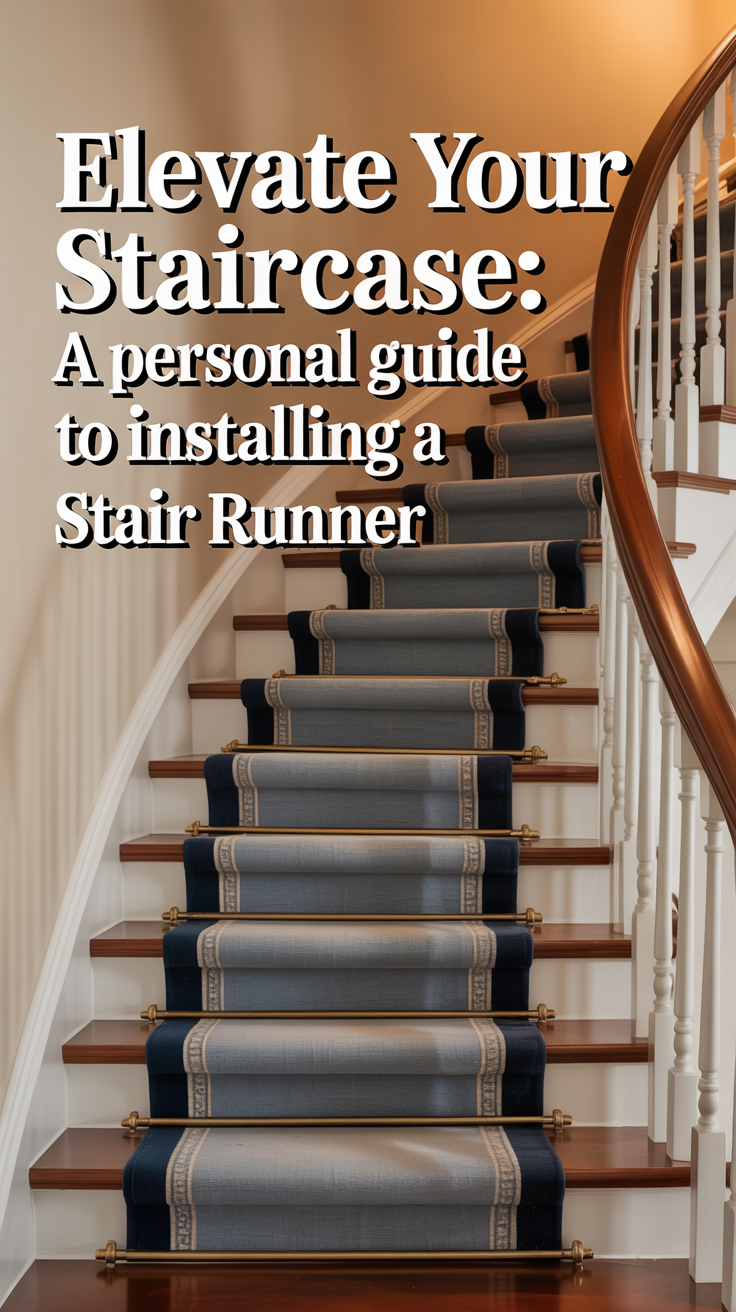
This is where the fun really begins! Choosing a runner is your chance to inject your personality into your staircase. Do you want a bold pattern that makes a statement? Or a neutral, textured runner that adds warmth and sophistication? The options are endless.
I have to admit, I spent weeks agonizing over this decision. I ordered countless samples and draped them over my stairs, trying to envision the final look. In the end, I went with a classic stripe that added a touch of coastal charm to my home. But I also seriously considered a beautiful sisal runner for its durability and natural texture.
Here are a few things to keep in mind when choosing your runner:
- Durability: Your stairs get a lot of foot traffic, so you’ll want a runner that can stand up to the wear and tear. Indoor/outdoor rugs are a great option, as are natural fibers like wool and cotton. Look for a low-pile rug, which will be easier to keep clean.
- Stock vs. Custom: You can find stock runners in standard sizes, which are often more affordable. Or, you can go the custom route and have a runner made to your exact specifications. I’ve done both, and both have their pros and cons. A stock runner might require a little more creativity to make it fit perfectly, while a custom runner will be a perfect fit but might cost a bit more.
Measuring and Prep Work: The Foundation of a Flawless Finish
I can’t stress this enough: accurate measurements are the key to a professional-looking stair runner. It might seem tedious, but taking the time to do this right will pay off in the end. I learned this the hard way on my first attempt, where I was a little too eager to get started and ended up with a slightly off-center runner. Let’s avoid that, shall we?
Measuring for the Perfect Fit
First, let’s figure out how much runner you’ll need. Grab your tape measure and a string. The string is a great trick for measuring the length of one step, including the riser and the tread, and wrapping it around the bullnose (the rounded edge of the stair). Once you have that measurement, multiply it by the number of stairs you have. Then, do yourself a favor and add about 10-15% extra. It’s always better to have a little too much fabric than not enough.
Next, let’s talk about width. Most stair runners leave a few inches of wood exposed on either side, which creates a beautiful, custom look. I like to leave about 2-3 inches on each side, but this is a matter of personal preference. Measure the width of your narrowest stair and subtract 4-6 inches to determine your ideal runner width. Keep in mind that some staircases flare out at the bottom, so make sure the width you choose will look good from top to bottom.
Prepping Your Stairs for Their Makeover
If you’re planning on painting or staining your stairs, now is the time to do it. You definitely don’t want to be worrying about dripping paint on your brand new runner. I decided to give my stairs a fresh coat of paint before I installed my runner, and it made a huge difference. I painted the risers a crisp white and the treads a warm gray, which really made the runner pop.
This is also a good time to do any necessary repairs. Do you have a squeaky tread that’s been driving you crazy? Now’s your chance to fix it. Check for any loose boards or molding and take care of those as well. A solid, well-maintained staircase is the perfect canvas for your new runner.
The Installation: A Step-by-Step Guide to Stair Runner Success
Alright, the prep work is done, and you’re ready to bring your vision to life. This is where the real transformation happens. Take a deep breath, put on your favorite playlist, and let’s get this runner installed. I promise, it’s easier than it looks.
Step 1: Mark Your Territory
Remember all that careful measuring you did? Now it’s time to put it to use. Using your painter’s tape, mark the placement of your runner on each step. This will be your guide, ensuring that your runner stays straight and centered as you work your way down the stairs. I found this step to be a lifesaver, especially since my staircase has a slight curve to it.
Step 2: The Real Hero – The Rug Pad
Don’t underestimate the power of a good rug pad. It not only adds a layer of plushness underfoot but also keeps your runner from shifting. I prefer to use the rug pad only on the tread of the stair, not the riser. This saves a little money and prevents the runner from looking too bulky. Cut your rug pad into strips that are slightly narrower than your runner and long enough to wrap around the bullnose of each step.
Step 3: My Secret Weapon for Invisible Staples
This is my favorite part of the process, and it’s a little trick I picked up along the way. The key to a professional-looking installation is to make your staples disappear. And how do you do that? With a Sharpie! That’s right, a simple permanent marker is all you need. Before you load the staples into your electric staple gun, color them with a Sharpie that matches your runner. For my striped runner, I used a black Sharpie. For a sisal runner, a gold or brown Sharpie would work well. This simple step dulls the shine of the staples, making them virtually invisible.
Step 4: Starting at the Top
Now for the main event. Start at the top of your staircase and work your way down. Secure the top of your runner to the riser of the top step, right under the lip of the tread. Pull the runner tight and staple it along the bottom of the riser. Remember, you’re only stapling into the risers, not the treads. This way, you won’t have to worry about stepping on a staple.
Step 5: The Rhythm of the Installation
Once you get into a rhythm, the installation process goes pretty quickly. Pull the runner tight over the tread, and then staple it under the lip of the next tread. I like to use my body weight to apply pressure to the back of the staple gun, which helps the staples sink in nice and deep. Don’t be afraid to use plenty of staples. You want that runner to be secure.
Step 6: Connecting Two Runners (If Needed)
If your staircase is on the longer side, you might need to connect two runners. Don’t worry, this is an easy fix. The best place to hide the seam is under the lip of a tread. Cut the end of your first runner so that it ends right under the bullnose. Staple it securely, and then start your second runner in the same spot. The transition will be so subtle that no one will even notice it.
Step 7: The Grand Finale – Finishing the Bottom Edge
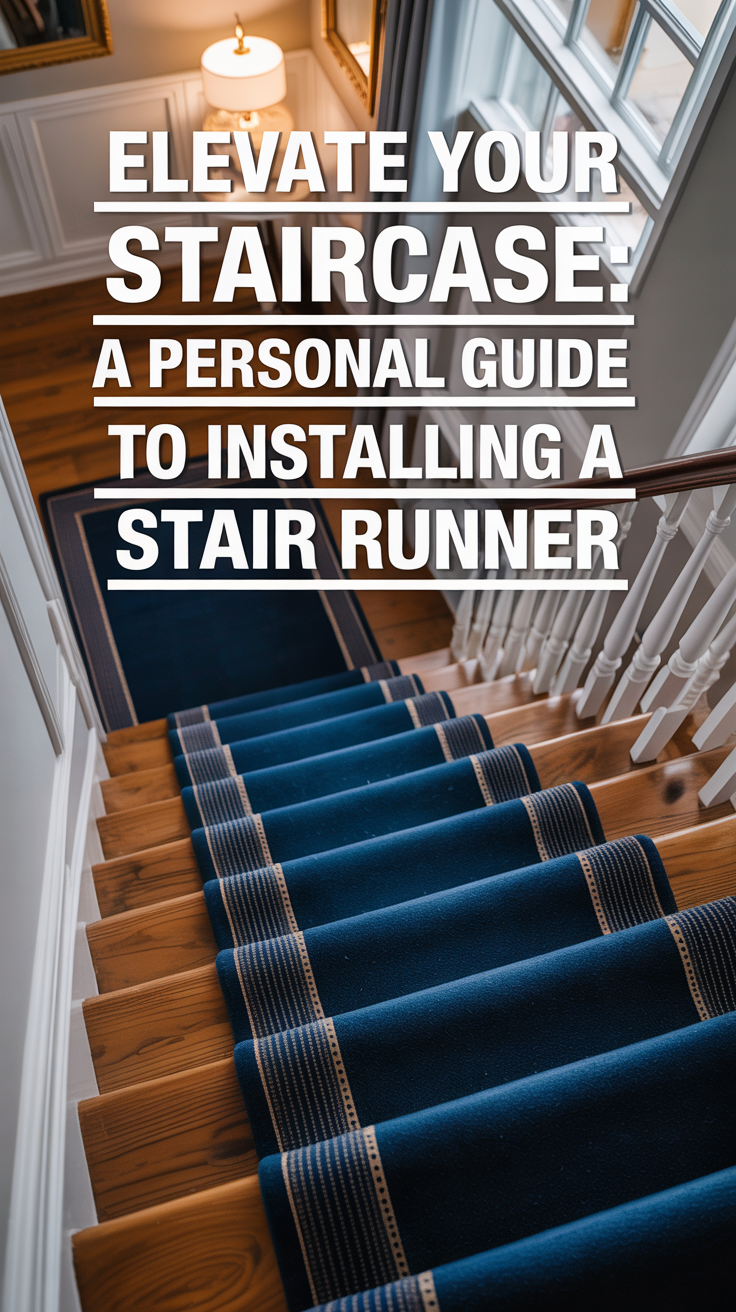
When you reach the bottom of your stairs, you’re in the home stretch. Cut the runner, leaving about an inch of extra material. Fold that extra bit under and staple it to the bottom of the last riser. This will give you a clean, finished edge that looks like it was done by a pro.
And that’s it! You’ve successfully installed your very own stair runner. Stand back and admire your handiwork. You’ve not only transformed your staircase but also added a personal touch to your home that you can be proud of for years to come.
I hope this guide has inspired you to take on this project yourself. Installing a stair runner is one of those DIYs that looks a lot more intimidating than it actually is. With a little bit of patience and the right tools, you can completely transform your staircase in just a few hours. And the best part? Every time you walk up and down your stairs, you’ll have a little reminder of what you’re capable of creating.
So go ahead, pick out that runner you’ve been eyeing, and get ready to give your staircase the makeover it deserves. You’ve got this!