

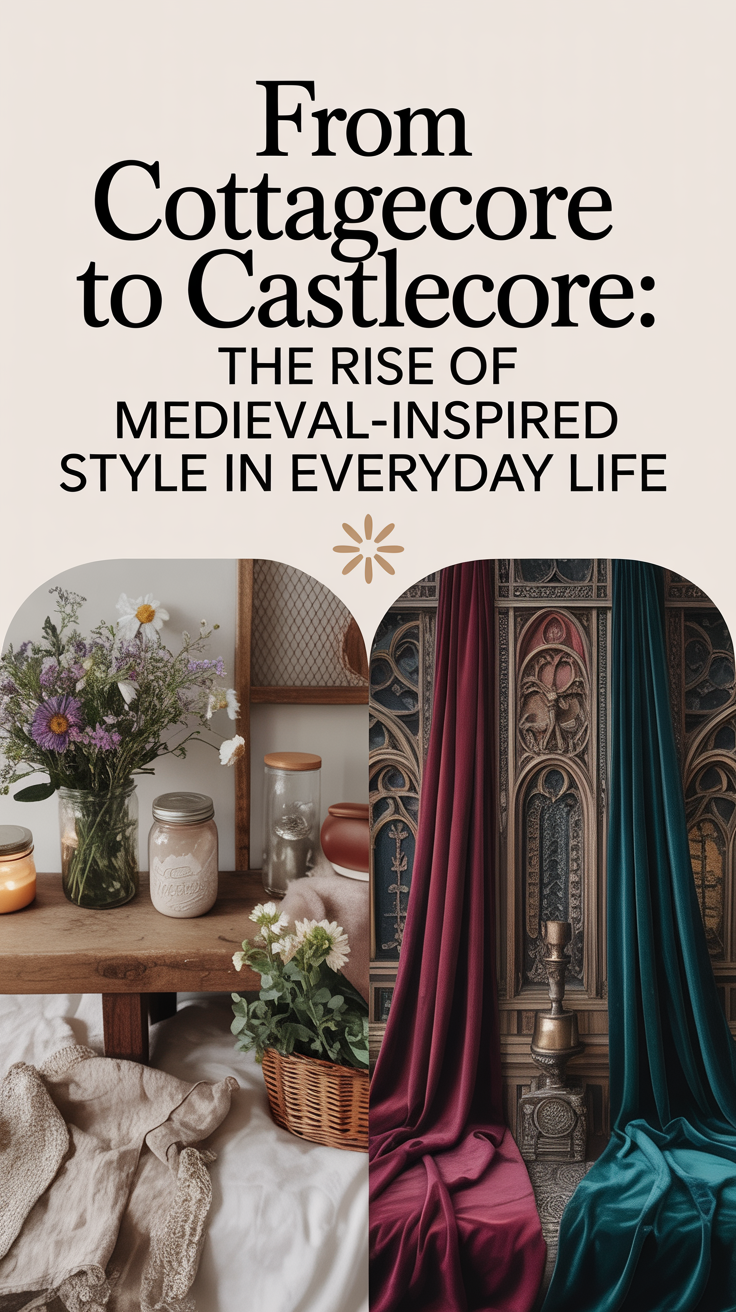
Every cultural era has its fantasy — a collective dreamscape we retreat to when the real world feels too hurried, too digital, too disconnected. The 2020s have been defined by this longing for aesthetic escape. At first, that yearning found comfort in Cottagecore, the soft-focus ideal of country life. It was a balm during uncertain times: linen dresses, home-baked bread, floral teacups, and the promise of simplicity.
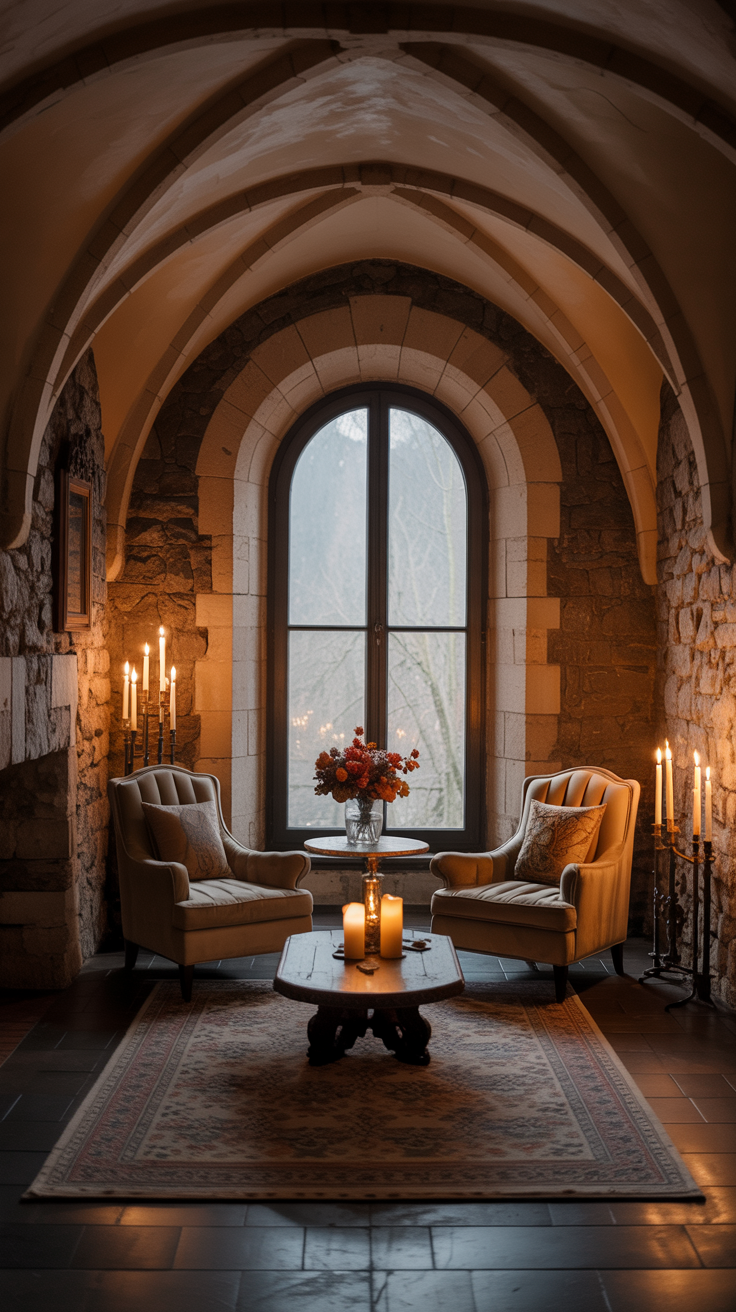
But fantasy is a living thing. As the world reawakens, our escapism has evolved from pastoral calm to medieval grandeur. Enter Castlecore — the aesthetic that takes the tenderness of Cottagecore and raises it to something regal. Where Cottagecore celebrated domestic gentleness, Castlecore seeks beauty that endures — stone walls, iron fixtures, tapestries, and candlelight that flickers across carved wood.
Castlecore is not just about design; it’s about an emotional texture — one that honors craftsmanship, history, and the quiet power of permanence. It whispers of legacy and lineage, of hearths that have burned for centuries.
In many ways, it’s the natural evolution of our cultural story: as we move beyond the fragile simplicity of Cottagecore, we crave something with more structure, depth, and drama — a world built to last.
Defining Castlecore: Where Story and Style Converge
At its core, Castlecore is about romanticizing the medieval. It takes inspiration from Gothic cathedrals, Renaissance art, stone fortresses, and the rituals of life before industrial modernity. It borrows heavily from fantasy and folklore — the kind of worlds imagined by The Witcher, Game of Thrones, or The Lord of the Rings.
Yet, unlike pure fantasy, Castlecore isn’t about escaping reality — it’s about enriching it. It takes that romantic visual language and weaves it into daily life, offering modern ways to live, dress, and decorate with old-world depth.
The Castlecore aesthetic often features:
Architectural weight: arches, stone textures, heavy wood, and candle sconces.
Historical textiles: velvet, brocade, lace, linen, and tapestries.
Regal palettes: oxblood, forest green, antique gold, ink blue, and cream.
Symbolic ornamentation: iron hardware, carved motifs, heraldic emblems, and romantic florals.
It’s both grounded and grand — the quiet majesty of a world lit by firelight.
From Rustic to Regal: How We Got Here
The rise of Castlecore is more than an aesthetic shift; it’s a reflection of cultural mood. When Cottagecore emerged during global lockdowns, it provided comfort — a dream of simpler times when life moved at a gentler pace. But as the years passed, that craving for coziness began to merge with a desire for strength and permanence.
We no longer just want comfort; we want meaning. We want our homes, clothes, and rituals to feel like they belong to something — to a story, a lineage, a world that endures beyond trends.
The Pendulum of Style
Aesthetics move in cycles. Minimalism reigned for a decade — all white walls and clean lines. Then came maximalism, with color and clutter reclaiming joy. Cottagecore was a form of emotional minimalism — softness and restraint. Castlecore, by contrast, embraces drama. It says: more texture, more depth, more story.
The modern home, once defined by neutrality, is now rich with patina. We’re painting walls in jewel tones, choosing aged brass over polished chrome, and collecting rather than decluttering.
Castlecore captures this mood perfectly: a hunger for history in an age obsessed with novelty.
Castlecore Interiors: Living with Legacy
You don’t need a centuries-old castle to live like a modern noble. The Castlecore home is not about square footage or location — it’s about mood and materiality. It’s the feeling of walking into a space that tells a story.
1. Walls That Whisper
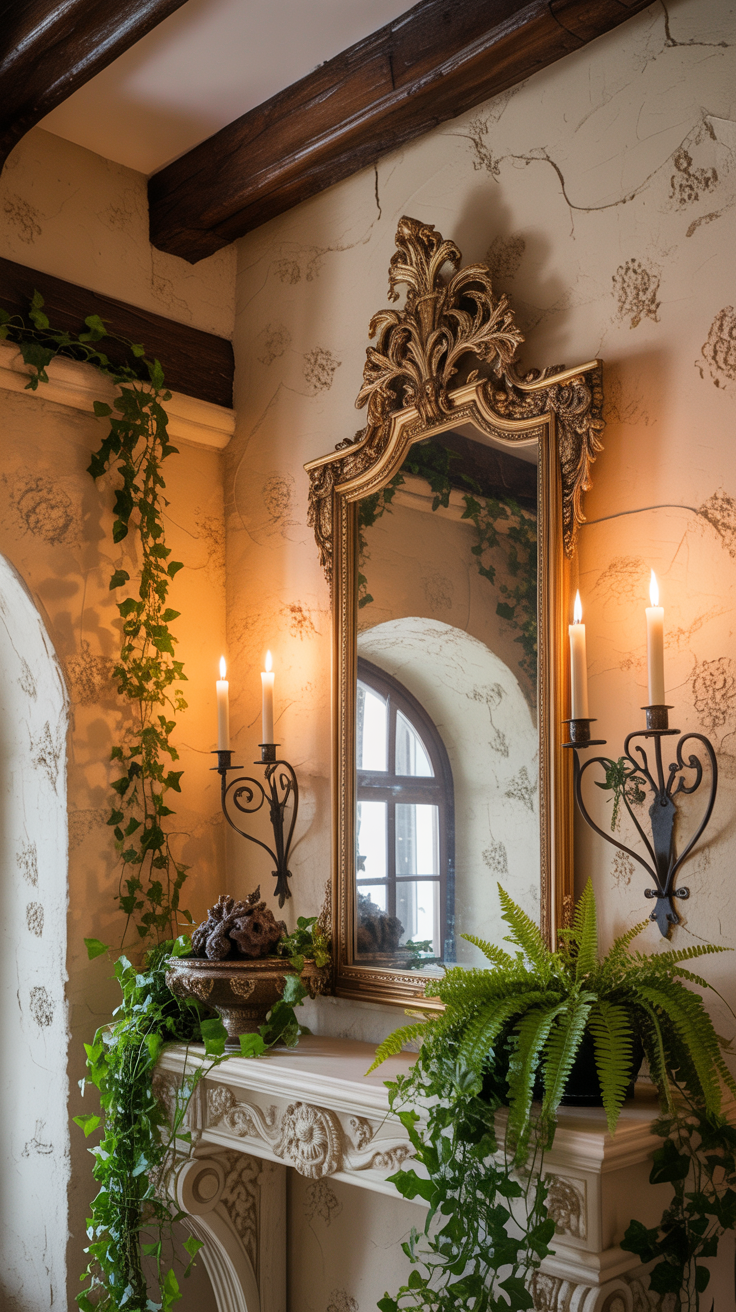
Texture is everything. Flat drywall gives way to limewash, plaster, or textured paint that mimics the uneven surface of ancient stone. Even in small spaces, this adds a sense of depth and timeworn beauty.
Layer walls with art that feels collected, not curated — oil paintings, gold-framed mirrors, and portraits that could have hung in a great hall.
Design Tip: Choose one moody hue — olive, eggplant, or slate blue — and use it across walls, trim, and doors for a cocooning effect.
2. Lighting That Feels Alive
Medieval lighting was never sterile — it flickered, glowed, and danced across surfaces. Recreate that warmth with iron sconces, candlesticks, and amber-toned bulbs.
Layer light sources: a chandelier overhead, a cluster of pillar candles on a mantel, a single lamp with a linen shade in the corner.
The goal isn’t brightness; it’s atmosphere — that soft, shadowed light that invites storytelling.
3. Textiles of Time
Velvet cushions, linen drapes, tapestry throws — Castlecore interiors thrive on fabric with weight and drape. Instead of synthetic sheen, opt for fibers that age gracefully.
Mix dark florals with muted solids, or add a velvet bench at the foot of a bed for an instant sense of opulence.
Style Note: Rich doesn’t have to mean ornate — a single, perfectly chosen velvet chair can transform an otherwise minimalist space into something cinematic.
4. Furniture with Soul
Look for pieces that feel hand-touched — carved wood, wrought iron, and stone. Thrift shops and estate sales are full of potential finds: a weathered oak dining table, a brass mirror, or an embroidered footstool.
Don’t be afraid of imperfections; patina is part of the story. Every scratch and nick feels like a chapter.
5. Details that Anchor the Fantasy
Even modern materials can take on medieval charm with the right accents.
Swap sleek knobs for antique brass pulls.
Layer rugs with fringe and intricate borders.
Display ceramic pitchers, goblets, or stacked books as décor.
Each piece should feel like it was chosen — not shopped.
Castlecore Fashion: Everyday Enchantment
Castlecore fashion walks the line between romance and strength — garments that move with drama but carry intention. Think of it as modern armor made beautiful.
1. Silhouette and Structure
The key is balance: long, flowing skirts paired with fitted bodices or belted waists. Modern iterations include maxi dresses with square necklines, peasant sleeves, or corset detailing.
Even a simple blouse with puffed shoulders evokes that old-world femininity, especially when paired with leather boots or a velvet headband.
2. Fabrics that Tell a Story
Velvet is the hero of Castlecore — luxurious yet grounding. Layer it with lace, wool, or linen to temper its weight.
In warmer months, lighter interpretations — cotton gauze or crinkled linen in earthy tones — carry the same romance without the heaviness.
3. Accessories with History
Jewelry completes the look: gold medallions, pearls, signet rings, or gemstone earrings.
Add in brooches, hair combs, or silk ribbons for subtle nods to the past.
Footwear leans toward the practical but elegant: leather boots, lace-up flats, or Mary Janes with metal buckles.
4. The Modern Translation
Castlecore doesn’t mean costume. Pair a brocade jacket with jeans, or a corset-style top with a tailored blazer. It’s about essence, not exactness — a sense of regality that fits seamlessly into today’s wardrobe.
Castlecore in Daily Life: Rituals of Reverence
What truly sets Castlecore apart is its way of living. It’s not only what we wear or where we live — it’s how we experience beauty.
It invites us to slow down, to live with ceremony, to treat daily routines as sacred.
1. The Ritual of Light
Lighting a candle becomes more than a practicality; it’s an act of presence. The glow softens edges and invites quiet reflection.
2. The Beauty of a Meal
Instead of eating on the go, Castlecore encourages gathering. Use real dishes. Fold linen napkins. Pour water from a carafe. Even a weekday dinner can feel like a feast when it’s intentional.
3. Crafting as Connection
Embroidery, breadmaking, journaling — old crafts find new relevance. These tactile practices restore focus and remind us that creating something with our hands is its own form of luxury.
4. Nature as Decor
Bring the outside in: dried flowers, bundles of herbs, or branches arranged in stoneware vases. Nature in its imperfect state complements Castlecore’s emphasis on authenticity and age.
Cultural Roots and Modern Relevance
Why now? Why this fascination with the medieval?
Perhaps it’s because we’re collectively searching for roots. Technology has made life convenient but ephemeral — everything is downloadable, replaceable, fleeting. Castlecore, by contrast, insists on substance.
It honors history not as nostalgia, but as a guide. It reminds us that our spaces can be sanctuaries, our clothing can be armor, and our rituals can be meaningful.
There’s also a subtle feminist thread woven through Castlecore — a reclaiming of strength through softness. Women in medieval lore were not just damsels; they were queens, strategists, poets, and patrons of art. The aesthetic’s modern embrace of velvet and lace isn’t about submission — it’s about sovereignty.

Blending the Old with the New: A Modern Castlecore Guide
Castlecore thrives in the blend — when the ancient meets the contemporary. You can bring its essence into your home without surrendering modern comforts.
Kitchen
Mix open shelving with earthenware bowls, copper pots, and iron trivets. Display herbs in clay jars. Choose a heavy linen apron that feels as timeless as the recipes you love.
Bedroom
Replace bright lighting with wall sconces or flickering candles. Layer the bed in deep-toned linens — plum, moss, or rust. Add a velvet throw and a carved wooden headboard for a hint of drama.
Bathroom
Even a modern bathroom can carry medieval warmth with brass fixtures, mosaic tile, and framed mirrors. Add a small stool and a vase of dried roses for a poetic touch.
Outdoor Spaces
If you have a patio or garden, lean into the enchanted. Grow climbing roses, ivy, or lavender. A wrought-iron chair and a stone planter instantly create that storybook charm.
The Future of Fantasy: What Comes After Castlecore
Trends are always evolving, but the move toward history-inspired aesthetics is here to stay. After years of sterile modernism, the pendulum is swinging toward warmth, texture, and narrative design.
Castlecore may evolve — perhaps into Manorcore or Abbeycore — but the heart of the movement will remain: the celebration of permanence, beauty, and human touch.
Designers are already merging medieval inspiration with eco-conscious materials and sustainable craftsmanship — the next logical chapter in a story about honoring what endures.
Living Like a Modern Monarch
Castlecore isn’t about fantasy so much as it is about philosophy. It’s about choosing to live beautifully, slowly, and intentionally — to value what lasts and to find meaning in the material world.
Whether you’re lighting candles at dusk, dressing in brocade for brunch, or layering stoneware and velvet in your home, the message is the same: beauty is not a luxury; it’s a lineage.
And in a world obsessed with speed and screens, there’s something quietly radical about living as if your home — your habits, your style — were built to last a hundred years.
Because maybe, in a way, they are.