

For years, the debate between natural landscaping and artificial turf has been steadily growing, especially as more homeowners weigh sustainability, design, maintenance, and usability. Turf has gone from something you only saw on sports fields to a backyard staple in neighborhoods across the country. At the same time, natural lawns, native plants, and creative hardscaping still have passionate supporters.
If you’re standing in your backyard right now staring at patchy grass, piles of oak leaves, or muddy paw prints, you’re not alone. Choosing between turf and alternatives isn’t just about what looks good—it’s about what works for your family, pets, and lifestyle.
This guide will walk you through the history, pros and cons, cost analysis, environmental impact, design inspiration, and real-life scenarios to help you decide if turf is truly worth it—or if native plants, gravel, or traditional grass might be a better fit.
A Quick History of Artificial Turf
Artificial turf was first developed in the 1960s, when the Houston Astrodome—the world’s first domed stadium—needed a surface that would stay green year-round. “AstroTurf,” as it was branded, was born. For decades, turf was synonymous with sports fields, golf courses, and putting greens.
Over time, though, new generations of turf were created. These versions were softer, more natural-looking, and safe enough for residential use. Homeowners began installing turf in regions where water restrictions made maintaining a green lawn nearly impossible, especially in the American Southwest. Now, turf is no longer reserved for professional fields. It has become a mainstream choice for families across the country who want a low-maintenance, kid-friendly, and pet-friendly yard.
Turf vs. Natural Landscaping: What’s the Real Difference?
Related reading: Related reading: If you’re dealing with a challenging yard layout, check out our guide on how to landscape a yard with no curb appeal. how to landscape a yard with no curb appeal.
The main question many homeowners ask is whether turf simply looks good or whether it actually performs better than natural landscaping. The answer depends on what you’re looking for.
Artificial turf requires far less day-to-day maintenance. You don’t need to mow it, fertilize it, or water it, and it always looks the same shade of green no matter the weather. It’s highly durable, lasting anywhere from ten to twenty years when properly installed and maintained, and it’s a favorite for families with pets because it eliminates mud and bald spots. That said, it does come with a high upfront cost, it isn’t biodegradable, and it can retain heat in full sun.
Natural landscaping, whether you stick with traditional sod or experiment with groundcovers and native plants, offers its own set of benefits. Lawns and gardens are inherently eco-friendly because they support biodiversity, soil health, and pollinators. They shift with the seasons, offering fresh beauty throughout the year, and they cost less to install than turf. The downsides, of course, are the ongoing upkeep. Natural lawns need to be mowed, watered, reseeded, and treated for weeds and pests. In shady yards or regions with drought restrictions, maintaining them can be a constant struggle.
Maintenance: The Day-to-Day Reality
One of the biggest selling points of turf is how little upkeep it requires compared to grass. But “low maintenance” doesn’t mean zero maintenance.
Turf needs to be rinsed down occasionally to remove dust or pollen. Pet owners should pick up waste and rinse the area to prevent odors from lingering, and in some cases, an enzyme cleaner can help with freshness. To keep the fibers upright and prevent flattening, turf should be brushed a few times a year, and infill levels may need to be topped off every few years. Turf also doesn’t absorb debris, which means every falling leaf stays put. If you have mature trees, like the towering oaks in our yard, you’ll still find yourself vacuuming or raking leaves regularly. While it’s not as time-consuming as mowing and fertilizing a natural lawn, it is a recurring task that surprises many new turf owners.
A natural lawn requires far more routine attention. Grass grows quickly and usually needs mowing once a week in the warmer months. Fertilizer is often applied several times a year to keep it lush, and seasonal reseeding is common in areas that see heavy foot traffic or shade. Irrigation can be costly, especially in drought-prone regions, and weed and pest treatments add even more time and expense.
The bottom line is this: turf requires less time and money annually, but it isn’t truly “set it and forget it.” You’re trading one set of chores for another.
Turf and Pets: What You Need to Know
If you have dogs, you already know the struggle of muddy paw prints, bald patches, and constant yard repair. Turf can feel like a game-changer for pet owners, but there are details to consider before making the switch.
Good quality turf is designed with perforated backing so liquids, like urine, drain through rather than pooling on the surface. Cheaper turf may not have proper drainage, which can quickly lead to odor buildup. Even with good turf, you may need to use an enzyme cleaner or deodorizer every so often. If your dog is a digger, installation becomes even more important—edges must be secured so your pup can’t rip it up. Heat is another factor. In direct sunlight, turf can get warm, so adding shaded areas or cooling mats is helpful for pets who spend a lot of time outdoors.
For our household, pets were the deciding factor. Our dogs destroyed every patch of sod we laid down, but with turf, we finally had a yard that worked for them and for us.

The Environmental Conversation
This is where things get complicated. Both turf and natural lawns have environmental pros and cons, and it’s worth considering the bigger picture.
Artificial turf doesn’t require mowing or fertilizers, which reduces emissions and chemical runoff. It also conserves water, making it especially valuable in drought-prone areas. But turf is made of plastic. Over time, the blades can break down into microplastics, and at the end of its life cycle, turf isn’t biodegradable. Recycling options are improving, but they aren’t widespread yet. Turf also retains heat, which can contribute to the urban “heat island” effect in hotter regions.
Natural lawns have their drawbacks as well. They require enormous amounts of water—sometimes up to 55 gallons per square foot annually in dry climates. Fertilizers and pesticides can wash into waterways, harming ecosystems, and gas-powered mowers and blowers release pollutants into the air.
One compromise many homeowners explore is native landscaping. Replacing traditional sod with drought-tolerant plants, wildflowers, or groundcovers can create a beautiful yard that requires minimal water and supports pollinators. However, these designs don’t always provide the same usable “lawn” space that families with children or pets may want.
Design Inspiration: How to Style Turf Beautifully
Related reading: For more ways to elevate your outdoor space, explore these 25 easy backyard upgrades that feel more polished than they cost. 25 easy backyard upgrades that feel more polished than they cost.
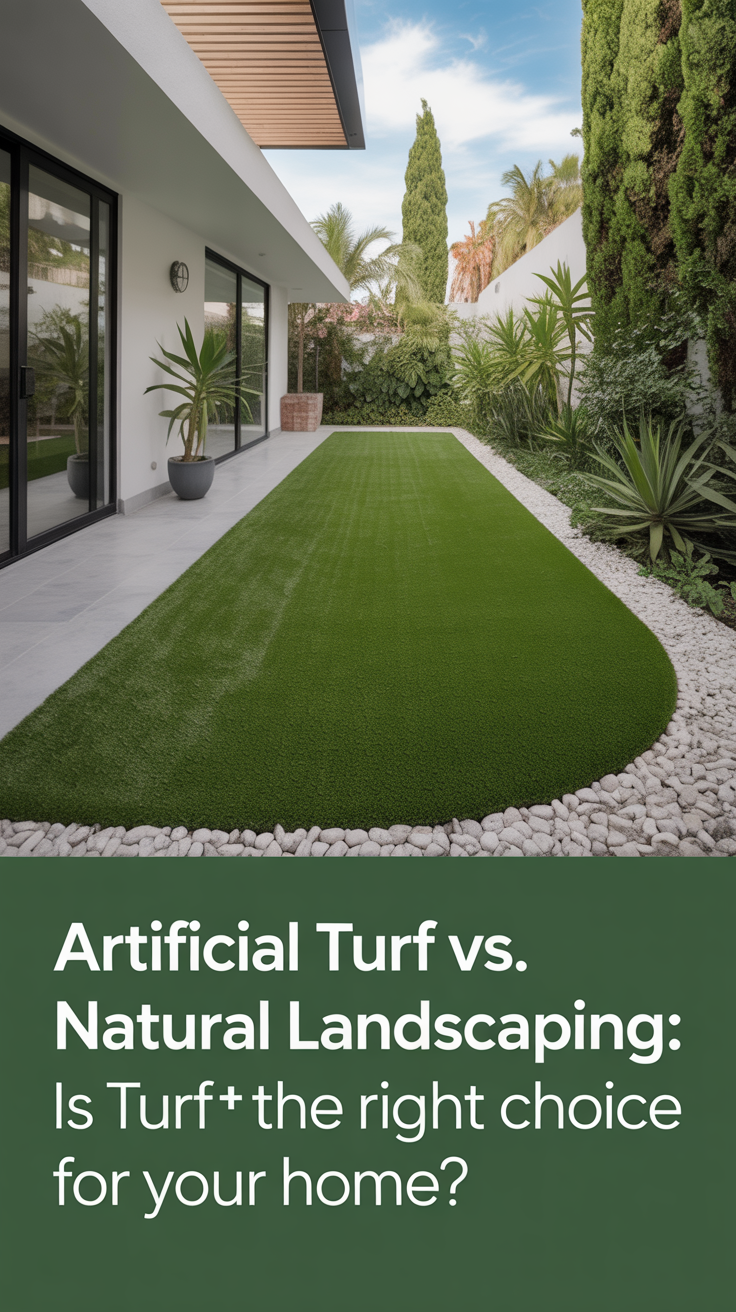
Turf doesn’t have to look like a golf course. In fact, when styled thoughtfully, it can blend seamlessly into modern, natural-looking landscapes. Some homeowners install turf strips between pavers or stepping stones for a clean, architectural feel. Others use turf beneath playsets or in kid zones to eliminate mud while keeping a soft, safe surface. Pet runs and side yards are also perfect candidates for turf, giving dogs a designated spot that won’t turn into a dirt patch.
Turf works well for entertaining areas, too. Imagine a cozy firepit surrounded by turf and gravel or a sleek patio broken up with strips of greenery. It can also be a lifesaver in spots where grass simply refuses to grow, such as under dense shade from oak trees.
Regional Considerations
Where you live also plays a role in whether turf is the right choice. In the American Southwest—places like Arizona, Nevada, and California—turf can save thousands of gallons of water each year. In the Southeast, where humidity makes grass grow well, turf appeals to homeowners who are tired of muddy yards during the rainy season. In the Midwest, turf provides a consistent green lawn even when natural grass goes dormant in winter. In the Pacific Northwest, heavy shade and rain make turf appealing, but the high volume of falling leaves and moss growth mean you’ll need to stay on top of maintenance.
Cost Breakdown: Turf vs. Alternatives
Related reading: If you’re looking for other budget-friendly ways to improve your yard, browse our collection of 25 low-cost backyard projects that make a big difference. 25 low-cost backyard projects that make a big difference.
Cost is often one of the biggest deciding factors. Artificial turf averages between six and fifteen dollars per square foot installed, making it the most expensive option upfront. However, turf can last ten to twenty years, which spreads out that cost over time.
Natural sod is far cheaper to install, usually one to two dollars per square foot, but the ongoing expenses add up quickly once you factor in water, fertilizer, and maintenance. Native plants and groundcovers cost somewhere in the middle, averaging between two and six dollars per square foot, while gravel and other hardscaping solutions range from three to ten dollars per square foot.
While turf has the steepest initial price tag, many homeowners find the investment worthwhile once they factor in lower water bills, reduced maintenance, and increased usability of the space.
Financing and ROI
If you’re worried about the upfront expense, it’s worth knowing that many turf companies now offer financing. While turf may not increase your home’s appraised value in the same way a kitchen renovation would, it can improve curb appeal and make your backyard far more functional. Buyers with pets or children often see turf as a bonus, which could make your home more appealing on the market.
Real-Life Case Studies
Related reading: Struggling with a difficult space? Read our advice on what to do with an awkwardly shaped backyard. what to do with an awkwardly shaped backyard.
There are countless scenarios where turf becomes the obvious solution. Families with large shade trees often discover that no type of sod will grow, but turf can give them the green yard they crave. Pet owners who are exhausted by constant reseeding and muddy floors usually find turf life-changing. Busy professionals who travel often enjoy the peace of mind that their yard will look the same when they return home. Eco-minded homeowners, on the other hand, may choose native plants over turf to prioritize biodiversity and natural beauty.
The Bottom Line: Our Decision
Related reading: For even more inspiration and expert tips, visit our complete Outdoor Living hub. Outdoor Living.
After years of struggling with patchy sod, muddy paws, and the heavy shade from our mature oak trees, we finally made the leap to turf. For our family, turf was the only option that balanced beauty, usability, and durability. That said, it isn’t perfect. The oak trees still drop thousands of leaves every fall, and since turf doesn’t absorb debris, I spend a surprising amount of time raking or even vacuuming the yard to keep it tidy. It’s easier than mowing and reseeding, but it’s still work, and I think that’s important for potential turf owners to understand.
So where does that leave us? Turf isn’t a one-size-fits-all solution. In climates where native plants thrive, or for homeowners who love the seasonal rhythm of natural landscaping, turf may not make sense. But if pets, shade, and maintenance headaches are preventing you from enjoying your yard, turf can be a worthwhile investment.
The best thing you can do is weigh your own priorities—pets, kids, climate, and budget—against the pros and cons of turf. Compare it to alternatives like native plantings, groundcovers, or gravel hardscaping. Whatever you decide, the goal remains the same: to create a backyard that works for your lifestyle, reflects your values, and gives you more reasons to enjoy time outdoors.