

Between juggling work, family, and trying to maintain some semblance of a social life, you probably have a million things on your plate. You want a beautiful home that reflects your personal style, but you also need it to be practical, manageable, and ideally, not require a second mortgage to achieve. You want that “wow” factor without spending every single weekend pulling weeds.
For the longest time, the front of my house was just… there. It wasn’t terrible, but it certainly wasn’t winning any neighborhood awards. It was a patch of grass that needed mowing, a few overgrown foundation bushes that came with the house, and a concrete walkway that had seen better days. It felt like a chore rather than a welcoming entrance. But then I realized something important: the front of our home is the first impression we give the world, and more importantly, it’s the first thing we see when we come home. It sets the tone for how we feel when we walk through the front door.
If you’re looking for the single most impactful way to transform the front of your house, the answer is simple: flower beds. A well-designed flower bed can soften the hard lines of your architecture, add a pop of personality, and make your home look instantly more expensive and inviting.
But I know what you’re thinking. “I don’t have a green thumb,” or “I don’t have the time to maintain a massive garden.” The good news is that modern flower bed design is all about working smarter, not harder. We are moving away from those stiff, formal, high-maintenance lawns and embracing spaces that are lush, eco-friendly, and full of personality.
Whether you have a sprawling suburban lawn or a tiny urban patch, there are so many ways to transform your outdoor space.
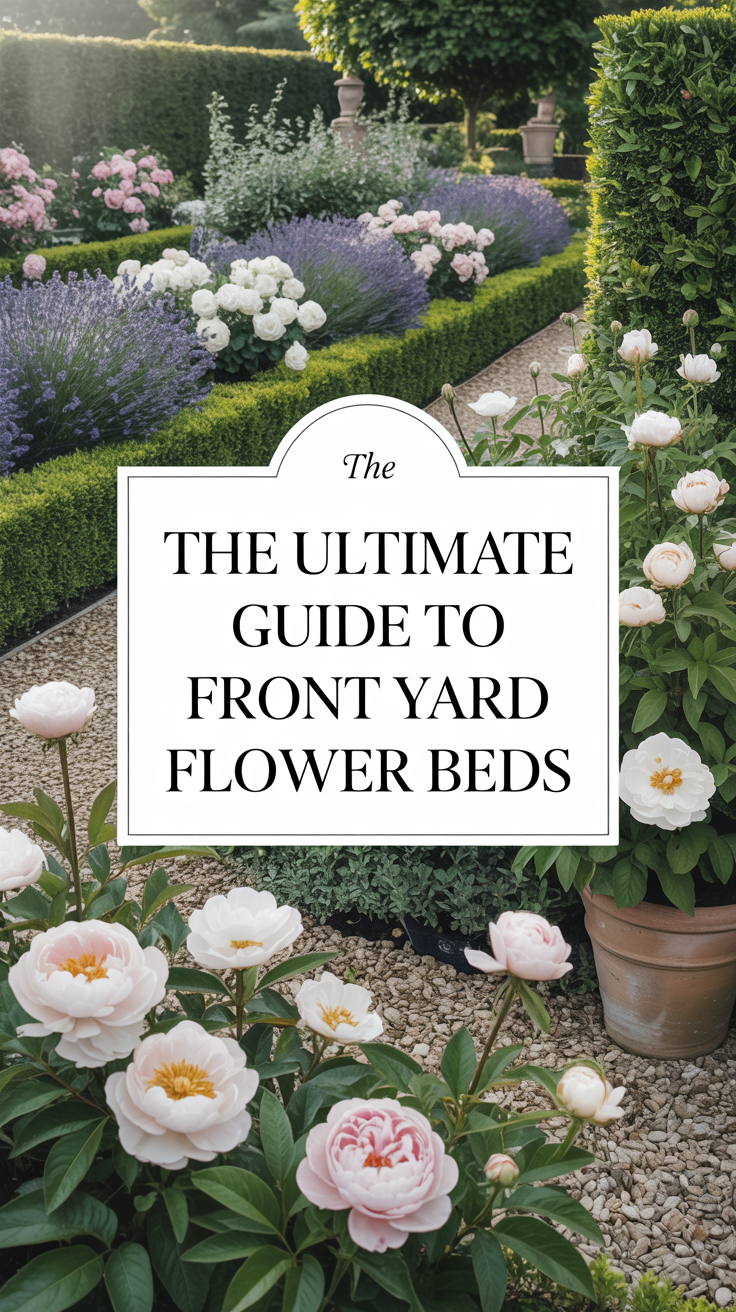
Part 1: The Foundation of Good Design
Before we even talk about picking out pretty flowers at the nursery, we need to talk about design. The biggest mistake I see people make (and I made it too!) is going to the garden center, buying a bunch of plants that look pretty that day, and then coming home and sticking them in the ground randomly.
A beautiful flower bed doesn’t happen by accident; it happens by design. Here are the core principles you need to know to create a magazine-worthy landscape.
The Magic of Landscape Layering
If you’ve ever drooled over glossy magazine articles or awe-inspiring Instagram feeds of gorgeous gardens and wondered, “How did they do that?” the secret is usually landscape layering.
Landscape layering is the practice of using a wide variety of plants arranged into a staggered foreground, middle-ground, and background. It creates a casual, mixed border that looks lush and intentional. Think of it like a garden pyramid.
The Back Layer (The Anchor): This is where your tallest plants go. If your flower bed is up against your house (a foundation planting), this layer will consist of ornamental trees or large evergreen shrubs. Evergreens are crucial here because they provide structure and color 365 days a year. If you only plant things that lose their leaves in the winter, your house will look bare for half the year.
The Middle Layer (The Show-Offs): This is where the magic happens. The middle layer is typically made up of deciduous flowering shrubs (like hydrangeas or lilacs) and tall perennials (like coneflowers or ornamental grasses). This layer provides the bulk of your seasonal color and texture.
The Front Layer (The Edging): The front of your flower bed should feature low-growing perennials, annuals, and groundcovers. These plants soften the edge of the bed, spill over onto walkways, and tie the whole look together. Think creeping thyme, sweet alyssum, or low-mounding hostas.
When you plant in layers, you create depth. Your plants aren’t lined up like soldiers; they are woven together in a way that feels natural and abundant.
Curves vs. Straight Lines
When you are mapping out the shape of your new flower bed, you have a choice to make: straight lines or curves?
Straight lines and 90-degree angles are very popular in modern and contemporary landscape design. They look clean, architectural, and highly structured. However, straight lines require a lot of maintenance to keep them looking sharp. Every weed or overgrown edge stands out like a sore thumb.
Curved flower beds, on the other hand, are much more forgiving and tend to look more natural. Curves help bounce the eye across the space, making a small front yard feel larger. They soften the rigid, boxy shape of a house and create a sense of flow.
Pro Tip: If you choose to do curved beds, make sure the curves are deep and sweeping. The biggest mistake people make is creating tight, wavy curves that look like a squiggly worm. Broad, sweeping curves are not only more elegant, but they are also much easier to mow around! A great trick is to lay out a garden hose on your lawn to play with the shape before you start digging.
The Rule of Repetition
Consistency is key in garden design. If you plant one of everything, your flower bed will look chaotic and messy, like a botanical zoo rather than a cohesive design.
To create a professional look, you need to use repetition. You can repeat a specific plant, a specific color, or a specific texture throughout the bed.
For example, planting a “drift” (a grouping of 3, 5, or 7) of the same plant creates a much bigger visual impact than spotting one plant here and there. Repeating a specific color—like weaving pops of magenta or bright yellow throughout the bed—helps guide the eye down the pathway and makes the whole design feel connected. Always plant in odd numbers; it looks much more natural to the human eye than even, symmetrical pairings.
Part 2: Choosing the Right Plants
Okay, now for the fun part: picking the plants! When you are designing a flower bed for the front of your house, you want plants that offer maximum impact for minimal effort. You need a mix of evergreens for structure, perennials for reliable yearly blooms, and annuals for non-stop summer color.
The Backbone: Foundation Shrubs
Foundation shrubs are the plants that sit directly in front of your house, hiding the foundation and anchoring the home to the landscape.
Boxwood: You can’t go wrong with a classic boxwood. They are evergreen, deer-resistant, and can be pruned into neat, formal shapes or left to grow into soft, natural mounds. They provide that essential winter structure.
Hydrangeas: If there is one shrub that screams “curb appeal,” it’s the hydrangea. They produce massive, showy blooms all summer long and into the fall. Depending on your climate and soil, you can choose from classic blue mopheads, elegant white panicles, or hardy oakleaf varieties. They look stunning planted in large amounts.
Dwarf Yaupon Holly: If you live in a warmer climate, this is a fantastic, low-maintenance evergreen option. It has small, dense leaves and a naturally rounded shape that requires very little pruning.
The Reliable Returners: Easy-Care Perennials
Perennials are the plants that come back year after year. They are the workhorses of the flower bed. While they have a shorter bloom time than annuals, they require much less work in the long run.
Coneflowers (Echinacea): These are an absolute must-have. They are incredibly drought-tolerant, they bloom for weeks in the mid-to-late summer, and they come in a candy box of colors (though the classic purple-pink is my favorite). Plus, they attract butterflies and bees!
Hostas: If the front of your house is shaded by large trees or faces north, hostas are your best friend. They are grown primarily for their gorgeous, textured foliage, which comes in shades of deep green, chartreuse, and blue-gray. They are virtually indestructible.
Black-Eyed Susans (Rudbeckia): These cheerful, golden-yellow flowers are native to many parts of the US, which means they are tough as nails. They thrive in full sun and poor soil, and they provide a massive burst of color in the late summer when other plants are starting to fade.
Sedum (Autumn Joy): If you want a plant that you can literally plant and forget, this is it. Sedum is a succulent, so it stores water in its leaves and is incredibly drought-tolerant. It produces large, broccoli-like flower heads that turn a beautiful rusty pink in the fall.
The Showstoppers: Long-Blooming Annuals
Annuals are plants that complete their life cycle in one year. You have to replant them every spring, but the trade-off is that they bloom continuously from the moment you plant them until the first frost. They are the secret to a flower bed that always looks colorful.
Petunias (specifically Supertunias): Forget the sticky, messy petunias of the past. Modern varieties like Supertunias are self-cleaning (meaning you don’t have to pick off the dead flowers) and they bloom profusely all summer long. They are perfect for the very front edge of your flower bed.
Sweet Alyssum: This low-growing annual produces a carpet of tiny white or purple flowers that smell like honey. It’s a fantastic edging plant that spills beautifully over rocks or walkways.
Lantana: If you live in a hot, sunny climate, lantana is a powerhouse. It produces clusters of brightly colored flowers (often mixing pink, yellow, and orange on the same plant) and thrives in the blistering heat. It’s also a magnet for hummingbirds.
Part 3: Planning for Four-Season Color
One of the biggest challenges in designing a flower bed is making sure it looks good all year round. It’s easy to go to the nursery in May, buy everything that is blooming, and have a spectacular spring garden that turns into a brown, dead mess by August.
To create a truly magazine-worthy front yard, you need to plan for four-season color. This means selecting plants that peak at different times of the year.
Spring: The Awakening
Spring is all about fresh, bright colors and the excitement of new growth. This is the time for bulbs and early-blooming perennials.
What to Plant:
- Daffodils and Tulips: Plant these bulbs in the fall for a burst of cheerful yellow, pink, and red in the early spring. They look best planted in large drifts rather than single rows.
- Creeping Phlox: This low-growing perennial creates a carpet of vibrant pink, purple, or white flowers that spill beautifully over the edges of your flower bed.
- Bleeding Hearts: If you have a shady front yard, these delicate, heart-shaped flowers are a classic spring favorite.
Summer: The Main Event
Summer is when your flower bed should be in full swing. This is the time for your long-blooming annuals and heat-loving perennials to shine.
What to Plant:
- Daylilies: These tough perennials produce large, trumpet-shaped flowers in a huge variety of colors. Each flower only lasts one day (hence the name), but the plant produces so many buds that it blooms for weeks.
- Salvia: This spiky, purple or blue perennial is a magnet for bees and butterflies. It blooms profusely in the early summer and will often re-bloom if you cut it back after the first flush.
- Zinnias: These classic annuals come in almost every color of the rainbow and bloom non-stop until the first frost. They are perfect for filling in any gaps in your flower bed.
Fall: The Grand Finale
Don’t let your flower bed fizzle out in September! Fall is a fantastic time for rich, warm colors and interesting textures.
What to Plant:
- Chrysanthemums (Mums): These are the quintessential fall flower. They produce dense mounds of blooms in shades of orange, yellow, red, and purple. You can buy them in full bloom at the garden center and pop them right into your flower bed for instant color.
- Ornamental Grasses: Grasses like Maiden Grass or Fountain Grass really come into their own in the fall. They produce feathery plumes that catch the autumn light and add beautiful movement to the garden.
- Japanese Anemone: This late-blooming perennial produces delicate, cup-shaped flowers in shades of pink and white. It’s a great choice for adding a touch of elegance to the fall garden.
Winter: The Quiet Structure
Winter is the hardest season to design for, but it’s also the most important. When all the flowers are gone and the leaves have fallen, your flower bed needs structure to keep it from looking barren.
What to Plant:
- Evergreens: As mentioned earlier, evergreens are the backbone of the winter garden. Boxwoods, hollies, and junipers provide essential green color and solid shapes.
- Red Twig Dogwood: This deciduous shrub loses its leaves in the winter, revealing striking, bright red branches that look incredible against a backdrop of snow or evergreen foliage.
- Winterberry: Similar to the Red Twig Dogwood, this shrub produces clusters of bright red berries that persist throughout the winter, providing a pop of color and a food source for birds.
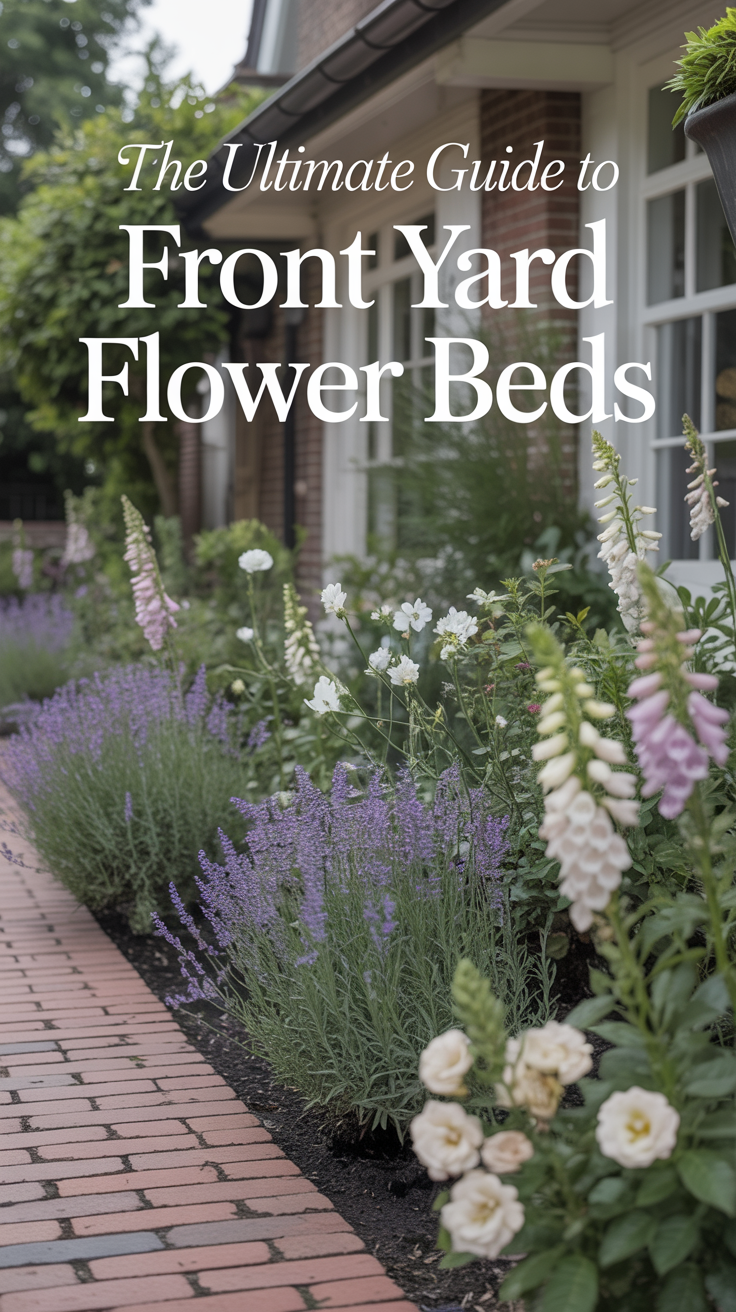
Part 4: Color Theory for the Garden
Now that you know what to plant and when to plant it, let’s talk about color. Choosing a color palette for your flower bed can be overwhelming, but understanding a little bit of basic color theory can make a huge difference.
The Color Wheel
The color wheel is your best friend when designing a flower bed. It consists of primary colors (red, yellow, blue), secondary colors (orange, green, purple), and tertiary colors (the colors in between).
Complementary Colors: These are colors that are opposite each other on the color wheel, like purple and yellow, or orange and blue. Pairing complementary colors creates a high-contrast, vibrant look that really pops. For example, planting purple salvia next to yellow black-eyed Susans is a classic, eye-catching combination.
Analogous Colors: These are colors that are next to each other on the color wheel, like red, orange, and yellow, or blue, purple, and pink. Analogous color schemes are harmonious and soothing to the eye. A flower bed filled with different shades of pink, purple, and white is a beautiful, romantic choice.
Monochromatic Colors: This is a color scheme that uses different shades and tints of a single color. A monochromatic white garden (often called a “moon garden”) is incredibly elegant and looks stunning in the evening light.
The Rule of Three
When choosing a color palette, a good rule of thumb is to stick to three main colors. This keeps the design from looking too chaotic. You can choose one dominant color and two accent colors, or three colors that are evenly balanced.
For example, you might choose a palette of pink, purple, and white. You could use pink coneflowers as your dominant color, purple salvia as an accent, and white sweet alyssum as an edging plant.
Don’t Forget the Foliage
When we think about color in the garden, we usually think about flowers. But foliage is just as important! In fact, foliage is often more reliable than flowers, because it lasts all season long.
Look for plants with interesting foliage colors, like the deep burgundy leaves of a coral bell (Heuchera), the silvery-blue leaves of a hosta, or the bright chartreuse leaves of a sweet potato vine. Mixing different foliage colors and textures is a great way to add visual interest to your flower bed, even when nothing is blooming.
Part 5: DIY Tips for Building and Maintaining Your Flower Bed
Okay, you’ve got your design, you’ve chosen your plants, and you’ve picked your color palette. Now it’s time to get your hands dirty! Here are some practical, DIY tips for building and maintaining a gorgeous flower bed.
Step 1: Prep the Soil
The secret to a successful flower bed is good soil. If you have poor, compacted, or clay-heavy soil, your plants are going to struggle.
Before you plant anything, take the time to prep the soil. Remove any grass or weeds from the area. Then, add a generous layer of organic matter, like compost or aged manure. Work the organic matter into the top 6-8 inches of the soil using a tiller or a garden fork. This will improve the soil structure, drainage,