

We’ve all stood in that odd little corner of our apartment or house and imagined it as something more than a dust-catching afterthought. A cozy reading nook is one of the highest-value upgrades for a small home: it doesn’t just add a place to sit, it creates a feeling, an intentional pause in an otherwise busy floor plan. In this guide we’ll walk through how to evaluate awkward corners, choose seating that fits, layer the right lighting, maximize storage, and style a spot that invites you to linger. The 15 nook ideas that follow are practical, space-savvy, and updated for 2026 trends, think multipurpose furniture, warm LEDs, and tactile textiles. Whether you’re working with a sliver of space between windows or a tiny alcove under the stairs, we’ll show ways to turn it into your favorite corner.
Why A Cozy Reading Nook Transforms Small Homes
A small home benefits most from features that do double duty: they serve a clear function and also make the space feel larger or more purposeful. A cozy reading nook does exactly that. First, it provides a dedicated zone for focused activity, reading, journaling, or just decompressing, without requiring a whole room. That sense of a designated place helps the rest of the home feel more organized and intentional, which psychologically reduces clutter. Second, a well-designed nook adds vertical interest and texture: books, shelving, and layered soft goods draw the eye upward and create perceived depth. Third, nooks often act as “featherweight” focal points: they’re inexpensive to create and easy to change seasonally, so we can refresh our interiors without a major renovation. Finally, in 2026 the emphasis on hybrid living, work, leisure, rest, means we need micro-spaces that support different activities. A reading nook can function as a quiet work spot, a cozy call background, or a meditation nook when we need it. So, beyond aesthetics, a reading nook is a small investment that pays in wellbeing and utility.
How To Evaluate Your Awkward Corner Before You Start
Before we sketch layouts or buy cushions, we need to measure and assess. Start with three practical steps: measure, observe, and prioritize. Measure: record the height, width, and depth of the corner, plus door clearances and window sash swing. Note any radiators, vents, or baseboard heaters that limit placement. Observe: spend a day or two noticing light patterns, when does direct sunlight hit the spot? Is it drafty in winter? Are there noise sources nearby? Prioritize: decide how you’ll use the nook. Is it for short reads (10–20 minutes), long reads with tea, or intermittent laptop work? If we’ll use a laptop, power access and a stable surface are non-negotiable. If the nook is mainly for relaxation, we prioritize softer seating and dimmable lighting. Sketch a quick plan to scale on graph paper or a simple phone app: this prevents impulse buys that don’t fit. Finally, consider circulation: a nook should feel tucked-in but not trapped, allow for a small clearance so someone can enter and exit comfortably. This upfront assessment saves time and ensures the finishing touches actually work when installed.
Seating Solutions for Tight Spaces
Seating in small corners needs to balance comfort, scale, and versatility. We look for pieces that feel intentional without overwhelming the space. The main strategies are scale-down (choose slim profiles), integrate (built-ins or benches), and flexible floor-level options (cushions and poufs). Slim armchairs with a narrower seat and lower arms maintain comfort while trimming depth. Corner benches, whether custom-built or modular, make efficient use of awkward geometry and can include storage. Floating seats, like cantilevered benches or wall-mounted folding chairs, free up floor area and provide a lighter visual footprint. When choosing materials, prefer fabrics that are durable and easy to clean, performance linens, tightly woven cottons, or leather alternatives that can handle coffee rings and daily use. Finally, consider ergonomics: even in a compact nook, a supportive backrest and a seat height that matches nearby surfaces (for small side tables) improves usability. With the right seating approach, an awkward corner becomes a deliberate mini-retreat rather than a cramped afterthought.
Seating Examples: Built-In Bench, Slim Armchairs, And Floor Cushions
Built-in bench: A shallow built-in bench (12–18 inches deep for lounging, 16–20 for eating) can follow the contour of the corner, L-shaped under windows or single-run against a wall. Add a hinged top for storage or a row of drawers beneath. We like plywood with a painted finish for a clean, budget-friendly base and a thick foam cushion covered in washable fabric for comfort. Slim armchairs: Choose chairs with exposed legs and low arms to reduce visual bulk. A sling-style seat or upholstered chair with tapered wooden legs reads lighter in a compact space. Look for seats around 24–28 inches wide and 28–32 inches deep to fit narrow corners. Floor cushions and poufs: For ultra-flexible seating that disappears when not needed, stackable floor cushions, kilim poufs, or oversized pillows are perfect. They’re great when the corner also serves as a play area or occasional extra seating for guests. Use a waterproof inner for spills and a removable cover for easy washing. Layer any combo of these solutions with a small side table or tray to keep drinks and books close.
Lighting And Ambience: Making A Small Corner Feel Inviting
Proper lighting transforms an overlooked corner into a place you actually want to sit. We aim for three lighting goals: task illumination for reading, ambient light to set mood, and accent lighting for depth. Task lighting needs to be bright but glare-free, around 300–500 lux at reading level. Ambient lighting softens shadows and makes the nook feel warm. Accent lighting highlights texture, sconces can wash a bookshelf, while a downlight can spotlight a plant. Consider using warm color temperatures (2700K–3000K) to keep the nook cozy: cooler whites are harsher and less restful. Dimming capability is essential: we want bright for focused reading, low for evening relaxation. Also plan lighting with wiring in mind: battery-operated or USB-rechargeable lamps have improved dramatically and allow placement where outlets are scarce. Finally, think about control: smart bulbs or a small inline dimmer let us adjust intensity without jumping up from a comfortable position.
Layered Lighting Ideas For Small Corners
Sconce + reading lamp: A wall sconce provides ambient wash while an adjustable swing-arm or clamp lamp gives targeted task light. This combo keeps surfaces uncluttered and works well where floor space is tight. LED strip + under-shelf light: Install a warm LED strip under floating shelves to illuminate books and create a glow behind cushions. It’s energy-efficient and low-profile. Pendant + table lamp: In slightly taller corners, a small pendant adds vertical interest and a small accent lamp on a slim side table supplies task light. Choose a pendant with a downward shade so it doesn’t glare into the eyes. Rechargeable tabletop lamp: When outlets are absent, high-quality rechargeable lamps with dimmers and warm LEDs are game-changers. They’re portable, safe around kids, and many models mimic ambient candlelight without the fire risk. Don’t forget smart controls: a single app or voice command can switch the nook from reading-bright to movie-cozy without fumbling for switches.
Storage And Shelving Strategies To Maximize Space
Books are the soul of a reading nook, but storage often determines whether the nook feels tidy or chaotic. We prioritize vertical storage and multifunctional pieces to use every inch. Narrow floor-to-ceiling shelving capitalizes on vertical real estate, open shelving keeps the nook airy, while back panels or small baskets conceal clutter. Built-in benches with cubbies or drawers offer hidden storage for oversized books, throws, and out-of-season textiles. Corner shelves specifically shaped for triangulated spaces make awkward angles purposeful. Floating shelves are excellent because they keep floor area clear: staggered shelf heights accommodate tall books and decor. For multiuse homes, consider integrating a compact cabinet with a drop-front surface that doubles as a laptop desk. Use baskets, magazine holders, and labeled boxes to corral small items: consistent containers create a cleaner visual rhythm. Finally, rotate your book display seasonally, store lesser-read volumes elsewhere and keep current reads within arm’s reach to maintain a curated feel.
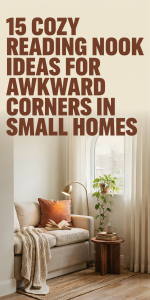
15 Cozy Reading Nook Ideas For Awkward Corners (Layouts, Materials, And Practical Tips)
- Window Seat with Deep Cushion: Make an under-window ledge into a shallow bench layered with a custom-cut foam cushion and weather-resistant fabric for sunny reading spots. Tip: add a thin lumbar pillow for back support.
- L-Shaped built-in bench with drawers: Use the corner footprint to install an L-shaped bench with drawers on one side and open cubbies on the other, perfect for books and boards.
- Narrow Tall Bookshelf + Cozy Chair: Place a slim, tall bookcase against the wall and a narrow, low-profile chair beside it. This vertical emphasis keeps the corner feeling roomy.
- Fold-Down Wall Bed for Reading + Napping: A shallow murphy-style seat that folds to a nap surface is ideal in micro-studios where furniture must multi-task.
- Alcove With Floating Shelves and Poufs: Floating shelves above a layered rug and stackable floor cushions give a boho, flexible lounge that tucks neatly into alcoves.
- Built-In Window Bench With Radiator Cover: Combine a radiator cover with seating: the warmth makes the nook irresistibly cozy in winter.
- Corner Daybed for Long Reads: A short corner daybed (a twin mattress depth) offers a near-lie-flat option for long reading sessions without taking over the room.
- Diagonal Corner Chair to Open Circulation: Orient a compact chair diagonally to soften sharp angles and create a welcoming flow.
- Hidden Storage Ottoman + Reading Light: A rectangular ottoman that opens for storage paired with a clamp lamp is simple, affordable, and neat.
- Narrow Bench with Under-Seat Baskets: A slim bench with baskets underneath provides tidy storage for magazines, knitting, or kids’ books.
- Floating Desk That Doubles as Shelf: Install a shallow floating desk that’s shallow enough for reading and deep enough to hold a lamp, when not in use it reads as an integrated shelf.
- Minimal Scandinavian Nook: Light woods, neutral textiles, and a slim lounge chair create a bright, airy corner that feels larger than it is.
- Multi-Level Shelving Cascade: Cascading shelves that step down into the corner create display nooks and a natural place to perch a cushion.
- Built-In Bench With Integrated Lighting: Recess LED strips into the underside of upper cabinets or shelves to make a soft halo of light around the bench.
- Pocket Nook With Curtain or Sliding Panel: For privacy or to hide the nook when guests come, install a curtain rail or slim sliding panel. This works well in open-plan living rooms.
Materials and practical tips: choose performance fabrics for durability: use plywood or MDF with veneered finish for affordable built-ins: pick low-VOC paints for indoor air quality: secure tall shelves to studs for safety: and use slim-profile hardware to keep the look light. For every idea, we recommend sketching to scale and prioritizing electrical planning early, lighting and outlets make or break a functional reading nook.
Styling, Textiles, And Accessories To Complete The Nook
Styling a nook is where personality meets comfort. Start with a base layer: a small rug anchors the space and adds warmth, choose a size that fits the seating plus a 6–12 inch border so it reads intentional. Layer cushions of varying sizes and textures: a firmer lumbar pillow for support, a larger soft cushion for lounging, and one decorative pillow to add color. Throws are non-negotiable: a medium-weight knit and a lightweight cotton cover give seasonal options. For textiles, mix natural fibers (linen, cotton, wool) with a tactile accent (bouclé or faux shearling) for 2026’s cozy-modern aesthetic. Accessories should be curated, not cluttered: a slim side table or a nesting tray keeps drinks safe, a small stack of current reads gives the nook a lived-in feel, and a houseplant adds life and air cleansing benefits. Decorative hooks or a small pegboard can hold reading glasses or headphones. For wall decor, we favor one modest piece, a framed print, a small mirror to amplify light, or a shallow shelf with a rotating vignette. Finally, scent matters: a subtle reed diffuser or a soy candle (never unattended) turns fleeting visits into ritualized relaxation.
Conclusion
Creating a cozy reading nook in an awkward corner is one of the highest-impact, lowest-cost ways to elevate a small home. By assessing the space carefully, choosing scaled seating, layering practical lighting, and integrating smart storage, we can convert even the smallest recess into a treasured retreat. The 15 ideas here mix DIY approaches with ready-made solutions so we can pick the option that fits our budget, skill level, and lifestyle. Start small, test a cushion or temporary lamp, and iterate. With thoughtful planning and a few well-chosen pieces, that awkward corner will become the spot we actually choose when we want to slow down, read, or simply be.