Custom upholstery feels like the holy grail of decorating — a chance to create something that actually fits your room, your body, and your style. But with a hundred tiny decisions (fabric, fill, frames, springs, skirt or no skirt, welt or flange…), the process can go from exciting to overwhelming fast. This guide walks you through everything worth considering before you order a custom sofa, sectional, chair, or daybed — plus a few pro details most shoppers never hear about.
1) Start With the Right Partner (Your Maker Matters More Than Your Moodboard)
Great custom furniture starts with the shop building it. If you can, work with a reputable local upholsterer or small workshop: communication is easier, and you can sit-test fillings and flip through fabric books in person. Semi-custom retailers are fine, but ask pointed questions:
What’s the average lead time (and what’s realistic during holidays)?
What frame materials do you use (ideally kiln-dried hardwood)?
What spring/suspension system do you use (more on this below)?
Can I sit-test cushion fills or see construction samples?
What’s the repair/warranty policy?
Pro move: Ask to see an in-progress piece. You’ll learn more from five minutes in a workroom than five hours on Pinterest.
2) Measure More Than the Room (Measure How You Live)
Dimensions aren’t just numbers — they’re comfort. Before you spec a sofa:
Seat height: 17″–19″ suits most people. Taller folks often prefer 19″–20″.
Seat depth: Standard is ~22″. Loungers like 24″–26″. Petite folks often prefer ~20″–21″.
Back height: If you want head support, aim higher than 32″ (or choose tall loose backs).
Arm height: Matters if you nap or side-lean; 24″–26″ can cradle a pillow perfectly.
Lifestyle fit test: Visit a showroom and write down the actual measurements of seats you love. Don’t guess — capture what your body likes, then build to that.
3) Frame Construction (What You Can’t See Determines How Long It Lasts)
The frame is the skeleton. Look for:
Kiln-dried hardwood (maple, oak, beech). Avoid softwoods/particleboard.
Corner blocks + glued/doweled joints for strength.
Plinth base vs. legs: Plinth reads modern and sturdy; legs feel lighter and traditional.
If a maker can’t clearly explain their frame, move on.
4) Springs & Suspension (The Secret Ingredient)
This is the stability and bounce under your cushions:
Eight-Way Hand-Tied (8WHT): Gold standard. Hand-lashed coil springs tied in eight directions. Even support, great longevity, premium price.
Sinuous (No-Sag) Springs: S-shaped steel running front-to-back. Good value, firmer sit, perfectly fine when done well (heavier gauge is better).
Webbing (including Pirelli): Often used in modern pieces/chairs. Quality varies; high-end webbing can be excellent.
If you want heirloom comfort, ask for 8WHT. If budget matters, well-executed sinuous springs are a solid choice.
5) Cushion Fill (Comfort vs. Maintenance)
Cushion fill determines how the piece feels — and how much fluffing it needs.
All down/feather: Cloudy and luxe… but high-maintenance. Needs frequent fluffing.
Foam: Holds shape best, can feel firm if not wrapped.
Best-of-both: High-resiliency foam core wrapped in a 90/10 feather-down blend (or fiber if you’re allergic). Channeled backs keep the feathers from settling.
Pro move: Ask for a “crown” on your seat cushions (a slight dome) so they don’t look flat after a few months.
6) Fabric: Beauty Meets Reality
Fabric is where style meets everyday life. Consider three things: look, durability, and care.
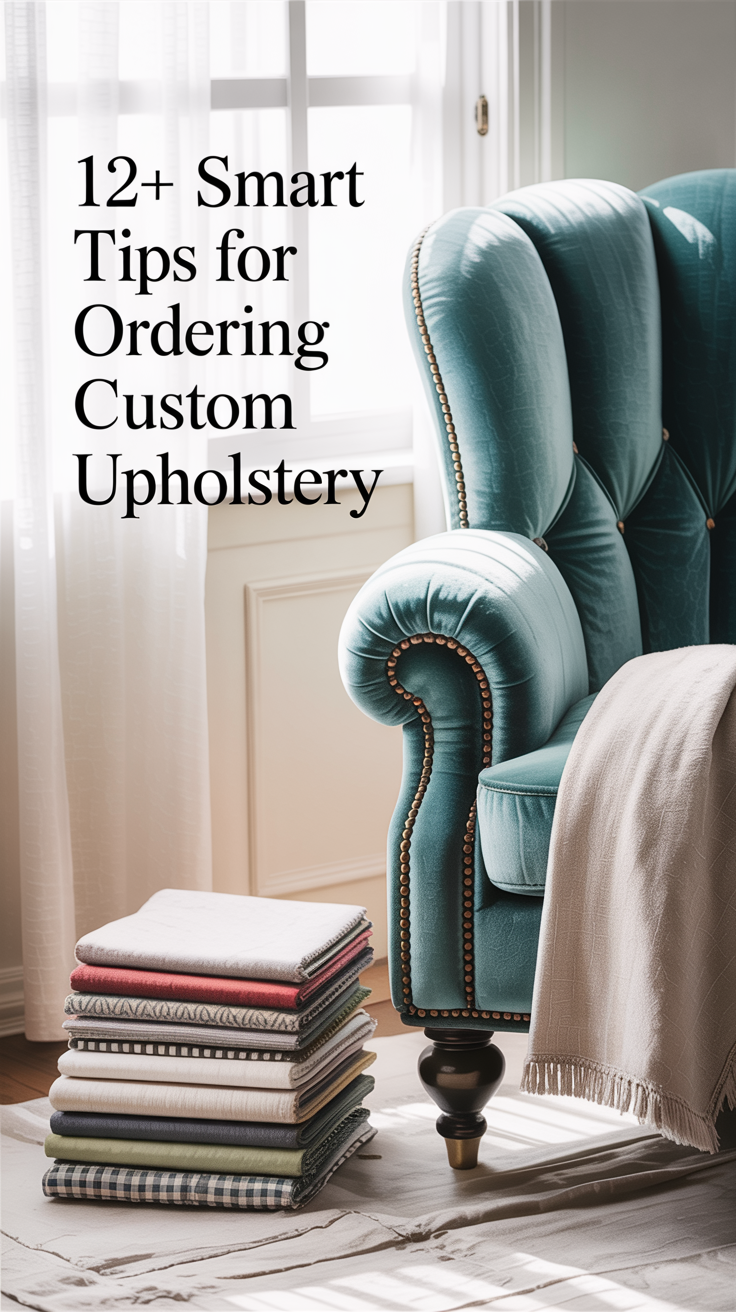
Natural fibers: Linen, cotton, wool — gorgeous hand, can wrinkle/stain more easily.
Performance fabrics (Crypton, InsideOut, etc.): Stain resistant, family- and pet-friendly, wipeable.
Leather: Durable, ages beautifully; see the leather section below.
Patterns/texture: Texture hides wear better than a slick solid. Patterns require pattern matching (more $$ but worth it).
Durability tip: Ask the Martindale or Wyzenbeek rub count. For family rooms, target 30,000+ double rubs. For light-use living rooms, you can go lower.
Sun + pets + kids? You’ll likely be happiest with performance fabric or protected leather.
7) Leather 101 (Grain, Finish & Patina)
If you’re considering leather:
Full-grain: Highest quality; the natural surface isn’t sanded. Ages with beautiful patina.
Top-grain: Slightly corrected; still good quality.
Split/bonded: Budget options; not as durable.
Finish types:
Aniline: Soft, natural, shows patina and marks; most luxe, least protected.
Semi-aniline: A light protective finish — the sweet spot for softness + practicality.
Pigmented/protected: Most durable and uniform; less “buttery,” but easiest to live with.
8) Arms, Legs & Base (Style DNA)
Arms and legs define the silhouette:
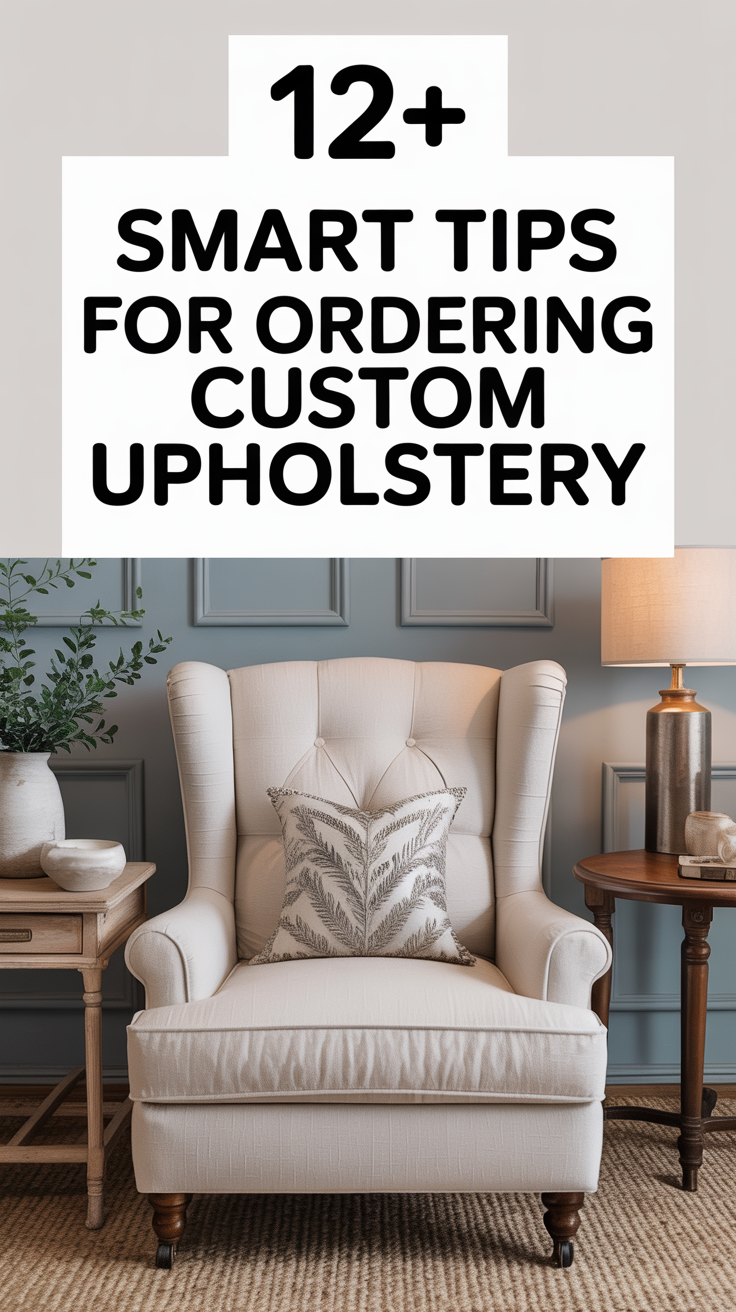
Arms: Track (modern), English roll (classic), shelter (cozy), slope (soft transitional), key/ledge (tailored).
Legs: Turned (traditional), tapered (Mid-century), reeded/fluted (decorative). Casters add charm and mobility.
Skirt vs. no skirt: Skirts feel traditional and hide dust bunnies; no-skirt feels cleaner and shows off the legs.
Pro move: If you want a modern-classic mix, try a track arm with turned legs on brass casters — crisp meets cozy.
9) The Fun Stuff: Tailoring & Details
Small details add a designer finish:
Welting / piping (self or contrast)
Flange edge (casual, airy)
Tufting (tight or diamond)
Banding/tape trim (think Greek key on a bench)
Nailheads (classic on chairs/sofas)
Topstitching (great on leather)
Slipcovers (washable, coastal, or Belgian linen vibes)
These details make a simple form feel custom without a massive price hike.
10) Pattern Matching (If You Love Stripes, Read This)
Plaids, stripes, and large-scale prints need skillful cutting so lines meet at seams and across cushions. Ask if pattern matching is included and how they handle “railroading” (running the pattern horizontally to avoid seams on long cushions). If your heart is set on a hero print, budget a little extra for the match.
11) Sectional Planning (Avoid the “Too Big” Trap)
Sectionals are deceptively tricky. Watch for:
Traffic paths: Leave 36″ clear walkways.
Chaise vs. bumper: A chaise is deep and naps well; a bumper is more open and flexible.
Modular vs. fixed: Modular pieces reconfigure as your life changes; fixed sectionals look cleaner.
Corner comfort: Corner back cushions matter — ask for channeled/structured backs.
Room layout rule of thumb: Sofa + coffee table = 18″ between seat front and table edge (comfortable reach).
12) Sleeper Sofas (If Guests Are Real People, Not “Future You”)
Not all sleepers are equal:
Barless mechanisms are worth it (no dreaded “bar-in-the-back”).
Mattress type: Foam is fine; memory foam or air-over-coil hybrids are more comfortable.
Seat feel vs. sleep feel: Some sleepers sit firmer because of the mechanism. Sit-test if you can.
13) Maintenance Reality Check (So It Still Looks Good Next Year)
Ask up front:
Can cushion casings be removed?
Are slipcovers available?
What cleaning codes apply (W/S/X)?
For down-wrap seats, how often should you rotate/fluff?
For leather, what conditioner and how often?
Annual care ritual: Tighten legs/casters, vacuum crevices, check seams, condition leather, lightly steam performance fabrics if needed.
14) Budgeting Without Surprises (Where the Money Actually Goes)
Your price is mostly driven by:
Fabric or leather cost
Cushion/fill spec
Frame & suspension
Tailoring complexity (tufting, pattern matching, skirts)
Size
Delivery & white glove
Budget saver ideas:
Choose a performance plain weave and add interest with contrast welt and pillows.
Do single bench seat (fewer seams) with tufted backs for drama, not cost.
Order matching pillows now; it’s cheaper than hunting later.
15) Lead Times & Logistics (The Most Boring Part That Ruins the Most Projects)
Plan backward from your date. If you need a sofa by November, you don’t approve specs in October.
Typical lead times: 8–20 weeks. Add time for fabric backorders.
Delivery: Measure every doorway, hallway, stair turn, elevator, and the final room.
White-glove setup: Worth it. They unwrap, assemble, and remove packaging.
Fit math you’ll actually use:
Diagonal depth of the sofa (corner-to-corner across the back) must be less than your tightest stair turn or doorway clearance. Ask the maker for the shipping schematic.
16) Sustainability (Better for Your Home, Better for the Planet)
Ask about:
Kiln-dried hardwood from responsible sources
Low-VOC glues/finishes
CertiPUR-US foam or natural latex options
Natural fillings (wool/down) if allergies aren’t an issue
Made-to-repair construction (replaceable cushion cores, slipcovers)
Long-life furniture is the most sustainable choice of all.
17) Warranties, Repairs & “What Ifs”
A clear warranty isn’t a luxury; it’s a must.
Frame: Look for 5–limited lifetime.
Springs/suspension: 3–10 years is common.
Cushions: Usually 1–5 years against premature collapse.
Tailoring/Fabric: Fabric mills set their own terms; performance claims vary.
Ask who handles problems — the maker, retailer, or fabric mill — and how long claims typically take.
18) Common Mistakes to Avoid
Ordering too deep: 26″ sounds cozy until your feet dangle.
Ignoring arm height: Side sleepers and readers need support.
Skipping pattern matching: You’ll notice it forever.
Forgetting the coffee table gap: Aim for 18″.
Not measuring delivery paths: The stairwell always wins.
Choosing fabric from a screen: Always request physical swatches.
19) Style Cheat Sheets (When You Don’t Want to Overthink It)
Modern Classic: Track arm, tight back, bench seat, tapered leg, performance linen.
Cozy Traditional: English roll arm, loose back, two seat cushions, skirted base, subtle herringbone.
Tailored Transitional: Slope arm, loose boxed backs, top-stitched leather, plinth base.
Family Room Workhorse: Shelter arm, foam + feather-wrap seats, channeled backs, Crypton tweed.
20) Ask-Your-Maker Script (Copy/Paste)
Hi [Name],
I’m planning a custom [sofa/sectional/chair] and want to confirm a few specs.
• Frame: kiln-dried hardwood? Joint type?
• Suspension: 8-way hand-tied or sinuous? Gauge?
• Cushions: HR foam core with 90/10 feather-down wrap (channeled backs)?
• Fabric: Can you confirm yardage for [width] fabric and whether pattern matching is included?
• Tailoring: [welting/flange/skirt/tufting details]
• Lead time: Current estimate, plus delivery window
• Warranty: Frame, springs, cushions, tailoring
• Delivery: White-glove? Can you provide a shipping schematic for fit check?
Thanks so much!
21) Measurement Worksheet (Drop-In Download Block)
Room length x width: ______ x ______
Doorway width/height: ______ / ______
Stair width / tightest turn: ______ / ______
Elevator interior (if applicable): ______
Ideal seat height: ______
Ideal seat depth: ______
Ideal back height: ______
Ideal arm height: ______
Coffee table gap target (18″): ______
Max sofa length without blocking traffic: ______
22) Sample Spec You Can Hand to a Maker
Style: 90″ sofa, track arm, tight back, bench seat
Frame: Kiln-dried maple, corner-blocked, glued/doweled
Suspension: 8-way hand-tied
Seat cushion: HR foam core (2.2+ density) with 90/10 feather/down wrap, crowned, down-proof ticking
Backs: Channeled 90/10 feather/down
Arms: 4″ track, 25″ height
Seat: 19″ H, 23″ D
Legs: 6″ tapered, medium walnut, non-marring glides
Tailoring: Self-welt on body and cushions
Fabric: Performance linen, 30,000+ double rubs, color “Sand”
Extras: Two 22″ self-welt pillows, 90/10 fill
Warranty: Frame 10 yrs, springs 5 yrs, cushions 3 yrs
Delivery: White-glove, debris removal
Use this as a template and tweak for your project.
23) If You’re Reupholstering (When to Save It vs. Start Fresh)
Reupholstery makes sense when:
The frame is solid hardwood and heavy.
You love the shape and it fits your room.
Springs can be retied; foam can be replaced.
Budget for new foam, retied springs, and labor — sometimes it’s more than a new sofa, but for heirloom frames, it’s worth every penny.
24) Pets, Kids & Real Life (Make It Easy on Yourself)
Choose woven textures or micro-patterns to hide wear.
Performance or protected leathers clean easily.
Opt for detachable cushion covers or slipcovers if you want washable convenience.
Keep a throw on your favorite perch; it saves the fabric beneath.
25) Timeline Planner (Reality Edition)
Week 0–1: Measure, gather inspo, define budget.
Week 2–3: Visit maker, sit-test fills, pull swatches home.
Week 4: Approve spec sheet, confirm yardage, place order.
Weeks 5–14+: Production (varies by shop).
Final 1–2 weeks: Delivery scheduling; clear pathways; protect floors.
If you have a hard deadline (holidays, move-in), say so up front.
26) Q&A: Quick Hits
Q: Is 8-way hand-tied always worth it?
A: If budget allows and you want that buoyant, even support for decades, yes. But high-quality sinuous springs are absolutely respectable and often kinder on the wallet.
Q: Bench seat or two cushions?
A: Bench looks sleek and naps beautifully. Two cushions keep each seat neater and can be easier to rotate.
Q: Skirted or exposed legs?
A: Skirts feel traditional/cozy and hide robot vacs. Exposed legs feel lighter and show off floors.
Q: Fabric or leather for families?
A: Protected leather wipes clean and ages gracefully. Performance fabrics are fantastic if you love the softness of cloth.
27) Before-You-Order Checklist
Sit-tested seat height/depth you love
Frame spec in writing (kiln-dried hardwood)
Suspension spec (8WHT or sinuous + gauge)
Cushion spec (core density + wrap + channels)
Fabric/leather sample approved at home lighting
Pattern matching (if applicable) confirmed
Tailoring details listed (welt/tuft/skirt/trim)
Delivery schematic for fit check
Warranty terms documented
White-glove delivery included
Final quote with taxes/fees and timeline
Custom upholstery is part creativity, part engineering. When you get the structure right (frame, springs, cushions) and tailor the style to how you live, you end up with a piece that looks great on day one and year ten. Take your time with specs, ask direct questions, and don’t be shy about your budget or your deadline. The right shop will guide you, not push you.
And when that perfectly-sized, perfectly-soft, perfectly-you sofa shows up? Totally worth it.