

Bathroom lighting is one of the most underestimated elements of home design. People often spend hours choosing the perfect tiles, vanities, mirrors, and hardware—only to finish the space with basic overhead lighting that does nothing to enhance the design or improve day-to-day function.
Yet lighting is the single most important factor that determines whether your bathroom feels luxurious or lackluster. The right lighting elevates finishes, flatters skin tones, enhances visibility, prevents shadows, and transforms the entire atmosphere of the room. Bad lighting, however, can make even a gorgeous bathroom feel cold, dated, or impractical.
This guide will teach you everything you need to know about adding proper bathroom lighting—how to layer it, the best lighting temperatures, fixture placement, vanity lighting rules, shower lighting safety, and how to achieve a high-end spa-like look.
Let’s dive in.
Why Bathroom Lighting Matters More Than You Think
Bathrooms are functional spaces—but they’re also deeply personal ones. It’s where you start and end your day, where you get ready for work, where you relax with a bath, and where lighting has a direct impact on how you look and feel.
Here’s why bathroom lighting is critical:
1. You need functional lighting for tasks
Shaving
Makeup application
Skincare
Hair styling
Cleaning
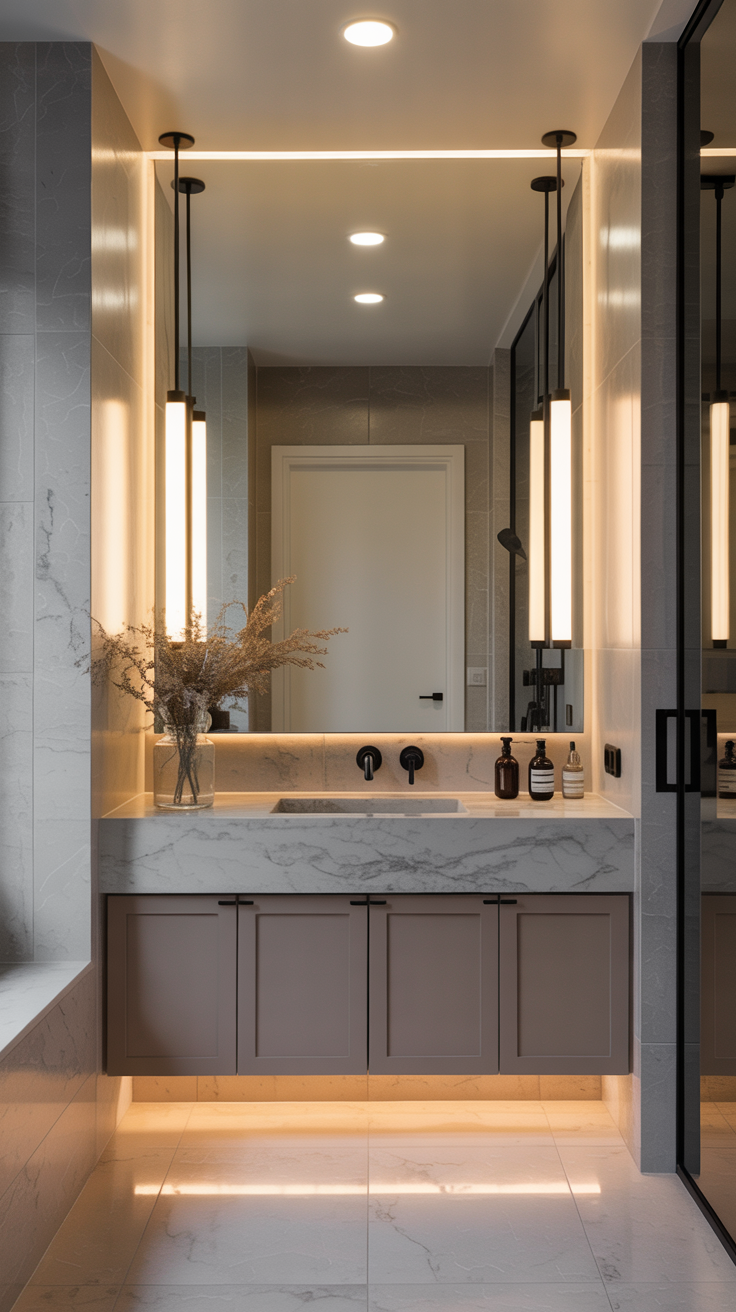
Proper vanity lighting ensures your reflection is accurate, flattering, and free of harsh shadows.
2. Good lighting enhances materials
Stone, tile, grout, wallpaper, painted walls, and wood look vastly different depending on lighting. The right lighting:
Highlights textures
Makes colors appear richer
Reduces glare
Shows true color
3. It sets the mood
Warm lighting creates a spa-like ambiance. Bright neutral lighting wakes you up. Layered lighting gives flexibility.
4. Lighting affects safety
Proper light prevents falls, especially around showers, wet spaces, and low-light late-night bathroom trips.
5. It makes your space look more expensive
Lighting is one of the highest ROI upgrades in any remodel.
Now, let’s break down exactly how to build the perfect bathroom lighting plan.
Three Essential Layers of Bathroom Lighting
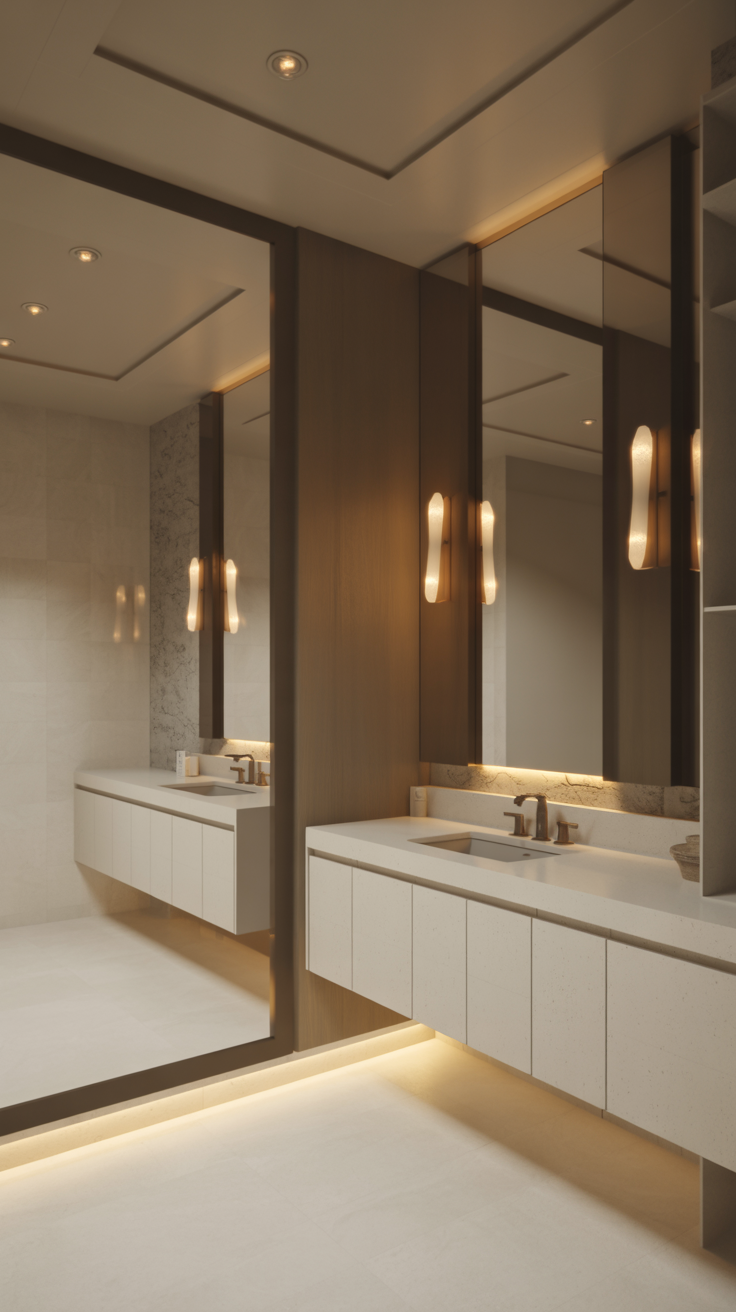
Just like a beautifully designed kitchen or living room, a bathroom needs more than one type of lighting. Designers use three lighting layers:
1. Ambient Lighting (General Illumination)
This is the overall light that fills the room—the baseline level of brightness.
Examples:
Recessed ceiling lights
A central flush-mount ceiling fixture
LED ceiling panels
Integrated lighting in exhaust fans
Ambient lighting sets the foundation and ensures the room is bright enough for everyday use.
2. Task Lighting (Focused, Functional Light)
Task lighting is essential at the vanity, where precision matters most.
Examples:
Vertical sconces
LED mirrors
Backlit mirrors
Vanity bar lights
Hollywood-style perimeter lights (modern versions)
Task lighting should eliminate shadows and light your face evenly.

3. Accent Lighting (Mood & Luxury)
Accent lighting takes a bathroom from “nice” to “wow.”
Examples:
Under-vanity toe-kick lighting
LED strips in alcoves or niches
Backlit floating mirrors
Pendant lights over a tub
Wall washer lights
Cove lighting
These layered details create a spa-like, design-forward atmosphere.
When all three layers work together, the bathroom feels bright, functional, high-end, and cohesive.
The Best Lighting Temperature for Bathrooms
Most homeowners get this part wrong—and it’s why their vanity lighting looks harsh, cold, or unflattering.
Recommended Bathroom Lighting Temperature: 3000K–4000K
3000K → Warm neutral, flattering, softer on skin tones
3500K → Ideal balance between warm and cool
4000K → Clean, daylight-like, great for grooming
Avoid:
2700K (too warm/yellow for accurate makeup application)
5000K–6500K (too blue, makes skin tones look washed out)
Ideal setup:
Vanity area (task lighting): 3500K–4000K
Ambient lighting: 3000K–3500K
Accent lighting: 2700K–3000K for spa vibes
This gives you perfect function and beautiful mood lighting.
How to Light the Vanity Properly (The Most Important Part)
Vanity lighting is where most homeowners struggle. Too often, they install only an overhead fixture—or mount a single vanity bar that casts shadows downward.
To avoid that, follow the rules below.
1. Light the Face Evenly From Both Sides
This is a core design principle.
The best setup:
Two vertical sconces mounted on either side of the mirror
Center of each sconce at 65–70 inches from the floor
Lights spaced 28–36 inches apart
Why this works:
Prevents harsh shadows on the face
Minimizes under-eye shadows
Mimics natural daylight coming from both sides
2. If Side Sconces Aren’t Possible, Use a Lighted Mirror
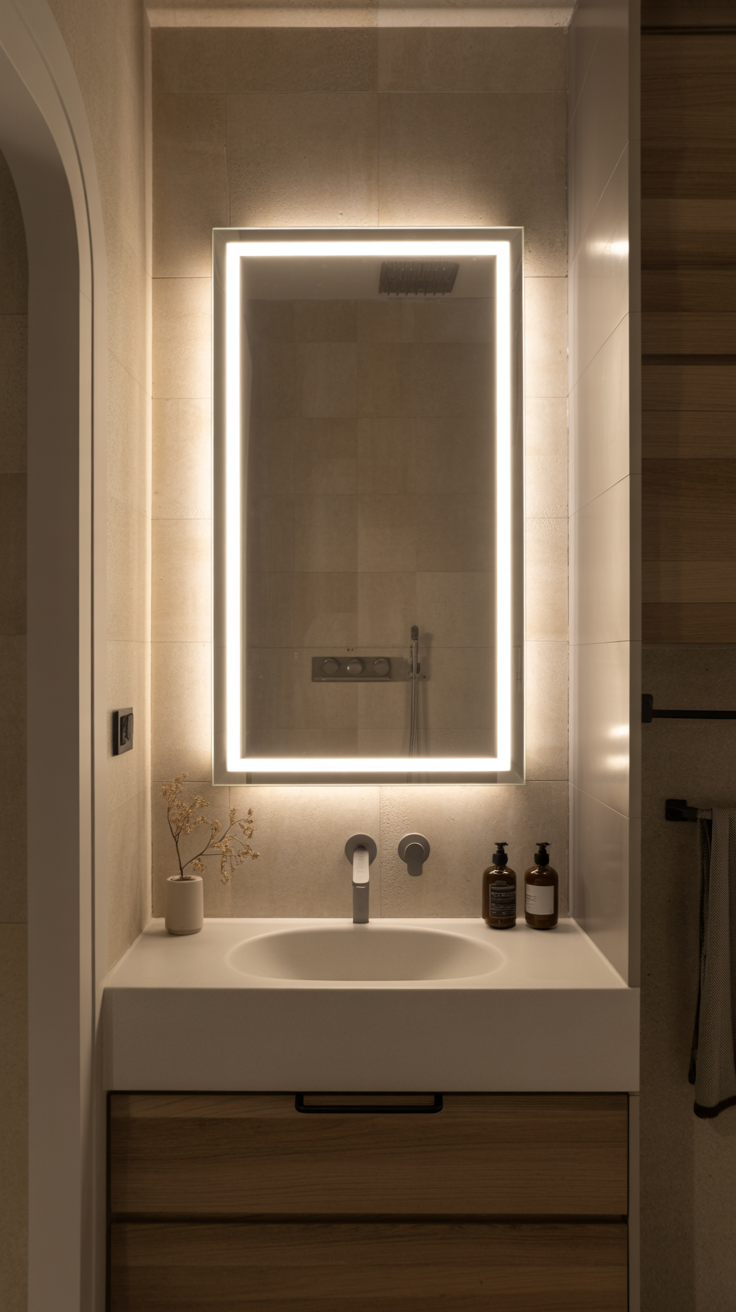
Lighted mirrors are excellent for compact bathrooms or modern designs.
Choose:
Front-lit (perimeter lighting) for soft, shadow-free illumination
Backlit (wall glow only) plus additional task lighting
3. Vanity Bars Should Be Mounted Correctly
A vanity bar should:
Be mounted 75–80 inches from the floor
Be the width of the mirror or slightly smaller
Use frosted shades to prevent glare
Avoid bars that shine light directly down onto your forehead—this creates shadowing and makes makeup harder to apply.
4. Use High-CRI Bulbs
CRI = Color Rendering Index (0–100)
Choose CRI 90+
This ensures:
True skin tones
Accurate makeup colors
Natural-looking reflection
A high CRI bulb is just as important as temperature.
5. Dimmers Are Mandatory
Dim your vanity lighting to:
Relax during a bath
Avoid blinding nighttime brightness
Create gentle morning light
Dimmers instantly make even a basic bathroom feel luxurious.
How to Add Proper Lighting in the Shower
Lighting in wet areas must follow safety requirements, but it’s absolutely worth including because it makes the space feel clean and functional.
Shower Lighting Rules
Use damp-rated or wet-rated recessed lights
Install one recessed light per shower (large showers may need two)
Choose 3000K–3500K for a natural glow
Avoid bulbs that cast overly cool blue tones
Optional upgrades:
LED niche lighting
Soft accent lighting behind tile lips
Rain shower accent lighting
Pro Tip:
Aim lighting toward the shower wall—not straight down on your head—to avoid unflattering shadows.
Lighting Around the Tub (Freestanding or Built-in)
A soaking tub is a luxury moment—and lighting enhances it dramatically.
Options:
A pendant light above a freestanding tub
Wall sconces nearby
Cove lighting
LED strip lighting behind tub accents
Safety Warning:
Keep pendants and chandeliers well outside wet zones according to local electrical codes.
When done correctly, you create magazine-worthy ambiance.
Ambient Lighting Done Right
Ambient lighting is the foundation of the bathroom. It should be bright enough to illuminate the space without relying solely on vanity lights.
Best ambient lighting options:
Recessed lights spaced strategically
Flush mount ceiling fixture
Integrated lighting in the exhaust fan
Modern LED ceiling panels

Spacing rule:
Recessed lights should be placed about 4–5 feet apart depending on the ceiling height.