

Summer’s winding down, and that familiar back-to-school buzz is starting. I don’t know about you, but this time of year brings a mix of excitement and maybe a little bit of dread. You know, the annual dance of stocking up on fresh notebooks, finding the perfect backpack, and mentally preparing for the whirlwind of school schedules, homework, and extracurriculars. But what if this transition didn’t have to be a chaotic scramble? As an interior designer, I’ve seen firsthand how our living spaces can truly transform our daily lives. And when it comes to back-to-school, a little thoughtful planning and some smart organization can turn your home into a supportive launchpad for your kids’ academic adventures. It’s all about creating a comfortable, functional, and inspiring environment that helps everyone thrive.
Today I want to cover some practical strategies for crafting a home that not only helps your kids stay on track but also fosters their independence and makes the whole family feel a little more settled. We’ll chat about setting up effective study spots, mastering daily routines, organizing school supplies, navigating the digital world, and even incorporating some healthy habits.
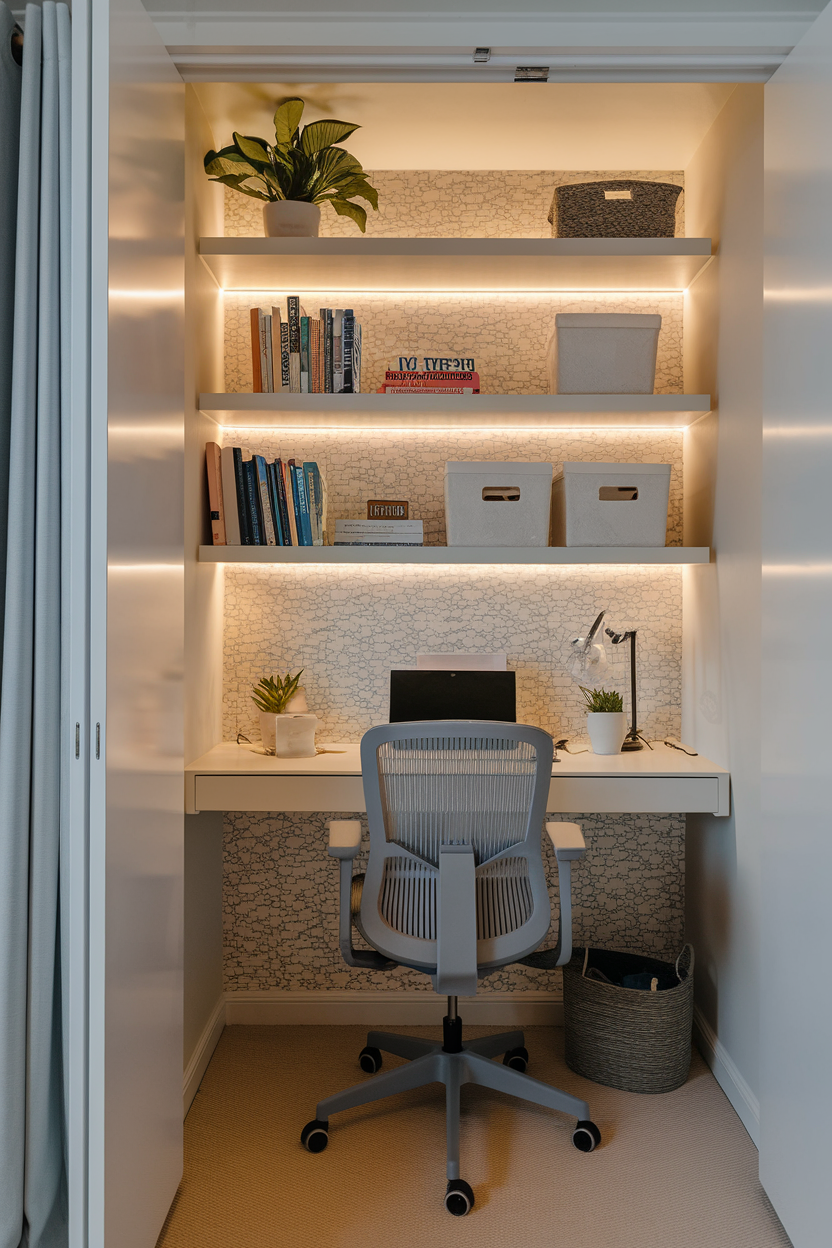
The Study Nook: Creating a Productive Space
Let’s talk about creating a dedicated spot for learning: the study space. You don’t need a grand, custom-built library to make this work. It’s about making the most of your existing space. Whether it’s a quiet corner in a bedroom, a designated spot at the kitchen island, or a clever nook in the living room, having a consistent place for homework can make a big difference.
This dedicated area acts as a signal, helping kids transition from playtime to focused work. It can reduce those “Where should I do my homework?” questions and help establish a consistent routine. Plus, it’s a good way to minimize distractions – a living room floor with a blaring TV isn’t ideal for concentration.
Crafting an Effective Study Spot
So, how do we make this study space functional and inviting? It comes down to a few key details:
1.Location: Quiet, Well-Lit, and Accessible. Ideally, choose a spot that’s as free from household traffic and noise as possible. If a separate room isn’t an option, consider a quiet corner by a window, or designate specific “homework hours” for common areas. If noise is an issue, noise-canceling headphones can be helpful. Good lighting is crucial to prevent eye strain and maintain alertness. Natural light is best, but a good, adjustable desk lamp can also work well.
2.Comfortable Seating and Proper Desk Height. An uncomfortable chair can lead to fidgeting and a shortened attention span. Invest in a chair that offers good back support and allows feet to rest flat on the floor or on a footrest. The desk height should allow for elbows to be at a comfortable 90-degree angle when working. Adjustable desks and chairs are a practical choice as children grow.
3.Organization: Clear Desk, Accessible Supplies, Shelving. A cluttered workspace can lead to a cluttered mind. Keep the main desk area as clear as possible, with only the immediate task materials present. All necessary school supplies (pencils, pens, paper, rulers, calculators, etc.) should be neatly organized and easily accessible. Desk organizers, drawers, or small caddies can help. Shelving units or cubbies nearby are useful for textbooks, notebooks, and binders. Labeling these storage solutions can make it easier for children to put things away.
4.Personalization vs. Clutter: Finding the Balance. A study space should be functional and organized, but it doesn’t have to be sterile. Allowing children to personalize their area with a few meaningful items – a favorite picture, a small plant, or a motivational quote – can make the space more inviting. However, it’s important to balance personalization with avoiding excessive clutter that could become a distraction. The goal is to create an environment that feels comfortable and inspiring without being overwhelming.
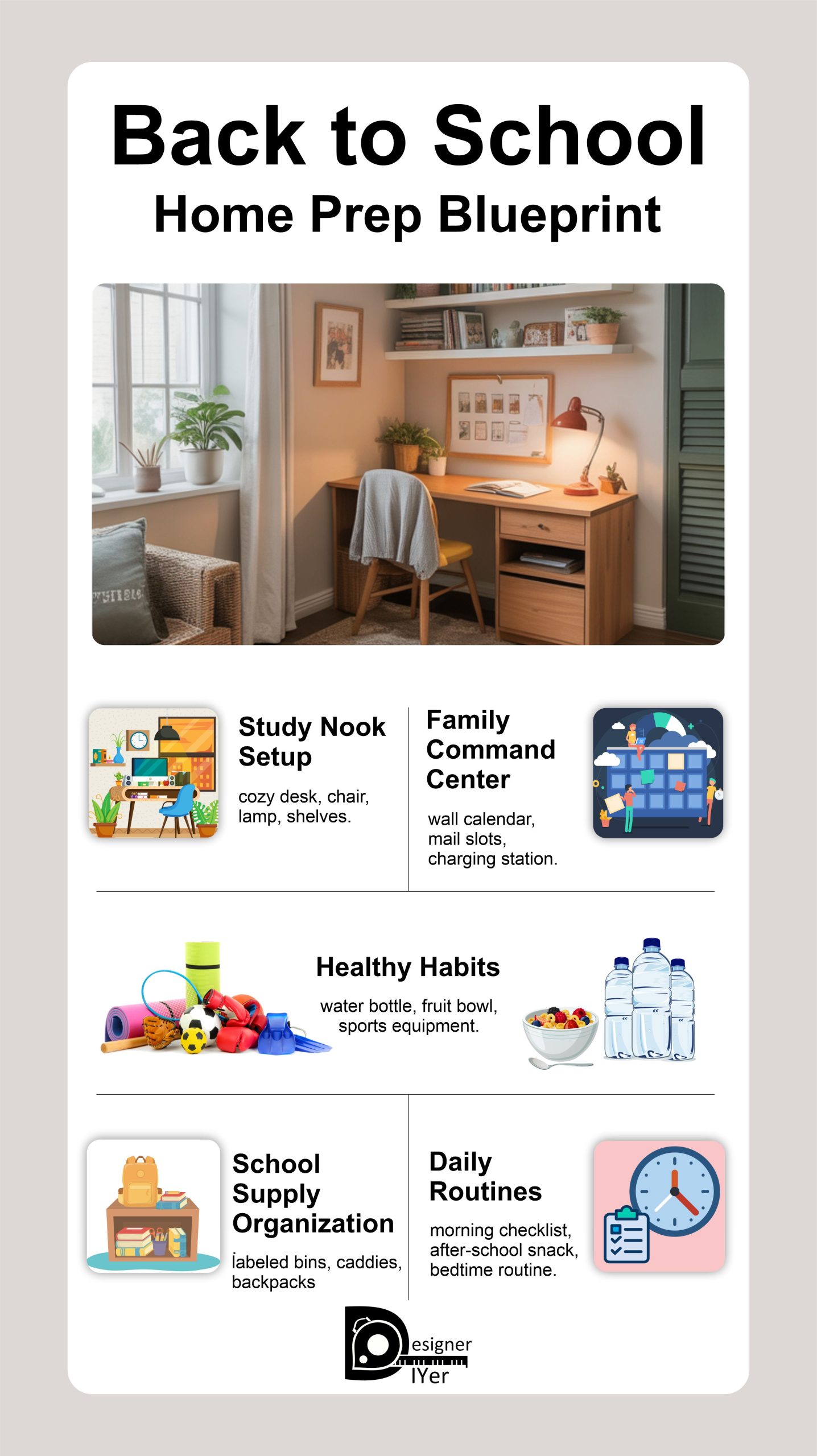
Adapting Spaces for Different Ages and Situations
The ideal study space will vary depending on the child’s age and your home’s layout. For younger children, a small table and chair in a common area allows for easy supervision. As children get older and need more independence, a dedicated desk in their bedroom or a quiet corner of a den might be more suitable. In homes with limited space, creative solutions are often necessary. For instance, my daughter Willa’s room is tight on space for a big desk, so we converted a hall closet to an awesome little pocket desk or “cloffice” just for her. By the way, this was such an easy weekend DIY, check it out here. A portable caddy with school supplies can transform a dining table into a temporary study zone. Wall-mounted desks or fold-down tables can maximize space in smaller rooms. For shared bedrooms, bunk beds with integrated desks or room dividers can create individual study areas. The key is flexibility and adapting these principles to fit your family’s unique needs.
Routine: Your Secret to a Smoother School Year
Beyond organizing physical spaces, establishing consistent daily routines is a powerful way to keep your family on track. Routines provide predictability, which can reduce anxiety for both kids and parents. When everyone knows what to expect, there tends to be less resistance and more harmony. Let’s look at how routines can help.
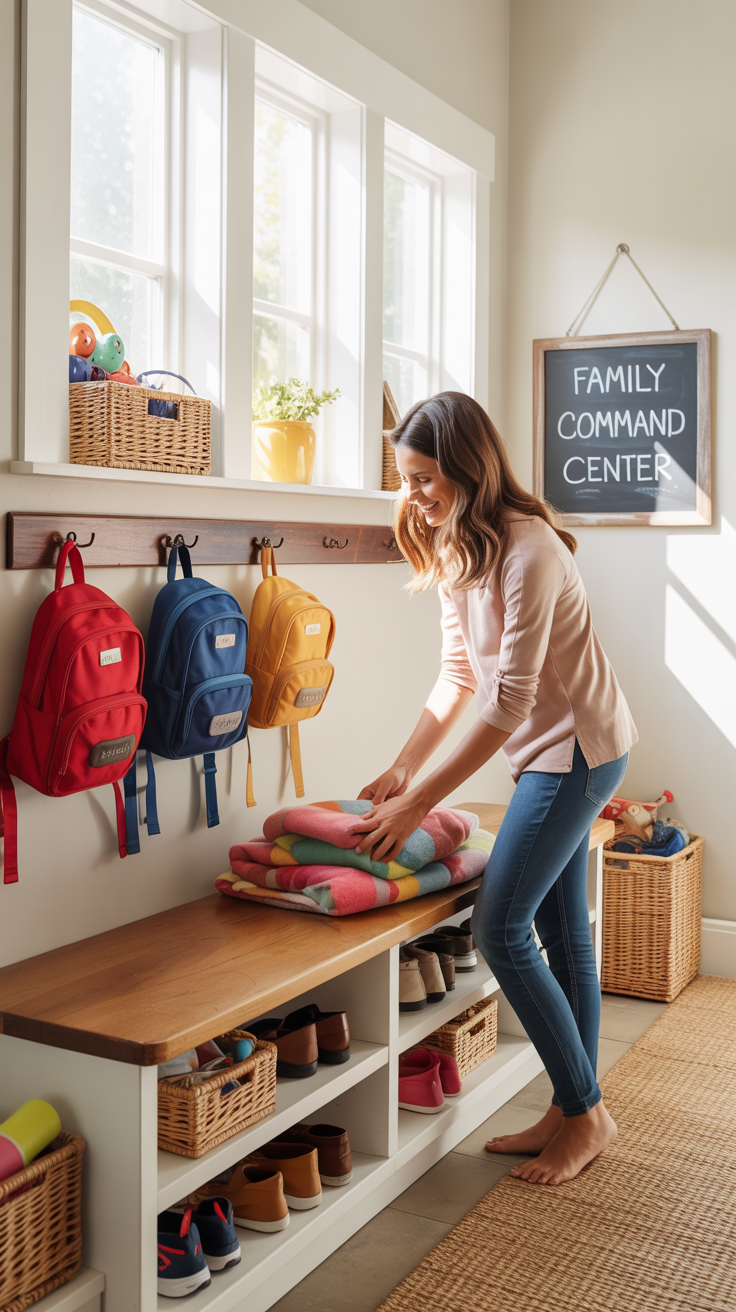
The Benefits of Predictability
1.Morning Routines: Starting the Day Calmly. How the day begins often sets the tone. A well-structured morning routine can help avoid frantic rushes and last-minute arguments. Ideally, this routine starts the night before, with clothes laid out and backpacks packed. In the morning, a consistent sequence of waking up, getting dressed, eating breakfast, and preparing to leave can make the process smoother. Visual aids, like a checklist or a picture schedule, can be especially helpful for younger children.
2.After-School Routines: Decompressing and Transitioning. The time right after school can be a critical period. Children often need time to unwind before starting homework. An effective after-school routine might include a snack, some free play, and then a designated time for homework. This structured transition helps children shift from school mode to home responsibilities, which can prevent procrastination.
3.Homework Routines: Consistency and Accountability. Consistency is important for homework. Establishing a regular time and place for homework each day helps children develop a habit of focused work. This doesn’t mean homework has to be done at the exact same minute every day, but rather within a consistent window (e.g., after a short break). Parents can offer support, but the responsibility for completing assignments should gradually shift to the child. A quick check-in at the end of the homework session can ensure tasks are completed.
4.Bedtime Routines: Ensuring Enough Rest. Adequate sleep is fundamental for a child’s cognitive function, mood, and academic performance. A consistent bedtime routine signals to the body that it’s time to wind down, promoting better sleep quality. This routine might include a warm bath, reading, or quiet playtime. It’s also important to limit screen time at least an hour before bedtime, as the blue light from devices can interfere with sleep.
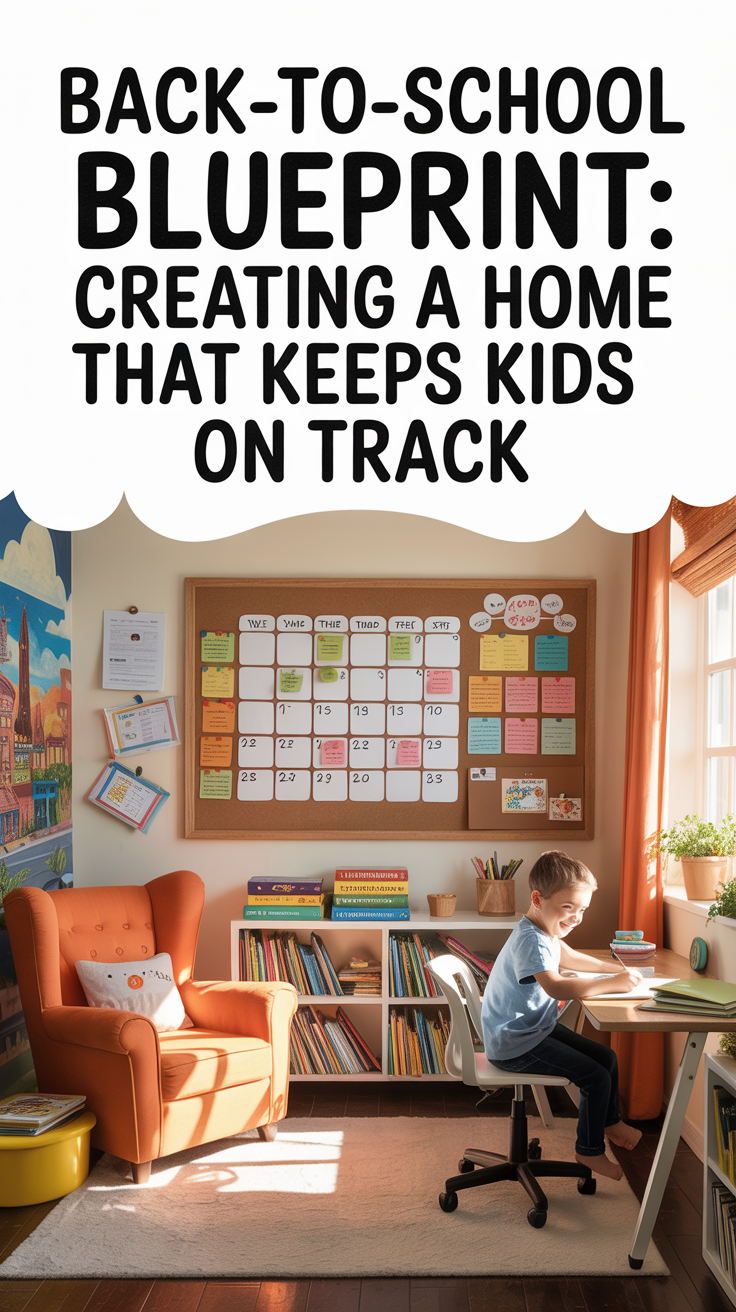
Tools for Time Management
In addition to routines, various tools can help children manage their time effectiAvely:
1.Planners and Calendars. For older children, a planner or calendar is a useful tool for tracking assignments, tests, and extracurricular activities. Whether digital or physical, consistent use is key. Parents can help by regularly reviewing the planner with their child, especially at the beginning of the week, to anticipate deadlines.
2.Checklists and Visual Schedules. For younger children or those who benefit from visual cues, checklists and visual schedules can be effective. These can be simple cards with pictures or words depicting each step of a routine, or a whiteboard where daily tasks are listed and checked off. Checking off an item can provide a sense of accomplishment.
3.Time-Blocking Techniques. As children mature, they can benefit from techniques like time-blocking, which involves allocating specific blocks of time for specific tasks. The Pomodoro Technique, for example, involves working for 25 minutes, followed by a 5-minute break. This method can help maintain focus during longer study sessions.