

I’ll say it first: an awkwardly shaped backyard can make even a generous amount of outdoor space feel frustratingly small. Perhaps it narrows like a slice of pie, bends around an extension, runs beside the house in a long strip, or ends in a sharp corner. It is easy to focus on the strange angles and hope lawn will make them disappear.
But unusual geometry is not a design failure. A skewed boundary, diagonal view, or tapered end gives a garden character and direction. Stop treating the outline as something to correct and use it to organize a sequence of intentional spaces, with somewhere to sit, something to look toward, and a small sense of discovery.
The goal is not to make an awkward backyard look square. It is to make it look purposeful.
Whether your outdoor space is a tiny urban wedge or a roomy L-shaped garden, the strongest approach is usually the same: establish a useful layout, soften the edges, create visual rhythm, and give every difficult area a job. Here is how to turn a backyard that feels like an afterthought into one of the most distinctive parts of your home.
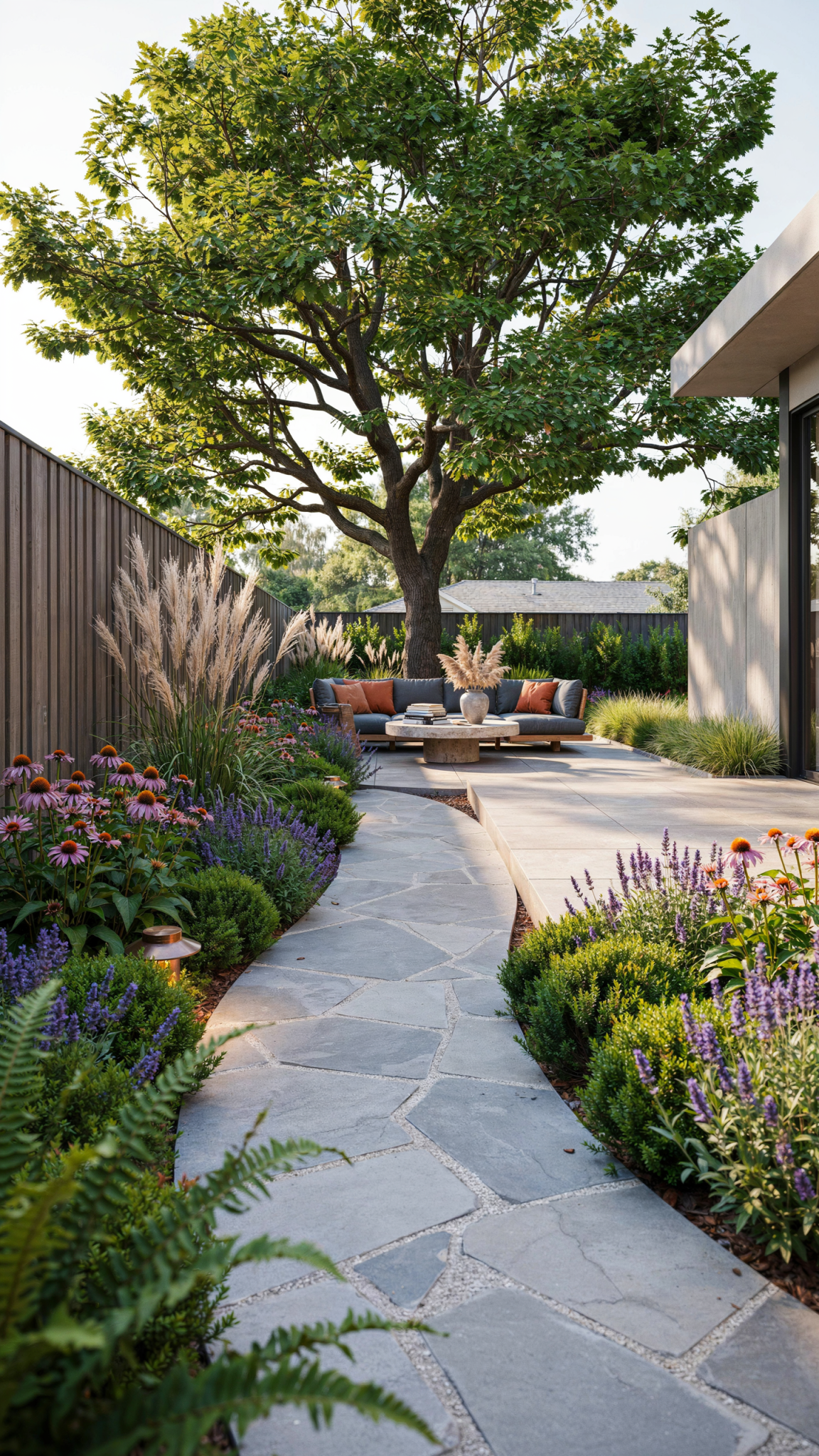
Begin With the Reality, Not the Pinterest Version
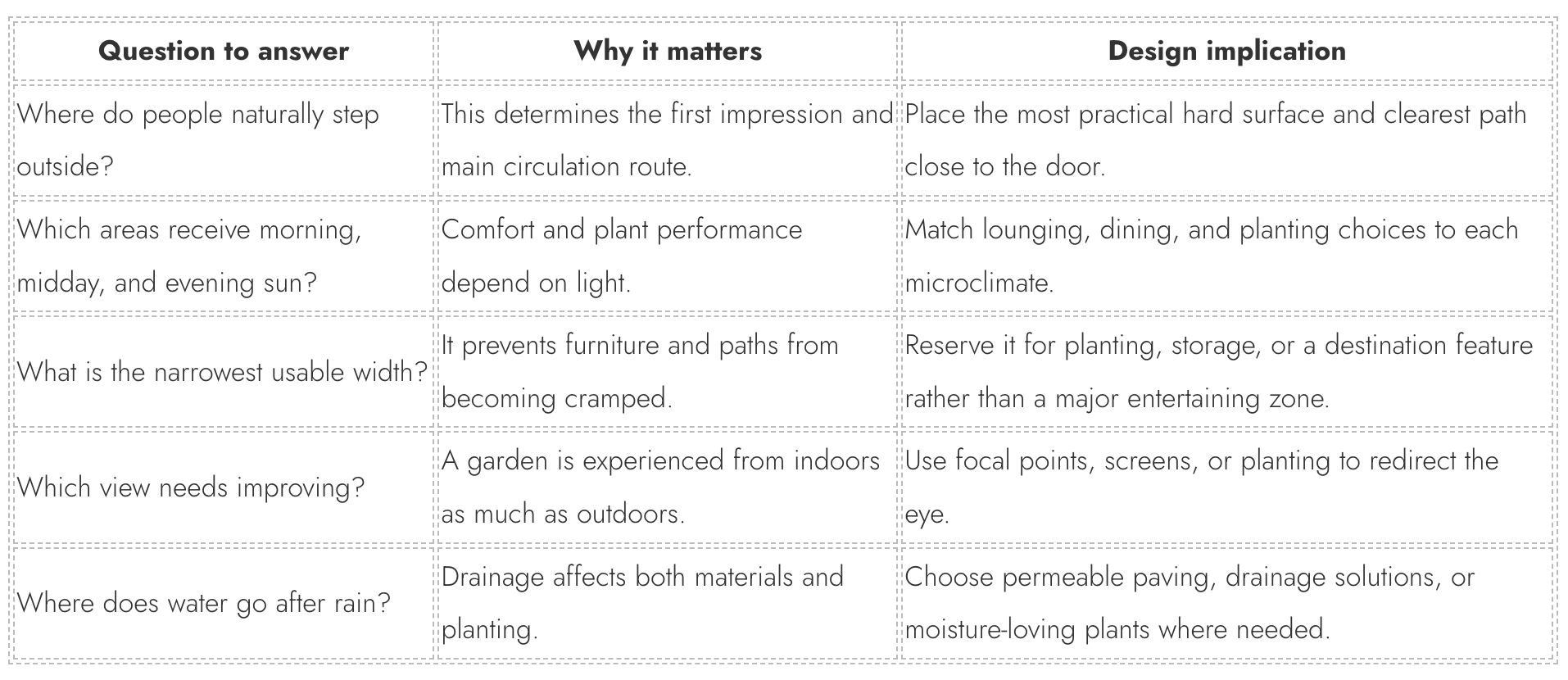
Before buying a single planter or sketching a curved path, spend time understanding the space you actually have. Walk outside at different times of day. Notice where the sun lands for breakfast, where the late-afternoon light is pleasant, and which areas are permanently shaded by fences, walls, neighbouring buildings, or mature trees. Watch where rain collects. Look at the views from the kitchen, living room, and upstairs windows, because these are often the angles from which the garden will be seen most often.
Then make a simple measured plan. Mark the house, doors, windows, drains, shed, existing trees, utility access, and boundary lines; most importantly, record the narrowest and widest usable points. A space that seems generous on paper can become impractical once furniture and a clear route are added.
Pay attention to what cannot move. A mature tree, inspection cover, neighbouring window, shared fence, or awkward side return is not merely an obstacle; it can anchor the plan. A wet corner might become a rain garden, while a sharply angled boundary could take a layered bed or slim storage screen.
Stop Trying to Fill One Big Shape
The common mistake in a difficult backyard is to design it as one enormous, irregular room. That approach tends to exaggerate every slanted fence and pointy corner. Instead, divide the garden into a handful of smaller zones. Think of them as outdoor rooms connected by a clear route or a shared material palette.
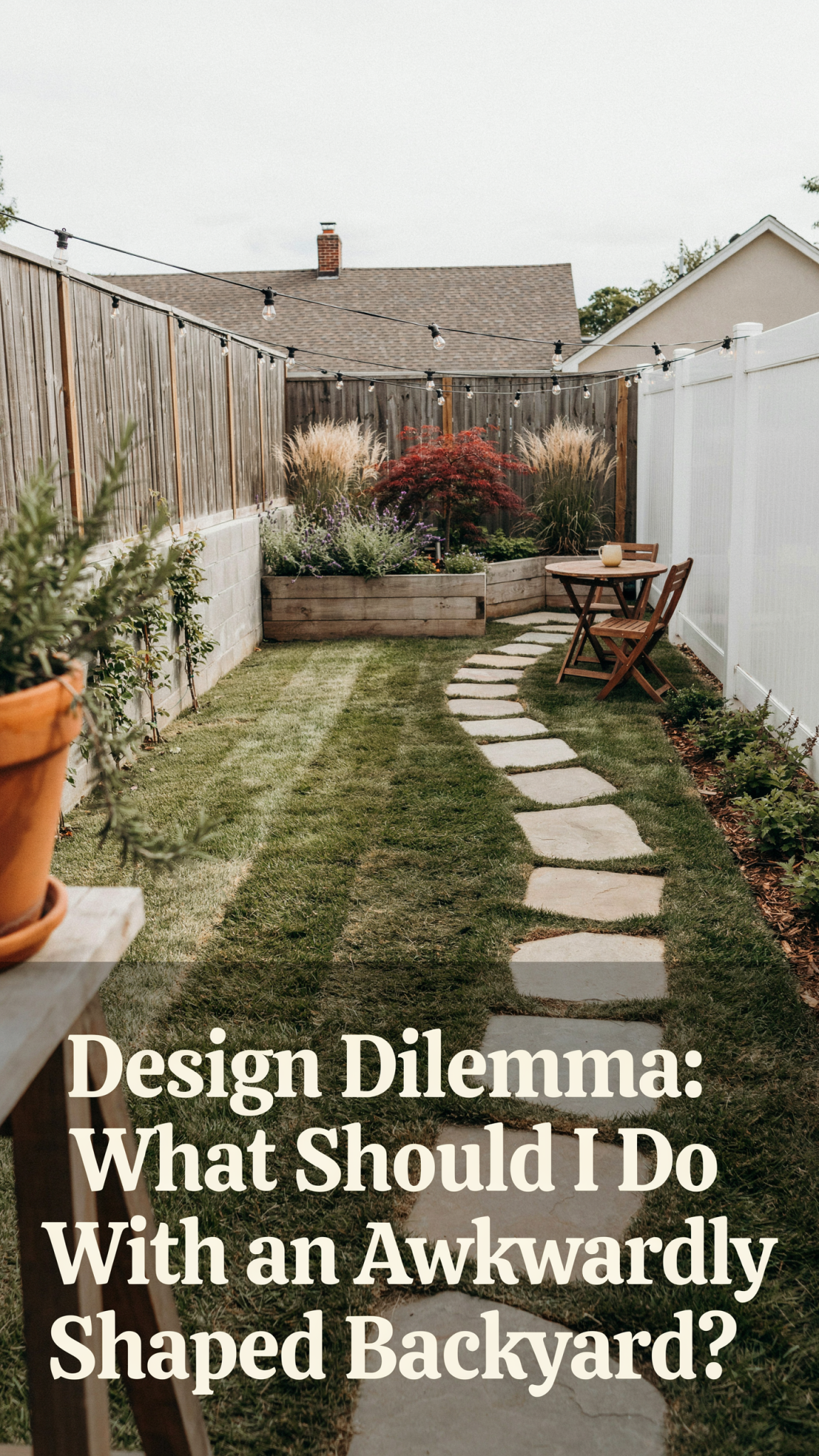
A long narrow garden might have a compact dining terrace near the house, a central green or planted section, and a quiet bench or fire bowl at the far end. An L-shaped space might use the wider arm for entertaining, while the smaller return becomes a kitchen garden, reading nook, or practical utility area. A triangular plot might reserve its broad end for everyday use and turn the tip into a lush focal point. The garden no longer has to answer one overwhelming question “What do I do with this strange space?” because each area is answering a simpler one.
Zoning also makes a modest backyard feel more generous. A single open expanse is read instantly; a series of spaces makes the eye travel. Gentle thresholds like. a material change, taller planting, a pergola post, or a raised bed are enough to create outdoor rooms without heavy separation.
Let real habits determine the zones. Do not surrender the sunniest part of the yard to a table for eight if you rarely entertain. A small coffee spot may be more valuable, while a clear route for children or dogs should be protected before planting or storage is added around it.
Let Curves and Diagonals Do Some of the Hard Work
Not every awkward backyard needs curved lines, but in many cases, a curve is the most gracious way to deal with a difficult boundary. A gently arcing path, lawn edge, or planting bed can make an odd angle feel like part of a fluid composition. It gives the eye a line to follow, rather than inviting it to measure the fence behind it.
Diagonals can be just as effective. In a rectangular garden that feels narrow, a diagonal path or a paving pattern laid on the bias makes the eye travel across the width as well as down the length. In a triangular or trapezoid plot, a diagonal can create a more balanced “room” inside the irregular outline. The important idea is to design an intentional internal geometry instead of tracing every external boundary.
If your taste is more contemporary than cottage-like, use bold, simple forms. A crisp square terrace can sit within a sloping plot; the mismatch is what makes it feel composed. Plant the resulting wedges generously, using repeated foliage and a restrained colour palette. The formal surface becomes a calm centre, while the irregular edges read as abundant planting rather than leftover space.
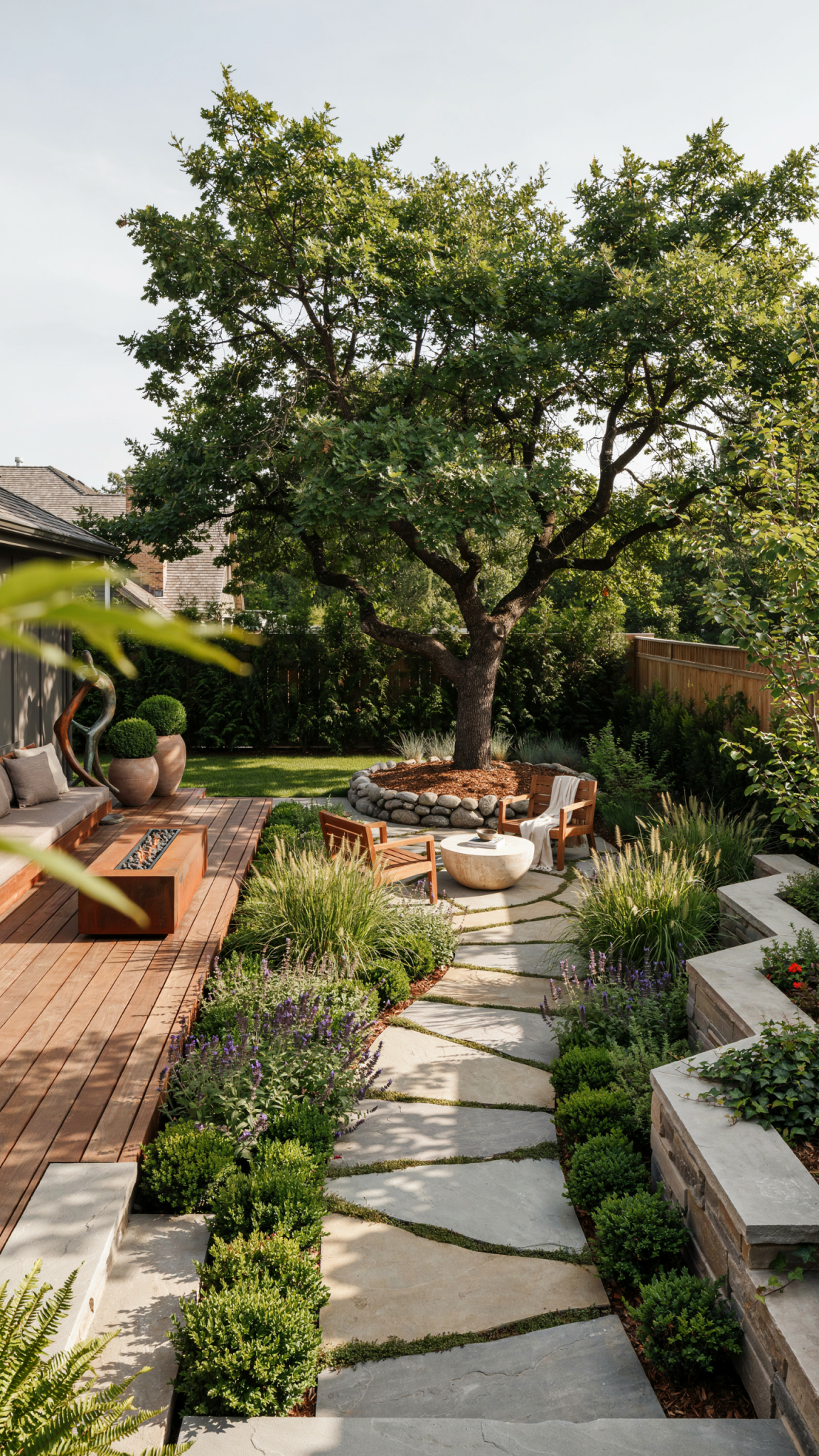
Make the Wide Part Work Hardest and the Narrow Part Look Lush
Nearly every awkward backyard has a part that is more generous and a part that is more constrained. The wide section should usually carry the social function: dining, lounging, play, or cooking. It has the turning room for chairs, trays, and people passing one another. Putting the main patio in the broadest area prevents the everyday experience of squeezing around furniture.
The narrow end, on the other hand, is often best treated as a visual destination. Rather than forcing a full seating area into an uncomfortable point, create something to look at when you are sitting elsewhere. A small tree in a raised bed, a sculptural urn, a slim built-in bench, a bubbling water feature, a mirrored panel used thoughtfully, or a simple piece of garden art can give the eye a reason to travel there.
Planting is especially helpful in a tapering section. Layered foliage makes a tight corner feel deep and mysterious rather than pinched. Start with an upright evergreen, multi-stemmed small tree, or architectural shrub at the end, then place medium-height plants in front of it and low, spreading plants along the edge. Repeating a few plants gives the composition confidence. In a small garden, an exuberant catalogue of one-offs can look more cluttered than charming.
A useful rule of thumb is to keep the focal point slightly in front of the farthest boundary where possible. This creates a pocket of shadow and planting behind it, which adds depth. A bench pushed flat against a fence feels like storage; a bench nestled just forward of a planted backdrop feels like a destination.
Treat Boundaries as the Backdrop, Not an Apology
The fences, walls, and hedges around an oddly shaped yard may be the very features making it feel difficult. They are also the largest visual surfaces in the space, so treating them as an afterthought is a missed opportunity. A consistent boundary treatment can unify several conflicting angles in seconds.
Dark charcoal, warm black, deep olive, or muted brown fencing can recede behind foliage and make greenery appear richer. A soft, pale neutral can brighten a shady courtyard, especially when paired with silvery leaves and pale paving. The best choice depends on light, architecture, and personal taste, but consistency matters more than fashion. Painting only one section of a multi-angled fence often draws attention to the divisions; repeating the same finish allows the garden to read as one envelope.
Vertical planting is one of the most useful tricks for awkward spaces because it takes visual weight off the ground plane. Climbers on wires, trellis panels, espaliered fruit, wall-mounted planters, or a narrow green screen can make an ugly boundary feel intentional without consuming valuable floor area. For a more contemporary look, install slim timber battens or metal trellis panels in repeating sections, then let climbers soften them over time.
Do not feel obliged to hide every fence. The relaxed-contemporary look combines clean hardscape with loose planting: pale grasses against dark slatted fencing, clipped evergreens beside airy perennials, and weathered timber with oversized planters. It feels tailored without being precious, and suits unconventional plots particularly well.
Choose One Strong Focal Point—and Borrow a View If You Can
An awkward shape becomes less noticeable when the eye is confidently drawn somewhere else. The focal point does not need to be expensive. What matters is contrast, placement, and a sense that it belongs at the end of a view.
In a long backyard, the far boundary is an obvious spot for a destination feature. In a small L-shaped plot, the focal point may sit at the turn, encouraging people to follow the garden around the corner. In a triangular garden, place it near the tip or slightly off-centre to prevent the composition from feeling too predictable. From the patio or main doorway, test the view by standing still. Does your eye land on something appealing, or does it land on a plastic storage box and a fence post? This simple test often reveals where the design energy needs to go.
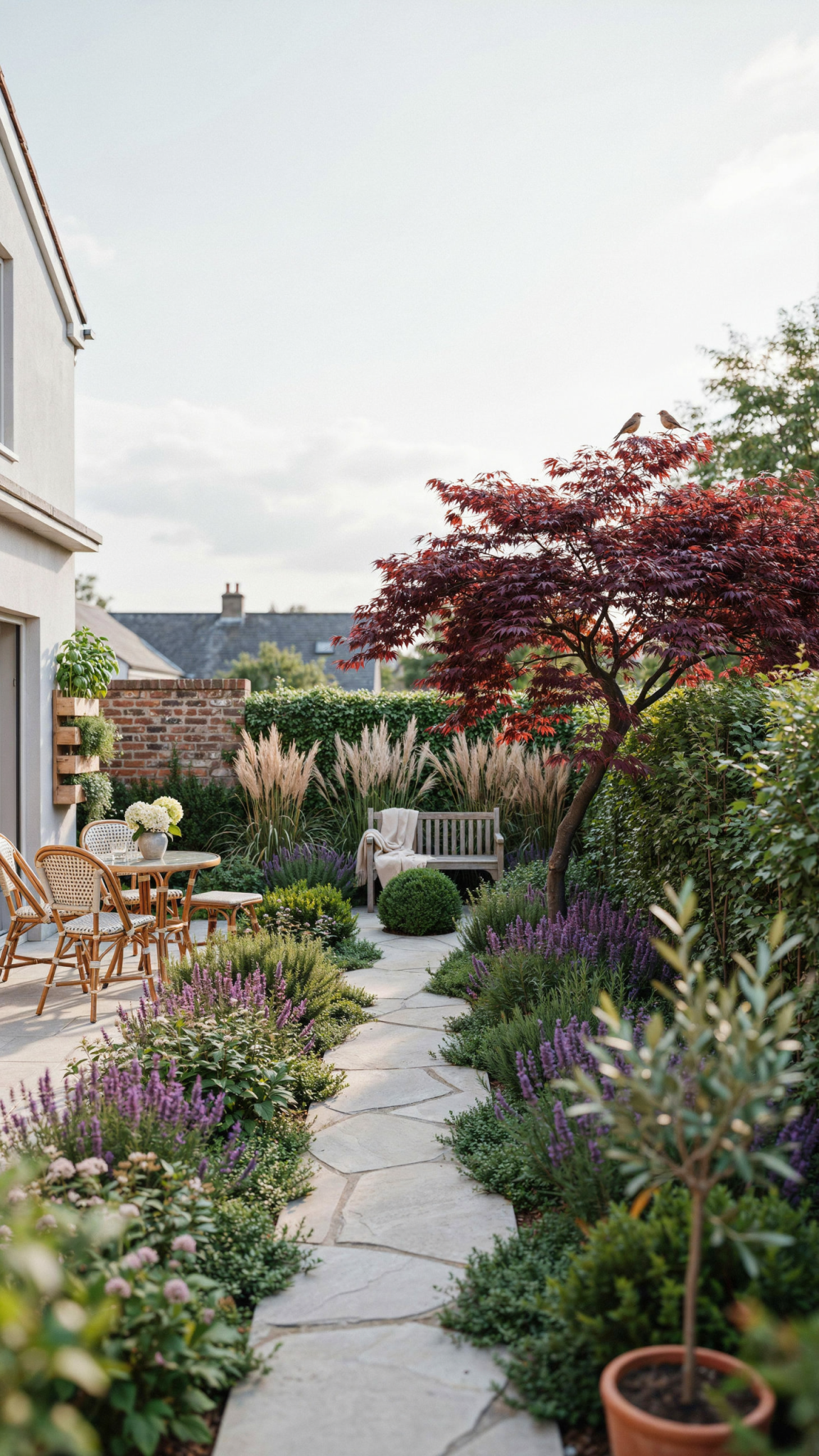
A focal point can be living, built, or borrowed: a small tree, water bowl, painted gate, or a handsome view beyond the boundary. If a neighbour’s tree or distant skyline is attractive, frame it with planting rather than blocking it.
The trick is restraint. A garden with a fountain, pergola, fire pit, sculpture, mirror, bright chair, and feature wall all competing for attention can feel just as unsettled as the awkward plot you began with. Choose one star, then support it with quieter materials and planting.
Use Level Changes Carefully, Even on a Small Plot
A modest level change can define an inconvenient part of the garden: a low dining platform, a broad step to a gravel lounge, or a raised bed along an angled boundary can establish a clean internal shape. Keep it restrained in a compact yard, where tall decks, railings, and multiple steps quickly consume space and interrupt sightlines. Repeating the same material in a bed edge, bench top, or small table helps the whole composition feel connected.
Create a Clear Route Through the Garden
Good circulation is the quiet ingredient that makes a backyard feel calm. If every trip to the shed requires stepping around a dining chair, or if the only way to reach the far end is through a muddy lawn, the layout will always feel compromised. Establish one clear primary route from the house to the garden’s practical destination, then allow the decorative parts to sit around it.
In a narrow garden, the route does not have to run directly down the middle. In fact, a slightly offset path can create more interesting planting opportunities and disguise the length of the plot. A path that widens briefly at a bench, a small threshold, or a cluster of pots feels deliberate. Gravel is forgiving in irregular areas and suits informal, drought-tolerant or Mediterranean-inspired planting. Large-format pavers feel cleaner and more contemporary. Brick or stone can add warmth to older homes. Whichever material you choose, repeat it enough that it reads as a choice rather than a patchwork of leftovers.
Paths can also slow the reveal. A gentle bend, planting that partly screens the next zone, or a tall pot placed off-axis adds a sense of progression without making the garden difficult to navigate.
Plant for Shape, Texture, and Season—not Just Flowers
In an awkward plot, planting has an architectural role: it can absorb corners, soften hard lines, direct attention, and create depth. Start with evergreen shrubs, small trees, architectural perennials, grasses, and groundcovers, then add flowers as seasonal accents.
For a contemporary, calm garden, try a limited palette of greens with white, soft blue, burgundy, or dusky pink accents. Repetition is especially powerful: three or five of the same grass, shrub, or perennial look much more polished than a single specimen of many varieties. In a sunny, well-drained garden, the relaxed Mediterranean look of lavender, rosemary, salvias, euphorbias, olive-toned foliage, ornamental grasses, and gravel can work beautifully. In shade, lean into layered greens, ferns, hellebores, hardy geraniums, hydrangeas where appropriate, and