

Water changes the character of a garden in a way few other features can. It reflects the sky, catches light, supports planting, and creates a destination that encourages you to slow down. Whether the space is a tiny courtyard or a broad backyard, a pond can be shaped to suit the scale and style of the home.
The ideas below move from compact water gardens to more architectural and naturalistic installations. Think first about the experience you want to create: a quiet view from a chair, a lush habitat-like corner, a dramatic sound feature, or a clean-lined focal point. From there, choose details that make the pond feel purposeful and easy to enjoy through the season.
1. Start Small With a Patio Water Garden
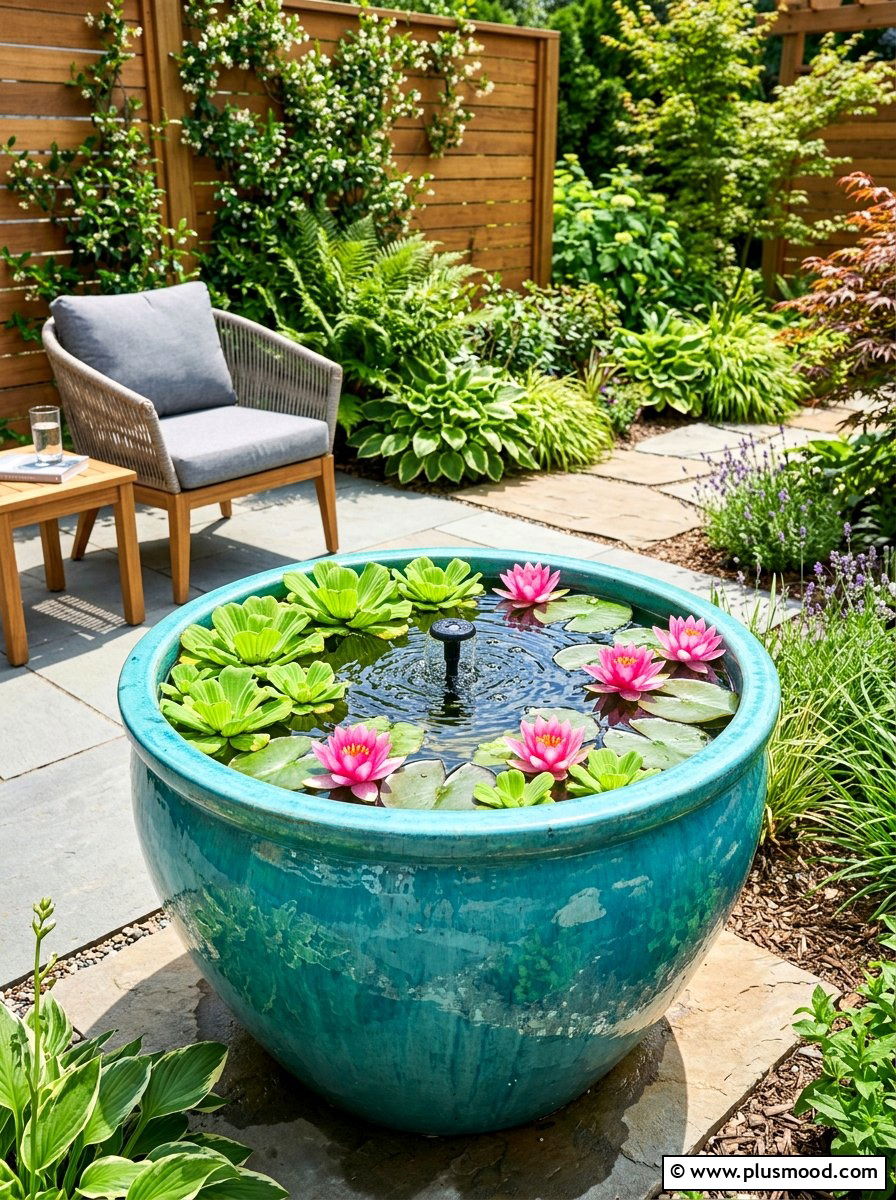
A watertight bowl, trough, or oversized planter can bring the appeal of a pond to a patio without a major landscape project. A few aquatic plants and a modest circulating pump create a contained focal point that is easy to position near seating.
Key Details
- Use a vessel built to hold water over time.
- Place it where you can easily top it up and maintain it.
Pro Tip: Choose a container with a broad opening so the plants and water surface are visible from across the patio.
2. Tuck a Water Feature Beside the Terrace
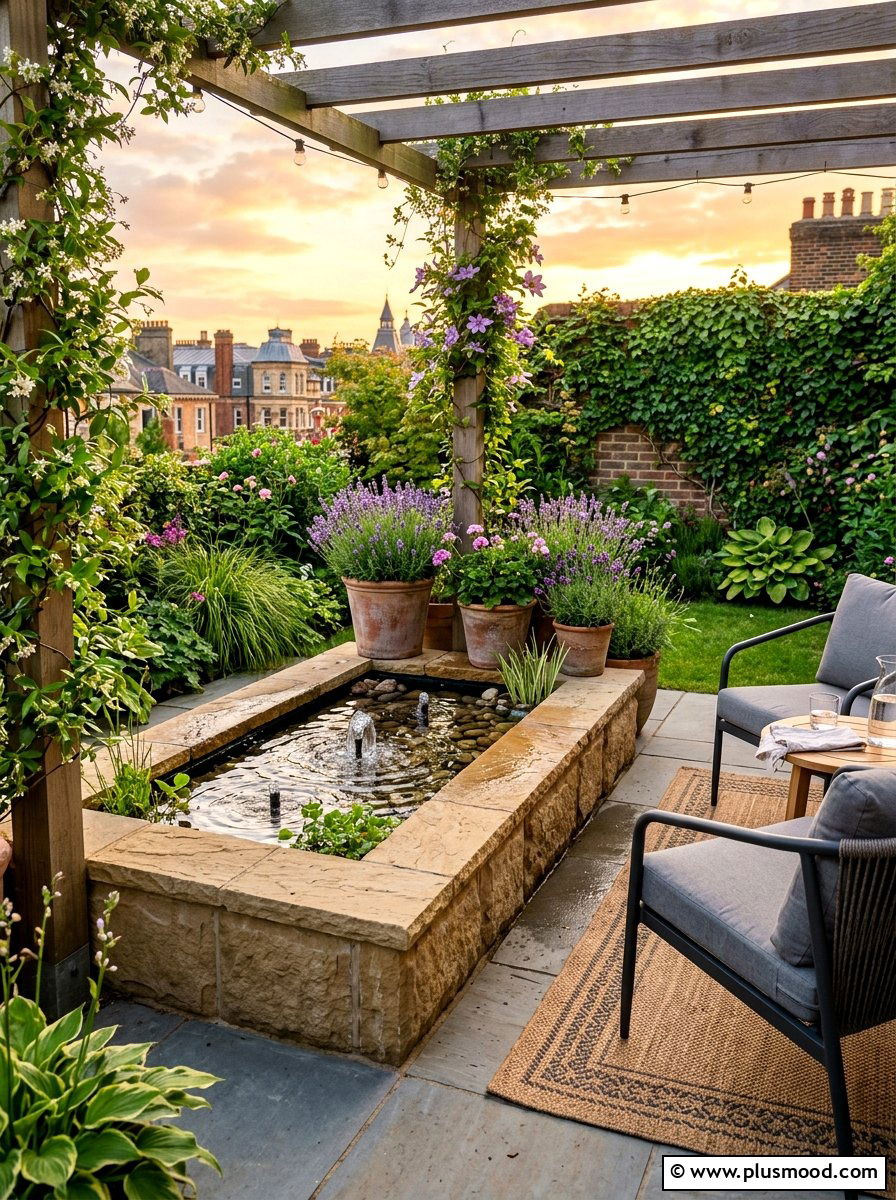
A compact water element near a patio can make an outdoor sitting area feel more sheltered and intentional. It works particularly well where a wall, fence, or planting bed needs an additional layer of texture and sound.
Key Details
- Keep service access to the pump straightforward.
- Choose a scale that leaves clear passage around furniture.
Pro Tip: Position the feature where its sound can be heard from the main chairs without competing with conversation.
3. Make a Quiet Corner Feel Like a Destination
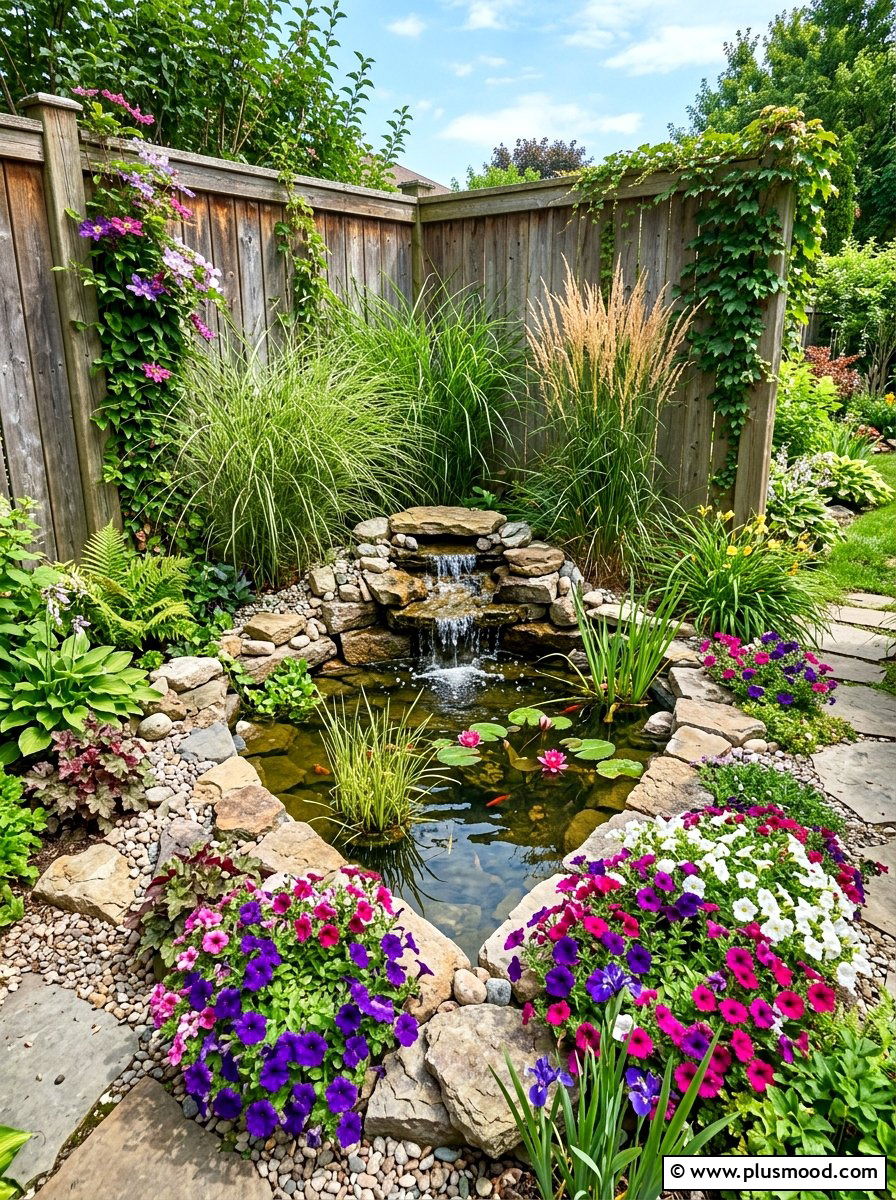
An unused garden corner can become a private viewing spot with a small pond framed by grasses, ferns, or low flowering plants. Keeping the outline simple gives the planting and water surface room to make the impression.
Key Details
- Plan a clear route to the pond for routine care.
- Use surrounding plants to soften hard edges.
Pro Tip: Add a bench at a slight angle to the pond instead of facing it squarely for a more relaxed view.
4. Use Strong Geometry for a Modern Garden
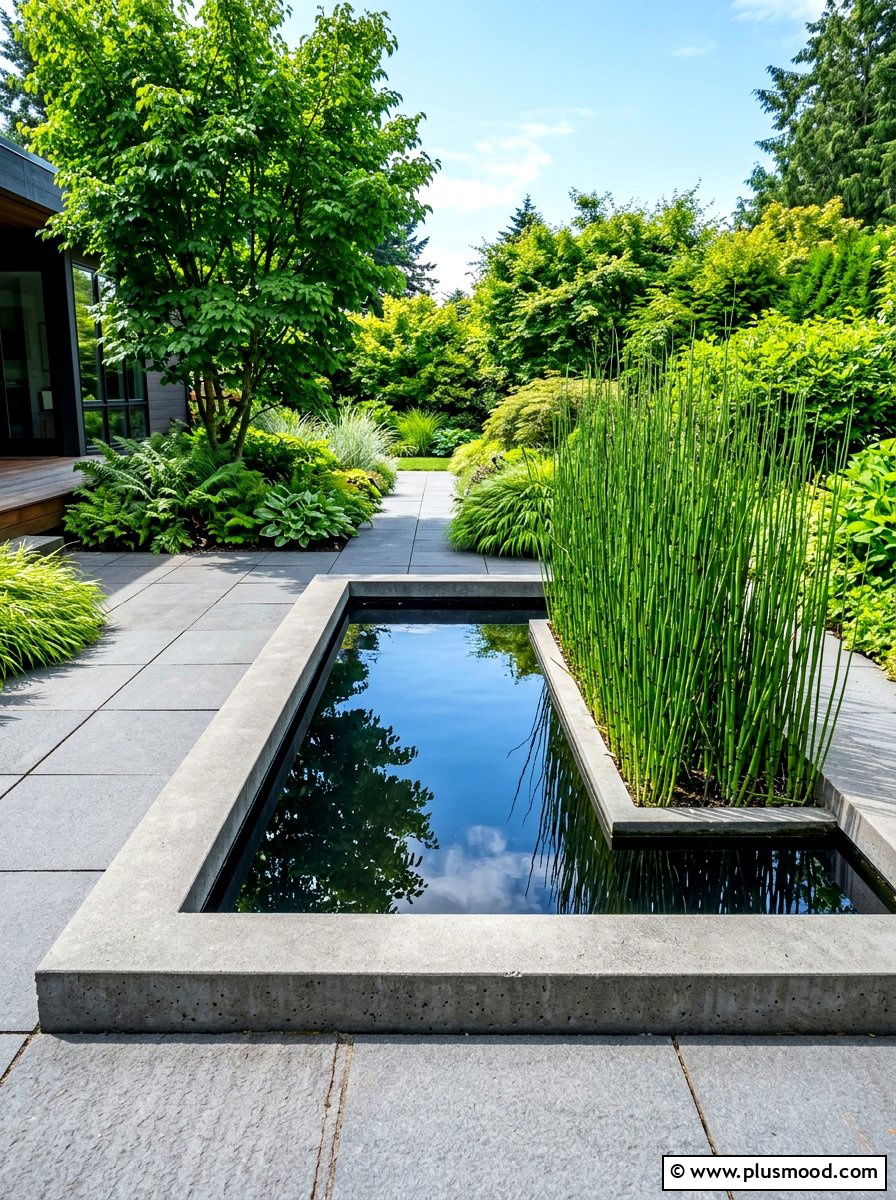
A rectangular pond with crisp borders can reinforce the clean lines of contemporary architecture. Limit the palette to a few materials, such as concrete, dark stone, and a single repeated plant form, so the reflection becomes the main visual event.
Key Details
- Align the basin with an existing patio or wall line.
- Choose durable coping with a comfortable finished edge.
Pro Tip: A dark interior finish can make still water read as deeper and more reflective.
5. Create a Formal Reflecting Pool
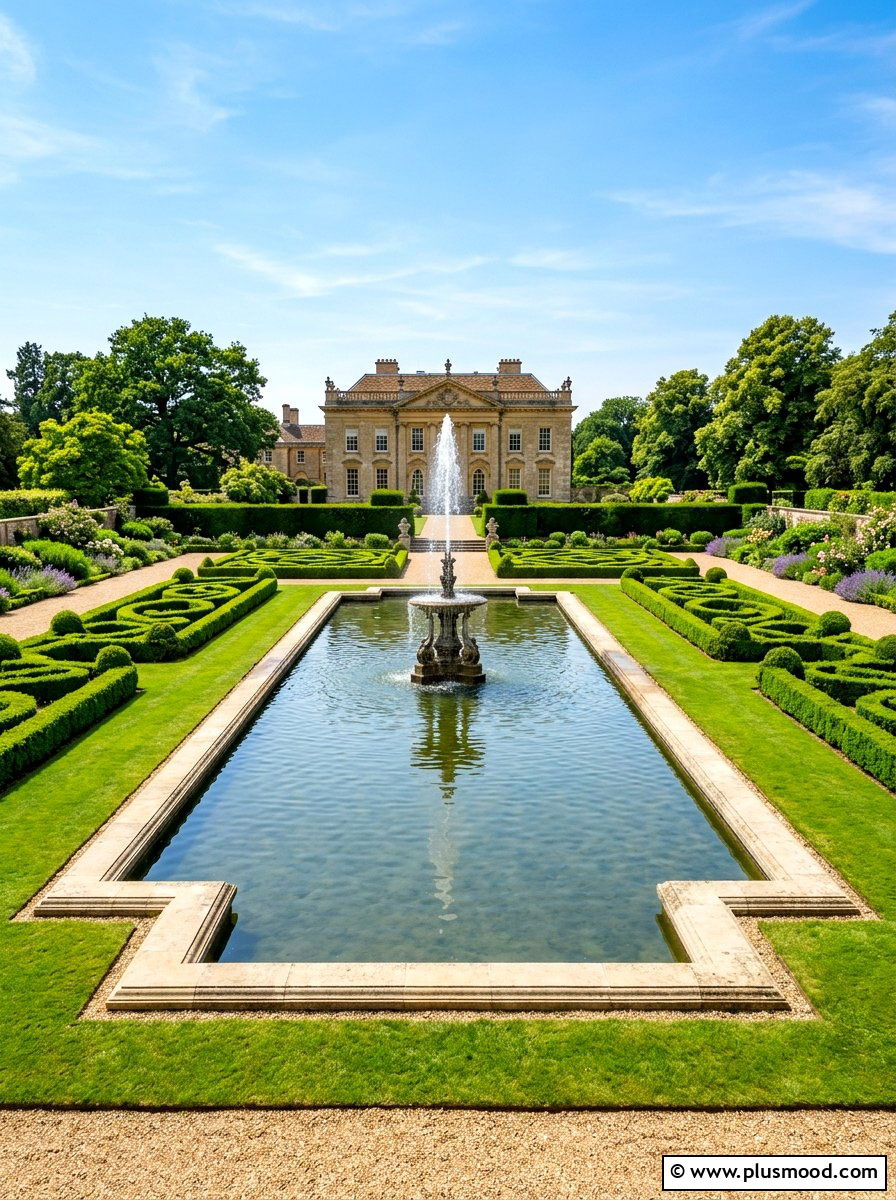
Symmetry and restraint make a formal pond feel polished without requiring an oversized yard. A simple rectangular form, repeating paving, and clipped planting nearby can turn a central lawn or axial view into a composed garden moment.
Key Details
- Keep the edges level for a clean waterline.
- Repeat one or two materials used elsewhere in the landscape.
Pro Tip: Design the pond to reflect an architectural feature, specimen tree, or open sky rather than placing it where the view is cluttered.
6. Let the Pond Shine After Sunset
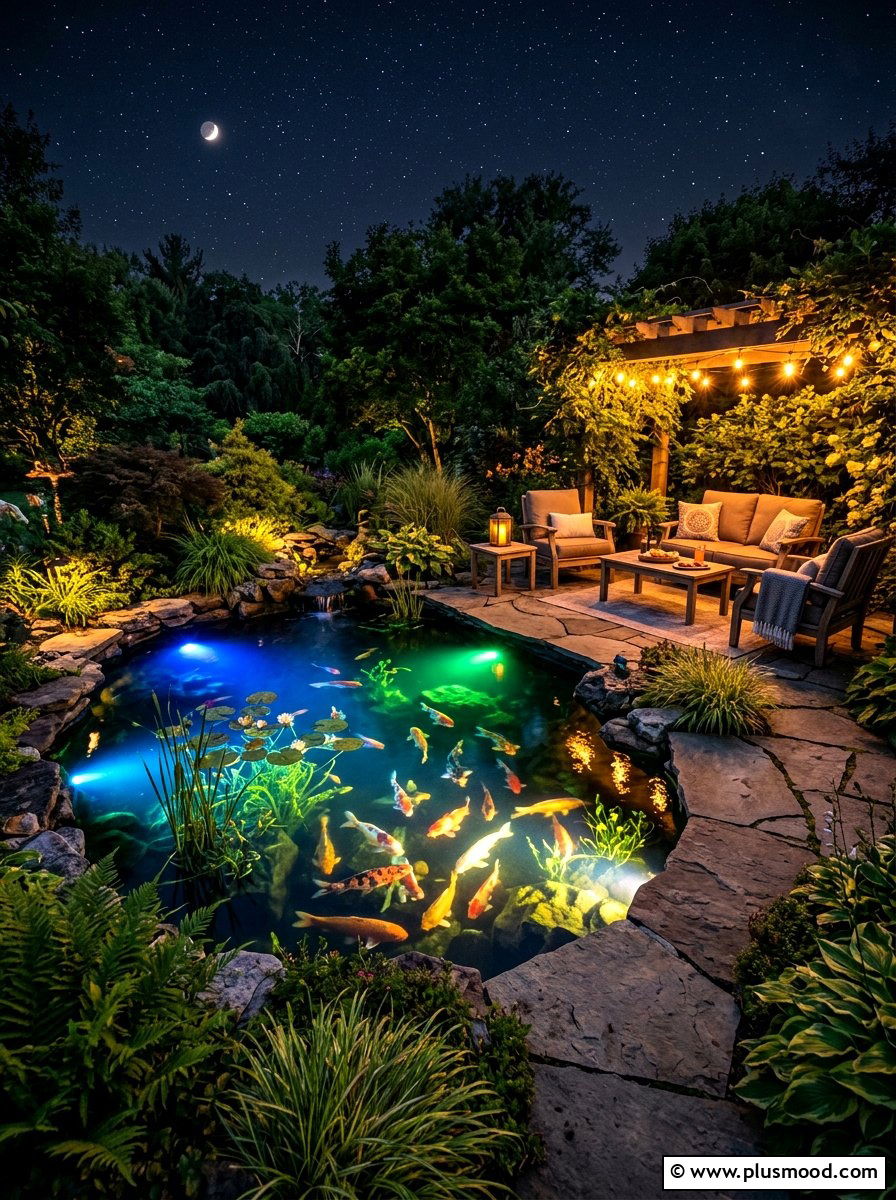
Subtle lighting can extend the enjoyment of a pond into the evening, revealing ripples, planting silhouettes, and stone textures after dark. Keep the effect restrained so it feels atmospheric rather than overlit.
Key Details
- Use equipment designed for wet exterior conditions.
- Conceal fixtures within planting or below the coping line.
Pro Tip: Aim light across the water or onto nearby foliage instead of directing a bright beam toward seating.
7. Bring Movement In With a Low Waterfall
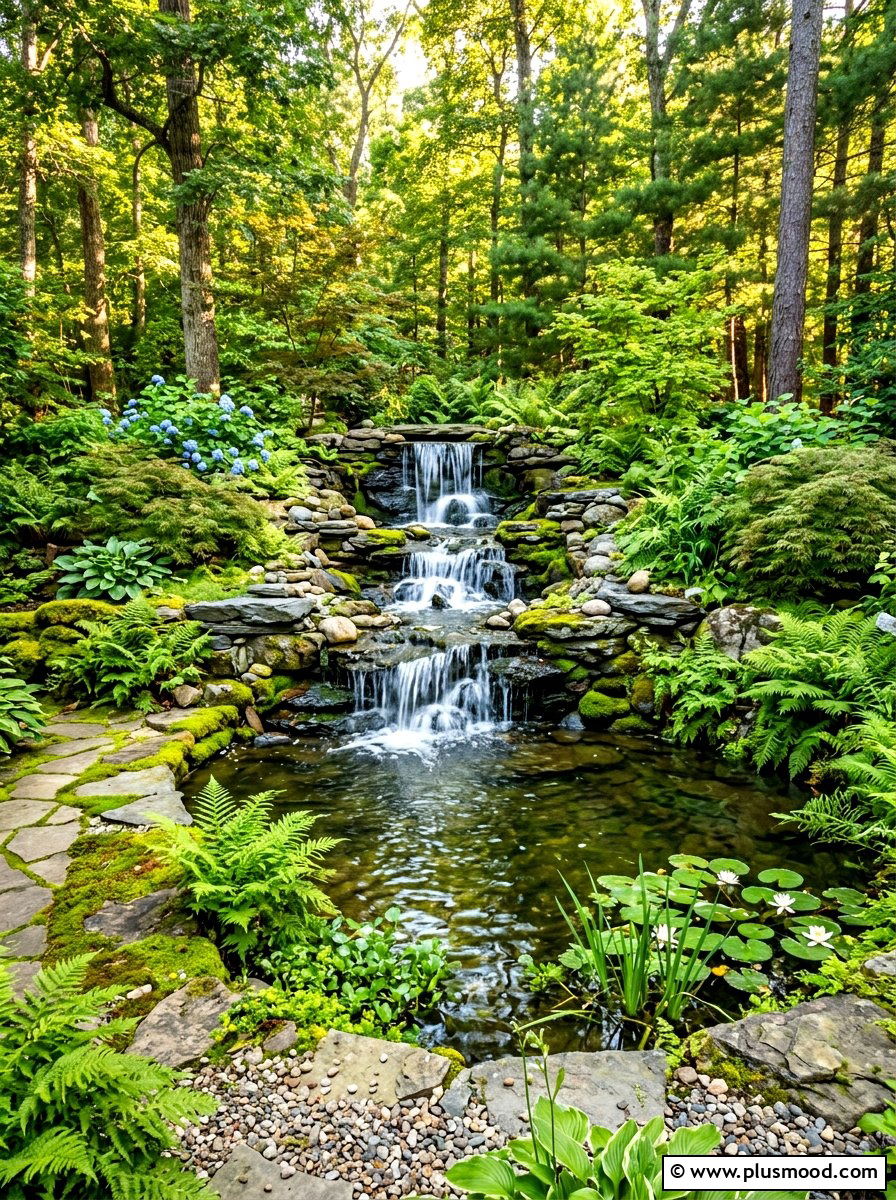
A short cascade can give a still pond a livelier presence and introduce a soft layer of sound. Rock ledges, carefully placed planting, and a controlled flow help the feature feel integrated rather than like an add-on.
Key Details
- Build access to the pump into the layout from the beginning.
- Test the water path before fixing stones permanently.
Pro Tip: Use several modest drops rather than one tall fall when you want a gentler, more natural sound.
8. Blend Water Into a Moisture-Loving Border
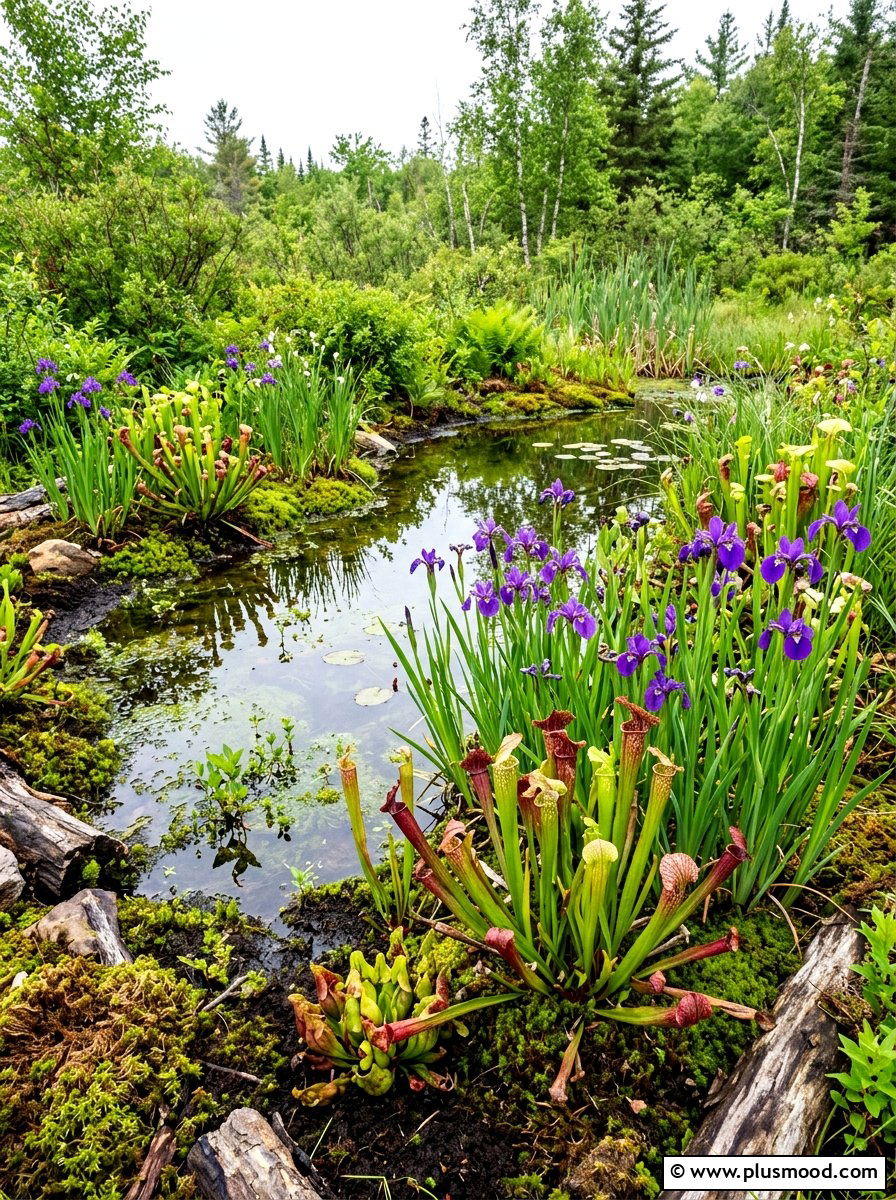
A bog-inspired pond edge creates a generous transition between open water and garden planting. It is an appealing way to showcase plants that enjoy consistently damp soil while giving the whole area a softer, more immersive appearance.
Key Details
- Match plant choices to the moisture and sun at the edge.
- Plan drainage carefully so nearby structures remain protected.
Pro Tip: Use varied leaf shapes around the margins to make the planting look rich even when flowers are not in bloom.
9. Frame the Water With Region-Appropriate Planting
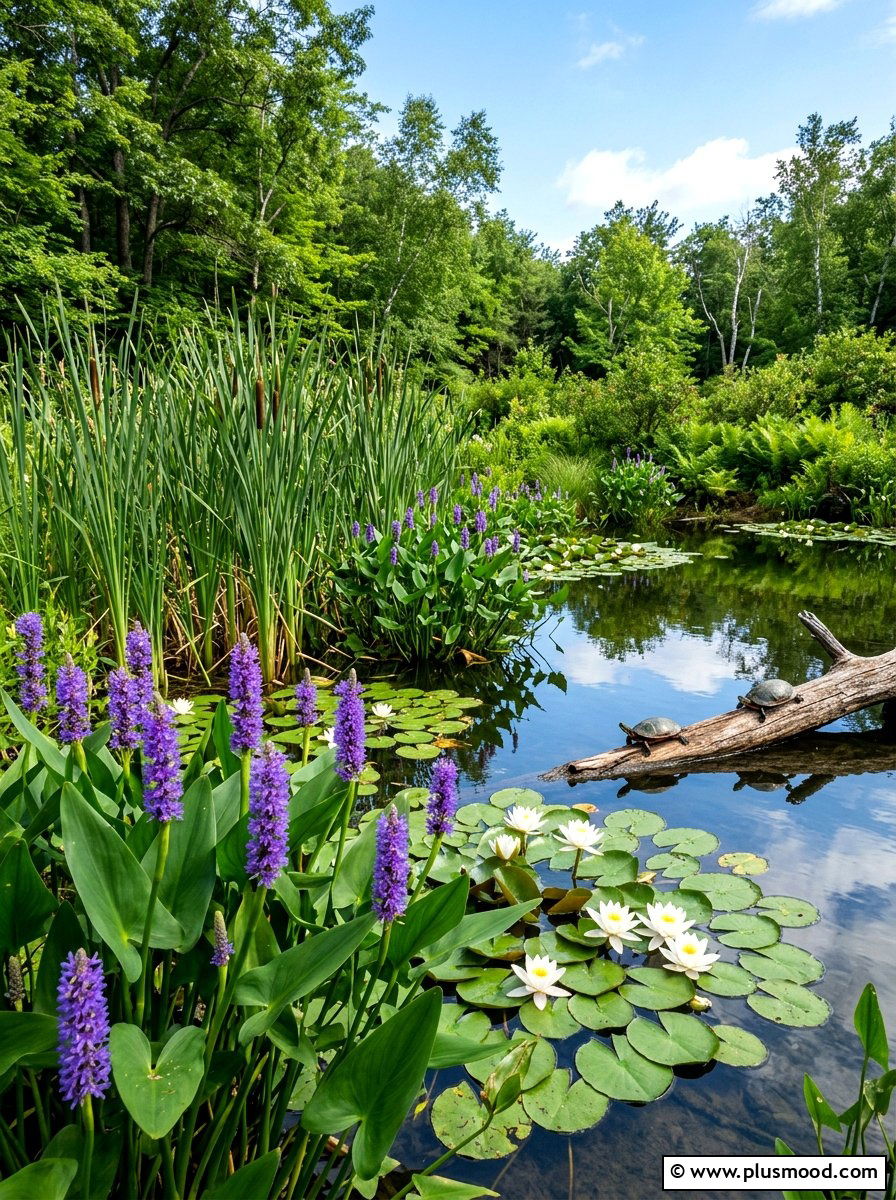
A pond bordered by plants suited to your local conditions often feels more settled than one filled with a random mix. Layers of low, marginal, and taller plantings can create a seasonal scene while helping the pond blend into its setting.
Key Details
- Consult a local nursery or extension service for appropriate choices.
- Avoid invasive species and plants unsuited to your climate.
Pro Tip: Leave one open viewing edge so the water does not disappear behind mature planting.
10. Design for Visiting Wildlife
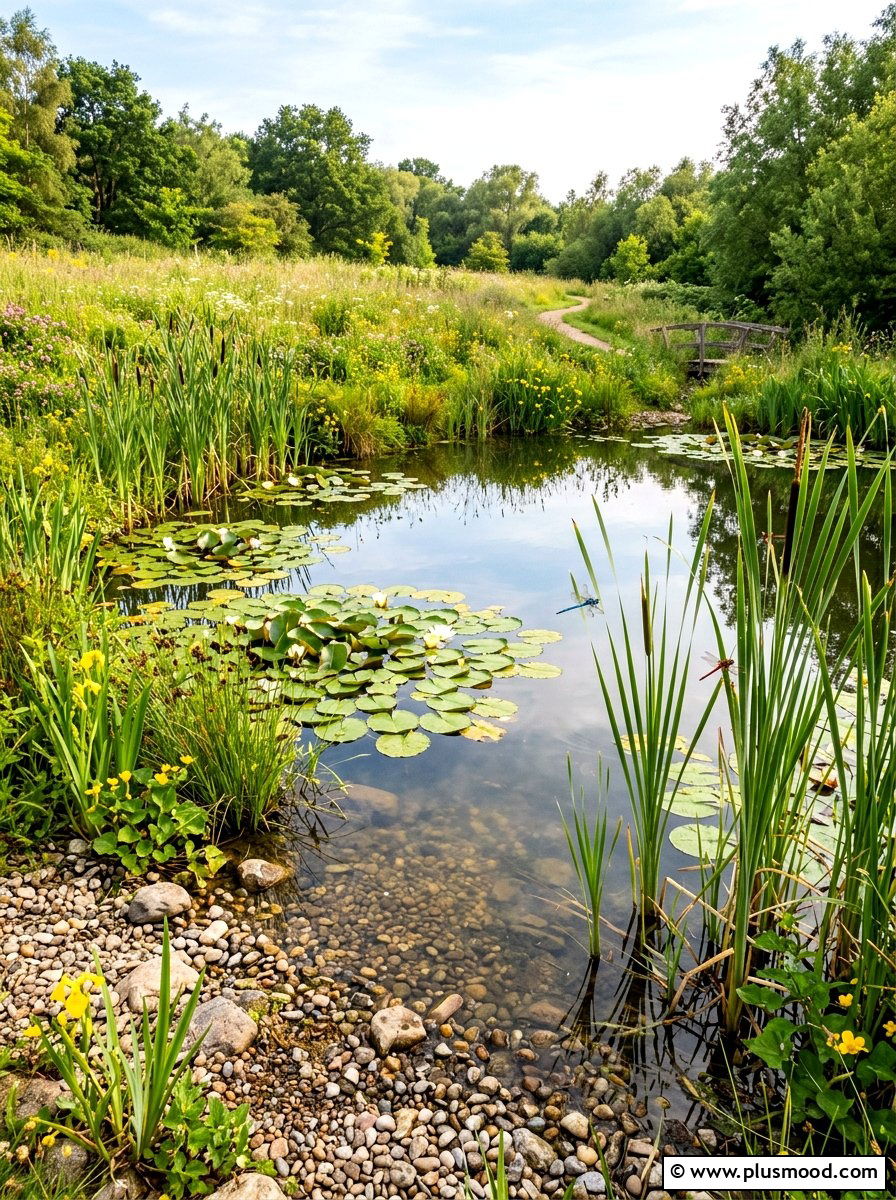
A naturalistic pond can support observation of birds, insects, and amphibians when its edges provide gentle access and shelter. Varying the depth and keeping a portion of the perimeter planted creates a more inviting, less formal water garden.
Key Details
- Include a gradual escape route from the water.
- Avoid adding chemicals unless guidance supports their use.
Pro Tip: Keep the pond visible from indoors so you can enjoy the activity without disturbing it.
11. Layer Lilies for a Lush Summer Surface
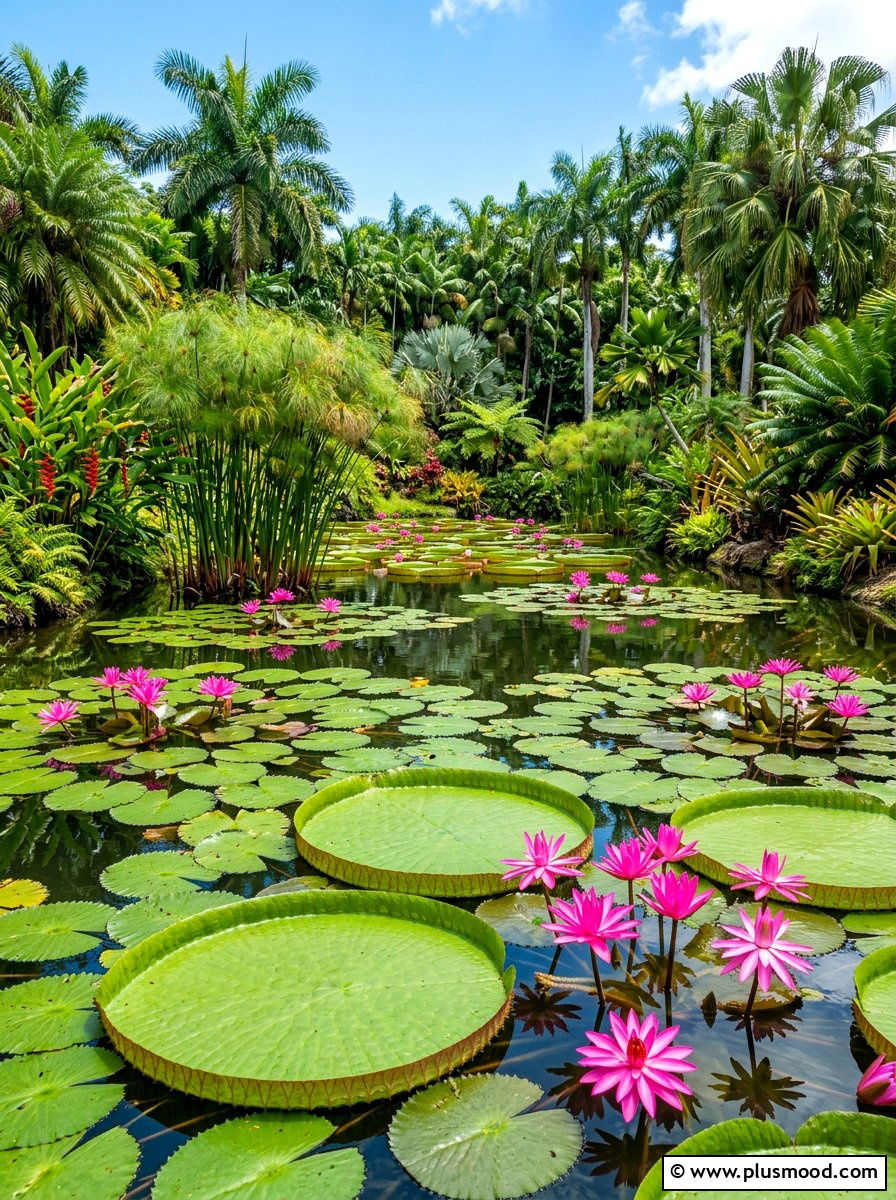
Water lilies can soften a pond’s surface with floating leaves and seasonal color, while taller marginal plants bring depth around the perimeter. The goal is a full, garden-like composition that still leaves enough open water to catch light.
Key Details
- Select varieties suited to the pond’s depth and sunlight.
- Allow space between plant groups for circulation and reflection.
Pro Tip: Use a restrained color palette so the leaves, flowers, and surrounding planting feel cohesive.
12. Build a Pond That Looks Settled Into the Landscape
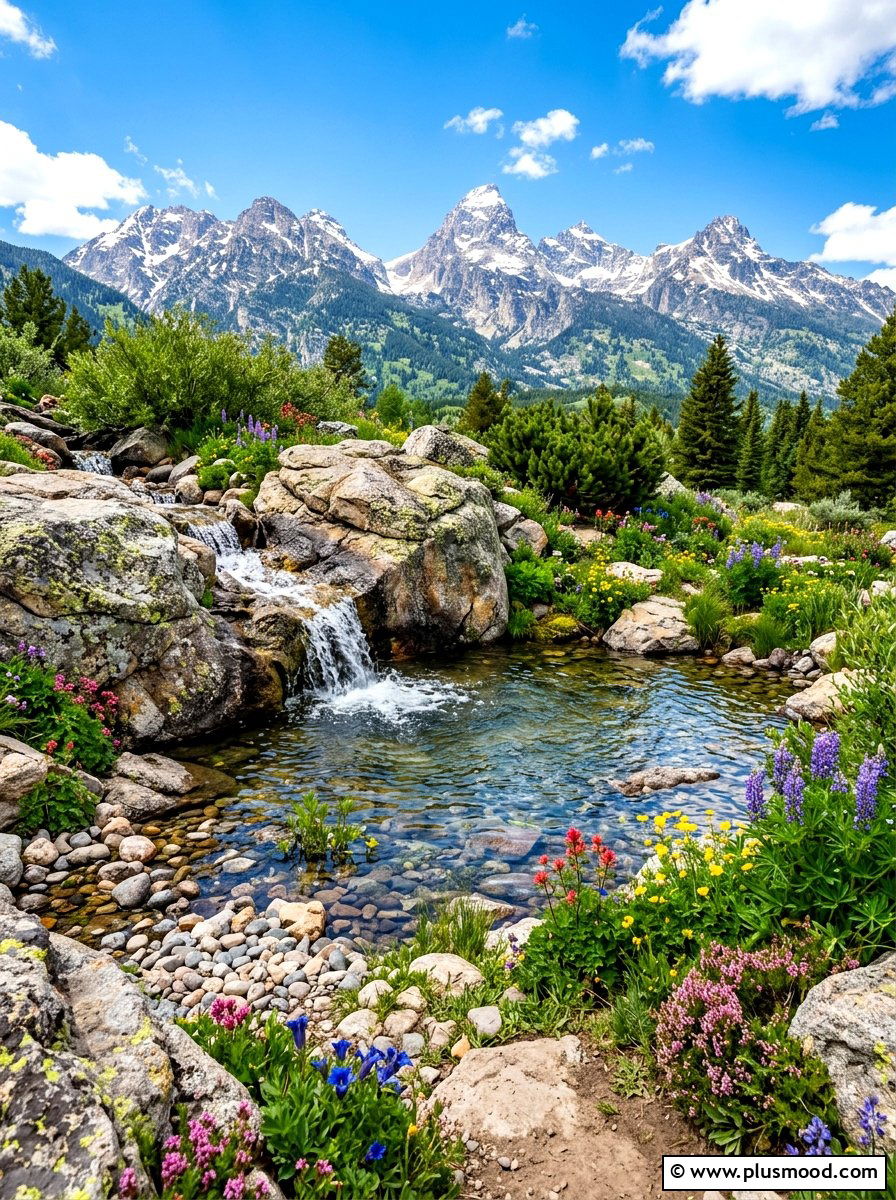
Natural stone gives a pond a grounded quality, especially on sloped sites or in gardens with informal planting. Mixing larger anchor stones with smaller pieces around the waterline creates a more believable transition between the pond and the terrain.
Key Details
- Use stones that suit the color and character of the home’s landscape.
- Set large stones securely before filling the pond.
Pro Tip: Partially bury selected rocks so they appear embedded in the site rather than placed on top of it.
13. Keep the Waterline Below Grade
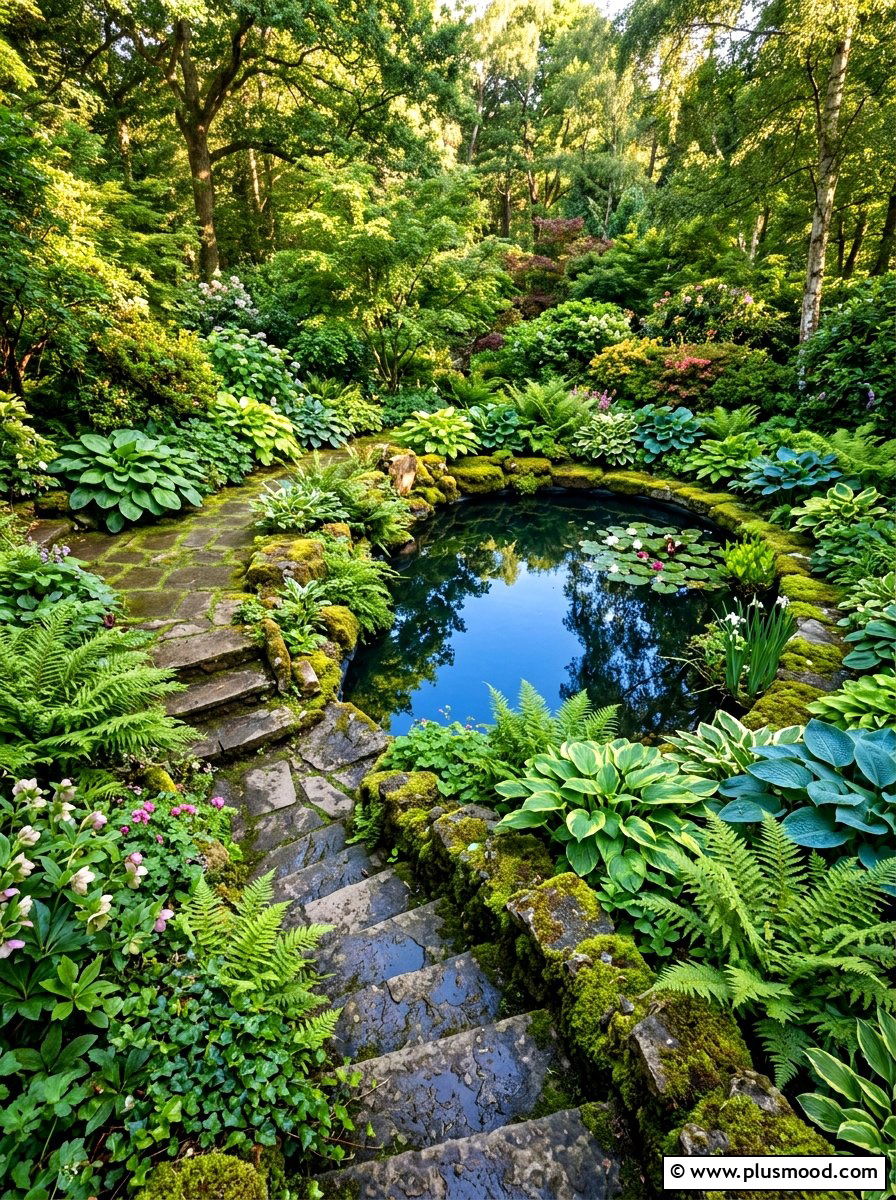
A sunken pond can feel more immersive because the landscape appears to meet the water at ground level. It is a strong option for a garden where you want the pond to read as part of the terrain instead of a raised object.
Key Details
- Plan the excavation, drainage, and safety details carefully.
- Use a stable edge treatment suited to the surrounding soil.
Pro Tip: Create one close viewing point at grade so guests can appreciate the surface and planting from a comfortable height.
14. Make a Woodland Clearing Feel Cooler
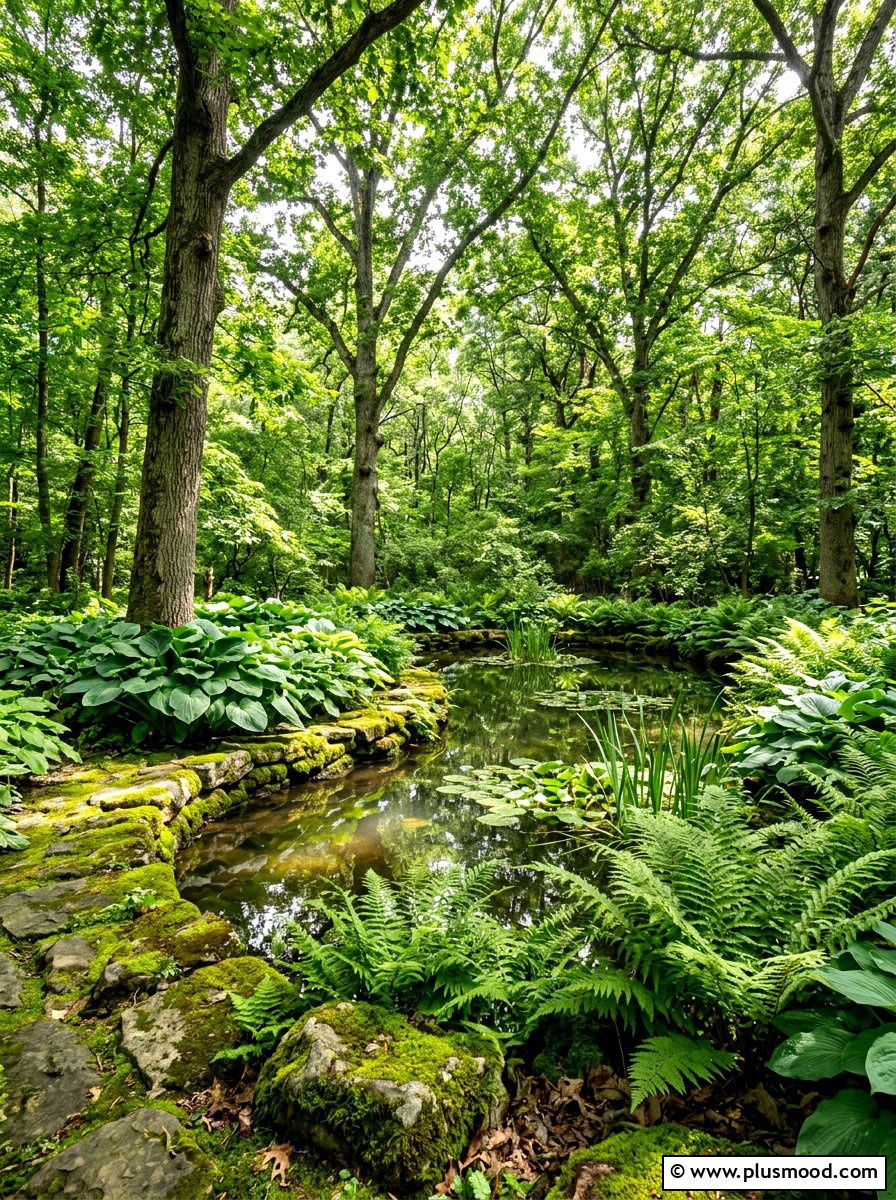
A pond placed beneath filtered shade can create a retreat-like garden scene, especially when surrounded by ferns, mossy stone, and foliage with contrasting textures. The design should work with the existing canopy rather than fighting it.
Key Details
- Choose plants that tolerate shade and seasonal leaf drop.
- Make maintenance access easy before planting densely.
Pro Tip: Use a simple path of bark, stone, or gravel to signal that the pond is an intentional destination.
15. Compose a Zen-Inspired Water View
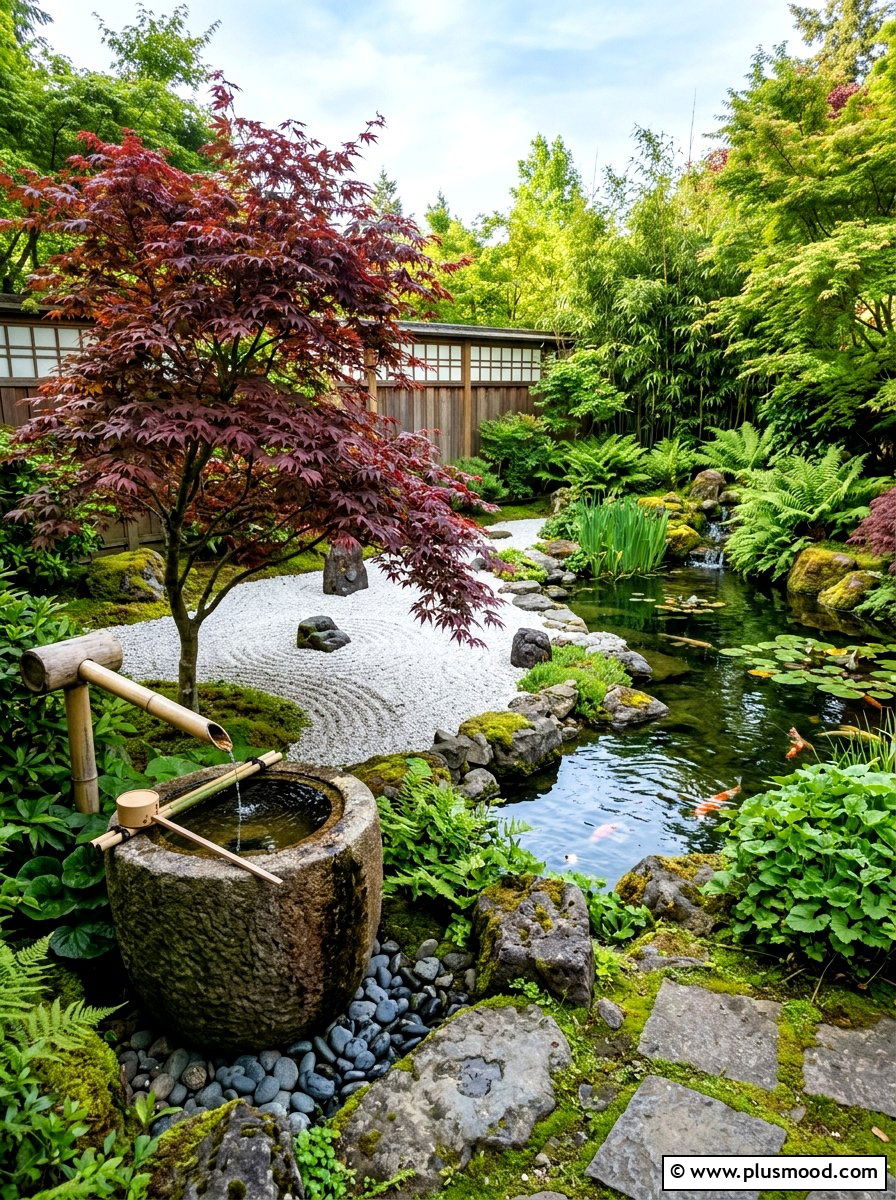
A restrained pond design can create a contemplative focal point with only a few carefully selected elements: a stone, a bridge-like stepping point, clipped green forms, and calm water. The success comes from space and proportion rather than decoration.
Key Details
- Keep materials and planting choices limited.
- Use negative space around the pond to preserve the calm effect.
Pro Tip: Place a single sculptural stone or lantern-like accent where it can be appreciated from the main view.
16. Use Sunlight to Power Gentle Circulation
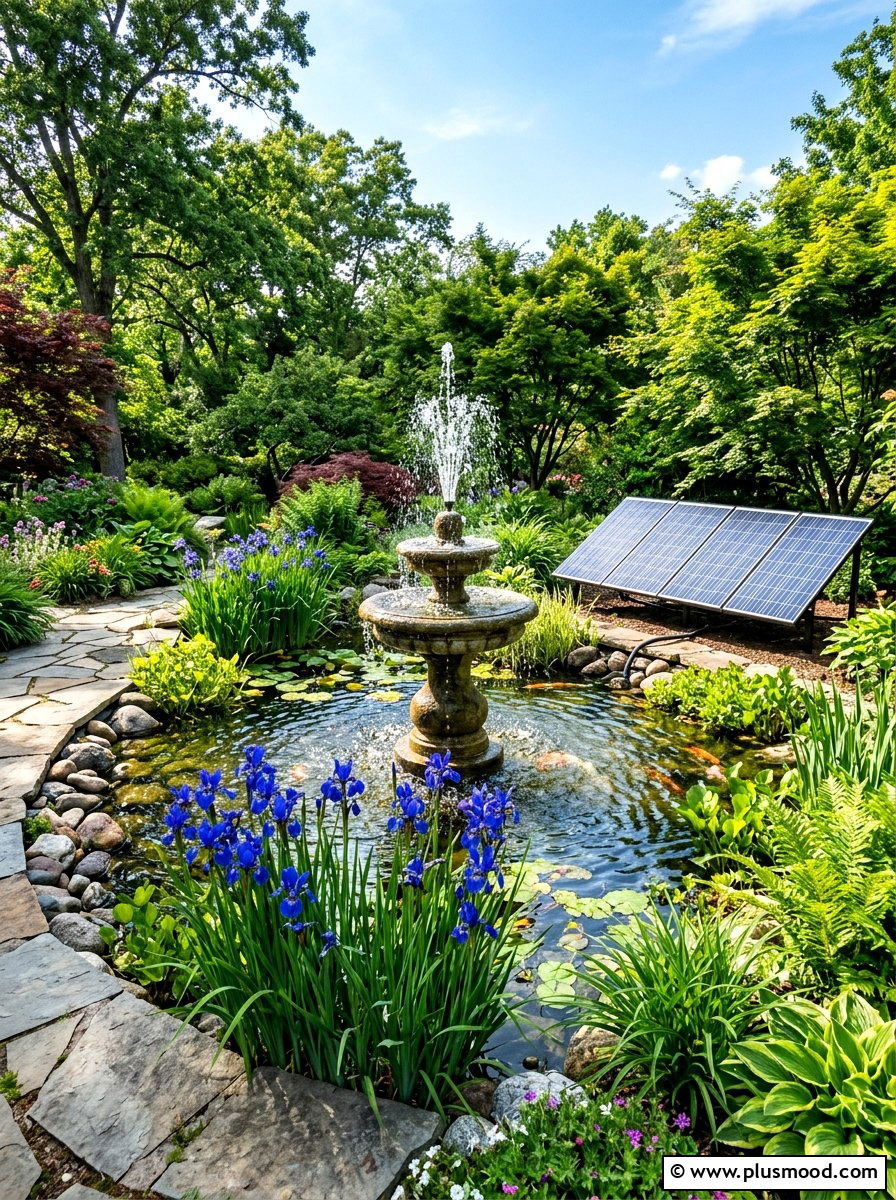
A solar fountain can add motion to a compact pond while avoiding a visible run of electrical cable. It is best suited to a bright, open site where the panel can receive reliable sun during the part of the day you use the garden most.
Key Details
- Place the panel where shade will not cover it through the day.
- Choose a pump size that matches the pond volume.
Pro Tip: Use a low spray pattern if the pond is small so wind does not carry water beyond the basin.