

I still remember the reality check of unlocking my first dorm room. I had spent half the summer saving inspiration photos of perfectly styled spaces. What I actually got was a cinderblock box, a humming fluorescent light, and a wooden bed frame that looked like it weighed more than my car. It was less “aesthetic haven” and more “correctional facility chic.” Dorms and first apartments are built to survive thousands of college students, not to win design awards. But over the last few years of renting, moving, and rearranging, I have learned that you do not need a massive budget to fix that.
The look for student living in 2026 is honestly a relief. We are finally past the era where you had to buy an expensive, matching bed-in-a-bag set just to feel put together. Now, the best rooms look collected, slightly mismatched, and deeply personal. It is all about layering textures, mixing eras, and figuring out how to make cheap things look intentional. Because the current vibe relies so heavily on thrifting, DIYs, and clever styling instead of buying everything brand new, it is incredibly easy on a student budget.
Whether you are trying to make a shared double room feel livable or trying to furnish your first off-campus apartment without spending your entire semester’s grocery budget, here is a breakdown of the biggest looks right now. We will cover the colors, the textures, and the actual, realistic ways to pull them off.
| Seagrass Storage Baskets with Lids (Flat Wicker Baskets)
The “Cloud Nine” Soft Coquette Aesthetic
If there is one mood taking over campus housing this year, it is the desperate need to just be comfortable. The “Cloud Nine” or soft coquette look is basically building a giant, romantic pillow fort to hide in after a brutal midterm. It is visually soft, slightly whimsical, and ridiculously inviting.
The colors here are pale icy blues, soft blush pinks, and warm creamy whites. You want to avoid stark, hospital-white sheets and go for tones that feel gentle. The trick to pulling this off without spending a fortune is to ignore everything else and focus on your bed. Your bed is the biggest thing in a dorm room, so whatever is on it dictates the whole vibe. Right now, cinched, ruched, and ruffled duvet covers are everywhere. They make the bed look like a puffy cloud, which instantly hides the fact that you are sleeping on a plastic-covered college mattress.
You do not need an expensive designer duvet for this. Big-box stores sell affordable seersucker or crinkle-texture bedding that does the exact same thing. If you already own a plain duvet and do not want to buy a new one, just fake the coquette vibe. Tie cheap satin ribbons to the corners of your pillowcases, or throw a ruffled blanket over the end of the bed.
Lighting makes or breaks this look. Make a pact with your roommate to never turn on the “big light.” Instead, you need warm, ambient sources. Plug-in wall sconces with little fabric shades look incredibly grown-up and just stick to the wall with command strips. If sconces are too expensive, buy a cheap paper lantern floor lamp. It casts a soft, diffused glow that makes everything look better.
Varsity Whimsy and Elevated Preppy
If you want something a bit more structured but still fun, “Varsity Whimsy” is having a huge moment. It takes that classic, slightly stuffy collegiate look and messes it up a bit with weird colors and quirky details. It feels nostalgic, academic, and like you actually go to a cool school in a movie.
The colors are high-contrast. Think deep navy blue clashing with bright cherry red, or hunter green paired with mustard yellow. The easiest way to nail this look is to ditch the comforter and buy a quilt. Quilts are back in a big way. They look vintage, and more importantly, they actually fit inside those tiny dorm washing machines without getting stuck. Look for quilts with bold stripes, checkerboards, or patchwork designs.
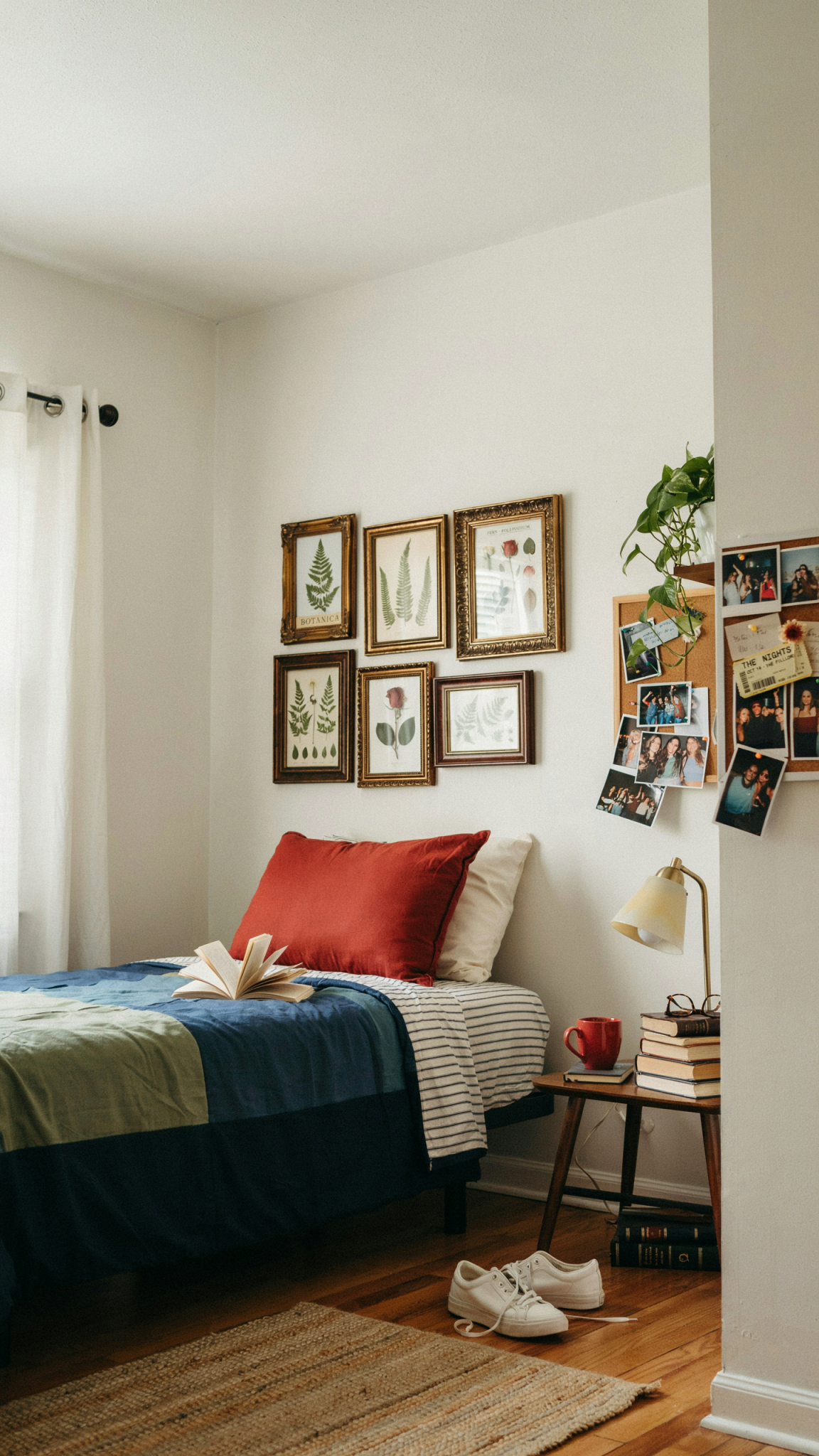
To keep your room from looking like an old Ralph Lauren catalog, you have to add the “whimsy” part. This is where you save money. Mix your preppy striped bedding with a really weird throw pillow. Get one in a loud floral print, or buy one of those round corduroy button pillows or a knot cushion.
For the walls, lean into the academic thing but keep it cheap. Frame vintage maps, old botanical prints, or even cool pages cut out of thrifted books. The trend right now is thick, chunky, slightly ornate frames. Do not buy these new. Go to a thrift store, buy the ugliest art they have for three dollars just to get the frame, and swap the picture out. A big corkboard above your desk, messy with polaroids, concert tickets, and actual class notes, fits right in and actually helps you stay organized.
The Vintage Nostalgia and Physical Media Revival
There is a massive wave of late 90s and early 2000s nostalgia happening right now. But instead of just taping up retro posters, people are actually bringing old technology and physical media back into their rooms. When you stare at a laptop for eight hours a day, having actual, tangible things to touch is surprisingly grounding.
This look does not really have a strict color palette; it is more about the stuff you display. It usually leans toward warmer, slightly muted tones like olive green, burnt orange, and warm wood. The focal point of the room is usually a media station. CD players, small record players, and literally just old portable boomboxes are being set up on shelves or rolling carts like they are art pieces.
This is inherently budget-friendly because you are basically decorating with old junk. Dig through thrift stores, flea markets, or your parents’ garage for old media players, weird cassette towers, or chunky digital alarm clocks. They do not even necessarily have to work perfectly; they just have to look cool.
Treat your physical media like decor. Do not shove your CDs or records under the bed. Stack them on your desk, or buy cheap acrylic ledges to display the album covers on the wall. If you want posters, skip the glossy ones from the campus poster sale. Look for vintage movie posters, old local concert flyers, or retro ads. Hang them up with simple binder clips or cheap wooden poster hangers so it looks relaxed and a little unfinished.
| Amazon Basics Wall Mounted Coat Rack with 8 Hooks
The Eco-Chic Botanical Retreat
If your main goal is to pretend you do not live in a concrete building, the botanical look is your best bet. It is all about bringing the outdoors inside, using earthy colors, natural textures, and a ridiculous amount of plants. It feels calm, grounding, and totally organic.
The colors are basically just dirt and leaves: sage greens, warm terracottas, mustard yellows, and sandy neutrals. When you buy stuff for this room, skip the shiny plastics. Get cotton or linen bedding. It will wrinkle, but the messy, relaxed texture is the whole point. Buy woven seagrass or wicker baskets for storage instead of those clear plastic tubs.
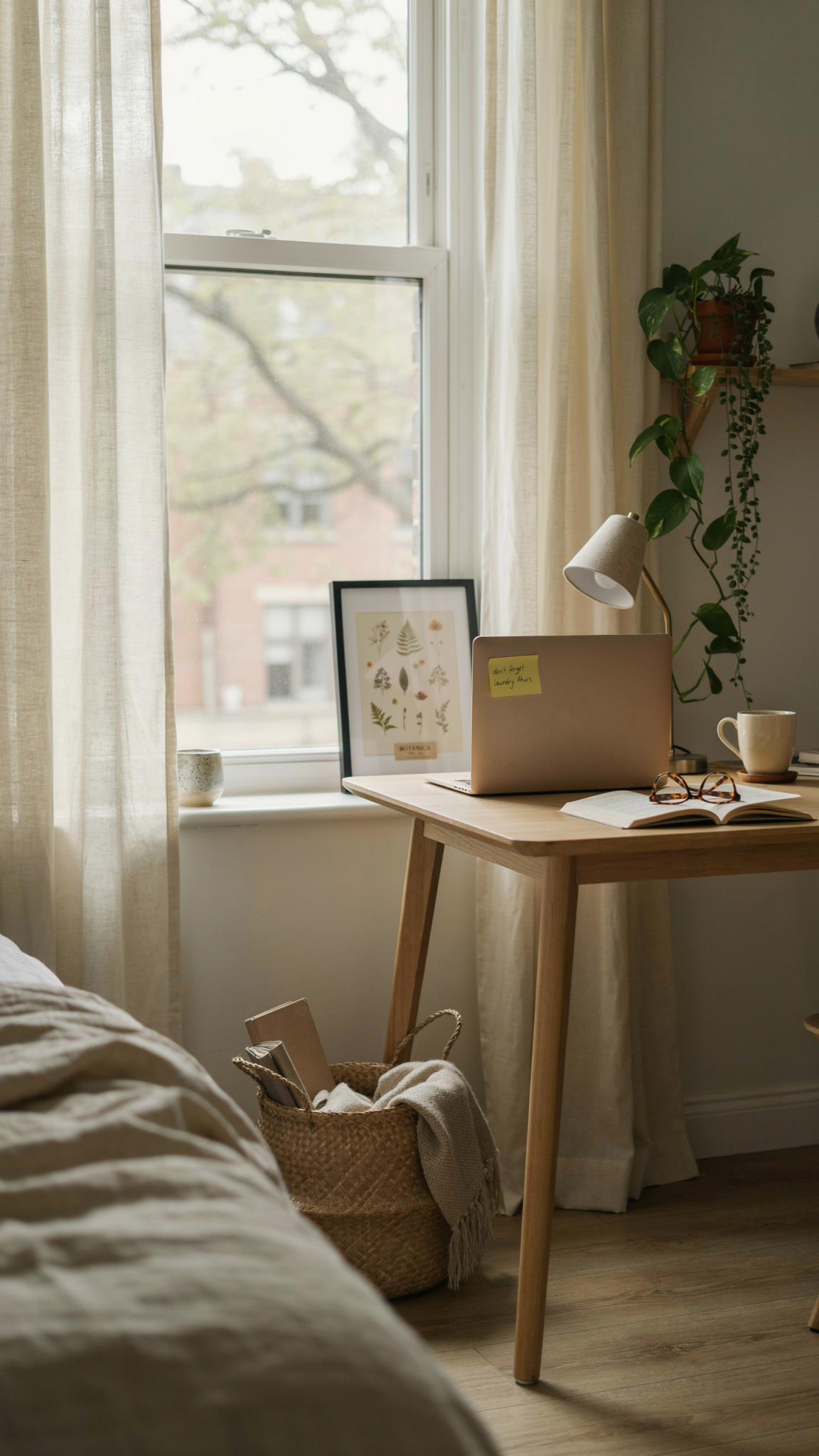
Plants are the only rule for this look. If you have a decent window, cram the sill with trailing pothos, snake plants, and succulents that are hard to kill. If your room gets zero sunlight, do not panic. Fake plants have gotten really good lately. Grab a few high-quality faux vines and drape them over your bookshelf; it gives you the exact same green look without the guilt of accidentally killing them during finals week.
For the walls, pressed flower art is everywhere right now, and it is free to make. Grab some leaves or small flowers from campus, flatten them in a heavy textbook for a week, and stick them in cheap glass frames. If you have a massive, ugly wall to cover, buy a lightweight fabric tapestry with a botanical drawing or a landscape on it. It hides the cinderblocks instantly and sets the tone for the room.
Chromatic Color Pop and Bold Maximalism
If you hate the idea of a quiet, neutral room, the Chromatic Color Pop trend is exactly what you need. This look completely ignores the old rule that small rooms have to be white and boring. It is all about loud colors, clashing patterns, and shoving as much personality into the space as possible. It is loud, it is fun, and it refuses to be ignored.
There are zero rules for the color palette here, except that it needs to be bright. Throw a cobalt blue rug under a mustard yellow chair and pile hot pink pillows on the bed. The only trick to keeping it from looking like a messy thrift store bin is to do it on purpose. You want the colors to fight each other a little bit.
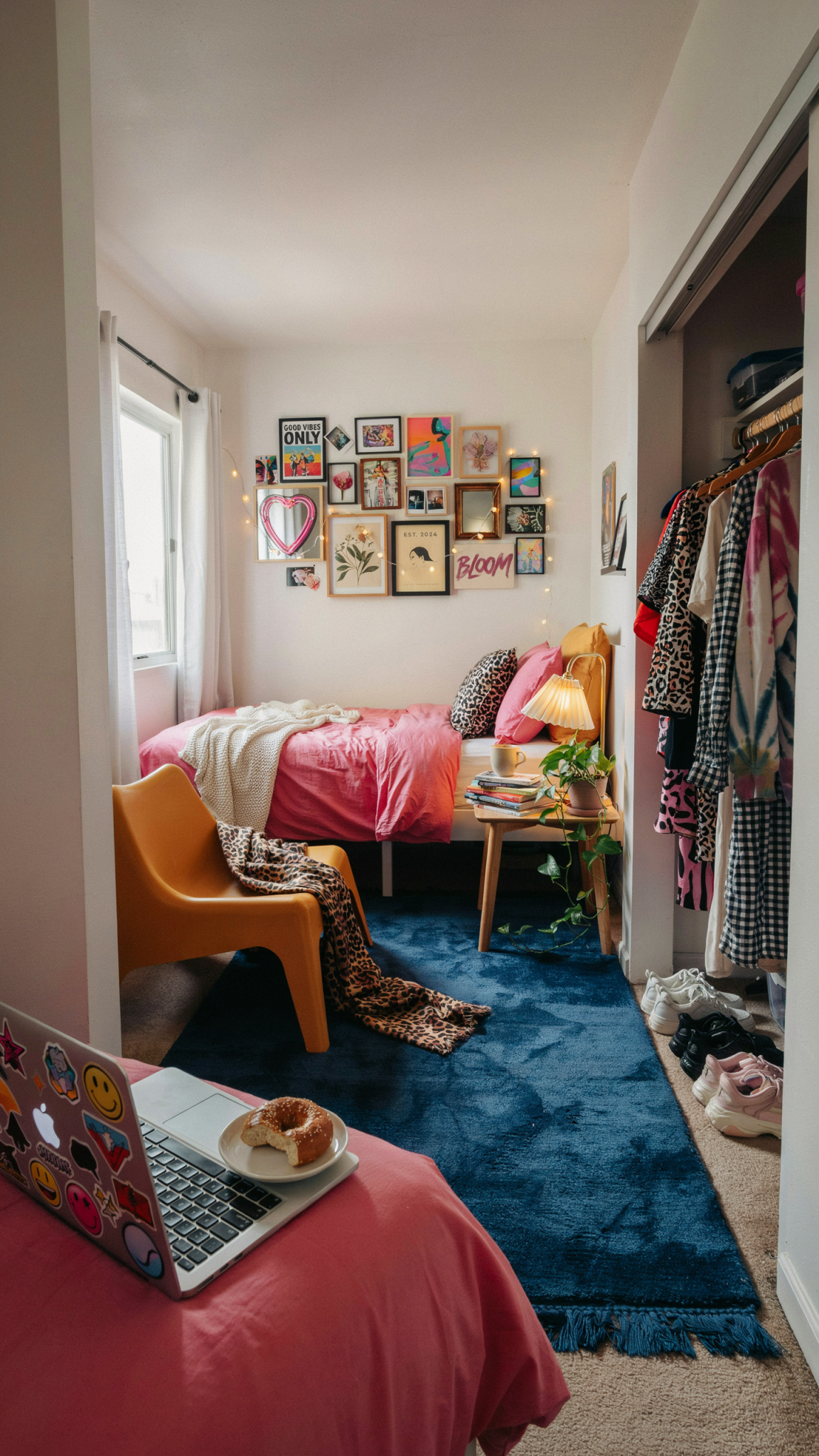
Since your landlord or RA definitely will not let you paint the walls, you have to bring the color in with your stuff. A big, loud area rug is the easiest way to do this. Weirdly, animal prints like zebra and leopard are acting as neutrals right now. They look amazing under bright colors. If you find a crazy, colorful rug for cheap, just pull a couple of colors from it and use those for your bedding and pillows.
For the walls, go huge. Build a floor-to-ceiling gallery wall. You do not need to buy real art. Frame colorful postcards, cool pages torn out of fashion magazines, bright graphic prints, or even really cool shopping bags. The frames should not match. A chaotic mix of cheap, colorful frames makes the whole thing look deliberate.
The Rise of “Dopamine Decor”
If full-on maximalism feels like too much work, “Dopamine Decor” is the lazier, happier alternative. It is exactly what it sounds like: decorating your room exclusively with things that make you smile, even if they make zero sense together. It is deeply personal, and because you probably already own half the stuff, it costs almost nothing.
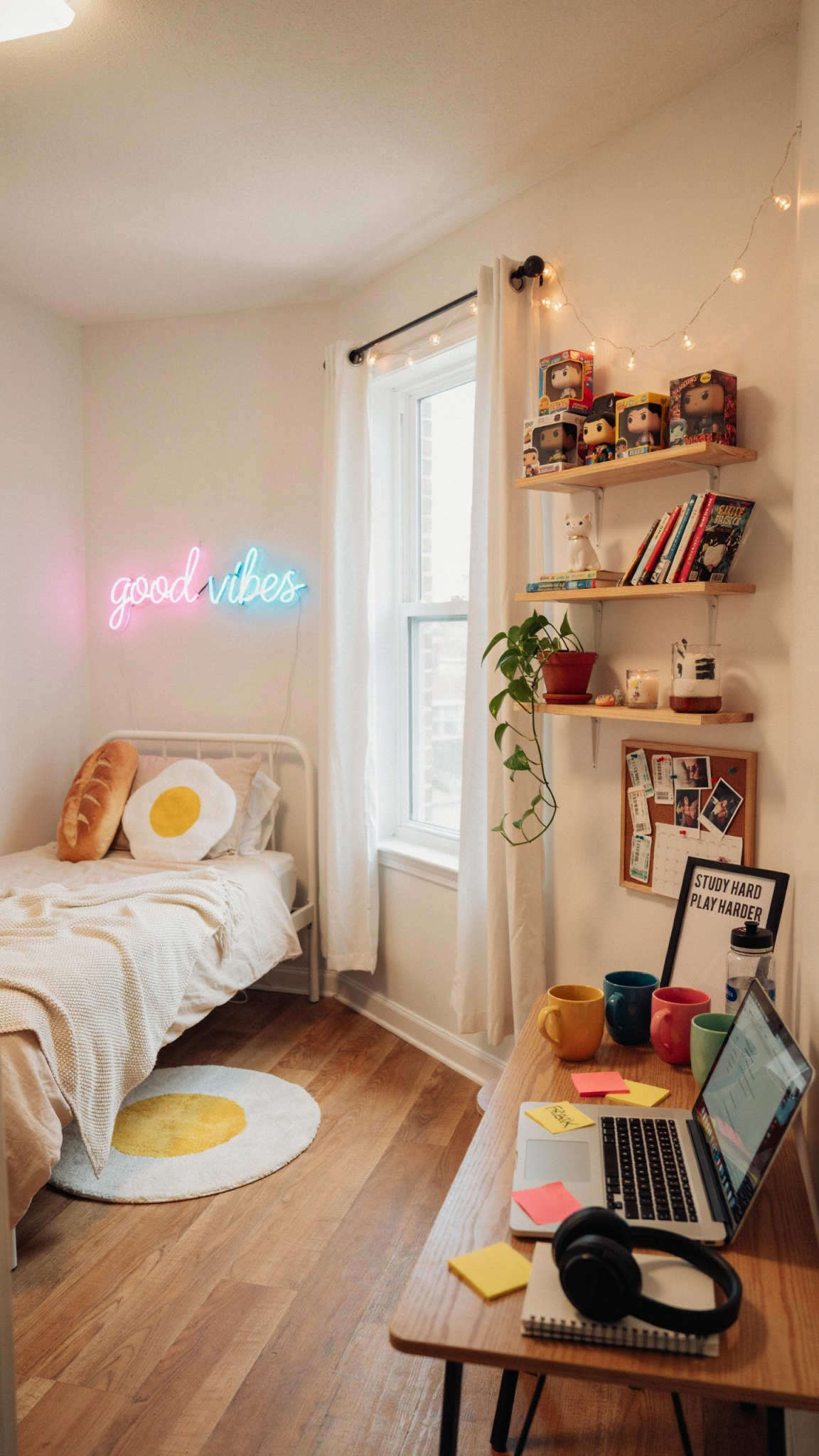
To pull this off, you basically just have to organize your clutter. Stop hiding your weird collections and put them out. If you hoard vintage matchbooks, stick them in a shadowbox. If you have fifty enamel pins, pin them all to one corkboard. The secret to making this look like a design choice and not just a messy room is grouping. One weird mug on your desk means you forgot to do the dishes; five weird mugs lined up on a shelf is a “collection.”
This trend also loves stupid, funny design elements. Think bath mats shaped like fried eggs, pillows that look like giant pieces of bread, or cheap neon signs with dumb inside jokes. You can find this stuff everywhere for cheap, and it makes the room feel fun. When you are stressed out of your mind in November, having a room that doesn’t take itself seriously is actually a huge relief.
The Art of the “Hobby Cart”
No matter which vibe you go for, there is one specific thing showing up in every single stylish room right now: the hobby cart.
You know those cheap, three-tier metal rolling carts everyone buys for dorm bathrooms or snacks? People are taking those and turning them into hyper-specific little stations. They aren’t just for shoving extra deodorant into anymore; they are the focal point of the room.
I have seen people turn these into dedicated matcha and coffee bars, with electric kettles, cute mugs, and glass jars of sugar. I have seen them used as record stations, with a cheap turntable on top and vinyl stacked underneath. I have even seen them used as rolling art studios packed with paints and sketchbooks.
The hobby cart is brilliant because it takes the thing you actually like doing and turns it into decor. It saves desk space, it looks incredibly intentional, and it immediately tells people what you are into when they walk in. You can buy these carts at literally any target or home store, and if you want it to look a little nicer, spend ten extra dollars to get a bamboo or wood version instead of the metal one.
| Amazon Basics Wall Mounted Coat Rack with 8 Hooks
| Amazon Basics 4-Shelf Heavy Duty Steel Wire Shelving
Lighting Hacks for Cinderblock Rooms
Before we even talk about apartments, we need to address the biggest enemy of dorm design: the lighting. I cannot stress this enough, if you only do one thing to your room, turn off the overhead fluorescent light. It makes everything look like a hospital waiting room, and it is terrible for late-night studying.
You need to build “layers” of light. Start with the ambient light. String lights are still a dorm staple, but the vibe has shifted from those tiny copper wire fairy lights to larger, clear globe lights. Stringing a set of globe lights around the perimeter of the ceiling immediately warms up the whole room.