

There is a particular moment in decorating that can make even an enthusiastic homeowner feel defeated. The major decisions have been made. The walls are painted. The sofa has arrived. The rug is finally in the right position, the dining chairs are around the table, and the curtains are no longer living in their packaging. By every practical measure, the room is finished.
And yet it still feels incomplete.
Usually, the instinct is to shop harder. We search for the missing lamp, the right art, the perfect pair of pillows, the decorative object that will somehow make everything click. We save hundreds of images, compare measurements, and try to identify the one item that will transform a collection of perfectly reasonable choices into a room with a point of view.
Sometimes that works. More often, it produces a room that is technically complete but emotionally flat.
The problem may not be that the room needs more things. It may be that it needs room for the unexpected.
That is the idea behind the 15 Percent Rule: leave approximately the final fifteen percent of a room open until the larger pieces are in place and you can experience the space in real life. That last portion is reserved for the discoveries that cannot be predicted from a floor plan or a mood board—a vintage lamp with the right shade of brass, a painting that gives the room an entirely different energy, a weathered chest that solves a storage problem, or a textile whose colors pull together details you did not realize were already there.
The rule is not an excuse to avoid planning. It is not permission to spend without limits. It is not a guarantee that every flea-market visit will reveal a magical object. It is a decorating discipline built around a simple belief: a room should be designed with intention, but it should also have the capacity to become more personal over time.
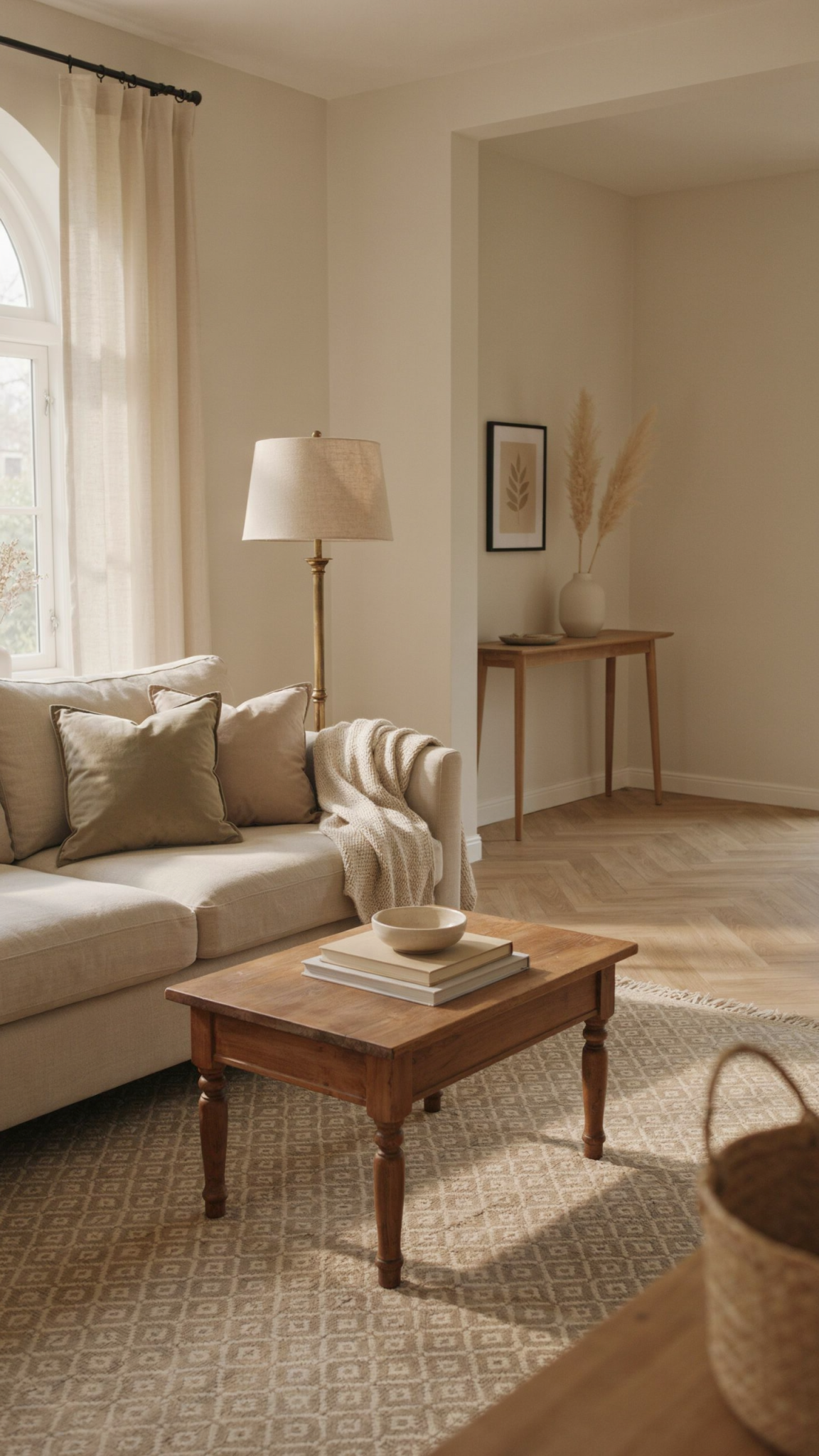
What the 15 Percent Rule Actually Means
The phrase sounds mathematical, but it is not meant to be a strict calculation. You do not need to measure a room, count every object, and remove exactly fifteen percent of the contents. The number is a helpful way to describe a final margin of flexibility.
The first eighty-five percent includes the decisions that establish how the room functions and feels. It includes the layout, the major furniture, the lighting plan, the architectural finishes, the main colors, and the pieces that determine scale. These decisions deserve thought because they are expensive, difficult to change, and responsible for whether the room works as a room.
The final fifteen percent includes the smaller choices that give the space character. These may be accessories, lamps, artwork, occasional tables, pillows, throws, decorative storage, objects collected while traveling, vintage finds, or one unusual piece that changes the balance of the room. They are not insignificant, but they are more adaptable than a sofa or a kitchen island.
The rule also applies to timing. Rather than selecting every accessory before the furniture arrives, you wait. You allow the room to reveal what it needs. You notice where the light falls in the morning. You see whether the sofa reads as warm or cool in the actual space. You discover that the wall you thought needed a large mirror may look better with a small painting and a tall lamp. You understand the room through use instead of trying to solve it entirely in advance.
This is the difference between decorating a room as an image and decorating it as an environment.
Why Finishing Everything at Once Can Work Against You
Complete-room shopping is appealing because it promises certainty. Retailers make it easy to purchase a sofa, chairs, tables, rug, lighting, and accessories in one visual package. Everything is shown together, so the proportions appear resolved. The colors coordinate. The room looks finished immediately.
The trouble is that coordination is not the same as character.
When every decision is made from one collection or during one intense shopping period, the room can lack contrast. There may be no object with a different age, texture, scale, or origin. Nothing interrupts the visual rhythm. The space looks polished, but it also looks as though it arrived in a single delivery.
A room needs a few elements that do not behave perfectly. A glossy lamp beside a rough wood table. A floral cushion on a plain sofa. A formal mirror above an informal console. A piece of art that introduces a color found nowhere else. These small tensions keep the eye moving.
There is also a psychological cost to finishing everything immediately. Once every surface has been filled, homeowners often become afraid to change anything. The room is treated as a completed project rather than a living arrangement. A lamp cannot move because it was purchased for that corner. A chair cannot be recovered because the fabric was selected to match the curtains. A shelf cannot hold ordinary books because the objects were arranged for a photograph.
The 15 Percent Rule creates a different relationship with the room. It leaves space for observation, adjustment, and personal history. It acknowledges that the most meaningful objects are often found when you are not trying to complete a checklist.
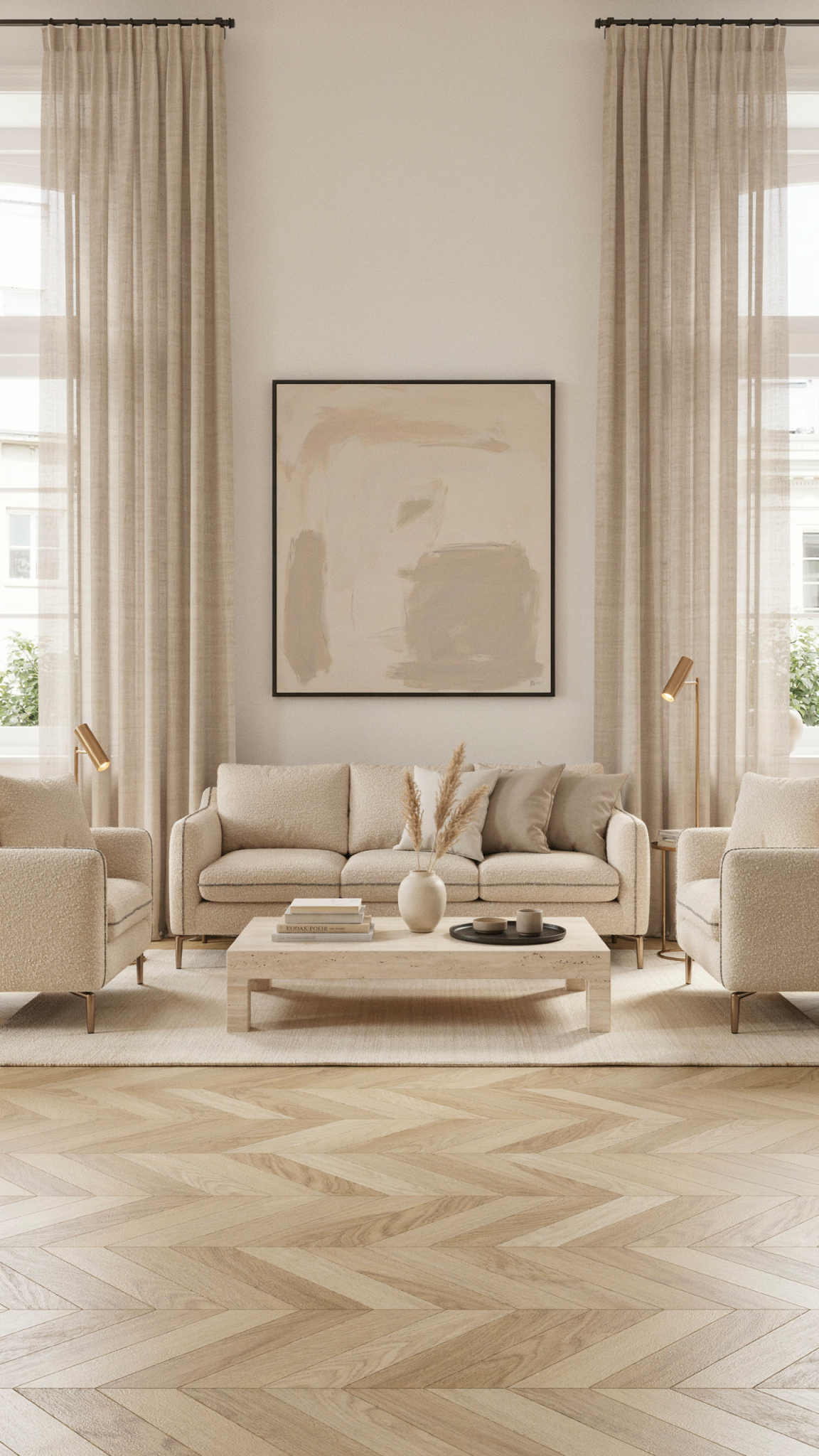
The Rule Begins With a Strong Foundation
Leaving room for surprise does not mean beginning with uncertainty. The opposite is true. The final fifteen percent works only when the first eighty-five percent is sound.
Before looking for accessories, decide what the room needs to do. Is it a place for conversation, reading, television, meals, work, play, or several of these at once? Where will people enter? What paths need to remain clear? Which seats will have the best light? What must be stored nearby? What should be easy to reach?
Function gives decorating decisions a purpose. A storage ottoman may be more valuable than a delicate side table if the room regularly hosts children. A bench may be more useful than a second accent chair in a narrow entry. A shaded lamp may do more for a reading corner than a sculptural object that cannot provide light.
Scale is equally important. A beautiful small rug will not make a large seating area feel grounded. A tiny lamp may disappear on a deep console. An oversized coffee table can make movement difficult. These are not problems the final fifteen percent can solve. They belong to the foundation.
The foundation should also establish a visual direction without dictating every detail. You may know that you want a room to feel warm, quiet, collected, and slightly traditional. You may choose dark wood, soft upholstery, aged brass, and a muted green as the starting vocabulary. That is enough. You do not need to decide the exact pattern of every pillow or the precise object that will sit on every shelf.
A useful foundation answers the major questions while keeping a few minor questions open.
What Belongs in the Final Fifteen Percent?
The most successful additions are usually smaller, movable, and capable of creating contrast. They are pieces that can change the emotional register of a room without forcing you to redesign it.
Lighting
Lighting is one of the best places to use the rule because it changes how every other choice is perceived. A room may need a lamp with a warmer shade, a picture light above art, a low fixture on a bookshelf, or a floor lamp that creates a pool of light beside a chair.
Do not decide every lamp before the furniture is installed. The height of the sofa, the location of the side table, and the amount of natural light can change what the room needs. A lamp that looks ideal in a photograph may be too low to read comfortably or too bright for evening conversation.
The final lighting layer is often what makes a room feel finished after sunset. It is also one of the easiest details to adjust later.
Textiles
Pillows, throws, quilts, runners, and small rugs are useful because they introduce color and texture without creating a permanent commitment. A neutral room can move toward tobacco, moss, plum, rust, or deep blue through textiles alone. A smooth sofa can become more relaxed with a wool throw. A formal chair can feel more inviting with a patterned cushion.
Textiles are also where a room can take a small risk. A stripe, check, floral, or faded geometric pattern may be easier to live with on one cushion than across an entire sofa. If it works, you can build on it. If it does not, you can move it elsewhere.
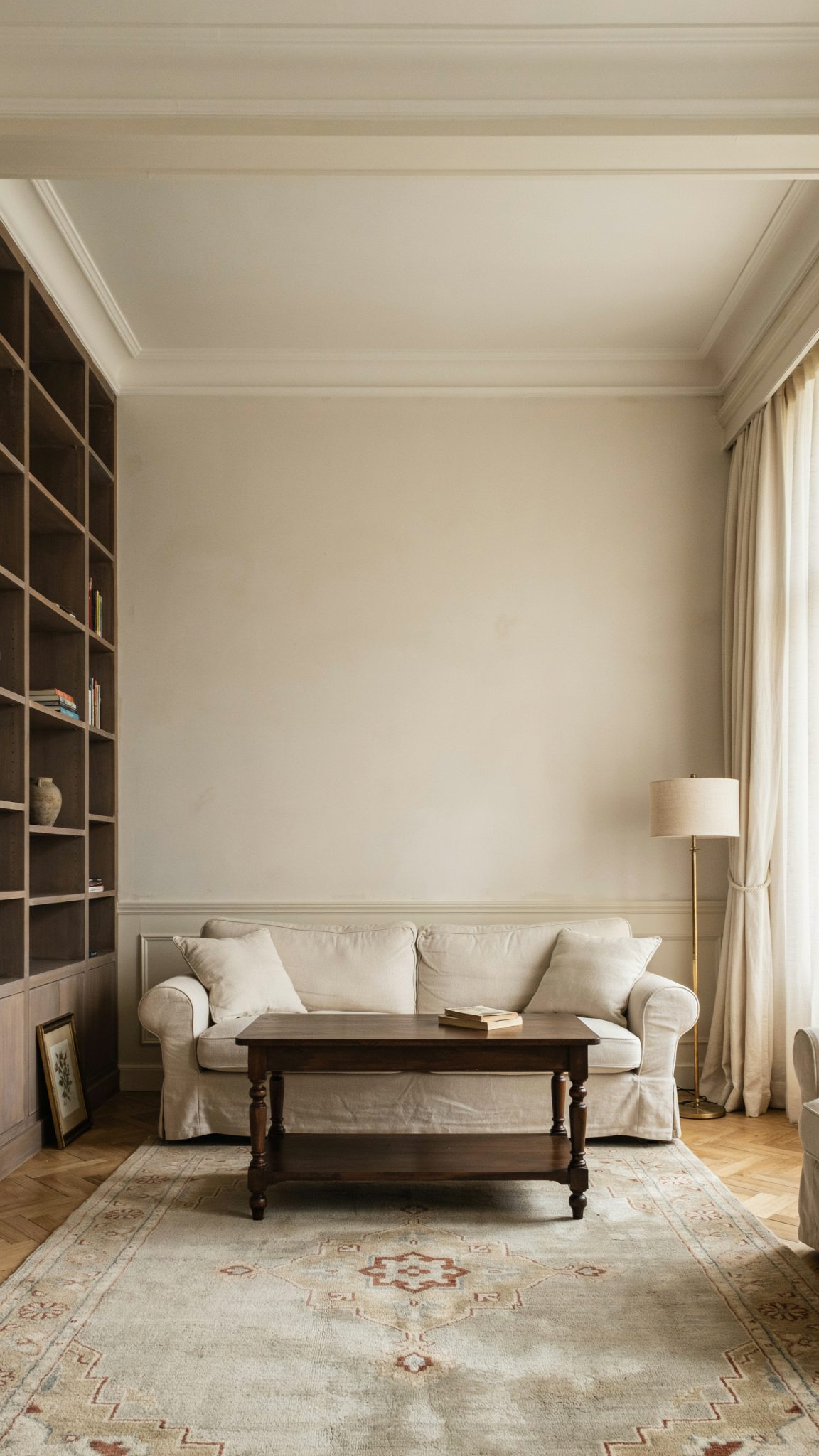
Artwork
Art should not always be selected as the final color-matching exercise. It can be the thing that disrupts the room in the best possible way. A painting may introduce a smoky blue into a brown room or a vivid red into an otherwise quiet hallway. A photograph may make a formal space feel more intimate. A print found at a local shop may carry more meaning than a large piece chosen solely because its dimensions fit the wall.
Waiting to select some art allows you to understand the room’s empty walls. You may discover that the space needs one strong piece rather than a gallery wall, or that a small work placed beside a lamp creates more interest than a large work centered above the sofa.
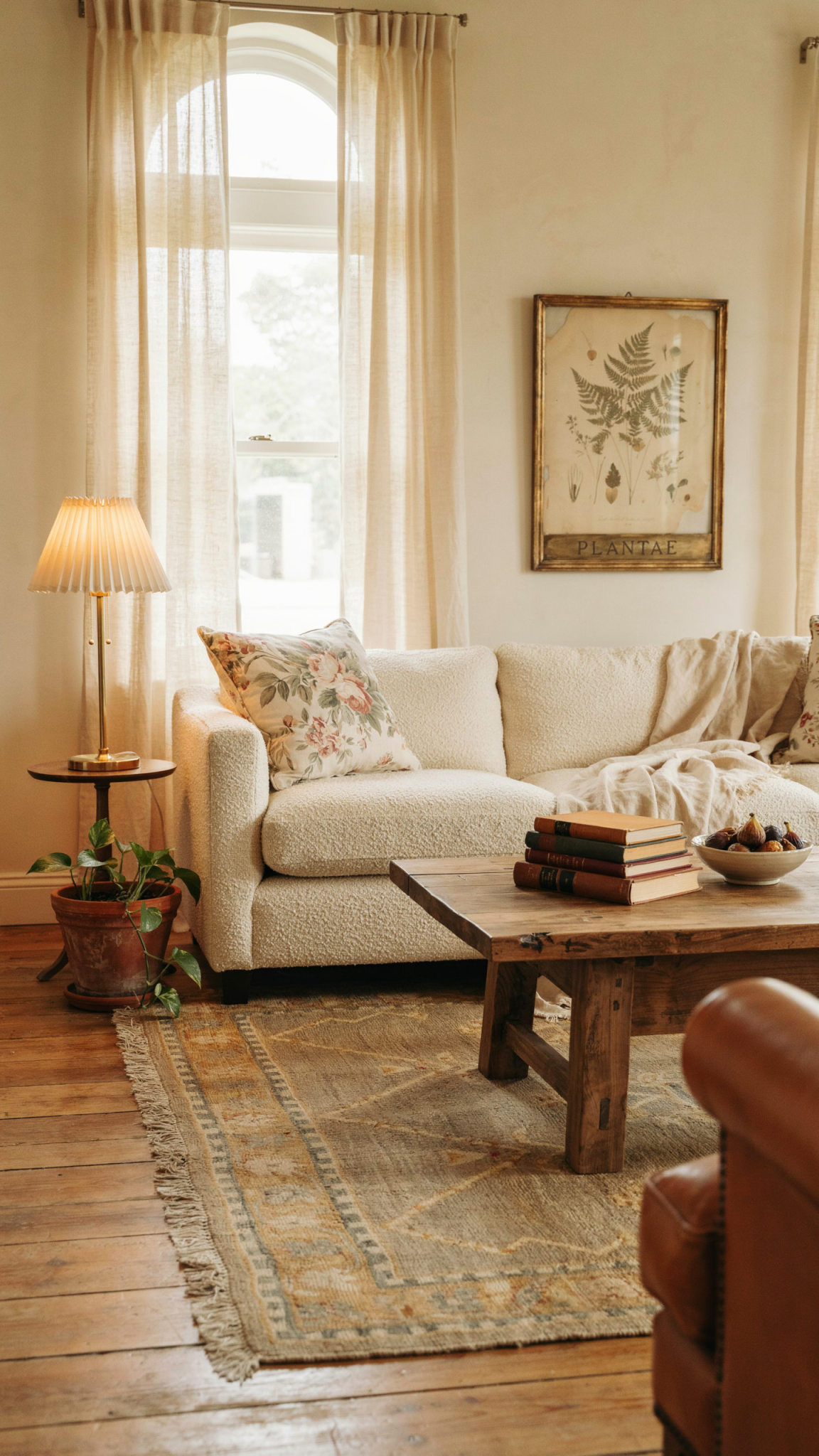
Vintage and Found Objects
This is the category most closely associated with the 15 Percent Rule. Vintage objects bring variation that new products often imitate but rarely duplicate. The finish may be uneven. The proportions may be unusual. The object may have a practical history that gives it a reason to exist.
Look for pieces that are useful as well as attractive: a small chest, a stool, a tray, a ceramic vessel, a mirror, a lamp, a box, a basket, or a side table. A found object does not need to announce its age. It simply needs to contribute something the room does not already have.
The goal is not to turn the home into an antique shop. One or two distinctive pieces can be enough to prevent a room from feeling overly new.
How to Shop for the Missing Pieces
The final fifteen percent requires a different shopping behavior from the first eighty-five percent. You are no longer trying to acquire everything quickly. You are looking with a specific gap in mind.
Before shopping, spend a few days observing the room. Write down what feels absent. Be precise. “It needs more décor” is not useful. “The wall beside the bookcase needs a small vertical element,” “the seating area needs a soft rust-colored accent,” or “the entry needs a shallow surface for keys” gives you a direction.
Measure the available space, but do not become so rigid that you reject anything with slightly different proportions. The perfect find may be a little narrower, taller, darker, or more irregular than the original plan. What matters is whether it solves the visual or functional problem.
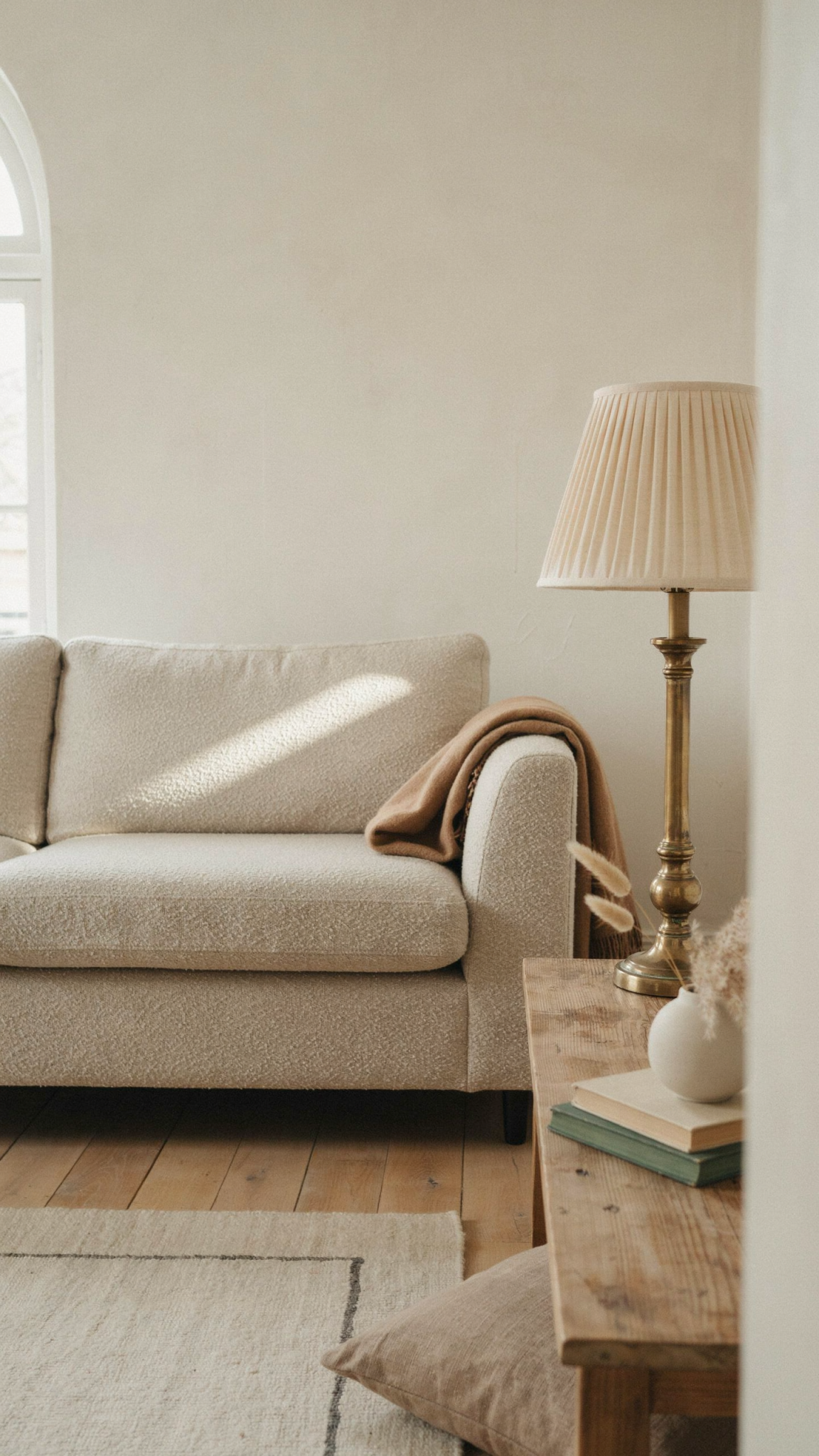
Antique stores, estate sales, flea markets, architectural salvage shops, local makers, fabric remnants, resale platforms, and community marketplaces are all useful sources. Online marketplaces are especially helpful when you search with clear terms and check regularly rather than expecting the first result to be right.
Persistence matters because special pieces are rarely available on demand. The 15 Percent Rule works best for rooms that can evolve. If a room must be photographed or hosted next weekend, you may need a practical temporary solution. But even then, avoid buying a permanent piece purely to fill a hole. A temporary lamp or borrowed artwork is often better than an expensive object that does not belong.
The best search habit is to keep a short list and remain open. You may be looking for a weathered cabinet and find a lamp. You may be looking for a pillow and discover a small painting. The purpose of leaving space is not to control the discovery. It is to make room for it.
A Room-by-Room Guide to Applying the Rule
The Living Room
The foundation of a living room is usually the seating arrangement, rug, coffee table, and primary lighting. Once those pieces are in place, resist the urge to fill every surface.
Live with the room for a week. Notice whether the coffee table feels too empty or whether its openness makes the room easier to use. See where people actually put drinks and books. Observe whether the sofa needs patterned pillows or whether the room already has enough visual activity.
The final fifteen percent might be a vintage side table, a framed textile, a small lamp, a sculptural bowl, or one chair in a contrasting fabric. It might also be subtraction. Removing an accessory that feels too predictable can make the entire room more confident.
The Bedroom
Bedrooms benefit from restraint, but restraint does not mean blandness. The foundation includes the bed, headboard, nightstands, bedding, window treatment, and layered