

Stepping across the threshold of a newly constructed house is such a thrill! The floors are pristine, the appliances have never been used, and there is a distinct lack of previous owners’ quirks to undo. Yet, as you unpack the last of your boxes and look around, a creeping realization often sets in: the house feels a little… hollow. It lacks the soul, the warmth, and the distinct personality that makes a house truly feel like your home. Welcome to the reality of the builder-grade home.
Builder-grade homes are designed to appeal to the masses. They are canvases painted in broad, inoffensive strokes, think neutral walls, standard-issue flush mount lights, basic chrome hardware, and carpeting that is perfectly fine but entirely unmemorable. The builders prioritize cost-efficiency and broad marketability, which means the charming architectural details and bespoke finishes you drool over on Pinterest and Instagram are usually left on the cutting room floor.
But here is the secret that interior designers and seasoned home bloggers know: a builder-grade home is actually the perfect blank slate. You do not need a massive renovation budget, and you certainly do not need to start tearing down walls to inject character into your space. Transforming a cookie-cutter house into a custom haven is entirely achievable through thoughtful, strategic upgrades that you can tackle one weekend at a time.
Today I want to walk through the most impactful, design-forward ways to elevate your home. From the magic of wall treatments to the art of layered lighting, these are the trending aesthetics and practical tips that will make your guests ask, “Wait, did you hire an interior designer?”
The Power of Paint and Wall Treatments
If there is one cardinal rule in the world of interior design, it is this: never underestimate the transformative power of paint. Builder-grade homes are notorious for being swathed in what I affectionately call “landlord beige” or “agreeable gray.” While these colors are safe, they do very little to add depth or architectural interest to a room.
Color Drenching for Drama
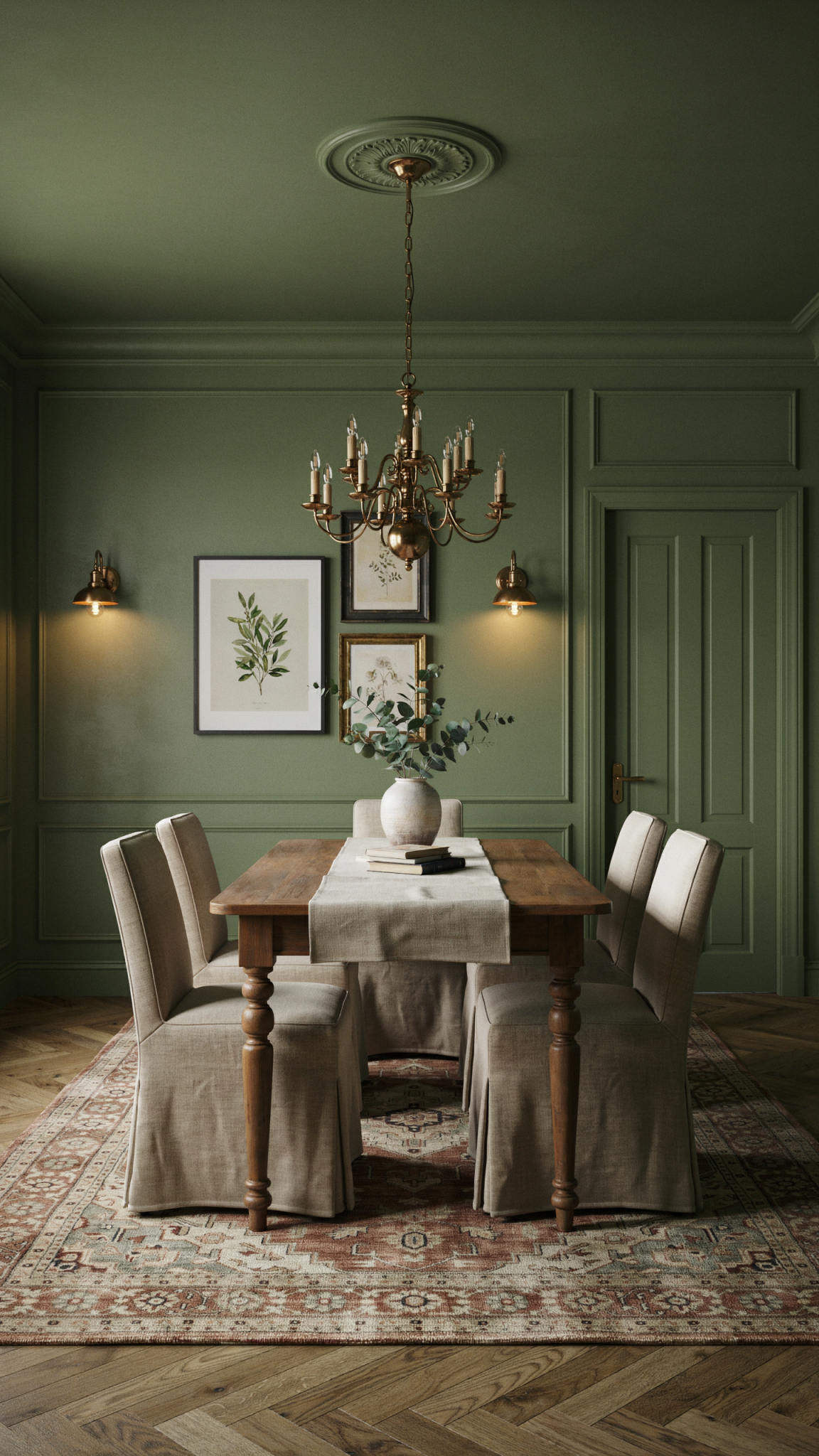
One of the most significant trends in interior design right now is color drenching. This technique involves painting the walls, trim, doors, and sometimes even the ceiling all in the exact same color. In a builder-grade home, where the trim is often narrow and uninspiring, painting it the same color as the walls creates a seamless, high-end look that feels incredibly custom. Imagine a moody, deep olive green or a rich terracotta wrapping a room—it instantly elevates the space from basic to boutique hotel. If a dark color feels too intimidating, color drenching works beautifully with soft, earthy neutrals like mushroom or warm taupe.
Architectural Molding: The Ultimate Customizer
Builder-grade homes typically lack the architectural details found in older, historic homes. Fortunately, you can fake it beautifully. Adding molding is perhaps the single most effective way to make a room look expensive.
Picture Frame Molding: Also known as box molding, this involves applying trim in rectangular shapes across your walls. It adds an immediate sense of elegance and history. When painted in a rich, saturated hue, picture frame molding looks incredibly sophisticated and provides the perfect backdrop for artwork or sconces.
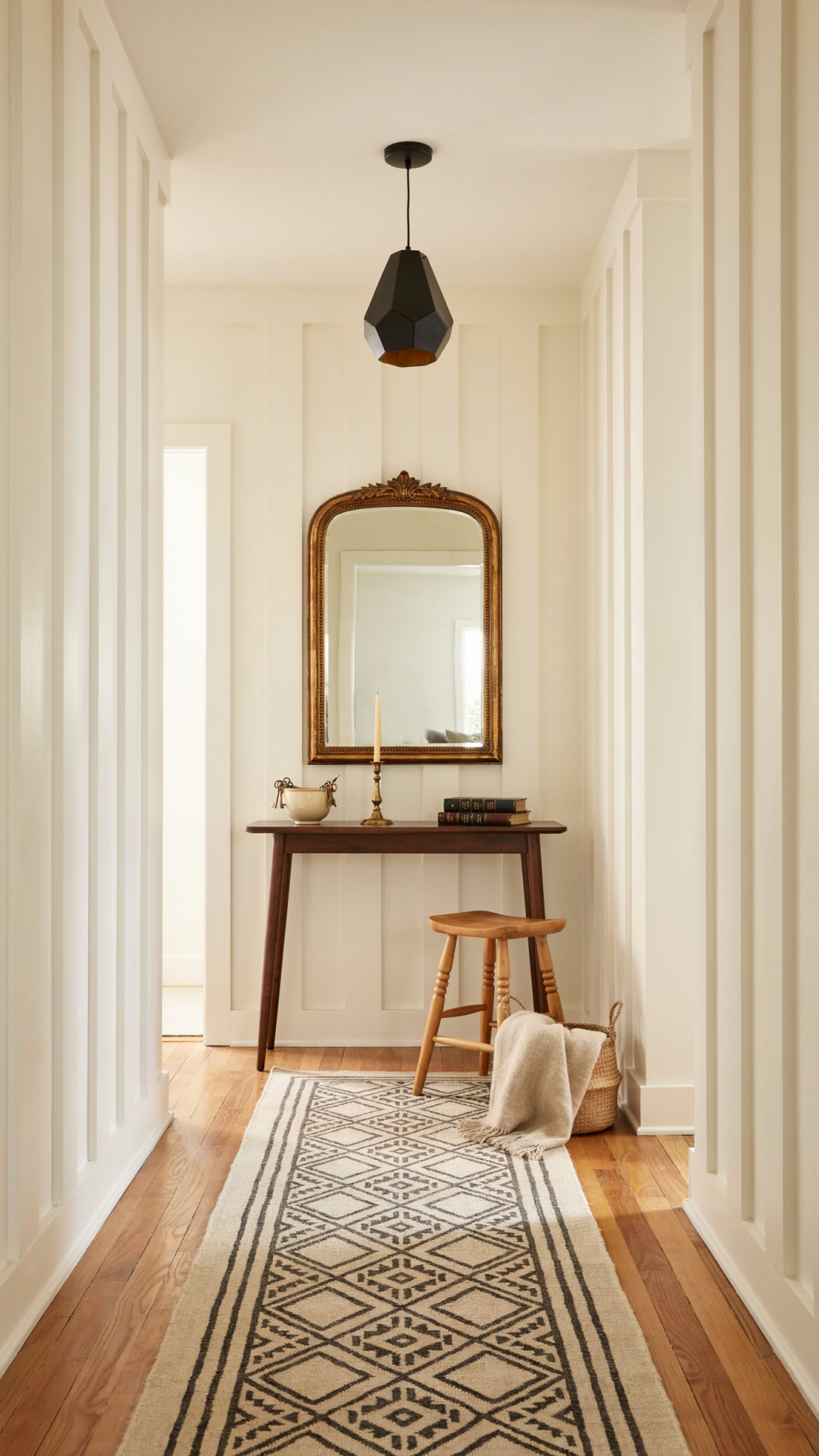
Board and Batten: For a more transitional or modern farmhouse aesthetic, board and batten is a fantastic option. By installing vertical strips of wood (battens) over flat boards (or just directly onto a smooth wall) and adding a top rail, you create texture and dimension. Taking board and batten two-thirds of the way up a wall or even up to the ceiling in a dining room or entryway makes a massive visual impact.
Crown Molding and Baseboards: Take a look at your baseboards. Are they tiny, three-inch strips of MDF? Upgrading to taller, chunkier baseboards (think five to seven inches) instantly grounds a room and makes it feel more substantial. Similarly, adding crown molding draws the eye upward, making ceilings appear higher and giving the room a finished, tailored look.
Wallpaper: The Comeback Kid
Wallpaper has shed its fussy, outdated reputation and returned as a design powerhouse. In a builder-grade home, wallpaper is the perfect antidote to boring walls. You do not have to wallpaper an entire room to make a statement. A bold, large-scale botanical print in a small powder room creates a jewel-box effect. A textured grasscloth in a home office or dining room adds warmth and sophistication. If you are hesitant about the commitment or the mess of traditional wallpaper, the market is currently flooded with incredibly high-quality peel-and-stick options that look virtually indistinguishable from the real thing.
Upgrading Lighting Fixtures
Lighting is the jewelry of your home. It is one of the first things people notice, yet it is often the area where builders cut the most corners. The standard “boob lights” (you know, the flush mounts with the little finial in the center) and generic track lighting are dead giveaways of a builder-grade space.
Swapping the Standard for the Statement
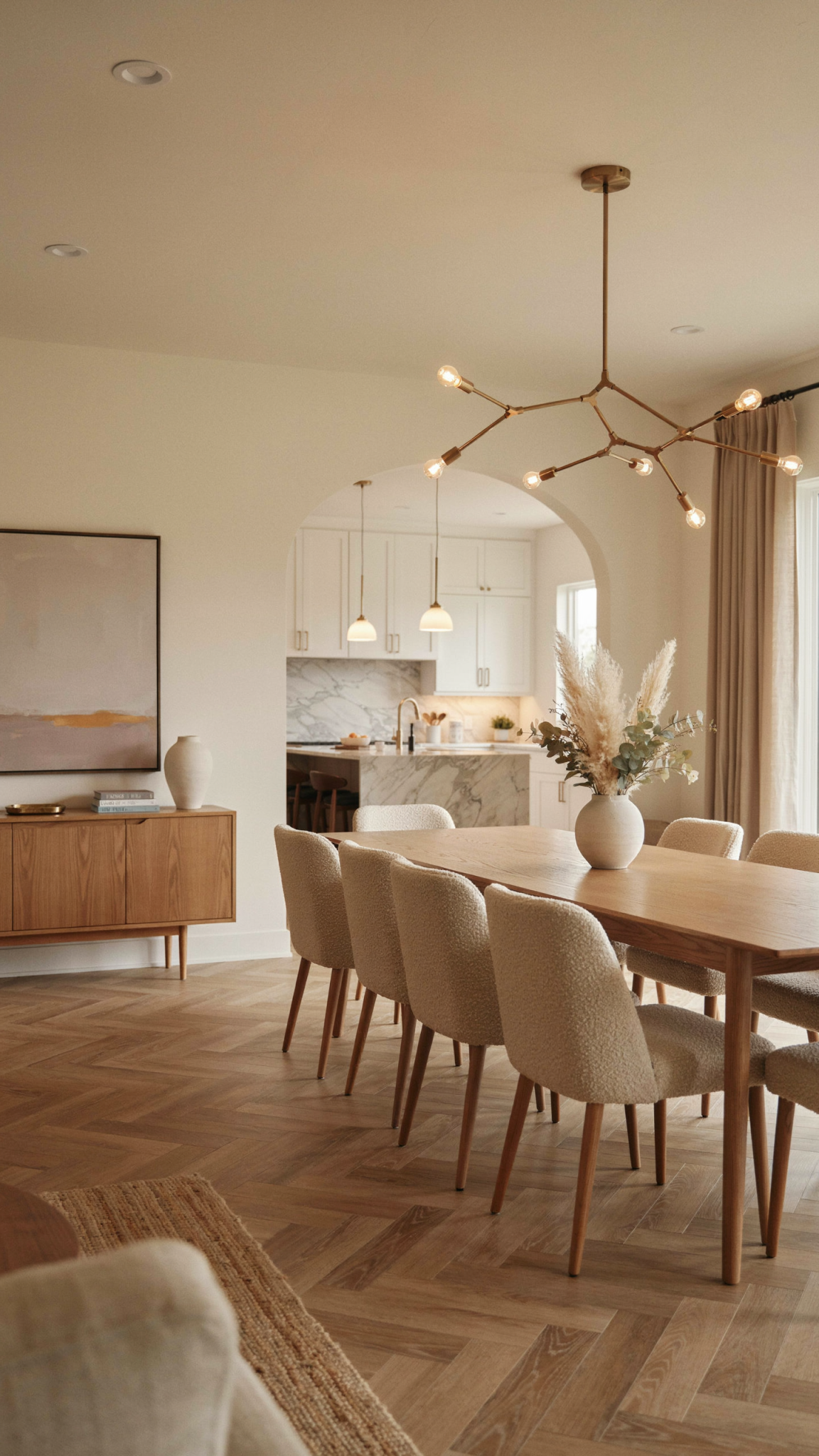
The fastest way to change the entire vibe of a room is to swap out the ceiling fixtures. In the dining room, replace the basic chandelier with an oversized, sculptural pendant or a linear brass fixture. In the living room, ditch the flush mount for a semi-flush mount with interesting details like something with a linen shade, brass accents, or seeded glass.
Do not be afraid to play with scale. A common mistake is choosing light fixtures that are too small for the space. An oversized light fixture draws the eye and acts as a focal point, distracting from other less-than-custom elements in the room.
The Art of Layered Lighting
Custom homes never rely solely on overhead lighting. Overhead lighting, especially recessed cans, can be harsh and cast unflattering shadows. The secret to a warm, inviting, and expensive-feeling home is layered lighting. You need ambient lighting (general illumination), task lighting (for reading or cooking), and accent lighting (to highlight art or architectural features).
Introduce table lamps with interesting ceramic or stone bases to your living room console and side tables. Add a sleek, modern floor lamp next to your reading chair.
Sconces Without the Rewiring
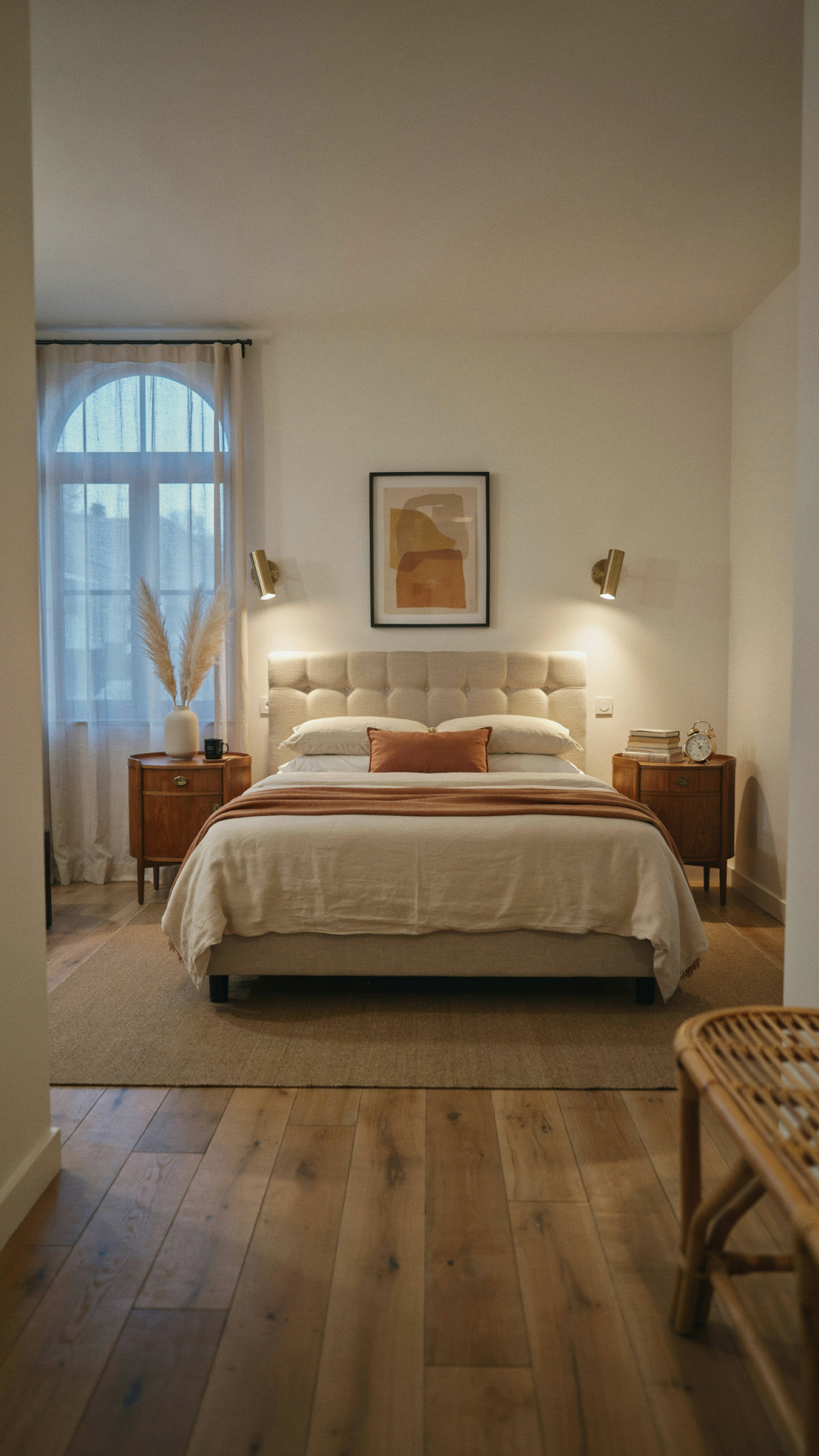
Wall sconces add a layer of sophistication that screams “custom build.” They are perfect for flanking a bed, a bathroom mirror, or a fireplace. But what if your builder didn’t wire for sconces? Enter the magic of the plug-in sconce or the “puck light trick.” You can mount beautiful sconces anywhere on your walls and use battery-operated, remote-controlled LED puck lights inside them. No electrician required, and you instantly have high-end accent lighting.
Smart Bulbs and Dimmers
Finally, never underestimate the power of a dimmer switch. Being able to control the mood and intensity of your lighting is a luxury that is incredibly cheap to install. Alternatively, invest in smart bulbs that allow you to adjust the color temperature from a crisp daylight for working to a warm, cozy glow for relaxing in the evening.
Swapping Out Hardware and Fixtures
If lighting is the jewelry of the home, hardware is the tailored belt and shoes that pull the whole outfit together. Builder-grade homes are typically outfitted with the most inexpensive hardware available, usually hollow, brushed nickel or basic chrome knobs and pulls.
Kitchen and Bathroom Cabinetry
You can completely change the look of your kitchen or bathroom simply by changing the cabinet hardware. This is a low-lift, high-impact weekend project. Move away from the standard little knobs and opt for substantial, heavy hardware.
Unlacquered brass is having a major moment; it develops a beautiful, living patina over time that adds character and warmth. If brass isn’t your style, matte black offers a striking, modern contrast, especially against light cabinetry. Polished nickel provides a classic, timeless elegance that feels much warmer than chrome. Consider mixing knobs on upper cabinets with cup pulls or long bar pulls on lower drawers for a bespoke, designed look.
Faucets and Plumbing Fixtures
The standard-issue faucets in a builder-grade home are functional but rarely beautiful. Upgrading your kitchen faucet to a high-arc, commercial-style pull-down faucet in a striking finish instantly elevates the entire sink area.
In the bathroom, swapping out a basic centerset faucet for a widespread faucet (if your counter allows) or a sleek, single-handle design makes a world of difference. Don’t forget the showerhead. Replacing a tiny, low-pressure showerhead with a luxurious rain showerhead is an upgrade you will appreciate every single morning.
Door Knobs and Hinges
Take a walk through your house and look at your interior doors. Chances are, they feature the cheapest possible round knobs. Swapping these out for lever-style handles or heavy, vintage-inspired knobs (like matte black or antique brass) makes opening every door feel like a premium experience. If you change the knobs, don’t forget to change the hinges to match. Mismatched hardware on the doors is a subtle detail that can break the illusion of a custom home.
Window Treatments that Elevate
Nothing says “builder-grade” quite like cheap, plastic vertical blinds or flimsy aluminum mini-blinds. Window treatments are often an afterthought, but they play a massive role in how finished and expensive a room feels.
The High and Wide Rule
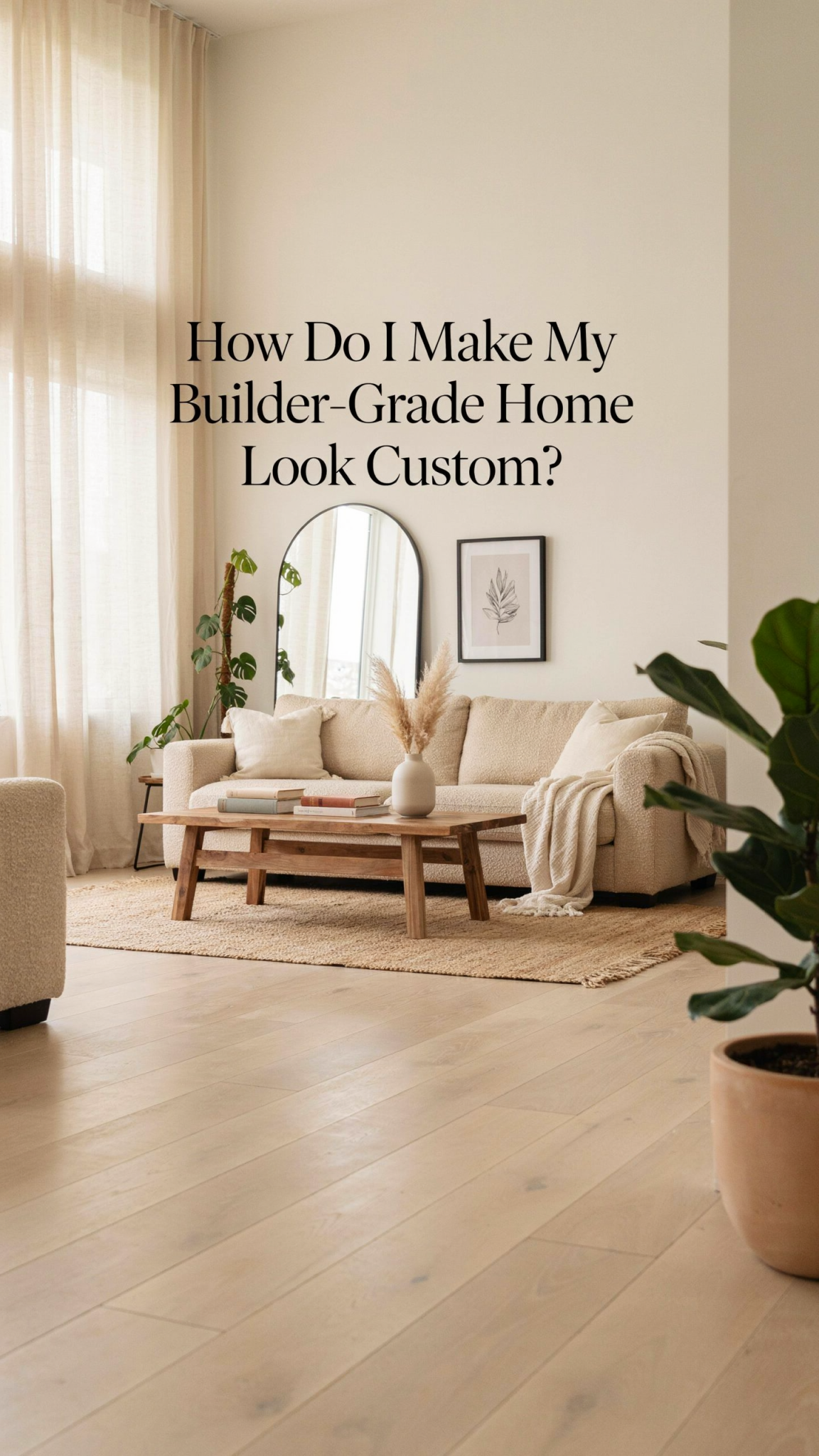
The biggest mistake people make with curtains is hanging them directly on the window frame. To make your ceilings look taller and your windows look larger, you need to hang your curtains “high and wide.”
Mount your curtain rod as close to the ceiling (or the bottom of the crown molding) as possible, and extend the rod 10 to 12 inches past the window frame on either side. When the curtains are open, they should just cover the window frame, allowing maximum light to enter and tricking the eye into thinking the window is massive.
Custom-Look Drapery on a Budget
Custom drapery can cost thousands of dollars, but you can achieve a very similar look for a fraction of the price. The secret lies in the pleats and the hardware. Buy inexpensive, heavy-weight curtains (IKEA’s Ritva or Sanela curtains are legendary for this) and use drapery pins and rings to hang them.
Pinch pleating the top of the curtains gives them a tailored, structured look that back-tab or grommet curtains simply cannot match. You can even train your curtains to fall in perfect folds by steaming them and loosely tying them with ribbons for a few days.
Layering for Texture
For a truly high-end look, layer your window treatments. Install woven wood or bamboo roman shades inside the window frame, and frame the window with linen or velvet drapery panels on the outside. This combination of textures adds incredible depth and warmth to a room, making it feel curated and thoughtfully designed.
Customizing the Kitchen
The kitchen is the heart of the home, but in a builder-grade house, it can often feel like a sea of generic cabinetry and standard countertops. Fortunately, there are several ways to infuse personality into this space without gutting it.
The Backsplash: Your Design Playground
Many builder-grade homes come with a standard four-inch granite or quartz backsplash, leaving the rest of the wall bare drywall. Removing that small lip and installing a full tile backsplash all the way to the bottom of the upper cabinets (or even up to the ceiling around a window) is a game-changer.