

Tell me I’m wrong here, but I think it’s safe to say we all had visions of what our home might look and feel like someday before we had kids. Whether you dreamed of a pristine cream-colored sofa, a perfectly styled coffee table with a stack of heavy art books, or a general sense of calm, minimalist serenity, you put some thought in it.
Then, reality hit. Brightly colored, plastic, noise-making reality hit.
Suddenly, your visions resembling an Architectural Digest spread evolves into the aftermath of an explosion at a toy store. There are rogue LEGO bricks waiting to ambush your bare feet in the hallway. There is a miniature play kitchen taking up prime real estate next to your fireplace. And do not even get me started on the sheer volume of Jellycats and Squishmallows that seem to multiply in the middle of the night!
If you are currently staring at a mountain of Magna-Tiles and wondering how you will ever reclaim your adult aesthetic, take a deep breath. You are not alone. Figuring out how to merge a stylish, grown-up home with the chaotic, messy reality of raising children is one of the greatest design dilemmas of our time.
Here is the best news: you do not have to choose between a beautiful home and a happy, playful childhood for your kids. You can have both. It just takes a little bit of strategy, some clever storage solutions, and a shift in how you view your space.
Let’s talk about how to hide your kid stuff without making your home feel sterile.
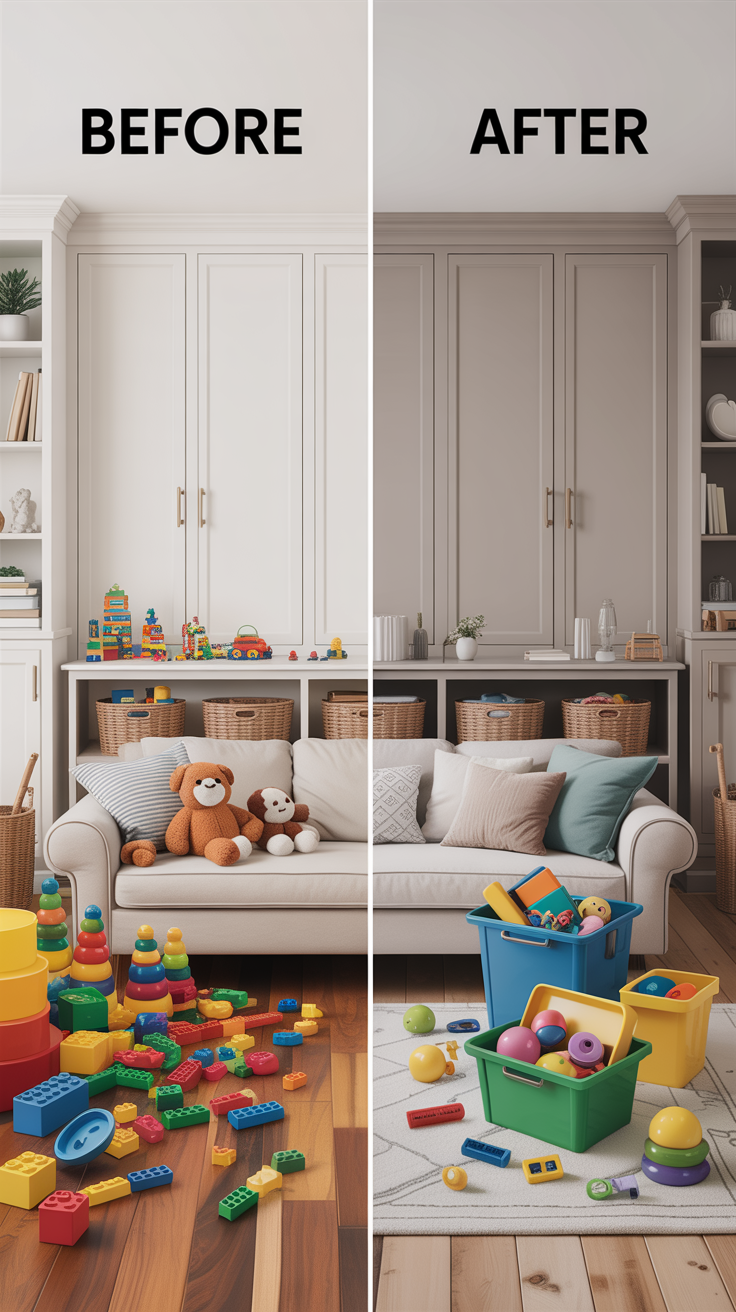
The Myth of the “Perfect” Family Home
Before we get into the nitty-gritty of storage bins and furniture layouts, we need to address the elephant in the room: the myth of the perfect family home.
If you spend any time scrolling through Instagram or Pinterest, it is easy to feel inadequate. You see these gorgeous, sun-drenched living rooms with two perfectly behaved children playing quietly with a set of heirloom wooden blocks. There is not a plastic, battery-operated toy in sight.
This is your reminder to not get sucked into their highlight reels. And actually these photos are probably mostly styled. In real life, kids are messy. They love bright colors. They love toys that make obnoxious noises. And they want to play where you are, which means their stuff is inevitably going to migrate into the main living areas of your home.
I’ve really struggled with this a lot over the years since becoming a mom. I’ve learned the goal is not to erase all evidence that children live in your house. I love pretty design, but my idea of a “dream home” has really shifted somewhere in between a design catalog and a home that just feels authentic and really just like a warm hug. Your home should reflect the people who live there, and that includes your kids! The magic comes in creating a space that functions beautifully for your family’s daily life, while still giving you a peaceful, visually pleasing environment to relax in after the kids go to bed.
It is about balance. It is about creating boundaries. And most importantly, it is about finding storage solutions that work so well, you actually want to use them.
Step 1: The Great Toy Purge (and How to Do It Without Guilt)
You cannot organize clutter. You can only move it around. If you are drowning in kid stuff, the very first step before you buy a single basket or bin is to declutter.
I know, I know. The thought of decluttering toys can induce a mild panic attack. What if they ask for that one specific plastic dinosaur they haven’t played with in six months? I’ve definitely been there and I still don’t know if I’m over it (pure guilt). What if you get rid of something expensive? What if you feel guilty for tossing a gift from Grandma?
Here is a gentle truth: kids actually play better when they have fewer toys. Studies have shown that when children are presented with too many options, they become overwhelmed and struggle to focus. They end up flitting from one toy to the next without ever engaging in deep, imaginative play. By reducing the sheer volume of stuff, you are actually doing them a favor.
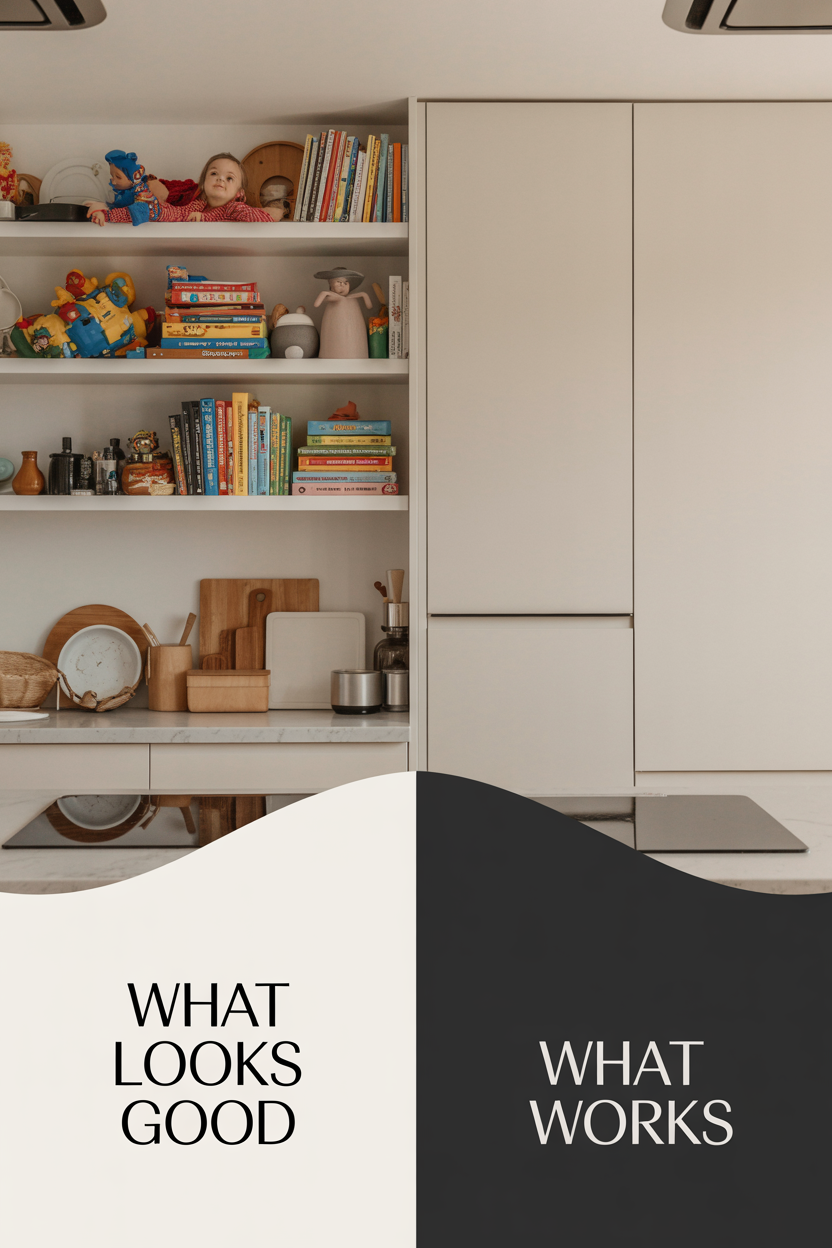
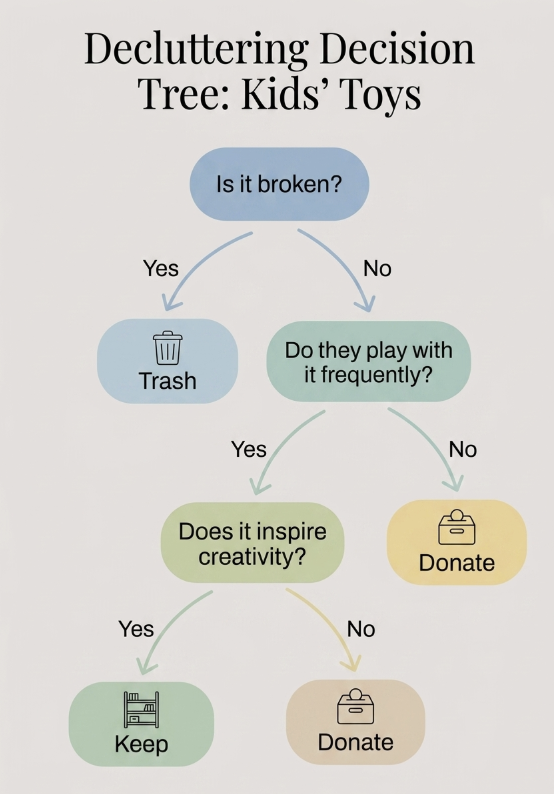
How to Tackle the Purge
- Do it without an audience. Do not try to declutter toys while your kids are in the room. Suddenly, every broken crayon and missing puzzle piece will become their most prized possession. Wait until they are asleep or at school.
- Start with the obvious trash. Grab a garbage bag and go through the bins. Throw away anything that is broken, missing crucial pieces, or dried out (looking at you, crusty Play-Doh). Toss the cheap plastic party favors and the happy meal toys that break after five minutes.
- Let go of the “guilt” toys. Those giant, noisy toy that your aunt bought for your toddler’s birthday? The expensive educational game you bought hoping your kid would love it, but they never touched it? Let ’em go. If a toy is not being played with, it is just taking up valuable real estate in your home. Donate it to a local charity or pass it along to a friend. Let it bring joy to another child rather than guilt to you.
- Keep the open-ended toys. When deciding what to keep, prioritize “open-ended” toys. These are toys that can be used in multiple ways and encourage imagination. Think building blocks, Magna-Tiles, animal figurines, play kitchens, and art supplies. These toys grow with your child and offer years of play value.
- The “Wait and See” Bin. If you are truly torn about getting rid of something, put it in a black garbage bag and hide it in the garage or the top of a closet. If your child asks for it within the next month, you can bring it back out. If they don’t even notice it’s gone (which is usually the case), donate the whole bag without opening it again. This step is particularly important if you have a collector in the house (don’t we all?). I hate to throw away her treasures, but she has A LOT and this strategy is really guilt-free.
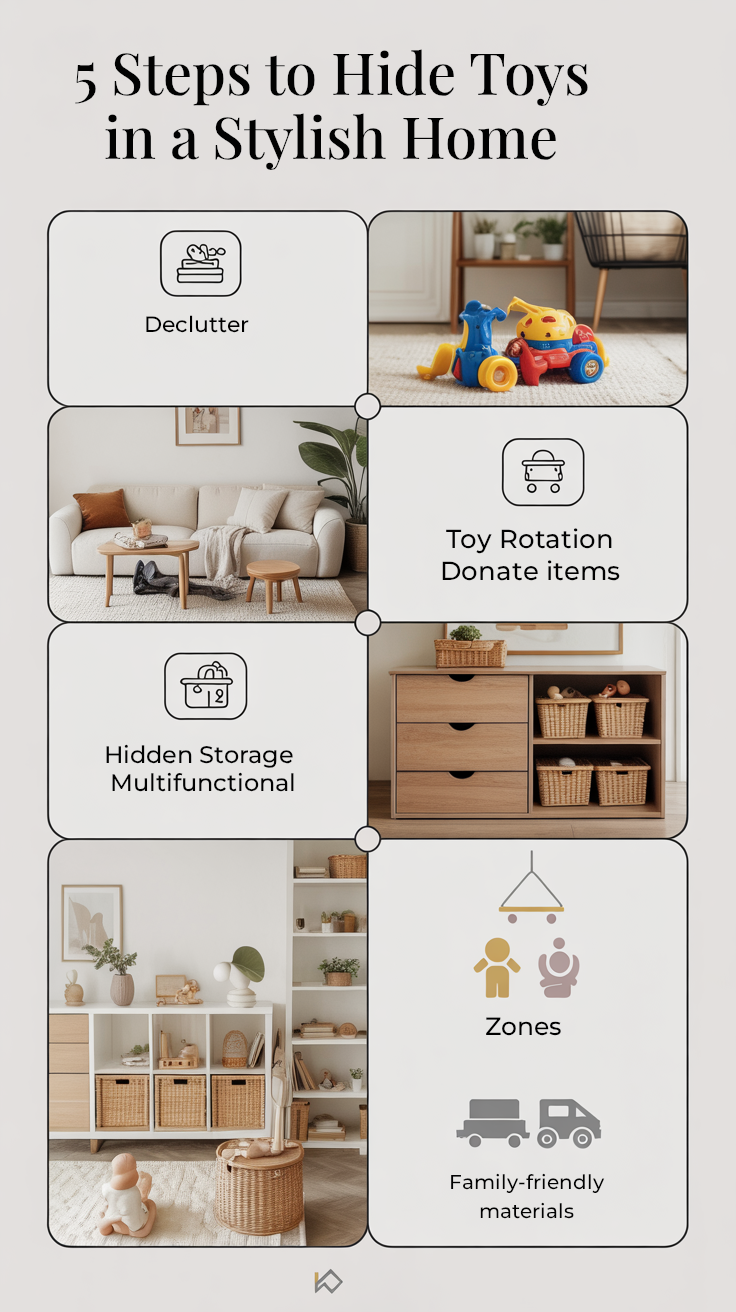
Step 2: The Magic of Toy Rotation
Once you have pared down the toy collection to the items your kids actually love and use, you might still find that you have too much stuff to comfortably fit in your living space. Enter the secret weapon of organized parents everywhere: the toy rotation.
Toy rotation is exactly what it sounds like. Instead of having every single toy accessible all the time, you divide the toys into groups. You keep one group out for play, and you pack the rest away in a closet, basement, or garage. Every few weeks (or whenever your kids seem bored), you swap the toys out.
Why Toy Rotation is a Game-Changer
- It instantly reduces visual clutter. When only a fraction of the toys are out at any given time, your living room automatically looks cleaner and more spacious.
- It makes old toys feel brand new. When you bring out a bin of toys that your kids haven’t seen in a month, it is like Christmas morning. They will engage with those toys with renewed excitement and focus.
- Cleanup is a breeze. It is infinitely easier for a child (and a parent) to clean up 20 toys at the end of the day than it is to clean up 200.
How to Set Up a Simple Rotation System
You do not need a complex spreadsheet to make this work. Simply buy a few large, opaque plastic storage bins (the kind you keep in the garage, not the living room). Divide the toys roughly equally among the bins, making sure each bin has a good mix of toy types (e.g., some building toys, some pretend play, some puzzles).
Keep one bin’s worth of toys out in your main living area, and store the rest. When you notice the kids are getting restless or the play is getting destructive, it is time to rotate. Pack up the current toys, pull out a new bin, and watch the magic happen.
Step 3: Hiding Toys in Plain Sight (The Furniture Strategy)
Now that we have the volume of toys under control, let’s talk about where to put the ones that are out. If you do not have a dedicated playroom and your kids play in the main living room, you need storage solutions that blend seamlessly with your adult decor.
The biggest mistake parents make is buying furniture that looks like toy storage. You know the pieces I mean: the primary-colored plastic bins on an angled rack, or the flimsy canvas cubes with cartoon animals on them. While these are fine for a bedroom or a dedicated playroom, they instantly scream “daycare” when placed in a living room. There are much better options out there, if nothing else a pretty woven basket is often a perfect solution.
Instead, the goal is to use “real” furniture to hide the kid stuff. Here are some of the best ways to do it:
1. The Power of Closed Cabinetry
Open shelving is beautiful for displaying books, framed photos, and carefully curated decor. It is terrible for storing a chaotic jumble of mismatched plastic toys.
If you are buying a media console, a sideboard, or a bookshelf for your living room, prioritize pieces with solid doors on the bottom half. This allows you to display your pretty, grown-up things on the top shelves, while literally shutting the door on the toy chaos below.
A beautiful, mid-century modern credenza can hold an astonishing amount of board games, puzzles, and bins of action figures. When the doors are closed, no one would ever know it is a toy chest in disguise.
2. Swap the Coffee Table for a Storage Ottoman or Trunk
The coffee table is prime real estate in a living room. If you are currently using a delicate glass table with sharp corners, you are missing out on a massive storage opportunity (and probably stressing about your toddler bumping their head).
Consider swapping your traditional coffee table for a large, upholstered storage ottoman or a vintage-style wooden trunk. These pieces offer a massive, cavernous space to dump toys at the end of the day.
If you go the ottoman route, choose a durable, wipeable fabric like leather or a treated performance fabric. You can place a beautiful wooden tray on top to hold your coffee cups and remotes, giving you the functionality of a table with the hidden bonus of toy storage.
3. Baskets Are Your Best Friend
I said it already and I’ll say it again and again: baskets are the heroes of family-friendly design. They add warmth, texture, and a touch of organic style to a room, while simultaneously swallowing up a ridiculous amount of kid clutter.
The key to using baskets effectively is to go big and go sturdy. Flimsy, unstructured baskets will quickly lose their shape when stuffed with heavy wooden blocks. Look for large, structured baskets made of thick seagrass, water hyacinth, or heavy canvas.
Place a pair of oversized baskets under a console table, next to the fireplace, or tucked into an empty corner. They are perfect for storing bulky items like stuffed animals, dress-up clothes, or large trucks. Plus, they make cleanup incredibly easy for kids, they just have to toss the toys in. No sorting required.