

A plain patio is often treated as a pass-through: a practical patch of paving between the house and the garden, somewhere to set a grill or stack a few chairs. Yet it has the potential to become one of the most enjoyable parts of a home. The shift happens when you stop decorating it as an exterior surface and start composing it like a real room without four walls. That means thinking about comfort, boundaries, light, texture, and how you want people to feel when they step outside.
The encouraging part is that this transformation does not require a large deck, a custom pergola, or a magazine-sized budget. A basic concrete slab, a small paver terrace, or even a narrow apartment patio can feel warm and intentional when it has a clear purpose and a few layers of visual softness. The best outdoor rooms have the same quiet logic as successful interiors: they invite you in, give your eye places to rest, and make it easy to linger.
Whether your goal is a candlelit dinner spot, a slow Sunday coffee corner, or a relaxed place for friends to gather, begin with the idea that the patio deserves a point of view. Here is how to make that happen.
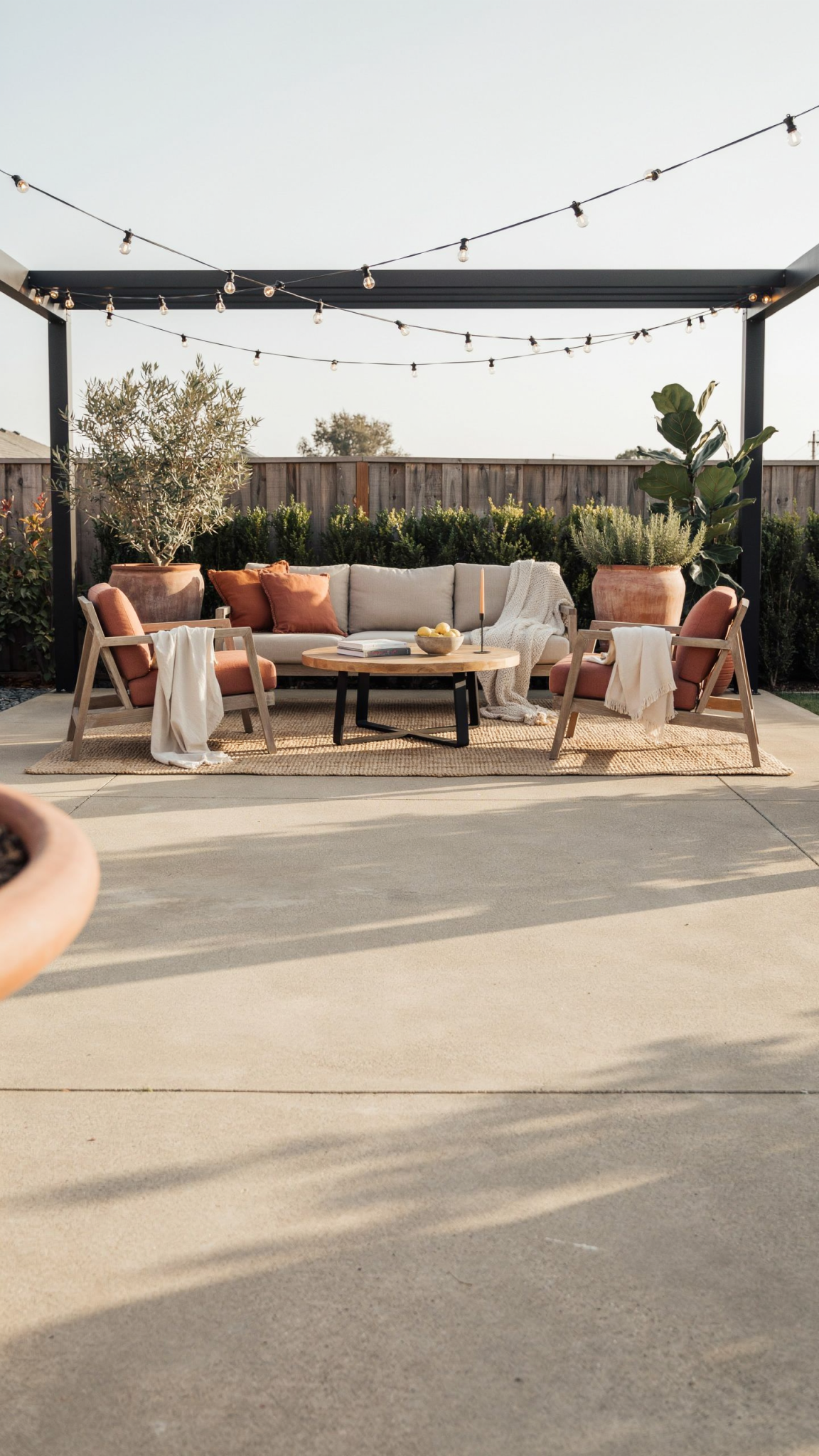
Start by Giving the Patio a Job
Before buying cushions, lanterns, or plants, decide what the patio is for. A room works because it supports a particular kind of life. Your patio should do the same.
Ask yourself what you genuinely want to do outside most often. Maybe you want an everyday breakfast nook with two comfortable chairs. Perhaps you host casual dinners and need one generous table. Or maybe the patio is a family lounging zone where people can put up their feet after a long day. A small space may need to handle more than one activity, but it should still have a primary role.
Once you name the purpose, the layout gets much easier. A dining patio needs room to pull chairs back and carry plates in from the kitchen. A conversation area needs seats that face one another rather than a lineup of chairs pushed against the wall. A reading corner needs shade, a side table, and one genuinely comfortable seat. In other words, design from behavior outward, rather than from a shopping list inward.
An outdoor room feels convincing when it answers the same question as an indoor room: what do people do here, and what do they need to do it comfortably?
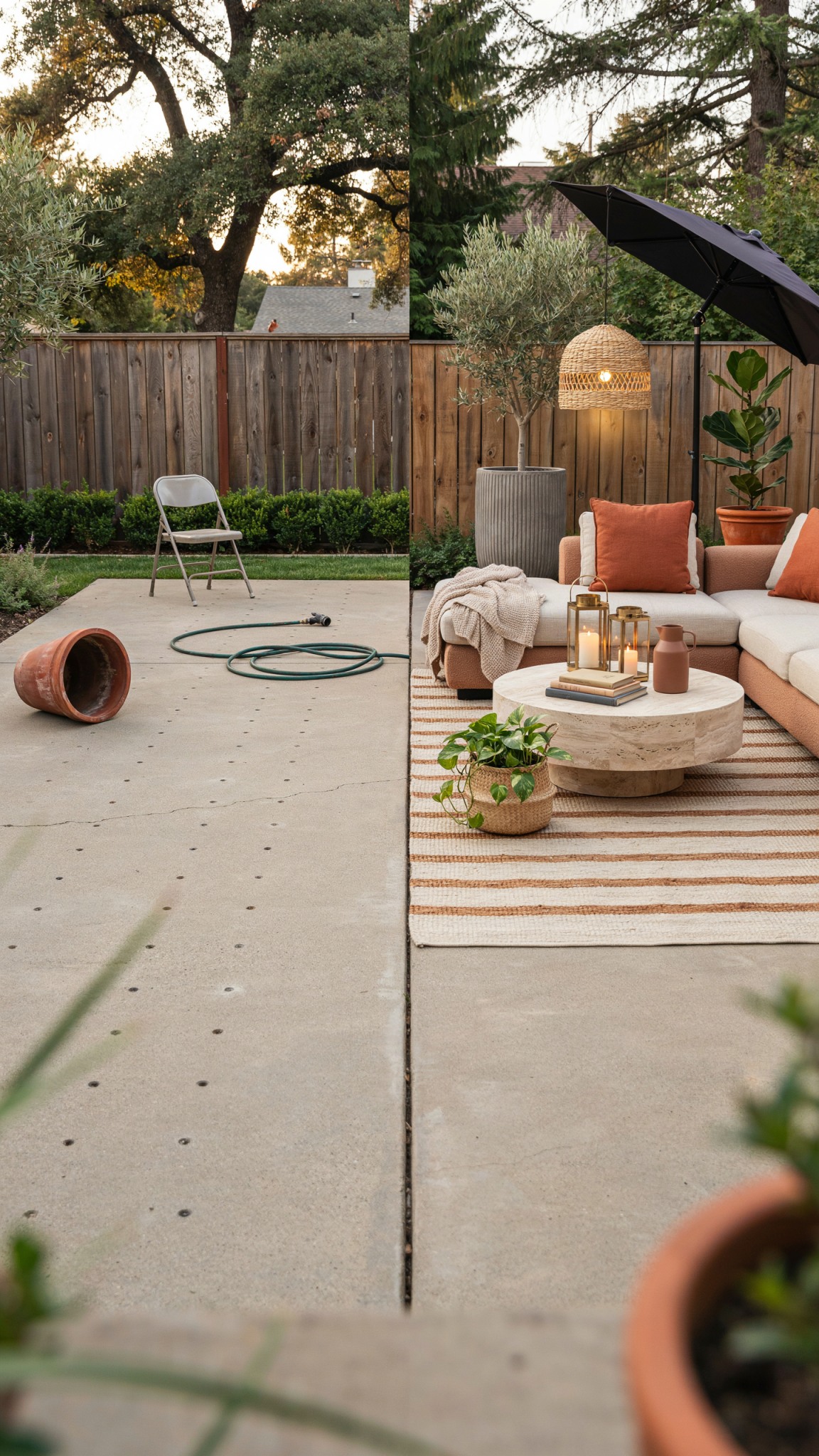
Create a Layout, Not a Furniture Pile
A basic patio often feels temporary because its furniture sits around the edges with an empty patch in the center. That arrangement is understandable and it makes the area look larger but it does not create a destination. Instead, arrange furniture in small, usable groupings, much as you would in a living room.
For a dining zone, center the table within the best portion of the patio rather than automatically pushing it against the house. A round table is especially helpful in a compact area because it softens hard paving lines and lets people move around it more easily. For lounging, place chairs close enough for conversation. If everyone has to lean forward or raise their voice, the arrangement is too spread out. A sofa and two occasional chairs, or four matching lounge chairs around a low table, can make even an uncomplicated slab feel deliberate.
Leave clear walking paths. There should be an easy route from the door to the garden, grill, or gate without requiring anyone to squeeze behind a chair. The goal is not to fill every inch; it is to create a useful balance between open circulation space and a defined seating area. That open space makes the arrangement feel generous, while the grouping gives it a center of gravity.
A small patio benefits from flexible pieces. A garden stool can serve as an extra seat, side table, or plant stand, while a storage bench can hold cushions and accommodate guests. Select pieces for their usefulness first, then make sure their materials and silhouettes speak the same visual language.
Use an Outdoor Rug to Establish the “Floor”
Nothing changes the feeling of a patio faster than an outdoor rug. Indoors, a rug visually gathers furniture into a room; outside, it does exactly the same work. It softens stone, brick, or concrete, adds color and pattern at eye level, and signals that the seating area is a place to pause rather than merely a collection of weatherproof items.
Size matters. The most common mistake is choosing a rug that is too small, which makes furniture look as if it is floating. In a lounge arrangement, aim for at least the front legs of all major seating pieces to sit on the rug. In a dining arrangement, choose a rug broad enough that chairs remain on it when pulled back. When in doubt, err a little larger. A generous rug makes a patio feel more considered and often more spacious.
For a calm, coastal, or earthy look, choose a woven neutral in sand, charcoal, terracotta, or faded olive. If your exterior is simple, a striped or geometric rug can lend personality without taking up any physical space.
Look for an outdoor rug designed to dry quickly and resist fading. Once it is down, cushions, tables, and plants begin to read as parts of a room rather than separate objects.
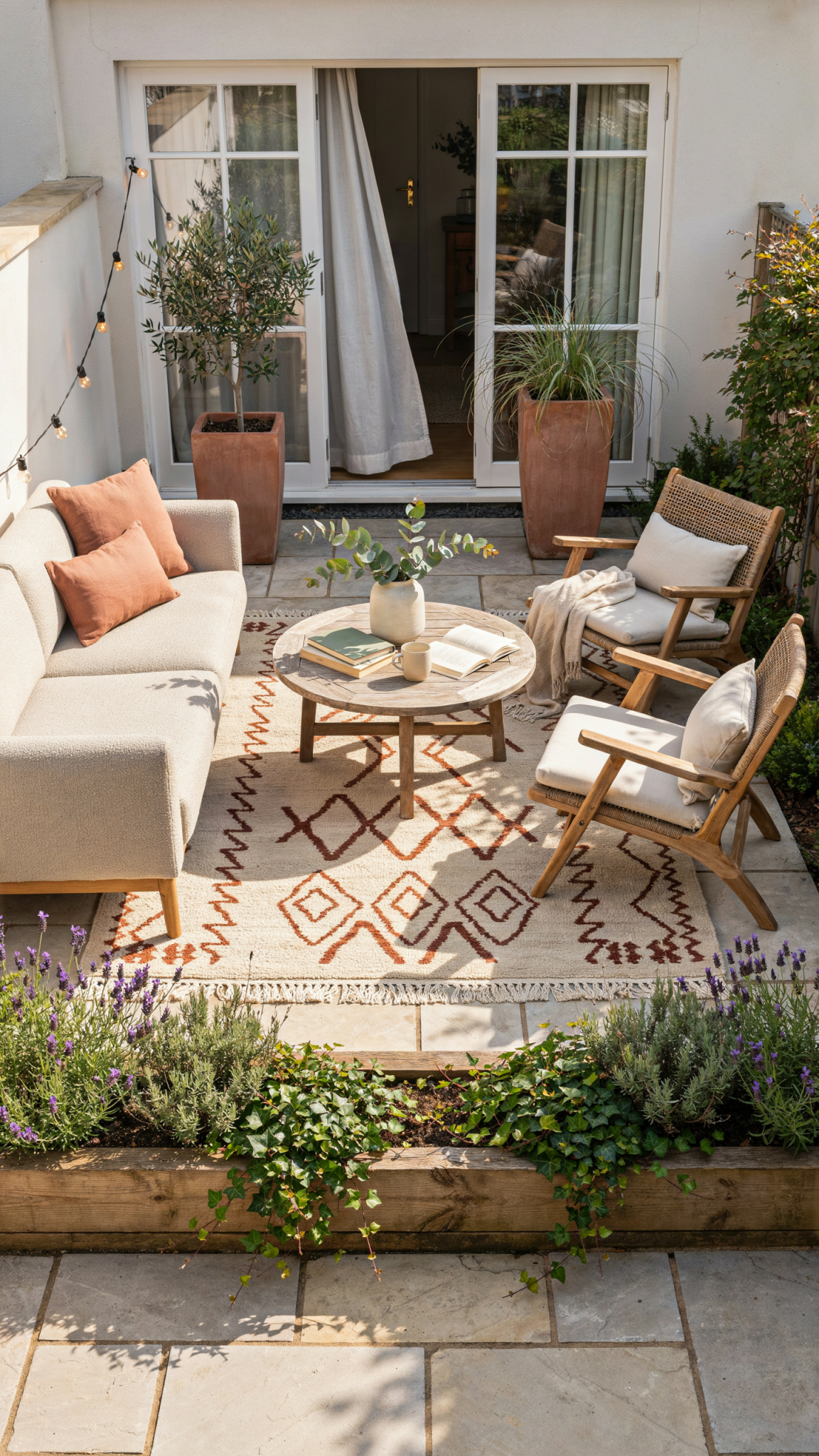
Add a Ceiling—or at Least the Suggestion of One
Indoor rooms feel protected because they have a ceiling. A patio can borrow that sense of shelter without necessarily building a permanent roof. Overhead elements make an outdoor space feel more intimate, and they create a subtle boundary between the patio and the rest of the yard.
A pergola is the classic option, especially over a dining table or lounge grouping. It provides structure even before it is dressed with vines, fabric, or lights. But a pergola is not the only way to get the effect. A large offset umbrella, a shade sail, a retractable awning, or a simple canopy of outdoor fabric can create a similar feeling with less commitment. On a small patio, even a single well-placed umbrella changes the scale of the area by bringing the visual focus downward.
If you use a shade sail, keep it cleanly tensioned: a crisp triangle or rectangle looks architectural, while a sagging sail looks accidental. For curtains or fabric panels, use outdoor-rated material and hang it where it can be tied back neatly.
Climbing plants can soften a structure over time. Whatever suits your climate, repeat one of the overhead element’s colors or materials in planters, furniture, or lighting below so it feels like part of the room.
Build Boundaries with Greenery and Screens
A patio does not need solid walls to feel enclosed. In fact, the most inviting outdoor spaces usually use partial boundaries: tall plants, trellises, a low hedge, a screen, or an arrangement of large planters. These elements create privacy and intimacy while leaving enough openness to feel connected to the sky and garden.
Identify the sides that need the most help, whether you want to soften a fence, block a view, or create separation from a neighbor. A row of tall planters is a flexible answer. Use repeated planter styles for polish, then vary the planting slightly so the composition does not feel stiff.
A trellis provides a vertical plane and a place for climbers to grow. Modern black metal screens suit contemporary patios, while woven willow panels create a softer garden mood. Even an open trellis gives the eye a defined backdrop.
Plants also make hard surfaces kinder. A basic patio is dominated by horizontal paving and sharp edges, so include a mix of heights and leaf shapes. Place a tall plant near a low lounge chair, spill something trailing over the edge of a planter, and add a medium-height leafy pot near a table. This layered approach creates depth and makes the view from a seated position more interesting.
Avoid scattering many tiny pots across the perimeter. They tend to read as clutter rather than a garden. Instead, group pots in threes or fives, using a mix of sizes with a shared color palette. A few large containers generally have more impact, are easier to water, and make a basic patio feel more confident.
Treat Lighting as the Atmosphere, Not an Afterthought
Daylight reveals the patio, but lighting gives it a second life. The difference between a patio that is technically usable at night and one that feels magical is almost always the quality of the light. Bright security-style illumination flattens everything. Warm, layered lighting creates mood, depth, and the comfortable sense that the evening can continue.
Begin with a soft ambient layer. String lights are affordable, flattering, and easy to drape beneath a pergola, along a fence, or between sturdy anchor points. Choose warm white and hang them with a purposeful pattern.
Then add lower points of light. Lanterns, rechargeable table lamps, and small wall sconces make a patio resemble an interior room because they put light closer to the human scale. Use flameless candles if you want the glow without worrying about wind, wax, or an open flame.
Finally, consider accent lighting. A small uplight aimed at a sculptural plant, a textured wall, or the trunk of a small tree gives the view beyond the seating zone more dimension. The goal is restraint. You want a few warm layers, not a runway. When choosing any permanent electrical work, use outdoor-rated fixtures and consult a qualified professional where required. Good lighting should feel almost invisible until you notice how reluctant everyone is to go back inside.
Choose Seating That Encourages You to Stay
Outdoor furniture has come a long way from stiff plastic chairs, but the principle remains simple: if seating is uncomfortable, no amount of styling will turn the patio into a living space. Choose the most comfortable piece your dimensions and budget allow, then make it softer with cushions, lumbar pillows, and throws.
A compact outdoor sofa creates an instant living-room association, especially when paired with two chairs and a coffee table. But you do not need a sofa to create comfort. Two deep lounge chairs facing each other can be just as inviting. On a narrow patio, a built-in bench topped with cushions may be the smartest way to get seating without overwhelming the footprint. Mix in one movable chair or stool so the arrangement can expand when company arrives.
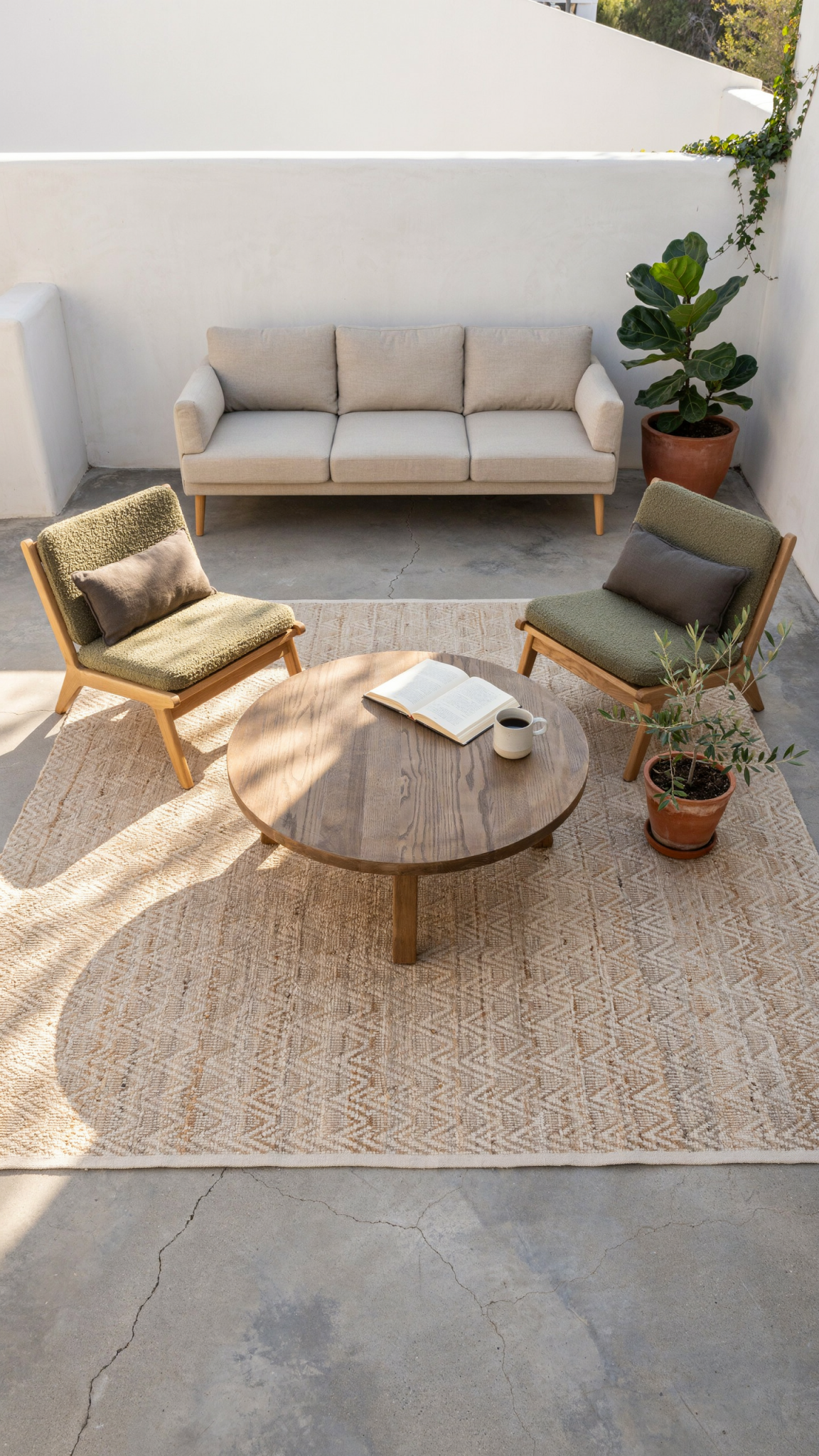
Pay attention to seat height and table height. Low, deep loungers are wonderful for an evening drink, but they are less practical for long meals or older guests who prefer a firmer, higher seat. A conversation patio often benefits from a mix: supportive chairs around a dining table, plus one softer corner for relaxed lounging. This variety makes the area feel like it has been designed for real life rather than photographed for a catalog.
Textiles are where personality enters. Combine related textures like a nubby neutral, a narrow stripe, and a subtle botanical print. Choose two or three colors and repeat them rather than introducing every shade you love.
Keep a basket, storage ottoman, or lidded bench nearby for cushions and throws. The easier it is to pack soft items away before rain or overnight, the more polished they will look and the longer they will last. Convenience is part of good design; a beautiful patio should not require a complicated ritual every time the weather changes.
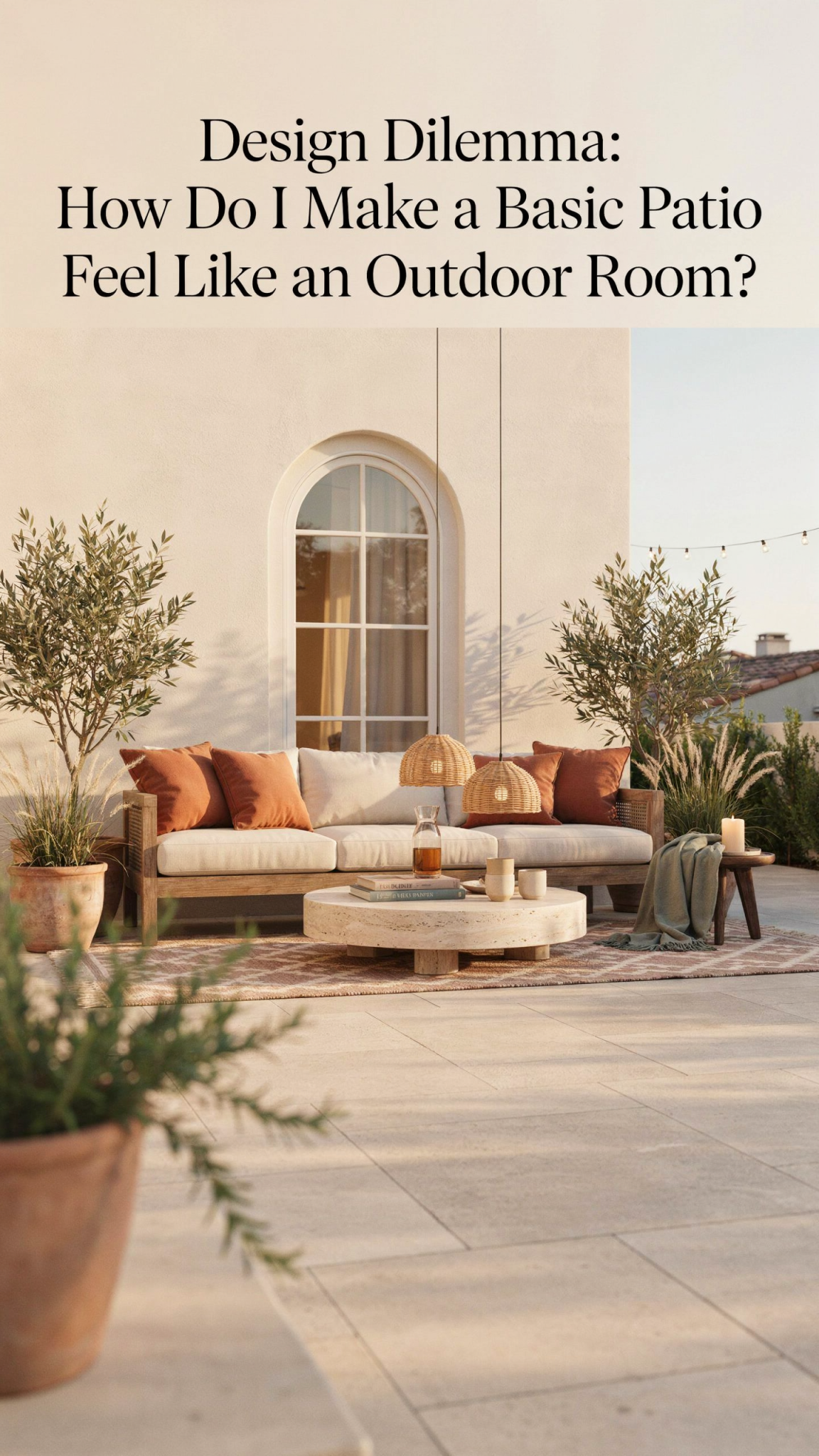
Add Tables and Surfaces for Everyday Ease
People settle into a room when there is somewhere to set a glass, book, plate, or phone. It is a small practical need, but overlooking it makes a patio feel incomplete. Every seat should have reasonably easy access to a surface. This does not mean every chair needs a matching side table. A coffee table, a garden stool, a low bench, and one occasional table can create a flexible, layered arrangement.
A dining patio needs a table that fits the way you host. If it is usually just two people, a round four-seat table can feel more gracious than a huge rectangular table that is rarely full. For larger gatherings, an extendable table is a practical investment.
For lounge areas, avoid making the coffee table an afterthought. A table with enough room for a tray, a few drinks, and a small bowl of snacks makes the space usable. A weatherproof ottoman can double as a footrest and a surface when topped with a tray. A side table beside the most comfortable chair turns it into a true reading spot. These pieces are not decorative extras; they are what make the patio support relaxed, unhurried habits.
Style with Layers, but Keep the Palette Controlled
The most successful outdoor rooms are layered, not crowded. They have enough detail to feel personal, but not so much that every gust of wind becomes a tidying emergency. A controlled palette is the secret to getting that balance right.
Start with the colors you cannot change: the patio surface, exterior walls, doors, fencing, and major furniture frames. Then choose a small palette that flatters those fixed elements. For example, pale concrete looks fresh with charcoal, ivory, olive, and natural wood. R