A Christmas living room should still work as a living room. The tree needs a comfortable spot, the sofa needs to stay usable, and there should be somewhere to put a cup of coffee. Start with those basics, then use a few repeated colors and materials to bring the decorations together.
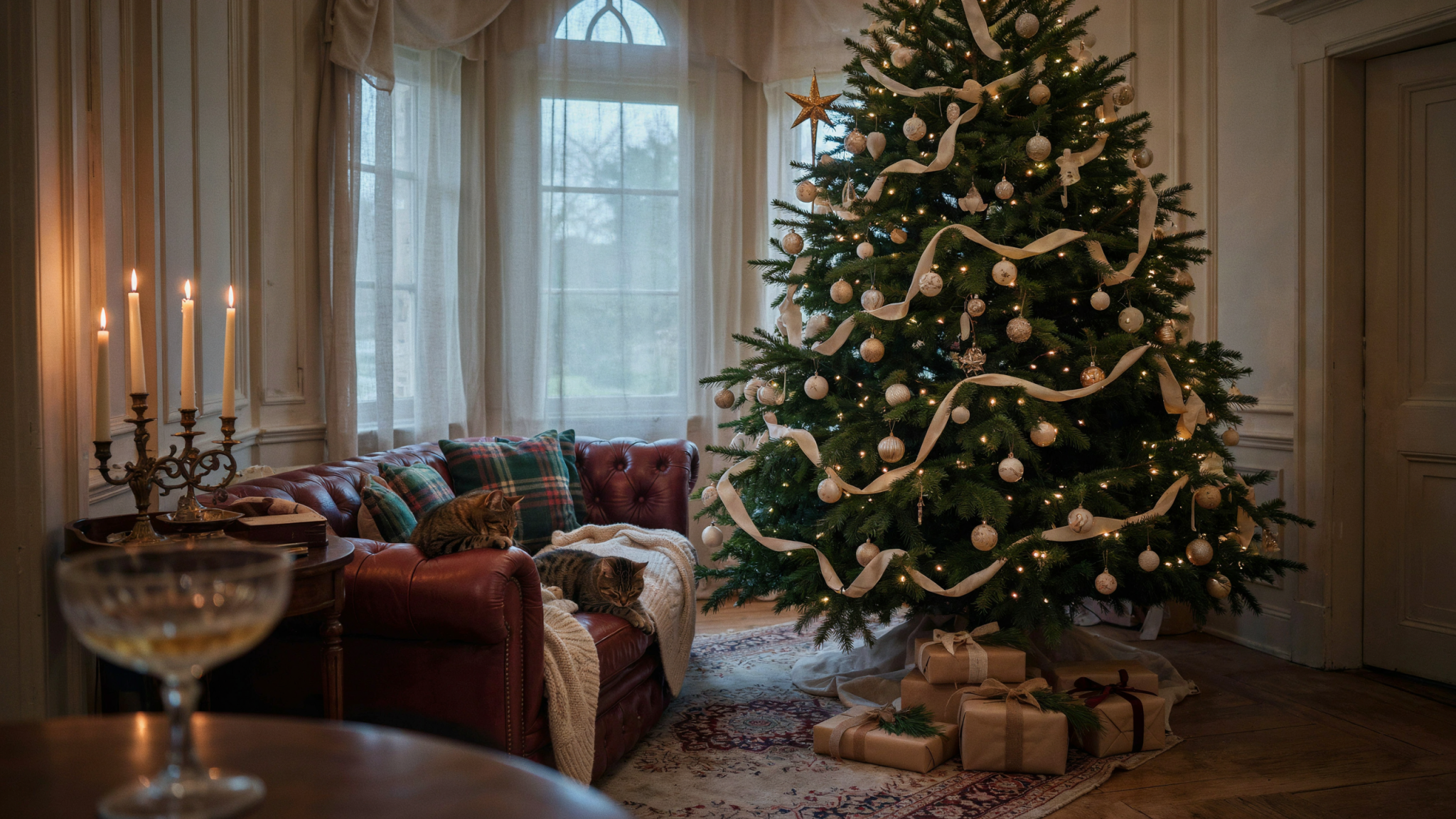
This plan takes you from measuring the tree space to arranging the mantel, console, and smaller details. The images are inspiration; adapt the layouts and quantities to your room.
1. Start With the Living Room You Already Have

Before unpacking every ornament, take a photo of the room from its main doorway. Notice the colors you already have in the sofa, rug, curtains, and artwork. Pick holiday accents that belong with those pieces instead of trying to disguise the whole room.
Choose two main holiday colors and one supporting texture. For example, cream and burgundy with velvet ribbon can work with warm neutral upholstery. Navy and antique gold can relate to an existing blue rug. Green and natural wood can keep a room with lots of family ornaments from becoming visually busy.
Then choose three places to decorate: the tree, a mantel or console, and one smaller surface. That is enough to make the room feel festive. Put everyday accessories in the empty holiday bins so you are replacing some decor rather than adding a second layer to every surface.
2. Measure the Tree Space Before Choosing the Tree

Measure the usable ceiling height and the floor area where the tree will stand. Include the stand, topper, and widest branch spread when checking the product’s dimensions. A tree that fits vertically may still block a chair, curtain, or route across the room.
Mark the proposed footprint on the floor with a temporary outline, using a material suitable for the surface. Walk from the door to the seating and open nearby drawers or cabinet doors. If the space feels squeezed, choose a slimmer tree or a tabletop version rather than moving all the furniture into the walkway.
Tree placement also needs to respect heat sources and exits. The U.S. Fire Administration recommends keeping the tree at least three feet from heat sources. Keep exits clear, check light strands, and follow the lights’ instructions for connecting sets. For a real tree, check the water daily.
A small-room example: place a slim tree in the corner beside the sofa if its full branch spread fits comfortably. Move one side table elsewhere for the season. Put the table lamp on a nearby console if the room still needs that light, and keep the route to the sofa open.
3. Decorate the Tree in Layers

Lay out your ornaments before hanging them. Group them into a base collection, a few accents, and the sentimental pieces you want to see. You don’t have to use everything you own this year.
- Set up and check the lights: assemble the tree and test the lights before adding fragile decorations. Follow the tree and light manufacturers’ directions.
- Add the larger visual elements: place larger ornaments or short lengths of ribbon first, spreading the color around the tree.
- Fill with the base ornaments: use smaller pieces to connect the larger accents. Step back regularly instead of filling one branch cluster at a time.
- Add the personal pieces: hang children’s creations, travel ornaments, and favorites where you can enjoy them. Use unbreakable ornaments in spots children or pets can readily reach.
- Finish the base: use a skirt or collar suited to the stand, keeping watering access available for a real tree.
For ribbon, test a short section before cutting the whole roll. A few soft loops tucked into separate areas can be easier to adjust than a continuous spiral. If your ornament collection is colorful, repeat just one ribbon color to bring the mix together.
4. Give the Mantel or Console One Clear Arrangement

A mantel works best when it has a main idea. Try one framed piece or mirror as the backdrop, greenery across part of the surface, and a small group of objects at one end. Leave some visible surface so the arrangement has room to breathe.
A simple console recipe: keep the existing lamp at one end, place a bowl of unbreakable ornaments near the middle, and add a small tabletop tree at the other end. Repeat one ornament color from the main tree. That gives you a connected arrangement without buying a second collection.
For garland: measure the actual route with string, including any planned drape, before buying. Check the weight of the garland and use a mounting method approved for the surface and load. A stone surround, painted wood mantel, and wallpapered wall may require different solutions.
For an operating fireplace, follow its clearance requirements and keep decorations out of the heat zone. A nearby console can hold the greenery and stockings if the mantel is not a suitable display space. Flameless candles make it easier to get a soft glow near seasonal greenery.
5. Repeat the Palette With Textiles and Small Details

You don’t need a holiday version of every pillow. Keep the inserts you already have and change one or two covers if their colors help connect the room. Add a throw where someone will actually use it, rather than covering every chair.
- Coffee table: use a low tray with a small bowl of ornaments and one short decorative object. Leave room for drinks and the remote.
- Bookshelf: replace one everyday object with a small tree or seasonal frame. Keep the rest of the shelf intact.
- Window: a single wreath or hanging ornament can be enough if the tree already fills that side of the room.
- Seating: repeat one fabric or color from the tree ribbon in a pillow cover or throw.
If the room feels crowded, remove a decorative item before adding another. For more ideas on spacing and grouping objects, see our shelf-styling guide.
6. Choose a Complete Look, Then Shop the Gaps

Warm and traditional
Palette: burgundy, cream, and green. Tree: existing family ornaments tied together with burgundy ribbon. Console: greenery and a bowl of cream ornaments. Seating: one burgundy pillow and a plain cream throw. Use wood and brass pieces you already own to finish it.
Quiet and natural
Palette: green, warm white, and wood. Tree: simple white ornaments with wooden or paper accents. Console: a small tree and one ceramic vessel. Seating: a textured neutral throw. Keep metallic accents limited if the room already has a relaxed, natural feel.
Colorful and family-focused
Palette: the colors in your favorite ornaments, connected by one repeating ribbon. Tree: handmade and collected pieces, with durable ornaments on accessible branches. Console: a display of holiday cards or children’s artwork. Seating: keep everyday textiles and add just one festive detail.
Each scheme is a starting point, not a shopping list you must complete. Inventory what you have, identify the one or two missing pieces, and set a spending limit before browsing. Ribbon, replacement light strands, or a properly sized tree stand may be more useful than another box of ornaments.
A Decorating Order That Saves Rework
- Clear and clean the three areas you plan to decorate.
- Set up the tree and check its footprint, stability, and lights.
- Decorate the tree, stepping back to judge the whole room.
- Arrange the mantel or console using one color from the tree.
- Add textiles and a small coffee-table or shelf arrangement.
- Check walkways, cords, heat clearances, and access to everyday storage.
Switch on the room’s lamps and tree lights before making the final adjustments. View it from the doorway and from your usual seat. If it feels busy, remove a few small items and let the pieces you love stand out.
When the season ends, pack by area and label the bins. A photo of the finished room tucked into a bin makes next year’s setup easier, especially if you liked the arrangement.