

As the holiday season approaches, we often focus our decorating efforts on the main living areas of our homes—the living room, dining room, and entryway. But why not extend the festive cheer to the most personal space of all: the bedroom? Transforming your bedroom into a cozy Christmas sanctuary can be a wonderful way to unwind and embrace the magic of the season. After all, this is where you begin and end each day, and creating a space that reflects the warmth and joy of the holidays can significantly enhance your overall well-being during this special time of year.
This comprehensive guide will walk you through everything you need to know to create a festive and inviting Christmas bedroom, from choosing a color palette to adding the perfect finishing touches. Whether you have a spacious master suite or a compact bedroom, whether you’re decorating for yourself, guests, or children, you’ll find practical advice and inspiring ideas to help you create a holiday haven that feels both magical and restful.
I. The Foundation: Establishing Your Color Scheme and Theme

Before you start decorating, it’s essential to have a clear vision for your Christmas bedroom. This foundational step will help you make cohesive choices and create a space that feels both festive and serene, rather than chaotic or overwhelming.
Understanding Color Psychology in the Bedroom
The colors you choose for your Christmas bedroom decor will have a significant impact on the overall mood and atmosphere of the space. Understanding color psychology can help you create the exact ambiance you’re seeking. Traditional Christmas colors like red and green can be energizing and festive, but they need to be balanced carefully in a bedroom to avoid overstimulation. Cooler tones like blues, silvers, and whites create a calming, winter wonderland effect that can be particularly soothing for sleep. Warm metallics like gold, copper, and bronze add a touch of luxury and warmth without being too bold.
Selecting Your Color Palette
When choosing a color palette, start by considering your existing bedroom decor. The most successful Christmas decorating schemes work with, rather than against, the permanent elements of your room. If your bedroom features warm tones—creams, beiges, taupes, and warm woods—you might opt for traditional Christmas colors like deep burgundy red and forest green, accented with antique brass or copper metallics. This combination creates a rich, cozy atmosphere that feels both classic and inviting.
For bedrooms with cooler palettes featuring grays, whites, and cool-toned woods, consider a winter wonderland theme with shades of white, silver, champagne, and soft sage or ice blue. This approach creates a serene, sophisticated look that feels fresh and modern while still being unmistakably festive. Another beautiful option for any bedroom is a jewel-tone palette featuring emerald green, sapphire blue, or amethyst purple paired with metallic accents. These rich colors add depth and luxury without feeling overly traditional.
The key to success is choosing two to three main colors and using them consistently throughout your decorating scheme. This creates visual harmony and prevents the space from feeling cluttered or chaotic. One color should be dominant, while the others serve as accents that appear in smaller doses throughout the room.
Choosing a Unifying Motif
To create a cohesive look that feels intentional rather than random, choose a single motif and use it subtly throughout the room. A motif is simply a recurring decorative element that ties your design together. This could be anything from snowflakes and stars to bells, tiny houses, woodland creatures, or vintage ornaments. The key is to use the motif in a few strategic places rather than overwhelming every surface.
For example, if you choose snowflakes as your motif, you might incorporate them through a snowflake-patterned throw pillow, a piece of wall art featuring snowflakes, and a few delicate snowflake ornaments hanging in the window. This creates a sense of harmony and intentionality without making the room feel like a theme park. The motif should whisper rather than shout, adding a subtle thread of continuity that pulls the entire design together.
Creating a Mood Board
Before you begin purchasing items or decorating, consider creating a simple mood board. This can be as simple as a Pinterest board or a physical collection of paint chips, fabric swatches, and magazine clippings. Gather images that represent the feeling you want to create in your Christmas bedroom. Are you drawn to rustic, natural elements? Glamorous metallics? Cozy, cabin-inspired textures? Minimalist Scandinavian simplicity? Your mood board will serve as a reference point as you make decorating decisions, helping you stay focused and avoid impulse purchases that don’t fit your overall vision.
II. The Centerpiece: Creating a Festive Bed
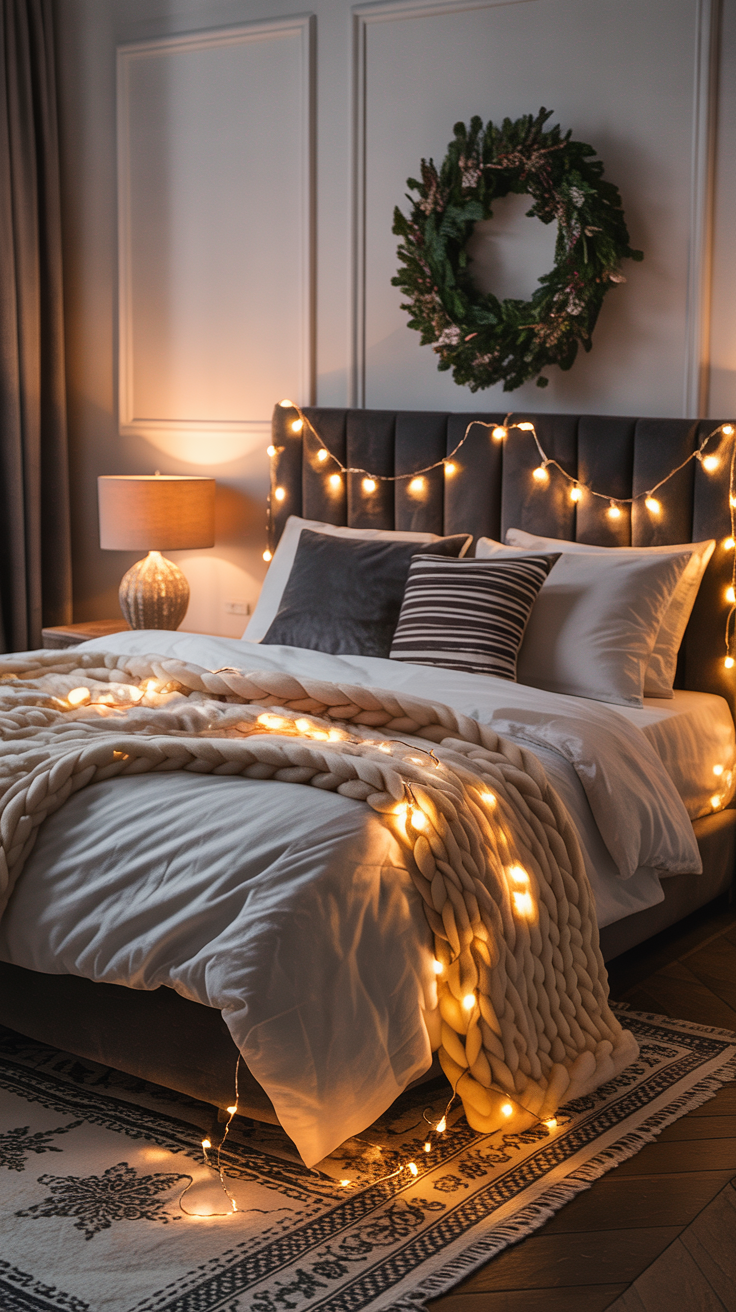
The bed is the focal point of any bedroom, so it’s the perfect place to start your Christmas decorating. A beautifully dressed bed not only looks inviting but also enhances the comfort and coziness that are so essential during the winter months.
Selecting Seasonal Bedding
The foundation of your festive bed starts with the right sheets. During the Christmas season, you’ll want bedding that feels cozy and appropriate for cooler weather. Flannel sheets are a popular choice for their soft, brushed texture that provides warmth without excessive weight. They’re particularly wonderful in colder climates or for those who tend to feel chilly at night. Cotton sateen offers a silky, smooth feel with a subtle sheen that feels luxurious while still being breathable—an excellent choice for those who sleep warm or prefer a more elegant look.
When selecting the color or pattern for your sheets, think about how they’ll work with your overall color scheme. Deep ivory, mushroom gray, forest green, burgundy, or a subtle plaid can all work beautifully. If you prefer to keep your sheets neutral, you can add seasonal color through your other bedding layers. Some people enjoy having a dedicated set of Christmas sheets with festive patterns, while others prefer to keep the foundation neutral and add holiday touches through more easily changeable elements.
Layering for Luxury and Warmth
The secret to a truly inviting bed is layering. Professional designers and luxury hotels use this technique to create beds that look sumptuous and feel incredibly comfortable. Start with your fitted sheet, then add a flat sheet. Next, place a lightweight blanket—cotton, wool, or a cotton-blend—over the flat sheet. This middle layer adds warmth without excessive weight and creates that coveted “loft” that makes a bed look full and inviting.
Your duvet or comforter comes next. During the Christmas season, you might opt for a heavier weight than you use in other seasons, or choose one in a festive color that coordinates with your palette. A white or neutral duvet cover provides versatility and can be dressed up with seasonal accessories, while a colored duvet in green, burgundy, or navy makes a bolder statement.
At the foot of the bed, fold a quilt or coverlet. This adds visual interest, provides an extra layer for particularly cold nights, and creates that polished, designer look. The quilt is an excellent place to introduce pattern or an accent color from your palette. Finally, add throws. A chunky cable-knit throw or a faux fur or sherpa throw draped across the lower third of the bed adds incredible texture and invites you to curl up and get cozy. You might also drape a second, lighter throw from one corner of the bed for an effortless, lived-in look.
The Art of Pillow Arrangement
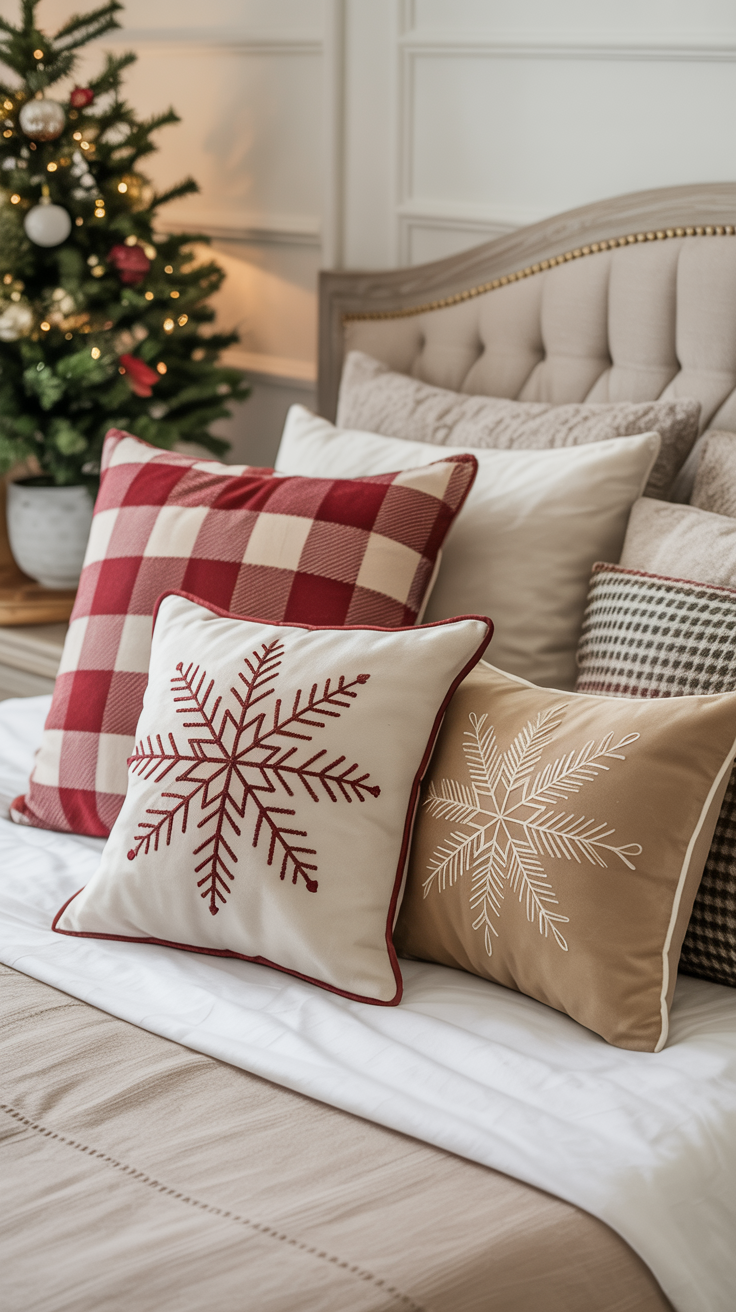
Pillows can make or break the look of your bed, and during the Christmas season, they’re an easy way to add festive touches without a major investment. The key is to think about scale, texture, and color rather than simply piling on as many pillows as possible.
Start with two European square pillows (26″ x 26″) at the back. These large pillows create height and serve as a backdrop for the rest of your pillow arrangement. You can use Euro shams in a solid color that coordinates with your palette, or choose a subtle pattern. Next, place your standard sleeping pillows in front of the Euro shams. These should be in coordinating pillowcases—either matching your sheets or in a complementary color.
Now comes the fun part: decorative accent pillows. A lumbar pillow (typically 12″ x 20″ or 14″ x 36″) adds visual interest with its rectangular shape and is the perfect place to introduce a rich texture like velvet, faux fur, or a nubby weave. Choose a color that either matches your accent color or provides a complementary contrast. Finally, add one or two smaller accent pillows that incorporate your Christmas theme. This might be a pillow with an embroidered snowflake, a festive saying, a plaid pattern, or your chosen motif. The key is restraint—one or two festive pillows create a curated look, while too many can make the bed feel cluttered and overwhelming.

Keep all of your pillows within your established color palette. Even if you’re using different textures and patterns, maintaining color cohesion will ensure that the bed looks composed and intentional rather than chaotic.
Adding a Bed Skirt or Riser
If your bed frame allows, consider adding a bed skirt in a coordinating fabric. This hides under-bed storage and gives the bed a finished, polished look. During the Christmas season, you might choose a bed skirt in a festive color or a subtle pattern. Alternatively, if your bed sits low to the ground and you’d like to create more visual impact, bed risers can add a few inches of height, making the bed feel more substantial and creating additional storage space underneath.
III. Beyond the Bed: Decorating Walls and Windows
Once your bed is beautifully dressed, it’s time to turn your attention to the walls and windows. These elements frame your space and provide excellent opportunities to reinforce your Christmas theme.
The Wall Above Your Bed
The wall above your bed is prime real estate for a festive focal point. This is often the first thing you see when you enter the room, so it deserves special attention. A wreath is a classic choice that works in almost any style of bedroom. For a traditional look, choose an evergreen wreath with pinecones and berries. For a more modern aesthetic, consider a minimalist wreath made from eucalyptus or a geometric wreath form decorated with simple ornaments.
When hanging a wreath above your bed, use a long ribbon so the wreath hangs at a height that relates to the bed rather than floating awkwardly in empty space. The bottom of the wreath should typically be about 6-12 inches above the top of your headboard or pillows. If you don’t have a headboard, aim for the wreath to hang at approximately the same height as if you did.
Another beautiful option is a garland. A slim, elegant garland can be mounted directly to the wall (using removable hooks to avoid damage) and draped in a gentle arc above the bed. Weave in a ribbon that echoes one of your accent colors, and consider adding small battery-operated lights for a soft glow. The key with garlands is to keep them slim and elegant—you don’t want them to look heavy or to interfere with your pillows.
Seasonal Art and Wall Decor
If wreaths and garlands aren’t your style, consider swapping out your regular wall art for something seasonal. A winter landscape photograph, an abstract painting in your Christmas colors, a vintage holiday poster, or even a simple framed print with a festive saying can all work beautifully. The advantage of this approach is that it feels sophisticated and can be as subtle or as bold as you prefer.
For a more creative approach, you might create a small gallery wall of Christmas-themed prints, family holiday photos in coordinating frames, or a collection of vintage Christmas cards. Keep the frames consistent in color (all white, all gold, all black, or all natural wood) to maintain a cohesive look even with varied artwork.
Window Treatments That Enhance the Season
Your windows offer another excellent opportunity to add festive touches while also serving the practical purpose of insulation and privacy during the darker winter months. Consider swapping out your lightweight summer curtains for heavier drapes in a rich fabric like velvet, linen, or a wool blend. These fabrics not only look luxurious but also help insulate your room against winter drafts.
Choose a color that ties into your overall palette. Deep green velvet curtains can look incredibly elegant and festive, while cream or gray linen provides a neutral backdrop that allows your other decorations to shine. If you love pattern, a subtle plaid, a winter botanical print, or a geometric design can add visual interest without overwhelming the space.
The way you hang your curtains also matters. For a more luxurious look, hang your curtain rod higher than the top of your window frame—ideally close to the ceiling—and choose curtains that puddle slightly on the floor or just kiss it. This creates the illusion of taller windows and a more elegant space.
Decorating the Windowsill
Your windowsill is a perfect spot for a small seasonal vignette. The key is to keep it simple and sculptural so you don’t block natural light or make the window feel cluttered. A trio of bottlebrush trees in graduated heights creates a charming winter forest scene. You might choose traditional green trees, or opt for white or silver for a more modern look.
Other beautiful windowsill options include a single ceramic or wooden house (perhaps one that lights up from within), a shallow bowl filled with clementines and bay leaves for a natural, fragrant display, a collection of white candles in varying heights, or a simple arrangement of winter branches in a small vase. At night, a strand of micro LED lights woven along the windowsill transforms the window into a gentle, glowing focal point that’s visible from both inside and outside your home.
If you have a window seat, dress it for the season with festive cushions and a cozy throw. This creates an inviting spot for reading, daydreaming, or simply enjoying the winter view.
IV. The Magic of Light: Creating a Warm and Inviting Ambiance
Lighting is perhaps the most important element in creating a cozy and inviting atmosphere in your Christmas bedroom. The right lighting can transform an ordinary space into a magical retreat, while poor lighting can undermine even the most beautiful decorations.