

There is a particular kind of Christmas interior that never feels dated. It is warm without being cluttered, traditional without looking old-fashioned, and luxurious without depending on glitter or obvious branding. The rooms seem to have gathered their character over time. There are tartan cushions on a deep sofa, a tree dressed in red and brass, polished wood furniture, candlelight on the mantel, and a stack of well-loved books close enough to reach.
This is the appeal of Ralph Lauren Christmas interiors. The look is not really about reproducing a designer showroom. It is about creating an atmosphere of inherited comfort: the feeling of a country house prepared for guests, a library after dark, or a family room where decorations return to the same places every December. It combines American heritage style with English country-house references, equestrian details, collegiate patterns, rich textiles, and an appreciation for objects that look better when they are used.
The result is festive but not frantic. Instead of filling every surface with novelty decorations, the style relies on a restrained palette, tactile materials, and a few memorable details. A velvet ribbon can do more than a box of plastic ornaments. A large wreath can create more impact than a dozen small signs. A bowl of pinecones, a brass candlestick, or a plaid throw can make a room feel seasonal while remaining useful once Christmas is over.
The most important principle is that nostalgic luxury should feel lived in. A room should not look as if it has been sealed off for a photoshoot. It should invite people to sit down, put their feet up, eat something comforting, and stay longer than planned.
What Ralph Lauren Christmas means in interiors
The Ralph Lauren home aesthetic is built around contrast. It places refined objects beside rugged ones, formal furniture beside relaxed textiles, and heritage patterns beside simple contemporary shapes. A tailored room might contain a worn leather chair. A polished dining table might be surrounded by mismatched wooden chairs. A traditional Christmas tree might sit beneath a modern picture light.
That balance prevents the look from becoming a theme. If every item is overtly rustic, the room can begin to resemble a shop display. If every surface is formal and symmetrical, it can feel cold. The charm comes from allowing different kinds of beauty to coexist.
The interior version of the trend draws on several familiar references. There is the warmth of an old library, with books, dark wood, leather, and low lighting. There is the comfort of a country retreat, with wool, ticking stripes, checks, and natural greenery. There is the polish of a classic hotel or members’ club, with brass, velvet, framed art, and carefully chosen lamps. Finally, there is the personal layer: photographs, inherited ornaments, travel souvenirs, and objects that carry a story.
You do not need a large house, an open fire, or expensive furniture to create the mood. The style is more about editing what you have. A small apartment can achieve it through a wool-look throw, a table lamp with warm light, a collection of framed prints, and a compact tree decorated in a disciplined colour palette.
The colour palette: deep, warm, and quietly festive
The foundation is a winter palette that feels connected to nature and traditional materials. Think forest green, cranberry, burgundy, navy, camel, tobacco, chocolate brown, cream, and warm white. These colours work well because they create depth without relying on high contrast.
Red is essential, but it does not have to be bright. A dark berry red feels more sophisticated than a primary scarlet, especially when paired with walnut, brass, or cream. Use it in a velvet ribbon, a cushion, a table runner, a plaid blanket, or a cluster of ornaments. A little red repeated around the room will feel more intentional than a single loud decoration.
Green brings the outdoors inside. Evergreen branches, eucalyptus, olive leaves, rosemary, and pine can all contribute to the effect. If fresh greenery is not practical, choose realistic artificial stems and combine them with a few natural pieces such as pinecones, dried orange slices, or bare branches.
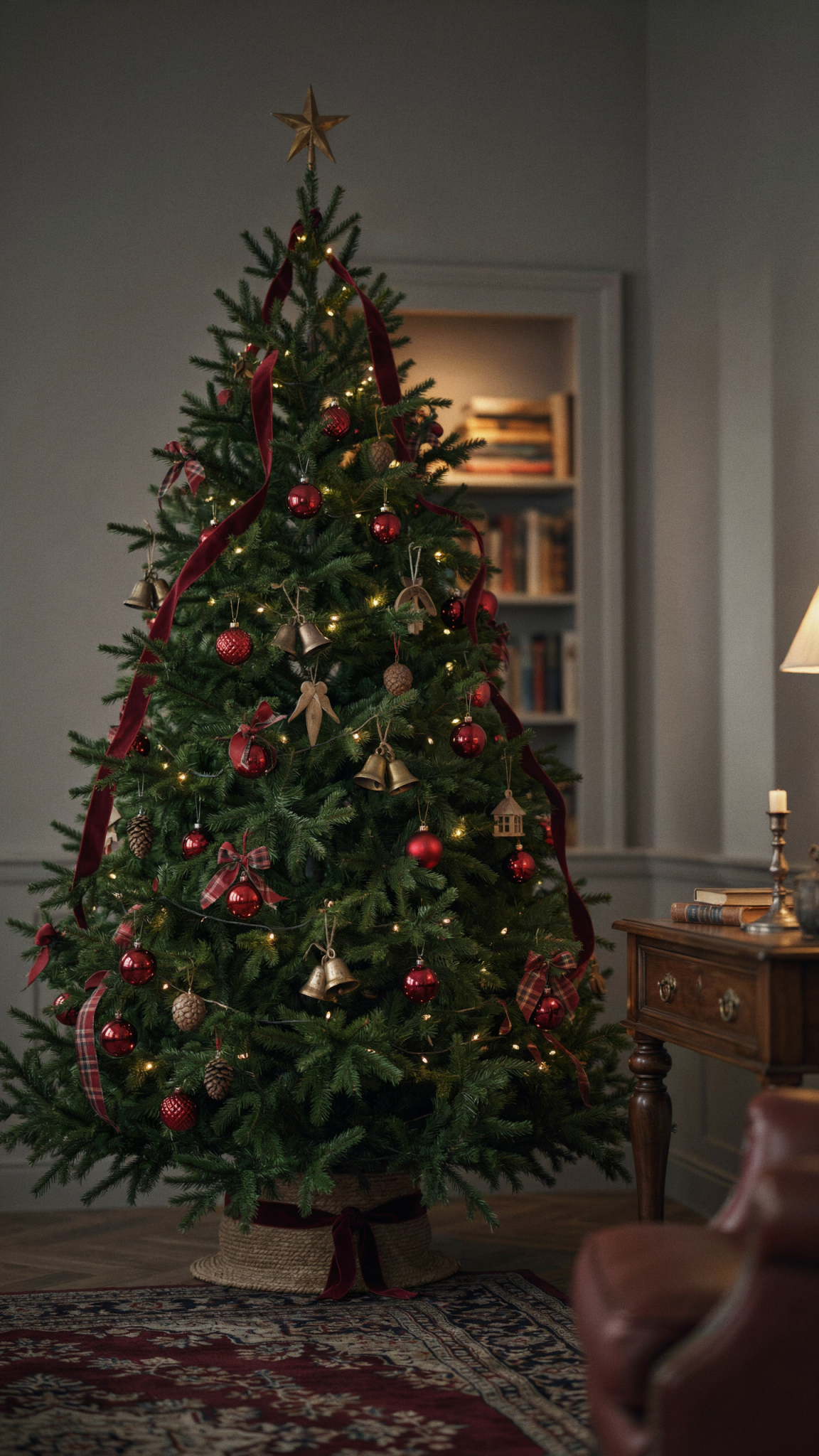
Navy is an excellent alternative to black. It gives a room the same grounding effect but feels softer and more connected to the traditional Ralph Lauren palette. Use it on a lampshade, velvet cushion, painted cabinet, table linen, or a ribbon tied around a wreath.
Cream and camel stop the darker colours from becoming too heavy. A cream throw across a leather sofa, a camel cushion on a navy chair, or ivory candles on a dark dining table adds light without making the room feel stark.
Metallics should be warm rather than icy. Brass, antique gold, bronze, and aged copper work better than highly reflective silver for this particular mood. They catch the light of candles and lamps in a softer way. You do not need to buy matching pieces. In fact, a mix of brass and old gold often looks more collected.
The materials that create nostalgic luxury
Texture is what turns a colour scheme into an atmosphere. A room can use the simplest palette and still feel rich if the surfaces have variation.
Velvet is the obvious festive material. It can appear in curtains, cushions, a footstool, a table runner, or the ribbon on a wreath. You do not need a large velvet sofa to make an impact. One deep-green cushion or a burgundy bow on the tree may be enough.
Wool and knitted textiles bring softness. Look for cable-knit throws, herringbone blankets, Fair Isle patterns, and chunky woven cushions. These textures are particularly useful in living rooms because they make the space feel comfortable rather than merely decorated.
Leather adds structure and a sense of history. A brown leather armchair, tray, desk accessory, or picture frame can anchor a room filled with softer fabrics. Faux leather can work well when it has a matte finish and a warm brown tone. Avoid anything too glossy, because shine can make the room feel more contemporary than intended.
Wood is central to the look. Dark wood creates the strongest library effect, but pale or medium wood can also work if it is paired with deeper textiles. Add wooden bowls, candlesticks, picture frames, serving boards, or a small stool rather than replacing your furniture. The goal is to introduce natural surfaces, not to make every object match.
Tartan and checks provide pattern. Use them on one or two large items, then repeat a small part of the colour elsewhere. A red-and-green blanket could connect to red berries on the mantel and green branches on the table. A navy-and-cream check cushion could echo the tree ribbon without matching it exactly.
Finally, include materials with a slight irregularity. Handmade pottery, aged metal, worn wood, rough linen, and imperfect glass make the room feel personal. Nostalgia is rarely perfectly symmetrical. A little variation makes the arrangement believable.
The Christmas tree: edited, layered, and personal
The tree is the centre of the room, but it does not need to carry every Christmas idea at once. A Ralph Lauren-inspired tree is usually strongest when it follows a clear palette and includes ornaments with different scales and textures.
Begin with lights in a warm white tone. Cool blue-white lights can make rich fabrics and wood look flat. Place the lights deeper into the branches as well as near the tips so the tree glows from within.
Add ribbon before ornaments. Velvet, grosgrain, plaid, ticking stripe, or a simple wide satin ribbon can give the tree a sense of movement. Instead of wrapping it in a perfect spiral, let it fall in loose vertical sections. This looks more relaxed and uses less ribbon.
Choose a small number of ornament families. Traditional red baubles, brass bells, wooden figures, glass drops, and cream-coloured decorations can work together when the colours repeat. Add a few unusual or sentimental ornaments to stop the tree from looking too coordinated. A child’s decoration, a travel souvenir, or an old ornament with a slightly faded finish may be the most attractive piece on the tree.
Use larger ornaments near the bottom and centre, with smaller pieces toward the tips. Hang some decorations deep inside the branches so the tree has depth. If the tree is small, use fewer large ornaments rather than covering it with many tiny ones.
The tree topper does not have to be a traditional star. A large velvet bow, a cluster of natural branches, or a simple brass ornament can feel more relaxed. Finish with a basket, a woven collar, or a folded blanket around the base. This is an easy way to hide a stand without buying a dedicated tree skirt.
The mantel and entryway
A mantel can create the mood of the whole home, but it is easy to overfill. Start with one long garland or a line of greenery. Then add height at one end with a pair of candlesticks, a vase, or a framed piece of art. Balance it with a lower arrangement at the other end, such as pinecones, books, or a small bowl.
Do not feel obliged to place identical objects at either side. Symmetry can look elegant, but an informal arrangement often feels more like a real home. Repeat one or two colours from the tree so the rooms feel connected.
Candles are especially effective on a mantel because the light reflects against frames, mirrors, and brass. Choose unscented candles if the room already has a strong seasonal fragrance. Battery-operated candles can be useful around greenery and in homes with children or pets.
If you do not have a fireplace, create a similar focal point on a console, sideboard, or bookshelf. A large mirror or framed artwork can sit behind the arrangement. Add a garland, a lamp, a few books, and one seasonal object. The composition does not need to be large. It simply needs a clear centre.
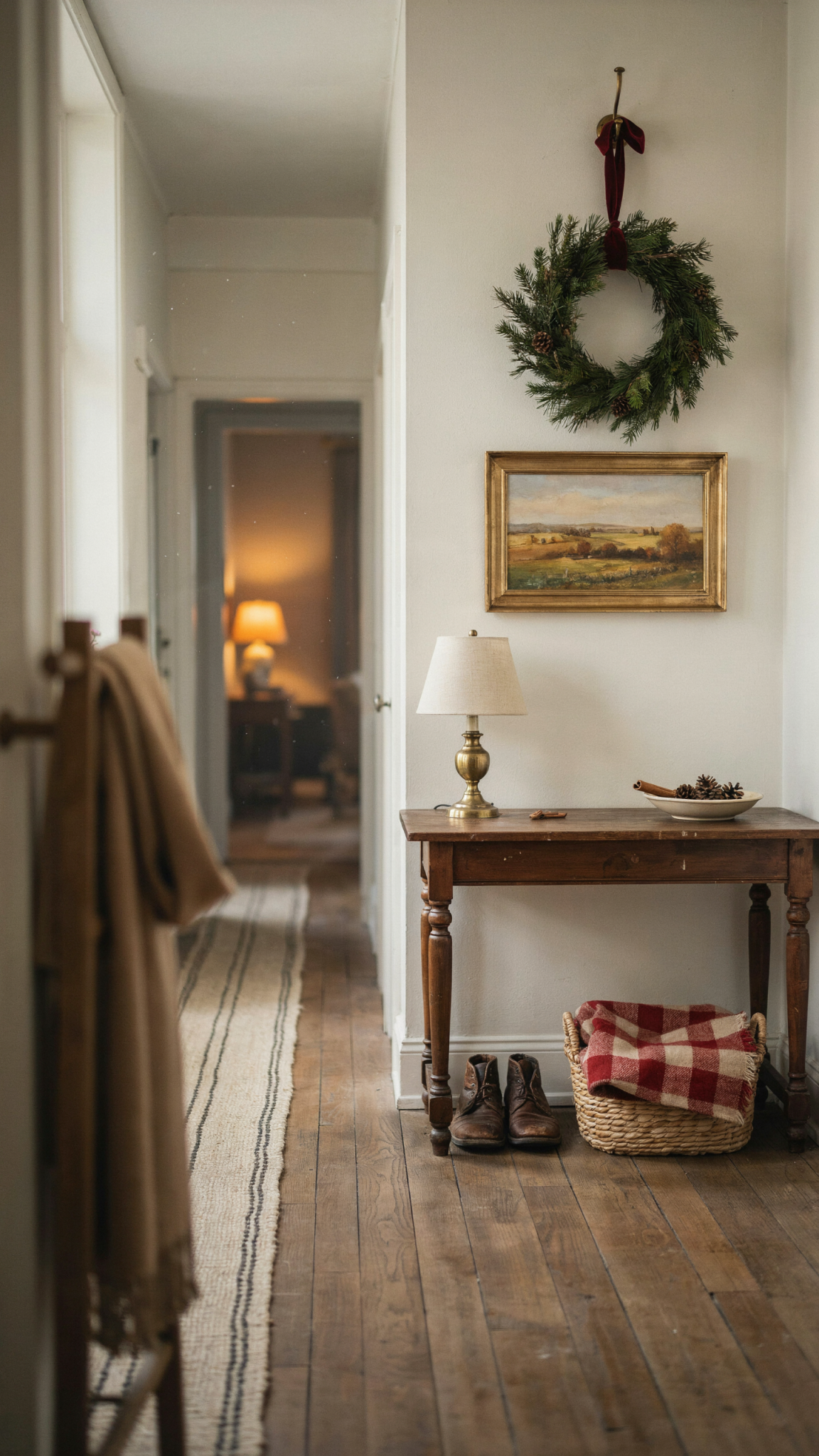
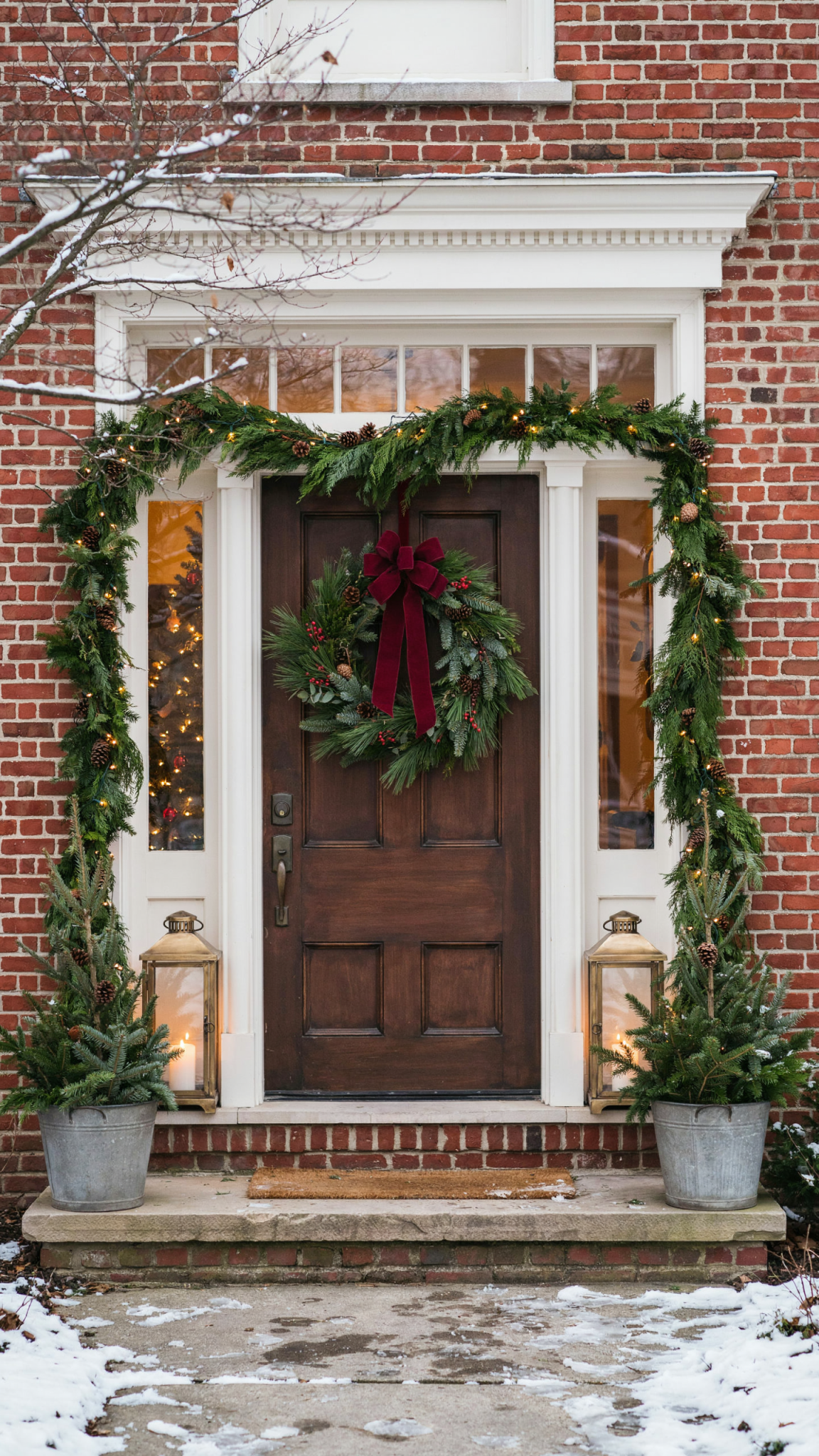
The entryway should introduce the palette without using every decoration. Hang a wreath made from eucalyptus, pine, magnolia, or dried materials. Tie it with a ribbon in burgundy, navy, or tartan. Place a basket beneath the console for scarves, or add a small lamp with warm light. A bowl for keys, a framed photograph, and a sprig of greenery can make the entrance feel considered without becoming cluttered.
The dining room: traditional, but not precious
A Ralph Lauren Christmas table combines practical comfort with a little ceremony. Begin with a natural base. A bare wood table, a linen runner, or a simple cotton tablecloth can provide the foundation. White plates are useful because they allow the greenery, glassware, and napkins to provide colour.
Layer in tartan, velvet, or ticking stripe through napkins, a runner, or chair ties. If the pattern is strong, keep the plates and centrepiece simple. If the tableware is plain, you can use a more expressive cloth.
The centrepiece should be low enough for conversation. Use greenery along the centre of the table, or place small branches in several low vases. Add fruit, pinecones, nuts, or pomegranates for colour and texture. Candles in brass or glass holders will give the table evening warmth.
Use mismatched objects if they share a visual quality. Old wine glasses can sit beside simple tumblers. Brass candlesticks can be different heights. A collection of small bowls can look more interesting than one large decorative piece. The table should suggest that it is ready to be used, not preserved.
For place settings, fold a napkin under the plate and add one small detail: a sprig of rosemary, a handwritten name card, a cinnamon stick, or a ribbon. These gestures cost very little but make the meal feel special.
A particularly effective trick is to decorate the backs of dining chairs instead of the table. Tie a velvet bow, a small wreath, or a sprig of greenery to each chair. This adds drama without taking away space needed for food.
The bedroom and quieter spaces
The bedroom should receive a lighter version of the style. Too much dark red or heavy pattern can make a small room feel crowded. Start with cream bedding, then add a tartan blanket or a forest-green cushion. A velvet cushion at the head of the bed can provide the festive texture without changing the entire room.
Use soft lighting. A bedside lamp with a warm bulb will do more than a string of bright lights. Add a small wreath to the headboard, a branch in a ceramic jug, or a simple bowl of pinecones on a dresser. If you like scent, choose cedar, pine, orange, clove, or a subtle wood fragrance rather than an overly sweet seasonal blend.
In a home office or reading corner, create a miniature library mood. Stack books with a brass object on top, place a wool throw over the chair, and add a small tree or vase of greenery. A framed print, vintage-style map, or landscape painting can reinforce the feeling of tradition.
Bathrooms can be included through small details: a dark green hand towel, a wood or brass soap dispenser, a sprig of eucalyptus, or a red ribbon around a candle. Seasonal decorating does not require every room to contain a full display.
How to get the look for less
The most effective way to recreate nostalgic luxury on a budget is to work with what already has the right shape and colour. Before buying decorations, look around your home for baskets, bowls, books, glass jars, trays, blankets, ribbons, candlesticks, and framed art. Many items can become seasonal when arranged with greenery or warm lighting.
Use one strong colour story. Buying random decorations in every shade often costs more and produces a less polished result. Decide on two or three main colours, then shop within that range. Red, green, and brass are classic. Navy, cream, and brown feel quieter. Burgundy, blush, and antique gold create a softer version.
Choose natural or natural-looking materials where possible. A handful of pinecones, dried oranges, branches, cinnamon sticks, and foliage can create more atmosphere than a large bag of novelty decorations. Collect fallen branches responsibly, dry citrus slices in the oven, or use cuttings from a garden if they are available.
Thrift stores, charity shops, flea markets, and online resale sites are excellent for brass candlesticks, wooden frames, tartan blankets, baskets, old books, ceramic pitchers, glassware, and small ornaments. Look for material and form rather than a particular brand. A heavy brass candlestick with a few marks can feel more authentic th