A thoughtfully planted container can make an entrance feel considered long before a guest reaches the door. The most balanced designs usually combine a vertical accent, a dense middle layer, and something that relaxes over the rim, but the plant choices should also match the light, the weather, and the character of the house.
This collection organizes 28 adaptable front-porch combinations from the earliest cool days of spring through late autumn. Use the pairings as a starting point, choose a container with drainage, and allow each plant enough soil volume to mature without competing for water.
1. A Cheerful March Planter: Marguerite Daisy, Nemesia, and Pansy
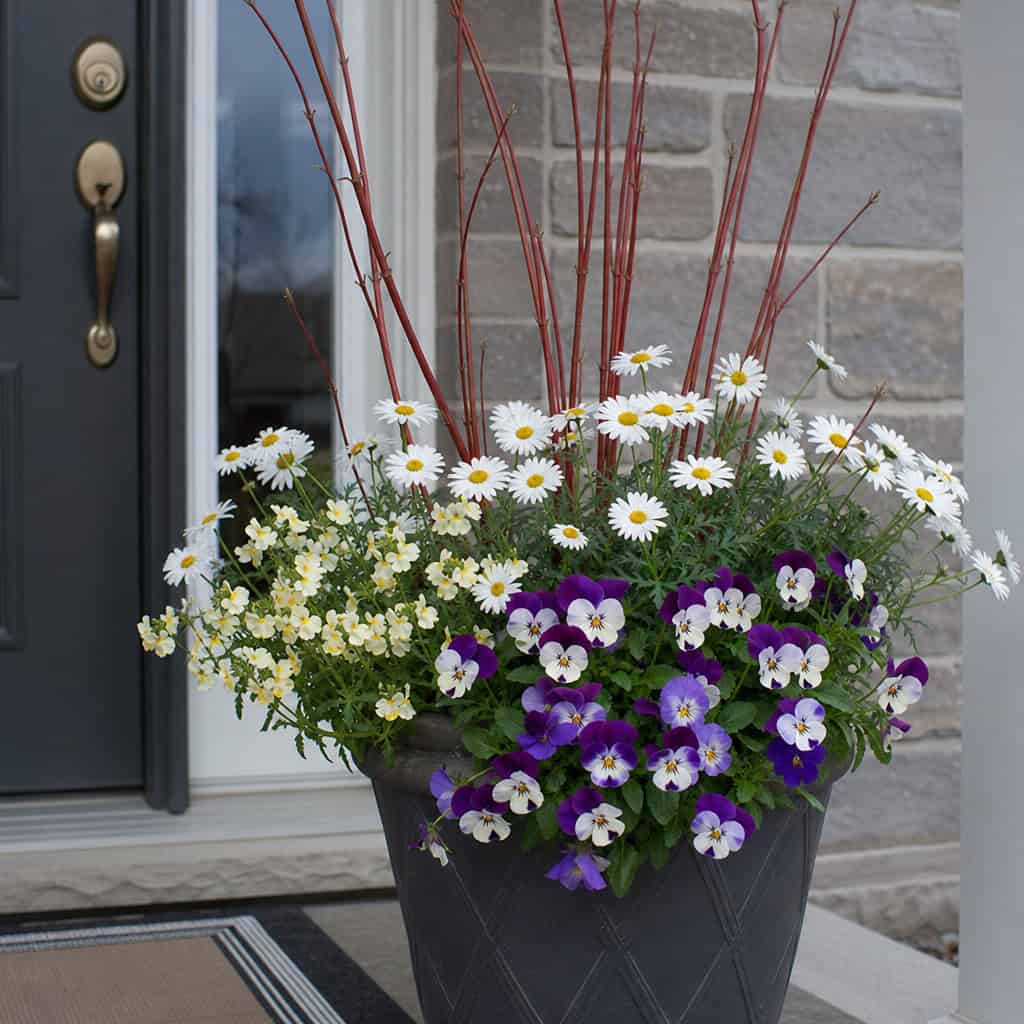
When the porch is still quiet after winter, this cheerful mix adds color without waiting for summer heat. Marguerite daisy creates the tallest shape, fragrant nemesia softens the center, and pansies make a generous skirt around the edge.
Key Details
- Best for a cool, bright front step
- Use a tall, narrow twig accent if extra height is wanted
Pro Tip: Pack cool-season annuals a little closer than summer plants, then replace them once consistently warm weather arrives.
2. Layered Spring Color with Tulips, Snapdragons, and Pansies
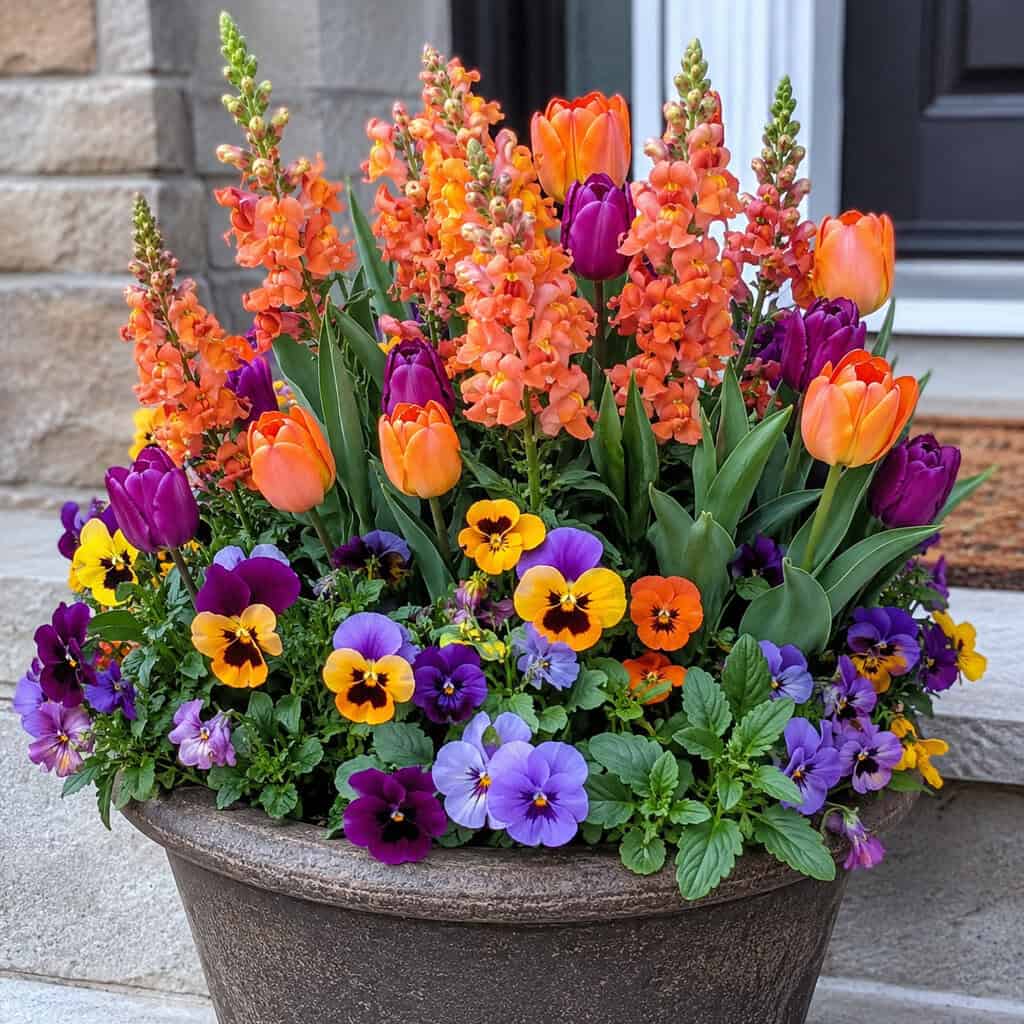
This combination is designed to unfold in layers. Tulips emerge through the lower planting while snapdragons add an upright silhouette and pansies keep the container looking finished at soil level.
Key Details
- A strong choice for a formal or cottage-style entry
- Plant tulip bulbs before the season, then tuck in annuals around them
Pro Tip: Choose one dominant flower color and echo it in the pot or a nearby door mat for a more intentional look.
3. Small-Space Viola, Alyssum, and Ornamental Kale
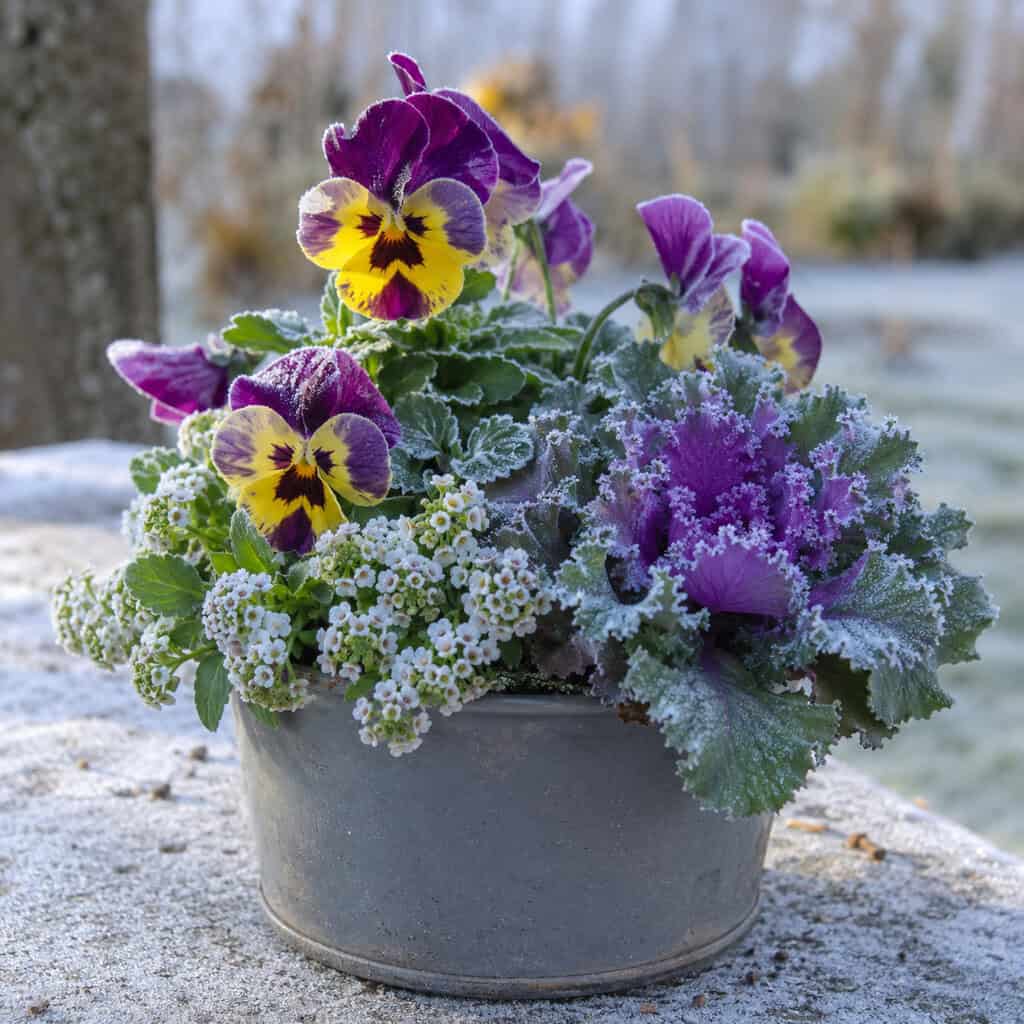
A compact bowl or low urn is all this small-scale planting needs. Violas provide bright faces, sweet alyssum creates a soft cloud around the rim, and ornamental kale gives the arrangement a structured center.
Key Details
- Suitable for early spring or mild autumn weather
- Especially effective in a shallow, wide container
Pro Tip: Deadhead the violas regularly and trim alyssum lightly if it becomes leggy.
4. Soft Shade Glow: White Caladium, Rose Begonia, and Diamond Frost
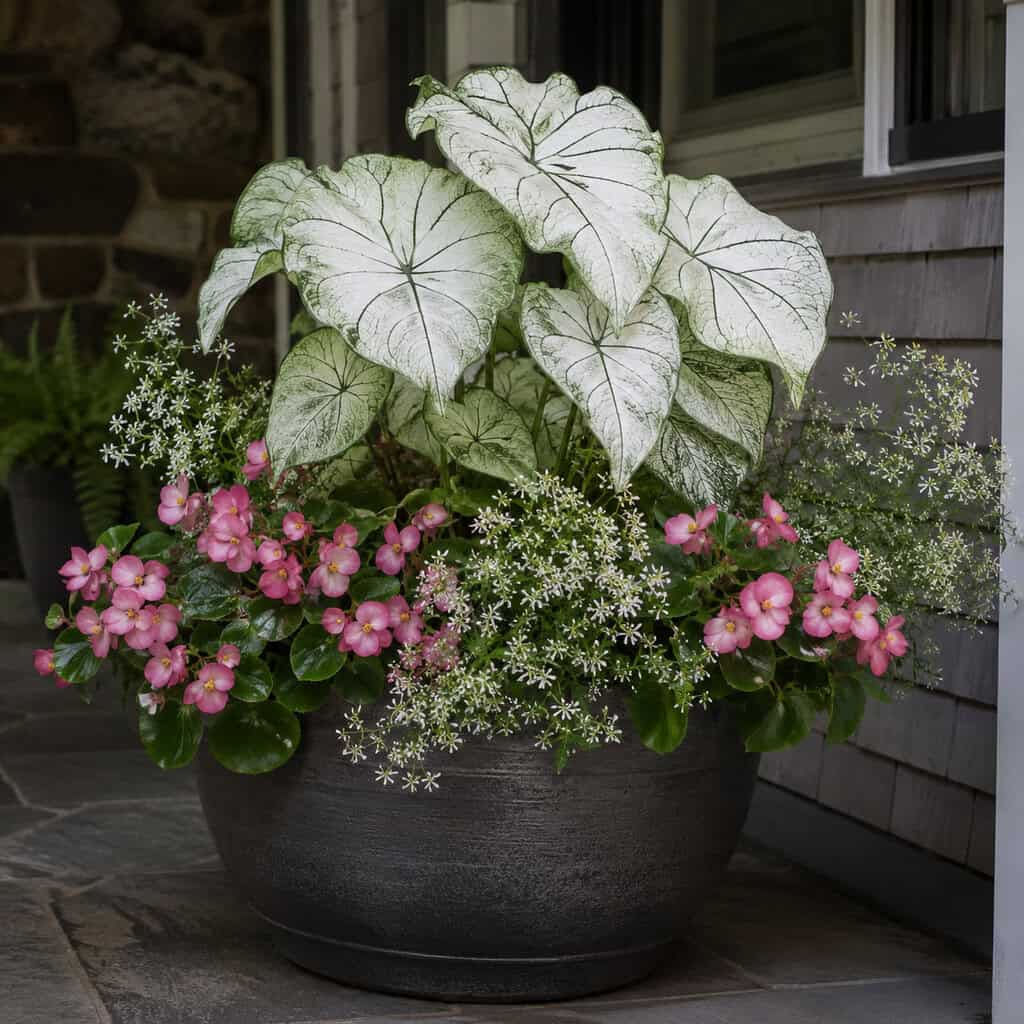
A covered porch does not have to feel dark. White-leaved caladium catches available light, rose begonia adds rounded color, and airy euphorbia gives the arrangement a delicate finish; a silvery petunia can trail from the edge where light permits.
Key Details
- Designed for bright shade or filtered morning light
- Use a pale or charcoal planter to emphasize the foliage
Pro Tip: Let the top inch of potting mix dry slightly between waterings, then water deeply rather than giving frequent small splashes.
5. Deep-Shade Texture with Caladium, Torenia, and Creeping Jenny
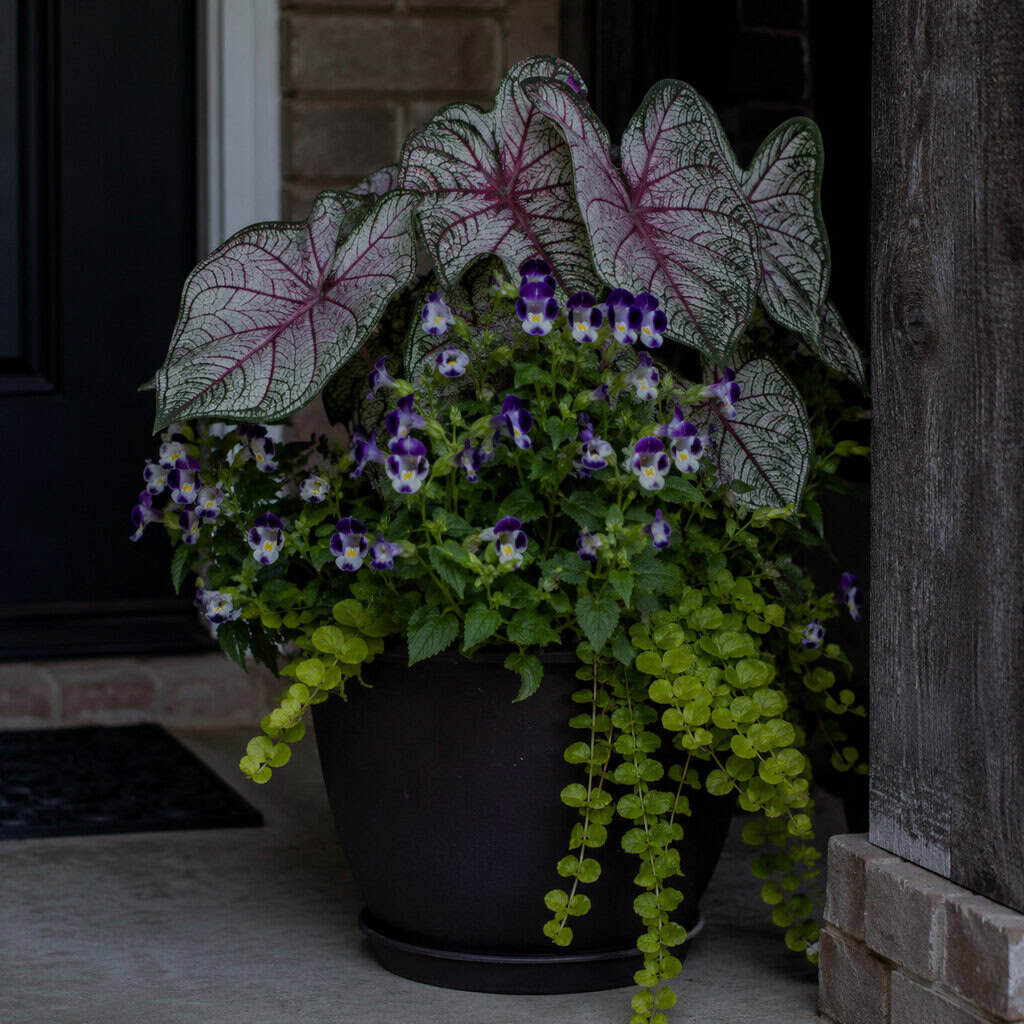
For an entry that receives little direct sun, this planting relies on foliage and flowers that stay visible in lower light. Caladium gives the design broad leaves, torenia brings small two-toned blooms, and creeping Jenny brightens the lip of the pot.
Key Details
- Ideal for a sheltered north- or east-facing porch
- Choose a caladium leaf color that contrasts with the container
Pro Tip: Keep the soil evenly moist in hot spells, because caladium foliage can lose its crisp appearance when a container dries too far.
6. Reliable Shade Color: Coleus, Impatiens, and Creeping Jenny
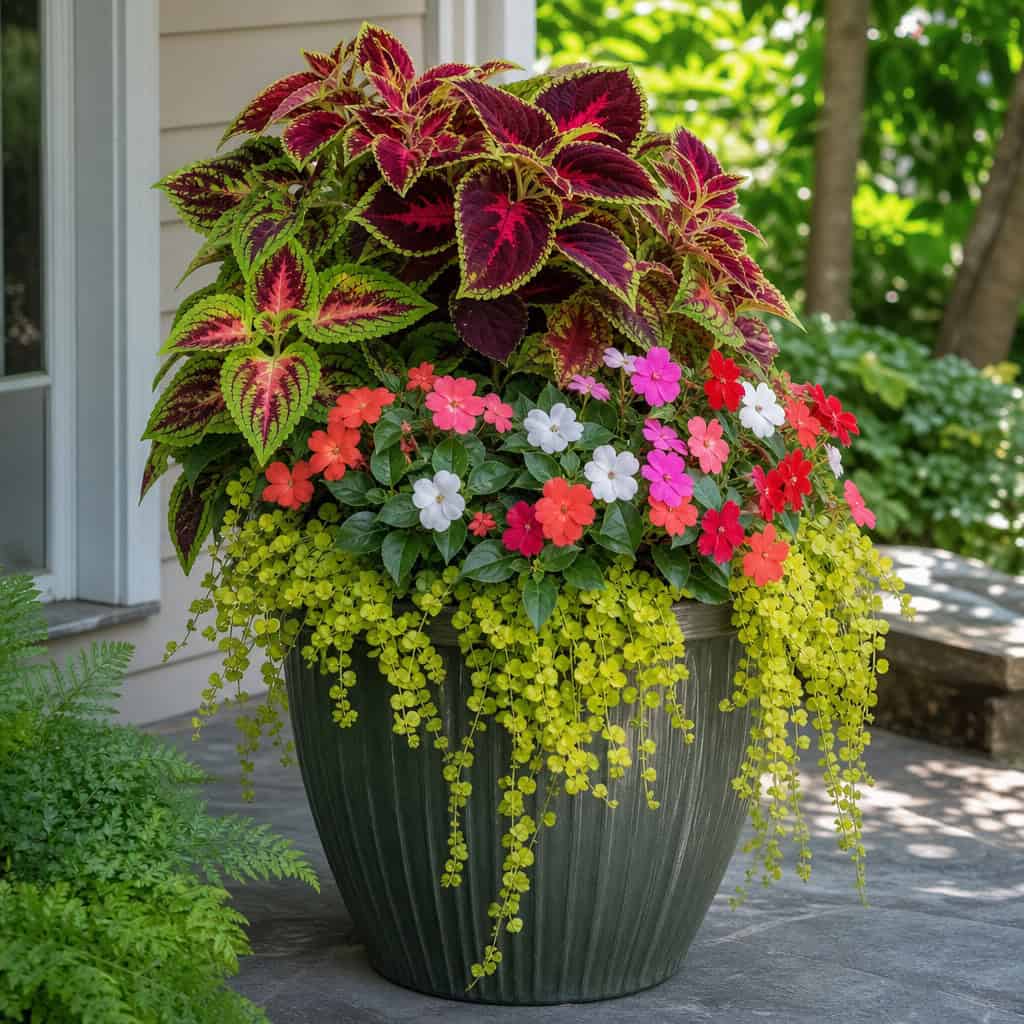
A simple three-plant formula makes this a useful first container for beginners. Coleus supplies patterned leaves and height, impatiens fill the middle with flowers, and creeping Jenny creates a bright waterfall down the side.
Key Details
- Easy to customize by changing the coleus leaf color
- Works in classic urns, glazed pots, or window boxes
Pro Tip: Pinch the growing tips of coleus once or twice early in the season for a bushier, more compact plant.
7. Polished Porch Shade: Kimberly Queen Fern, Begonia, and Silver Falls
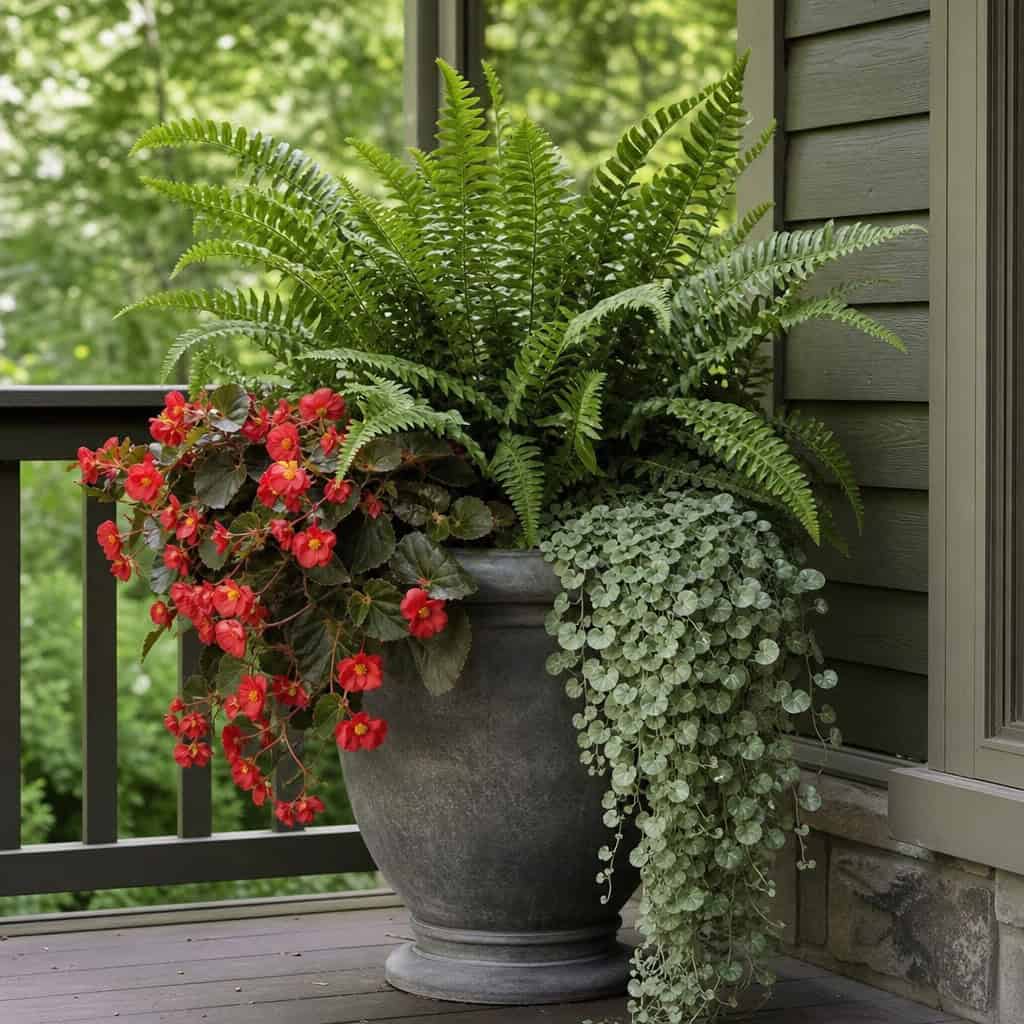
This combination looks tailored because every plant contributes a different leaf shape. The fern stands upright, Dragon Wing begonia fills out the planting with arching foliage and blooms, and silver dichondra creates a cool-toned cascade.
Key Details
- A sophisticated choice for a brick, stone, or painted-wood entry
- Use a generously sized planter so the fern has room at the center
Pro Tip: Rotate the container every week or two if one side receives noticeably more light than the other.
8. Cottage-Style Fuchsia, Impatiens, and English Ivy
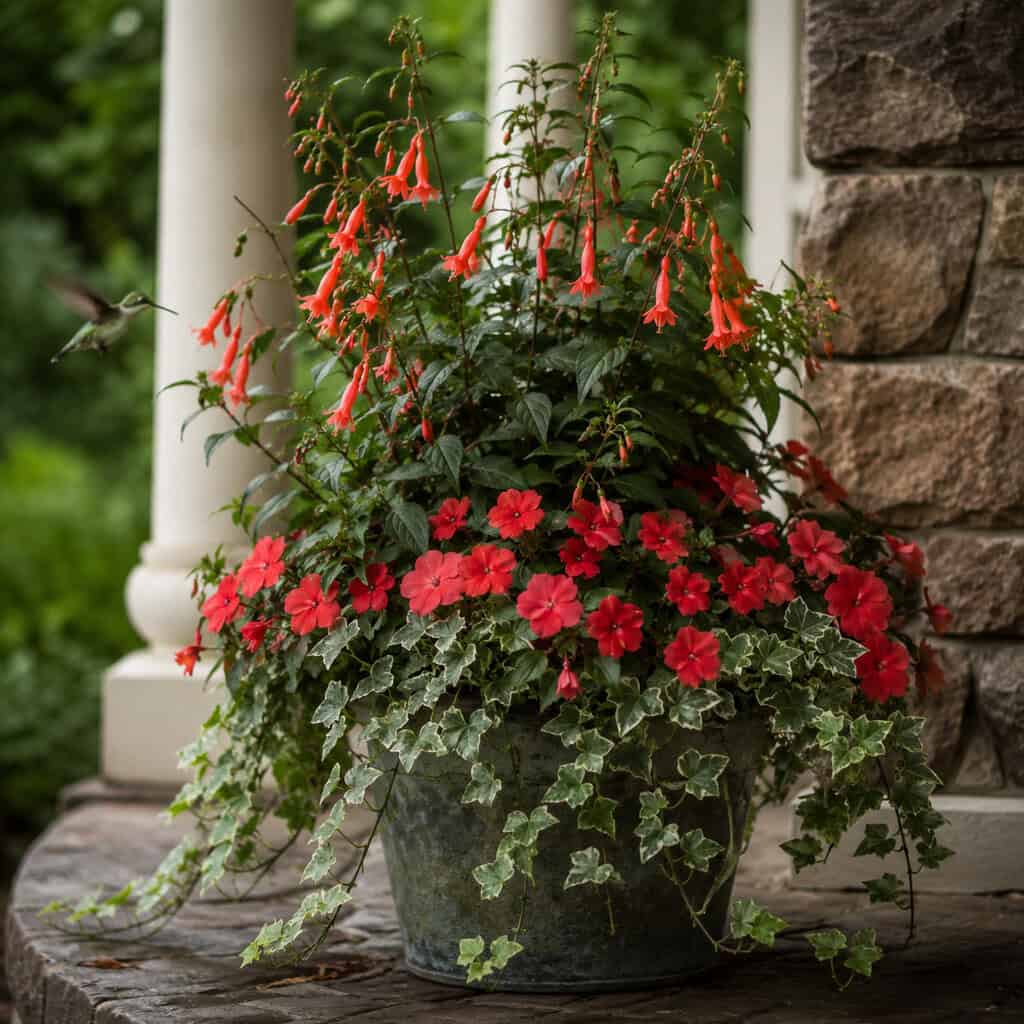
An upright fuchsia gives this shaded container a graceful focal point, while impatiens make a dense flowering base and English ivy adds the traditional trailing line. The result is especially at home beside a painted door or on a covered porch.
Key Details
- Use in cool shade and protect from harsh afternoon exposure
- A blue, green, or aged terracotta pot suits the cottage feel
Pro Tip: Remove spent fuchsia flowers and seed pods to keep the plant directing energy toward new blooms.
🛒 Container Picks for a Finished Porch
Large Outdoor Planters with Drainage (4-Pack)
A set of 13-inch pots with drainage holes and matching trays for creating coordinated porch groupings.
Amazon Basics Fluted Ceramic Planter Pot
A smaller drainage-hole planter for adding a polished accent pot beside a larger container.
As an Amazon Associate I earn from qualifying purchases.
9. A Tonal Shade Planter with Polka Dot Plant, Begonia, and Fern
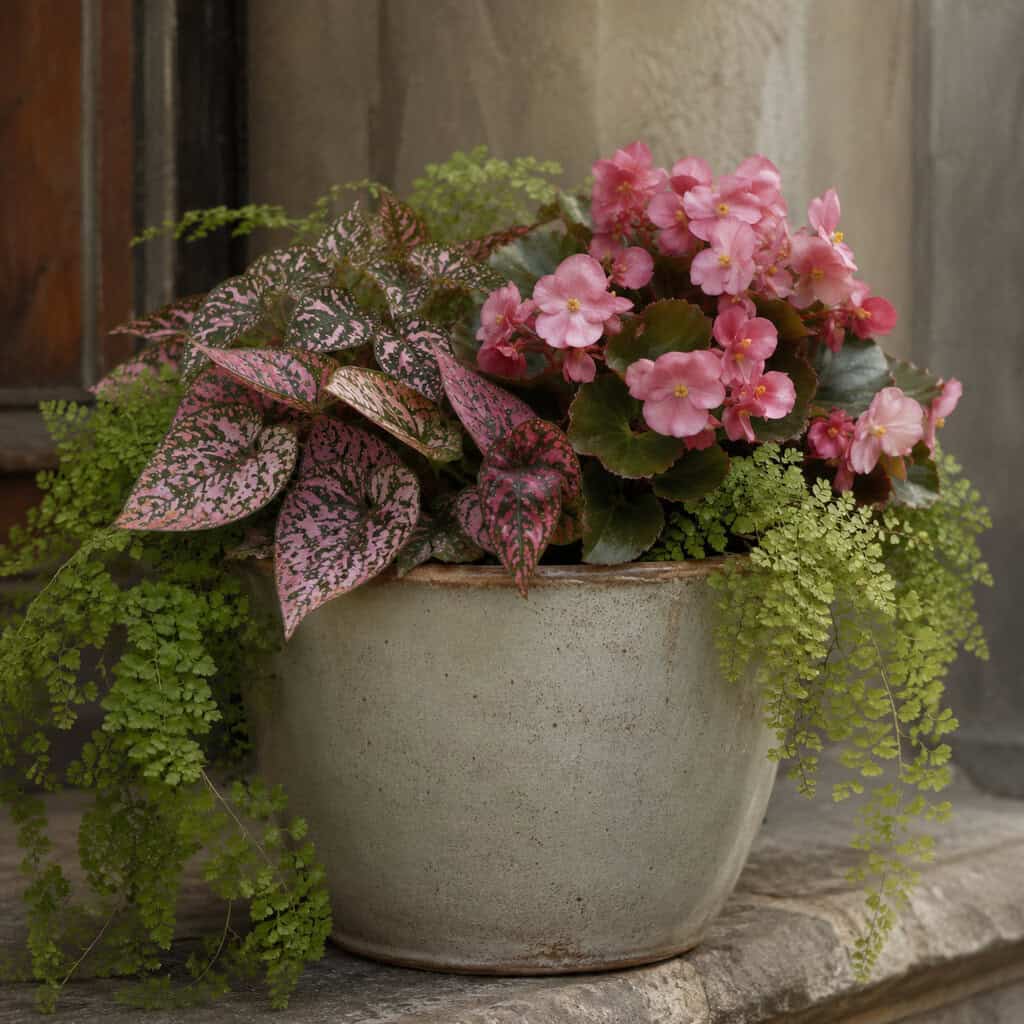
Rather than mixing many unrelated colors, this design repeats the speckles of hypoestes through a coordinating tuberous begonia. Maidenhair fern provides a soft finishing texture that makes the planter feel layered rather than busy.
Key Details
- Best for a protected porch without drying wind
- Match begonia flowers to a color found in the polka dot foliage
Pro Tip: Maidenhair fern prefers steady moisture, so use a moisture-retentive potting mix and check it often in warm weather.
10. Dramatic Foliage: Persian Shield, Snake Plant, and White Caladium
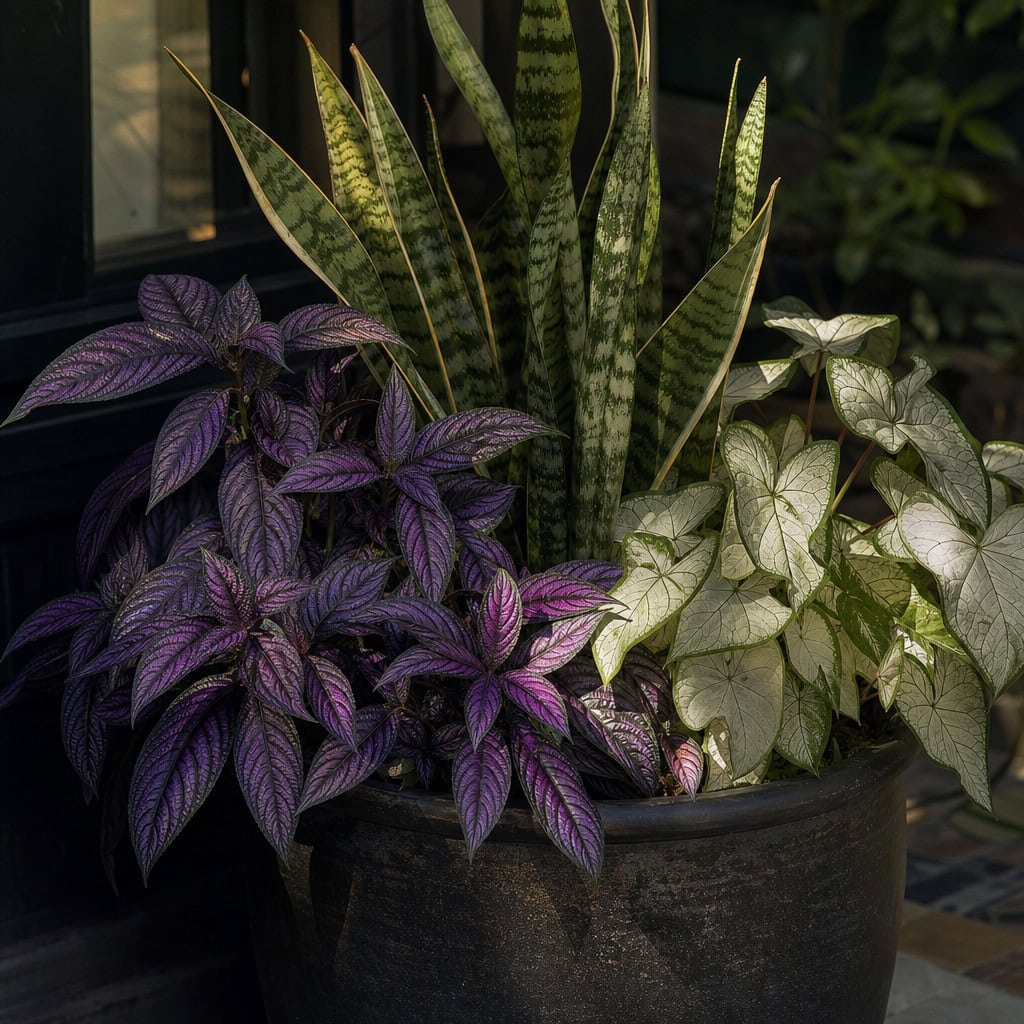
For an entry that needs a darker, more contemporary palette, combine the metallic-purple leaves of Persian shield with the architectural form of snake plant and a white caladium for contrast. It is a foliage-first arrangement with plenty of visual depth.
Key Details
- Works in bright indirect light or gentle morning sun
- Strong against black, deep green, or weathered concrete containers
Pro Tip: Before cold weather, move tender plants indoors or save caladium tubers according to local growing conditions.
11. Tropical Statement Pot with Elephant Ear, Caladium, and Coleus
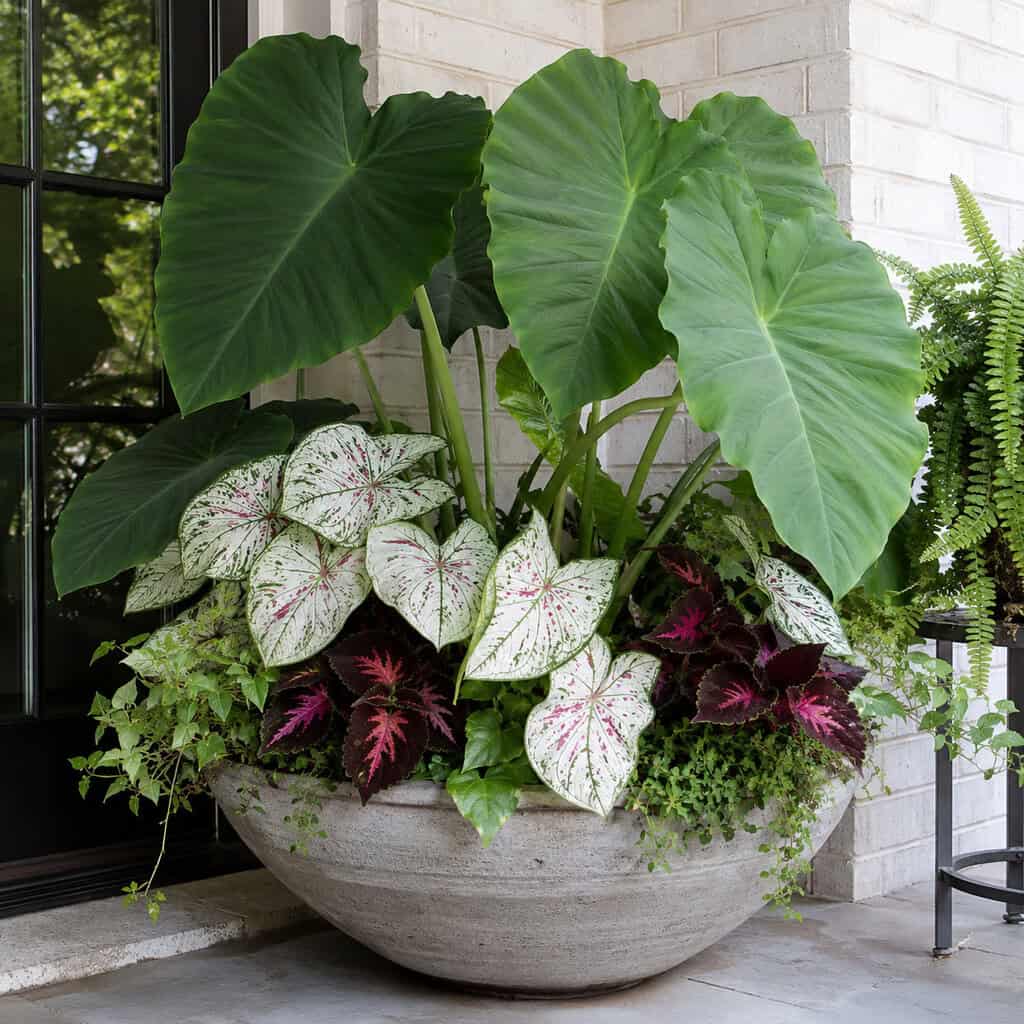
A broad-leaved elephant ear turns a roomy planter into a true porch feature. Snowy caladium lights the middle layer, while burgundy coleus anchors the base with a darker band of foliage.
Key Details
- Reserve this combination for a large, sturdy container
- Place it where broad leaves will not block a walkway
Pro Tip: Feed regularly during active summer growth and keep the soil consistently moist, especially in a breezy location.
12. Low-Water Bowl of Moss Rose and Lemon Coral Sedum
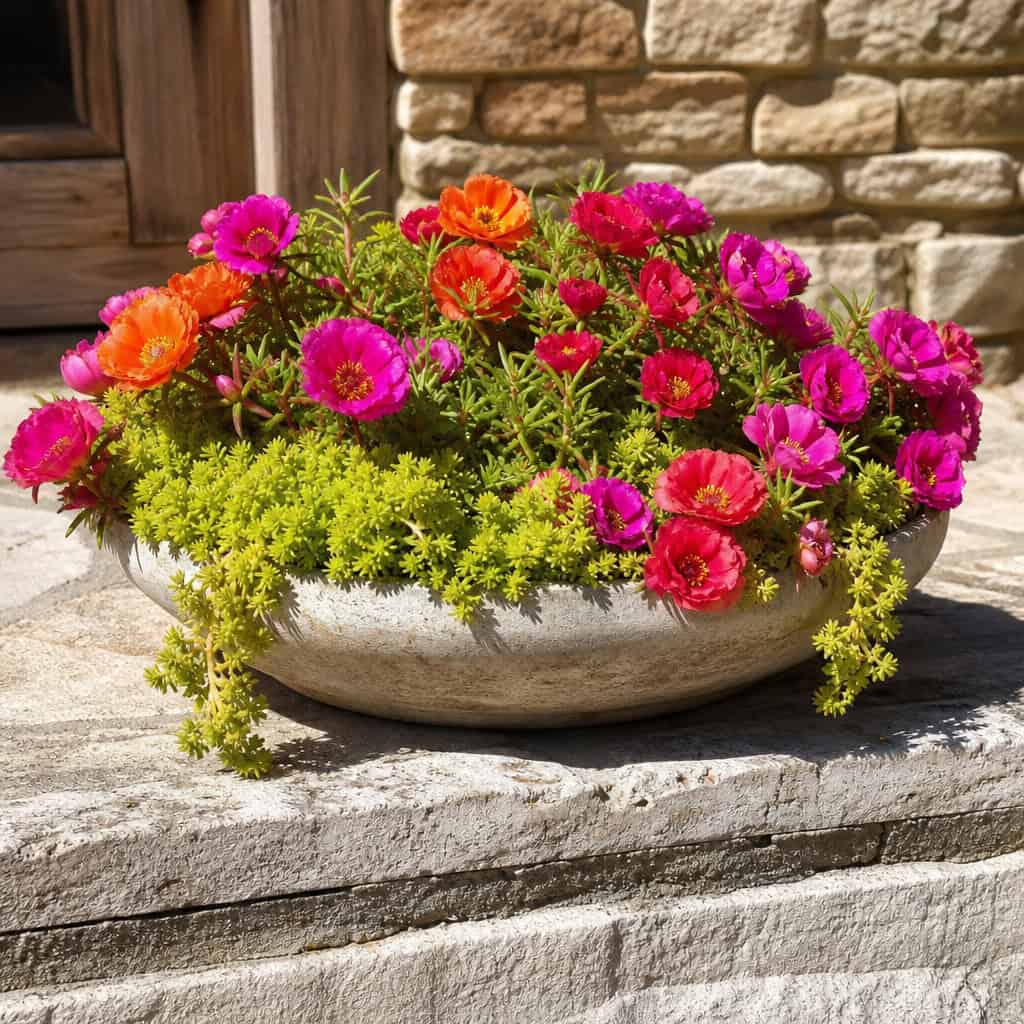
A shallow bowl becomes a bright, low-maintenance feature when planted with moss rose and chartreuse sedum. Their fleshy leaves and sun-loving habit make this a sensible design for a hot, exposed step.
Key Details
- Requires direct sun and very good drainage
- Use cactus or succulent potting mix for the strongest performance
Pro Tip: Avoid a saucer that holds standing water; these plants are more likely to struggle from excess moisture than a missed watering.
13. Heat-Loving Lantana and Fuchsia Supertunia
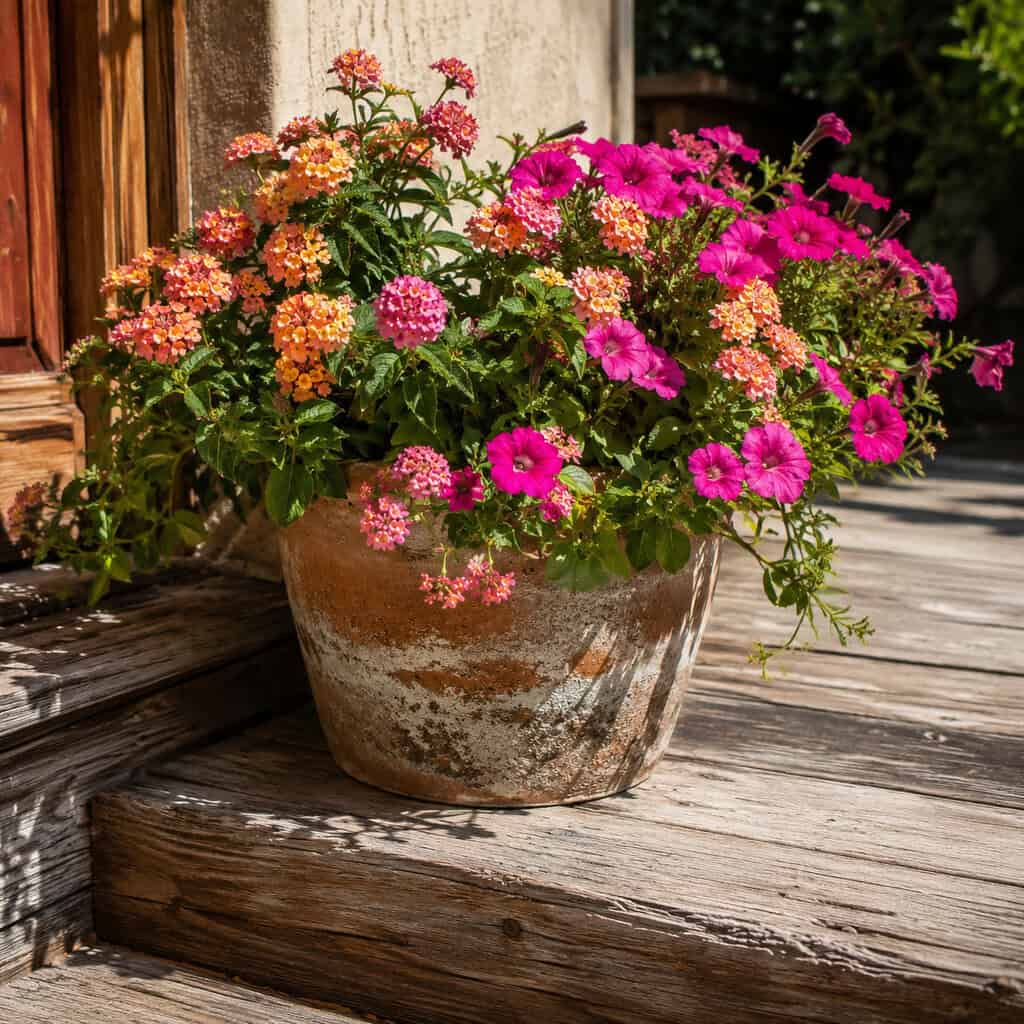
A fiery west-facing porch calls for plants that do not fade at the first hot afternoon. Lantana forms a colorful mound, while a vigorous fuchsia Supertunia pours over the edge in a high-energy pairing.
Key Details
- Made for long, sunny afternoons
- Choose a large pot to reduce how quickly the soil dries
Pro Tip: Water at the soil line in the morning, then allow the surface to dry slightly before the next irrigation.
14. Architectural Kangaroo Paw with Yellow Lantana
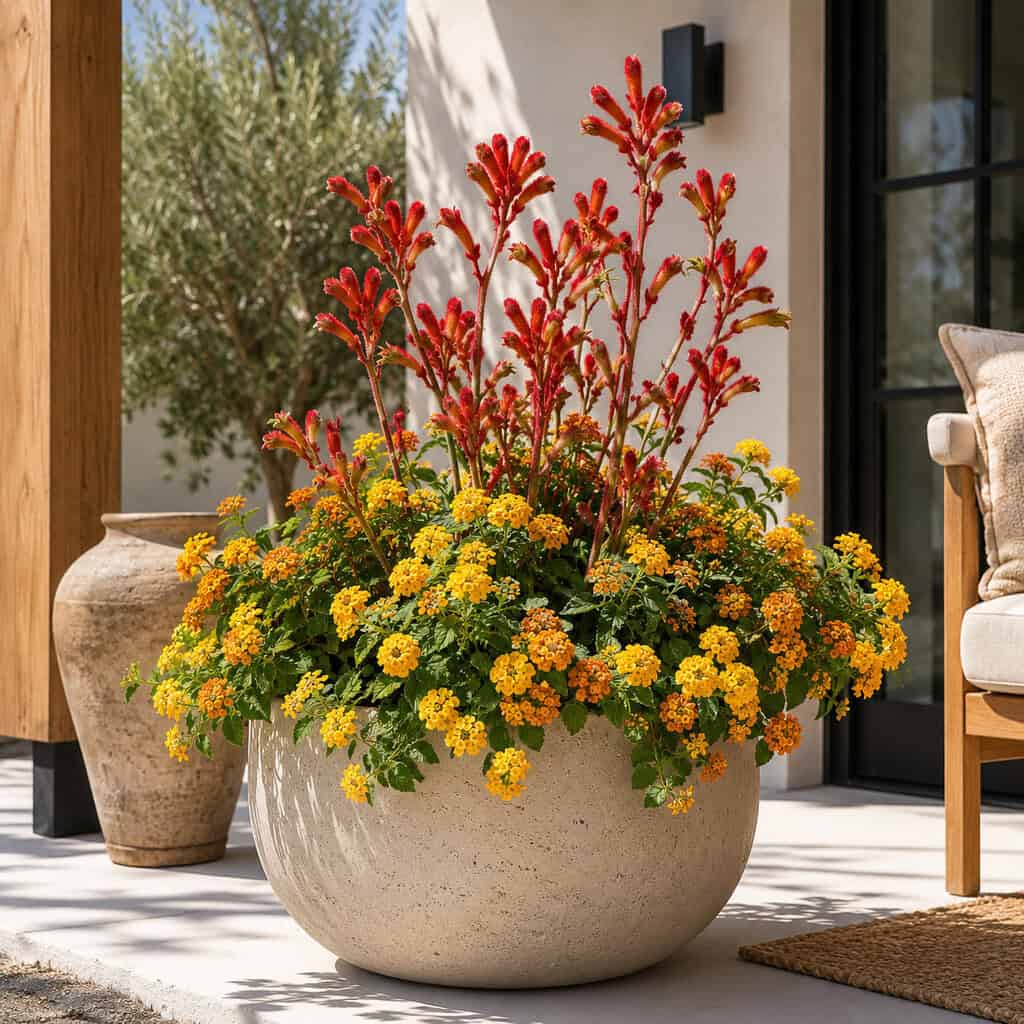
Kangaroo paw brings an unusual upright form that instantly makes a container look collected rather than ordinary. A sunny mound of yellow lantana softens its strong lines and keeps color close to the rim.
Key Details
- A distinctive choice for dry, sunny conditions
- Use a simple planter so the unusual flower form stays the focus
Pro Tip: Provide drainage and avoid overwatering; kangaroo paw generally performs best when roots are not kept constantly wet.
15. Hummingbird-Friendly Grass, Salvia, and Calibrachoa
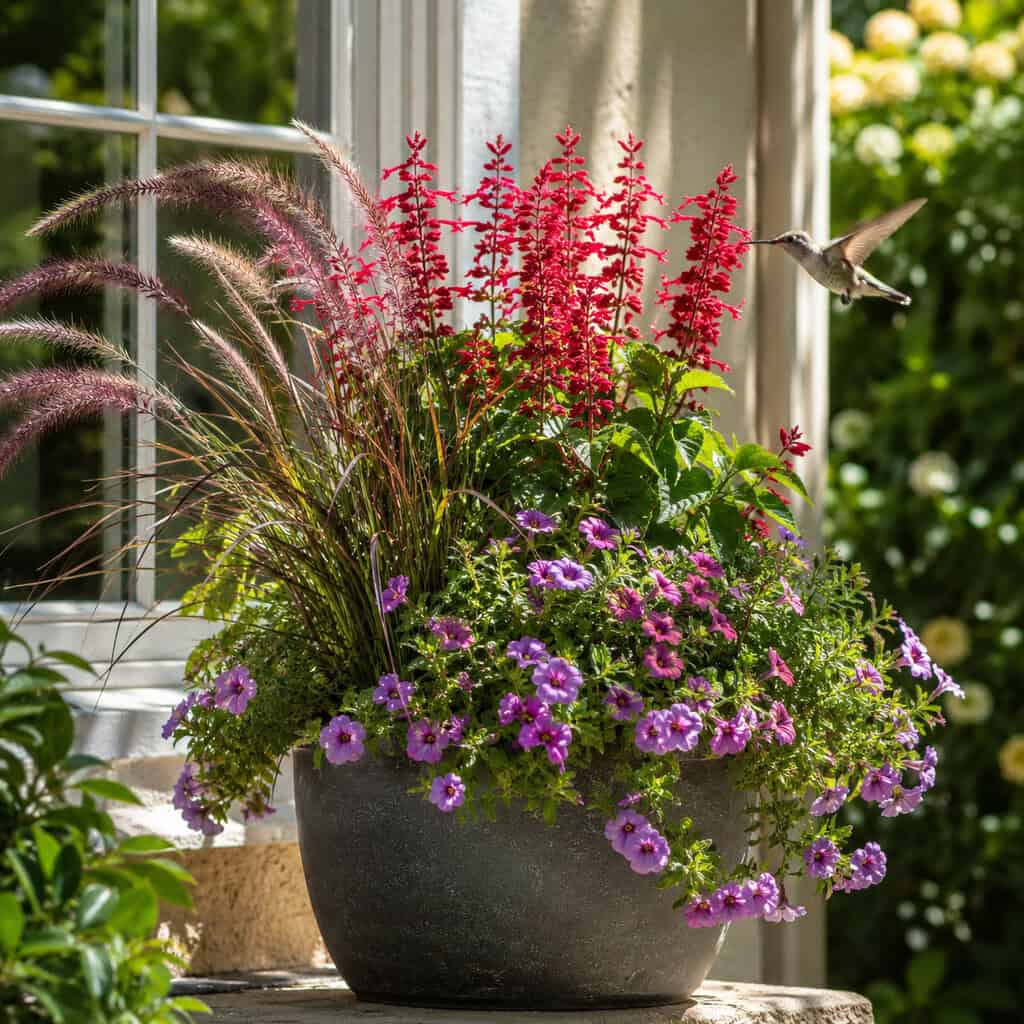
Purple fountain grass gives this planter its movement and height, red salvia provides flower spikes, and calibrachoa softens every edge with small petunia-like flowers. The deep foliage helps the warm blooms read clearly from the sidewalk.
Key Details
- A good placement is near a window or seating area
- Thrives in full sun with routine watering
Pro Tip: Trim calibrachoa lightly in midsummer if it stretches, then water and feed to encourage a fresh flush of growth.
🛒 Potting Mix for Container Plantings
Miracle-Gro Potting Mix, 16 qt. (2-Pack)
A general-purpose mix sized for outdoor flowers, herbs, vegetables, and ornamental container plants.
Miracle-Gro Moisture Control Potting Mix, 8 qt. (2-Pack)
A moisture-managing alternative for porch pots that need more forgiving soil between waterings.
As an Amazon Associate I earn from qualifying purchases.
16. High-Contrast SunPatiens, Verbena, and Yellow Calibrachoa
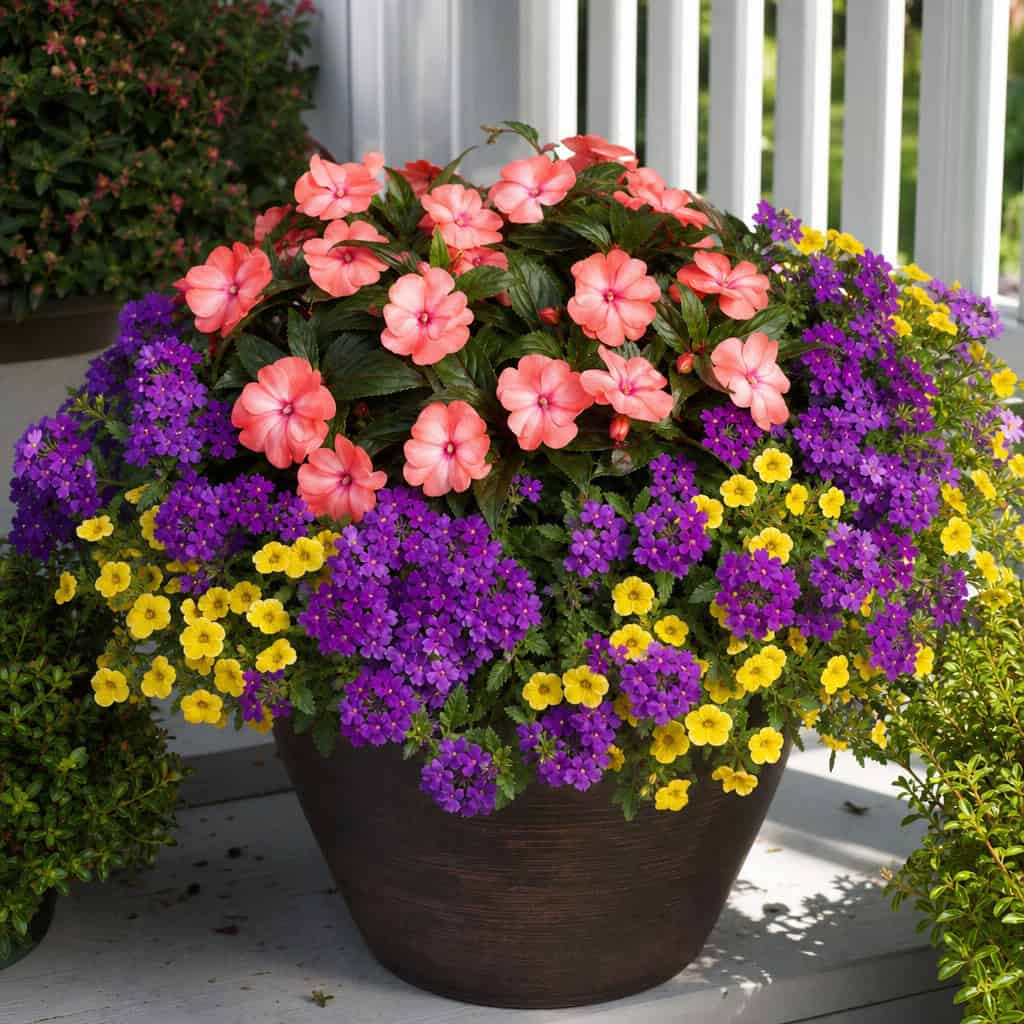
This bright arrangement leans into the energy of complementary color. SunPatiens make a broad central mound, purple verbena adds a cooler layer, and yellow calibrachoa brings the whole composition forward over the pot’s rim.
Key Details
- Suitable for sunny sites with regular irrigation
- Effective beside white trim, dark siding, or a vivid front door
Pro Tip: Make sure the planter is large enough for the SunPatiens to develop without crowding the trailing plants.
17. Summer Spires and Cascades: Angelonia, Supertunia, and Verbena
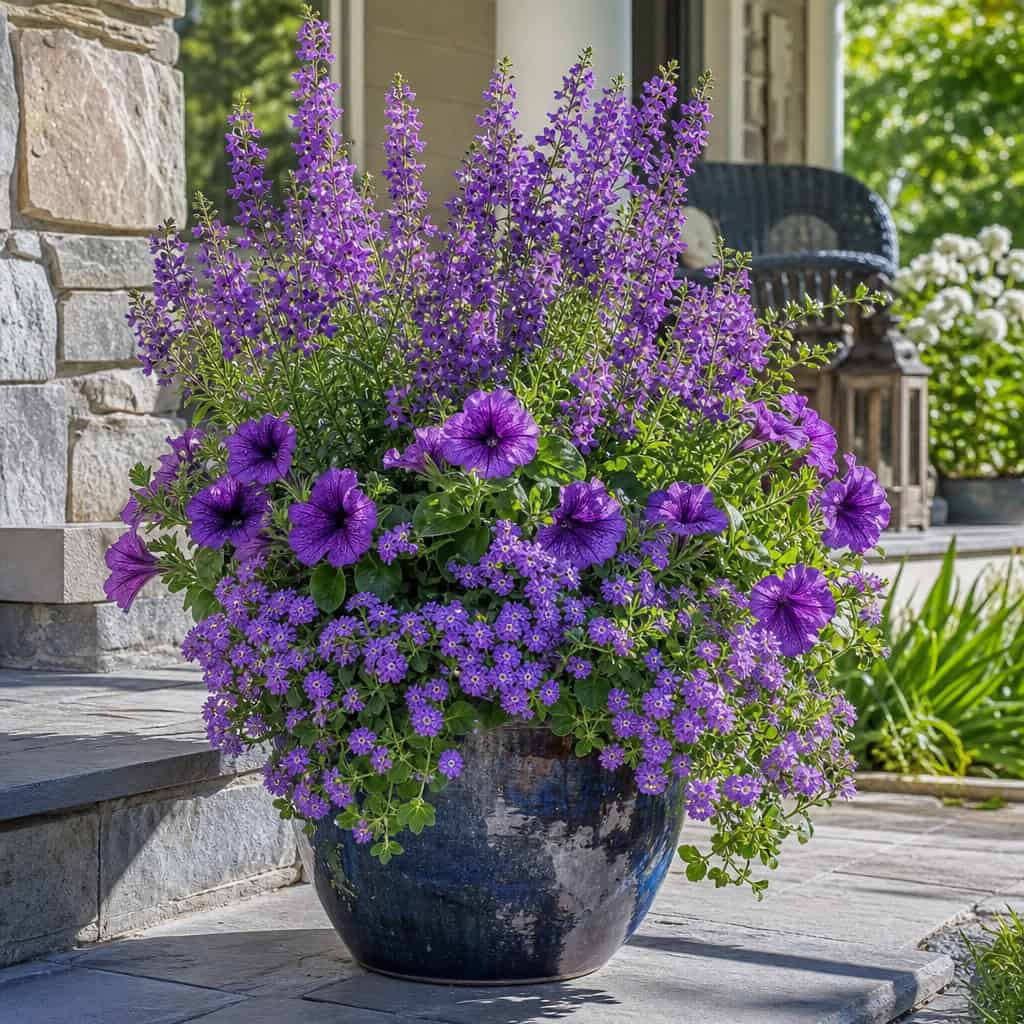
A mix of vertical flower spikes, rounded blooms, and a trailing habit gives this planter classic balance. Angelonia provides the height, Supertunia fills the main body, and Superbena adds a softer spill at the perimeter.
Key Details
- A flexible full-sun combination for modern or traditional homes
- Choose related pink, purple, or white flower tones for a cohesive result
Pro Tip: Apply a diluted container fertilizer on schedule to keep repeat-blooming annuals productive through the season.
18. Classic Red Geranium, Dracaena Spike, and Vinca Vine
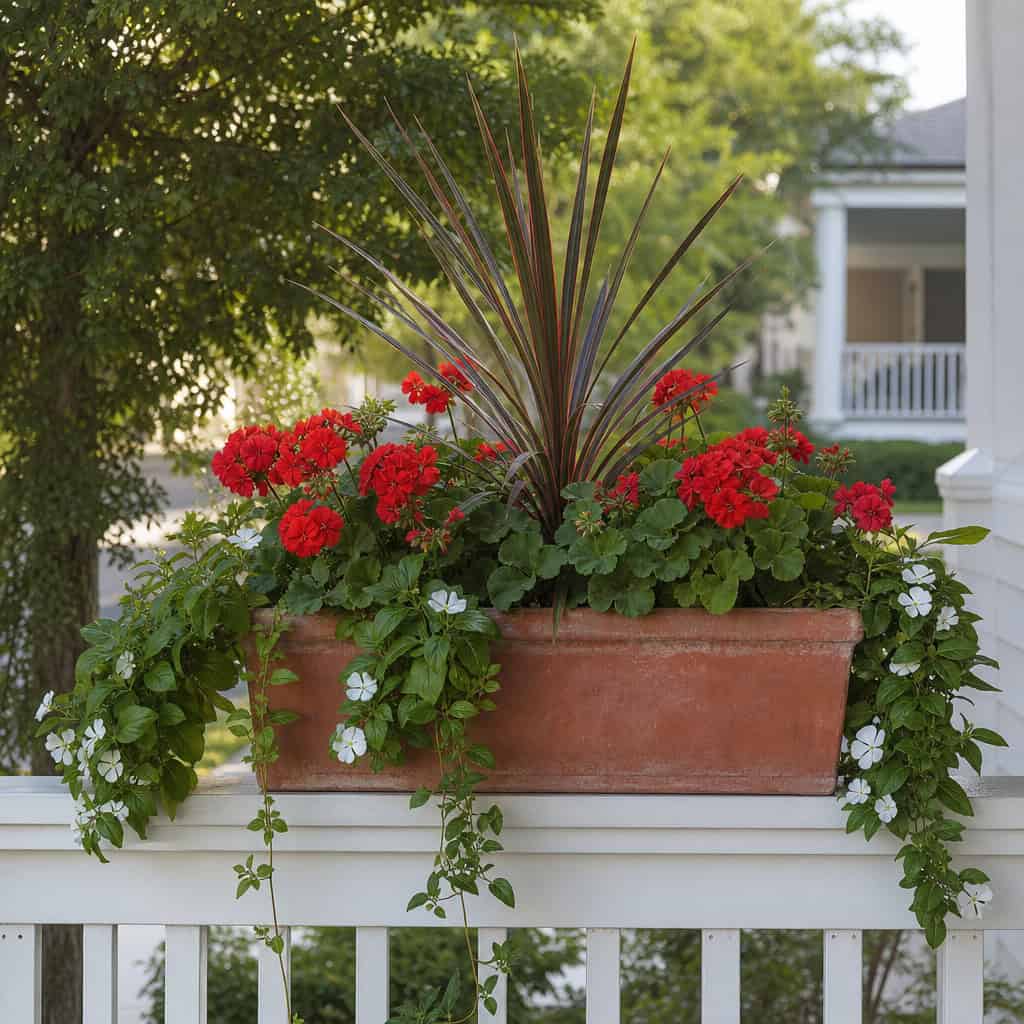
This familiar formula remains popular because it is clean, graphic, and simple to assemble. Dracaena spike supplies the vertical center, red geraniums bring bold rounded color, and glossy vinca vine finishes the outer edge.
Key Details
- A dependable option for a traditional entry
- Pairs naturally with brick, black planters, and red accents
Pro Tip: Remove faded geranium flower clusters promptly to encourage a tidier, more continuous display.
19. Burgundy Grass, Red Geraniums, and Sweet Potato Vine
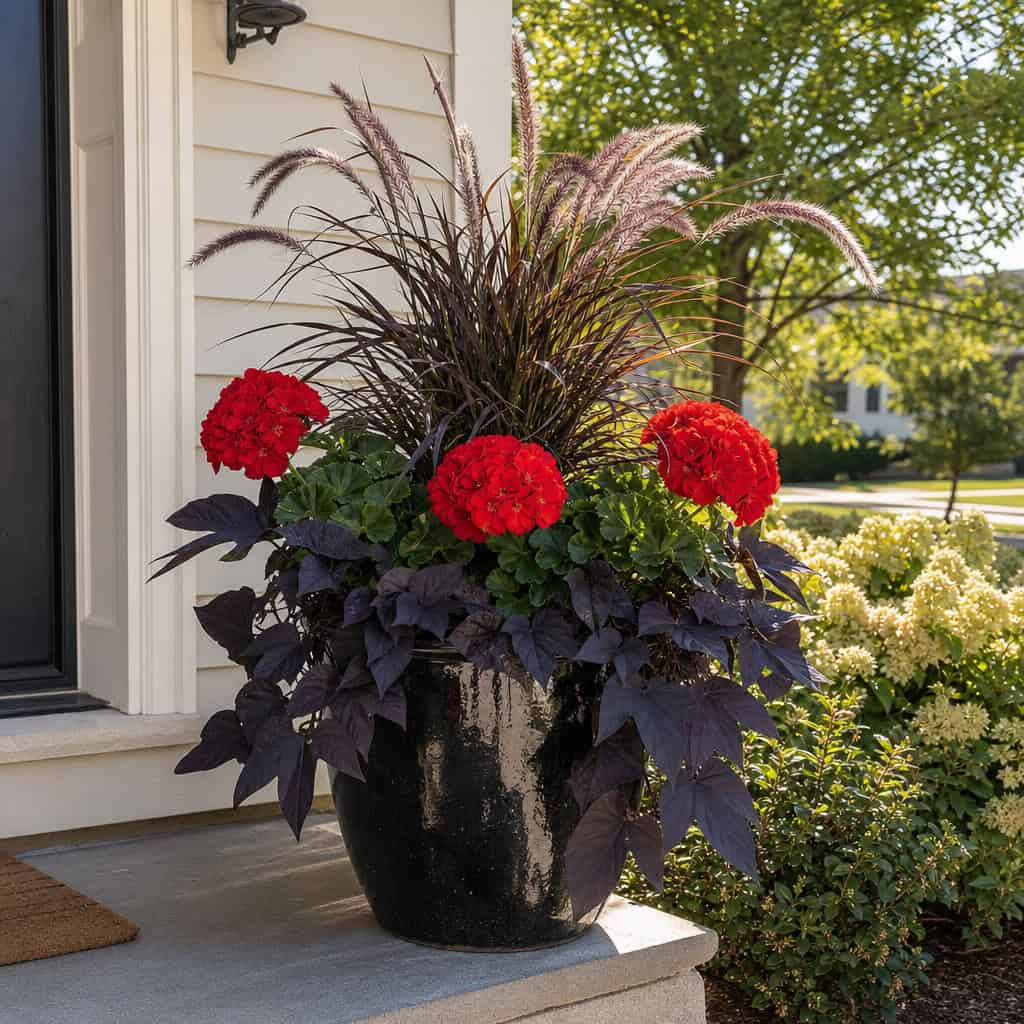
Use burgundy foliage as the thread that holds a bold front-door planter together. Purple fountain grass supplies a fountain-shaped center, red geraniums create a dense ring of flowers, and purple sweet potato vine falls over the rim in the same dark family.
Key Details
- A full-sun composition with strong curb appeal
- Especially striking in a black, charcoal, or deep red pot
Pro Tip: Give sweet potato vine room to trail and trim it back if it begins to hide the flowers.
20. Resort Porch Planter: Majesty Palm, Trailing Snapdragon, and Sweet Potato Vine
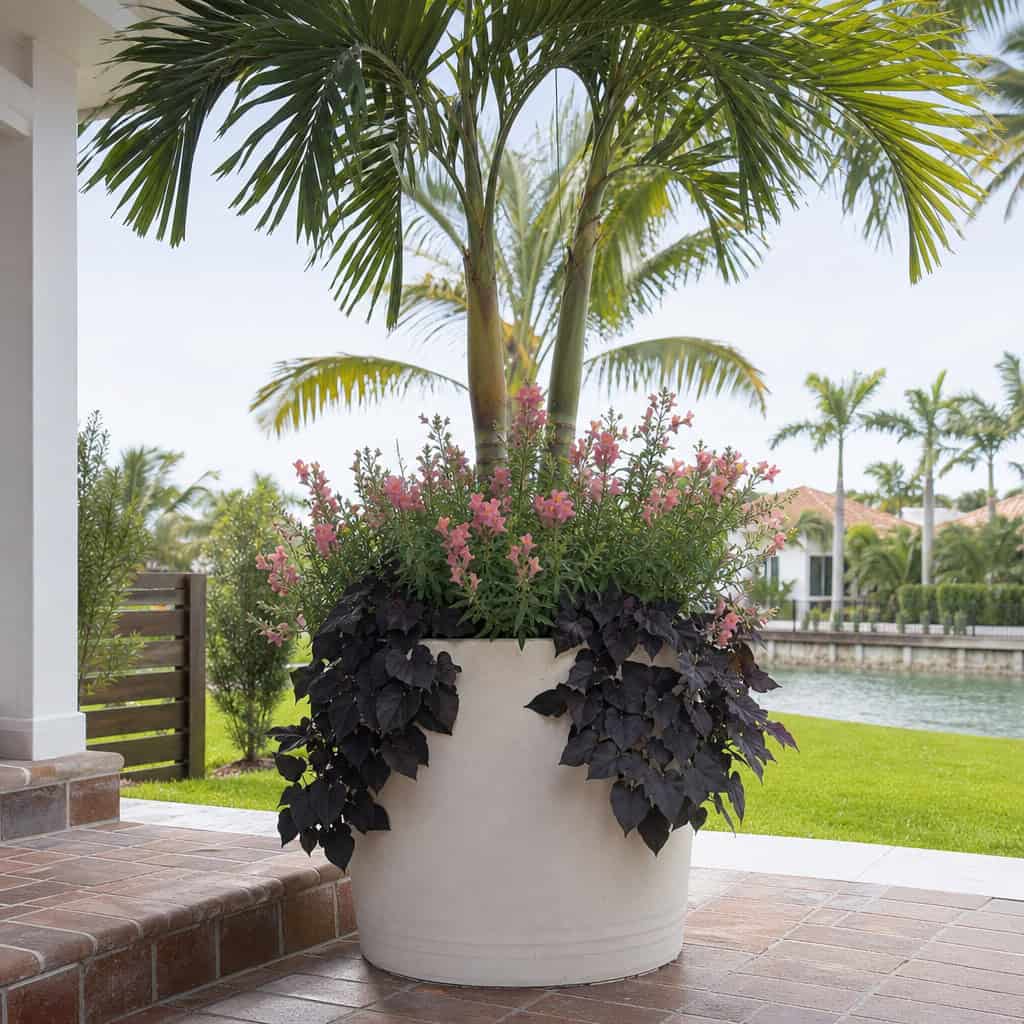
A majesty palm changes the scale of a porch container, lending a vacation-like outline that annuals alone cannot create. Pink trailing snapdragon fills around the trunk, while dark sweet potato vine adds a sweeping line over the pot.
Key Details
- Best in bright light with protection from strong wind
- Use a substantial container with a broad base
Pro Tip: Bring the palm inside well before cold weather in climates where temperatures fall below its comfort range.
21. The Autumn Essential: Fountain Grass, Mum, and Ornamental Kale
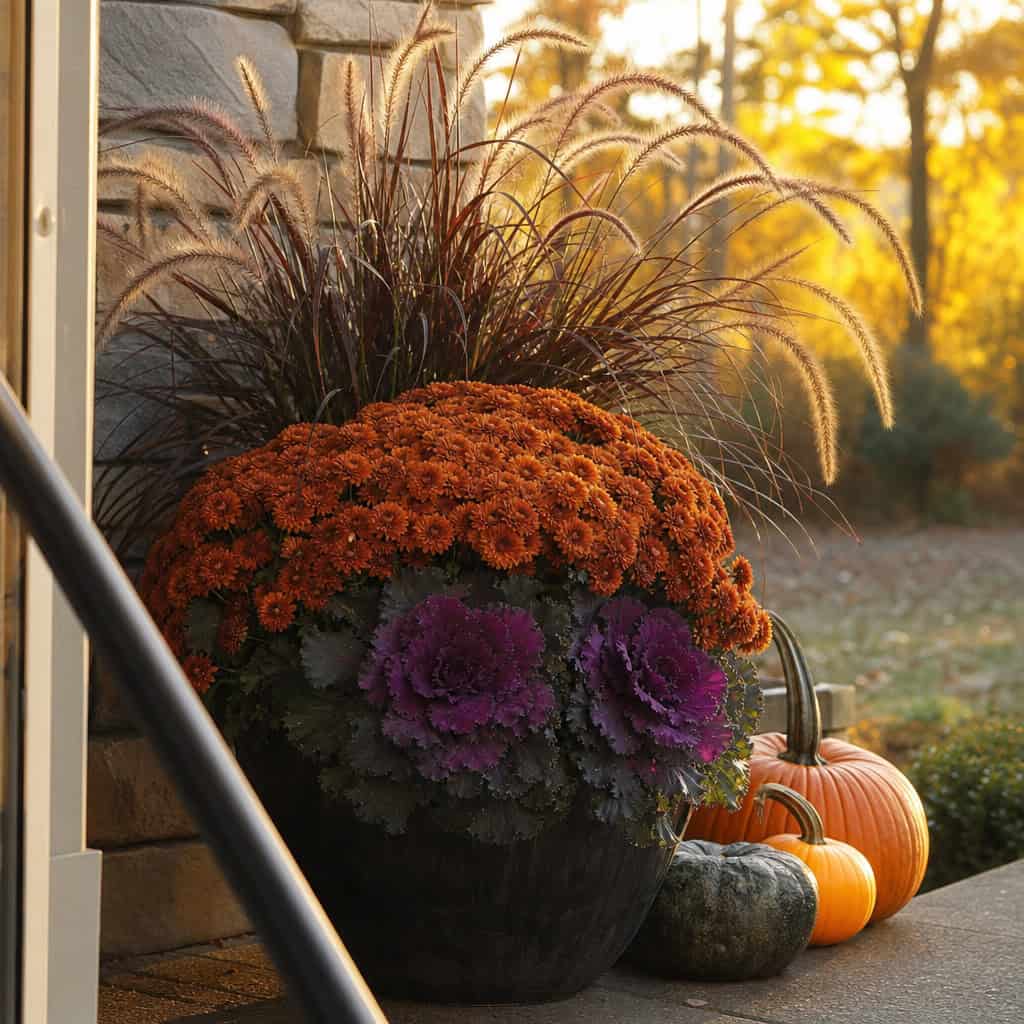
A fall planter becomes more interesting when it combines airy grass, abundant flowers, and a cold-tolerant rosette. Fountain grass provides height, a large chrysanthemum makes the central color statement, and ornamental kale holds the base together as evenings cool.
Key Details
- A natural fit for September through late autumn
- Choose mum and kale colors that repeat tones in the grass plumes
Pro Tip: Remove worn mum flowers as they pass, but leave the kale in place for structure after the blooms fade.
22. Five-Plant Fall Layering with Switchgrass, Mum, Euphorbia, Kale, and Liriope
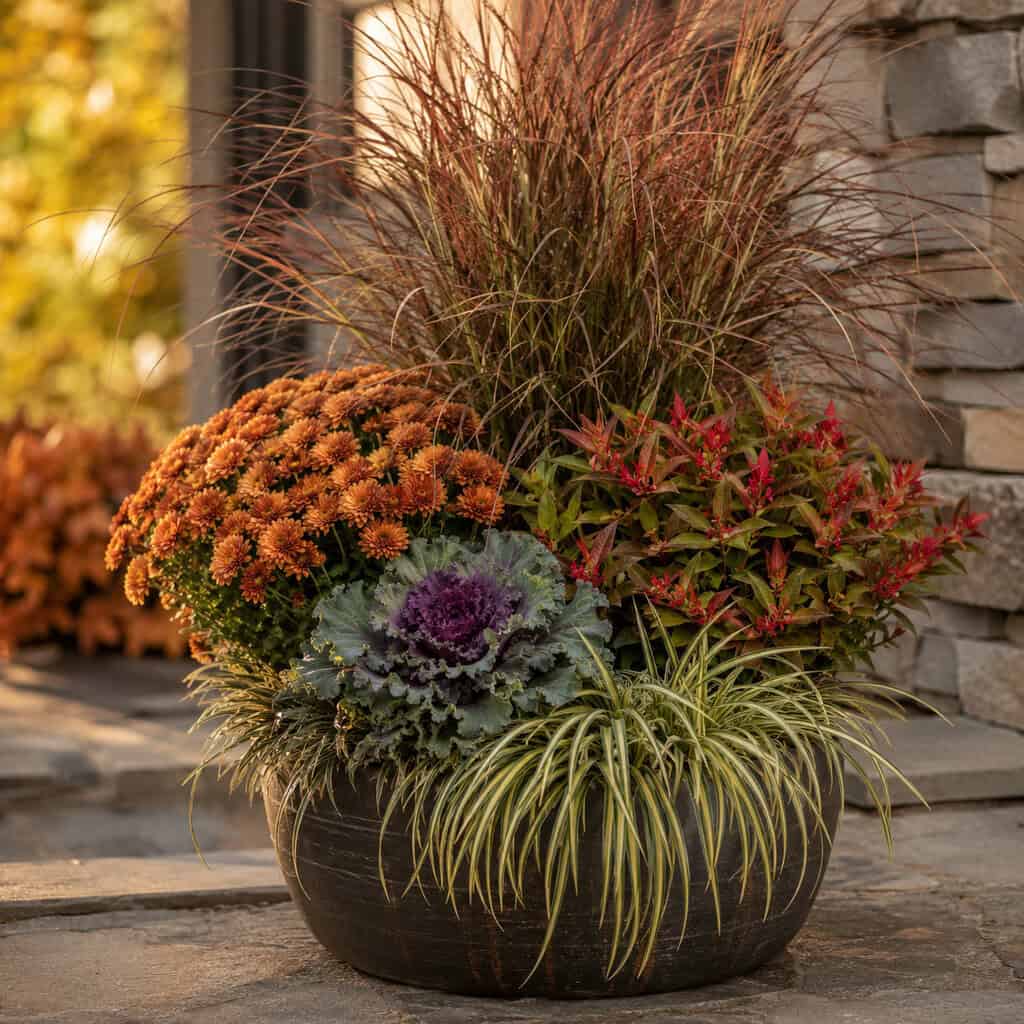
A more elaborate autumn design can still look unified when foliage colors recur throughout the pot. Upright switchgrass frames the back, chrysanthemum provides the main bloom, euphorbia adds fine texture, and kale plus liriope create a finished lower layer.
Key Details
- Best in a deep, wide container
- Repeat bronze, red, cream, or purple tones across the planting
Pro Tip: Set the tallest grasses slightly toward the back of the pot if the arrangement will be viewed mostly from one direction.
🛒 Watering Tools for Porch Pots
Qilebi 2-Gallon Garden Watering Can
A large-capacity watering can with a removable long spout and shower head for patio containers.
Chapin 2-Gallon Watering Can
A durable, drip-free watering can for regular care of grouped front-door planters.
As an Amazon Associate I earn from qualifying purchases.
23. A Nontraditional Fall Pot with Ornamental Millet, Celosia, and Sweet Potato Vine
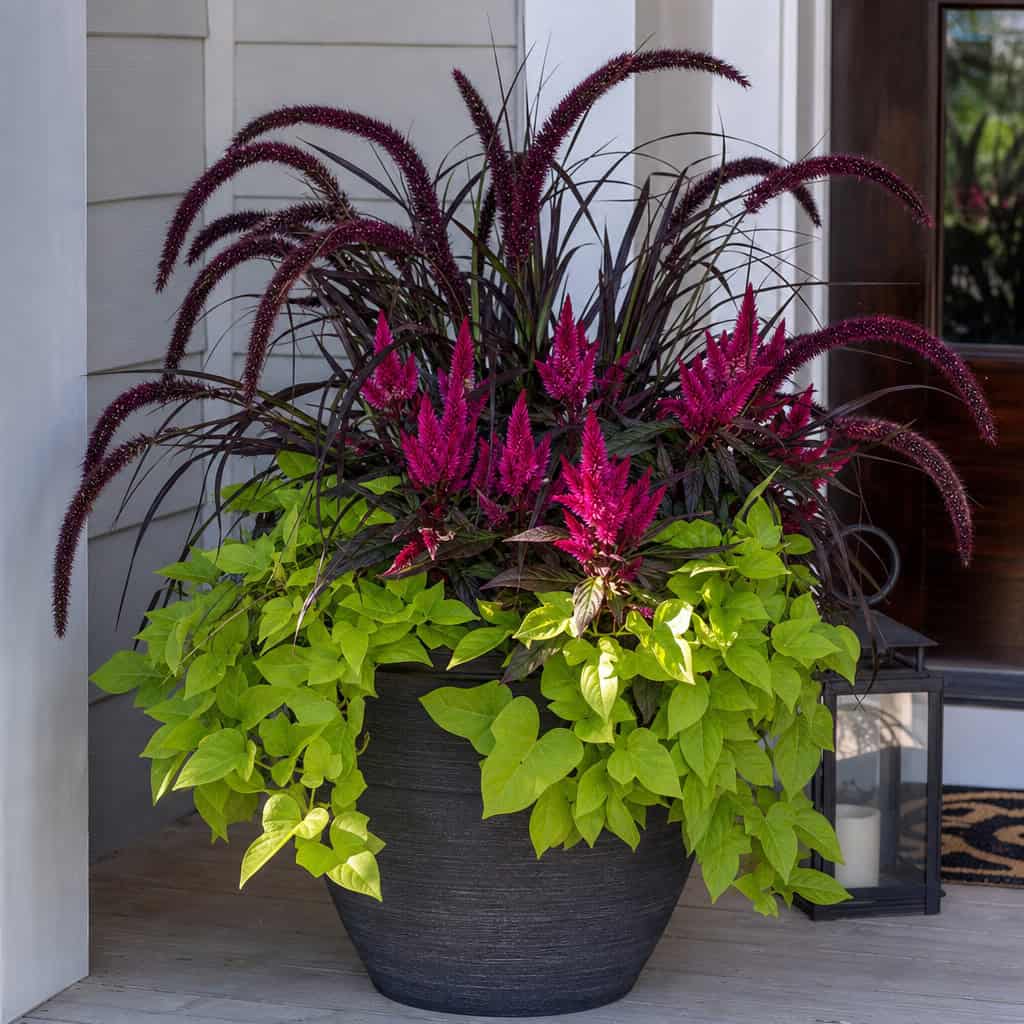
Move beyond the usual autumn color palette with dramatic millet seed heads, jewel-toned celosia, and a flowing sweet potato vine. The result feels contemporary while still carrying the warmth expected at the front door in fall.
Key Details
- A lively alternative to orange-and-gold seasonal displays
- Use a dark container to emphasize purple or magenta foliage
Pro Tip: Keep the planter in strong light and remove any damaged foliage to preserve the crisp contrast among plants.
24. Moody Cordyline, Burgundy Petunia, and White Euphorbia
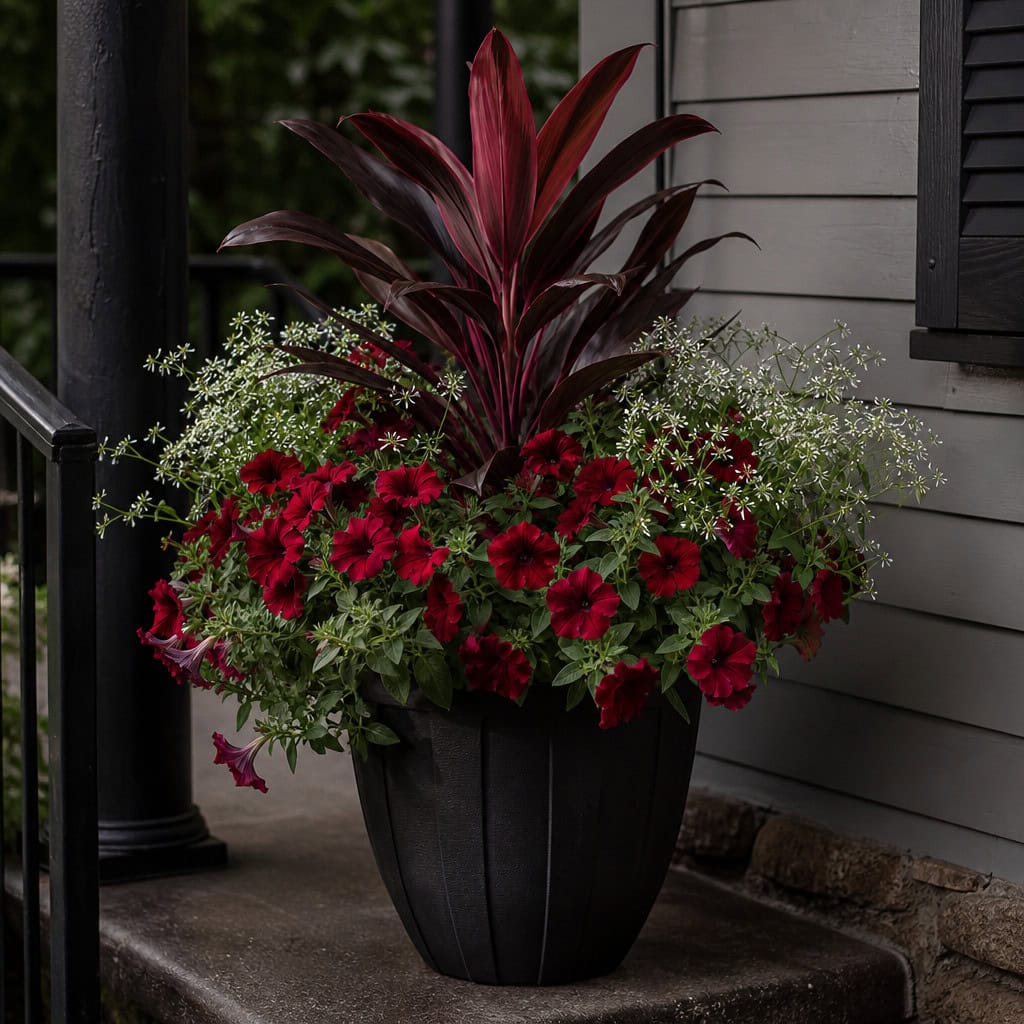
A deep red cordyline makes a clean vertical statement in the center of this rich planting. Burgundy petunias reinforce the saturated base, while white euphorbia acts like a light, airy veil that prevents the design from becoming too heavy.
Key Details
- A strong fit for contemporary, black-painted, or brick facades
- Works through the warm season and can transition into early fall
Pro Tip: Use white euphorbia sparingly around the outer edge so it reads as a highlight rather than a competing mass.
25. Conversation-Start Planter: Pineapple Lily and Diascia
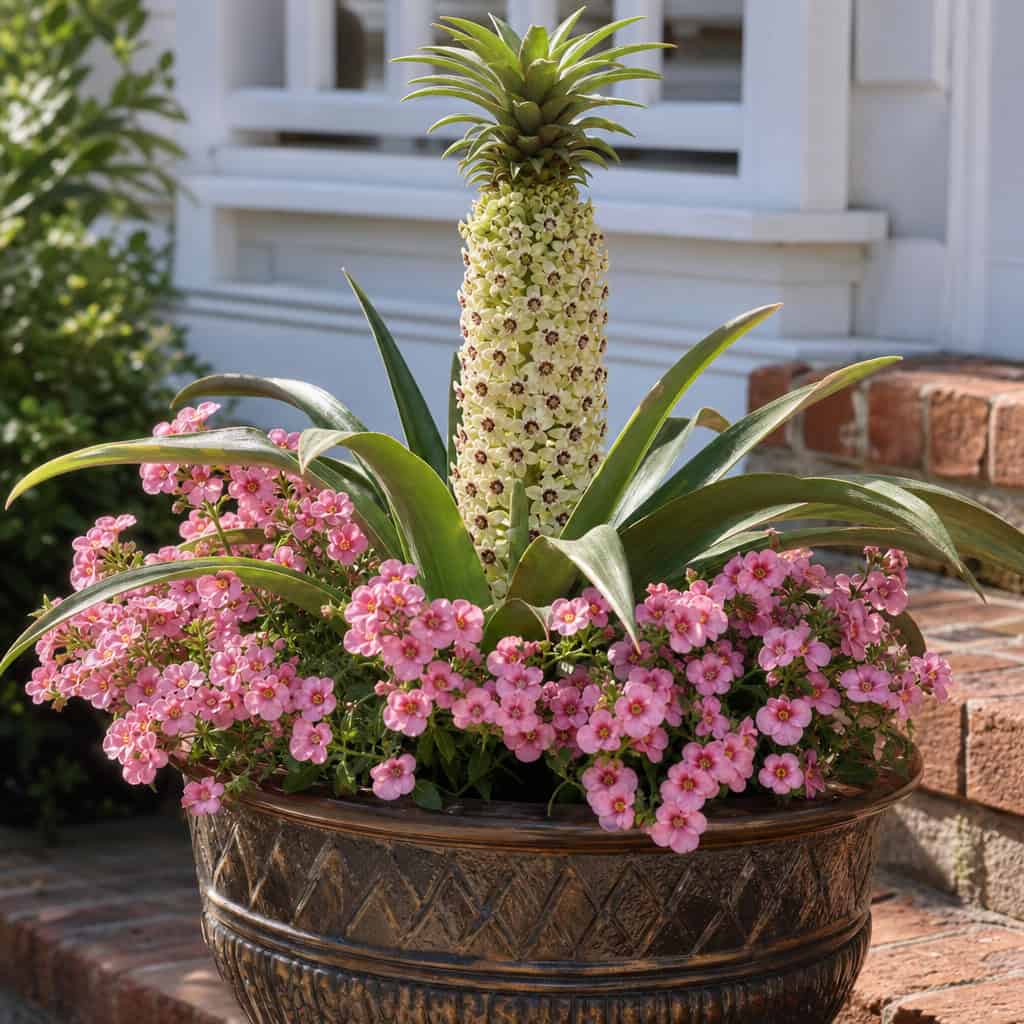
Pineapple lily offers an unmistakable focal point with its tufted flower spike, while diascia makes a gentle cushion of pink or coral at the base. The contrast between the unusual centerpiece and the soft flower mound is what gives this container its charm.
Key Details
- Choose a sunny position with a prominent sightline
- Substitute a compatible trailing annual if diascia is unavailable
Pro Tip: Keep the pineapple lily’s crown visible above the surrounding plants so the distinctive silhouette does not disappear.
26. Flower-Farm Feeling with Zinnia, Salvia, and Trailing Lobelia
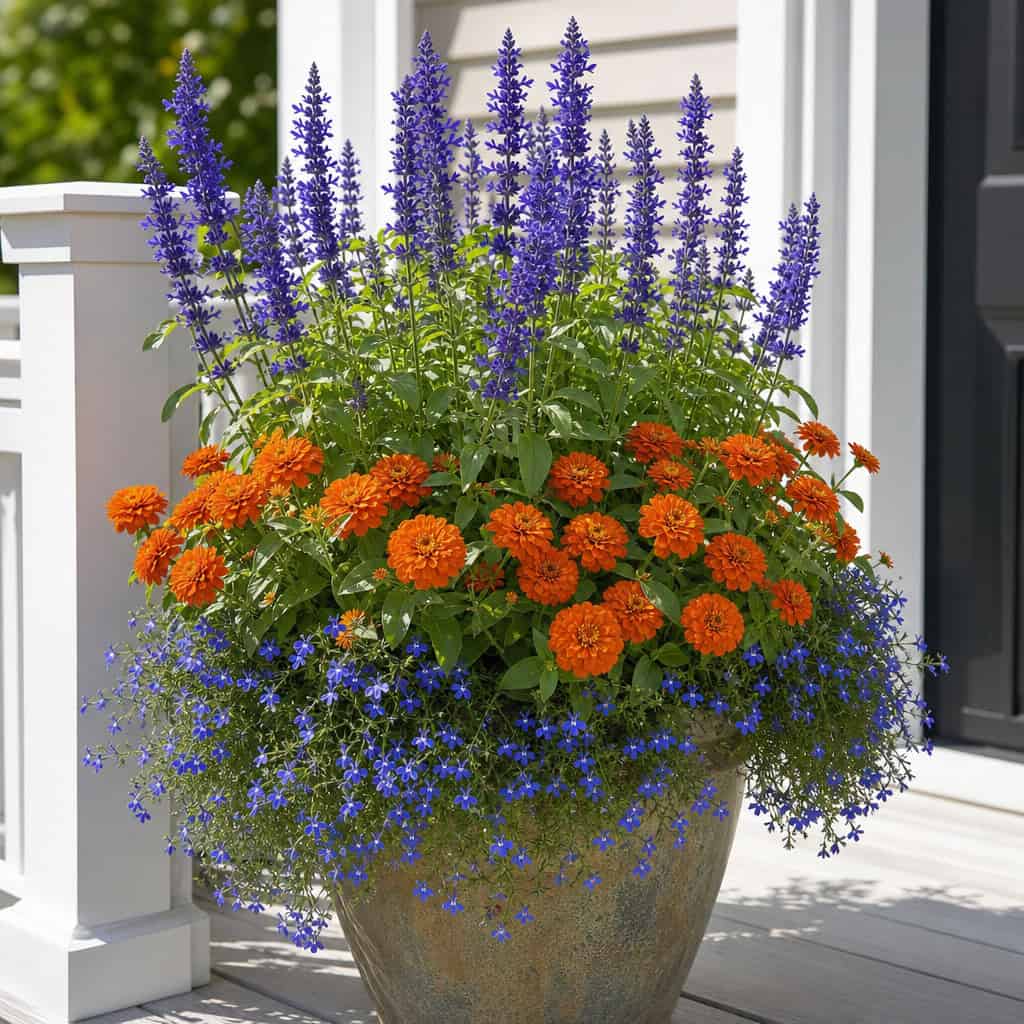
This planter has the relaxed look of a small cutting garden. Salvia supplies a vertical anchor, Profusion zinnias create a cheerful rounded center, and trailing lobelia or sweet potato vine brings the softer line that a container needs.
Key Details
- Best in sun with consistent water
- Use fresh zinnia stems indoors without sacrificing the overall look
Pro Tip: Harvest zinnias often and remove spent blooms to encourage additional flowering.
27. An Edible Accent: Salvia, Polka Dot Plant, and Curly Parsley
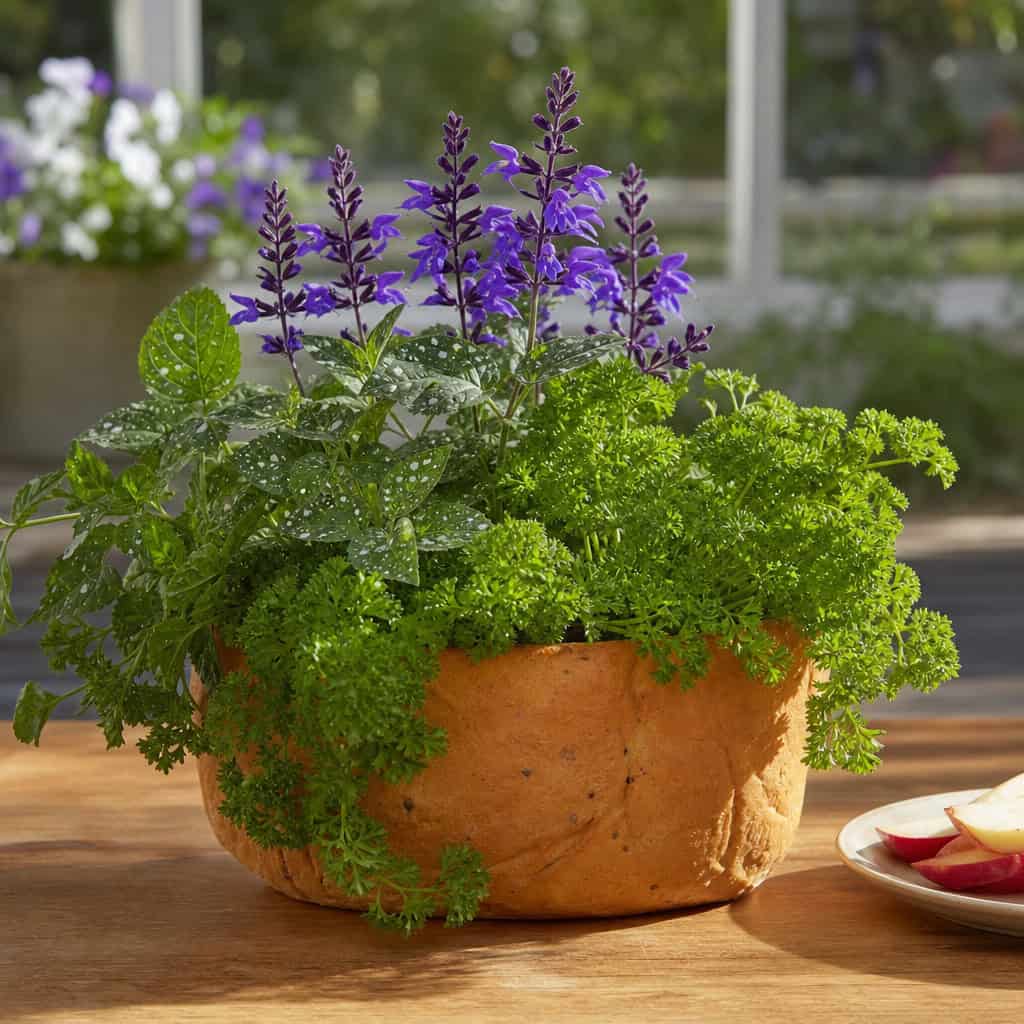
An ornamental planter can still earn a place in the kitchen. Flowering salvia creates the tallest line, polka dot plant adds playful foliage, and curly parsley fills and trails while remaining useful for everyday cooking.
Key Details
- Place where parsley can be harvested easily
- Use clean potting mix and avoid ornamental-only chemical treatments on edible plants
Pro Tip: Snip parsley from the outer stems first, leaving the central growth point intact for a longer harvest.
28. Harvest Porch Finish with Cornstalks, Yellow Mums, and Kale
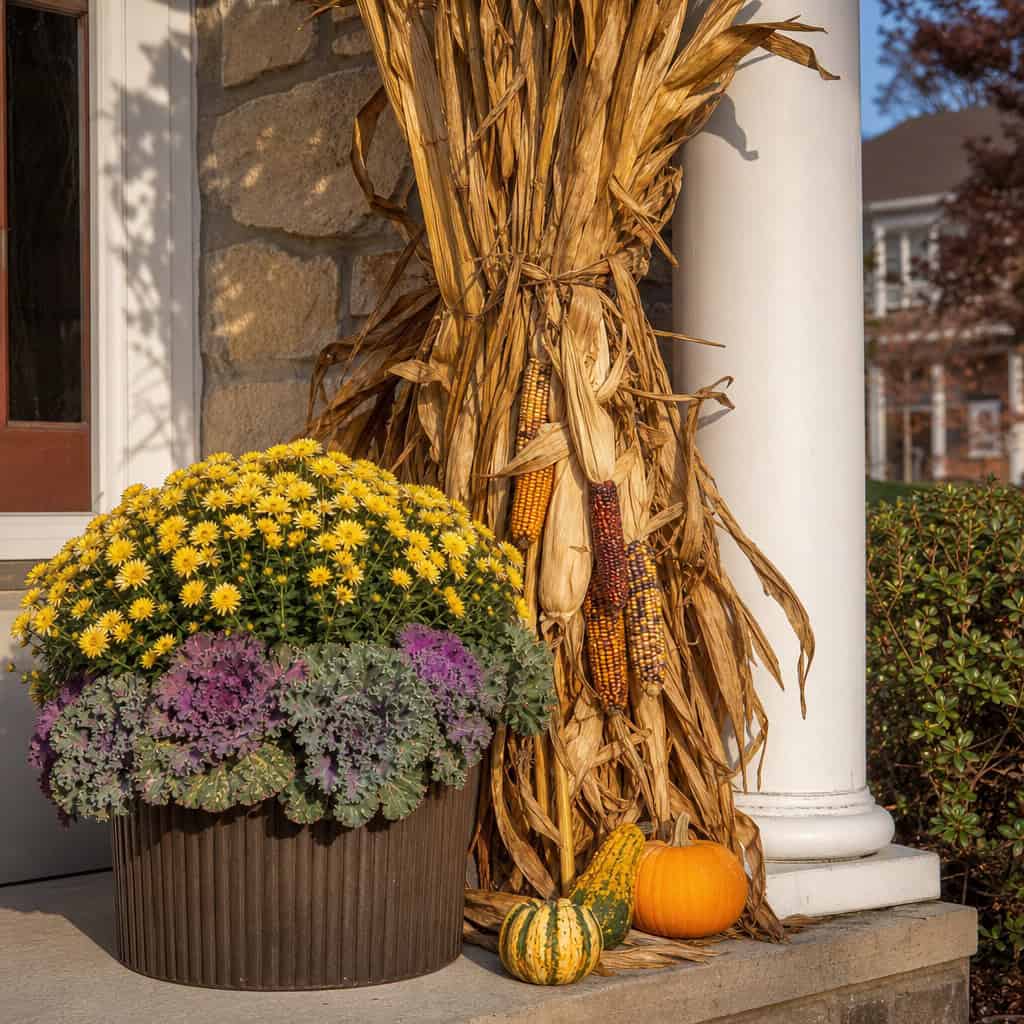
For a late-season entry, use cornstalks as a vertical backdrop rather than trying to grow height in the pot itself. Yellow mums bring clear color, and ornamental kale forms a sturdy base that carries the arrangement into cooler weather.
Key Details
- Ideal beside porch columns, steps, or a larger seasonal display
- Add pumpkins or gourds at ground level for extra dimension
Pro Tip: Secure cornstalks to a stable support so a gust of wind cannot shift them across the entry path.
Conclusion
The most successful porch planters are not necessarily the ones with the most plants; they are the ones in which every plant has a job. Start with the available light, decide whether the season calls for flowers, foliage, or both, and build a simple vertical-middle-trailing composition around that decision.
With a few well-matched plants and a container that suits the scale of the entry, a front porch can look refreshed in a single afternoon.