

A backyard does not need a complete overhaul to feel more welcoming. In many cases, the most noticeable changes come from better shade, clearer zones, a little lighting, and a few garden details that make an outdoor space easier to use.
The ideas below focus on approachable improvements that add comfort and personality without demanding a large-scale renovation. Choose one that solves a problem in your yard now, then let the rest become a list of possibilities for another weekend.
1. Stretch Shade Across the Busiest Part of the Yard
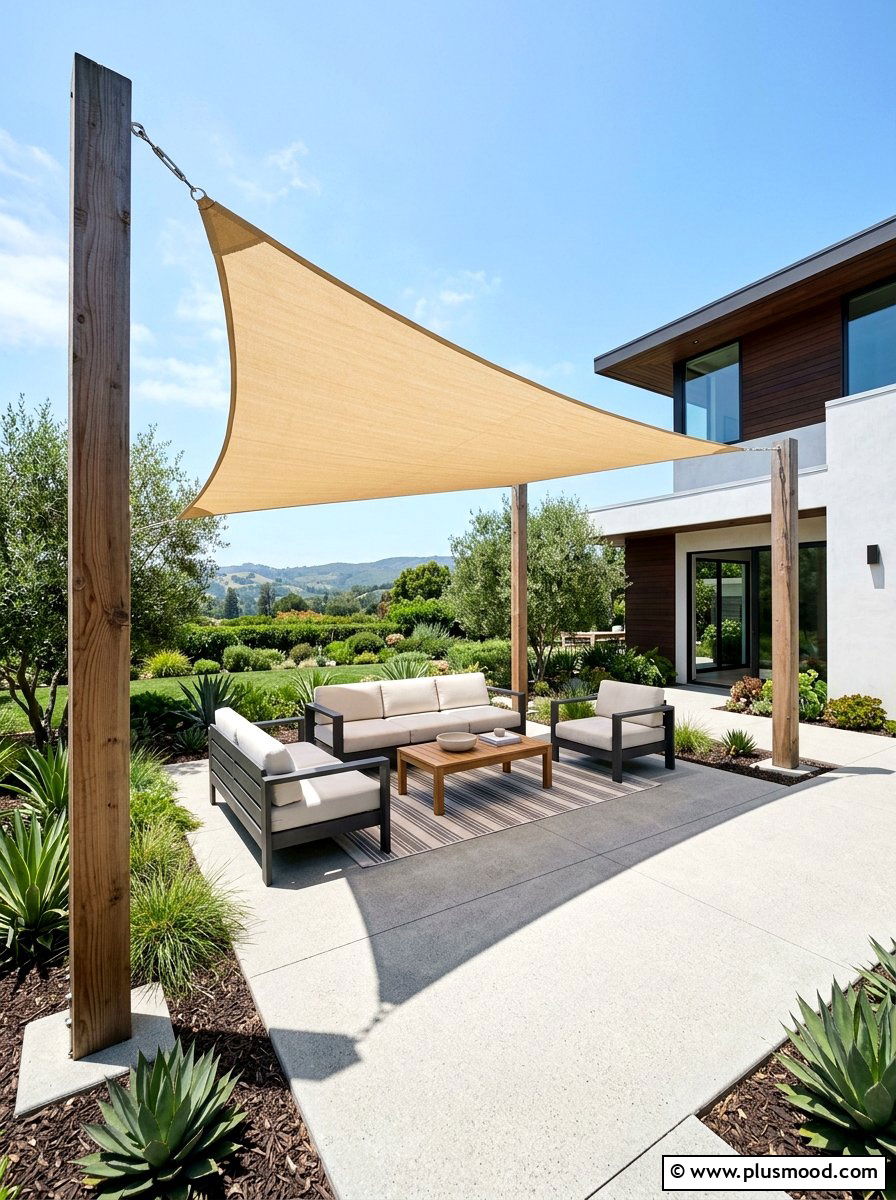
A shade sail can make a hot dining, lounging, or play area useful during more of the day. Its clean triangular shape adds graphic interest while creating a lighter, less permanent alternative to a full roof structure.
Key Details
- Use strong, appropriately placed anchors.
- Pitch the fabric so rainwater can drain.
Pro Tip: Set the sail to block the sun at the time you use the patio most, rather than centering it by default.
2. Screen an Awkward View Without Closing In
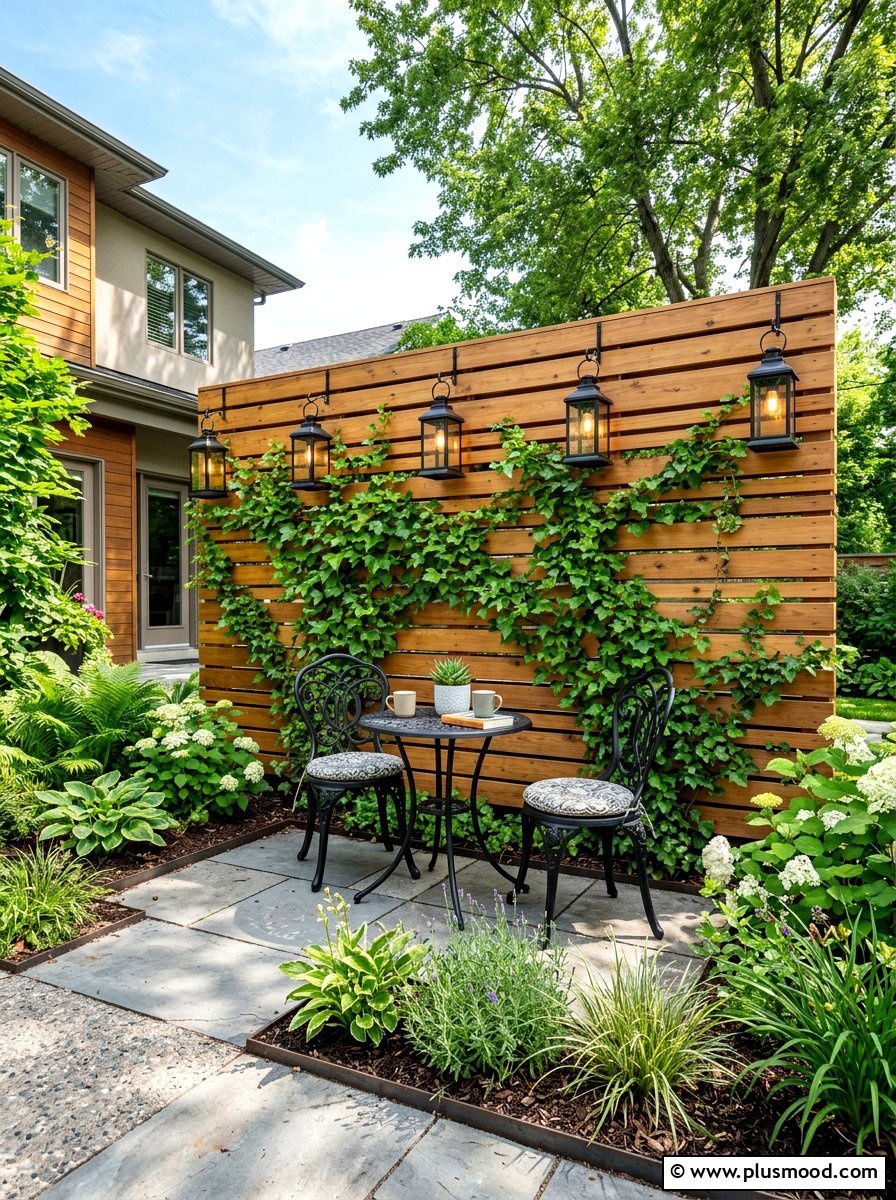
A lightweight privacy panel can make a small seating corner feel more protected from a neighboring wall, a service area, or a busy street. Slatted wood, lattice, and woven materials all work when securely installed.
Key Details
- Check local height and setback requirements first.
- Anchor panels for the wind conditions at the site.
Pro Tip: Add a narrow planting strip or a few pots in front to make the screen read as part of the garden.
3. Frame a Garden Moment With an Arch
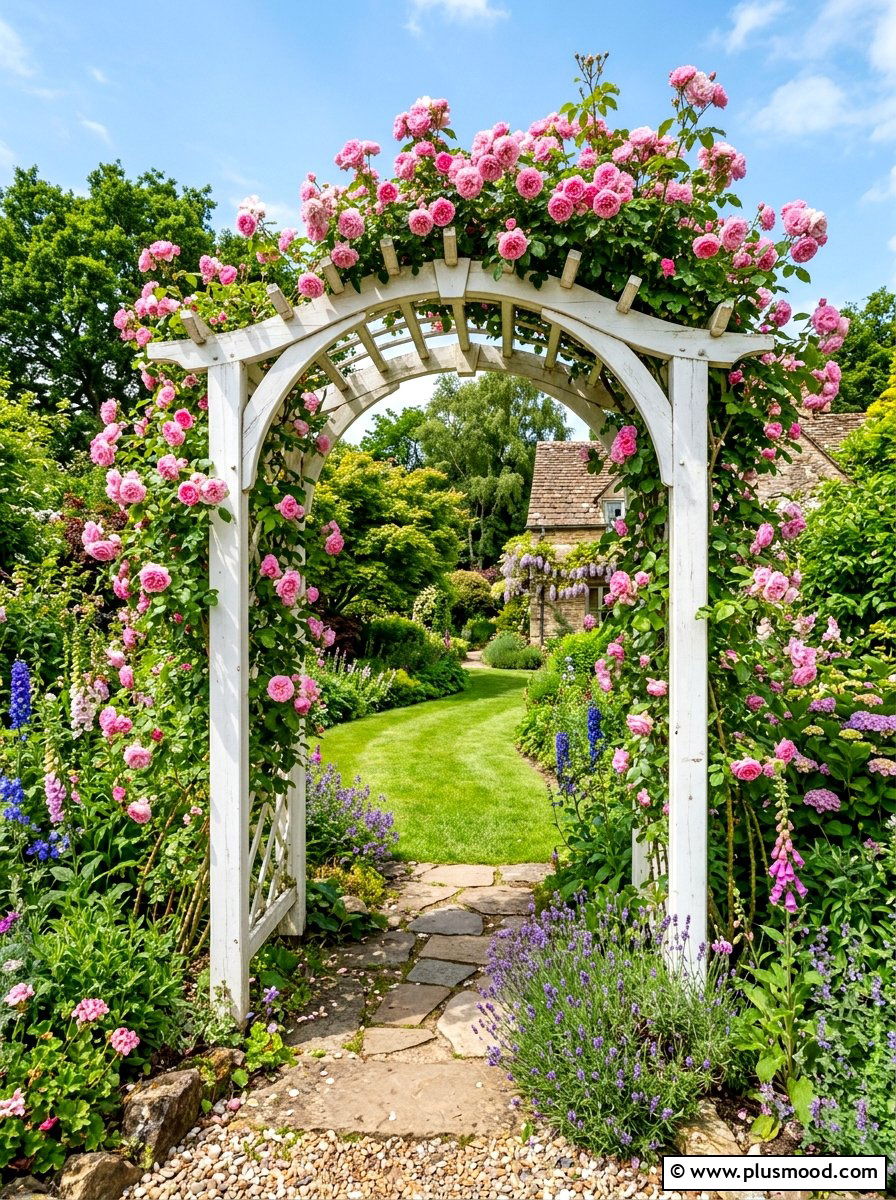
A simple arch gives an ordinary path or bed a sense of arrival and creates a vertical focal point in a flat yard. It can stand alone at first and become more layered as climbing plants mature.
Key Details
- Use weather-resistant material and secure footings.
- Choose climbers suitable for the available light.
Pro Tip: Place the arch where it frames a view to a bench, a water feature, or another planted area.
4. Swap a Worn Route for Simple Pavers
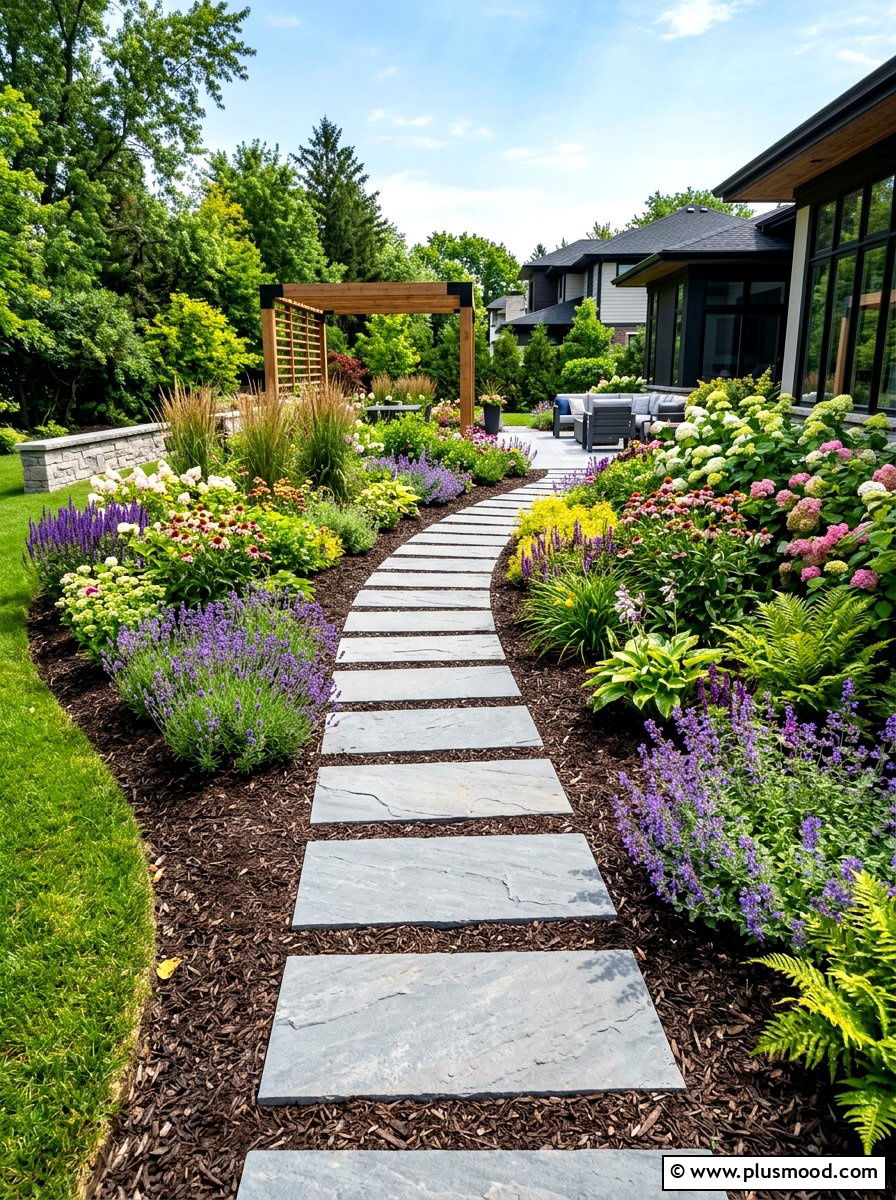
A paver path gives muddy shortcuts and trampled grass a practical new purpose. Even a modest run of pavers can establish a visual connection between the house, garden, and a sitting area.
Key Details
- Prepare a stable base before laying pavers.
- Allow for drainage and a slight runoff slope.
Pro Tip: Use the same paver at a small patio edge or step to make the path feel part of a larger plan.
5. Use a Barrel as a Planting Statement
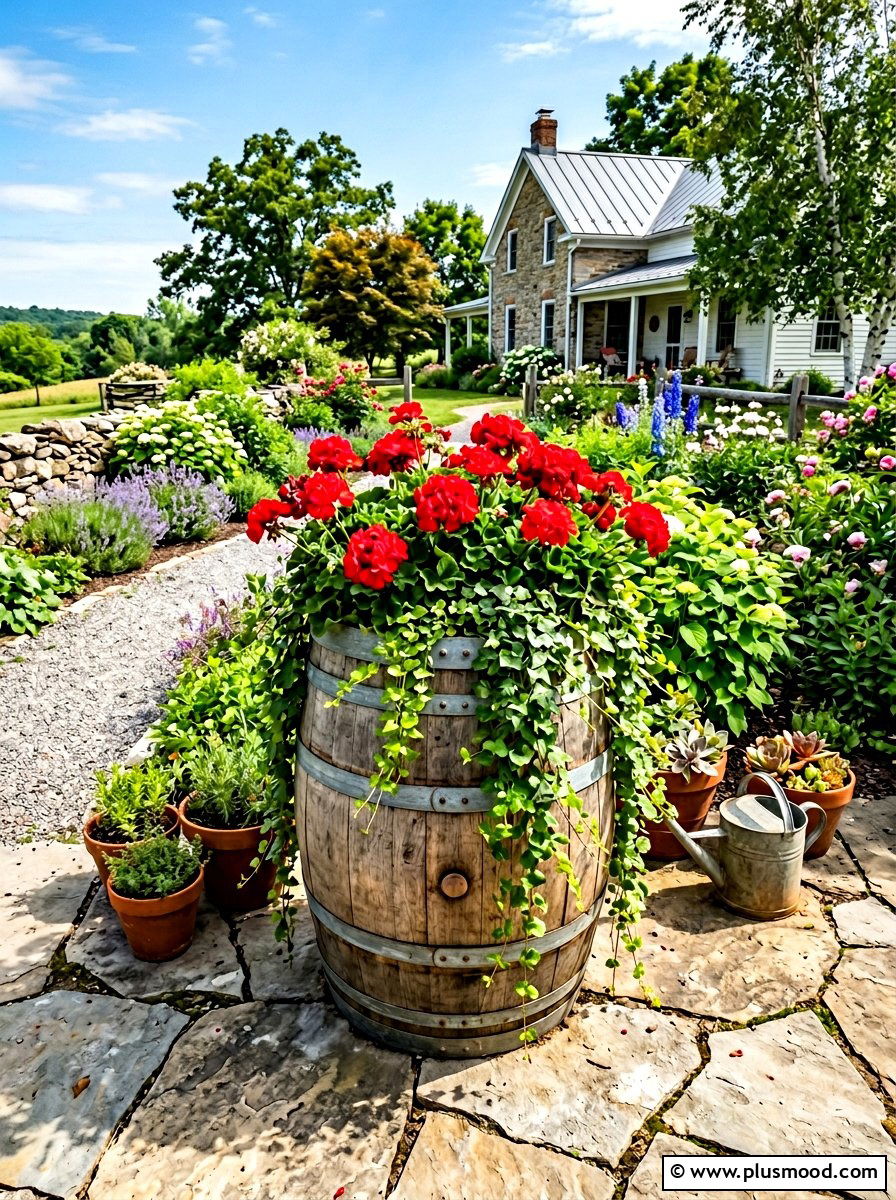
A half-barrel planter can add rustic warmth to a patio corner, entry, or garden edge with very little effort. Its generous volume allows a mix of upright plants, trailing foliage, and seasonal flowers to make an immediate impression.
Key Details
- Confirm drainage before filling the barrel with soil.
- Use a sturdy, level surface under the planter.
Pro Tip: Group the barrel with one smaller pot to create a layered display rather than leaving it isolated.
6. Keep a Small Vegetable Plot Close to the Kitchen
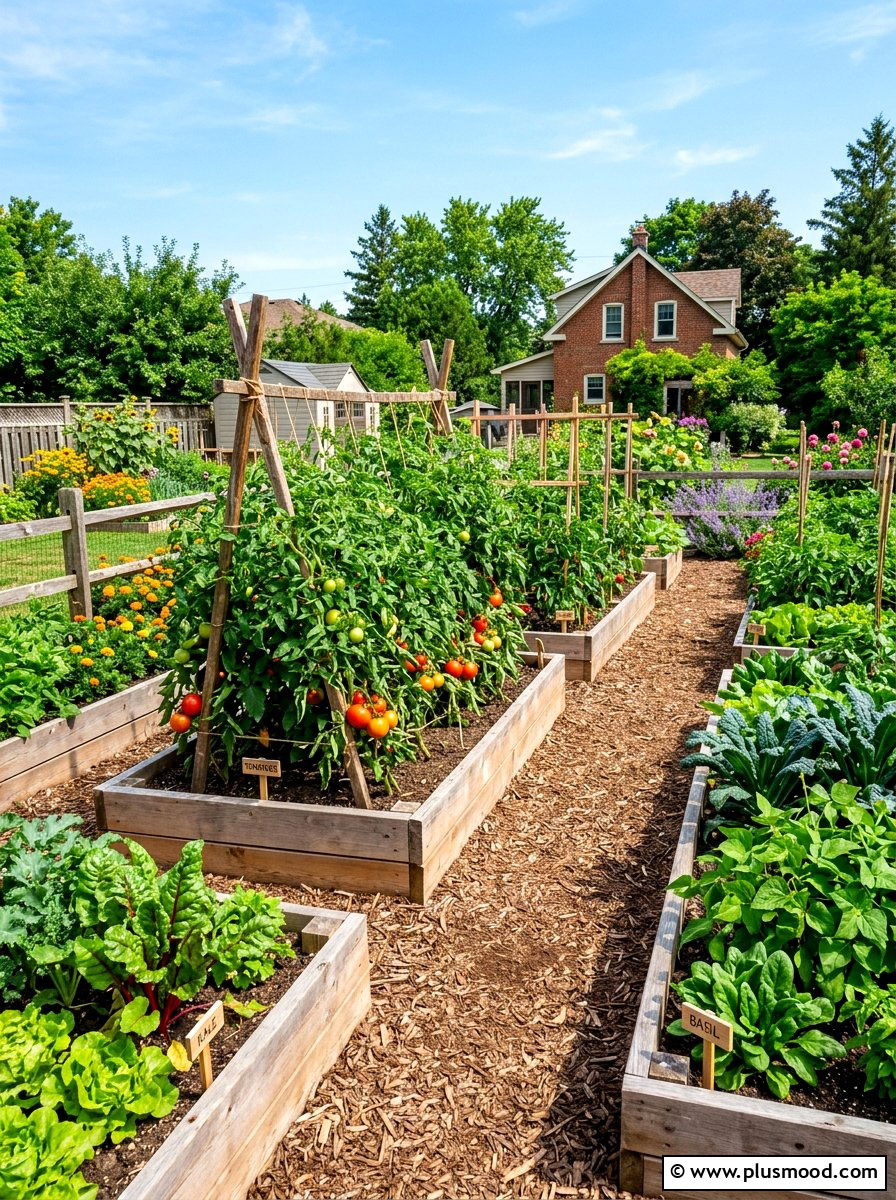
A compact patch for salad greens, herbs, or a few favorite vegetables can make the garden feel productive as well as decorative. The best location is one you pass frequently, because regular observation makes care simpler.
Key Details
- Choose crops that match the site’s sun and season.
- Create an easy way to water the bed.
Pro Tip: Start with a few reliable plants you will actually use instead of trying to grow every crop at once.
7. Put a Fresh Herb Collection Within Reach
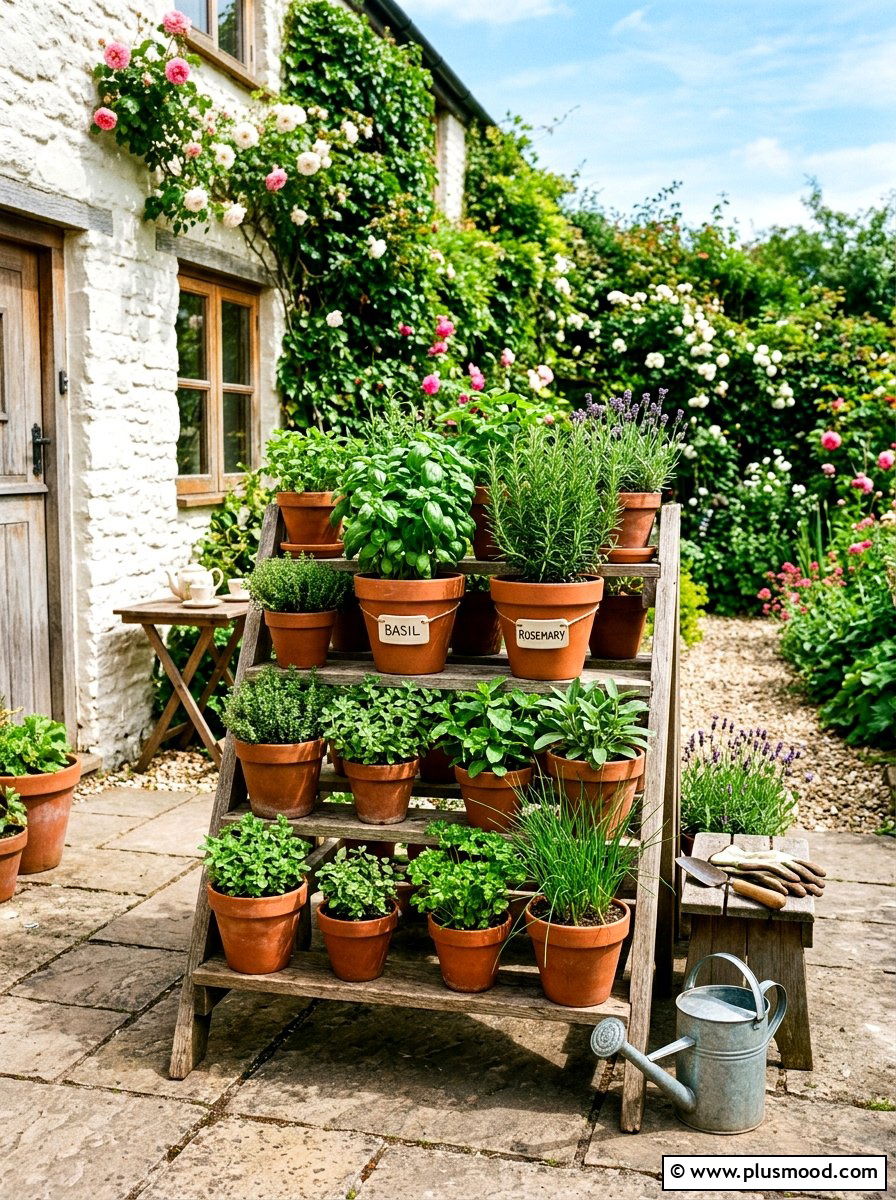
A small herb planting gives a patio scent, texture, and a practical reason to step outside before dinner. It can be as simple as a set of matching pots or a narrow strip beside a grill.
Key Details
- Use a well-draining growing mix.
- Group herbs with similar moisture needs.
Pro Tip: Keep the most frequently used herbs closest to the door or outdoor cooking area.
8. Give Gardening Supplies a Home
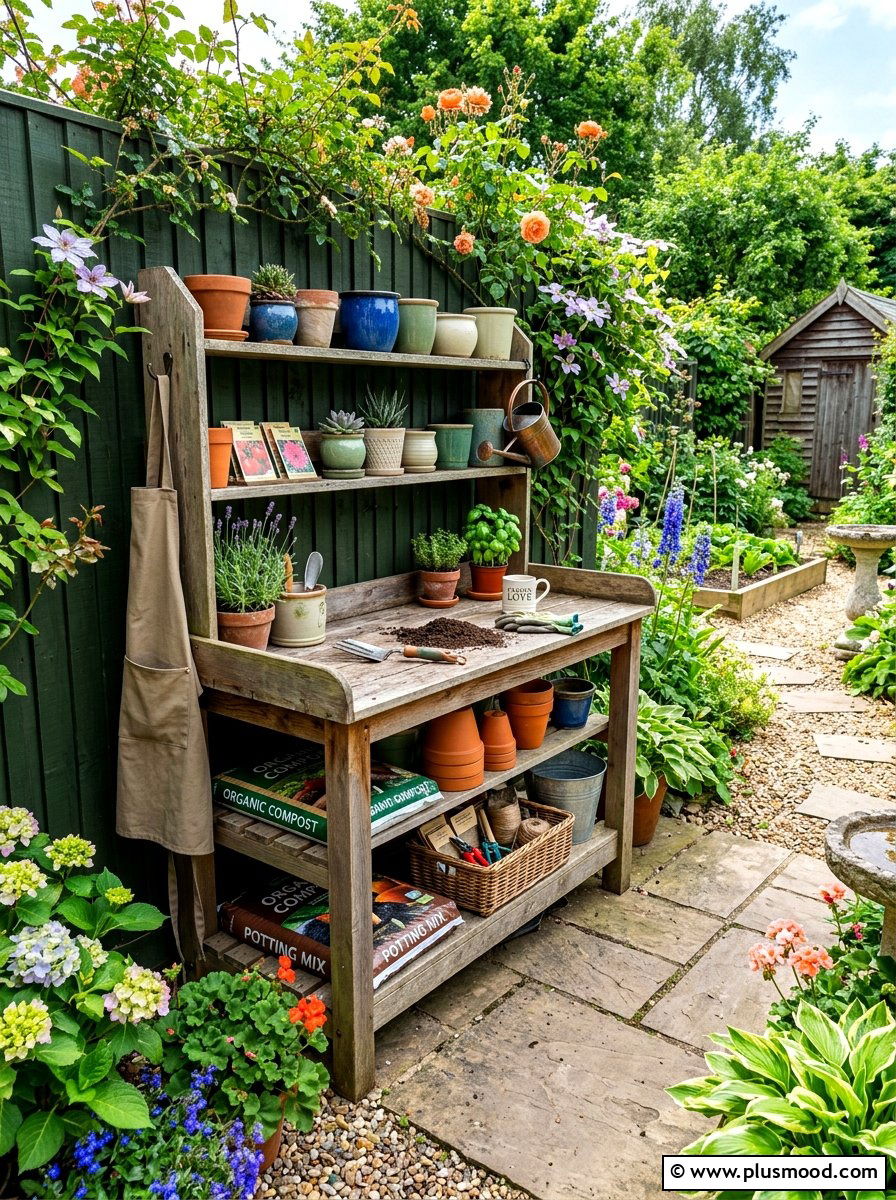
A potting bench can turn planting from a scattered task into a calmer routine. The exact bench can be simple, but it should provide a clear work surface plus a place for soil, tools, labels, and empty pots.
Key Details
- Choose a material that tolerates moisture and soil.
- Store hand tools safely but accessibly.
Pro Tip: Hang a small rail or pegboard behind the bench to keep the worktop clear.
9. Use the Fence as a Garden Surface
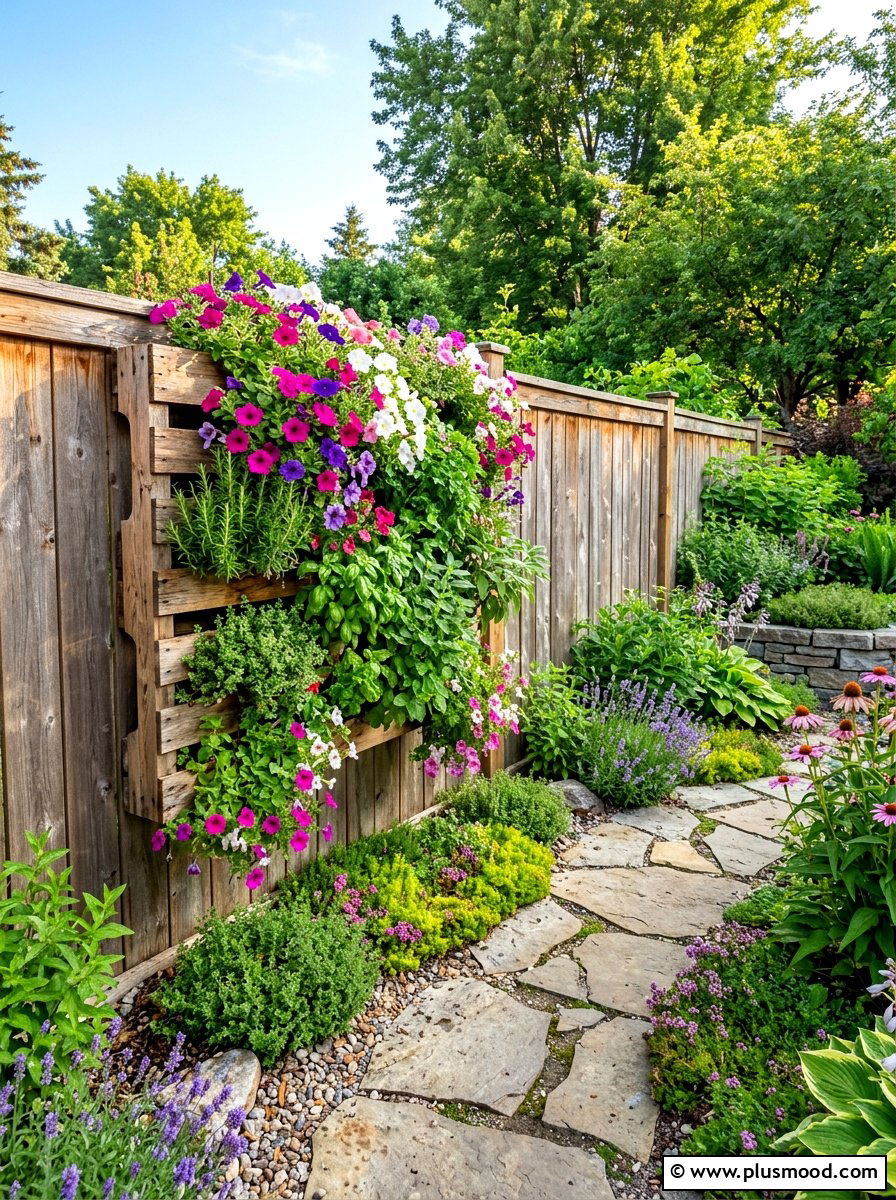
A vertical garden helps a narrow yard feel greener without taking up the room needed for chairs or play. Repeating containers or a simple mounted planter system can turn a blank fence into a lush backdrop.
Key Details
- Confirm the fence can support the added weight.
- Build in drainage so water does not damage the structure.
Pro Tip: Choose a limited palette of plants so the wall looks composed from a distance.
10. Give a Concrete Patio a New Color Story
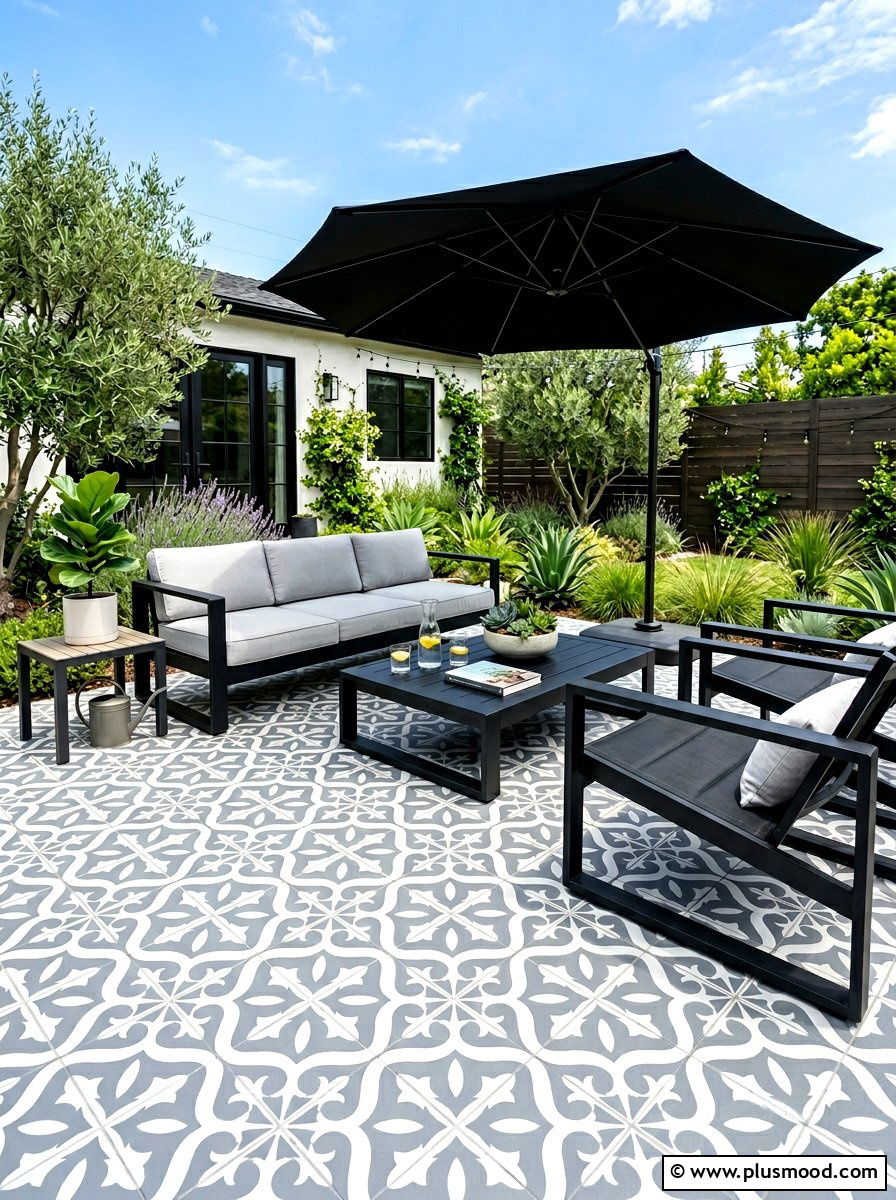
A faded slab can look entirely different with a thoughtfully chosen exterior coating. Focus on surface preparation and a finish designed for the conditions; the color can then unify a mix of existing furniture and planters.
Key Details
- Repair cracks and clean thoroughly before coating.
- Follow cure-time directions closely.
Pro Tip: Test the color in a small patch because sunlight can make a finish look lighter than expected.
11. Turn Loose Stone Into a Flexible Patio
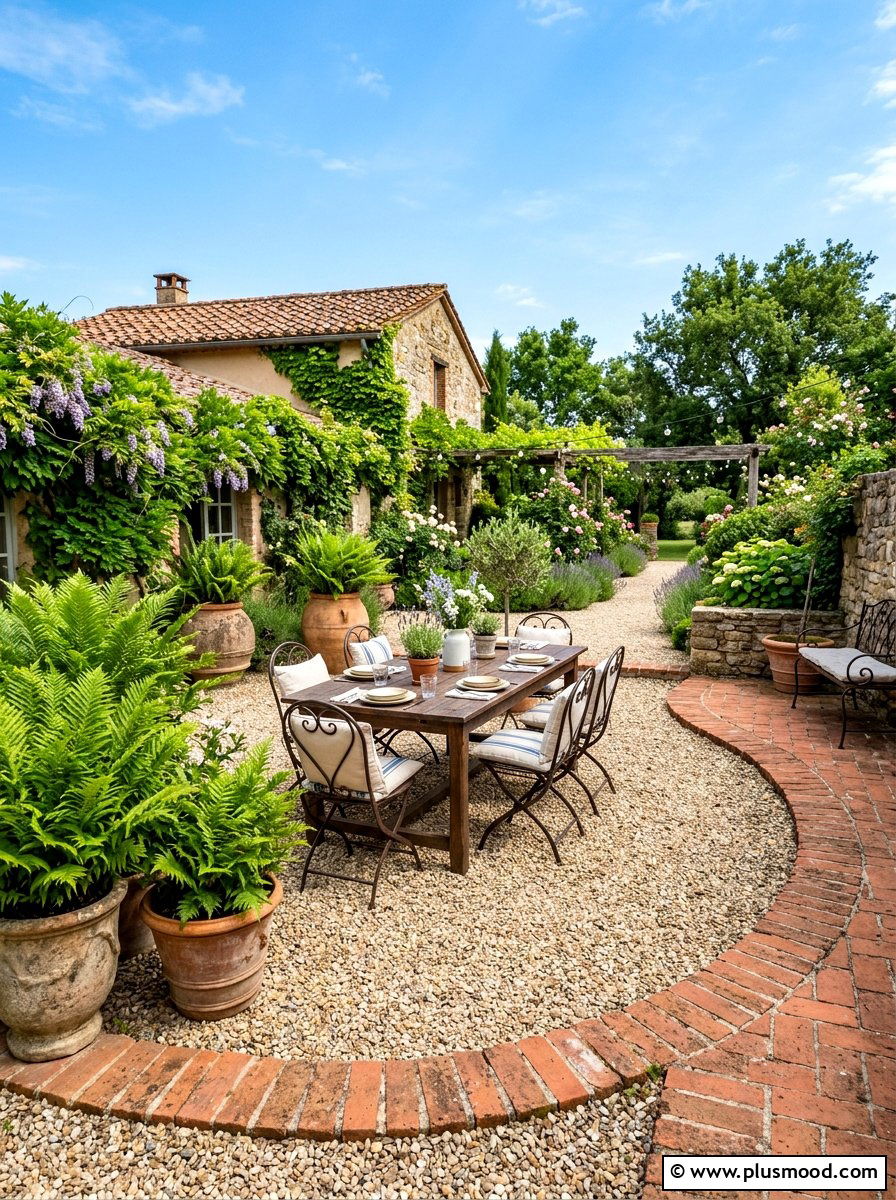
A gravel surface can give a neglected corner a clear purpose as a reading nook, a bistro spot, or a fire-side circle. The texture feels casual and can be installed in stages as the seating arrangement evolves.
Key Details
- Use edging to contain the gravel.
- Build a level, compacted base for better stability.
Pro Tip: Choose chairs with wider feet, or place small pads beneath legs so they remain steady.
12. Use a Rug to Pull Mismatched Seating Together
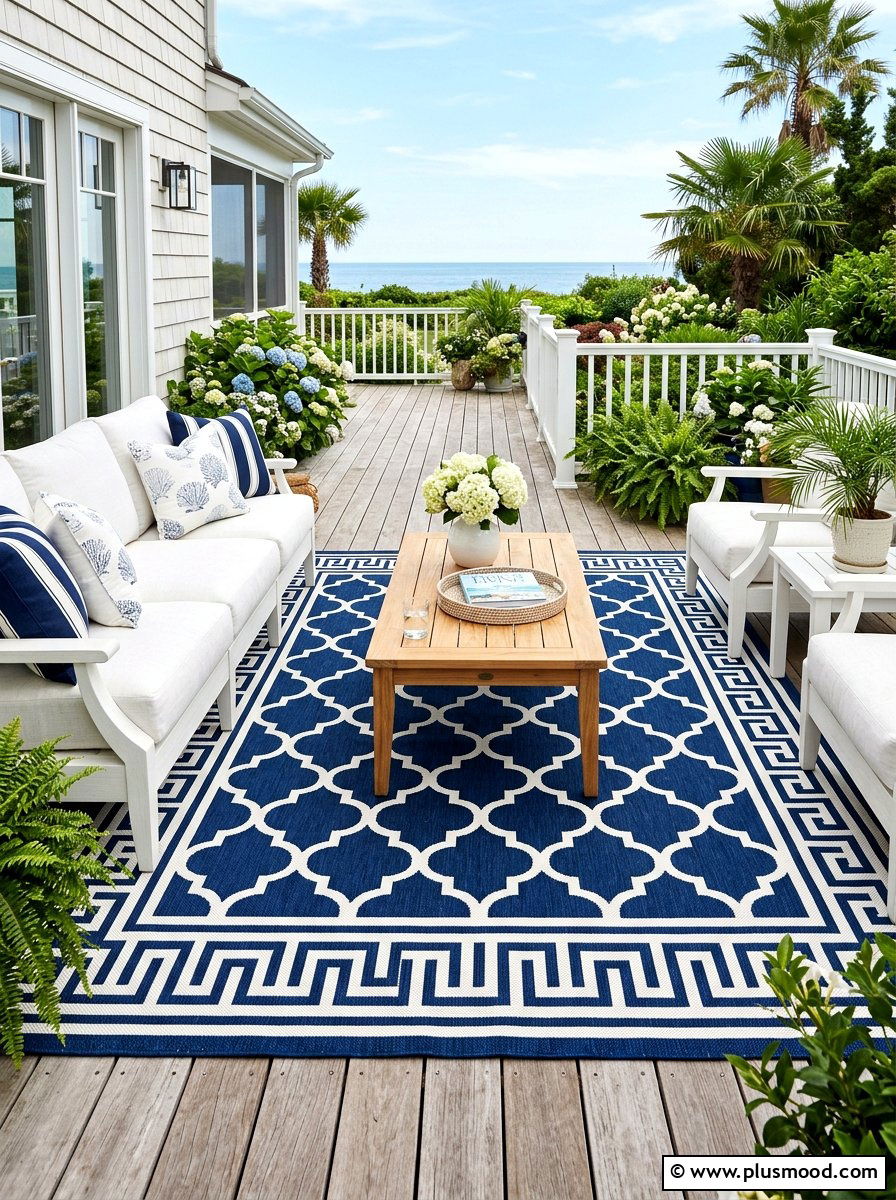
An outdoor rug can make inexpensive or mismatched furniture look like a planned conversation area. It introduces color underfoot and lets you create a room-like feel without changing the hardscape beneath it.
Key Details
- Choose a rug made for rain and sun exposure.
- Size it so it reaches under key furniture legs.
Pro Tip: Select a design with a mix of tones so outdoor debris is less obvious between cleanings.
13. Build a Lounge Around Reclaimed Wood
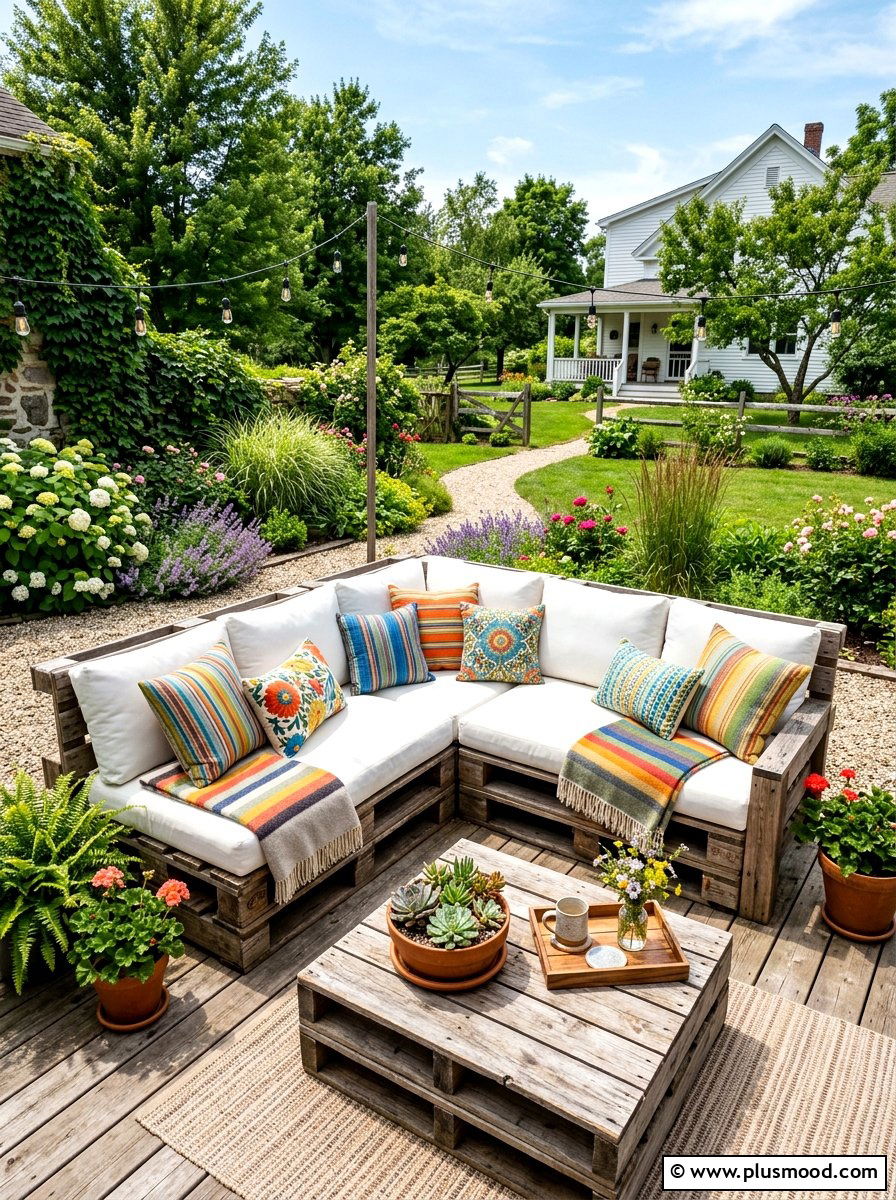
A reclaimed-wood sofa or daybed can be tailored to the exact dimensions of a small deck or awkward patio. Careful sanding, safe materials, a protective finish, and deep cushions are what make a DIY piece genuinely comfortable.
Key Details
- Inspect reclaimed lumber carefully before use.
- Keep the base elevated so it can dry after rain.
Pro Tip: Make the pieces modular so you can reconfigure the seating for a larger group later.
14. Create One Zone for After-Dark Gatherings
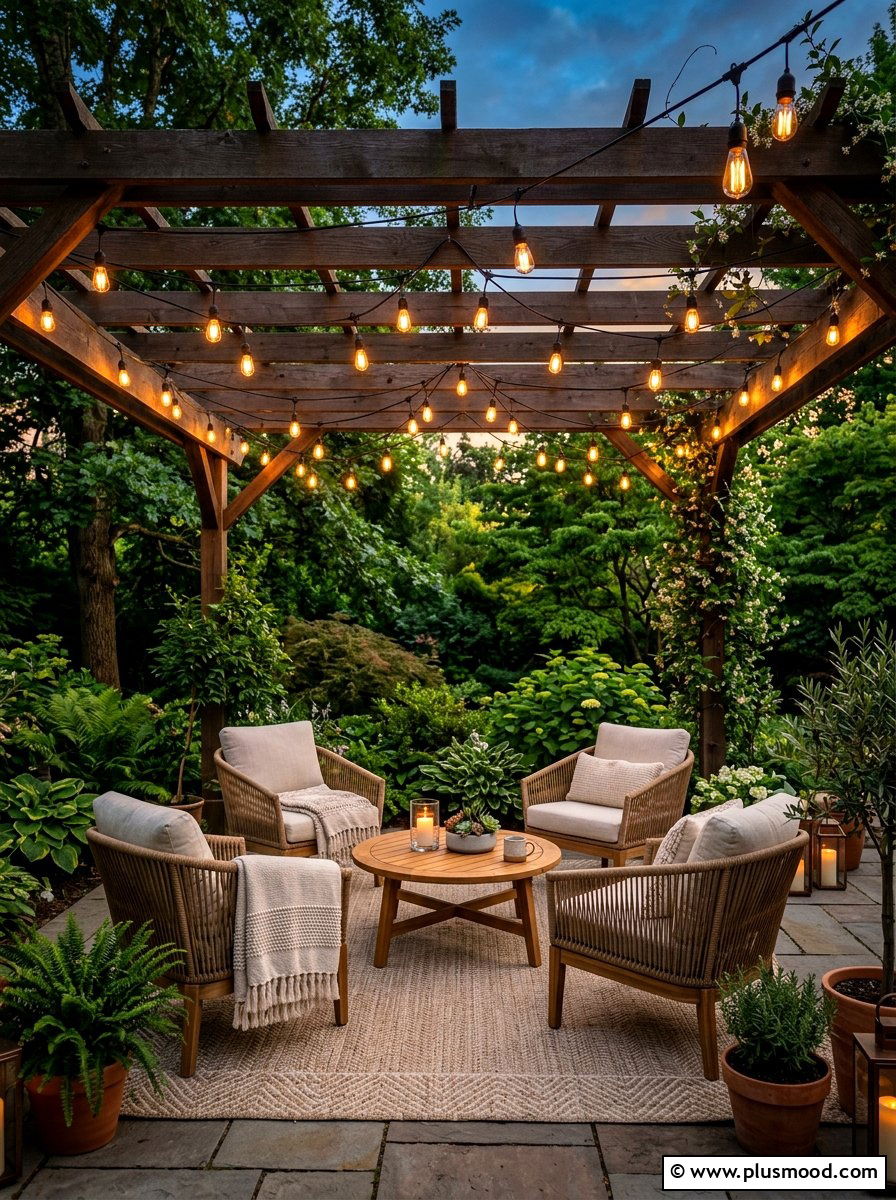
Overhead string lights can make a modest patio feel immediately more usable after sunset. A deliberate layout above a table or lounge area gives the light a purpose and prevents the setup from feeling like a tangle of cords.
Key Details
- Use weather-rated strands and connectors.
- Attach to sound anchor points or a tension wire.
Pro Tip: Install the lights high enough that they do not interrupt sightlines or movement beneath them.
15. Scatter Lanterns Where You Need a Softer Glow
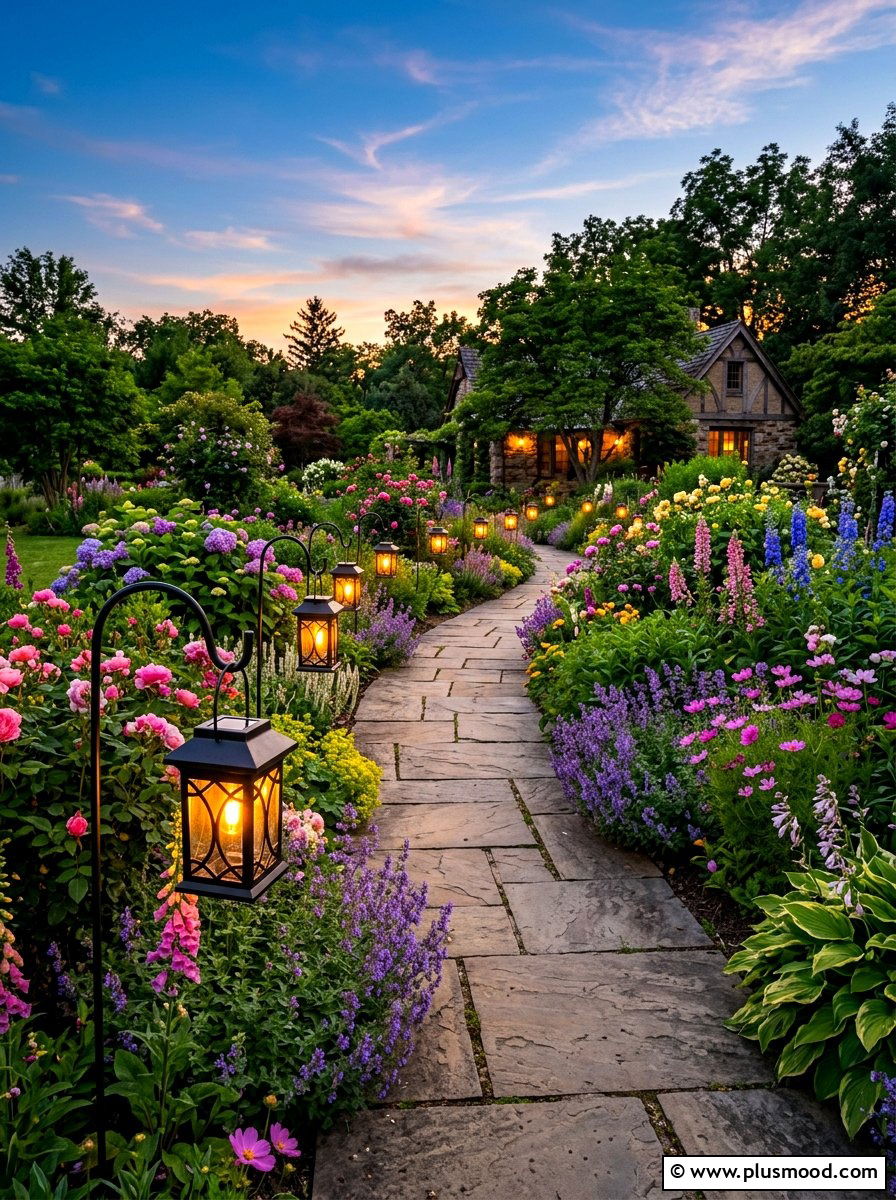
Solar lanterns are a flexible way to add low-level evening light without a permanent installation. Cluster them on steps, along a path, or around a seating area to create a layered effect rather than a row of identical points.
Key Details
- Place solar panels where they can receive daylight.
- Use stable surfaces so lanterns cannot tip easily.
Pro Tip: Mix two lantern heights for a more natural, collected look.
16. Tuck Tiny Lights Into a Garden Detail
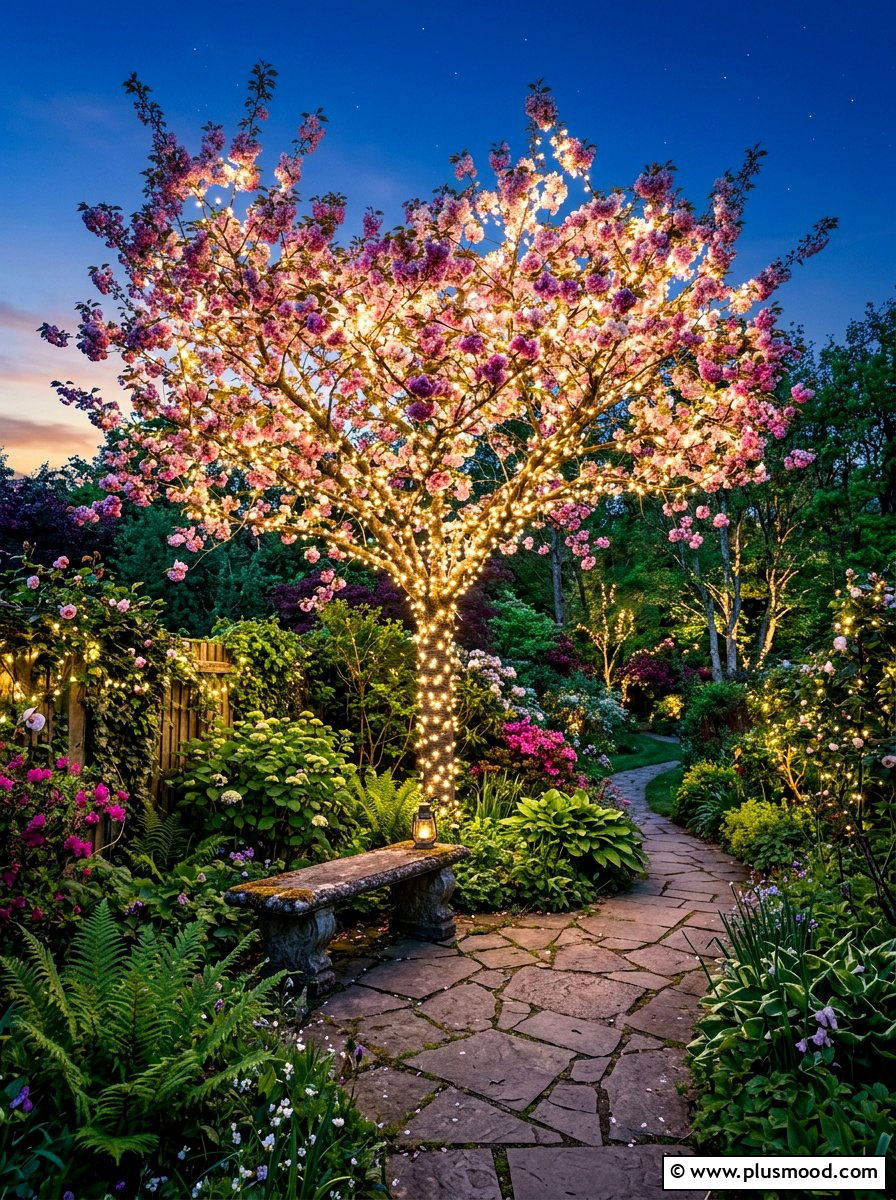
Fine fairy lights can turn a planter, trellis, or small tree into an evening feature with very little visual weight. They are most effective as an accent rather than the only source of outdoor illumination.
Key Details
- Use strings rated for exterior conditions.
- Keep connections protected from water.
Pro Tip: Wrap lights loosely around a single focal plant or structure instead of covering every surface.
17. Make a Simple Fire Spot the Heart of the Yard
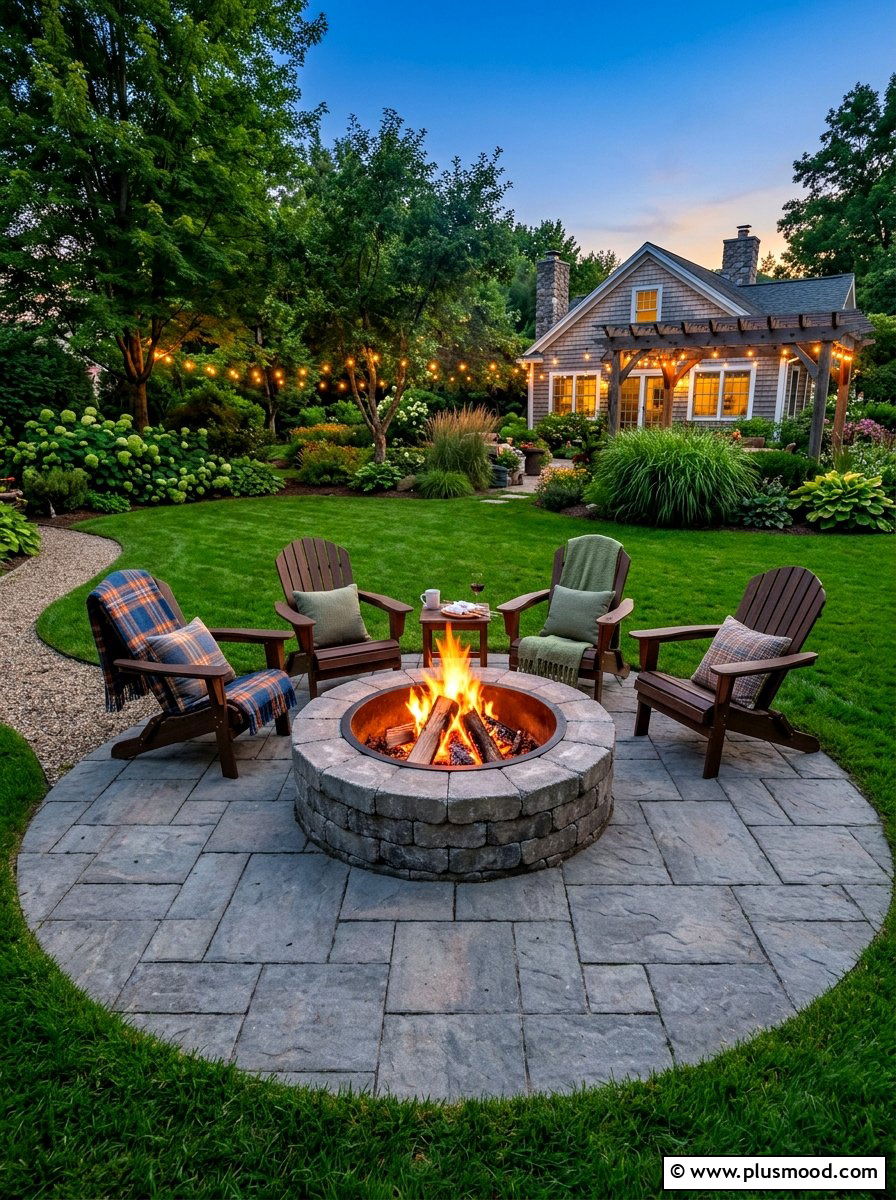
A fire feature gives an inexpensive seating circle a clear reason to exist and extends outdoor time into cooler evenings. Start with safety, local requirements, and a stable noncombustible surface before choosing chairs or decorative details.
Key Details
- Follow applicable local fire rules.
- Keep water or appropriate fire-safety equipment within reach.
Pro Tip: Leave one open space in the chair circle for easy entry and extra seating when friends visit.