

If you’ve spent any amount of time scrolling through interior design feeds or browsing the latest home decor collections lately, you’ve probably noticed a big shift in the air. The bright, stark-white, and overtly themed beach houses of the past decade are rapidly evolving. In their place, a richer, more collected, and deeply sophisticated aesthetic is taking over. It’s a vibe that feels less like a breezy summer rental and much more like a generational family estate nestled on the rugged coast.
Studio McGee and their wildly popular retail arm, McGee & Co., have been at the absolute forefront of this design movement, beautifully coining it “Seaside Heritage.” It’s a look that nods respectfully to classic coastal living, where time-honored tradition blends seamlessly with heirloom-inspired details. It’s sophisticated, it’s grounded, and above all, it is deeply inviting. And the best part: so many elements of the aesthetic are not just for seaside homes.
But here is the ultimate design dilemma that many homeowners face: how do you bring this elevated, nuanced coastal look into your own home without accidentally veering into the cheesy, mass-market territory? We all know the look I’m talking about. I’m talking about the “Life’s a Beach” wooden signs, the overly distressed and chippy white furniture, literal anchors hung on walls, the thick nautical ropes wrapped around lamps, and the starfish glued to just about every available surface.
As someone who genuinely loves the relaxed, unpretentious feel of coastal design but absolutely cringes at the kitsch and the clichés, I’ve spent a good chunk of time dissecting exactly what makes the Seaside Heritage aesthetic work so incredibly well. To me, it’s about subtlety, rich texture, and a subtle nod to the sea rather than a literal, heavy-handed translation of it.
Let’s talk about this “Seaside Heritage” look piece by piece. We will explore the nuanced color palettes, the tactile materials, the specific furniture choices, and the insider styling secrets that will help you achieve that coveted, high-end Studio McGee vibe without the ropes and anchors required.
The Evolution of Coastal Design: From Kitsch to Heritage
To truly understand and appreciate the Seaside Heritage aesthetic, we first have to look back at where coastal design has been over the last few decades. For a very long time, “beachy” decor meant bright, saturated turquoise, stark, blinding white, and nautical motifs everywhere you looked. It was fun, it was playful, but it often felt a bit like a theme park or a novelty restaurant. It felt like it was only suitable for homes right on the ocean. It lacked the depth and sophistication required for a primary residence versus a (tourist trap) vacation home.
Then came the “Modern Coastal” wave, which was a welcome breath of fresh air. This movement stripped away the kitsch in favor of clean lines and minimalism. It was all about light, bleached oak, crisp white slipcovers, and maybe a subtle, thin blue stripe here and there. It was undeniably beautiful and serene, but as time went on, it sometimes lacked warmth, history, and a sense of personal character. It could feel a bit sterile or overly staged.
Now, we are firmly entering the Seaside Heritage era. First of it feels like we are in the Heritage-everything era, but even the coastal vibe is “Heritage”. This aesthetic takes the relaxed, breezy, and comfortable feel of coastal living and grounds it with traditional, historical elements. It draws heavy inspiration from the historic, weather-beaten homes of New England, the rugged, untamed beauty of the coastline, and the romantic idea of a home that has been lovingly collected and curated over generations (the Heritage piece).
It’s significantly less about the feeling of “I just bought this entire room at a beachside souvenir shop” and much more about the narrative of “This antique brass telescope belonged to my grandfather, and this moody landscape painting was found tucked away at a flea market in coastal Maine.” It is storytelling through design versus a strickly turquoise and white color palette.
The Seaside Heritage Color Palette: Moody, Grounded, and Rich
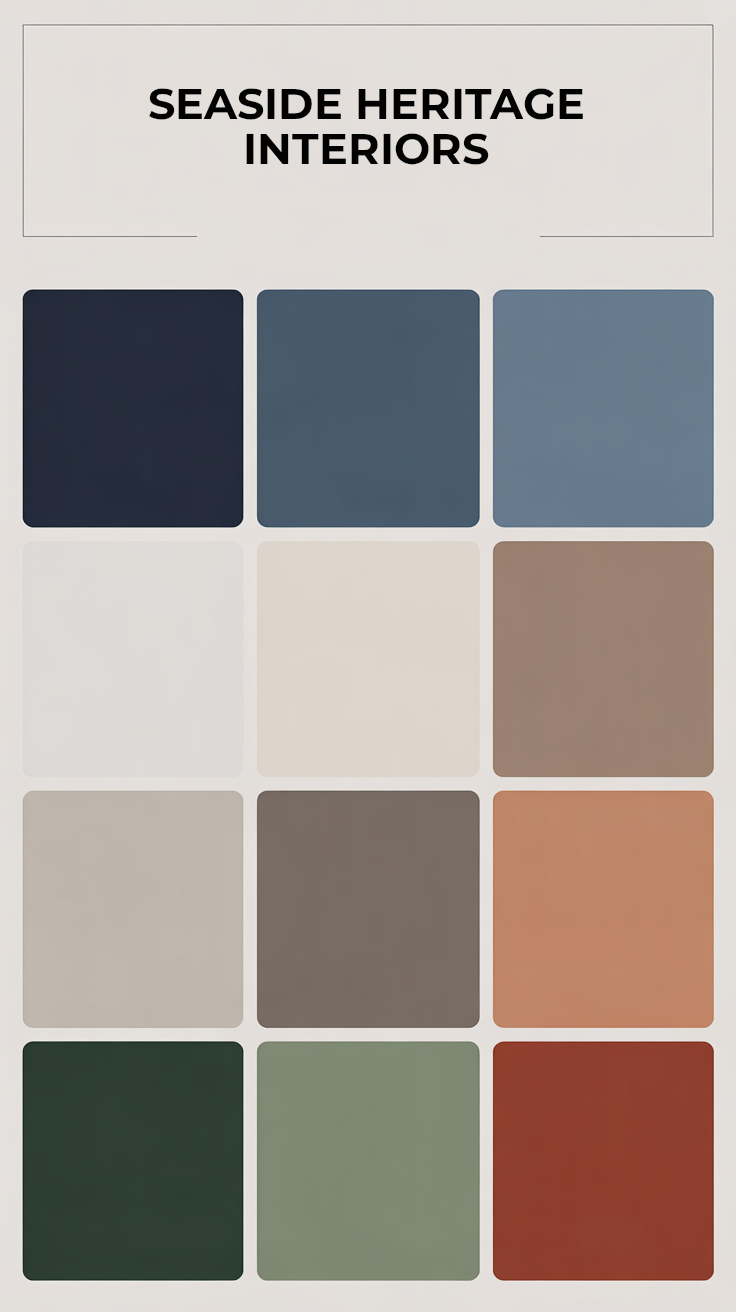
The absolute quickest way to make a coastal room look cheap, dated, or clichéd is to use the wrong colors. The bright, artificial aquas, the neon corals, and the stark, cool whites of the past are decidedly out. The Seaside Heritage palette is much more nuanced, drawing directly from the natural, often moody elements of the coastal landscape.
Ditch the Predictable, Saturated Blues
While blue will always be a fundamental staple of coastal design, the specific shades we are seeing now are significantly deeper, moodier, and more complex. Instead of bright, cheerful turquoise or pale baby blue, you need to think in terms of navy, deep indigo, slate, and stormy, overcast gray-blues.
Studio McGee frequently uses navy as a foundational, grounding color in their Seaside Heritage spaces. A textured navy jute rug, a deep blue velvet accent chair, or even a room drenched in a dark, moody blue paint instantly adds a layer of sophistication and history. These darker blues feel historic and traditional, anchoring the space and providing a beautiful, striking contrast to the lighter, airier elements in the room.
Embrace Warm, Earthy Neutrals
The Seaside Heritage look relies heavily on warm, earthy neutrals to create a welcoming atmosphere. Instead of stark, cool, hospital-like white, opt for creamy off-whites, warm taupes, mushroom tones, and sandy beiges. These colors mimic the natural, unrefined landscape of the coast—the exact color of wet sand at low tide, the hue of dried, sun-bleached driftwood, and the soft tones of sea oats swaying in the wind. These warmer neutrals reflect light beautifully while maintaining a cozy, lived-in feel.
Introduce Unexpected, Saturated Hues
One of the most defining moments of this new look is the deliberate introduction of colors you might not typically associate with the beach at all. Deep, earthy forest greens, rich chocolate browns, and even muted burgundies, rusts, or oxblood are making their way into coastal spaces with stunning wow factor!
I know it may seem odd to associate these moodier colors with a coastal palette. The truth is, if you really think about it the colors we associate with “coastal decor”, it’s not clear why we leave out the dark marine blue and teal color of the deep sea or the vibrant green in moss coral that covers the seabed. If you think about it, there really are bold moodier colors in so many natural elements of the ocean.
These richer, unexpected tones add incredible depth and prevent the room from feeling too one-dimensional or predictable. Imagine a deep green velvet lumbar pillow resting on a crisp linen sofa, or a dark walnut antique dresser standing against a creamy, textured white wall. It’s unexpected, it’s slightly rebellious for a coastal space, but it works beautifully to create that collected, heritage feel.
Materials and Textures: The Tactile Heart of the Aesthetic
If there is one single secret to achieving the Seaside Heritage look, it is an absolute obsession with texture. When you intentionally remove the literal beach motifs like the signs, the anchors, the shells, you have to rely entirely on texture to tell the coastal story and provide visual interest.
The Return of Dark and Weathered Woods
For years, coastal design was completely dominated by light, bleached woods or heavily distressed, chippy white paint that looked artificially aged. The Seaside Heritage look boldly brings back dark, rich, and polished woods.
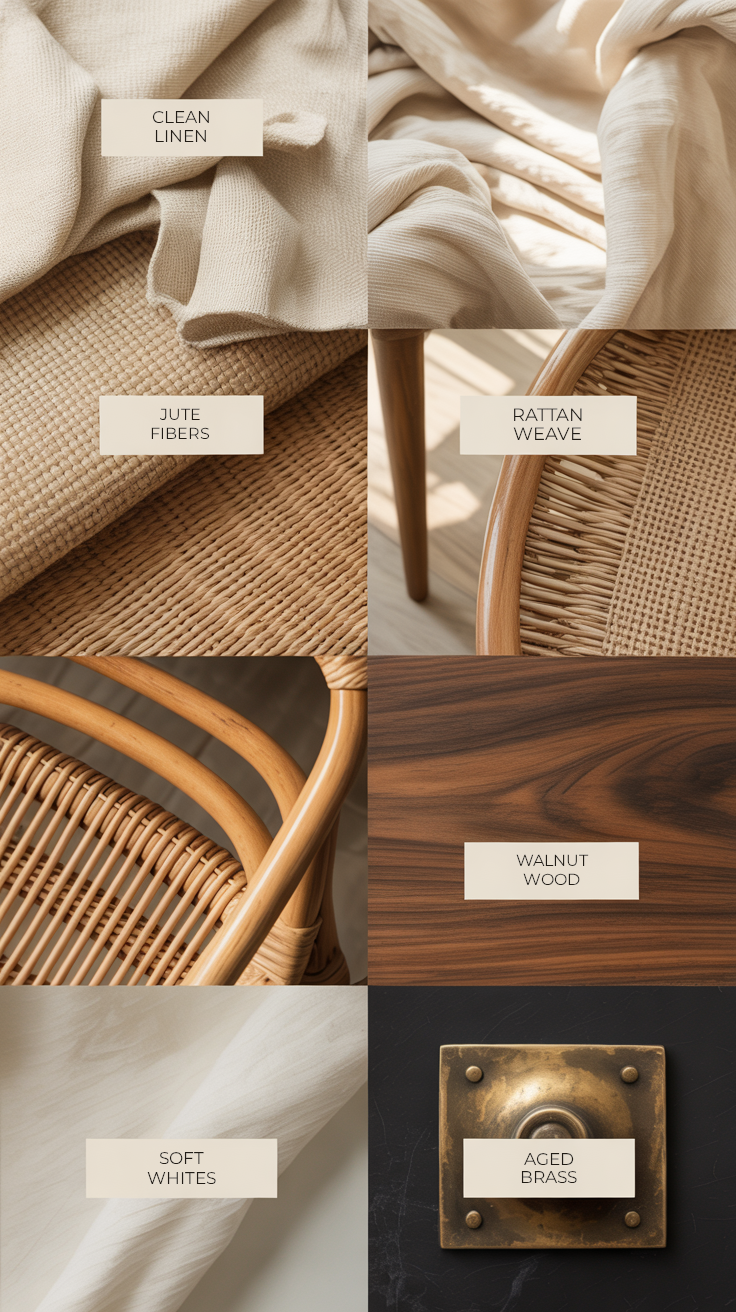
Walnut, mahogany, and dark-stained oak add an immediate sense of history, weight, and permanence to a room. They feel like genuine heirloom pieces that have been passed down through generations. When paired with lighter fabrics, creamy walls, and woven textures, these dark woods do not feel heavy or oppressive; instead, they provide a necessary, sophisticated contrast that makes the entire space feel grounded and intentional.
Refined Natural Fibers
Woven materials are absolutely essential to any coastal look, but in the Seaside Heritage aesthetic, the application is much more refined and elegant. Instead of a chunky, rough, scratchy rope mirror or a basic wicker basket, think of a tightly and intricately woven rattan chair, a fine, elegant seagrass wallpaper that adds subtle dimension to a dining room, or a sophisticated, tightly bound jute rug.
Linen is undeniably the fabric of choice for upholstery and textiles. It is inherently relaxed, breathable, and possesses a beautiful, imperfect texture that feels effortlessly chic. A slipcovered linen sofa in a warm oatmeal or a soft, creamy white is a quintessential staple of the Studio McGee look. It practically begs you to “come sit down and relax,” but the careful tailoring and high-quality fabric keep it looking incredibly elegant rather than sloppy.
Metals with Authentic Patina
Shiny chrome, polished nickel, and overly bright brass can often feel too modern, sterile, or flashy for this specific look. Instead, you should opt for metals that have a bit of age, character, and patina to them. Unlacquered brass that will age beautifully over time, antique bronze, and blackened iron add immediate warmth and a touch of historic, old-world charm.
Think of the heavy, weathered hardware on an old sailing ship or the sturdy fixtures in a historic, wind-battered lighthouse. These metals should look as though they have been exposed to the salty coastal air over time, telling a story of endurance and history.
Furniture: The Art of Blending the Old and the New
The Seaside Heritage aesthetic is entirely about the mix. If everything in your room is brand new, bought from the same catalog, and perfectly matched, it will completely lack soul and character. The ultimate goal is to create a space that feels as though it has been carefully collected and curated over a lifetime.
The Transformative Power of Antiques
Incorporating vintage or antique pieces is not just a suggestion; it is crucial to nailing this look. You do not need a house full of delicate, untouchable antiques, but one or two key, well-placed pieces can completely change the entire vibe and energy of a room.
Look for an antique wooden chest with beautiful brass hardware to use as a unique nightstand, a vintage, slightly battered console table for the entryway, or an old, worn wooden milking stool to tuck next to the freestanding bathtub. These pieces bring a sense of genuine history, craftsmanship, and soul that you simply cannot replicate with mass-produced furniture.
Embracing Traditional Silhouettes
While the Modern Coastal trend leaned heavily into clean, straight, and sometimes severe lines, Seaside Heritage warmly embraces more traditional, classic silhouettes. Look for sofas with elegant English rolled arms, accent chairs with beautifully turned wooden legs, and dining tables with subtle, classic detailing.
However, the absolute key here is balance. If you have a very traditional, heavy antique wooden dining table, you must pair it with more streamlined, modern, or woven chairs to keep the room from feeling like a museum. If your sofa has a classic, traditional shape, keep the fabric simple, un-fussy, and neutral. It is the tension between the old and the new that makes the design sing.
The Cardinal Rule: Avoid the “Matching Set”
I have talked about these so many times but in great detail here. Nothing screams “catalog showroom” or “amateur design” quite like a perfectly matching bedroom or living room set. To get that elevated, collected, and highly curated look, you must mix your wood tones and your furniture styles fearlessly. Pair a dark, antique wood dresser with a soft, upholstered linen bed. Mix a light, airy rattan accent chair with a heavy, luxurious velvet sofa. The contrast and the unexpected pairings are exactly what make the design interesting, dynamic, and sophisticated.
Styling: How to Nod to the Coast Without Being Literal
This is the exact point where things most often go wrong for well-intentioned people. Styling is the final, crucial layer, and it is where the temptation to add a literal anchor, a piece of fishing net, or a “Beach This Way” sign is the absolute strongest. Here is how to style your space with true Seaside Heritage elegance.
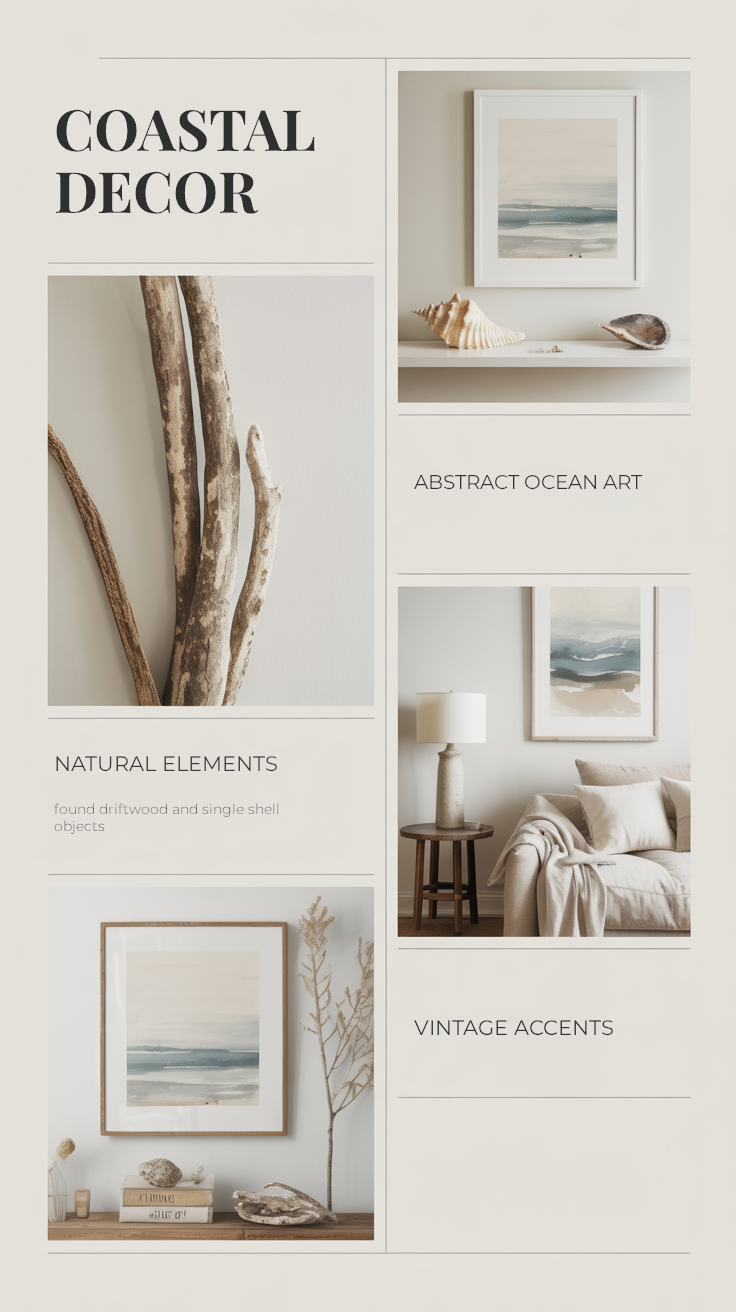
Art That Gives a Feeling, Not a Theme
Instead of buying mass-produced, generic canvas prints of palm trees, flip-flops, or cartoonish seagulls, look for art that evokes the deeper feeling of the coast.
Vintage landscape paintings featuring moody skies, dramatic seascapes with c