30 Small Apartment Bathroom Ideas That Make Every Inch Work Harder

A compact bathroom does not need a dramatic renovation to feel more capable. The most successful small-space updates begin by identifying the jobs the room must perform—morning routines, towel storage, laundry overflow, and the occasional moment to unwind—then giving each one a clear place.

This collection looks at practical ways to improve an apartment bathroom through scale, light, storage, and a few carefully chosen finish details. Some ideas can be installed in an afternoon, while others are worth keeping in mind for a landlord-approved upgrade or a future remodel. Choose the changes that suit your lease, layout, and daily habits, rather than trying to do everything at once.

1. Start With a Mirror That Reaches Beyond the Vanity
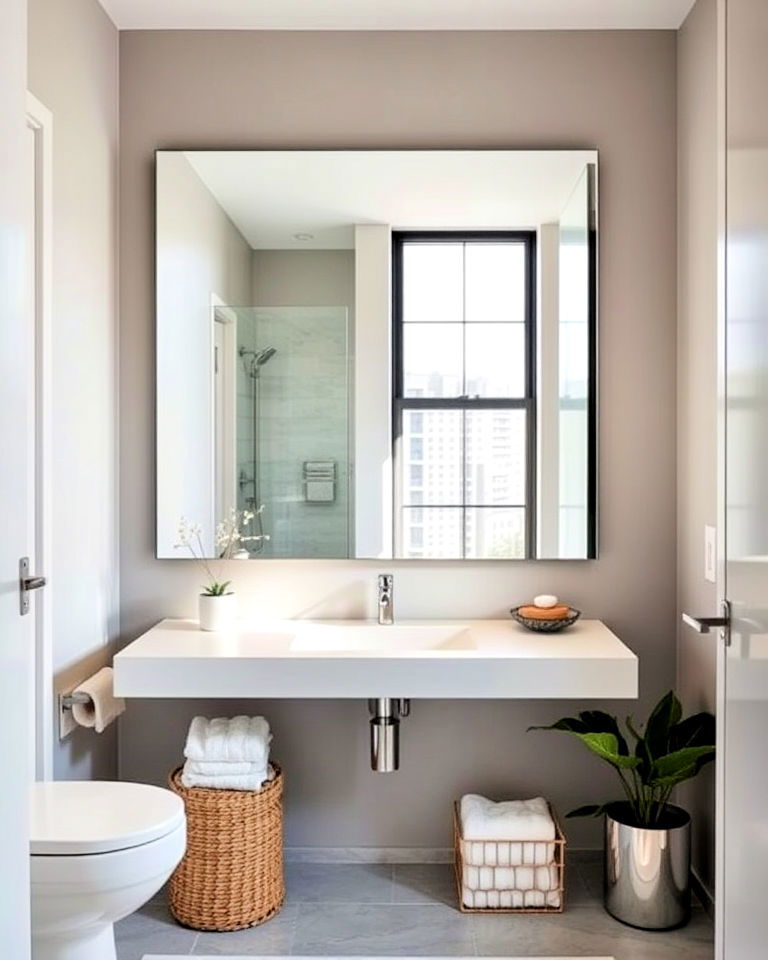
Start With a Mirror That Reaches Beyond the Vanity

A generously scaled mirror is one of the simplest ways to make a narrow bathroom feel less boxed in. It catches daylight and spreads the glow from your fixtures, while giving the wall above the basin a more intentional finish. Choose a proportion that relates to the vanity rather than stopping at a token-size mirror.

Key Details

  • Place it where it can reflect a window or the brightest wall.
  • Keep the frame slim when the room already has strong tile or color.

Pro Tip: Before drilling, tape the outline of the mirror to the wall so you can check its visual weight from the doorway.

2. Claim an Unused Wall With Open Shelving
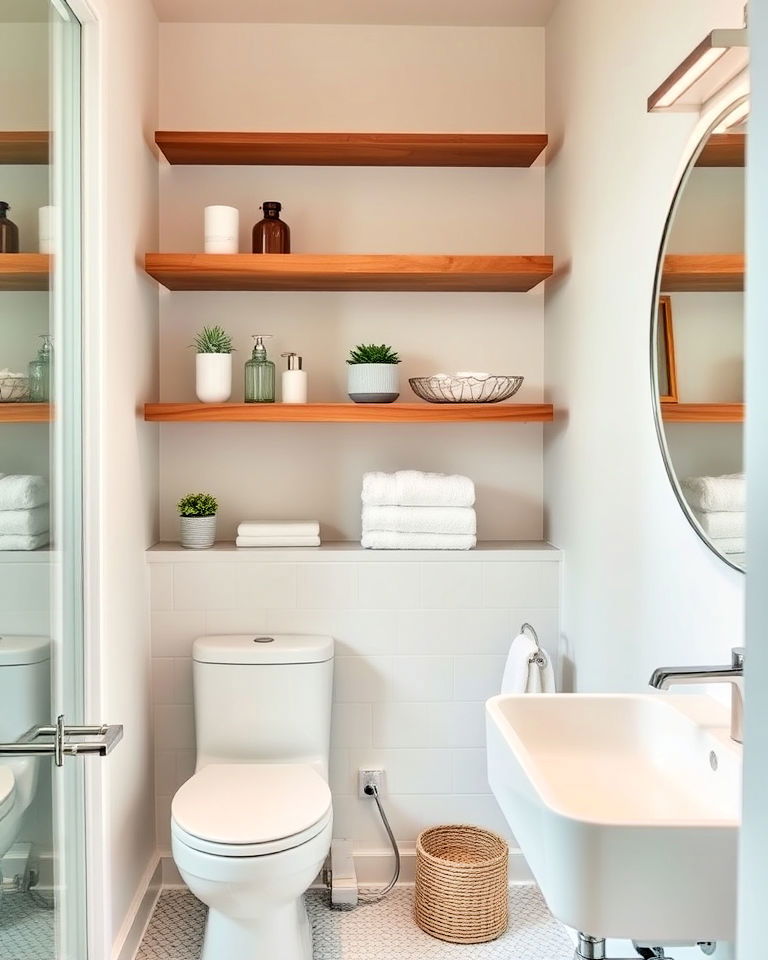
Claim an Unused Wall With Open Shelving

When cabinetry is scarce, a pair of shallow shelves can hold the things you reach for most without filling the floor. Use them for folded hand towels, a small tray of daily toiletries, or a discreet container for extra paper goods. The key is to give the shelves breathing room rather than treating them as a catch-all.

Key Details

  • Mount shelves high enough to clear the toilet tank or faucet splash zone.
  • Use matching baskets to keep loose items from looking busy.

Pro Tip: Limit open shelves to a small, edited set of useful and attractive items so the room still feels calm.

3. Choose a Petite Vanity That Hides the Mess
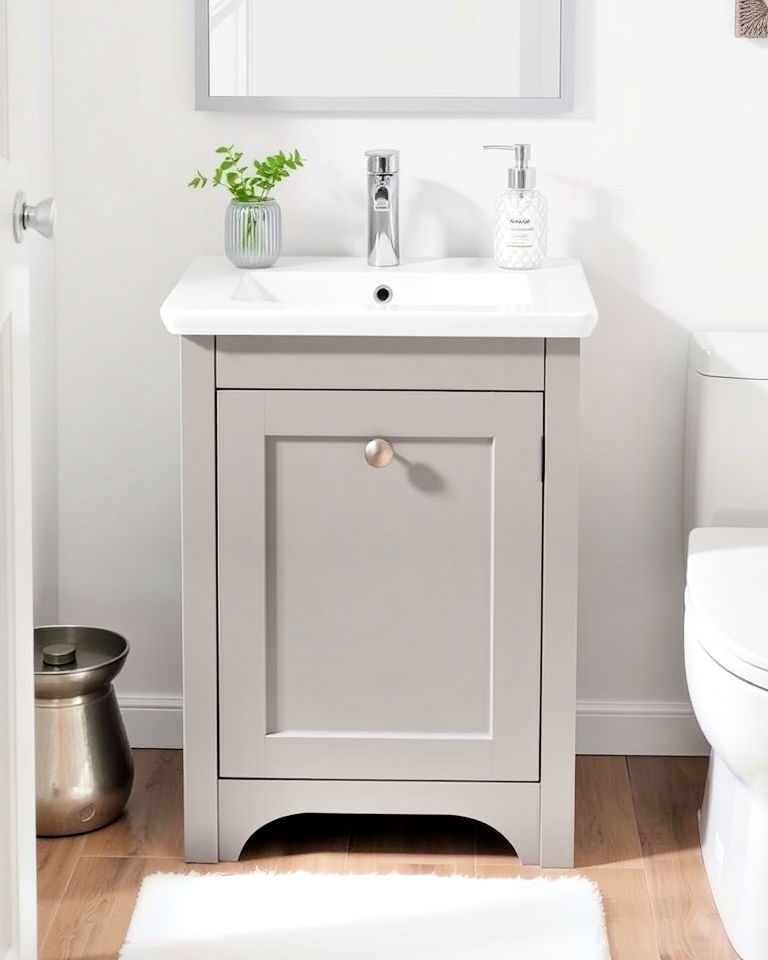
Choose a Petite Vanity That Hides the Mess

A narrow vanity can provide much-needed drawers or a cabinet without turning the circulation path into an obstacle course. Look for a model with the deepest storage possible within your available width, and favor doors or drawers that conceal backups, tools, and everyday clutter. A clean front makes a small bath immediately more restful.

Key Details

  • Measure door swing and knee clearance before choosing a depth.
  • Use drawer dividers to prevent small items from migrating.

Pro Tip: A wall-hung vanity can preserve a visible strip of floor, which often makes a compact layout feel lighter.

4. Build Storage Into the Shower Wall
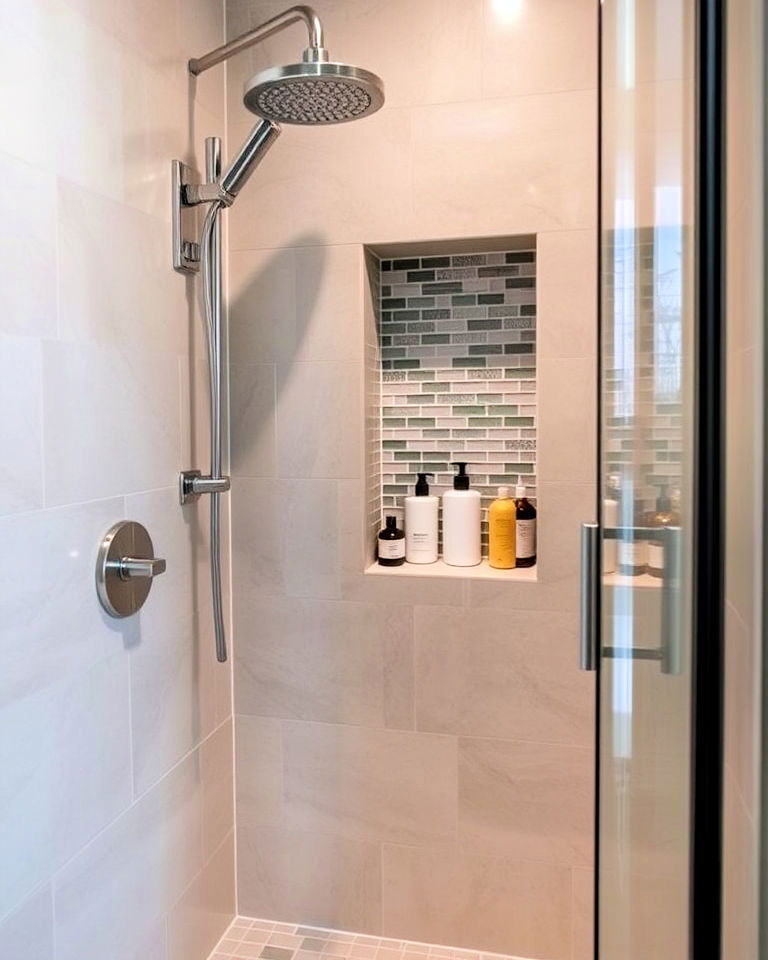
Build Storage Into the Shower Wall

A recessed niche gives shampoo and soap a permanent home without adding another object to the shower floor. In a renovation, position it where bottles are easy to reach but not directly in the strongest spray. A contrasting tile inside the recess can make this practical feature feel like a deliberate design moment.

Key Details

  • Size the niche for the bottles your household actually uses.
  • Include a slight slope toward the shower so water does not collect.

Pro Tip: If you cannot open the wall, select a slim adhesive shower shelf that performs the same job with no construction.

5. Let a Clear Shower Enclosure Keep Sightlines Open
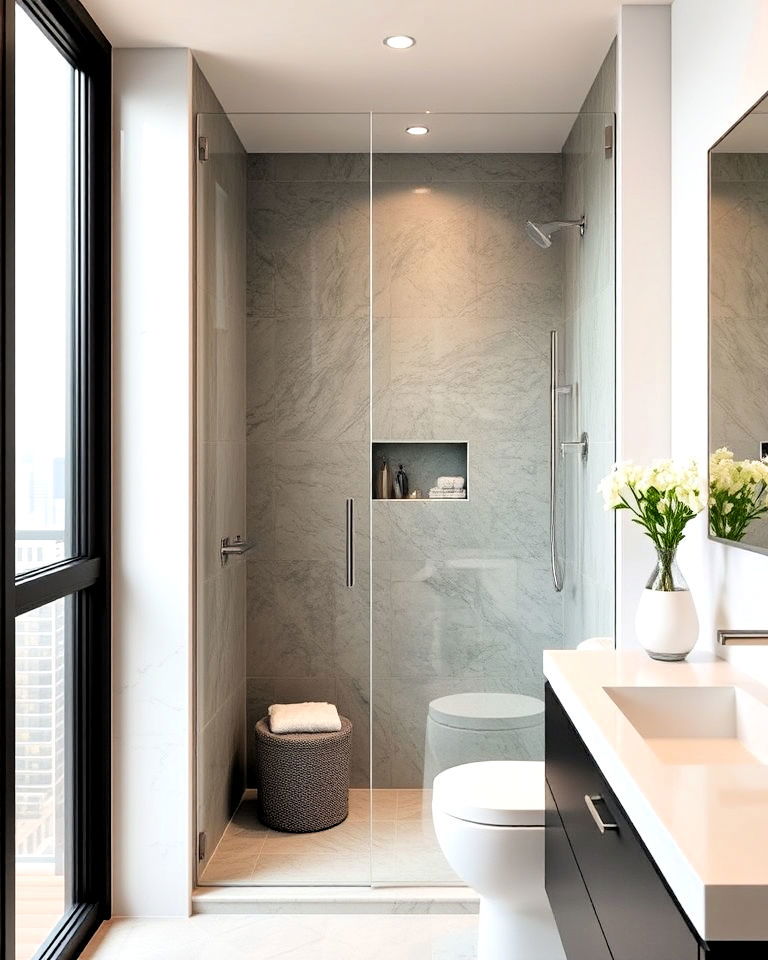
Let a Clear Shower Enclosure Keep Sightlines Open

A frameless or lightly framed glass panel allows the eye to travel through the shower zone instead of stopping at a curtain or heavy metal grid. That continuity can be especially valuable in a bathroom with limited square footage. It also lets a beautiful shower tile run visually across the entire room.

Key Details

  • Confirm that your building allows the required hardware installation.
  • Plan for a squeegee and regular cleaning to keep the glass looking clear.

Pro Tip: A fixed panel can offer an airy look with fewer moving parts than a full glass door.

6. Turn the Cabinet Under the Sink Into a System
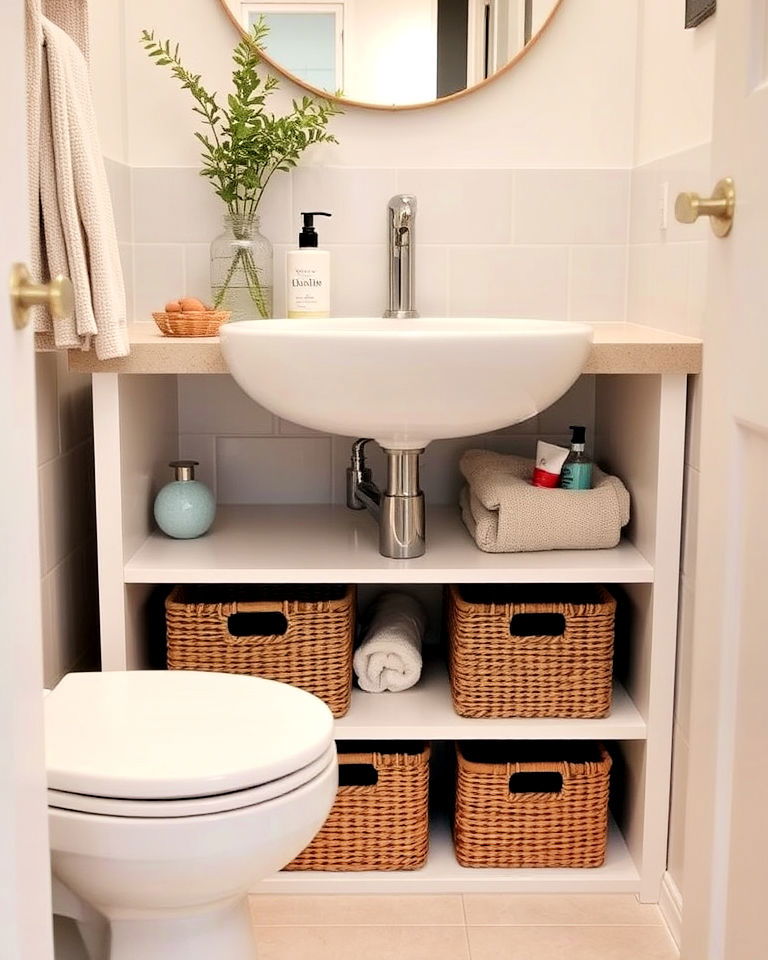
Turn the Cabinet Under the Sink Into a System

The awkward space beneath a sink becomes useful when it is divided into pull-out bins or low baskets. Group supplies by task—hair care, cleaning, travel toiletries, or backup tissue—so you do not have to empty the cabinet to find one item. This is an inexpensive organizing change with an outsized effect.

Key Details

  • Choose low-sided bins that clear the plumbing.
  • Use wipeable materials in case of a minor leak.

Pro Tip: Add simple labels facing outward so every item has an obvious place to return to.

7. Put the Area Above the Toilet to Work
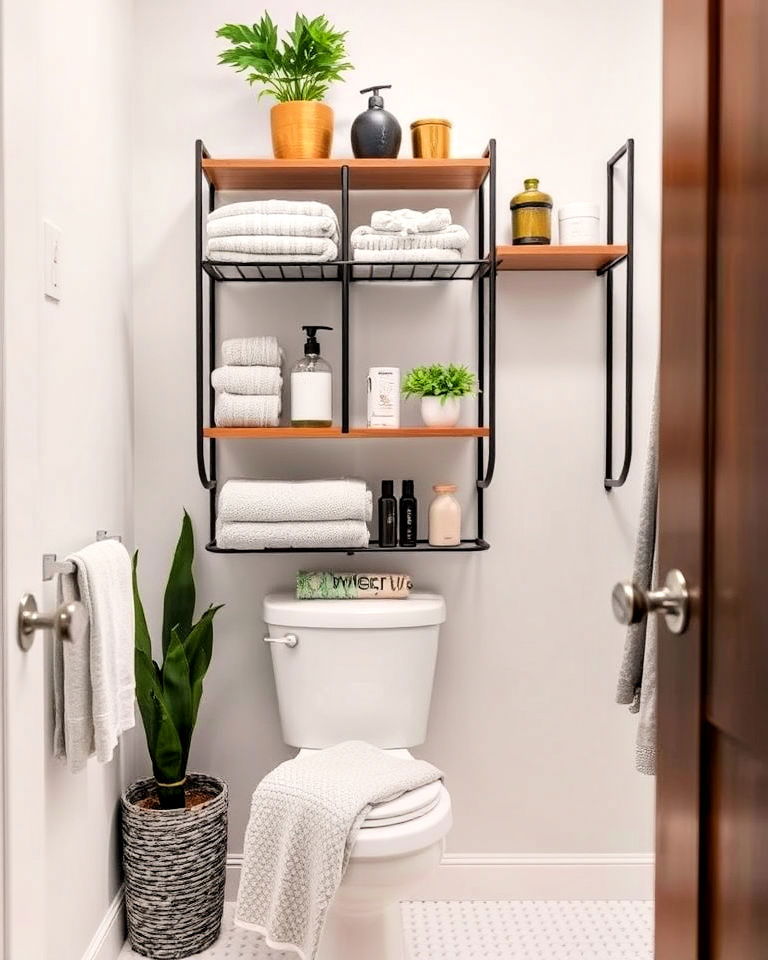
Put the Area Above the Toilet to Work

The wall above the toilet is often the most underused storage opportunity in a small bath. A freestanding étagère or securely installed shelving unit can house reserve towels, baskets, and a little decor while leaving the rest of the room clear. Select a narrow profile that does not crowd the toilet itself.

Key Details

  • Keep frequently used items on the lowest convenient shelf.
  • Anchor tall freestanding units according to the manufacturer’s instructions.

Pro Tip: Use lidded containers for personal supplies so the display remains tidy from every angle.

8. Add Height With a Slim Linen Tower
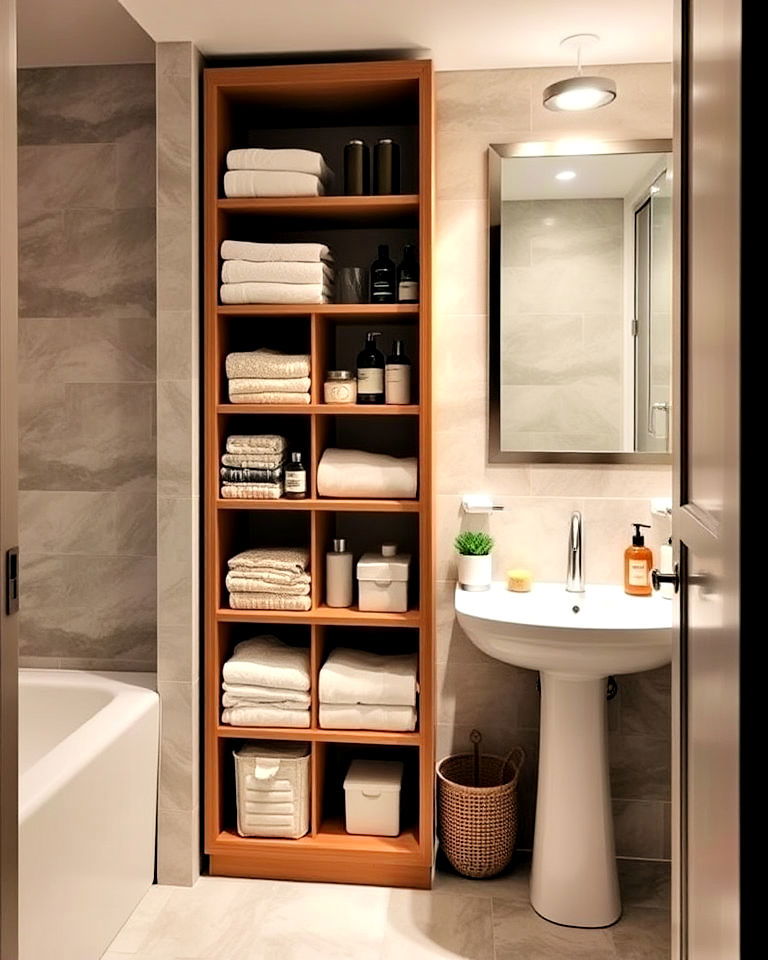
Add Height With a Slim Linen Tower

A tall, narrow cabinet delivers storage volume without claiming the footprint of a wide console. It can take over the role of a missing linen closet, keeping fresh towels and less-pretty cleaning supplies contained behind doors. Adjustable shelves make the piece more adaptable as your needs change.

Key Details

  • Look for a depth that does not pinch the path to the shower.
  • Reserve the top shelves for infrequently used stock.

Pro Tip: Choose a finish that blends with the wall color when you want the cabinet to recede visually.

9. Get Double Duty From a Medicine Cabinet
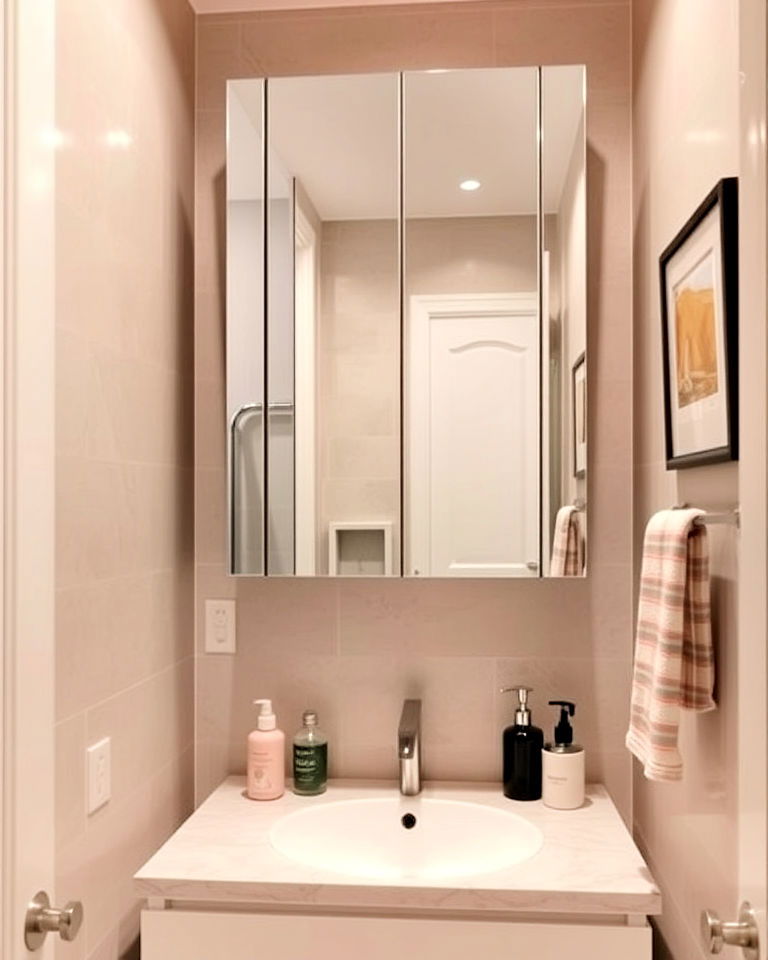
Get Double Duty From a Medicine Cabinet

A mirrored cabinet above the basin adds a reflective surface and a protected spot for daily toiletries in the same square of wall. It is particularly useful when the vanity is too shallow for practical countertop storage. Modern versions are available in clean-lined profiles that suit both classic and contemporary rooms.

Key Details

  • Check whether a recessed installation is possible before ordering.
  • Store small daily items at eye level and backstock lower down.

Pro Tip: A surface-mounted cabinet is a renter-friendlier option when opening the wall is not feasible.

10. Use a Vertical Rail for Everyday Towels
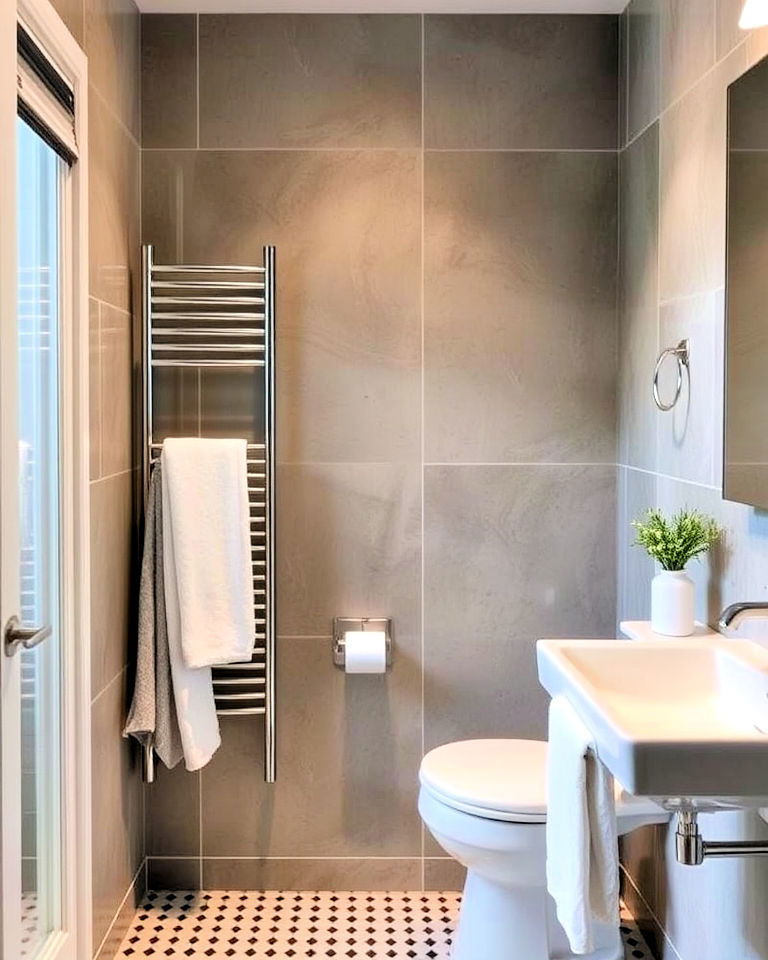
Use a Vertical Rail for Everyday Towels

A tall towel rail uses a skinny slice of wall that would otherwise do nothing, making it a smart answer for a bath with little horizontal room. Its stacked arrangement also separates damp towels so they can dry more effectively. Choose a finish that repeats the faucet or hardware for a cohesive look.

Key Details

  • Install it close enough to the shower for convenience but away from direct spray.
  • Leave enough space between rungs for air circulation.

Pro Tip: A single vertical rail can be more practical than several small hooks in a tight footprint.

11. Make the Back of the Door a Useful Zone
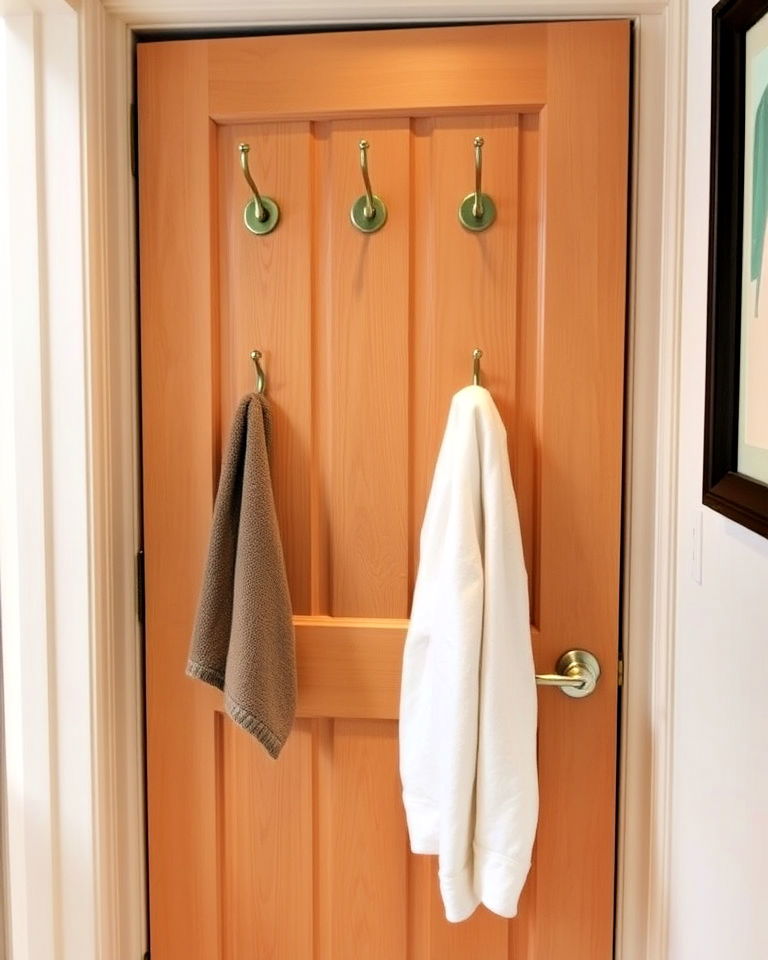
Make the Back of the Door a Useful Zone

The rear face of a bathroom door is a natural home for removable hooks, especially in rentals that lack wall space. Use it for robes, a spare towel, or a hanging toiletry bag, rather than allowing those items to land on the floor. Over-door hardware installs quickly and can move with you later.

Key Details

  • Pick padded hooks to protect the door finish.
  • Check clearance between the hooks and the wall when the door opens.

Pro Tip: Keep only lightweight, daily-use items on the door so it remains easy to operate.

12. Replace Shower Clutter With One Streamlined Caddy
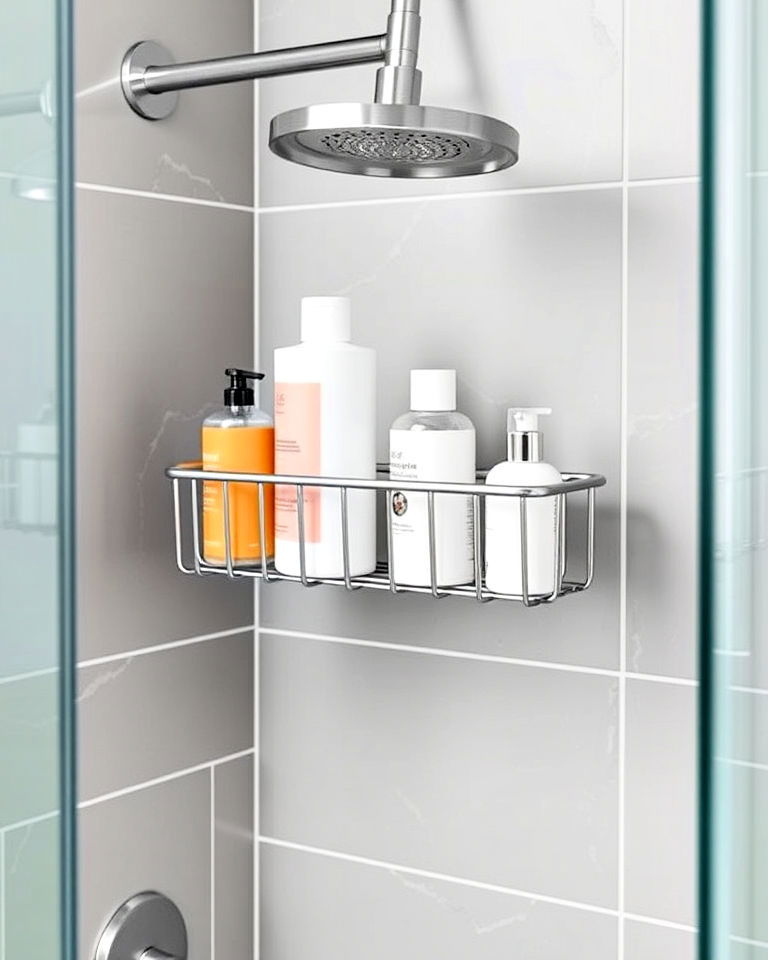
Replace Shower Clutter With One Streamlined Caddy

A well-chosen shower caddy establishes a boundary for bottles, razors, and washcloths, preventing the ledges and floor from becoming cluttered. Look for corrosion-resistant materials, drainage holes, and a mounting method suitable for your wall surface. The best design is the one that holds your routine without looking oversized.

Key Details

  • Measure your tallest bottles before buying.
  • Empty and rinse the caddy regularly to prevent residue buildup.

Pro Tip: Choose a caddy with adjustable-height baskets if more than one person uses the shower.

13. Hide Daily Toiletries Behind a Storage Mirror
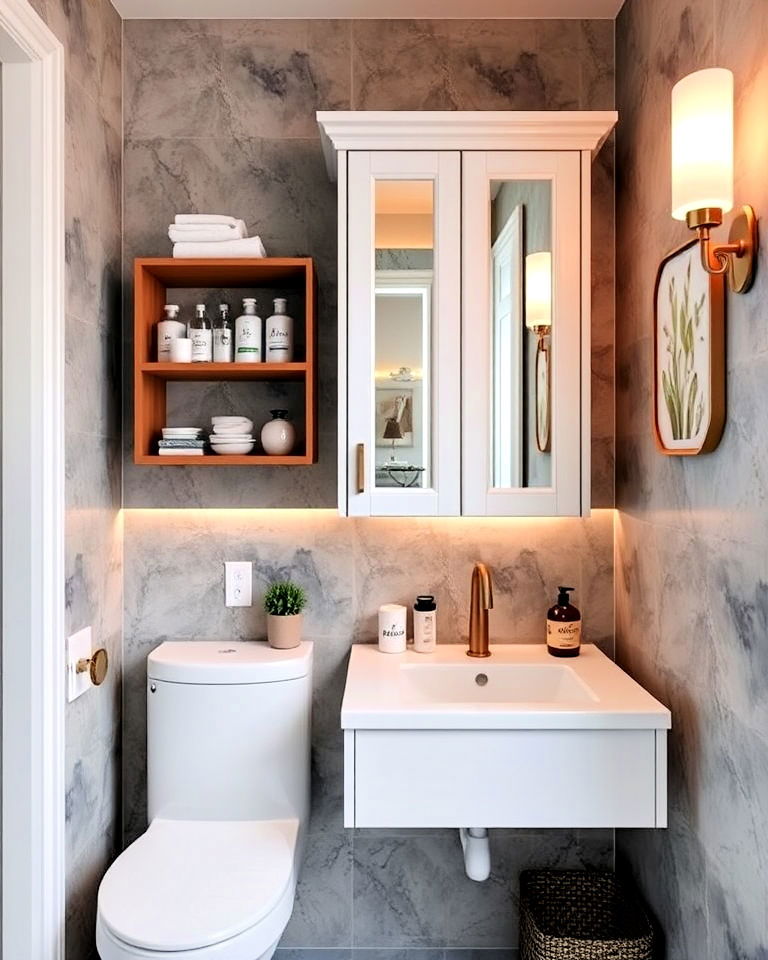
Hide Daily Toiletries Behind a Storage Mirror

A mirror with integrated shelves or a shallow cabinet is a compact solution when you need more surface function without another piece of furniture. It keeps skincare, toothpaste, and medications close to the sink while clearing the vanity top. A simple silhouette prevents the added storage from feeling heavy.

Key Details

  • Match the cabinet depth to your least-obtrusive wall.
  • Use shelf risers inside to make small items easier to see.

Pro Tip: Choose doors with soft-close hinges if the bathroom sits near a bedroom or living area.

14. Give the Vanity Even, Flattering Light

Give the Vanity Even, Flattering Light

Thoughtful lighting makes a bathroom more useful before it makes it more decorative. Side sconces or a well-diffused LED fixture reduce harsh shadows around the face, while a compact form keeps the wall uncluttered. Prioritize a damp-location-rated fixture and an output that supports everyday grooming.

Key Details

  • Place light sources at both sides of the mirror when the layout allows.
  • Use warm-neutral bulbs for a balanced, welcoming appearance.

Pro Tip: Put vanity lighting on a separate switch so it can be used without turning on every overhead light.

15. Keep the Ceiling Quiet With Recessed Fixtures

Keep the Ceiling Quiet With Recessed Fixtures

Recessed ceiling lights provide broad illumination without a pendant or flush mount occupying visual space overhead. This can make a low or narrow ceiling feel less crowded, particularly when combined with a strong mirror and bright wall finish. Use them as part of a layered lighting plan rather than the only source of light.

Key Details

  • Confirm ceiling access and building approval before installation.
  • Choose moisture-rated trims for wet areas.

Pro Tip: A dimmer lets one lighting layout shift easily from busy mornings to quiet evenings.

16. Use a Light Tile Field to Expand the Room

Use a Light Tile Field to Expand the Room

Pale tile can help a small bathroom feel more open by bouncing available light around the room. Soft white, warm ivory, misty blue, and gentle gray can all create an airy foundation without making the space feel sterile. Larger-format tiles can further simplify the look by reducing visible grout lines.

Key Details

  • Test tile samples in the room’s actual daytime and evening light.
  • Select grout close to the tile color for a more continuous effect.

Pro Tip: Use texture, a matte finish, or warm metal hardware to keep an all-light palette from feeling flat.

17. Ground the Room With a Graphic Floor

Ground the Room With a Graphic Floor

A patterned floor is a confident way to give a plain apartment bathroom a point of view while keeping the upper walls simple. Geometric tile creates energy underfoot and can define the room as a finished space, even when the fixtures themselves are modest. Keep surrounding finishes restrained so the pattern has room to shine.

Key Details

  • Use a scale of pattern that feels readable in a small room.
  • Repeat one floor-tile tone in a towel or accessory for continuity.

Pro Tip: If replacement tile is not an option, a durable, washable bathroom mat can introduce a temporary version of the same idea.

18. Create One Purposeful Tile Moment

Create One Purposeful Tile Moment

Rather than covering every wall with a bold material, concentrate personality in one feature zone. The wall behind the vanity or a section inside the shower are natural candidates for patterned, textured, or richly colored tile. A limited area gives the room character without shrinking it visually.

Key Details

  • Keep the accent within a clearly defined architectural boundary.
  • Balance busy tile with quieter paint, mirror, and flooring choices.

Pro Tip: In a rental, removable wall treatments can provide a similar focal point without permanent tile work.

19. Use a Shower Curtain as an Instant Style Layer

Use a Shower Curtain as an Instant Style Layer

A shower curtain has enough visual presence to refresh a bathroom without a renovation budget. Pick a print, stripe, or color that gives the room a clear mood, then pull one shade from it into towels or a bath mat. Because it is easy to swap, it is an ideal place to experiment.

Key Details

  • Hang the rod slightly higher to create a taller visual line.
  • Use a washable liner to protect the decorative curtain.

Pro Tip: Choose a curtain with a generous width so it looks full when closed, not stretched flat.

20. Add Greenery Without Sacrificing the Counter

Add Greenery Without Sacrificing the Counter

A hanging plant can soften hard bathroom surfaces and add a hint of life without using precious counter area. Choose a species appropriate for the light level and humidity of the room, and be realistic about watering access. A single well-placed planter often has more impact than several tiny accents.

Key Details

  • Confirm that the ceiling anchor is rated for the planter’s fully watered weight.
  • Use a saucer or sealed cachepot to prevent drips.

Pro Tip: If natural light is limited, place a low-maintenance faux plant where it adds softness without creating a care burden.

21. Fit a Sink Into an Underused Corner

Fit a Sink Into an Underused Corner

A corner sink can rescue a narrow layout by moving the basin out of the main traffic line. It works particularly well in powder rooms or bathrooms where a conventional vanity competes with the door or shower. Select the bowl size carefully so the solution remains comfortable for everyday washing up.

Key Details

  • Map the faucet reach and clearance with a full-scale paper template.
  • Allow enough elbow room on both usable sides of the basin.

Pro Tip: Wall-mounted corner models offer the most visual lightness when you do not need under-sink cabinetry.

22. Float the Basin to Reveal More Floor

Float the Basin to Reveal More Floor

A wall-mounted sink makes a tight bathroom feel less congested because the floor remains visible beneath it. This approach can be especially effective in a guest bath or a minimalist renovation where bulky storage is not a priority. Pair it with a nearby cabinet or basket if you still need a place for essentials.

Key Details

  • Verify that the wall framing can support the fixture.
  • Choose a basin with enough deck space for your preferred soap dispenser.

Pro Tip: Keep the area below the sink clear unless a small, visually light basket is genuinely useful.

23. Streamline the Layout With a Compact Shower

Streamline the Layout With a Compact Shower

A smaller shower enclosure can free valuable floor area in a bathroom that does not need a tub. Clear glass, a carefully selected door style, and built-in storage help the compact footprint feel purposeful rather than compromised. This is a renovation decision best made after reviewing local codes, plumbing, and circulation clearances.

Key Details

  • Choose a door configuration that does not conflict with the vanity or toilet.
  • Use light finishes inside the enclosure to maintain openness.

Pro Tip: A curbless or low-threshold approach can make a compact shower feel more continuous with the rest of the floor.

24. Make Room for a Short, Deep Soaking Tub

Make Room for a Short, Deep Soaking Tub

A compact tub is an option for people who value a bath but cannot accommodate a conventional long model. These tubs trade length for depth, creating a more upright soaking experience in a modest footprint. Before committing, confirm the water capacity, floor load, plumbing placement, and bathing comfort for the people who will use it.

Key Details

  • Compare interior dimensions, not only the exterior footprint.
  • Plan a ledge or nearby surface for towels and bath essentials.

Pro Tip: A glass shower screen can make a tub-shower combination feel more open than a constantly closed curtain.

25. Consider a Fold-Away Shower Seat

Consider a Fold-Away Shower Seat

A folding shower bench adds a practical perch without asking a small enclosure to surrender permanent floor space. It can support a more comfortable bathing routine, create a spot for products while shaving, or simply add flexibility for guests. For safety and durability, use a model and installation method designed for wet locations.

Key Details

  • Mount the bench to appropriate structural backing.
  • Choose materials that dry quickly and resist corrosion.

Pro Tip: Treat a shower seat as a building project, not a decorative accessory; secure installation matters.

26. Warm Towels With a Wall-Mounted Rack

Warm Towels With a Wall-Mounted Rack

A slim towel warmer brings a small daily luxury to the bathroom while also using wall height rather than floor area. In humid spaces, it can help towels dry between uses, depending on the model and room conditions. Choose an electrical or hydronic option only after understanding the building’s rules and installation requirements.

Key Details

  • Select a size based on the number of towels you actually use.
  • Keep textiles clear of switches and follow the manufacturer’s safety guidance.

Pro Tip: A ladder-style warmer can replace a standard towel bar while adding a more finished look.

27. Upgrade the Toilet Without Adding Another Fixture

Upgrade the Toilet Without Adding Another Fixture

A bidet attachment can improve a toilet’s functionality without requiring a separate unit or a larger footprint. Because models and plumbing requirements vary, start by checking compatibility with your toilet and the building’s water connections. A neat installation with a properly routed hose is essential in a small room where every detail is visible.

Key Details

  • Review installation instructions and local rental rules before purchasing.
  • Choose a model with straightforward controls and a compatible connection.

Pro Tip: If you are unsure about plumbing work, arrange professional installation rather than forcing fittings to work.

28. Contain Laundry in a Narrow, Intentional Hamper

Contain Laundry in a Narrow, Intentional Hamper

An appropriately scaled hamper prevents worn towels and clothing from taking over the bathroom floor. A slim lidded model can fit beside a vanity or in a corner while keeping the room looking collected. Look for ventilation and a removable liner if laundry will sit for more than a day or two.

Key Details

  • Measure the available corner before shopping.
  • Choose a style that can be carried easily to the laundry area.

Pro Tip: Keep a small wash bag inside for delicates so they are ready to move straight to the machine.

29. Lean a Storage Ladder Against a Blank Wall

Lean a Storage Ladder Against a Blank Wall

A leaning ladder gives hand towels a home in a spot too narrow for a cabinet, and it adds a relaxed vertical element to the room. It works best as a modest textile holder rather than a crowded shelving unit. Choose a finish that coordinates with the room’s other metals or wood tones.

Key Details

  • Use it on a dry wall rather than directly beside a wet shower.
  • Keep the ladder stable and away from the door swing.

Pro Tip: Two neatly folded towels are usually enough; overloading the rungs can turn a useful piece into visual clutter.

30. Rethink the Door Swing When the Layout Feels Stuck

Rethink the Door Swing When the Layout Feels Stuck

In the right building and layout, a sliding door can recover valuable clearance that a swinging bathroom door consumes. Barn-style hardware makes the mechanism visible, while pocket doors conceal it inside the wall; each option has different construction and privacy considerations. Treat this as a larger project, but a potentially transformative one in a constricted plan.

Key Details

  • Confirm wall conditions, sound privacy, and lock options before choosing a sliding system.
  • Keep the rail and adjacent wall clear so the door can operate fully.

Pro Tip: If a new door is not possible, reversing the swing direction may solve a circulation problem with far less work.

Conclusion

Small-bathroom design becomes much easier when you focus on visual breathing room and a reliable home for the essentials. Begin with the changes that eliminate friction in your routine—better lighting, a dependable storage solution, or a more efficient shower setup—then add personality through a mirror, tile, textiles, or greenery.

The goal is not to fill every inch. A well-organized apartment bathroom feels larger because the usable surfaces are clear, the lighting is intentional, and each object earns its place.

Leave a Reply

Your email address will not be published. Required fields are marked *