A comfortable living room is rarely the result of one dramatic purchase. It comes together through a sequence of practical decisions: how the seating works, where the light lands, what the eye notices first, and which details make the room feel genuinely lived in.
These living room decorating ideas are designed to be mixed rather than copied as a formula. Start with the two or three changes that solve a real problem in your space, then layer in personality over time. The result should feel composed, useful, and unmistakably yours.
1. Begin with a Rug That Defines the Conversation Area
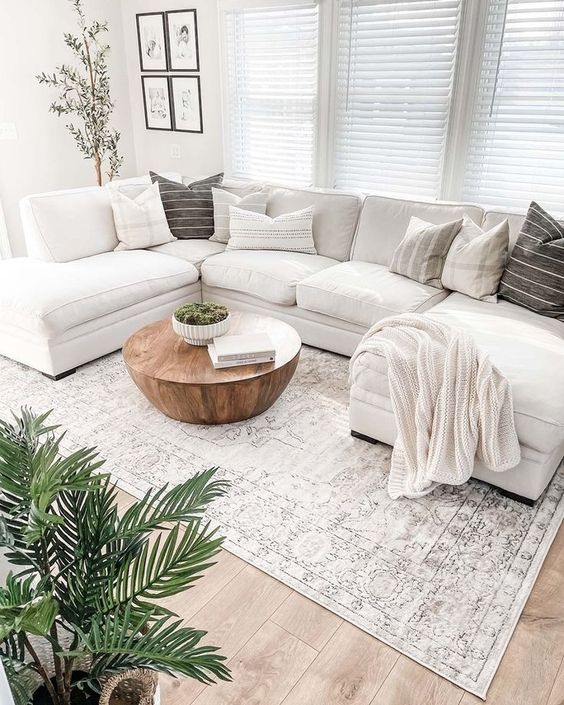
Treat the rug as the visual foundation for the seating zone, not as a small accent floating in the middle of the floor. A generously scaled rug connects the sofa, chairs, and table so the layout reads as one intentional gathering space.
Key Details
- Let the front legs of major seating pieces rest on the rug.
- Choose a low-contrast pattern when the room already has several focal points.
- Use wool, cotton, jute, or a washable blend according to the room’s daily demands.
Pro Tip: Before ordering, mark the rug dimensions with painter’s tape; it is the fastest way to check whether the proportion feels generous.
2. Give the Main Sofa Room to Breathe
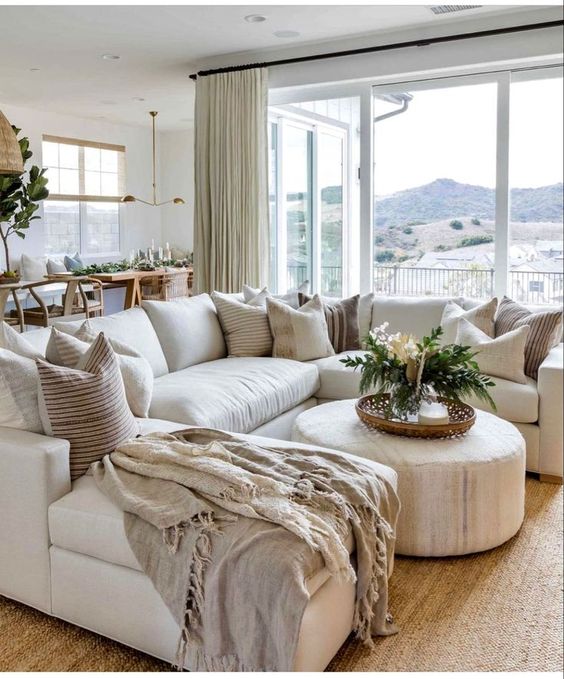
A sofa should anchor the room without pinning every other piece to the wall. Pull it forward when possible, leaving a clear path behind it or beside it, and aim for a layout that lets people talk without turning their bodies toward a screen.
Key Details
- Keep a comfortable walking route around the seating group.
- Match the sofa depth to the room rather than automatically choosing the largest option.
- Use the sofa back to define zones in an open-concept plan.
Pro Tip: If the sofa faces a television, angle a chair toward both the sofa and the view so the room supports conversation as well as watching.
3. Choose an Ottoman That Earns Its Footprint
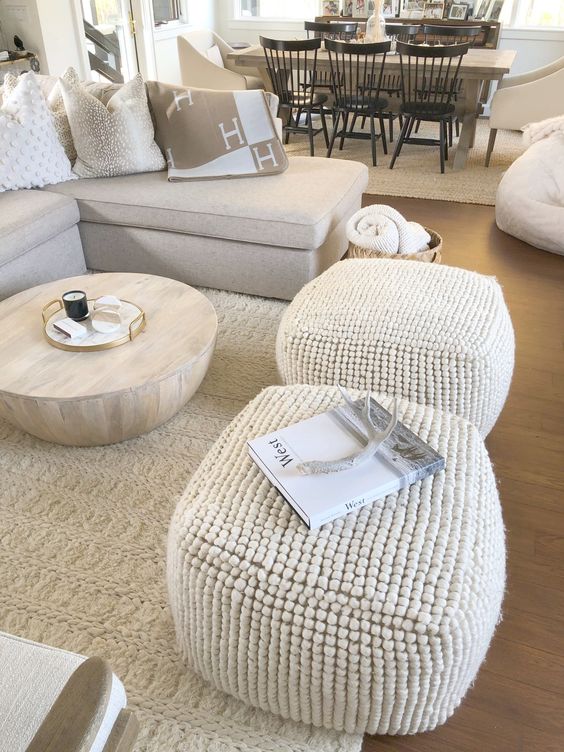
An upholstered ottoman can soften a seating arrangement while providing a place to prop up feet, offer an extra perch, or hold a tray for drinks. Its rounded edges are especially helpful in tight layouts or homes with energetic traffic patterns.
Key Details
- Use a firm tray when the ottoman needs to function as a table.
- Keep the ottoman roughly proportional to the sofa’s visual weight.
- Select a durable textile for a high-use family room.
Pro Tip: A pair of smaller ottomans offers more flexibility than one large piece and can be separated when guests arrive.
4. Turn One Corner into a Destination
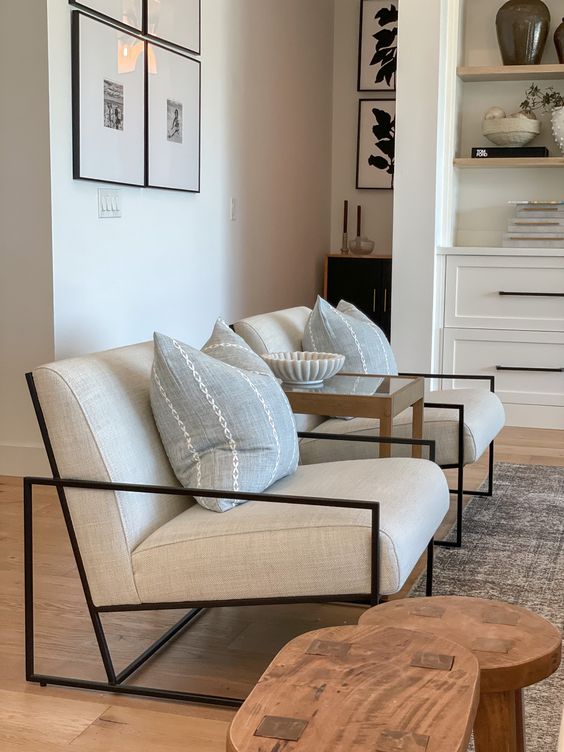
A lone chair feels purposeful when it has a job: reading, talking, enjoying a window view, or balancing the visual weight of a large sofa. Add a small table and a nearby light so the chair becomes a usable mini-zone rather than a decorative afterthought.
Key Details
- Choose a silhouette that contrasts with the sofa’s shape.
- Leave enough elbow room between the chair and its side table.
- Use a distinctive fabric to introduce a second layer of color or texture.
Pro Tip: Try placing the chair at a slight angle instead of square to the wall; the change often makes the entire arrangement feel more welcoming.
5. Place Side Tables Where Life Actually Happens
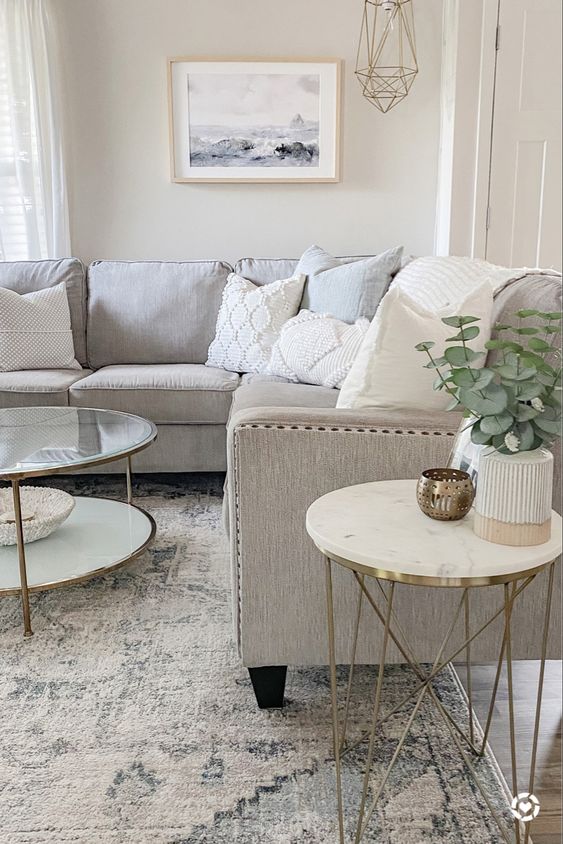
The most successful side tables are close enough to hold a drink, a book, or a lamp without forcing anyone to stretch. Mixing one slender table with one substantial table can make a room feel collected while still meeting everyday needs.
Key Details
- Aim for a tabletop near the seat cushion height.
- Use a compact pedestal table where the room’s circulation is tight.
- Choose a lower shelf only if it will be edited and used, not filled by default.
Pro Tip: Check every seat in the room for a nearby landing spot; that simple audit often reveals which table is missing.
6. Layer the Light Instead of Relying on One Fixture
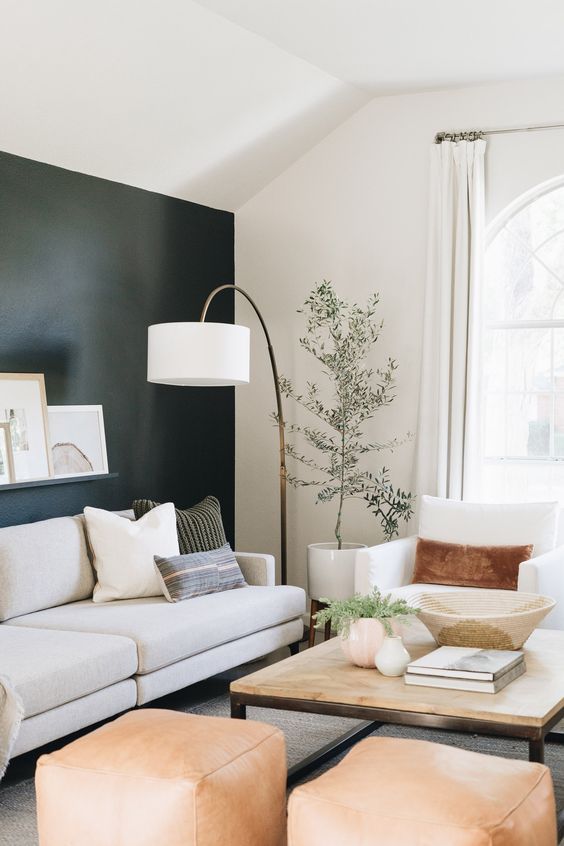
A living room feels more relaxed when light comes from several heights rather than one bright source overhead. Combine ambient light with a focused reading light and a softer accent light to create depth at different times of day.
Key Details
- Use table lamps to give low surfaces a warm glow.
- Position a floor lamp beside a chair or at the end of a sectional.
- Put key lighting on dimmers when electrical work allows.
Pro Tip: Turn on lamps from different parts of the room in the evening; if one area looks dim or uninviting, add light there instead of increasing the overall brightness.
7. Make the Ceiling Light Part of the Composition
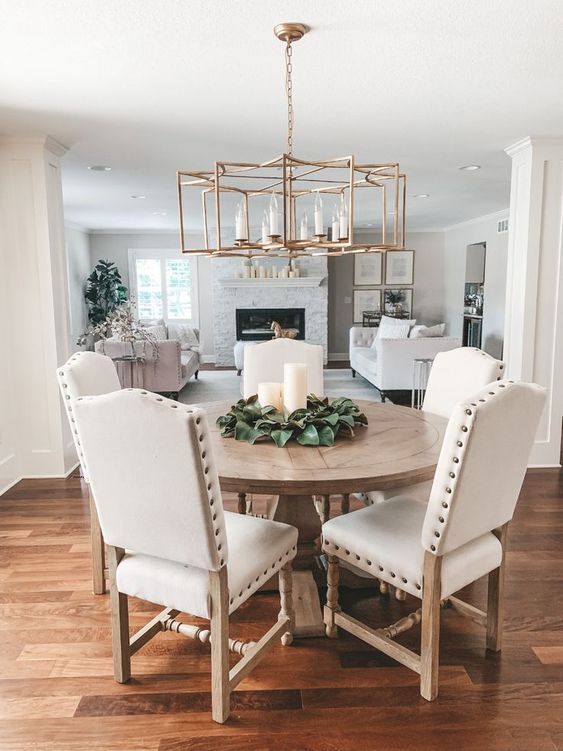
A sculptural pendant or chandelier can give the room a strong center without crowding the floor. The key is choosing a fixture that complements the scale of the furniture and leaves enough clear space around it to be appreciated.
Key Details
- Center the fixture on the seating arrangement rather than automatically on the room.
- Repeat one material from the fixture elsewhere in small doses.
- Select a design that looks pleasing both on and off.
Pro Tip: Use the coffee table or central ottoman as a visual guide when deciding where a statement fixture should hang.
8. Use Sconces to Frame a Feature
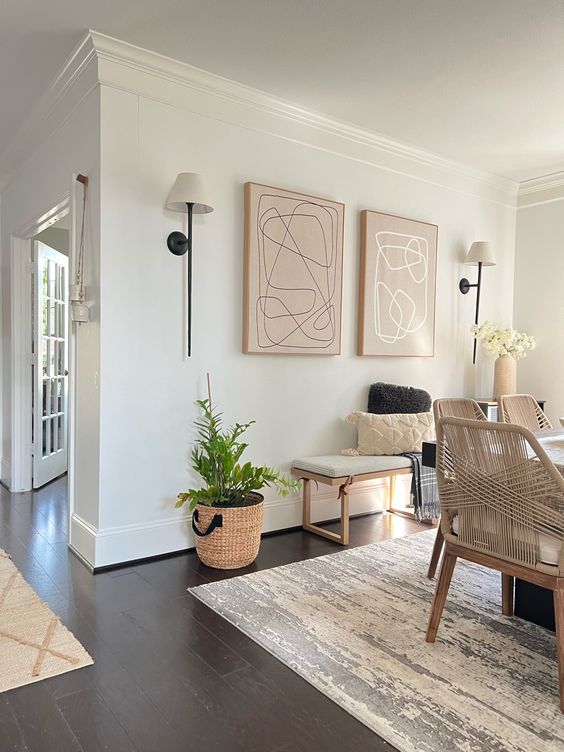
Wall sconces bring a tailored, architectural feel to a living room and free up precious tabletop space. They work beautifully as a pair around art, a mirror, a fireplace, or a built-in bookcase.
Key Details
- Choose a projection that does not interfere with walking paths.
- Use adjustable sconces where people read or work.
- Keep the finish in dialogue with the room’s existing hardware.
Pro Tip: Plug-in sconces are a useful option when you want the look of hardwired lighting without opening the wall.
9. Give the Coffee Table a Clear Role
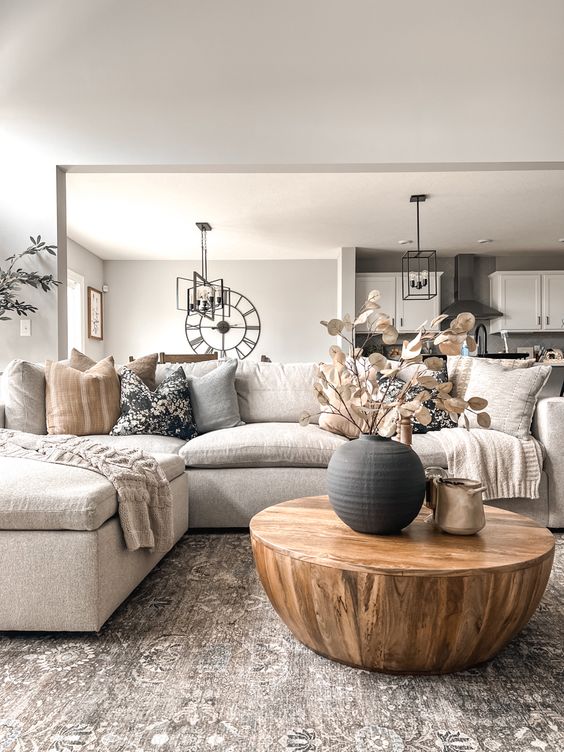
A coffee table should make the seating group easier to use, not obstruct it. Choose a shape that suits the circulation pattern, then style only a portion of the surface so there is still room for a remote, a mug, or a casual game night.
Key Details
- Choose round or oval forms for narrow pathways and sharp-cornered rooms.
- Keep a comfortable gap between the table and seating.
- Use a tray to corral smaller objects and make clearing the surface easy.
Pro Tip: If a coffee table feels too heavy visually, consider a glass top, open base, or two smaller nesting tables.
10. Bring in Warmth with Natural Fiber
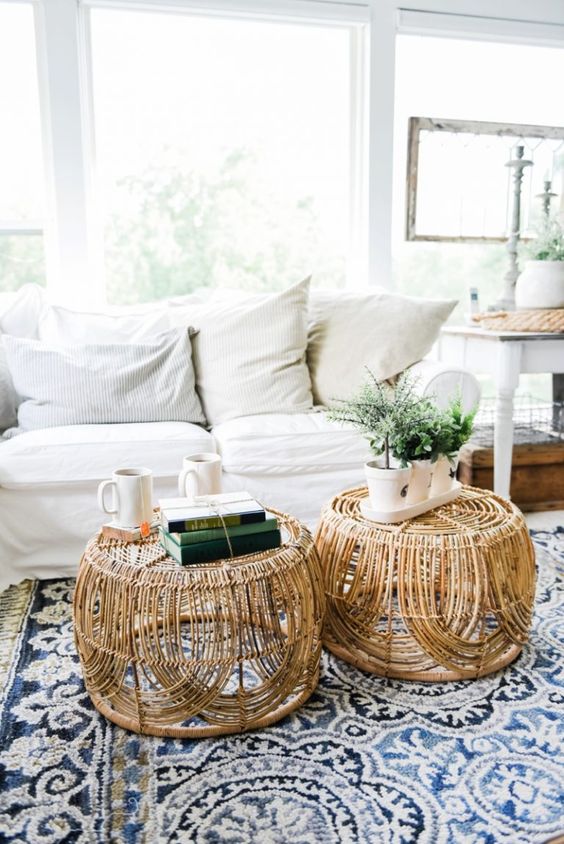
Rattan, cane, woven grass, and pale wood can keep a living room from feeling overly polished or flat. These materials are most effective when used as punctuation: a chair, a table, a basket, or a lampshade can be enough to introduce warmth.
Key Details
- Balance woven materials with softer fabrics and smoother finishes.
- Use a basket to hide everyday blankets or children’s toys.
- Choose a natural finish that works with the wood undertones already present.
Pro Tip: One warm, textured material repeated twice will look more intentional than many unrelated rustic accents.
11. Let a Bookcase Reveal What You Love
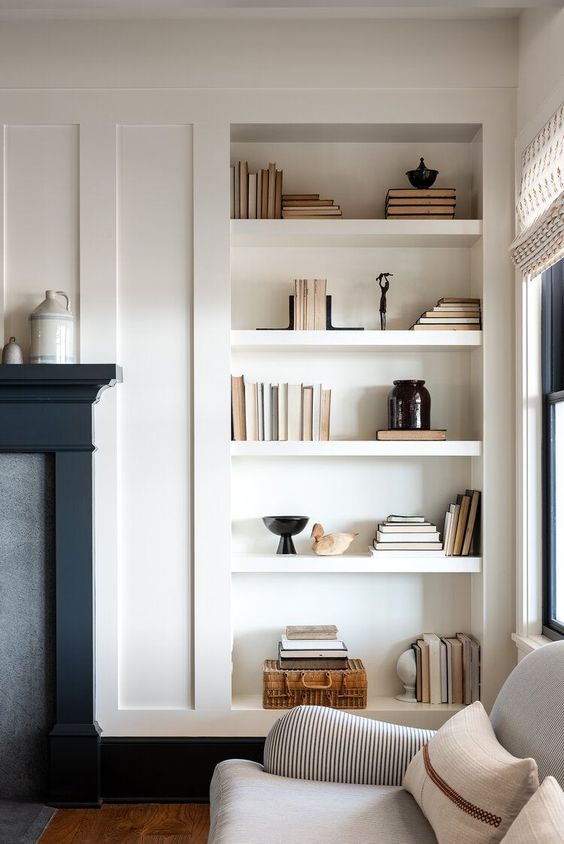
Bookshelves are more memorable when they hold evidence of real interests rather than a collection of identical fillers. Arrange books in varied orientations, leave breathing room around special objects, and allow a few pieces to be slightly unexpected.
Key Details
- Start with the books you use and enjoy before adding decorative objects.
- Vary vertical and horizontal stacks to create rhythm.
- Keep a few open areas so the shelf does not read as a single dense block.
Pro Tip: Place your most personal pieces at eye level, where they can become natural conversation starters.
12. Edit Open Shelves with More Space Than Stuff
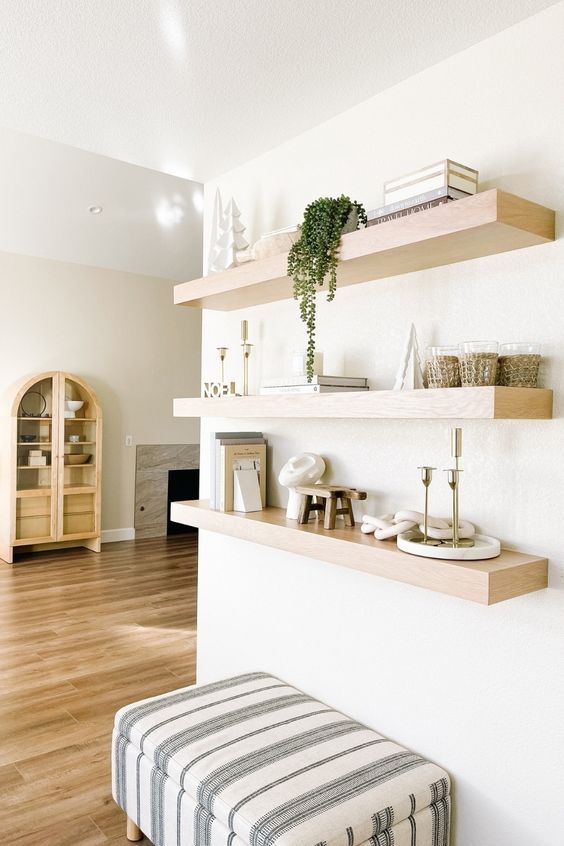
Open shelving looks calm when every item has a reason to be there. Group related pieces, change heights within each vignette, and let the shelf color or wall behind it remain visible as part of the design.
Key Details
- Build small clusters instead of lining objects up in a row.
- Use a restrained palette for vessels, frames, and sculptural pieces.
- Step back between adjustments to assess the composition from across the room.
Pro Tip: Removing one-third of the objects is often the quickest path to a more elevated shelf display.
13. Create a Gallery Wall with a Point of View
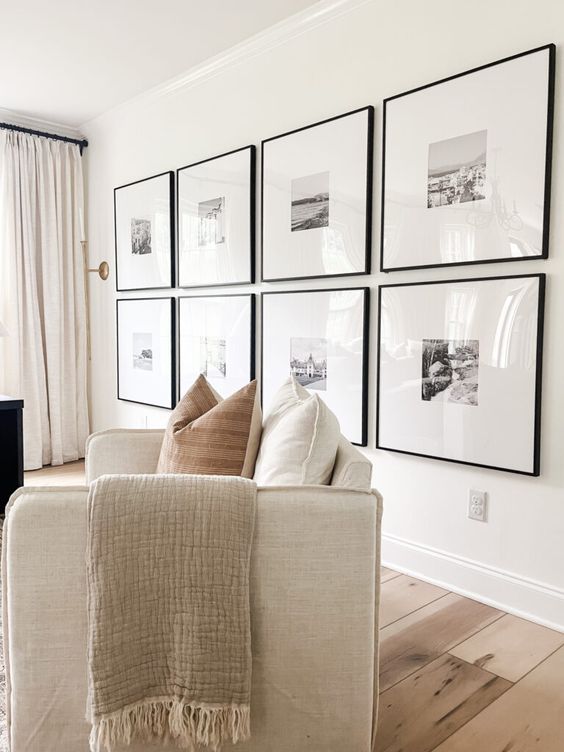
A gallery wall becomes cohesive when it is organized by a shared idea, such as a family story, a muted palette, travel imagery, or one frame finish. The individual pieces do not need to match, but the arrangement should feel deliberately paced.
Key Details
- Lay the grouping on the floor before making any holes.
- Anchor the collection around one larger piece or a strong centerline.
- Repeat one or two frame colors to create continuity.
Pro Tip: Use paper templates taped to the wall to test spacing and placement before hanging the real artwork.
14. Bounce Daylight with a Well-Placed Mirror

A mirror can brighten a darker living room when it reflects a window, a lamp, or an attractive view. It also adds a vertical surface with visual depth, which is useful above a console, fireplace, or low furniture piece.
Key Details
- Reflect something beautiful rather than visual clutter.
- Use a large piece to make an intentional statement.
- Choose a frame that echoes the room’s tone: refined, rustic, graphic, or traditional.
Pro Tip: Stand in several places before mounting a mirror; the reflection changes dramatically with the viewing angle.
15. Turn One Wall into an Anchor

A feature wall is most effective when it strengthens an existing focal point, such as the fireplace wall, the wall behind the sofa, or a built-in media zone. Let the treatment support the architecture instead of competing with every other surface.
Key Details
- Use paneling, paint, plaster-like texture, or a restrained pattern.
- Keep adjacent walls quieter so the emphasis remains clear.
- Pull a color from textiles or art to make the wall feel integrated.
Pro Tip: Test a large paint sample at multiple times of day before committing; a dramatic color can read very differently under evening light.
16. Introduce Pattern with Wallpaper

Wallpaper can bring energy to a room without requiring a complete renovation. In a living area, it works especially well on a wall that is not already crowded with art, shelving, or a large television.
Key Details
- Choose scale according to the room’s size and ceiling height.
- Ground a lively print with solid upholstery or a simple rug.
- Consider a removable option if you are experimenting in a rental.
Pro Tip: Order a sample large enough to view from across the room; a pattern’s impact cannot be judged from a phone-sized swatch.
17. Use Paint to Set the Room’s Emotional Temperature

Color changes how the room feels before any furniture is added. Soft mineral tones can make a bright room more grounded, while a warm off-white can keep a shadowy room from becoming severe. The best choice responds to the light your room actually receives.
Key Details
- Observe the room in morning, afternoon, and evening.
- Compare undertones against existing flooring, upholstery, and trim.
- Use deeper colors strategically to create intimacy rather than darkness.
Pro Tip: Paint a movable sample board instead of a small patch; you can carry it around the room and compare it against fixed finishes.
18. Direct Attention Upward with Ceiling Detail

A ceiling with beams, molding, or a subtle tonal treatment can give the room another layer of character. Because the eye travels upward, this approach can make the room feel more considered without asking the floor area to do all the work.
Key Details
- Match the scale of ceiling details to the room’s proportions.
- Use painted faux beams when solid timber is impractical.
- Keep the ceiling treatment consistent with the room’s architectural style.
Pro Tip: If the ceiling is low, a lighter finish and slimmer profile will usually feel more spacious than dark, heavy beams.
19. Add One Upholstered Moment with Energy

A patterned chair, a colored bench, or a richly toned sofa can bring a welcome sense of confidence to a neutral room. Rather than scattering several competing colors, choose one upholstered piece to lead and let smaller accents repeat its undertones.
Key Details
- Balance a bold textile with quieter surrounding surfaces.
- Repeat one accent color in a pillow, artwork, or vase.
- Consider the piece from all angles if it sits in the center of the room.
Pro Tip: When using a saturated fabric, introduce it at a smaller scale first with a chair or ottoman before committing to a large sofa.
20. Build a Pillow Mix, Not a Pillow Pile

Pillows can make a room look more layered, but they should not make the sofa difficult to sit on. Choose a small family of fabrics with different textures and scales, then vary the sizes so the arrangement has depth without excess.
Key Details
- Start with a larger base pillow and add one smaller accent shape.
- Combine solids, subtle patterns, and a tactile material.
- Choose insert fills that retain structure rather than collapsing immediately.
Pro Tip: Edit the grouping after you sit down; comfort is the most important test for a decorative pillow arrangement.
21. Style with Objects That Have a Story

Accessories work best when they make the room feel personal rather than over-styled. Use a few objects with meaning, such as a handmade bowl, a framed note, a found vessel, or a souvenir that genuinely belongs in the space.
Key Details
- Mix materials such as ceramic, glass, wood, and metal.
- Use objects in different heights to create a simple visual rhythm.
- Leave enough blank surface around special pieces so they can be noticed.
Pro Tip: Rotate smaller accessories seasonally; the room will feel refreshed without requiring a full redesign.
22. Use One Substantial Plant to Soften the Room

A tall plant can bring softness to an empty corner, balance a hard-edged media unit, or connect the room to an outdoor view. Choose a location with appropriate light, then select a container that relates to the rest of the furnishings.
Key Details
- Match the plant’s care needs to the light available in the room.
- Use a stand or basket to adjust the plant’s height.
- Place it where its silhouette has visual breathing room.
Pro Tip: For a low-maintenance look, group a larger durable plant with a smaller trailing plant rather than relying on many tiny pots.
23. Repeat a Green Accent for an Easy Sense of Calm

Green works well in a living room because it can feel both lively and restful. Introduce it through one or two deliberate accents, then repeat the hue in a smaller detail so the color feels connected rather than accidental.
Key Details
- Choose olive, moss, sage, or deep forest according to the room’s light.
- Pair green with warm woods, cream, black, or muted blue for balance.
- Use artwork and textiles to repeat the shade without overcommitting.
Pro Tip: If paint feels risky, begin with removable layers such as a throw, cushion cover, or framed print.
24. Give the Fireplace a Seasonal but Simple Edit

Whether it is working or purely decorative, a fireplace naturally becomes a focal point. Keep its styling clear enough that the material and proportion of the surround can remain visible, then update the mantel with a restrained collection of art, vessels, or branches.
Key Details
- Use one large anchor piece instead of many small competing ones.
- Maintain safe clearance around an active firebox.
- Let the mantel display echo colors found elsewhere in the room.
Pro Tip: A nonworking firebox can hold stacked books, birch logs, or a sculptural basket to keep the space from feeling empty.
25. Make the Television Zone Feel Intentional

A television does not need to disappear completely to coexist with a welcoming living room. Use a console, wall finish, or adjacent shelving that gives the screen visual company while allowing cords and equipment to remain controlled.
Key Details
- Choose a console wider than the television for a balanced silhouette.
- Hide cables with a proper in-wall solution or a paintable cover.
- Flank the screen with art, sconces, or shelving only when the wall has room to breathe.
Pro Tip: Keep the screen’s center close to seated eye level; a lower placement is usually more comfortable and less visually dominant.
26. Define Zones in an Open Layout

In a larger room, a low bookcase, a console, a screen, or a pair of chairs can clarify where one activity ends and another begins. The goal is not to create hard barriers, but to make the room’s circulation and purpose immediately legible.
Key Details
- Use furniture backs to outline a living area without blocking sightlines.
- Choose open shelving when you want separation without losing light.
- Keep pathways clear between zones so the room remains effortless to navigate.
Pro Tip: A rug is often the quietest room divider; pairing it with a sofa back can establish a clear zone with no construction required.
27. Create a Quiet Backdrop Before Adding Detail

A calm base makes a room more flexible over time. Start with a restrained mix of upholstery, wall color, and large-scale furniture, then let art, plants, textiles, and objects provide the changing layers of personality.
Key Details
- Vary texture when using a narrow color range.
- Use warm and cool neutrals together to prevent the room from feeling flat.
- Choose one or two darker notes for depth and visual structure.
Pro Tip: A neutral room still needs contrast; a black lamp, dark frame, or timber table can provide the definition that keeps it from looking washed out.
28. Use a Tray to Make Everyday Surfaces Look Composed

A tray gives small living-room objects a visual boundary, making a coffee table or ottoman look organized even when it holds practical items. It is an easy way to combine a candle, a small vase, and a useful remote-control box in one movable arrangement.
Key Details
- Match the tray shape to the table: round on round, rectangular on rectangular.
- Include one living element, such as stems or a small plant.
- Leave part of the tabletop open for daily use.
Pro Tip: Build the tray around a low object, a taller element, and something useful; this creates variation without visual clutter.
29. Keep a Throw Within Reach

A well-chosen throw adds a soft layer that makes the seating area feel ready to use. Drape it loosely over an arm, fold it into a basket, or place it at the foot of a chaise so it contributes texture without becoming a fussy display.
Key Details
- Choose a washable fiber for the pieces used every day.
- Repeat one color from the room’s existing palette.
- Use a generous size that can actually cover a person comfortably.
Pro Tip: Avoid folding every textile into a sharp rectangle; a slightly relaxed arrangement looks more natural in a living room.
30. Finish with One Small Sculptural Detail

The final layer can be wonderfully small: a pair of candlesticks, a tactile object, a handmade ceramic piece, or a branch in a simple vessel. These details are most effective when they create a pause for the eye instead of crowding every surface.
Key Details
- Choose one object with a distinctive silhouette.
- Balance decorative pieces with open space.
- Use an accent that repeats a finish, shape, or color already present.
Pro Tip: If a surface feels busy, remove rather than add; one excellent object has more impact than several ordinary ones.
Conclusion
A living room feels complete when it supports the way you live and reflects the things you genuinely enjoy. Start with proportion, comfort, and light, then add the layers that make the room yours. A few well-chosen changes—rather than a rush to fill every corner—will create a space that remains easy to enjoy long after the styling is finished.


